Planning beach holidays in Europe sounds simple until you actually start looking. There are thousands of coastal spots across the Mediterranean alone, and every travel blog makes them all sound perfect. They're not. Some are overcrowded, some are overpriced, and a few now require a booking before you can set foot on the sand. Here's an honest breakdown of the best beach holidays in Europe, with real costs, flight times from London, and the stuff the brochures leave out. If you'd rather stay closer to home, our best beaches in the UK guide covers that coast instead.
What changed for 2026
Europe's beaches have started pushing back, and it affects how you plan. Santorini now caps cruise arrivals at 8,000 a day and charges a 20 euro landing fee in peak season. Venice charges day-trippers to enter. Sardinia's best coves need a booking and a small fee. Two of Galicia's finest beaches require a free permit in summer, and Zakynthos has closed Navagio, the famous shipwreck cove, to all visitors over rockfall risk. Meanwhile Spain saw its largest anti-tourism march yet in Palma this July.
None of that makes Europe closed. It does mean the old approach of turning up at a famous beach in August and hoping for the best is running out of road. Our guide to Europe's 2026 beach caps, fees and closures lists every rule with its official source; the country notes below flag the ones that matter as you read.
Greece: The One Everyone Pictures
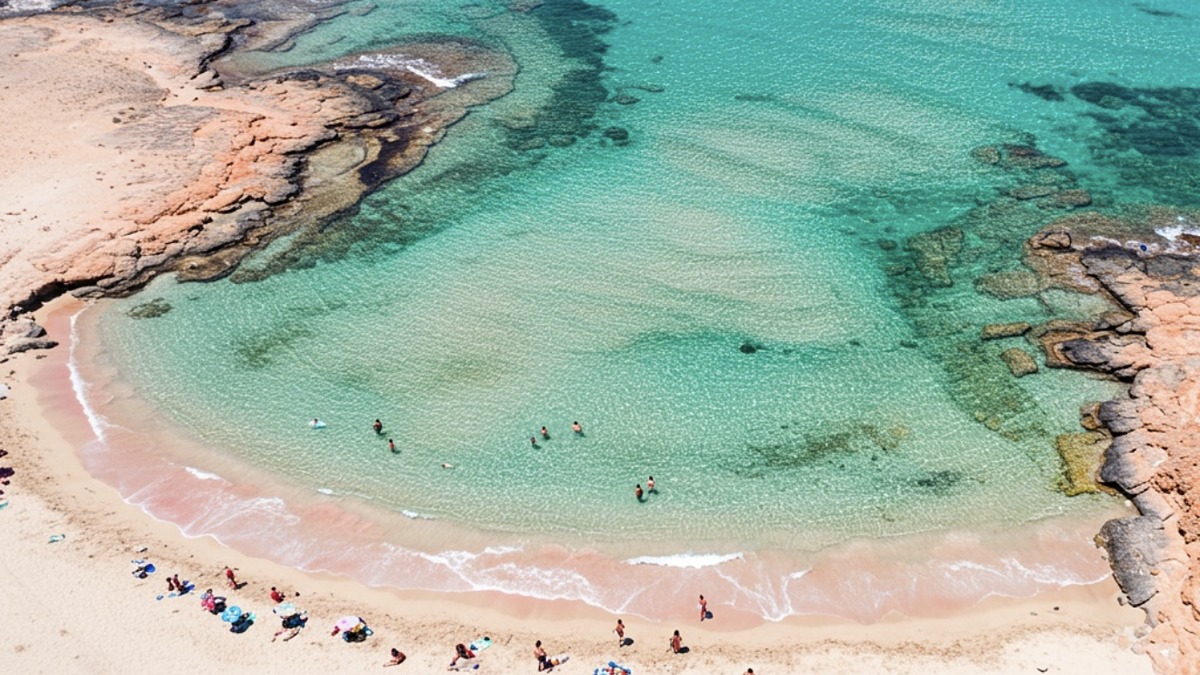
Greece is the default answer when someone asks about the best beach holidays in Europe, and the 2026 World's 50 Best Beaches ranking agrees: Greece tied for the most entries of any country on the list.
Crete is the biggest Greek island and probably the most versatile. Long sandy beaches on the north coast, rugged coves in the south, and enough villages and hiking trails to fill a fortnight. Elafonissi on the southwest coast has pink-tinged sand and shallow turquoise water that looks unreal. It's busy from mid-June through August; visit in September and you'll have room to breathe. Flights from London take about four hours. Budget around £60 to £100 per person per day for mid-range accommodation, meals and a rental car.
The Ionian islands are where Greece's beaches genuinely peak, and they are the quiet story of the 2026 list. Fteri on Kefalonia was ranked the second-best beach on the planet: a white-pebble cove with no road to it, reached by a ten-minute water taxi from Zola or a steep hour's hike. Corfu's Porto Timoni, a double beach with a bay on each side of a slim headland, also made the fifty. Neither is a lie-on-a-sunbed beach, and that's the point. Our Kefalonia and Corfu guides map the rest.
Zakynthos deserves a correction if you last looked a few years ago. Navagio Beach, the shipwreck cove on every travel poster, is closed to visitors until at least the end of October 2026 after repeated rockfalls from the cliffs above: you cannot land on the sand, swim in the bay, or bring a boat inside the marked zone. You can still see it from the clifftop viewing platform at Volimes, and the island's south-coast beaches and the Blue Caves are unaffected. Flights are about 3.5 hours from London.
Rhodes is the easy-holiday pick and holds its warmth longer than anywhere else in Greece. Tsampika, below its monastery hill, is the best of a long chain of east-coast sand, and the island's season runs deep into October.
Croatia: Beautiful but Not Cheap
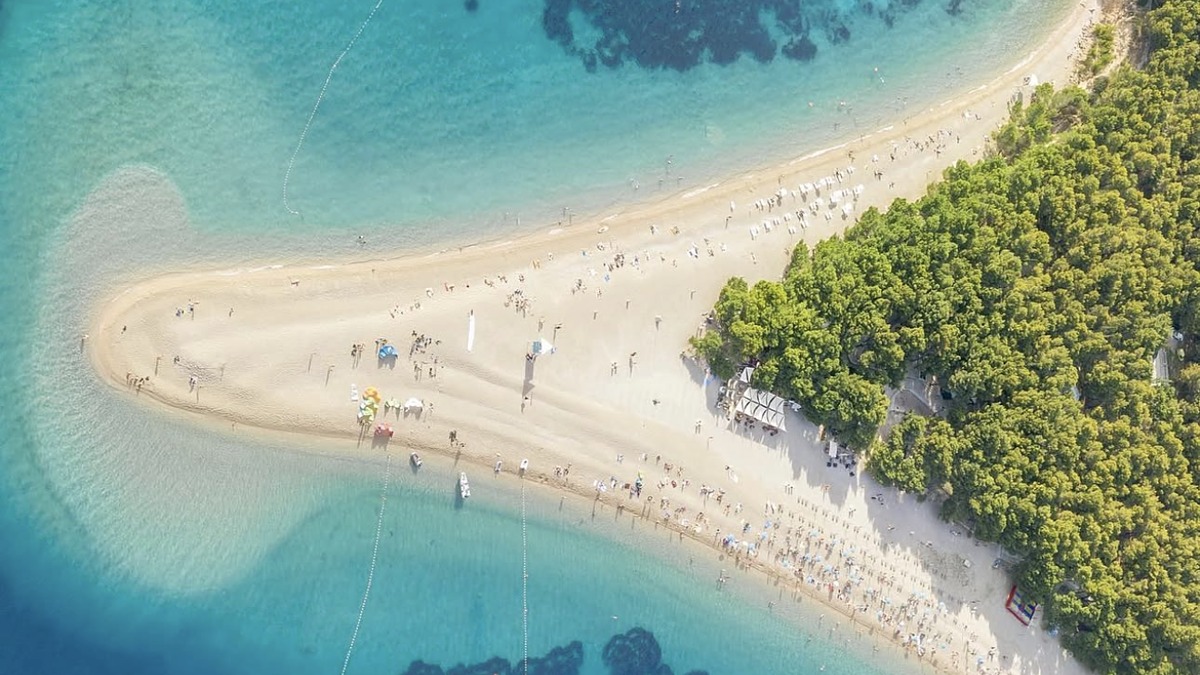
Croatia had its tourism boom a decade ago and prices have caught up. Split and the surrounding coast are gorgeous, with clear Adriatic water and historic towns built from white stone. But a beer in a Split waterfront bar costs nearly as much as one in London.
Hvar is the island for a mix of beaches, nightlife and lavender fields. Water taxis from Split take about an hour. Beaches are mostly pebble and rock rather than sand, so bring water shoes. One 2026 note: Hvar now fines swimwear worn in the town centre, up to around 600 euros, and public drinking up to 700. Budget around £80 to £130 per person per day. Flights to Split from London take about 2.5 hours.
Dubrovnik is worth a day, not a week, and it's the most managed place on this list: cruise arrivals are held to two ships and 4,000 passengers a day, with timed coach slots at the Pile Gate. For an actual beach holiday, go north instead. Istria has no cruise port at all and a long, folded coast that absorbs crowds, and Brač's Zlatni Rat and Vis's Stiniva are the headline beaches worth planning around. See our Istria guide and our ranking of Croatia's beach islands.
Portugal: Best Beach Holidays in Europe on a Budget
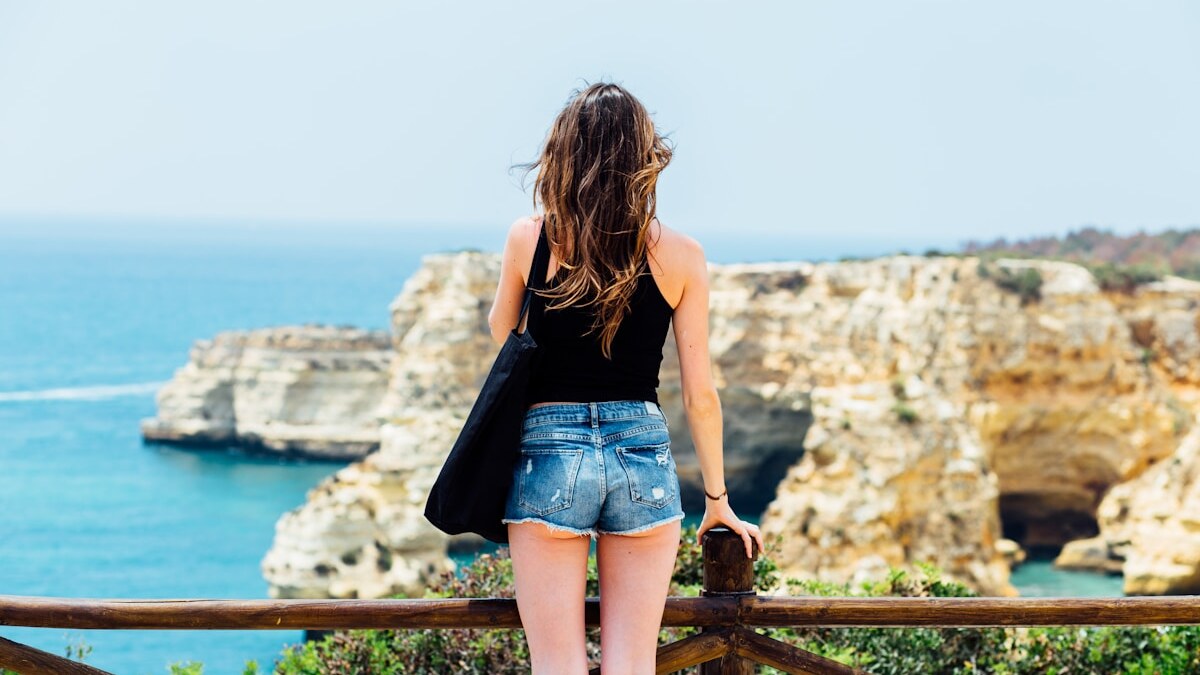
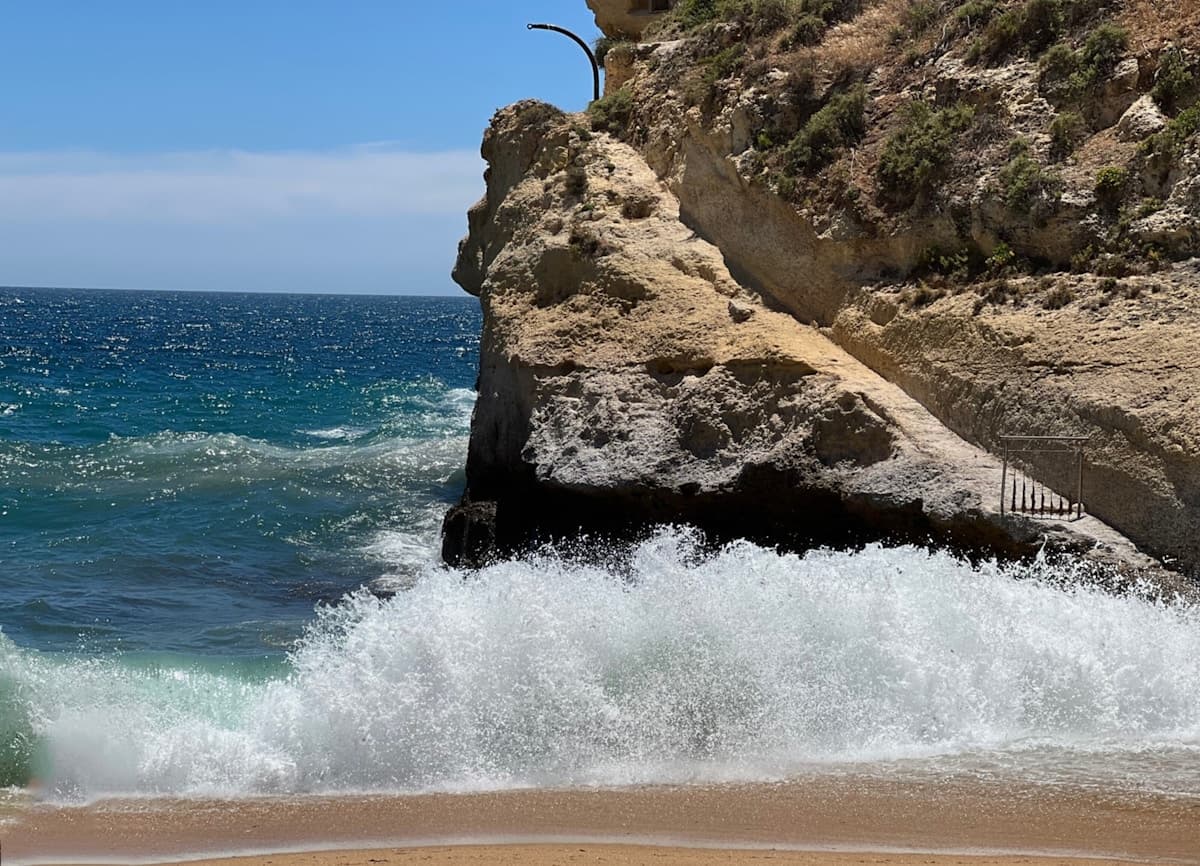
The Algarve has been a favourite with British travellers for decades, and it still delivers. The coastline between Lagos and Faro is packed with cliff-backed beaches, sea caves and golden sand. Praia da Marinha consistently ranks among the best beaches in Europe and earns it, while Praia da Falésia, the long orange-cliff strand near Albufeira, made the 2026 World's 50 Best list.
What makes Portugal stand out is value. You can eat a full seafood lunch with wine for under £15, and decent guesthouses start around £40 a night even in summer. The water is colder than the Mediterranean, typically 18 to 21 degrees from June to September, but you adjust. Flights from London to Faro take about 2 hours 45 minutes. Budget around £50 to £80 per person per day, making it one of the most affordable beach holidays in Europe. Our Algarve guide picks the coves apart.
Spain: Range for Every Budget
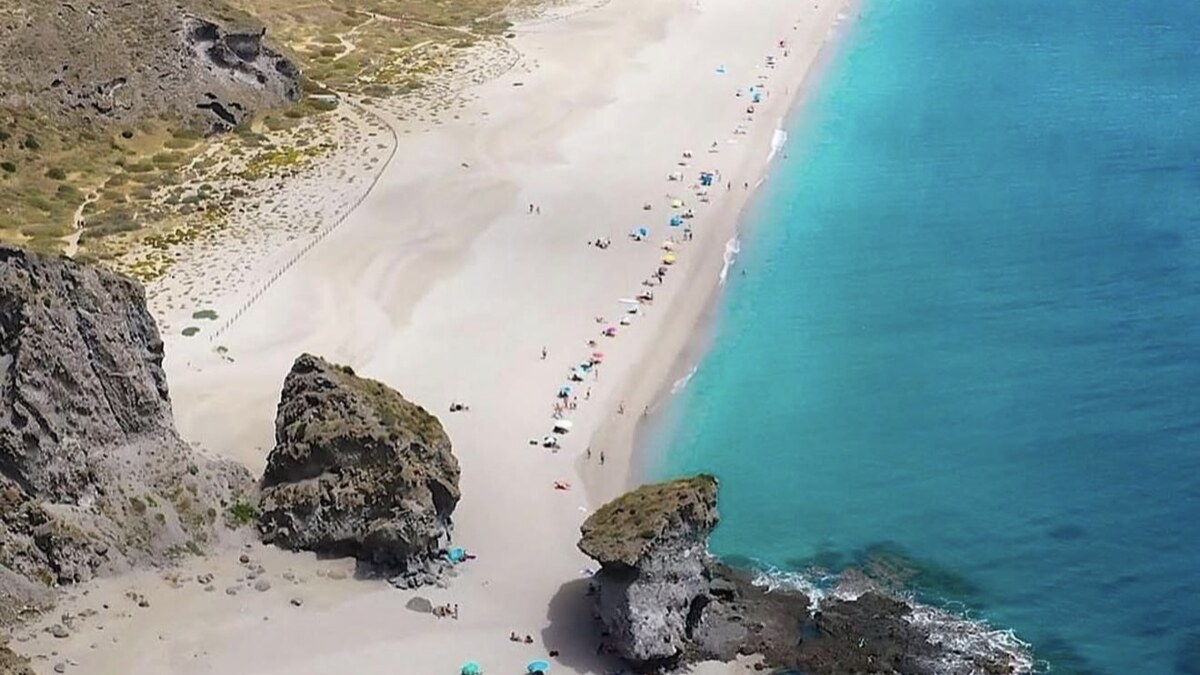
Spain offers so much coastline that grouping it together feels unfair, and 2026 has sharpened the differences between its coasts.
The quiet coasts are the smart play now. While the Balearics and Barcelona absorb the protests and the price rises, Almería's Cabo de Gata, the rural Costa de la Luz and the green north stay calm. Playa de los Muertos near Carboneras is the wildest cove on the mainland, Macenas at Mojácar is the easy one with a watchtower on the sand, and in Galicia the arches of Praia das Catedrais are extraordinary if you book the free summer permit and time the tide. Our nine quietest Spanish beaches guide covers the whole picture.
Costa Brava in northeast Catalonia still has the best combination of scenery, culture and food, with rocky coves slotted between pine-covered cliffs and towns like Cadaqués that have genuine character. Flights to Girona or Barcelona take about 2 hours.
The Balearics cover a wide spectrum, from Mallorca's party strips to Menorca's unspoiled coves and Ibiza's quieter north. Know what you're booking: the Balearic party zones now ban late-night alcohol sales, happy hours and party boats, and Palma saw Spain's largest anti-tourism march this July. Budget £70 to £150 per person per day. Flights run 2 to 2.5 hours.
The Canaries run a year-round season, and the wild end is the good end: Playa de Cofete on Fuerteventura and Guayedra on Gran Canaria are both hard to reach and empty because of it.
Italy: Worth the Premium
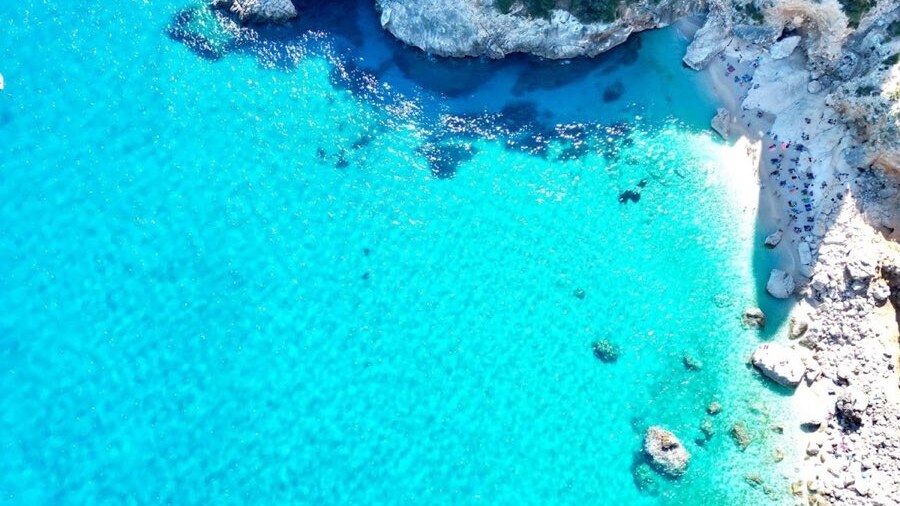
Sardinia is where you go for water that looks Caribbean with Italian food attached. Cala Goloritzé is the standout, and it comes with 2026 homework: entry is capped at 250 people a day at 7 euros, booked through the official app, and La Pelosa at Stintino runs its own cap of 1,500 a day at 3.50 euros. Budelli's pink beach is off limits entirely. The Costa Smeralda is the luxury end with eye-watering prices; the south around Villasimius and Chia has equally good beaches at half the cost. Budget £90 to £140 per person per day. Flights from London take about 2.5 hours. Our Sardinia guide has the full list.
Puglia in the south is the less obvious pick and better for it: clear Adriatic water, whitewashed towns, and some of the best food in Italy. Tourism is growing but hasn't reached Amalfi saturation. Flights to Bari take about 2 hours 45 minutes. Budget £60 to £100 per person per day.
Albania: Still Good Value, With One Caveat
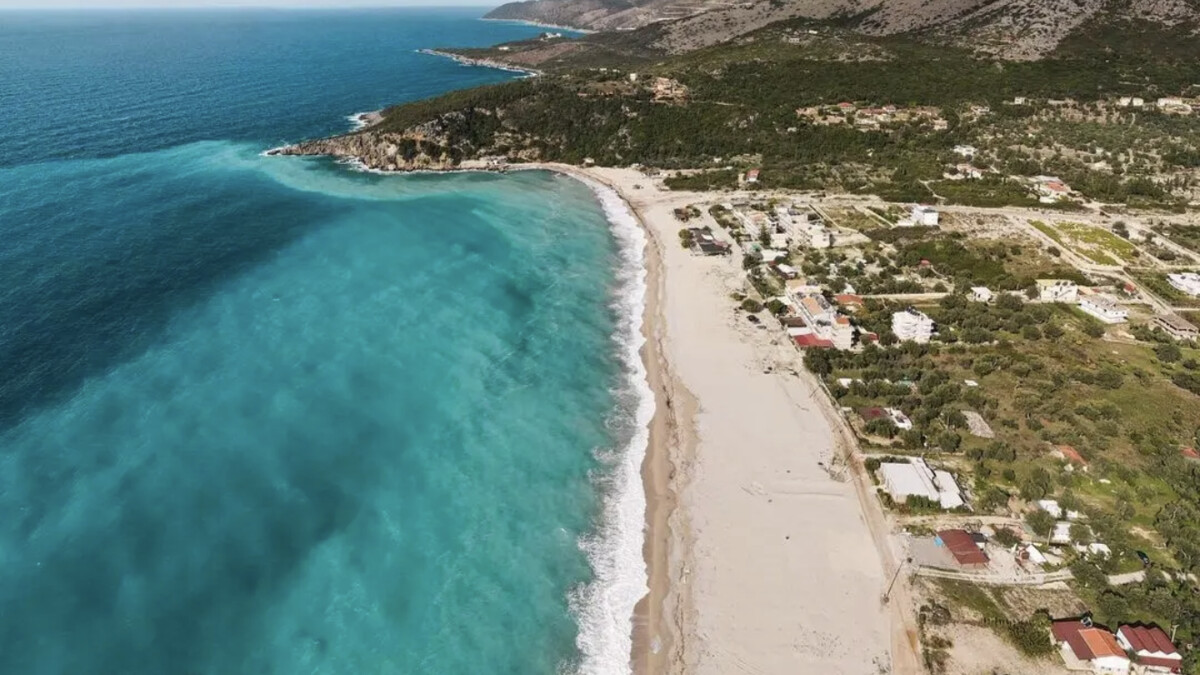
Albania is still the best-value clear water in Europe, but it is no longer the secret it was: 12.5 million foreign visitors came in 2025, up 7 percent, and the pressure shows in one place above all.
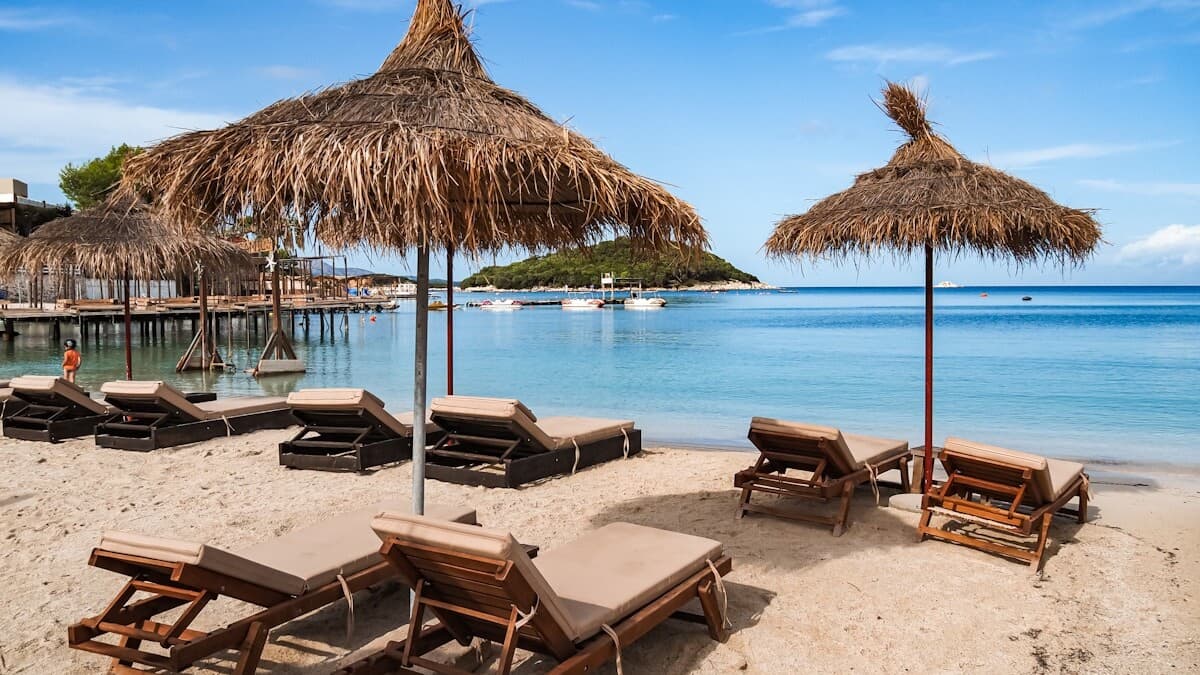
Ksamil, the famous bit opposite Corfu, has priced itself into a different bracket. Sunbed sets run 2,000 to 3,000 lek in peak season, and in June 2026 Sarandë's council approved a top tier of 4,000 lek, about 42 euros, for an umbrella on the island-facing beaches. In July and August you may not see sand between the loungers.
The rest of the Riviera has not followed. Around Himarë, Livadhi charges roughly half Ksamil's prices for a better swim; Borsh gives you seven kilometres of space, with restaurants handing out sunbeds free to diners; and Gjipe, a hike-in cove at the mouth of a canyon, ranked 28th on Europe's 50 Best Beaches for 2026. Budget £40 to £70 per person per day outside Ksamil. Note that Vlorë airport still has no scheduled flights, so the route in is Corfu plus the ferry to Sarandë, or Tirana and a four-hour drive. Our Ksamil alternatives guide covers the swaps in detail.
Turkey: Big Value, Long Season
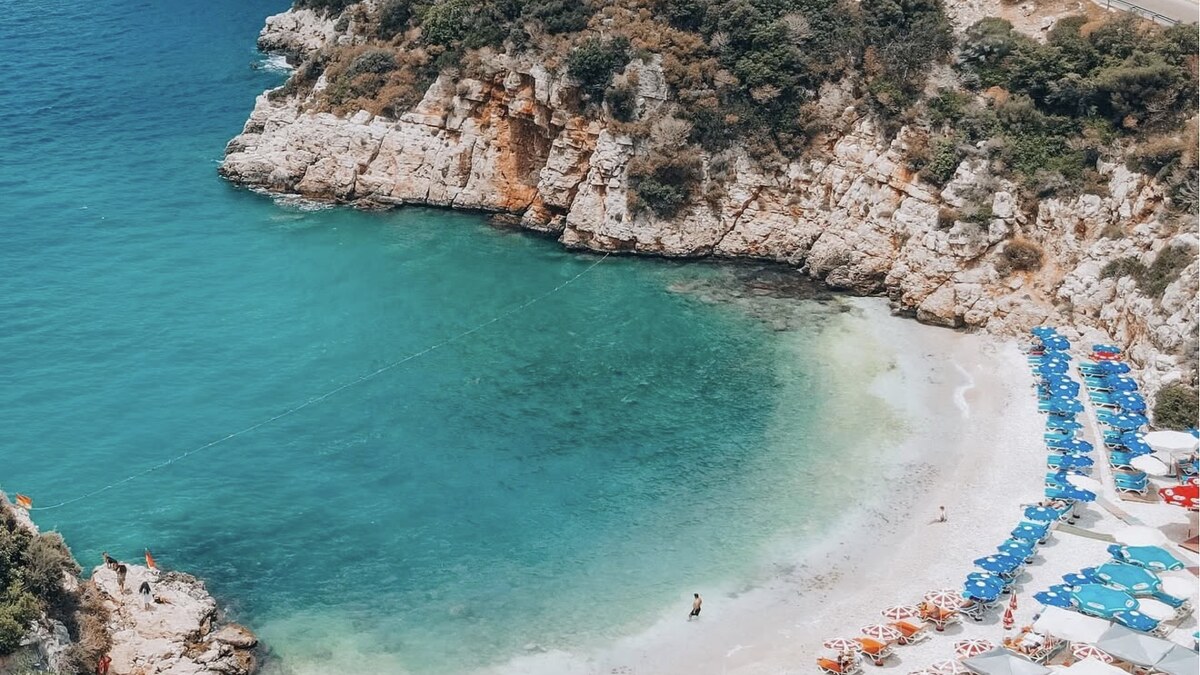
Antalya and the Turkish Riviera offer the longest beach season in the Mediterranean, April through November, and the warmest late-season water in Europe: September sea temperatures around Kaş and Kalkan run near 28 degrees, warmer than July. Kaputaş, the pocket cove reached down a staircase from the coast road between Kaş and Kalkan, is the single best-looking beach on this coast.
What sets Turkey apart is how far your money goes. Independent travellers can budget £40 to £70 per person per day and eat very well. Flights from London to Antalya take about 4 hours. The downside is peak summer heat, often above 40°C in July and August. June and September are the sweet spot.
Europe's beaches on the 2026 World's 50 Best list
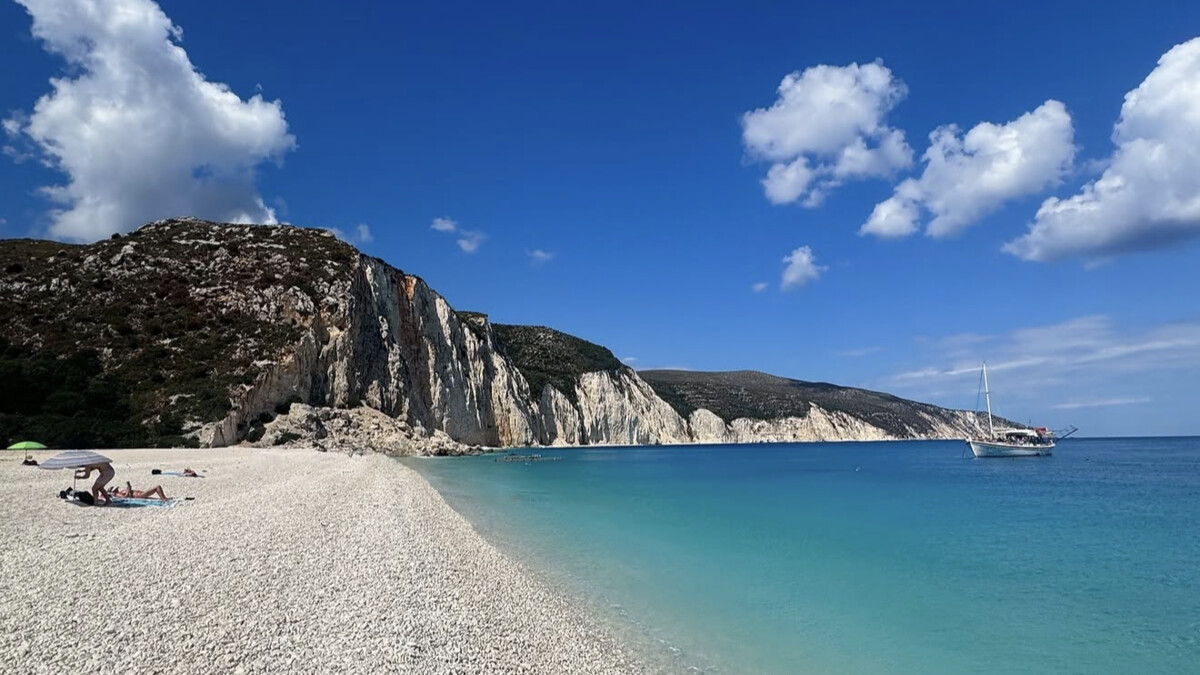
Ten European beaches made the 2026 global fifty, and the spread is a useful shortcut to where the continent's best water is: Fteri in Greece at number two, Cala Macarella in Menorca, Cala dei Gabbiani in Sardinia, Porto Katsiki on Lefkada, Santa Giulia in Corsica, Playa de Cofete in the Canaries, Praia da Falésia in the Algarve, Porto Timoni on Corfu, La Pelosa in Sardinia and Keem Bay in Ireland.
Two patterns stand out. Greece and Italy dominate, and almost every entry is a wild or hard-to-reach beach rather than a resort strand, which tells you what the judges reward and what to expect when you arrive. Our World's 50 Best Beaches guide has the full ranking and our first-hand verdicts on the ones we've stood on.
When to book, and why September beats July
For most of these destinations, June and September are the best months, and September is increasingly the smartest choice of the two. The sea lags the sun by four to six weeks, so across the eastern Mediterranean the water in September is warmer than it was in July, while crowds collapse the moment UK and French schools return on 1 September. Croatia's own figures show arrivals roughly halving between August and September. The exception is geography: the Adriatic and western Med cool quickly, so for Croatia, Sardinia's northwest and the Balearics, aim for the first half of the month. Our Mediterranean in September guide has the temperature map.
Book flights early for summer travel. Prices from London to popular Mediterranean airports jump significantly from March onward, and midweek flights are almost always cheaper than weekend departures, sometimes by £50 or more per person each way.
The biggest mistake people make with European beach holidays is defaulting to the same handful of destinations every year. Places like the Albanian Riviera beyond Ksamil, Puglia, Almería and the quieter Greek islands offer the same water quality and sunshine at a fraction of the cost, without fighting for a spot on the sand.
Single-Beach Reviews We've Published
If you want our deeper take on any of the headline stops on this list, our single-beach reviews score each one the same way:
- Fteri Beach on Kefalonia, the world's second-best beach for 2026
- Porto Timoni on Corfu
- Tsampika on Rhodes
- Rovinia on Corfu
- Pissouri Bay in Cyprus
- Praia da Marinha on the Algarve
- Cala Goloritzé in Sardinia
- Zlatni Rat on Brač and Stiniva on Vis
- Playa de los Muertos, Macenas and Praia das Catedrais in Spain
- Playa de Cofete and Guayedra in the Canaries