The Algarve gets talked about as if the whole coastline is one long postcard, and honestly, parts of it are. But not all Algarve beaches are equal. Some are incredible cliff-framed coves with turquoise water you have to see to believe. Others are tourist-heavy strips where you'll spend more time looking for parking than actually swimming. If you're planning a trip to southern Portugal in 2026, here's where to actually spend your time, and where the crowds might test your patience.
Praia da Marinha: The One That Lives Up to the Photos
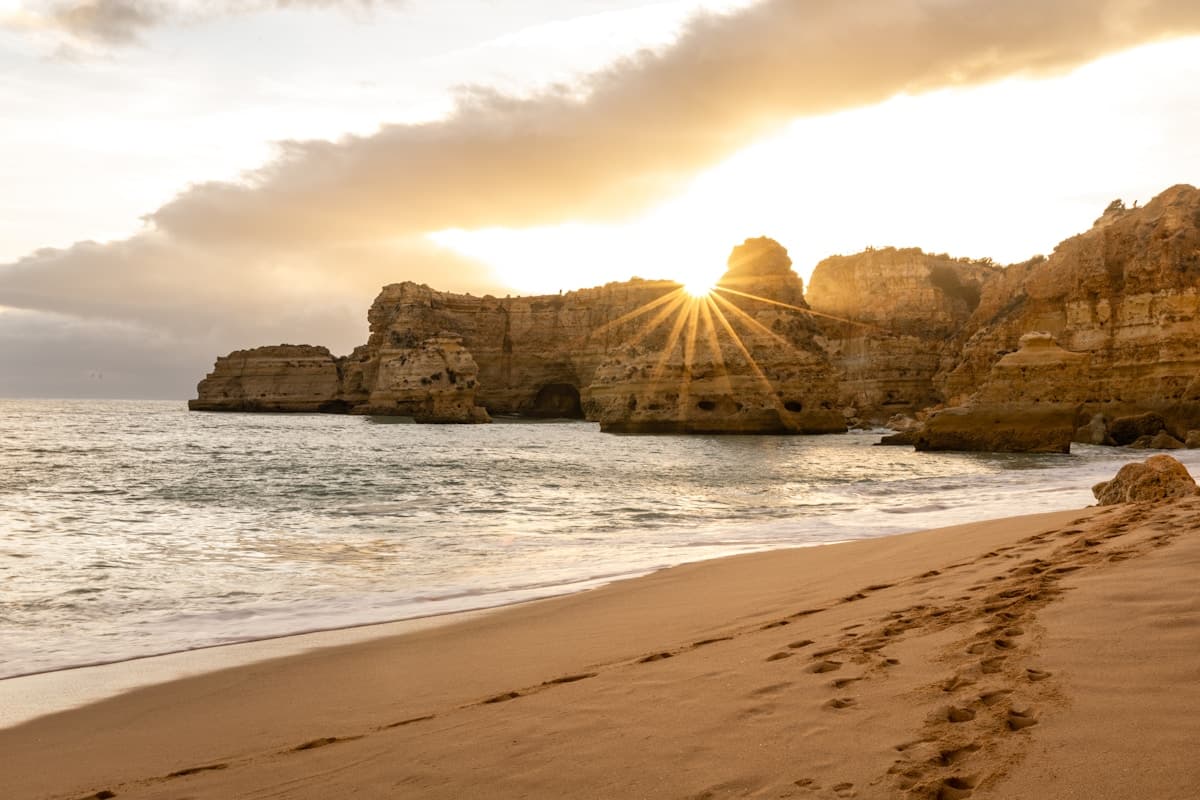
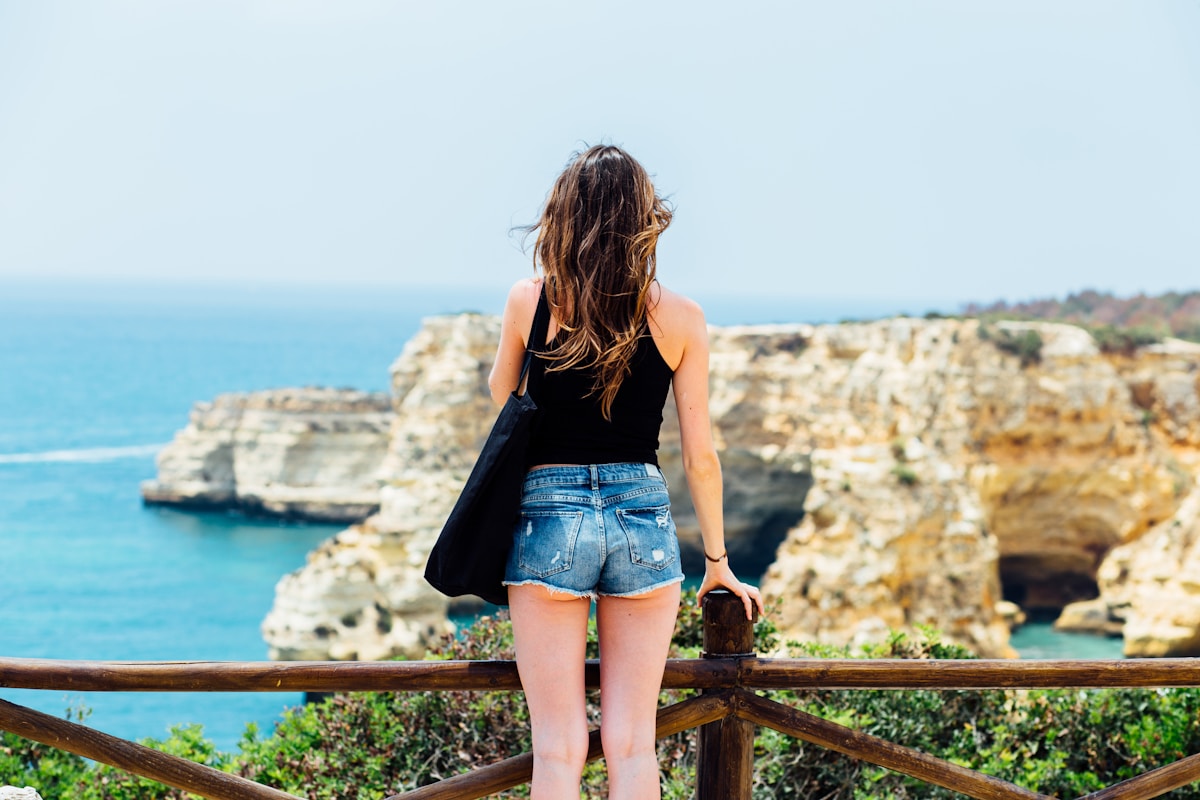
Praia da Marinha is often called the best beach in Portugal, and for once the hype is justified. The cliff formations framing this beach are genuinely dramatic, with golden limestone arches and sea stacks rising from clear blue-green water. You reach the sand via a wooden staircase cut into the cliffs, which takes about five minutes down (and a sweaty ten back up).
The beach itself is not huge. That is both its charm and its problem. In July and August, it gets packed tight by noon. If you want any reasonable amount of space, arrive before 10am. Parking is a dirt lot at the top of the cliffs that fills fast, and there is no overflow option nearby. Bring water and snacks because the nearest cafe is back up at the car park.
Snorkelling here is excellent, especially around the rock formations at the eastern end. The water stays shallow for a good distance, and visibility is some of the best on the Algarve coast. If you've been to Cala Goloritze in Sardinia, you'll find a similar vibe here, just with warmer rock tones and a bit more accessibility.
Benagil Cave Beach: Worth Seeing, But Manage Your Expectations
You've probably seen photos of Benagil Cave, the circular sea cave with a hole in the ceiling that lets sunlight pour onto a tiny beach. It is a genuinely beautiful natural formation. But visiting it in person is more complicated than the Instagram posts suggest.
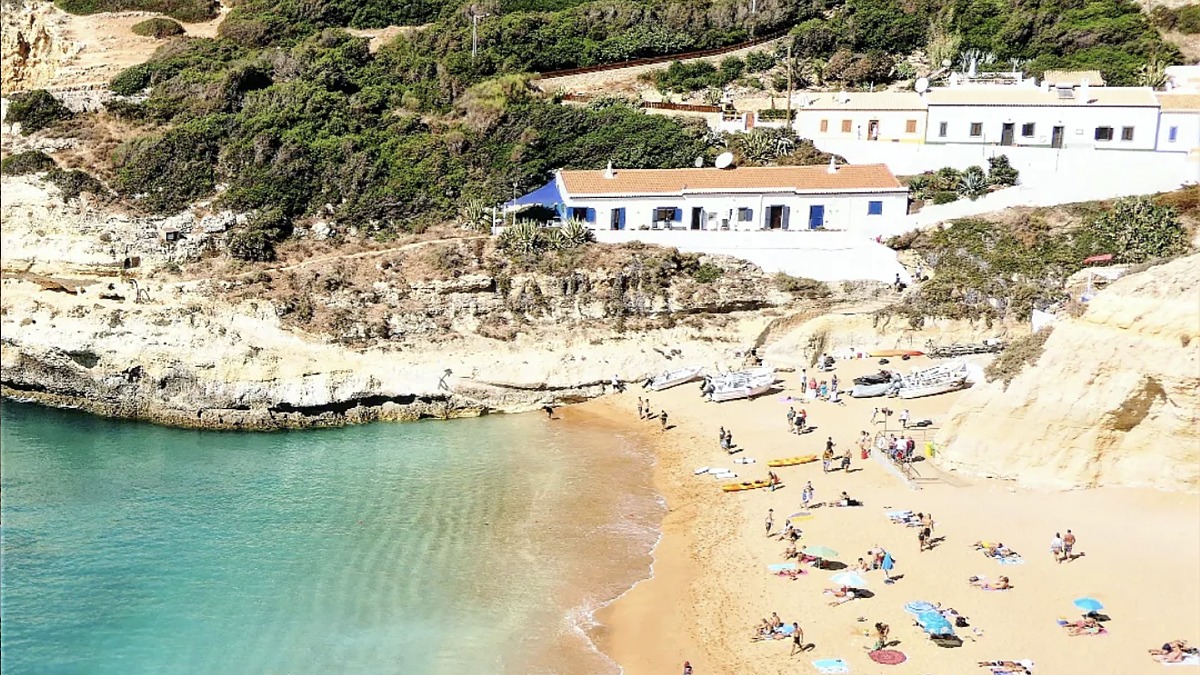
The cave sits about 100 metres from Benagil Beach, and you can only reach it by water. Swimming there is possible but involves open ocean with boat traffic, so it is really only for confident swimmers. Most people book a kayak or SUP tour from the beach, which costs around 25 to 35 euros per person and takes about 90 minutes. Boat tours are cheaper and will motor through the cave, but you will not get to land on the beach inside.
Benagil Beach itself is small, wedged between cliffs, and has limited parking. In summer the lot is full by mid-morning. The beach has a restaurant above it with decent grilled fish, and the cliff walk east towards Praia da Marinha starts here. That walk, roughly 5.5 kilometres one way, passes some of the most beautiful coastline in Europe and hits several small beaches you can scramble down to along the way.
Praia da Falésia: The Long One That Never Feels Crowded
If you want the opposite of a cramped cliff cove, Praia da Falésia is it. This beach stretches for about six kilometres between Vilamoura and Olhos de Agua, backed by eroded red and orange clay cliffs that look almost like a desert landscape. The scale of it means you can always find space, even in peak season.
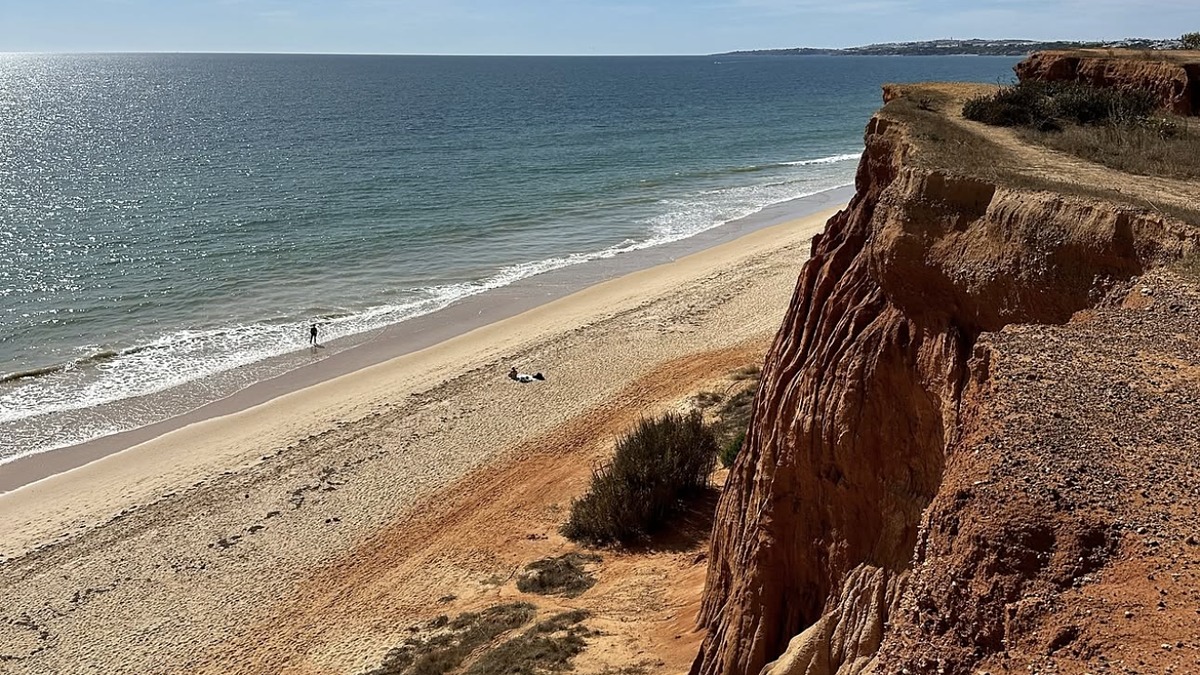
Most people access it from the western end near the Pine Cliffs resort, where there is a decent car park and a boardwalk down to the sand. Walk ten minutes east and you'll leave the resort crowd behind entirely. The sand is firm and good for running or long walks. Swimming is straightforward here with gentle waves on calm days, though it can get choppy when the wind picks up from the west.
This is a strong pick if you're looking for the quietest beaches in the Algarve without sacrificing quality. The cliffs change colour throughout the day as the light shifts, and late afternoon here is genuinely beautiful. There are a couple of seasonal beach bars along the stretch, but bring your own supplies to be safe.
Praia do Camilo, Lagos: Small and Photogenic
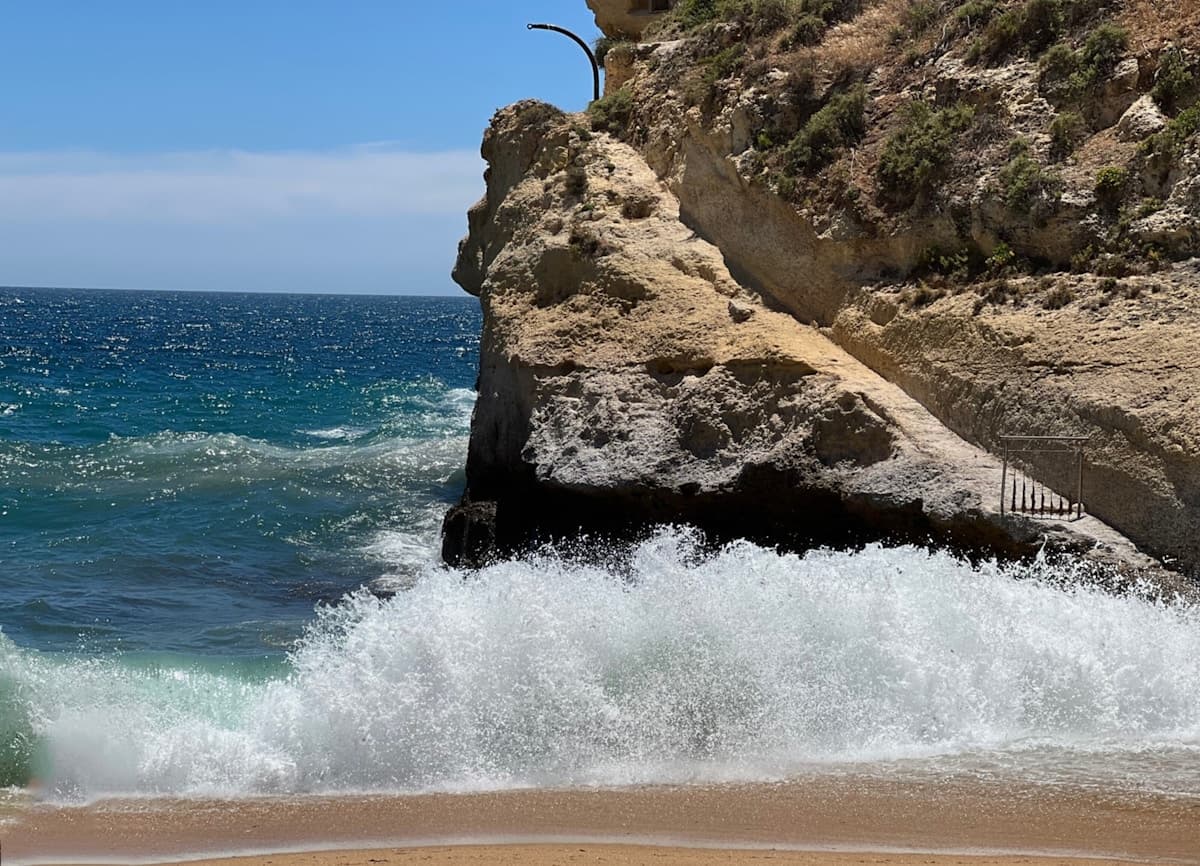
Praia do Camilo is one of those tiny coves that looks unreal in photos, and it genuinely does live up to them. You reach it via a steep wooden staircase of about 200 steps that winds down through the cliffs, opening up views of golden rock formations and deep blue water below.
The beach is small. Very small. Maybe 50 metres of sand pinned between two cliff walls. In summer, this means it fills up almost immediately. If you are not down the stairs by 9:30am between June and September, you are probably not getting a spot. There is a small car park at the top that holds maybe 30 cars, and the road to it is narrow. Parking chaos is real here.
But when you do get a spot, it is special. The water is calm and incredibly clear, the rock formations are right there for snorkelling, and the whole setting feels almost private despite being minutes from Lagos town centre. Just below Camilo, there is a short tunnel through the rock that connects to an even smaller hidden cove at low tide. Worth exploring.
Praia da Dona Ana: The Local Favourite in Lagos
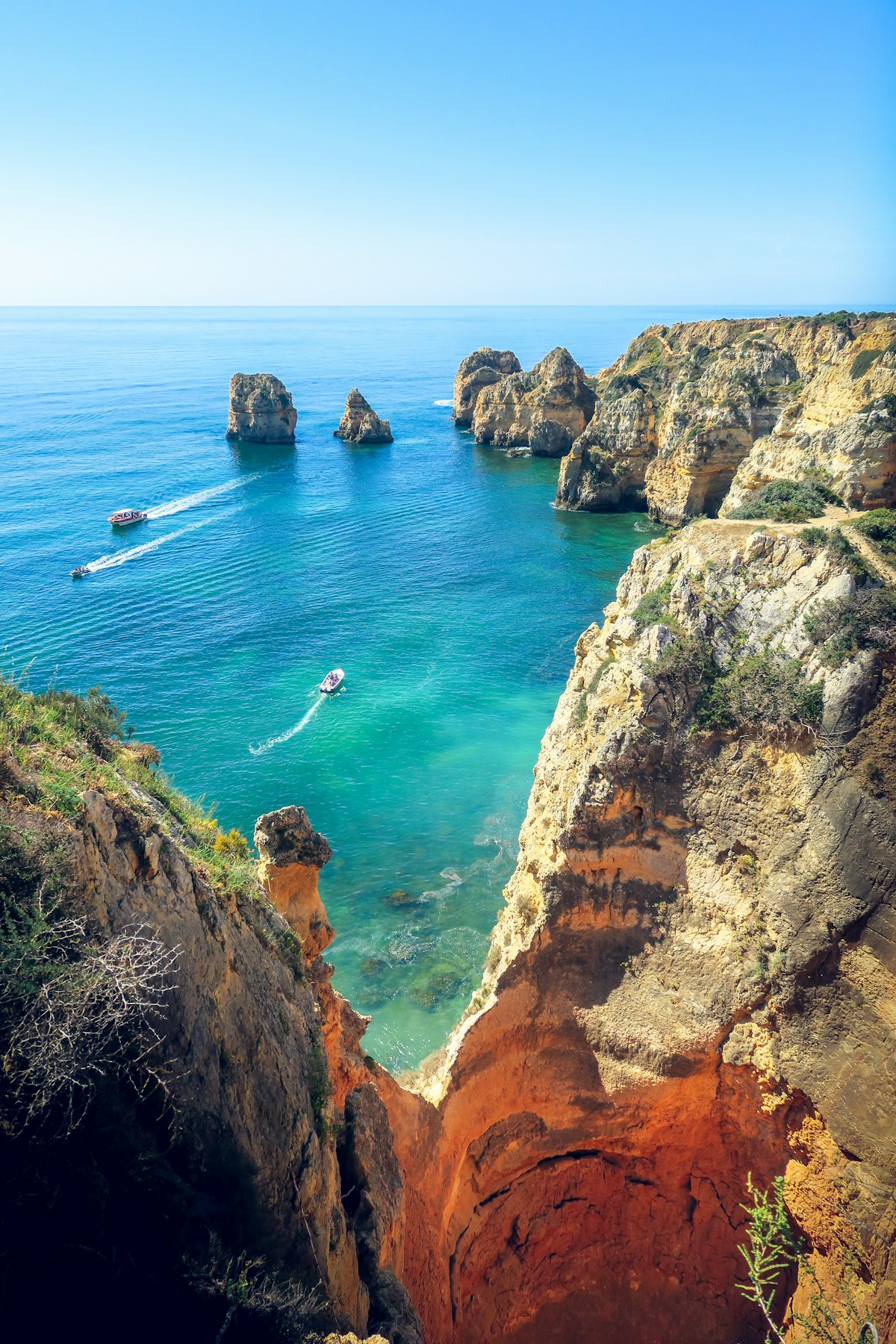
Praia da Dona Ana sits just south of Lagos and is probably the most popular beach in the area with locals and visitors alike. It is bigger than Camilo, easier to access, and has the same dramatic cliff scenery without quite the same scramble to get a spot.
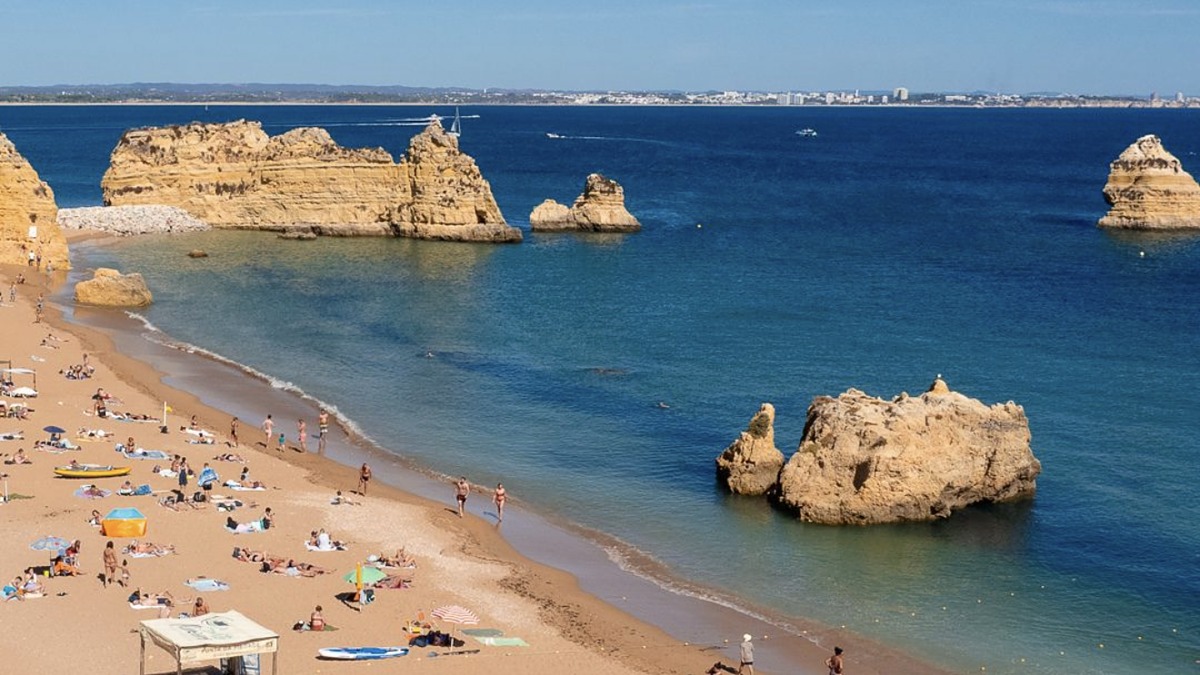
The beach has proper facilities including a restaurant at the top, toilets, and sun lounger rental. Steps lead down through an opening in the cliffs to a wide stretch of golden sand with interesting rock formations at both ends. The water is generally calm and sheltered, making this a solid choice for families, though younger kids will need help on the steps.
Parking is better here than at Camilo but still fills up by mid-morning in July and August. The simplest move is to walk from Lagos marina, which takes about 20 minutes along the clifftop path. That walk itself is worth doing for the views, passing grottos and sea stacks along the way.
Meia Praia: Best Algarve Beach for Families
If you're looking for the best beach in the Algarve for families, Meia Praia is the answer most locals will give you. It stretches for four kilometres east of Lagos harbour, flat, wide, and with gentle waves that rarely get rough enough to worry about.
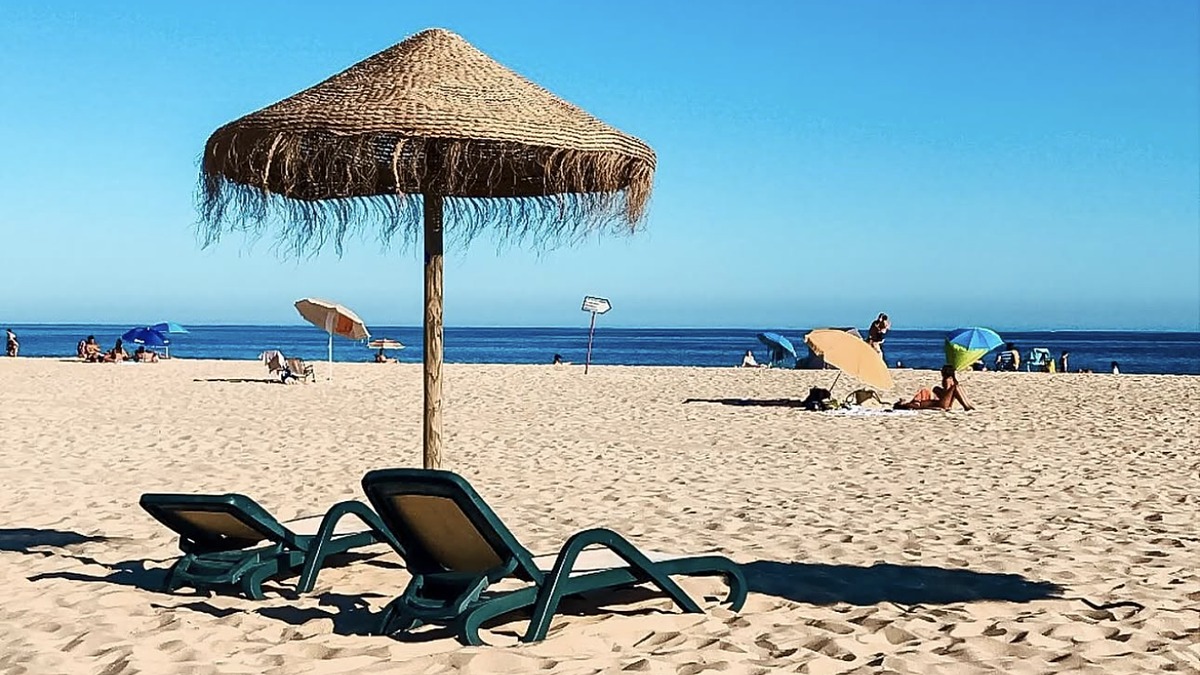
There is ample parking along the road that runs behind the dunes, and several beach restaurants are spaced along the sand. Lounger and parasol rental is available everywhere. The sand is golden and the water is clean, though it lacks the dramatic cliff backdrop of the coves further south. What it offers instead is space, comfort, and a relaxed atmosphere that does not stress you out.
The eastern end near the Ria de Alvor gets quieter and is worth walking to if you want more privacy. Windsurfing and kitesurfing are popular at that end when conditions are right. From the western end, you can walk to Lagos marina in about 15 minutes.
Praia da Rocha: The Busy One You Might Still Enjoy
Praia da Rocha in Portimao divides opinion. It is a big, wide beach with impressive cliff formations, but the seafront behind it is wall-to-wall hotels, bars, and tourist restaurants. If you are after a quiet, authentic Portuguese beach experience, this is not it.
That said, the beach itself is good. The sand is soft, the water is warm by Algarve standards, and the rock formations at the western end are photogenic. The cliff-top fortress of Santa Catarina gives excellent views over the whole stretch. There are plenty of water sports on offer and more restaurants within walking distance than you could try in a month.
It works best as a base if you want convenience and nightlife alongside your beach time, or if you are travelling with a group that has mixed interests. The train station in Portimao connects to Lagos and Faro, making it a practical hub for exploring the rest of the coast.
The Cliff Walks Between Beaches
One of the best things about the Algarve is that many of the top beaches are connected by cliff-top walking trails. The stretch from Praia da Marinha to Benagil is the most popular, about 5.5 kilometres of dramatic coastal scenery with lookout points over hidden coves and sea arches. It is well marked and manageable for anyone with reasonable fitness, though there is no shade so bring a hat and water.
From Lagos, the cliff walk from the marina to Praia da Dona Ana and on to Praia do Camilo takes about 40 minutes and saves you the parking headache entirely. You pass grottos, rock pools, and a couple of viewpoints that most visitors driving between beaches never see.
If you enjoy Europe's best beach destinations, the Algarve cliff walks are something you will not find in most Mediterranean spots. The combination of walkable coastal paths and world-class beaches in such a compact area is hard to beat.
Practical Tips for Visiting Algarve Beaches in 2026
Parking: This is the single biggest frustration at Algarve beaches. At the smaller cliff coves, car parks are tiny and fill before 10am in summer. Your options are arriving early, parking further away and walking, or using the cliff trails to walk between beaches from a single parking spot. Lagos town has larger paid car parks if you are visiting the beaches nearby.
Water temperature: The Atlantic here runs cooler than the Mediterranean, typically 17 to 22 degrees depending on the month. June can still feel bracing. By August it is comfortable but never bath-warm.
Seaweed and conditions: The Algarve occasionally gets seaweed on certain beaches depending on currents and wind direction. South-facing beaches like Dona Ana and Camilo are generally sheltered. West-facing beaches get more wave action and can be rough on windy days.
When to go: June and September are the sweet spot. Warm enough for full beach days, far fewer crowds than July and August, and parking is actually manageable. If you are packing for your trip, our what to bring to the beach guide covers the essentials.
Getting around: A rental car is almost essential for exploring the coast properly. Buses connect the main towns but getting to individual beaches by public transport is limited. The train runs along the coast between Lagos, Portimao, and Faro and is useful for town-to-town travel.
Single-Beach Reviews We've Published
We've published a full single-beach review for one of the headline stops below, scored the same way as every other beach on this site: