Mojácar has two personalities. The one everybody sees is the strip: seven kilometres of hotels, bars and Blue Flag beaches running below the white hilltop town. The one this page is about begins where the tarmac ends. Playa de Macenas is the last stop on Mojácar's coast before the wild starts, a curve of grey sand and rock watched over by an eighteenth-century fortress, with a second, far older tower on the crags beyond it. It is the rare Almería beach that is genuinely quiet and genuinely easy to reach, and that combination is its whole argument.
A beach with its own fortress
The Torre de Macenas stands directly on the shore, and it is not decoration. Built in 1771 and 1772 under Carlos III by the military engineer José Crame, its curious horseshoe-shaped plan, a curved battery face to the sea with two half-bastions guarding the landward door, carried two 24-pound cannons against the Barbary pirates who raided this coast for centuries. The beach below, historically called Bolmayor, had deep water close inshore where boats loaded mineral ore and esparto grass, which is exactly what made it worth defending. The tower later served customs officers and the Guardia Civil, picked up a ground-level door during the Civil War, and stands today as a protected monument you can walk right up to. Interior visits are reportedly possible by arrangement with the town hall; treat that as a check-locally detail rather than a promise.
Getting there, including the bus almost nobody mentions
By car it is simple: follow the coast road south through Mojácar Playa, turn off at the roundabout past the Hotel Indalo, and park for free along the track near the tower. In August the spaces go by mid-morning, which is the only crowd control this beach needs.
The detail that never makes the English guides: in summer 2026 Mojácar's local bus Línea 3 terminates at Macenas, roughly hourly through the morning and again from late afternoon, five minutes from the Hotel Indalo stop. A semi-wild beach with a bus stop is a rare thing on this coast; just note the three-hour afternoon gap in the timetable before you rely on it. Walkers can also arrive on the waymarked PR-A 96 trail along the coast from the north.
The beach, honestly
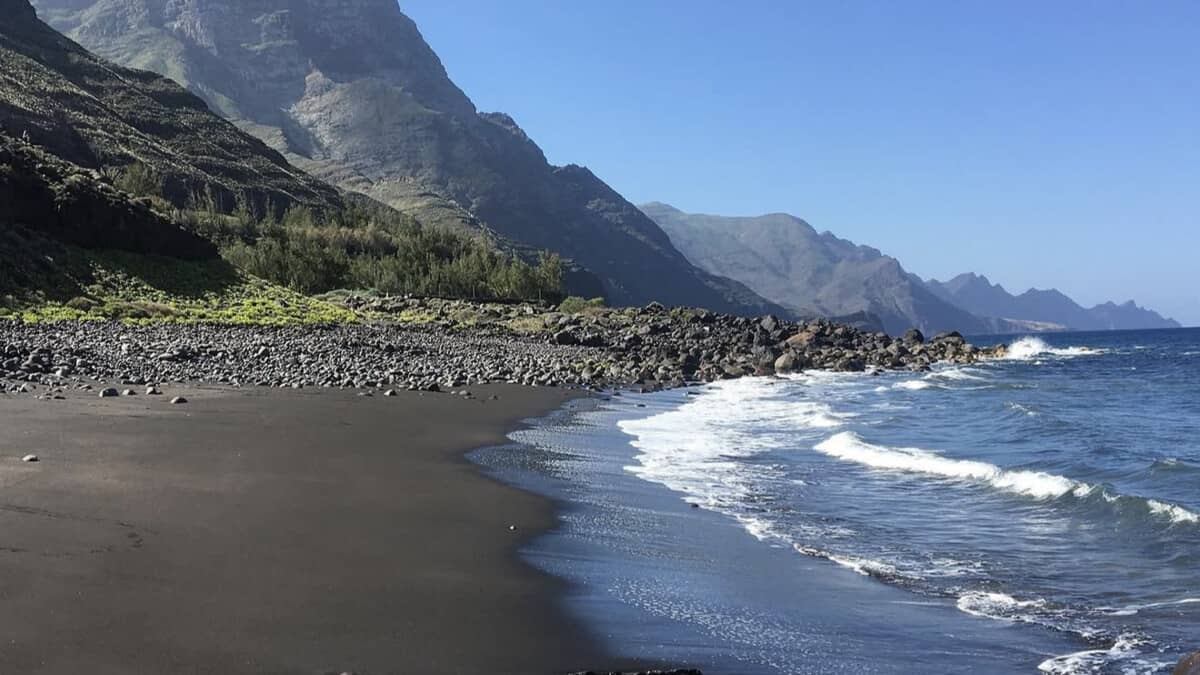
Macenas is grey. The sand is dark, fine-to-coarse, mixed with gravel and rock, and anyone expecting Caribbean gold has come to the wrong province. What it offers instead is space and water quality: the full wild stretch runs around 1.4 kilometres, the core beach by the tower about 600 metres, and even in peak season it officially reaches no more than medium occupancy. The water is clear, especially on calm westerly days when the sea turns glassy.
The honest caveats are two. Near the tower the entry crosses rock slabs and gets deep quickly, so in any swell it is not a small-children corner. And this is an open, east-facing shore: when the levante wind blows, waves build fast and the swim turns rough, while a poniente day is flat calm. Check the wind before you decide what kind of day this is. Facilities amount to a seasonal beach bar on the sand, litter bins and nothing else: no showers, no toilets, no lifeguards, no sunbeds. One more neighbourly detail: dogs are banned here as on all Mojácar bathing beaches, but Playa del Perulejo, the town's first official dog beach, opened in April 2025 right by the Macenas area.
South down the track: the second tower and the film-set coves
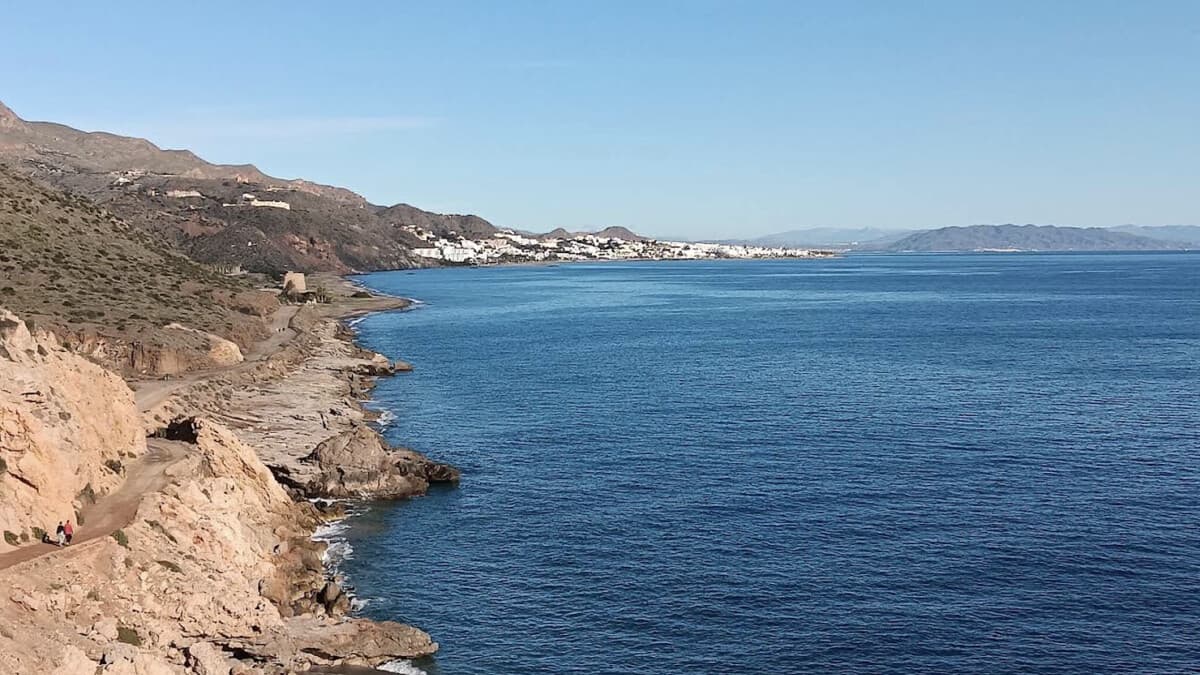
Macenas is also a gateway, and the coast south of it is the best walk on this shore. The dirt track, drivable with caution, passes below the Torre del Pirulico after about a kilometre and a half: a truncated stone cone on a crag, medieval where the Macenas fort is Bourbon, built by the Nasrids and rebuilt in 1526, with a passage through its rock base and a natural sea arch in the rocks below that has become the signature photograph of this coast. The two towers get confused constantly; they could hardly be more different, and seeing both in one walk is the point.
Beyond come the coves. Bordenares is the area's long-standing nudist beach, a cliff-backed pebble cove with a steep shore. Sombrerico, about 4km down the track, is named for its hat-shaped rock and carries an odd claim to fame: the 1972 Treasure Island, with Orson Welles as Long John Silver, was filmed along this stretch, and the beach bar there grew out of the old set. Further on, the Granatilla coves, reached down a ravine from the hamlet of Sopalmo, are as empty as mainland Spain's coast gets. None of it has services; all of it rewards water, shoes and an early start. Naturists also use the southern end of Macenas itself, past the tower, by long-standing local custom.
Is Playa de Macenas worth it?
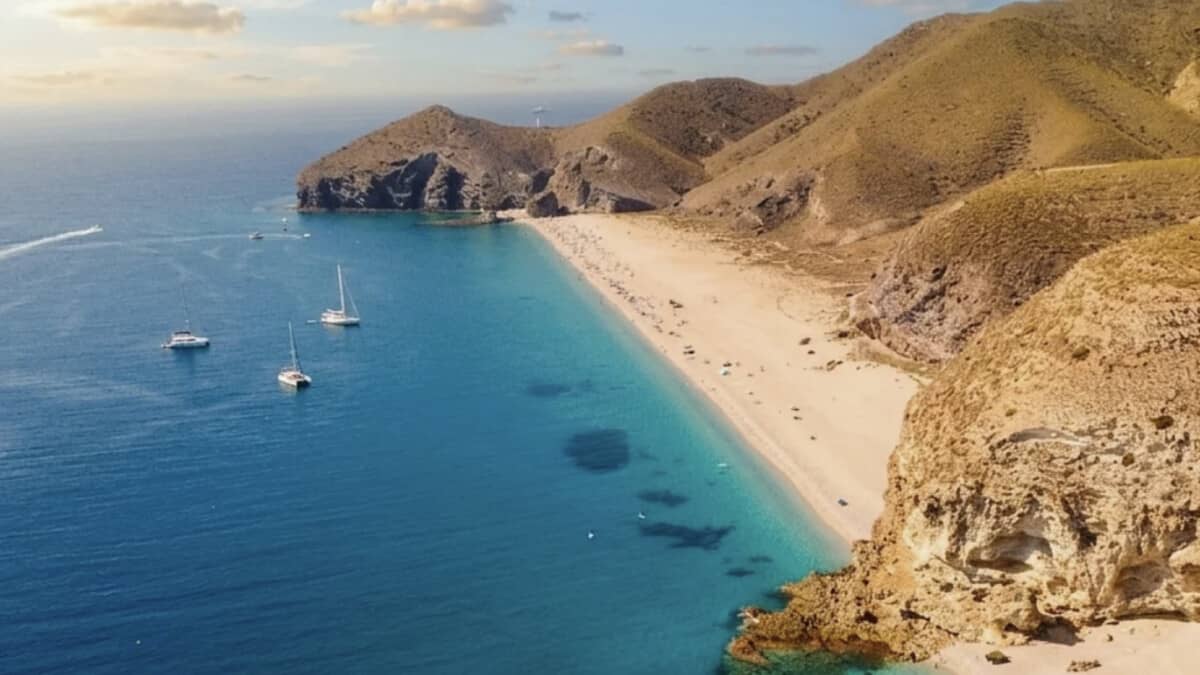
Yes, and for a specific person: anyone based around Mojácar who wants out of the strip without an expedition. Los Muertos, half an hour south, is wilder and clearer, but it demands a steep climb and rewards only the able-bodied; our Playa de los Muertos review covers that trade in full. Macenas asks nothing, flat access, free parking, even a bus, and gives back a fortress on the sand, a quiet grey beach, and the best coastal walk in the area starting from your towel. Time it for a calm day, stay for the light on the tower in the late afternoon, and it earns its place among Spain's quietest beaches without a single superlative required.