On 26 July 2026, tens of thousands of people brought central Palma to a standstill, police counted 25,000 and organisers claimed 70,000, in the largest of the anti-tourism marches that have moved along Spain's busiest coasts since 2024. The message from the marchers is worth hearing clearly: their anger is aimed at a housing crisis and a model of mass tourism, not at individual visitors, even though the day itself ended with scuffles between a minority of protesters and riot police.
The pressure is also concentrated in a handful of places, the Balearics, Barcelona, and the Canary Islands, and that is the useful part for anyone planning a beach trip. Most of Spain looks nothing like Magaluf in August. Go a few hours in the right direction and you reach beaches where you can still find your own patch of sand: the wild coves of Cabo de Gata, the Atlantic light of the Costa de la Luz, the green cliffs of the north.
Here are nine of them, all genuinely quieter than the postcard names, with how to reach each one. None of this is a secret escape from the protests, and we are not going to pretend otherwise. It is simply the calmer, less crowded Spain that was always there behind the headlines.
Cabo de Gata and the Costa de Almería
The southeast corner of Andalusia is the most reliably uncrowded mainland coast in Spain, because so much of it sits inside the Cabo de Gata-Níjar natural park and cannot be built on. Raw, dry and cinematic, it is where to come if you want space.
Playa de los Muertos
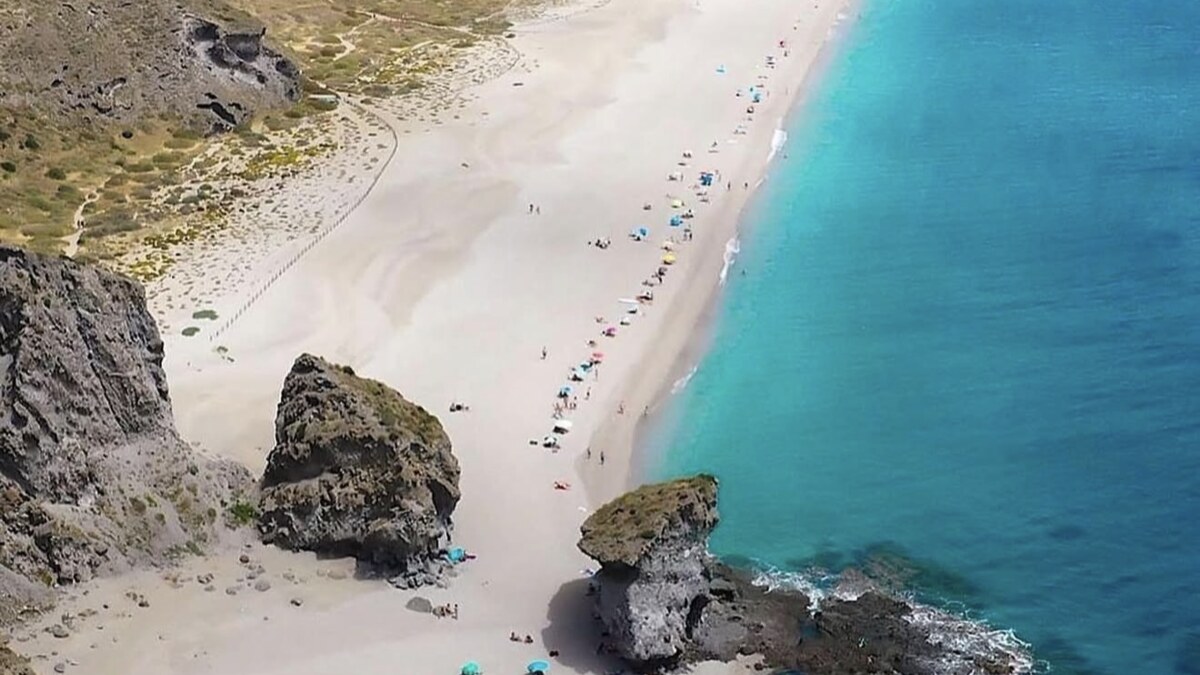
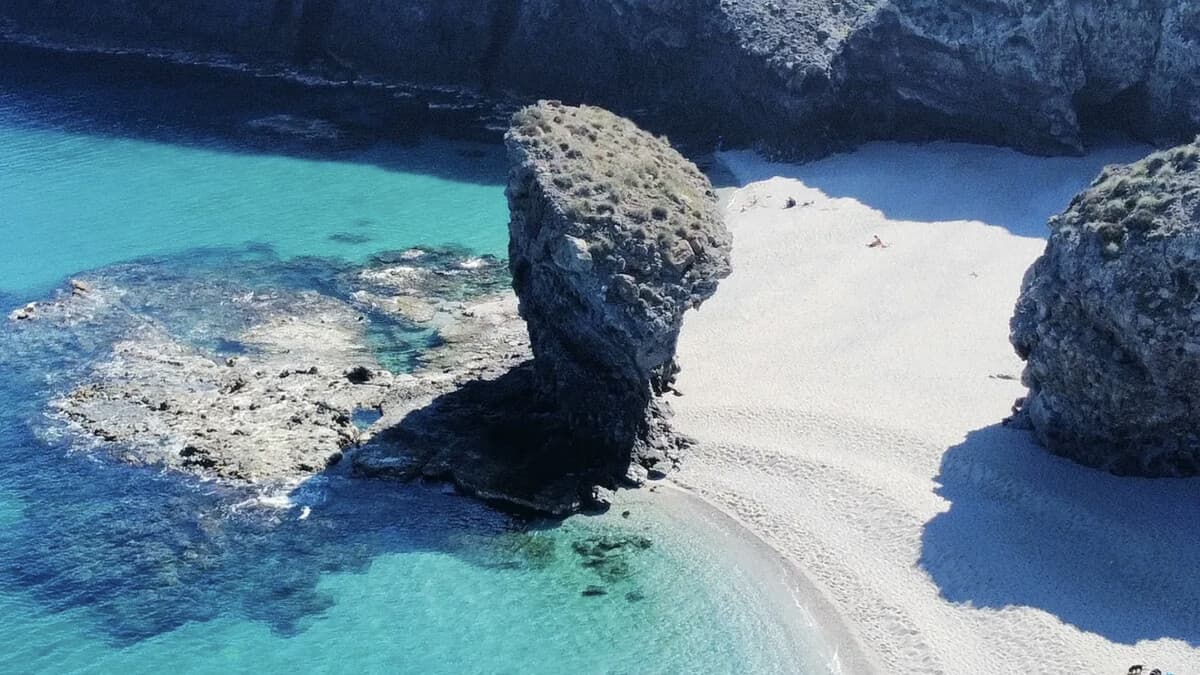
The wildest of the lot, and the one that best earns the word. Playa de los Muertos sits below the cliffs south of Carboneras, and you reach it on a steep footpath of ten to fifteen minutes over loose stone. That climb is the whole reason it stays calm: there is no road down, no bar, no sunbeds and no shade. What waits at the bottom is a long curve of pale pebbles and water clear enough to turn the shallows glass green. Bring water and shoes you can walk in, use the paid summer car park at the top, and know that summer Sundays draw a crowd even here. Come on a weekday morning and it is close to yours. Our full Playa de los Muertos review covers the three paths down, the parking clock and when the sea is safe to swim.
Playa de los Genoveses
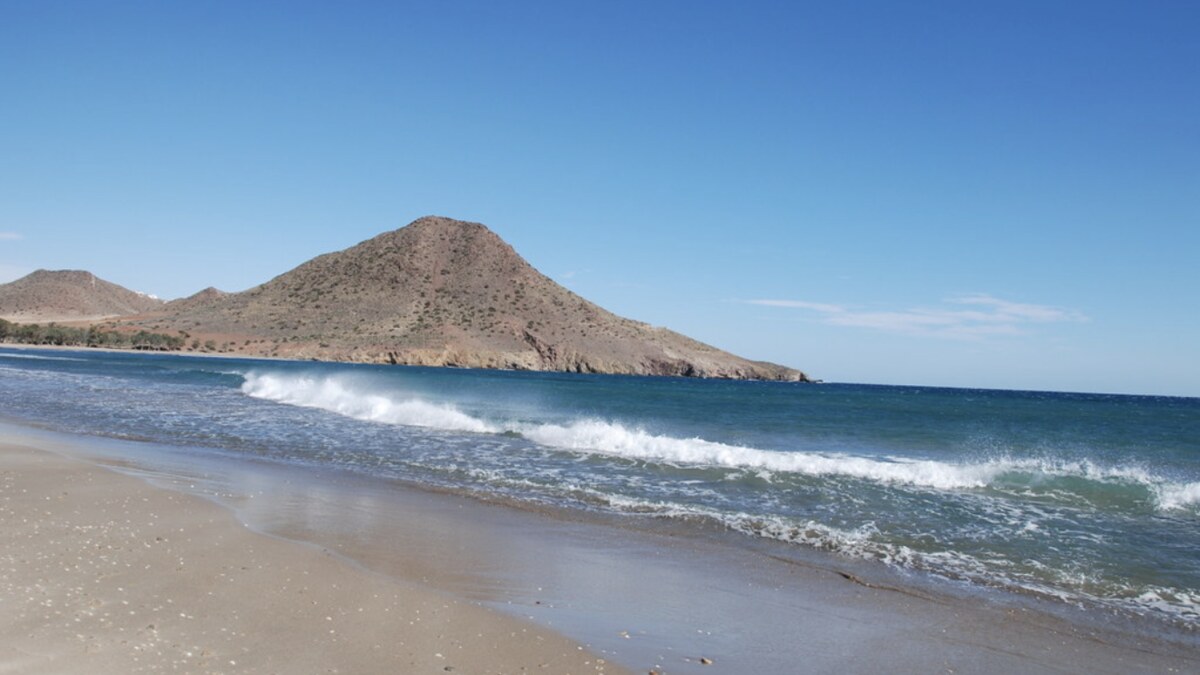
A wide golden crescent backed by dunes, agaves and low scrub, Genoveses is the image most people have of Cabo de Gata, and at over a kilometre long it absorbs people well. Even in August it rarely feels packed, because there is so much room to spread out. It is also a lesson in how Spain now manages its best beaches: from about 20 June to late September the access road closes once the car park fills, and a shuttle bus runs from the village of San José instead. Park early, or take the bus, and you get an undeveloped bay with gentle, shallow water that suits families.
Macenas
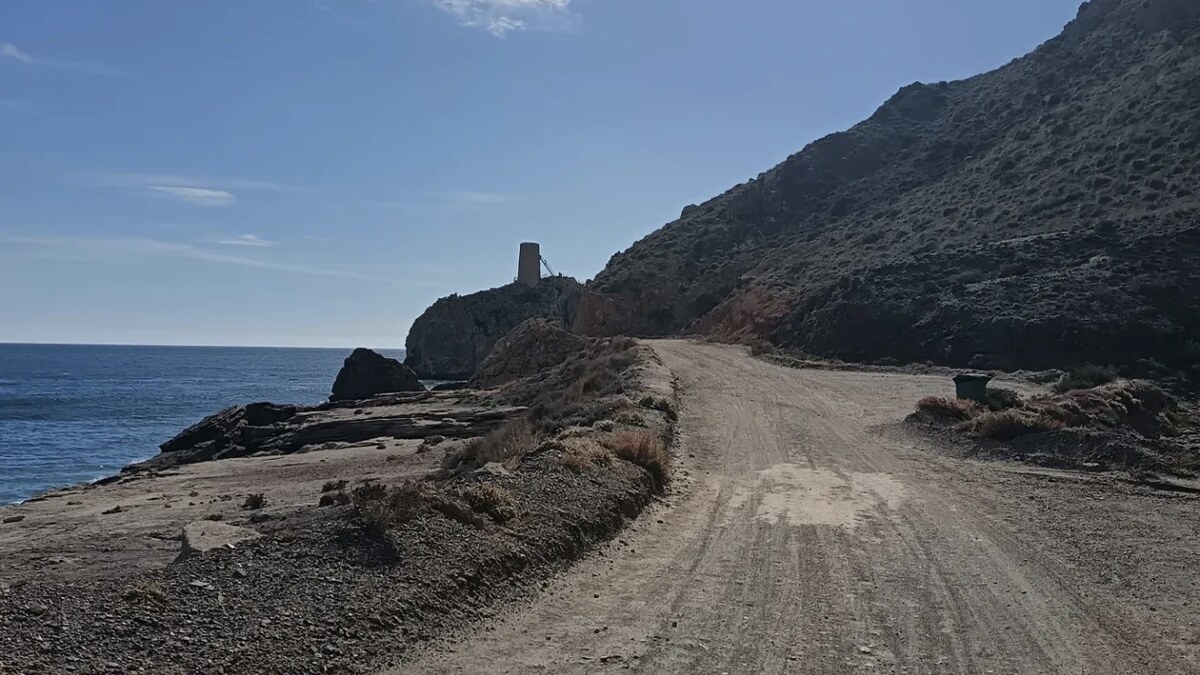
If Los Muertos is the wild one, Macenas is the easy one. Just south of Mojácar Playa, it is a long run of grey sand and rock with a beach bar, space to park and, unusually for this list, gentle access that works for all ages. It is genuinely low-key, described time and again as quiet, and it comes with a landmark: the Torre de Macenas, an eighteenth-century watchtower built under Carlos III to warn of pirate raids, still standing at the back of the beach. Set your expectations for grey sand rather than golden, and it is one of the most relaxed beach days in Almería. Our full Playa de Macenas review covers the tower, the summer bus and the wild track south.
The Costa de la Luz: Cádiz without the city
Cádiz province faces the Atlantic, which means bigger skies, cleaner light and, on the rural stretches away from the towns, far fewer people than the Mediterranean resorts. Base yourself on the coast rather than in the city and you get the best of it.
Cala de los Alemanes
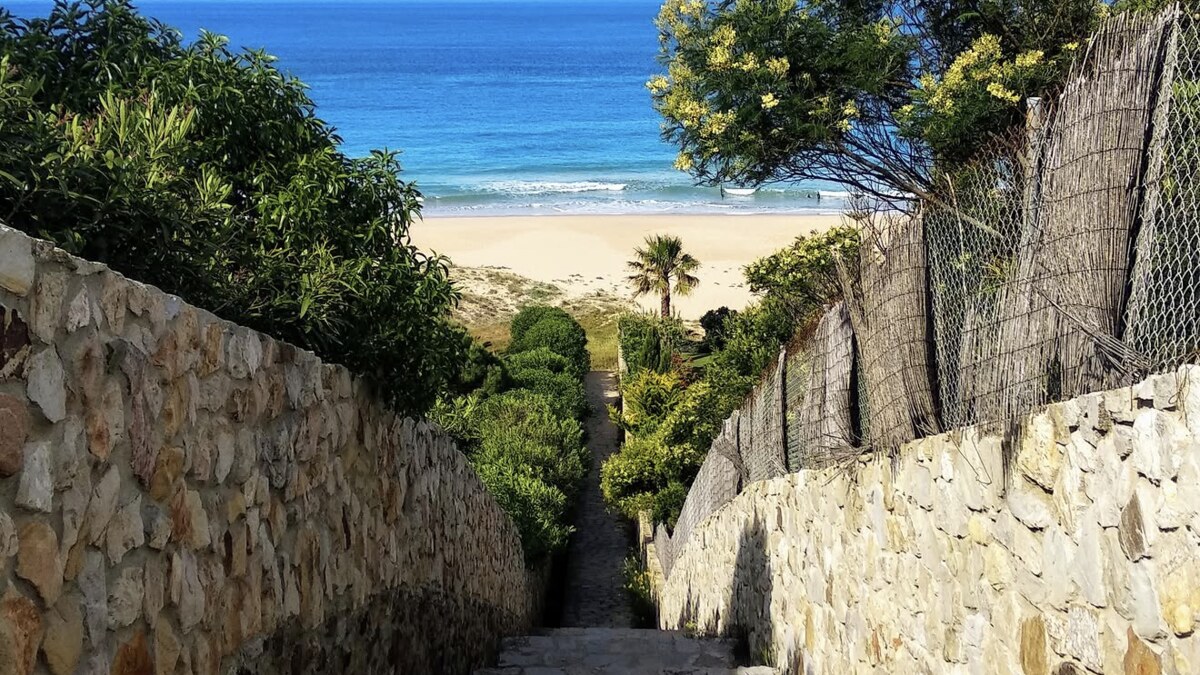
Tucked below the Atlanterra hillside south of Zahara de los Atunes, the Cala de los Alemanes stays quiet for one simple reason: you have to climb down a steep staircase to reach it, and the car park at the top is small. Make the effort and you get a narrow, semi-wild cove of clean sand with rocks near the waterline that are good for spotting fish. There is no promenade and little in the way of facilities, so bring what you need. It is the Cádiz coast at its most low-key, a long way in feel from the resort strips further north.
Bolonia
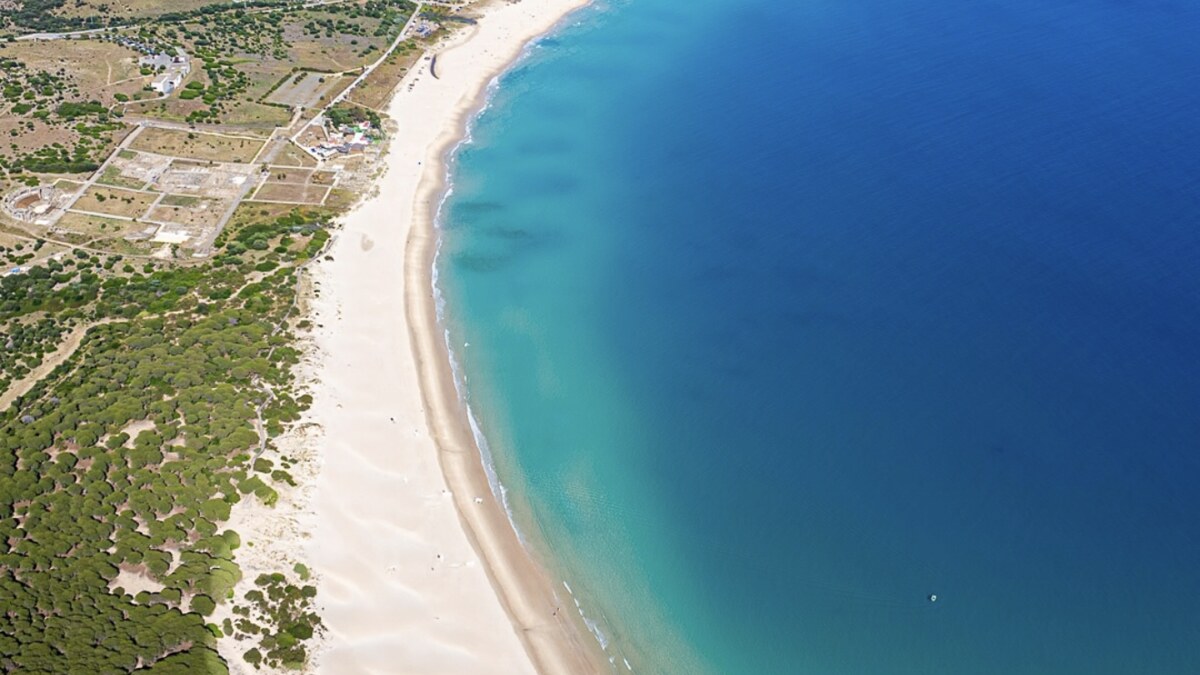
Bolonia is the one to be honest about. It looks wild, a broad sweep of golden sand backed by a giant shifting dune, the Duna de Bolonia, some thirty metres high and protected as a natural monument, and at one end sit the ruins of Baelo Claudia, the most complete Roman town in Spain, once a centre for salting tuna and making the fish sauce called garum. But its beauty is no secret, and in July and August it fills up, so come before mid-morning for a good spot. Treat it as a wild-looking beach with real history rather than a deserted one, time it right, and it is among the finest days on the whole coast. A seasonal bus runs from Tarifa in July and August; the rest of the year you drive.
Green Spain: the northern cliffs
Spain's north coast is its best-kept quiet secret: cooler, greener and wetter than the south, with dramatic cliffs, Atlantic surf and a fraction of the crowds. Pack for changeable weather and you are rewarded with beaches the package trade never reached.
Playa de Langre
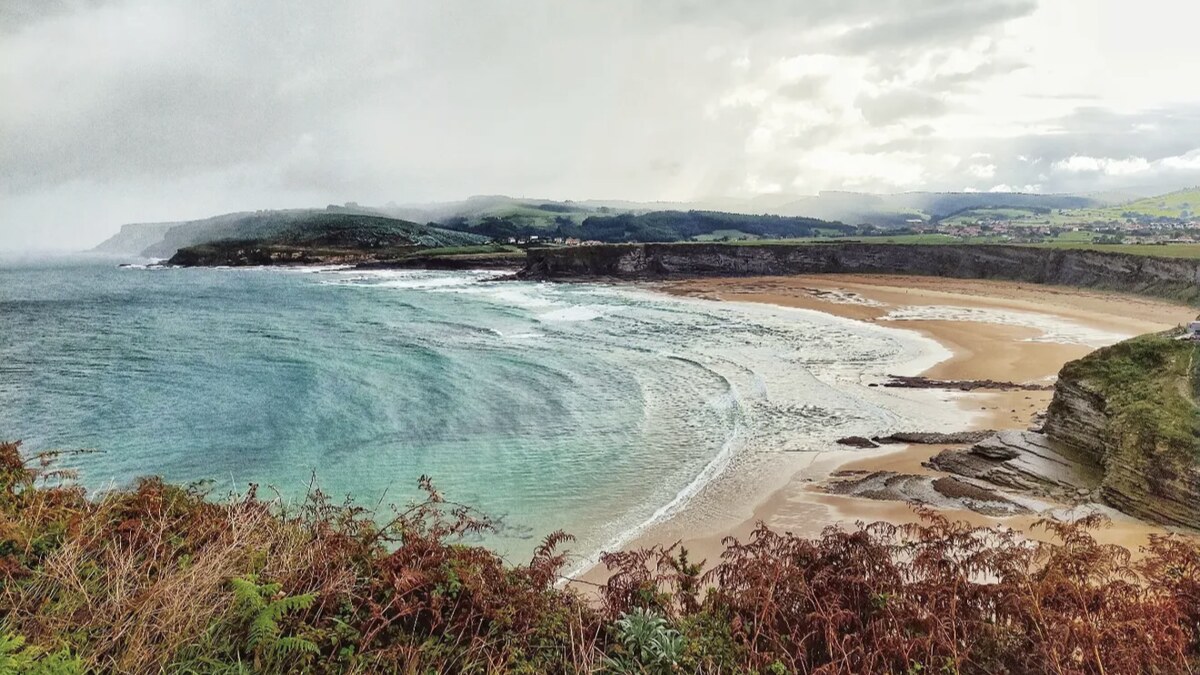
The pick of the north, and an easy trip from Santander. Langre sits at the foot of green cliffs more than thirty metres high, reached by a staircase down from a free clifftop car park, and it draws a fraction of the crowds you find at the big northern surf towns. The sand is pale and fine, the setting is all cliff and Atlantic, and the western end stays calm while the middle catches the waves. No cap, no fee, no booking, just a walk down and back up.
Playa de Oyambre
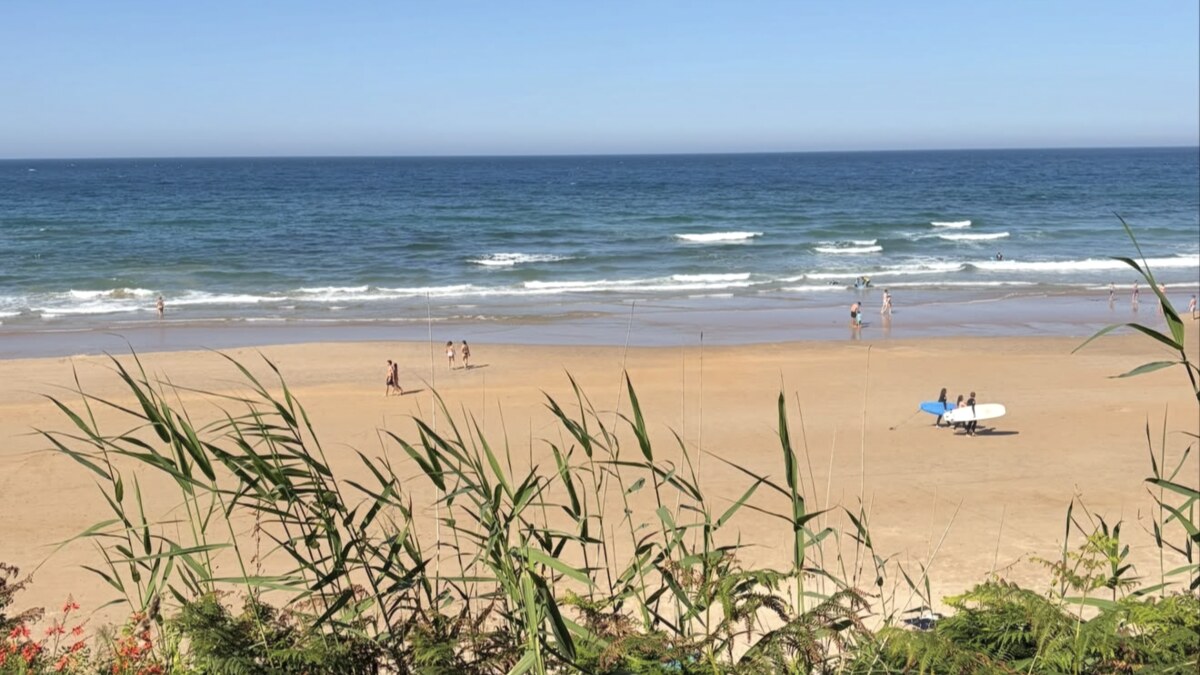
A little further west, between San Vicente de la Barquera and Comillas, Oyambre runs for nearly two kilometres inside its own protected natural park. It is a beach of dunes, an estuary and birdlife rather than a promenade, and that scale is what stops it ever feeling crowded, even when the surfers are out. There is a small car park with a modest fee, no cap, and green hills at your back. It is the north coast at its most restful.
Playa de Torimbia
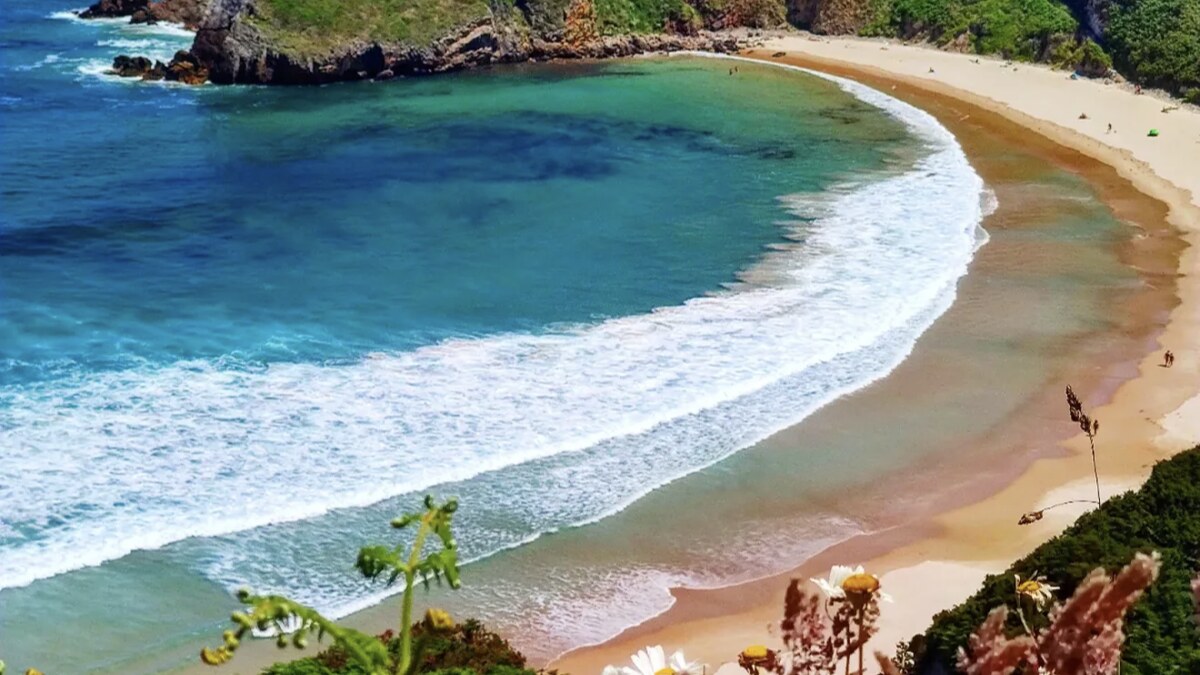
Torimbia, near Llanes in Asturias, is a crescent of sand and turquoise water with no road to it: you leave the car at a small clifftop car park and walk ten to twenty minutes down a dirt track, past ferns and the odd cow, to reach it. The walk is the filter, and off-season or early in the day you can have the whole cove to yourself. One thing to know before you go: Torimbia is a traditional nudist beach, though clothed visitors use it too. There are no facilities, so carry water and take everything back out with you.
One wild Canarian corner
Playa de Guayedra
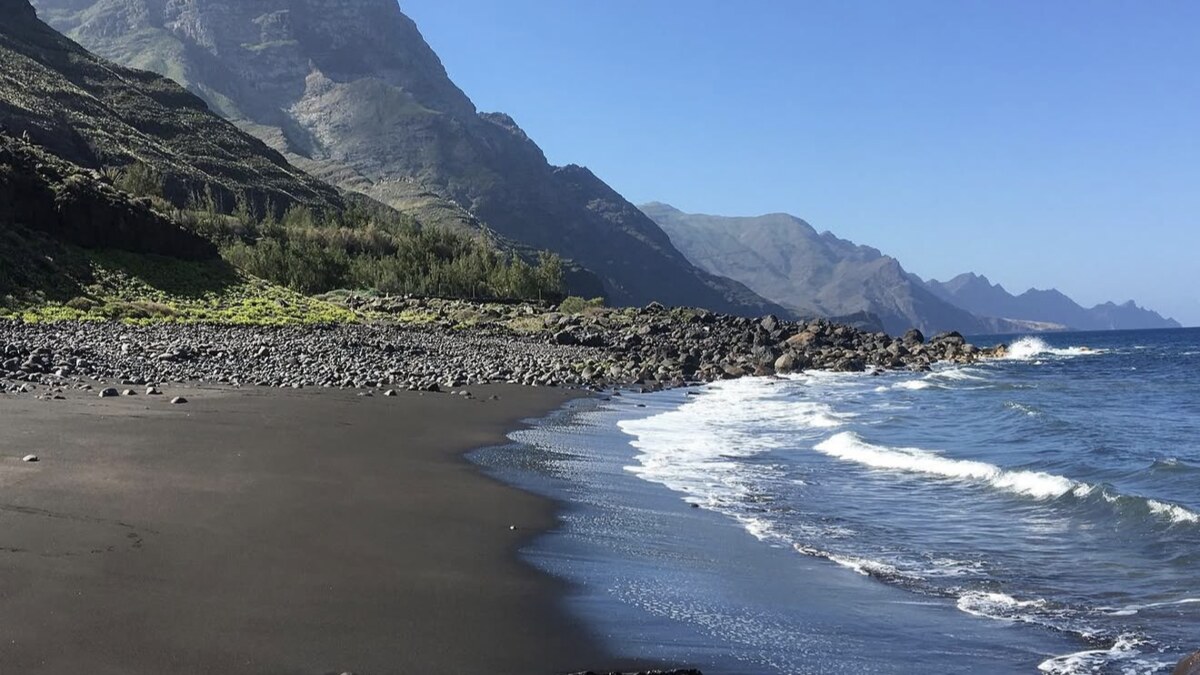
One Canarian beach, on its own honest terms. The Canary Islands have run some of Spain's largest anti-tourism protests, so this is no escape from the story, but Guayedra, on the northwest coast of Gran Canaria near Agaete, is a genuinely undeveloped corner of it. It is black volcanic sand and pebbles at the mouth of a ravine inside the Tamadaba park, reached down a narrow dirt road to a car park with about four spaces, which does the work of keeping numbers down. The catch is the sea: it faces the open Atlantic and the surf can run strong and dangerous, so treat it as much as a place to walk and look as to swim. Our full Playa de Guayedra review covers the dirt track, the trail from Agaete and when you can actually get in the water. For a bigger, equally wild Canarian beach, our Playa de Cofete review on Fuerteventura covers another that has stayed empty by being hard to reach.
The famous ones you now have to book
The flip side of Spain's quiet coast is what has happened to its famous one. Three of the country's most beautiful beaches now come with a gate. In Galicia, the Islas Cíes cap visitors at around 1,800 a day and make you claim a free permit before you can even buy a ferry ticket, and Praia das Catedrais, with its cathedral-like rock arches, needs a free timed booking through the summer, and our full review covers the permit and the tide window that matters more. Back in Cabo de Gata, the much-photographed Playa de Mónsul closes its access road to cars once the lot fills from late June, running a shuttle instead. None of these is quiet in the old turn-up-whenever sense; they are managed, and worth knowing about before you build a day around one. Our guide to Europe's 2026 beach rules has the full picture of caps, fees and closures across the continent.
The honest bottom line
None of this means Spain is closed. The marchers in Palma are asking for their towns back, for homes locals can afford and streets that work in August, not for visitors to disappear. Travel a little differently, go in June or September rather than the peak, stay longer in one place, spend in the village rather than the strip, and skip the three or four names everyone else is queuing for, and the quiet Spain in this list is as open as it ever was. For the best beaches worth a little effort, wherever in the world they are, see our World's 50 Best Beaches guide.