Some beach names are marketing. This one is a warning, delivered politely by history. Playa de los Muertos, the Beach of the Dead, sits below the coast road south of Carboneras in Almería, and local tradition says the converging currents that meet along this shore once carried the bodies of shipwrecked sailors onto the pebbles. Nobody can produce the parish records, so treat the story as received history rather than fact. What nobody disputes is the sea that inspired it: this corner of the Mediterranean moves with real force, and it has taken lives as recently as June 2026.
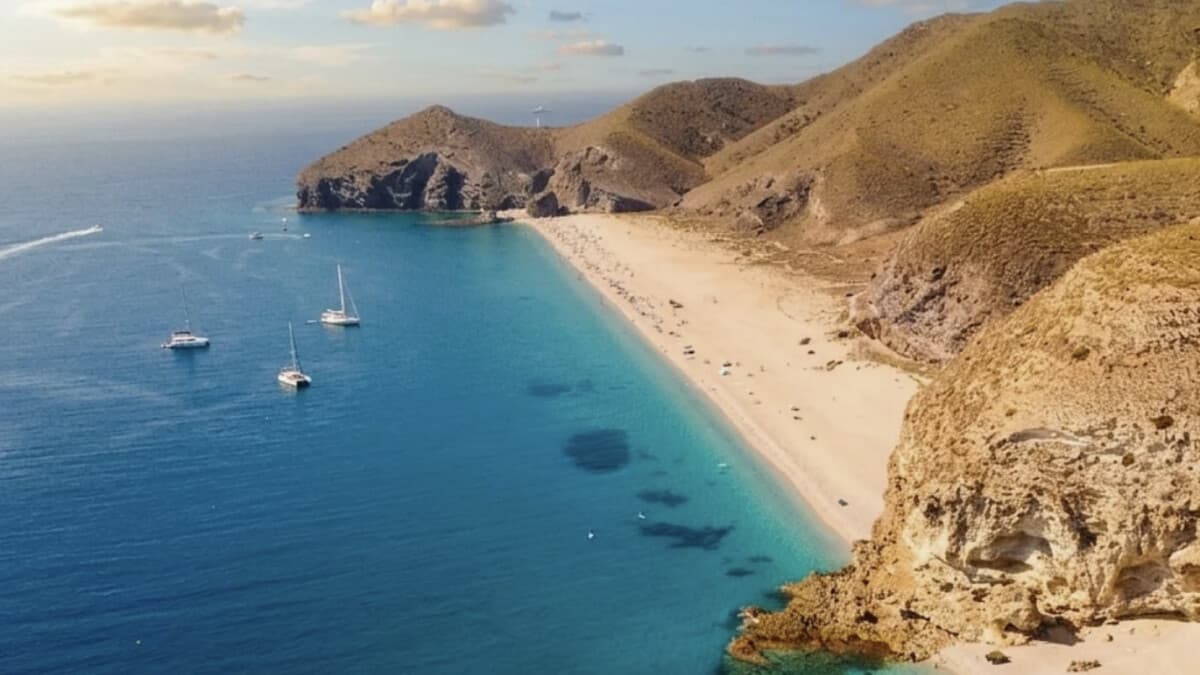
And yet this same beach has been voted the best in Spain multiple times, and on a calm morning you understand why within seconds of cresting the path. More than a kilometre of pale, fine pebbles runs beneath bare ochre hills, the water shading from glass-green to a blue that National Geographic's Spanish edition called the most intense in Cabo de Gata. No bar, no road, no buildings. The deal is the same as at every great wild beach: everything worth having here is natural, and everything convenient is missing.
Getting down, and the parking clock
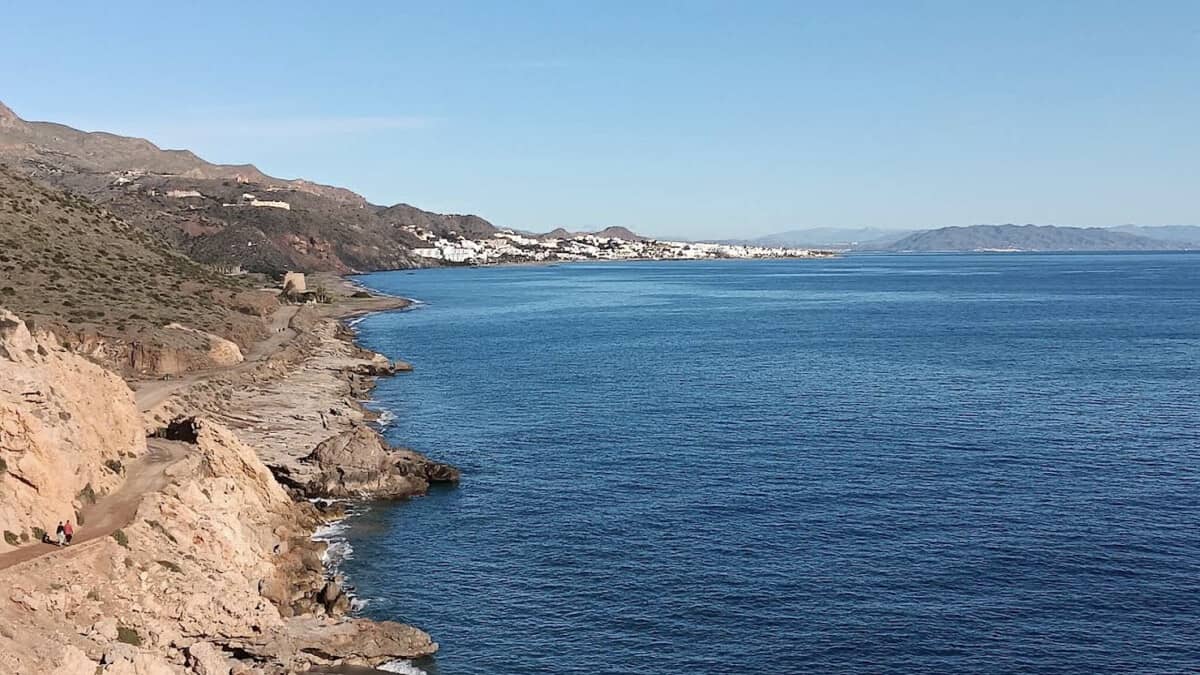
The beach hides below the AL-5106, the coast road running about 5km south from Carboneras toward Agua Amarga, at the northern edge of the Cabo de Gata-Níjar natural park. Two car parks sit by the road, one asphalt, one dirt, charging roughly 4 to 5 euros a day for a car in summer, card only, free the rest of the year. In August they run on a brutal clock: queues can start by 9:30am and the barrier can close on a full lot before 11. Come early or come in shoulder season; there is no plan B parking worth having.
From the car parks, three footpaths drop to the shore. The main one is about 700 metres and takes a quarter of an hour down over loose stone; the other two are shorter, steeper and rougher. None of them is a stroll, proper shoes beat flip-flops, and the return climb in afternoon heat is where the water you carried stops feeling optional. There is no disabled access of any kind. If the walk is not for you, the Mirador de la Playa de los Muertos up on the road gives you the postcard view for free.
The beach: Spain's clearest water on one of its steepest shores
Underfoot, Los Muertos is fine pale pebble, over a kilometre of it, backed by fenced-off dune restoration and the arid hills of the park. At the southern end, past where most people settle, two huge freestanding rocks mark the Cala del Peñón Cortado, the most sheltered corner when the wind is up and the first patch to fill in the morning. Naturists traditionally take the far left end facing the sea; with this much room, nobody minds.
The water is the whole argument. On a still day it is transparent to a depth that makes snorkelling along the rocky edges feel like flying, and the pebble seabed keeps it that way, nothing stirs up. It is the clarity that keeps winning those best-beach-in-Spain votes, and it is genuinely earned.
When to swim, and when not to
Here is the part the postcard leaves out. The beach shelves steeply, so you are in deep water within a few strides, and when any swell is running, the waves break hard directly onto that steep bank, the kind of shore-break that knocks adults off their feet. There are no lifeguards, no flags, and no help closer than the town. The currents that named the beach are still here: a bather died in August 2024, and in June 2026 a 31-year-old woman died after being unable to swim out of the current during an easterly blow.
None of this makes Los Muertos a no-swim beach. It makes it a conditions beach. Flat, windless day: swim, snorkel, stay in as long as you like. Waves or the levante wind from the east: walk the shore, photograph the Peñón, and keep it at your ankles. If the sea here is rough, the sheltered village beach at Agua Amarga, 4km south with restaurants behind it, is the graceful retreat.
A wild coast that stayed wild by inches
It is worth knowing, as you look at all this emptiness, that it nearly went another way. On the far side of Carboneras, on Algarrobico beach inside the same protected park, stands the concrete shell of a 21-storey hotel whose construction was stopped by the courts in 2006, and which has loomed over the coastline ever since as Spain's most famous planning scandal. In July 2026, twenty years on, Carboneras' council finally annulled the building licence, clearing the way at last for demolition. The wildness at Los Muertos is not an accident; it has been defended, slowly, for decades. Treat the beach accordingly: carry out everything you carry in.
Is Playa de los Muertos worth it?
Emphatically, on the right day. This is the best wild swim on the Almería coast and one of the most beautiful beaches in the country, and the awkward access is precisely what has kept it that way. Go in May, June, September or October if you can, before 9:30am if it must be August, and let the sea state make your swimming decisions for you. The name is not a curse; it is the founding rule of the place. Respect the water, and Los Muertos gives you the clearest of it in Spain. For where it sits among the country's calmest coasts, see our guide to Spain's nine quietest beaches.