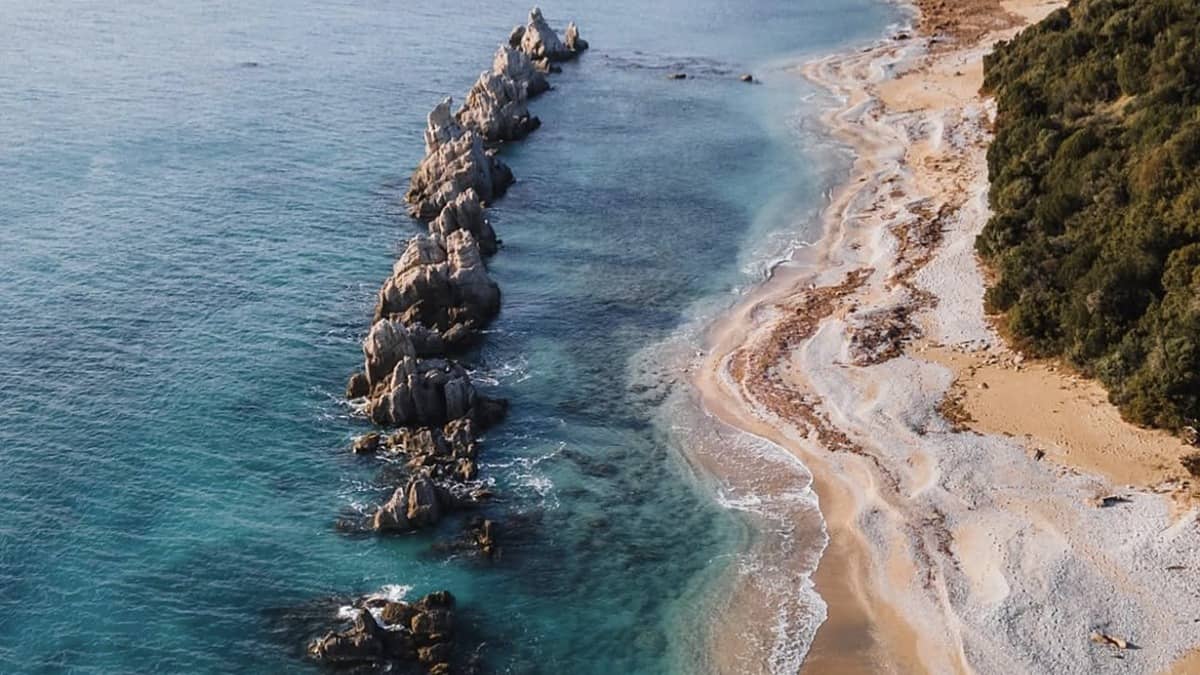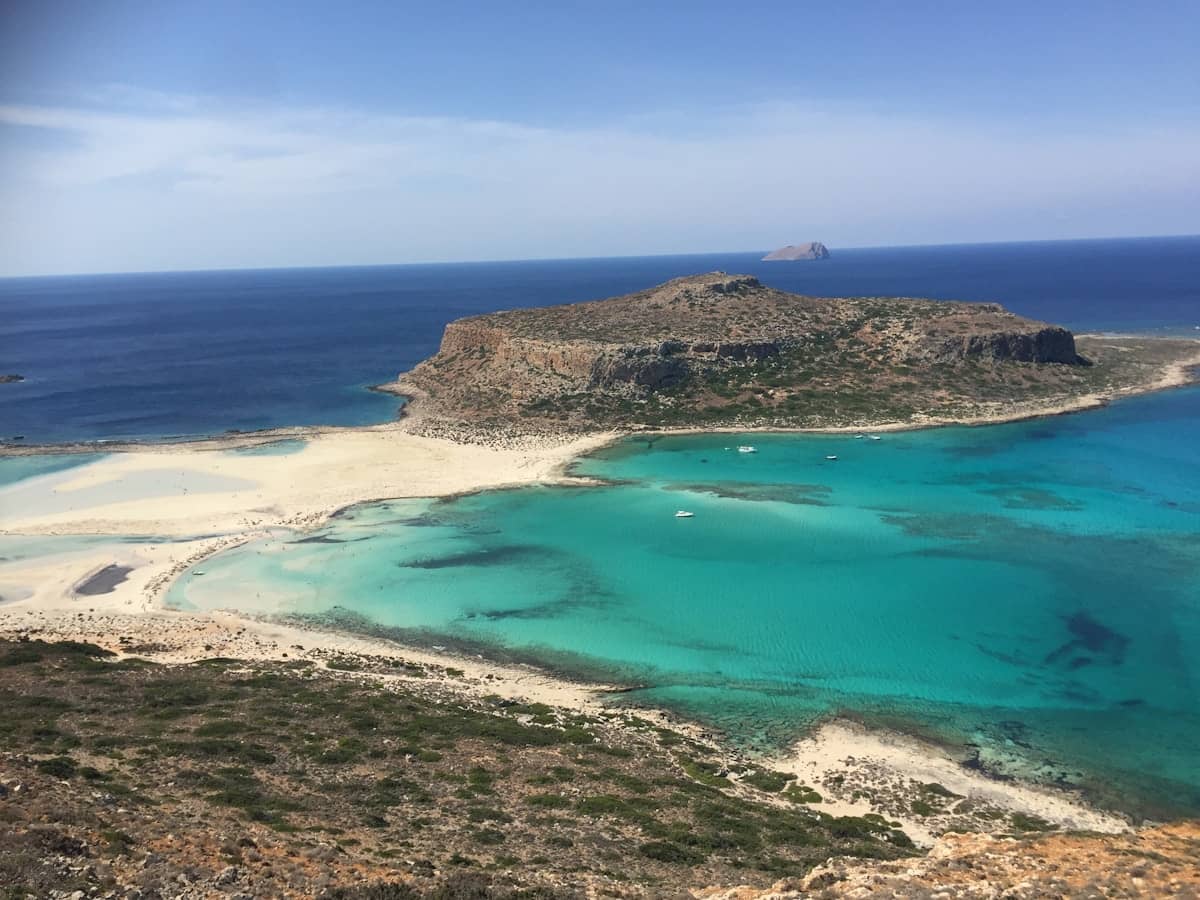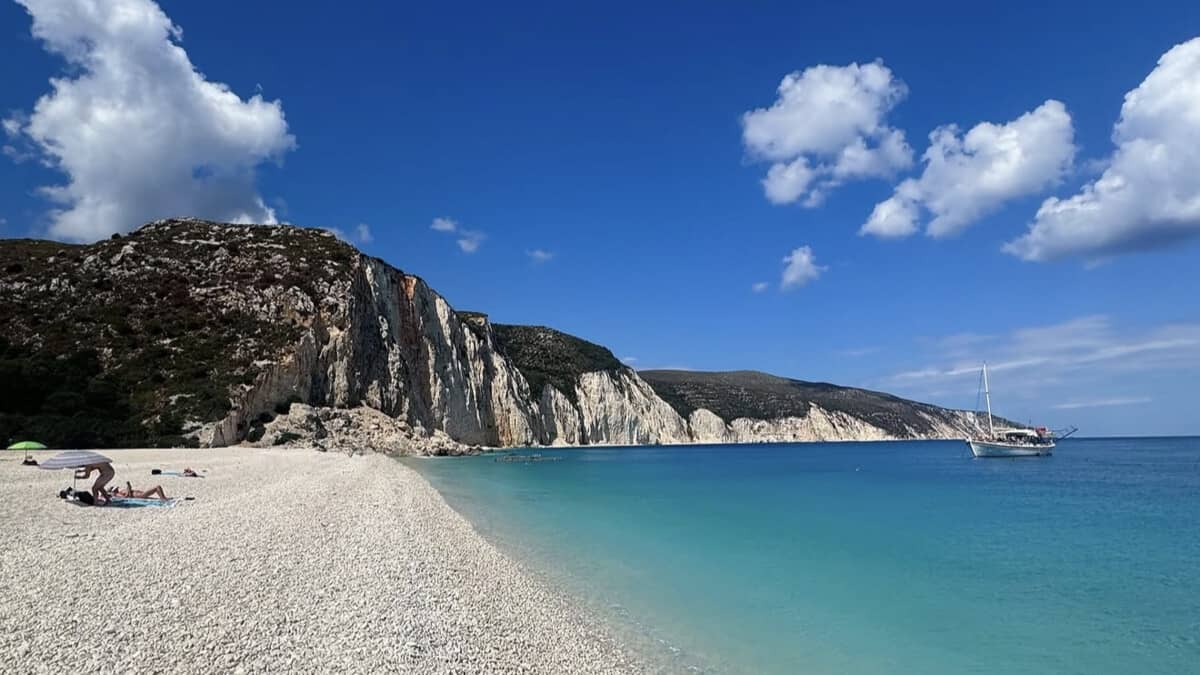
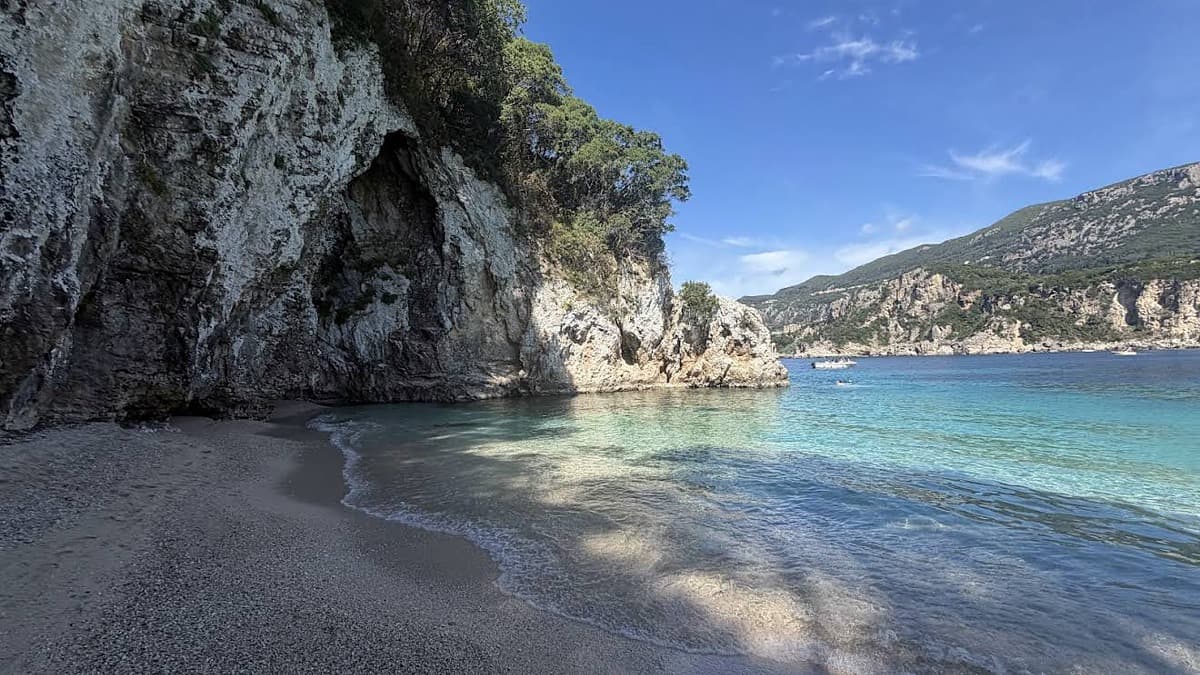
Rovinia Beach is the hidden cove near Liapades on Corfu's west coast that most travel guides mention briefly without explaining how hard it is to reach. The 700-metre forest path from the village descends through trees down to a small pebble shore tucked between limestone cliffs, with crystal-clear deep turquoise water and almost no infrastructure. The hike filters out casual day-trippers; the visitors who make it are the ones who wanted exactly this kind of beach. The trade-off is real: no facilities, limited space, and a steep walk back up afterwards.
This is what hidden beaches actually look like.
How to Find Rovinia
Rovinia Beach is on Corfu's west coast near the village of Liapades, around 20 kilometres west of Corfu Town and 40-50 minutes by car. The drive from Corfu Town runs through hilly inland roads to the western coast; the descent into Liapades village is steep with switchbacks.
Park in Liapades. Multiple options exist:
- Paid lots near the trailhead (4-5 euros daily) offer the closest access
- Free lot further away requires a longer walk
- Local advice points to the second paid lot as the best balance between convenience and road condition
Parking fills quickly in peak season. Arrive early.
From the parking area, walk to Liapades main beach (Gefyra). The trailhead is across the street from the Village Market mini-market. Follow the marked forest path 700 metres down to Rovinia. The walk takes around 15 minutes one way; the return uphill takes longer.
The trail is moderate: shaded by big trees, mostly clear, with some uneven sections. Sturdy shoes are essential. Flip-flops are uncomfortable; trail runners or hiking shoes are the right choice.
What's at the Beach
Rovinia is a small pebble cove around 100 metres long, tucked between limestone cliffs that rise dramatically on three sides. The pebbles are smooth and round; the water is exceptionally clear and deep close to shore. The bay is open to the sea on one side but sheltered enough from open Ionian swell to stay calm in normal summer conditions.
There are no facilities. No sunbeds, no umbrellas for rent, no toilets, no showers, no beach bars. Visitors bring everything they need or do without. The only seasonal exception is the kantina boat that often visits in high summer, anchoring off the beach and selling cold drinks and simple snacks; hours vary by season and weather.
Pack out everything you bring in. There is no trash collection at the beach.
The Swim
The water at Rovinia is one of the cleanest swims on Corfu. The pebble bottom does not stir up the way sand does, and the protected cove keeps the water consistently clear even on slightly windy days. The depth increases quickly close to shore; this is a deep-water swimming beach rather than a shallow wading one.
Snorkelling is excellent along the rocky base of the cliffs at either end of the beach. Reef fish, the occasional octopus, and small sea caves at the cliff bases reward the swim. Bring your own gear.
No lifeguard. No water sports allowed. The beach is genuinely quiet by Greek beach standards.
When to Go
June through September is the swim window. June and September are sweet spots with warm water (22-26°C) and quieter crowds. Mornings are essential in peak summer; arriving by 9-10am gives you space on the small pebble shore before the crowds arrive. Afternoons fill the beach completely in July-August.
The hike is more comfortable in cooler morning temperatures. The return uphill in midday August heat is genuinely tough; bring water for the climb back.
Avoid winter when the trail can be slippery from rain and most facilities in Liapades are closed.
Comparing Rovinia to Paleokastritsa
Paleokastritsa is the famous developed cliff-backed beach area 5 kilometres west of Rovinia, with multiple beaches, the cliff-top monastery, beach clubs, restaurants, and easy road access. The two beaches are completely different experiences:
Paleokastritsa for: dramatic scenery from the monastery, multiple connected beaches, full amenities, boat tours to hidden coves, easy access.
Rovinia for: a quieter swim, the hike-filter against crowds, the wild-cove atmosphere, the photographic reward.
Most visitors do both. The two together make a full Corfu west-coast day: Rovinia in the morning for the swim, Paleokastritsa for the afternoon and the monastery climb.
For the full Corfu beach lineup, see our Best Beaches in Corfu guide.
Should You Make the Hike?
Yes, if you are reasonably fit, willing to walk 30 minutes total for the experience, and you want a genuine Greek hidden cove rather than a developed beach. Rovinia is one of the most photogenic and rewarding beaches on Corfu, and the hike effort is exactly why it stays uncrowded.
No, if you have mobility issues, want a sun-and-loungers beach day, or expect Greek beaches to have facilities. The developed Corfu west-coast beaches (Glyfada, Paleokastritsa main beach) deliver those experiences without the walk.
For wider Greek beach context, see our Best Beaches in Greece guide. For the developed Corfu alternatives, the Best Beaches in Corfu guide covers Paleokastritsa, Glyfada, and the other major options.