Dubrovnik is the Croatian beach photo everyone has seen, and increasingly it is the one everyone regrets timing badly. The walled city now runs on crowd control: cruise ships are capped at two a day and around 4,000 to 4,500 disembarking passengers, ships must dock for a minimum of eight hours to stagger the flow, coaches have set drop-off slots at the Pile Gate, and from 2026 even the city walls are moving to timed advance booking. It is a remarkable place. It is also a small walled city with only a handful of small beaches, and in July it can feel like a queue with a sea view.
Istria, the peninsula at the opposite end of the country, is where Croatia keeps its actual beach coast. This is the part that Italy, Slovenia, Austria and Germany drive to, not fly to, with no cruise port and a long, deeply indented shoreline folded into hundreds of coves. Be clear about one thing up front: Istria is not an empty secret. It is one of the most visited regions in Europe by overnight stays, and in August it is genuinely busy. The difference is that the crowd is spread thin along a huge coast rather than funnelled into one Old Town, so finding your own patch is still realistic here in a way it no longer is in Dubrovnik.
Here are seven Istria beaches worth building a trip around, grouped by where they sit.
Rovinj: the prettiest base
Rovinj is Istria's showpiece, a working fishing town of tight lanes and a bell tower that looks across the water, and it happens to have two of the region's best beaches within a short walk.
Mulini Beach
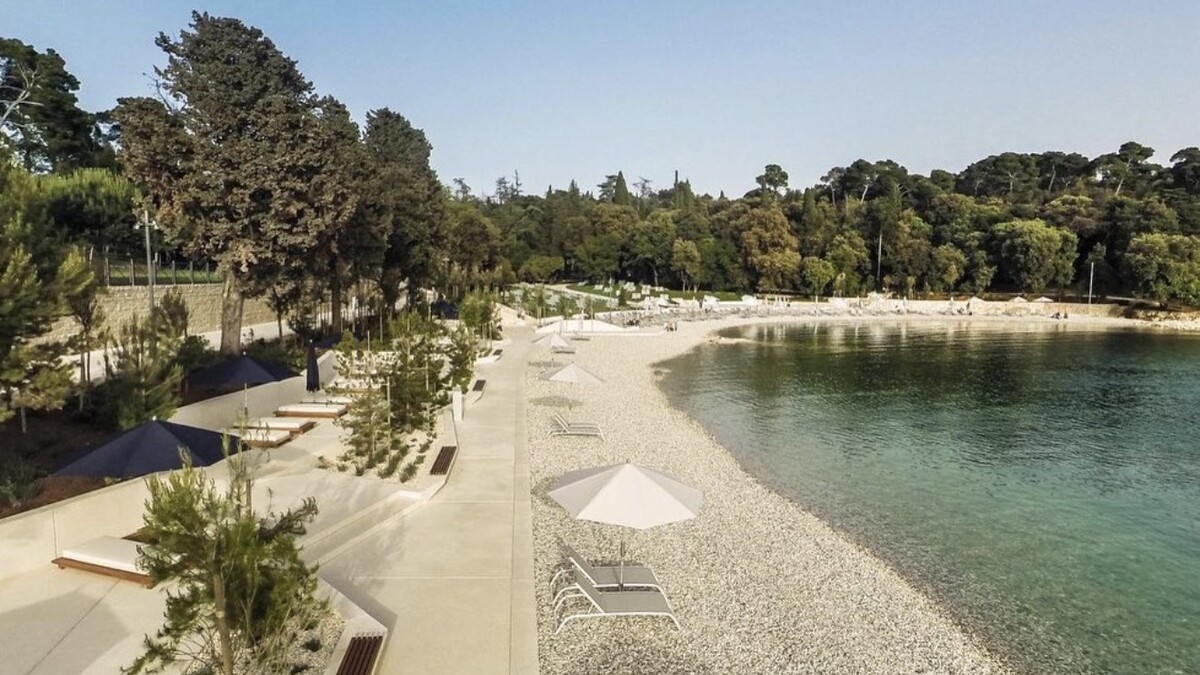
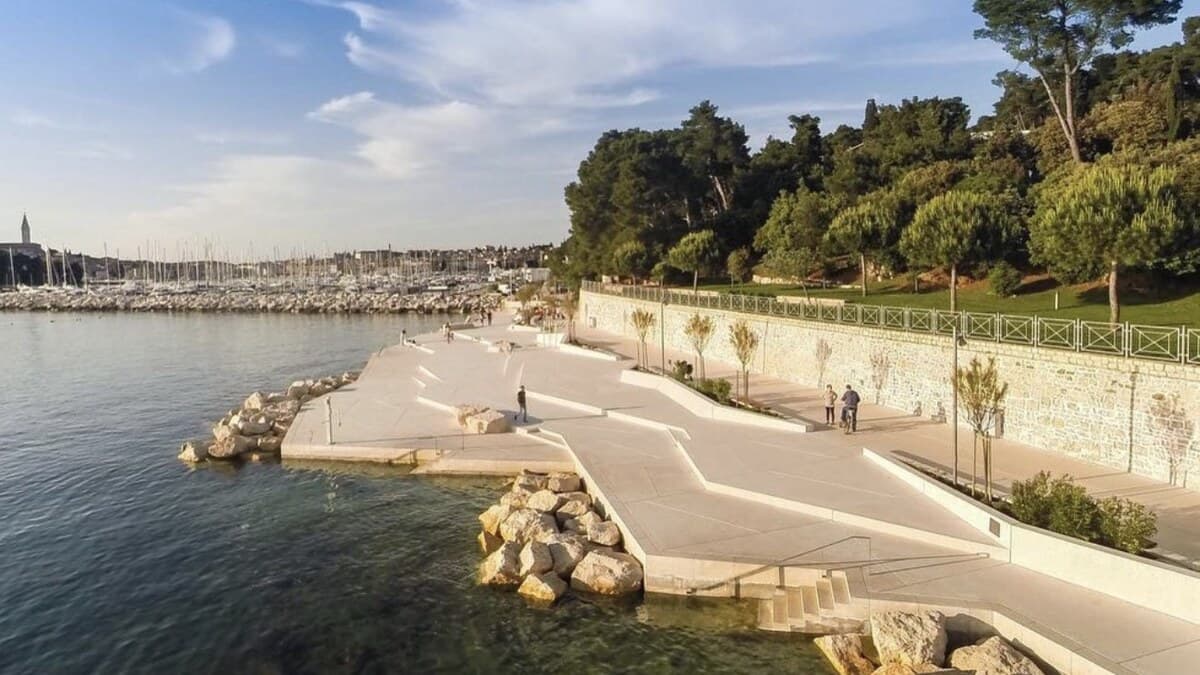
Mulini Beach is the polished one, a 15-minute walk south from the old town along a car-free seafront. It was rebuilt by Croatian architects in 2014 into a run of designed concrete sun decks and a calmer pebble bay, with a proper beach bar under a large steel pergola and the St Euphemia bell tower in the distance. The water is clear and the entry is gentle, so it suits families and anyone who would rather wade in than scramble. Loungers cost, and the front-row spots cost a lot, but you can lay a towel on a free patch of concrete because the beach itself is public. Come for the setting and a late-afternoon drink as the sun drops.
Lone Bay and the Zlatni Rt forest
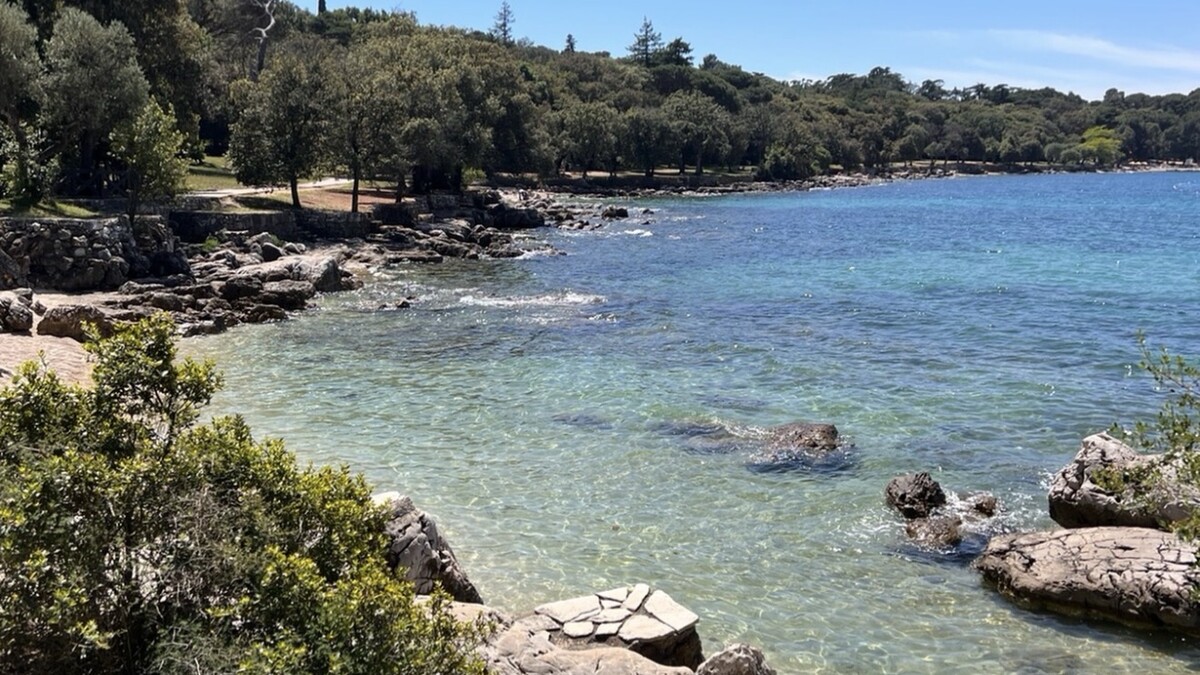
A few minutes further on from Mulini is the opposite kind of beach. Lone Bay sits inside the Zlatni Rt, or Golden Cape, forest park, a protected woodland of century-old pines and cypress laid out by an Austro-Hungarian count back in 1890. Here the shore is wide gravel and pebble backed by real shade, with a string of quiet rocky coves running on around the cape where you find your own slab of rock and swim off it. There are no big facilities and no charge, which is the whole point. Plenty of people do both in a day: loungers and lunch at Mulini, then a wander into the forest for a calmer afternoon swim.
Pula and Verudela: the widest choice
Pula anchors the south of the peninsula, a city built around a genuinely intact Roman amphitheatre, with the Verudela peninsula and its beaches a short bus ride away.
Ambrela Beach
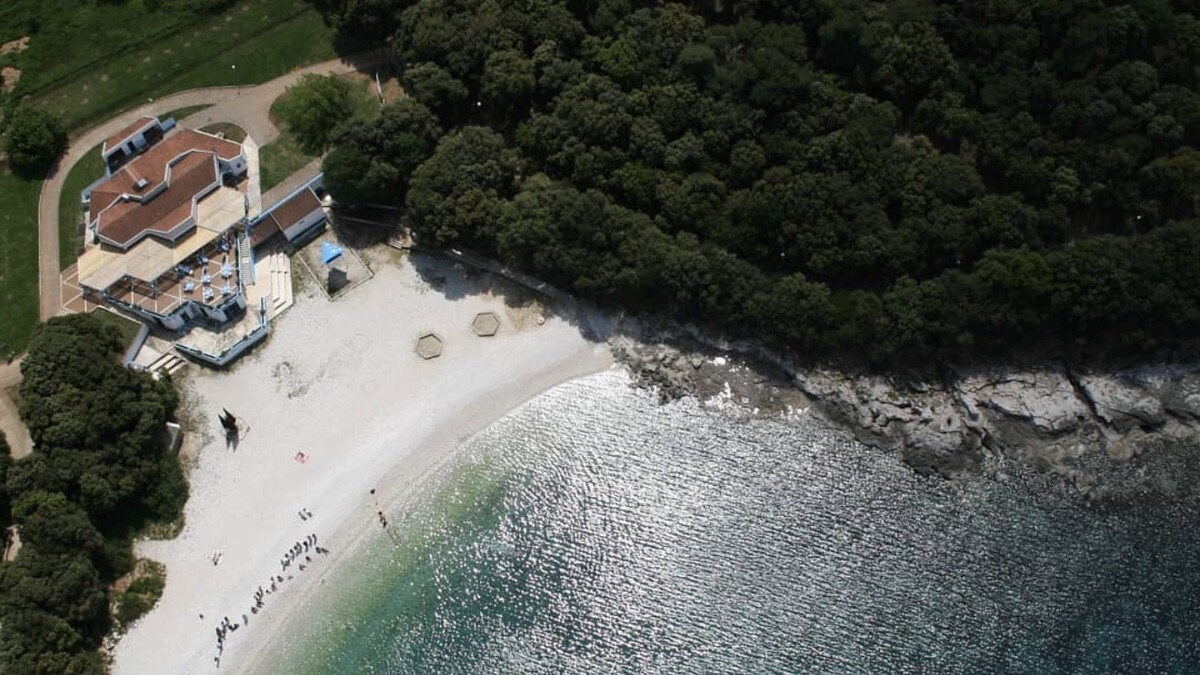
Ambrela Beach is the family-grade swimming beach on Verudela, about 4km from Pula's old town and reachable on city bus line 2. It holds a Blue Flag, has a seasonal lifeguard, and its swim zone is netted to keep boats and jet skis out of the water, which is exactly why it works with children. The surface is white pebble turning to larger rock at the edges, so water shoes earn their place, and the pines come down close enough to the shore to give you free shade. One honest note: the seabed drops off fairly quickly a short way out, so keep small swimmers in the shallow strip.
Hawaii Beach
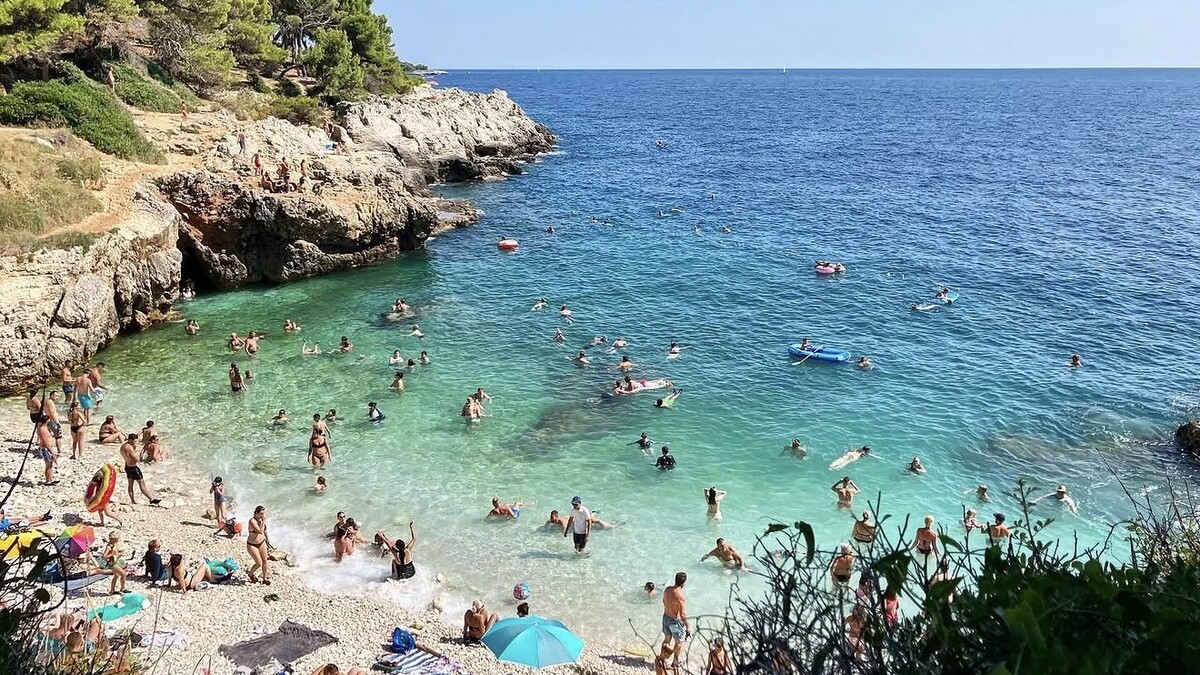
A short walk around the same Verudela peninsula is the beach locals call Hawaii, and it plays the opposite role to Ambrela. This is a cove framed by low cliffs, with white pebbles and clear turquoise water, and it draws a younger crowd for cliff jumping into the deep water below. Always check the depth yourself before any jump. There is far less in the way of facilities here than at Ambrela, so it is more of a swim-and-scramble spot than a set-up-for-the-day one, but paired with Ambrela next door it means Verudela covers both a family day and a livelier one.
Cape Kamenjak: the wild end
South of Pula, past the village of Premantura, the land runs out at Cape Kamenjak, a protected nature park of rough limestone, low scrub and some of the clearest water in Istria.
Pinizule Beach
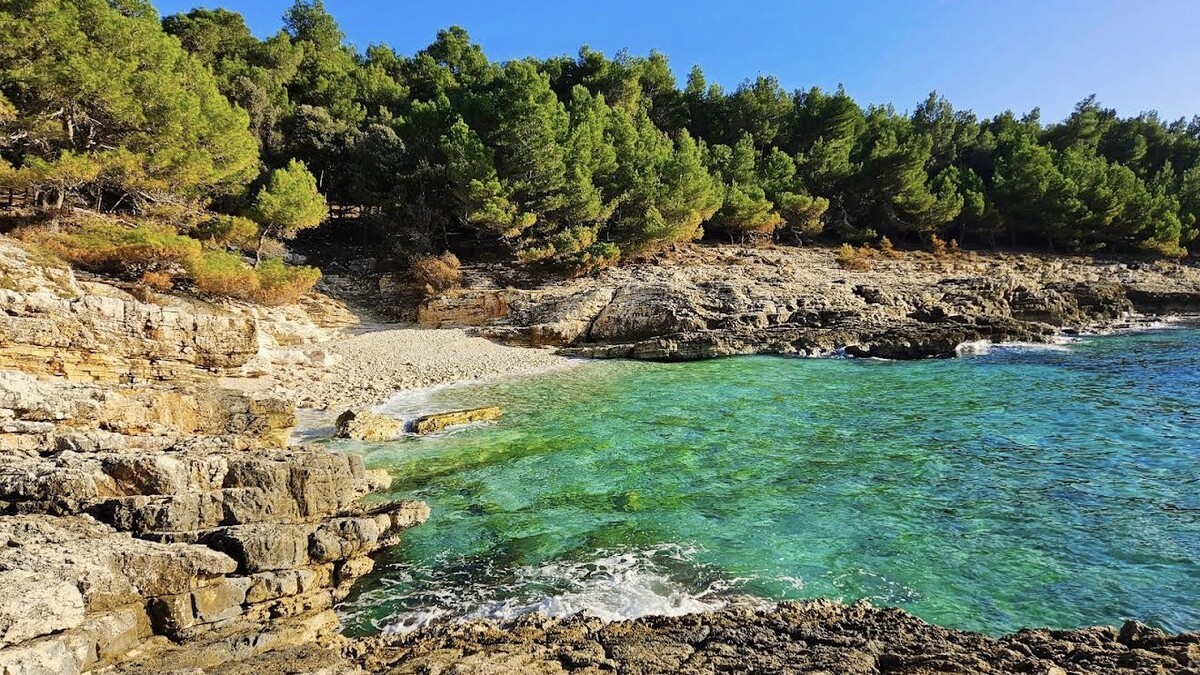
Pinizule Beach is the pick of the Kamenjak coves if you want clear water with at least some comfort. The shore is pebble and flat rock, the sea drops away clear enough to watch fish from the shallows, and unlike the wilder coves nearby there is a small beach bar and pine shade. The catch is the getting there: you pay a park entrance fee at the gate, around 20 euros per car in high summer, then drive in on rough gravel to a small parking area that fills by mid-morning. The park also caps how many cars it lets in, so the gate can shut once the cape is full. Treat it as an early start and a full day, not a quick dip, and it rewards you with the best swim in the area. Walkers and cyclists get in free.
Medulin: the sandy exception
Bijeca Beach
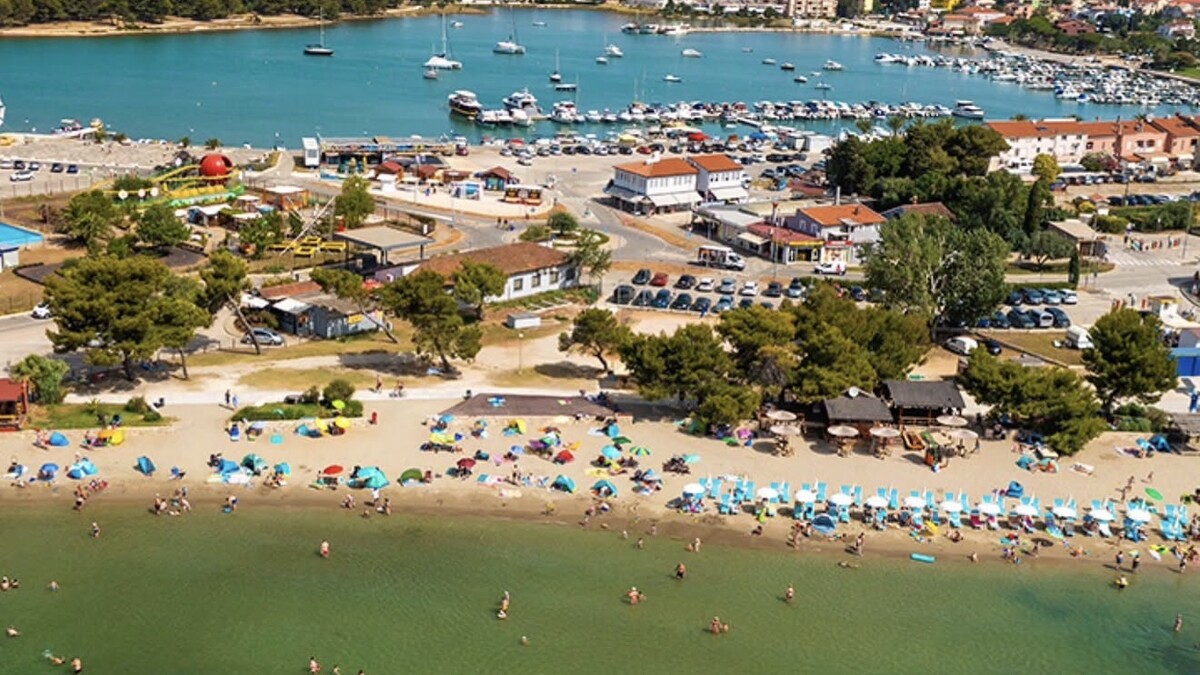
Most of Istria is pebble and rock, so Bijeca in Medulin, just east of Pula, is a genuine rarity: the best-known sandy beach in the region. The sand and the shallow water run out a long way, so small children can wade and paddle for ages before it reaches waist depth, which makes it one of the easiest family beaches on the whole coast. It gets busy for exactly that reason, so come earlier in the day in peak summer. If you are travelling with toddlers and sand matters, this is the beach to plan a day around.
Porec: the resort coast
Lanterna Beach
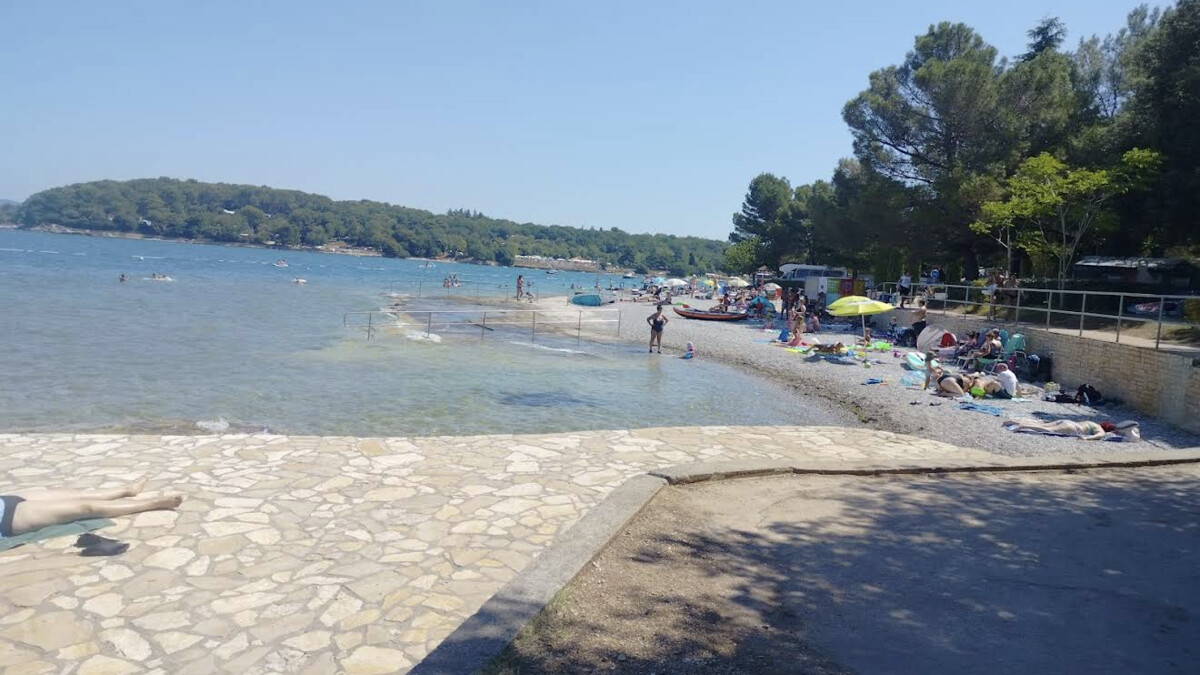
Lanterna Beach runs for about three kilometres along the front of one of Istria's biggest camping resorts, on the peninsula between Porec and Novigrad. This is a managed, facility-heavy beach rather than a wild cove: pebble and paved platforms with one groomed sandy family section, backed by pine shade, pools, a waterpark and water sports. The sea entry is gentle and there are lifeguards through the season, so it is built for families who want everything within walking distance of the water. The scale is the point. Three kilometres of shore absorbs a lot of people, so even in high season you can usually walk a few minutes and find room.
When to go, and how to keep clear of the worst crowds
Istria's season is longer and less spiky than the Dalmatian coast, partly because so much of its trade drives in rather than flies, so hotels, restaurants and cafes stay open well into spring and autumn. June and September are the sweet spot: warm sea, thinner crowds than midsummer, and the facilities still running. July and August are hot and genuinely busy, when the popular beaches fill by late morning and the Kamenjak gate can close by lunchtime.
The trick in high summer is timing and geography. Mornings before the day heats up and late afternoons after the day-trippers leave are the calm windows on any of these beaches. And because Istria's coast is so long and folded, moving even a short way from the obvious resort strip usually buys you space. For how Istria stacks up against the rest of the country, our best beaches in Croatia guide sets these coves against the Dalmatian names further south.
The verdict
If you want a Croatian beach holiday rather than a walled-city day trip, Istria is the smarter coast. Dubrovnik is a magnificent place to see once, but it is a city under crowd management with only a few small beaches, whereas Istria is a proper beach region with range: designed comfort at Mulini, free forest coves at Zlatni Rt, family swimming at Ambrela and Lanterna, clear wild water at Pinizule, and rare soft sand at Bijeca.
It is not a crowd-free escape, and anyone who sells it that way is not being straight with you. But it is a coast long enough and varied enough that, with an early start and a little willingness to walk past the first car park, you can still have the kind of Croatian beach day the postcards promise, without queuing for it.