Croatia has become one of the most popular beach destinations in Europe, and it's not hard to see why. The Adriatic coastline runs for over 1,700 kilometres, the water is absurdly clear, and there are more than a thousand islands scattered offshore. But there's one thing that catches people off guard: almost every beach in Croatia is pebble, not sand. If you're imagining yourself sinking your toes into soft white sand, you need to recalibrate your expectations or bring water shoes.
That said, the pebble beaches here are genuinely beautiful. The stones are smooth and white, the water is warm from June through September, and the backdrop of pine forests and limestone cliffs makes the whole coastline feel like a postcard. You just need to know which beaches are worth the effort to reach.
The Pebble vs Sand Question
This is the single biggest thing people get wrong about Croatian beaches. If you search for "best beaches in Croatia" expecting Caribbean-style sand, you'll be disappointed. The coastline is limestone karst, which means pebbles, rocks, and concrete swimming platforms are the norm.
There are exceptions. Nin, a small town near Zadar, has a genuine sandy beach called Queen's Beach that's popular with families. Sakarun on Dugi Otok has fine white sand and shallow turquoise water. But these are outliers. Most of the beaches on this list are pebble, and honestly, once you're floating in that crystal-clear Adriatic water, you stop caring about what's under your feet.
Stiniva Beach, Vis Island
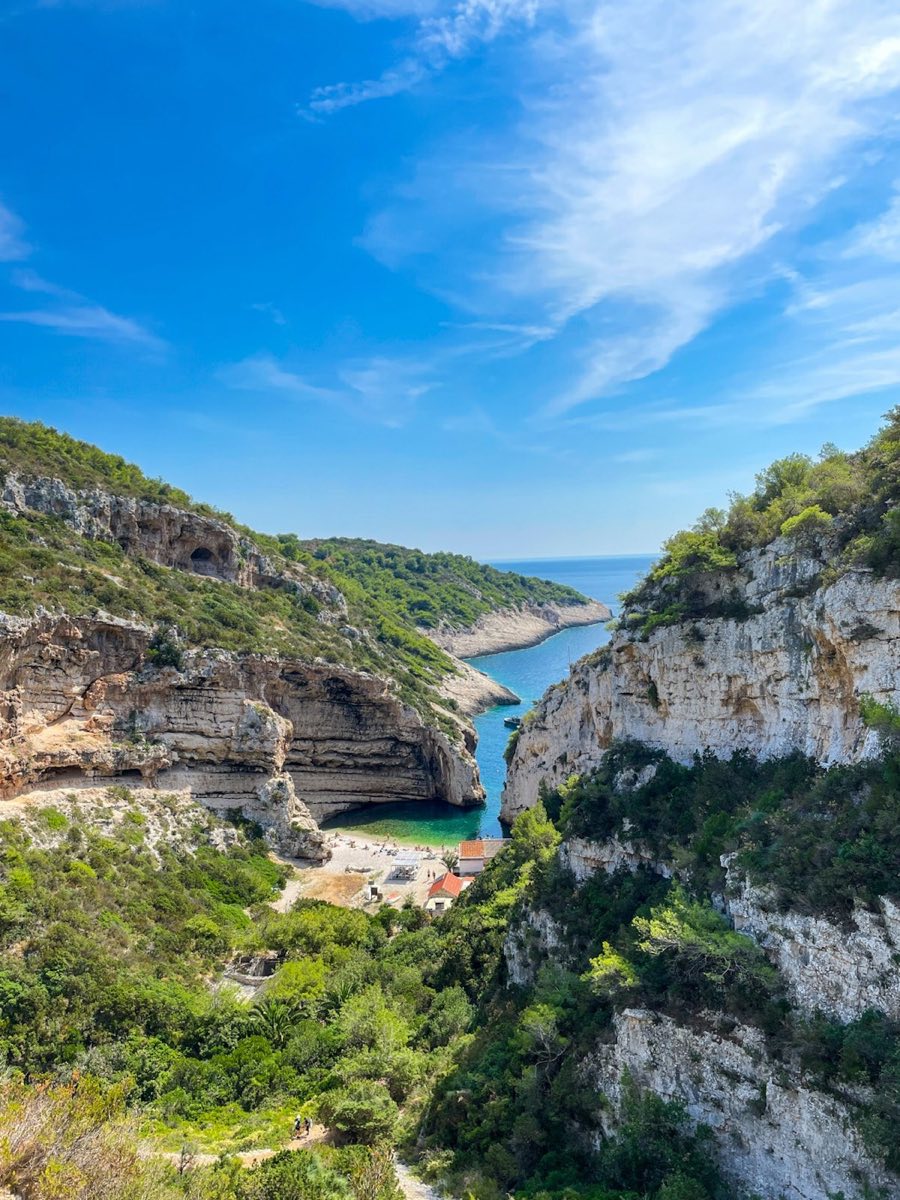
Stiniva is the kind of beach that makes you understand why people fly halfway across Europe for a cove. It's a narrow strip of white pebbles wedged between two massive cliff walls, with an opening to the sea that's barely wide enough for a small boat. We have a full review of Stiniva Beach if you want the details, but the short version is this: getting there requires either a 45-minute hike down a steep rocky path or a boat taxi from the nearby village of Rukavac.
The hike is rough. Proper shoes are essential, not flip-flops. The path is loose rock and dirt, and in summer heat it's a proper workout. But when you round the final corner and see that turquoise water framed by those towering cliffs, it makes sense. Bring your own water and snacks because there's nothing at the beach except a small seasonal bar that may or may not be open.
Zlatni Rat, Bol (Brac Island)
Zlatni Rat is Croatia's most photographed beach, and you've almost certainly seen it even if you don't recognise the name. It's a narrow tongue of white pebbles that juts out into the sea, changing shape slightly with the wind and currents. From the air, it looks incredible. At ground level, it's still beautiful but extremely busy in July and August.
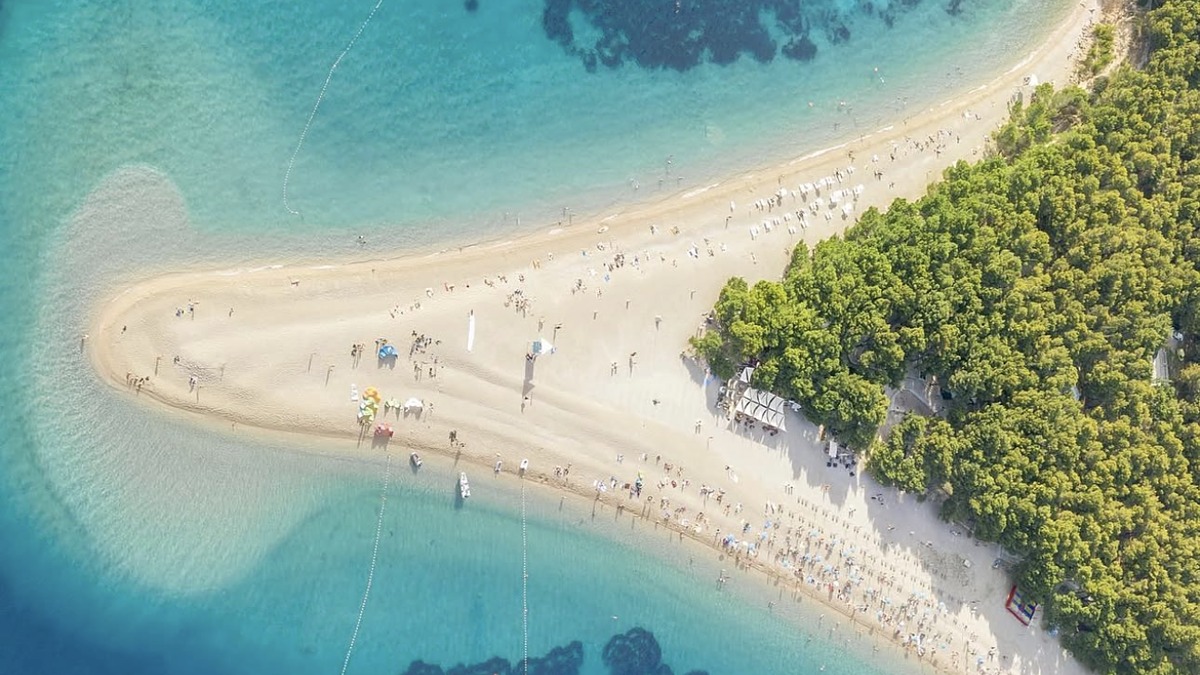
The beach is a 15-minute walk from Bol town along a pine-shaded promenade. Sunbed rentals cost around 13 to 20 euros for a pair, and there are a few beach bars selling drinks at resort prices. The left side of the horn tends to be calmer, the right side catches more wind and is popular with windsurfers and kitesurfers. Water shoes help on the pebbles, especially near the waterline where smaller stones shift underfoot.
Getting to Brac is straightforward. Catamarans run from Split multiple times daily, and the crossing takes about 50 minutes. Book ahead in peak season because morning boats fill up fast.
Sakarun Beach, Dugi Otok
If you're specifically looking for sand and shallow water, Sakarun is probably the closest Croatia gets to a classic Mediterranean beach. The sand is fine and white, the water is shallow enough for young kids to wade safely, and the bay is sheltered by pines that provide natural shade.
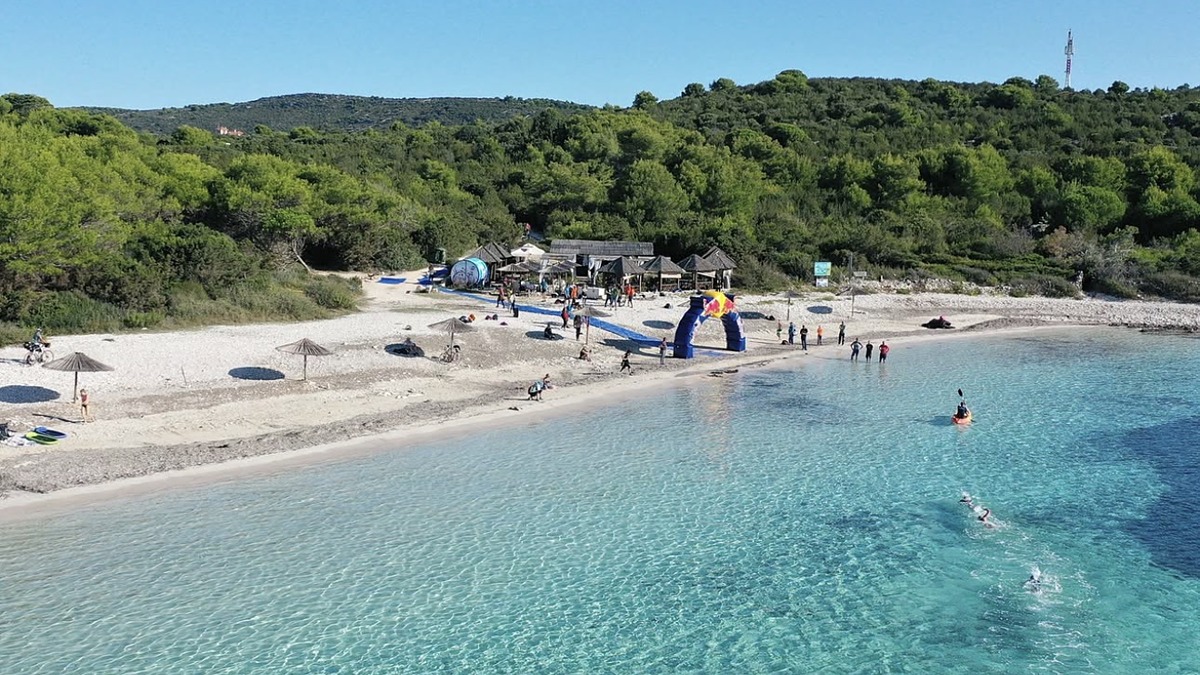
The catch is getting there. Dugi Otok is one of the longer islands in the Zadar archipelago, and Sakarun is at the far northwestern end. You'll need a ferry from Zadar to Brbinj (about 1 hour 20 minutes) and then a 30-minute drive across the island on a road that gets progressively narrower. There's a dirt car park near the beach that charges around 4 to 7 euros, and from there it's a short walk through the trees.
Because of the effort involved, Sakarun stays quieter than the mainland beaches. Go on a weekday in June or September and you might share it with a handful of other people. Peak August is a different story, but even then it's manageable compared to Zlatni Rat or Banje.
Punta Rata, Brela
Brela is a small resort town about an hour south of Split on the Makarska Riviera, and Punta Rata is the main beach. It regularly appears on "best beaches in Europe" lists, which has made it busier over the years, but it's still gorgeous.
The beach is fine white pebbles backed by Aleppo pines, with the Biokovo mountain range rising dramatically behind the town. The iconic feature is a large rock formation just offshore that's become a symbol of the whole Makarska coast. Water clarity here is exceptional, and the swimming is excellent with a gradual entry into deeper water.
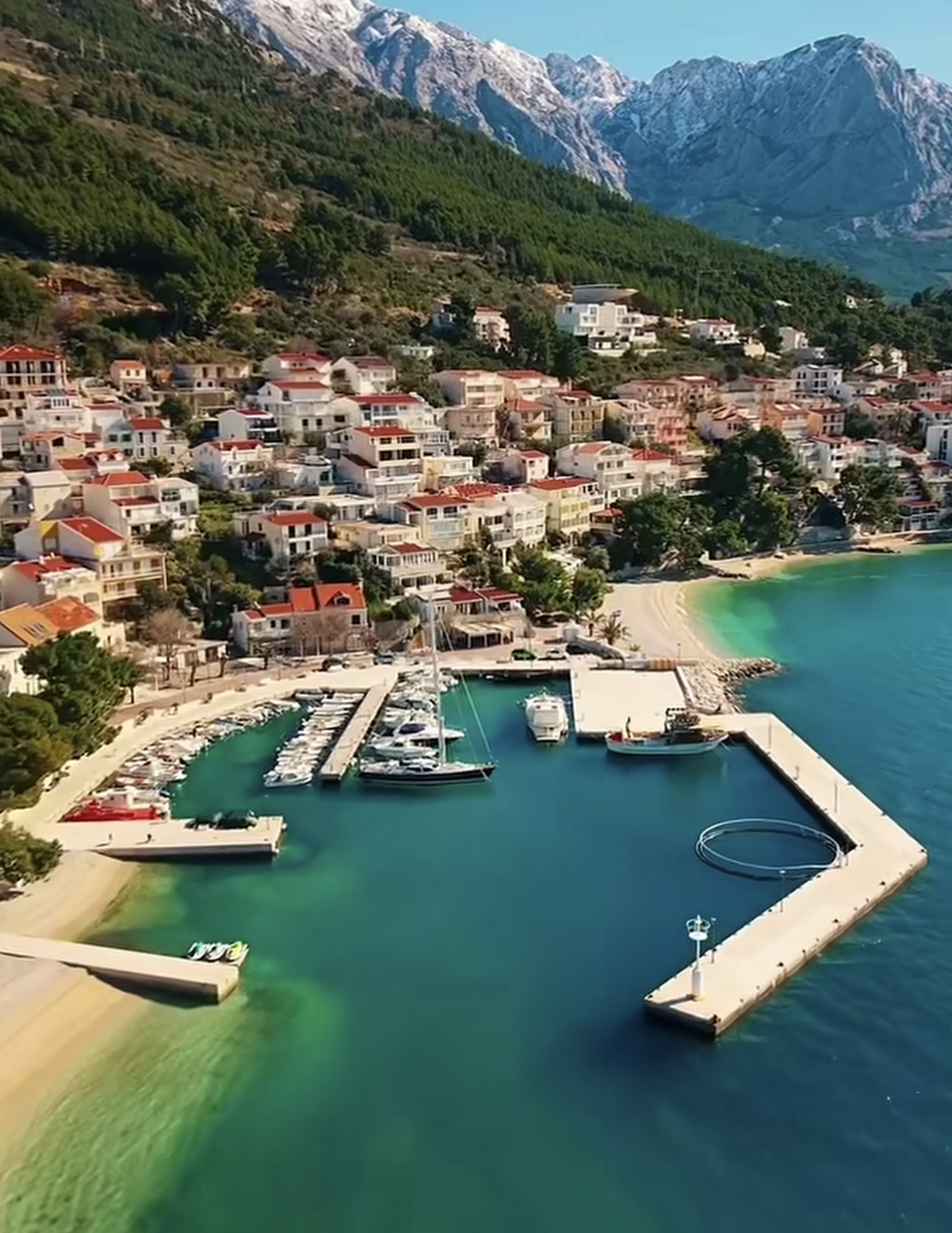
Brela itself is quieter than Split or Dubrovnik, with a handful of restaurants and konobas along the waterfront. Accommodation is mostly apartments and small hotels, so the vibe is relaxed. Parking can be tricky in August, with the main lots filling up by mid-morning. There's a paid lot on the edge of town (about 1 euro per hour) that's your best bet.
Banje Beach, Dubrovnik
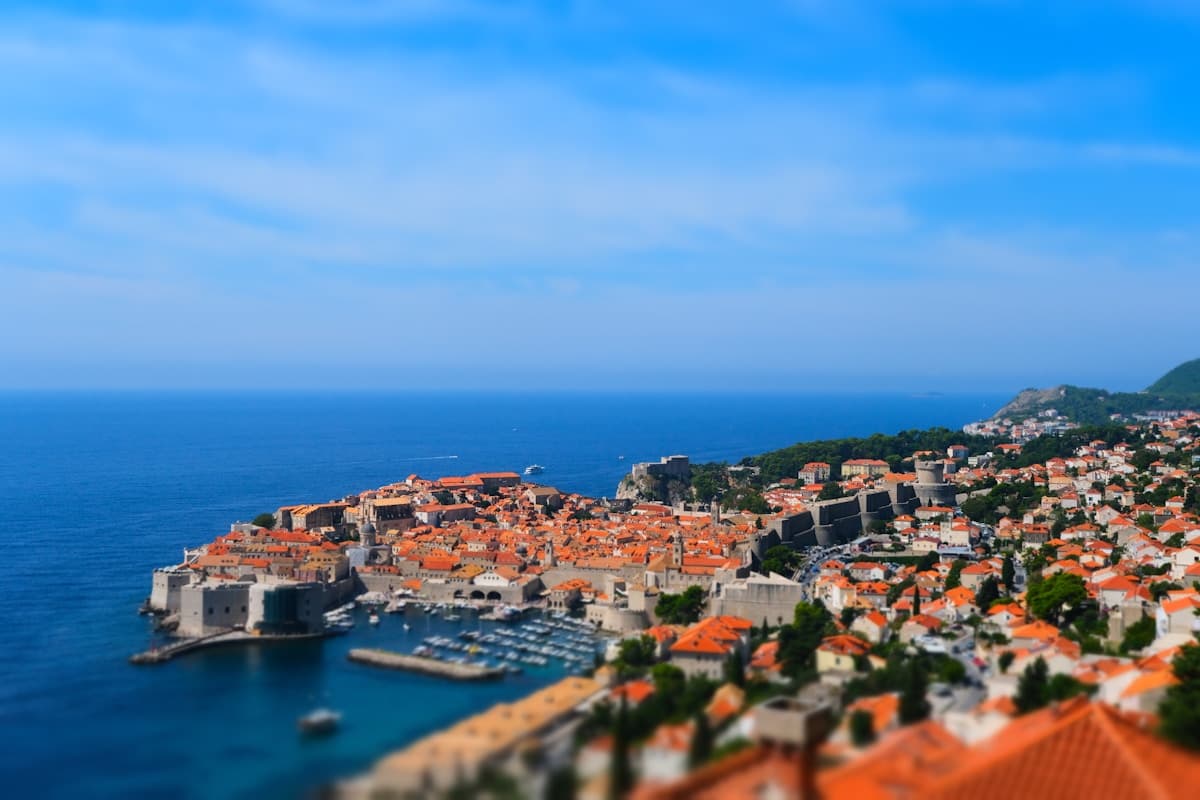
Banje is the most famous beach in Dubrovnik, sitting just outside the old town walls with a view straight across to Lokrum Island. It's the beach you see in every Dubrovnik travel photo, and in real life the setting genuinely lives up to it.
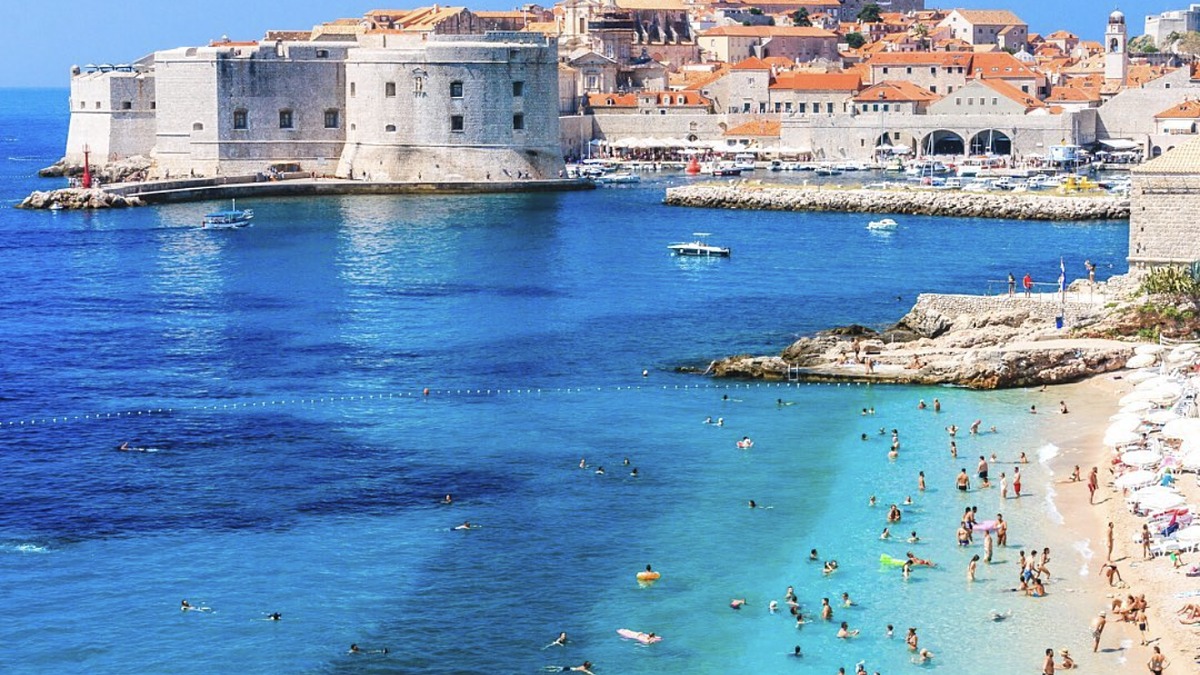
The reality on the ground is more complicated. Banje gets extremely crowded from June through September, and the front section of the beach is claimed by a beach club that charges 27 to 40 euros for a sunbed. The free public section at the back is smaller and fills up early. The pebbles are large and uncomfortable without shoes, and there's limited shade.
If you're visiting Dubrovnik for a day, Banje is worth seeing for the views alone. But if you're actually looking for a relaxing beach day, consider taking the ferry to Lokrum Island instead. It's a 15-minute boat ride, the swimming is better, and the crowds thin out once you walk past the main dock area. If you're planning a wider beach holiday in Europe, Dubrovnik works as a starting point but the best swimming is on the islands.
Zrce Beach, Pag Island
Zrce is not really a beach in the traditional sense. It's Croatia's answer to Ibiza, a 350-metre strip of pebbles lined with open-air clubs that pump music from June through September. If you want a quiet swim, go somewhere else. If you want to dance on the beach at 3am with a drink in your hand, Zrce is your spot.
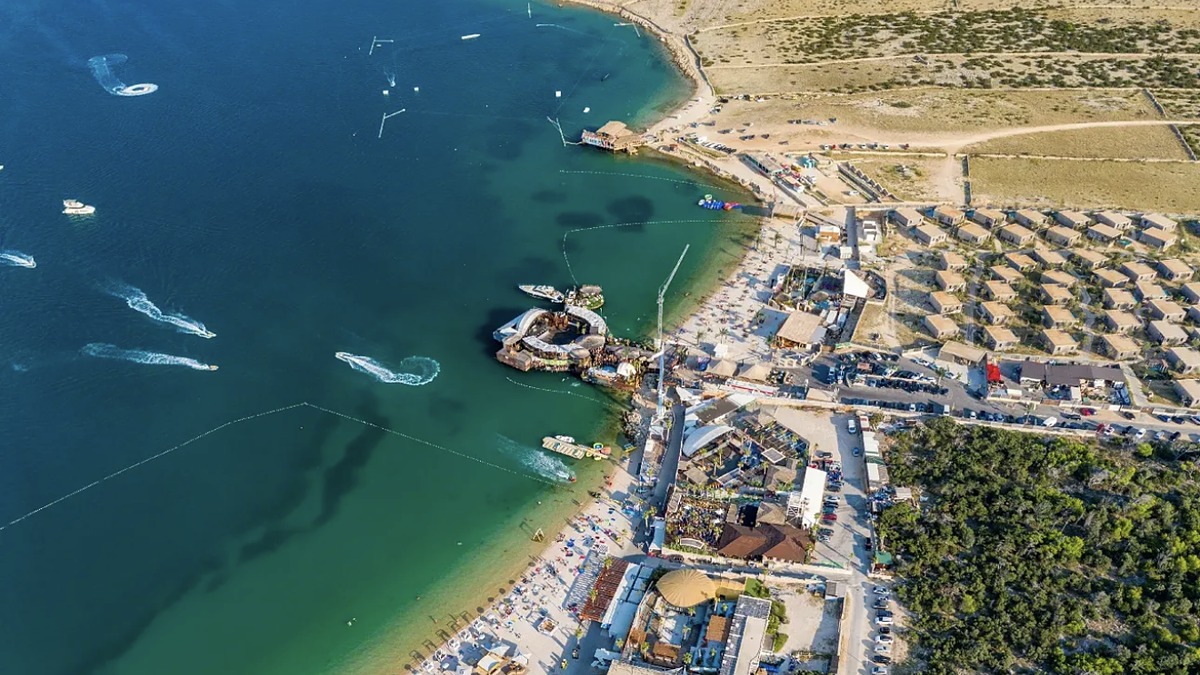
The main clubs, Papaya, Aquarius, and Noa, host international DJs throughout summer, and festival events run from late June through mid-August. Cover charges range from free on quiet weeknights to 27+ euros for headline events. Drinks are expensive by Croatian standards, roughly 7 to 11 euros for a cocktail.
The beach itself is fine for swimming during the day before the music starts. Water is clean, entry is pebbly but manageable, and there are sunbed areas if you want to recover from the night before. Getting to Pag requires either a ferry from the mainland or driving across the Pag Bridge from the north.
Lubenice Beach, Cres Island
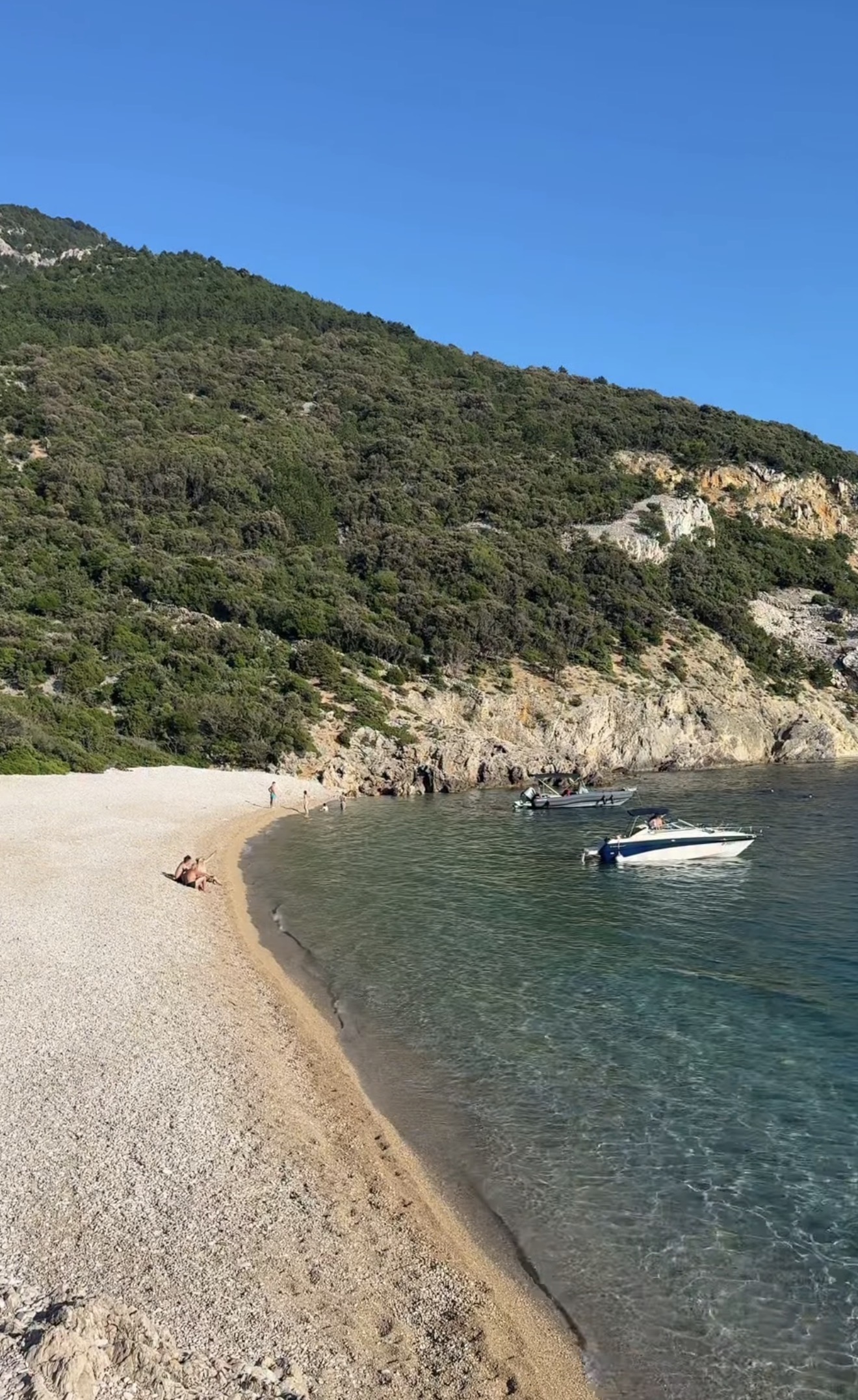
Lubenice is the kind of beach that rewards effort. The medieval hilltop village of Lubenice sits 378 metres above the sea on the western coast of Cres, and the beach below requires a steep 45-minute hike down a rocky trail. There's no path in the polished sense. It's more of a goat track through scrub and loose stone, and the return climb in afternoon heat is genuinely tough.
What you get at the bottom is a pristine white pebble beach with water so clear you can see the seabed 10 metres out. There's no infrastructure. No bars, no sunbeds, no toilets. Bring everything you need and take everything back up. The isolation is the whole point, and on most days you'll share it with maybe a dozen people.
Queen's Beach, Nin
Nin is a small town near Zadar that sits on a shallow lagoon, and Queen's Beach (Kraljicina Plaza) is one of the very few genuine sandy beaches on the Croatian coast. The sand is fine and golden, the water is warm and knee-deep for a long way out, and there's therapeutic mud at the north end that people smear on themselves for supposed health benefits.
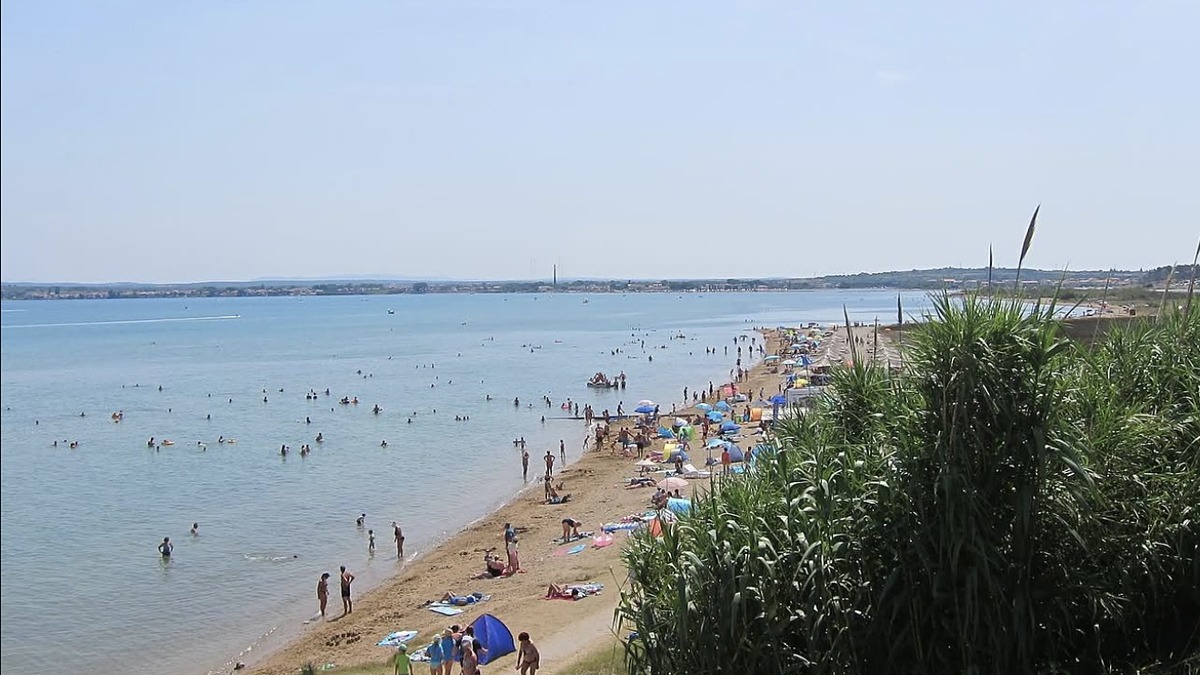
This is a family beach through and through. The shallow water makes it safe for small children, and the sandy bottom means no water shoes required. It gets busy in summer but the beach stretches for about a kilometre, so there's usually space. Parking is straightforward in several lots near the beach, typically around 4 to 5 euros for the day.
Nin itself is worth a wander. The old town sits on a tiny island connected by two stone bridges, and the Church of the Holy Cross is one of the smallest cathedrals in the world. After the beach, grab a plate of grilled squid at one of the restaurants on the waterfront. It's one of the more affordable spots on the coast.
Getting Around: Ferries and Island Hopping
If you want to see the best Croatian beaches, you'll need to take at least one ferry. Jadrolinija runs the main routes connecting Split, Hvar, Brac, Vis, and Korcula. In summer, catamarans are frequent but they fill up fast, especially morning departures from Split. Book online at least a few days ahead for foot passenger tickets, and a week or more ahead if you're bringing a car.
A rough summer timetable from Split: boats to Brac run roughly every hour or two, Hvar gets 4 to 6 catamarans daily, and Vis has 2 to 3 daily connections. Journey times range from 50 minutes to Brac up to 2 hours 20 minutes to Vis on the slower car ferry.
Renting a scooter on the islands is often easier than a car, especially on smaller islands where roads are narrow. Expect to pay around 27 to 40 euros per day for a scooter rental.
When to Go and What to Expect
Croatian beaches are best from mid-June through September. Water temperatures climb to 24 to 26 degrees by July, which is comfortable for long swims without a wetsuit. The coast gets full sun and very little rain from June through August.
The trade-off is crowds. Dubrovnik and Split are overwhelmed in July and August, with cruise ship passengers flooding the old towns daily. Beaches near these cities feel the pressure. If you can travel in June or September, you'll get warm water, lower prices, and significantly fewer people. Even the popular island beaches feel different when the schools go back.
For a wider Mediterranean comparison, check our guide to the busiest beaches in the world to understand just how packed some of these spots get at peak season. If you're considering other Adriatic options, Navagio Beach on Zakynthos across in Greece is another dramatic limestone cove worth comparing.
Single-Beach Reviews We've Published
For the headline stops on this list, our single-beach reviews go deeper on conditions, parking, and timing: