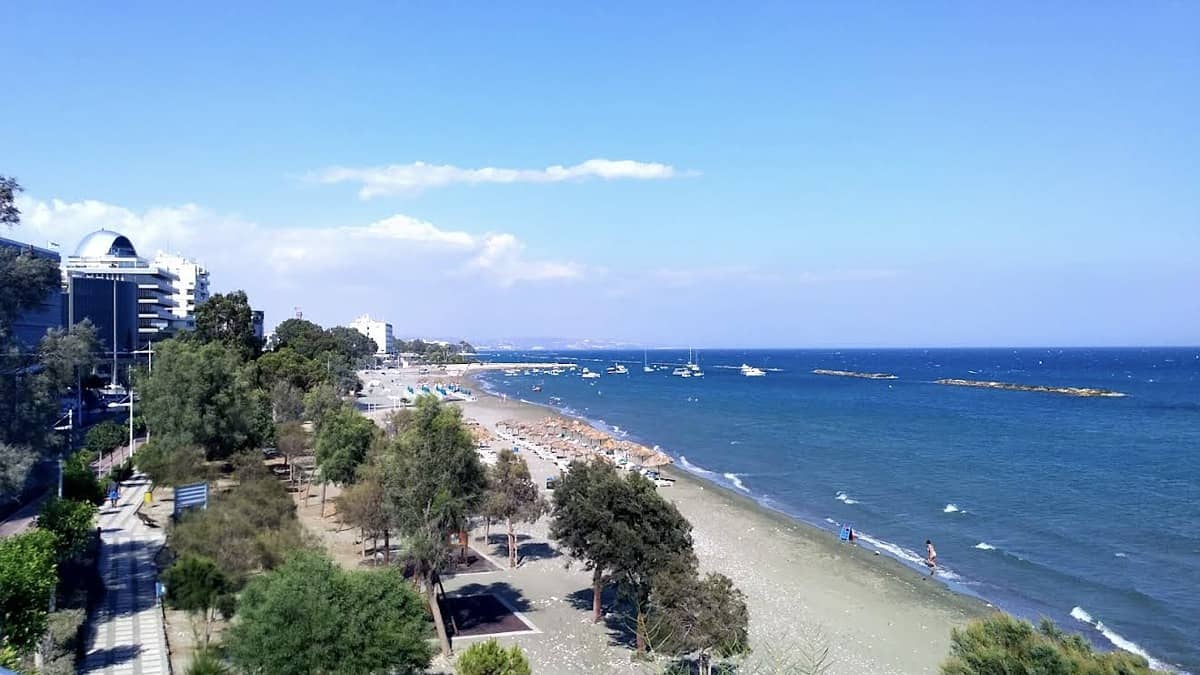
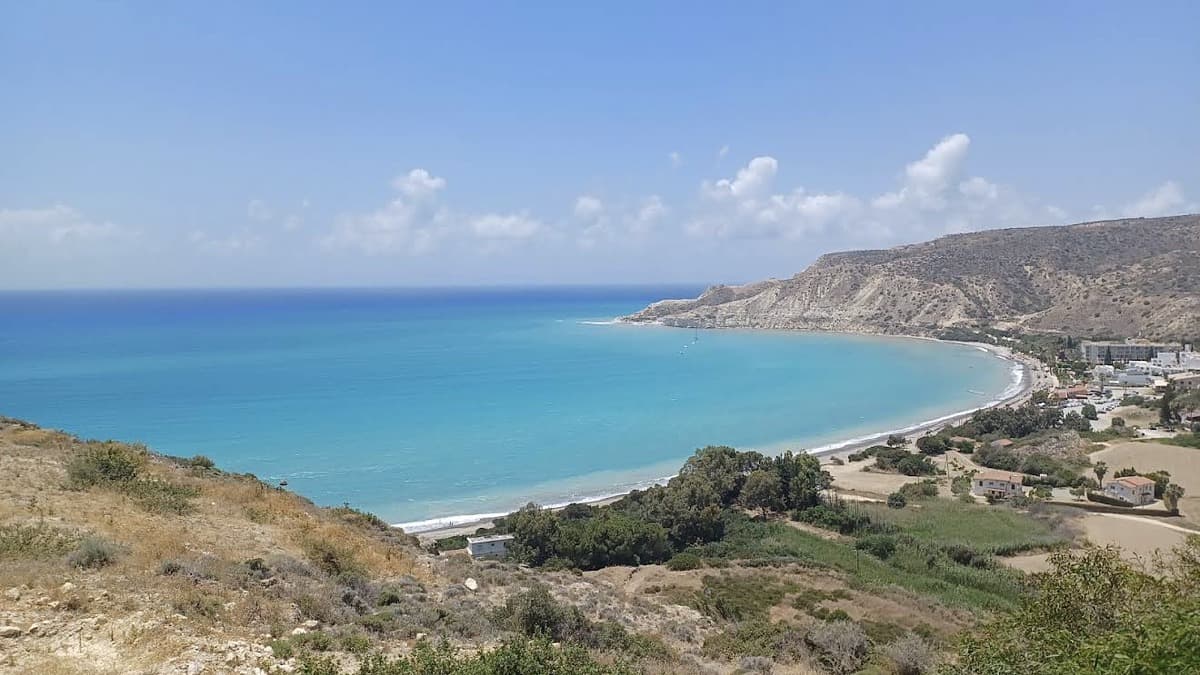
Cyprus has dozens of Blue Flag beaches and Pissouri quietly out-performs most of them. The 1.5-kilometre bay sits midway between Limassol and Paphos, with the chalk-white cliffs of Cape Aspro rising on one end, a sand-and-pebble shore that swims like a pool, lifeguards on duty through summer, and a village behind the beach that has not given itself over to mass tourism the way Ayia Napa or Coral Bay have. Most travel articles route visitors to the more famous beaches further east; Pissouri is what local residents drive to when they want a swim without the crowds.
Halfway between two big tourist towns, on its own terms.
Where Pissouri Sits
Pissouri Beach is on the south coast of Cyprus, 30 kilometres west of Limassol and 35 east of Paphos. From either town, take the A6 motorway and exit at Pissouri (signed). The road descends from the inland village down to Pissouri Bay, with the beach at the bottom of the valley between two white-cliff headlands. Paphos International Airport is around 30 minutes by car; Larnaca Airport is around 75 minutes.
This midway location makes Pissouri a practical base for visitors who want both Paphos archaeology (Tombs of the Kings, Paphos Mosaics, Akamas Peninsula) and Limassol restaurants without committing to either as the main destination. The village of Pissouri itself sits in the hills above the bay and has tavernas, small hotels, and the kind of quiet pace that disappears from Cyprus's more developed beach towns.
The Cape Aspro Backdrop
The white cliffs on the western end of the bay are Cape Aspro ("white cape" in Greek), chalk-and-limestone walls rising around 100 metres above the sea. The eastern end has lower but similar white outcrops. The combination of brilliant white cliffs and Mediterranean blue is the reason Pissouri photographs better than most Cyprus beaches; the contrast is dramatic.
Sunset on the cliffs is the best evening view in the area. The light hits the white limestone at an angle that turns the cliffs gold-pink while the sea stays deep blue. A walk along the beach toward Cape Aspro in late afternoon, then dinner at one of the village tavernas above the bay, is one of the better Cyprus evening plans.
What the Swim Actually Delivers
The beach is around 1.5 kilometres long, 90 metres wide, with fine golden sand at the water's edge transitioning to small smooth pebbles toward the back. The bottom is sandy in the middle of the bay and gentle for swimming; the rocky sections at both ends are where the snorkelling lives.
Water is consistently clean (Blue Flag certified) and the bay is sheltered from open-sea swell by the headlands on both sides. Lifeguards staff the beach from April through October, with full lifesaving equipment and first aid available. The water is generally calm; this is one of the easier family swims on the south coast.
For snorkellers, the rocky ends are the better section. Marine life includes wrasse, parrotfish, the occasional octopus, and sea bream. Visibility is best in the morning before the breeze picks up.
Facilities and Watersports
Pissouri is well-developed without feeling overdeveloped. Public toilets and showers, changing rooms, sun beds and umbrellas available daily, a watersports centre offering jet skis, kayaks, banana rides, wakeboarding, paddleboarding, parasailing, and the option of small boat hire for self-guided coast exploration. A beach volleyball court sits at the back of the central section.
Several beach bars and tavernas line the access road behind the beach, with the village of Pissouri offering more restaurants and shops a 5-minute drive uphill. The combination of beach-level amenities and a proper village behind is unusual on the Cyprus south coast and is part of why Pissouri keeps showing up on best-of lists.
How Pissouri Compares to Other Cyprus Beaches
Pissouri sits in the top tier of Cyprus beaches alongside Nissi Beach (Ayia Napa), Fig Tree Bay (Protaras), Lara Beach (Akamas), and Coral Bay (Paphos). Each has its angle.
Pissouri wins on natural setting (the white cliffs), Blue Flag consistency, and the midway location.
Nissi Beach wins on famous turquoise water and party scene, but is much busier.
Fig Tree Bay wins on golden sand and family resort infrastructure.
Lara Beach wins on remote isolation and turtle nesting (May-October), but has no facilities.
Coral Bay wins on accessibility from Paphos and a busy resort scene.
For the visitor who wants a balanced beach (clean water, natural drama, family-friendly, lifeguards, decent restaurants nearby, not party-oriented), Pissouri is the answer.
When to Visit
May through October is the swim season. June to mid-September is peak with sea temperatures of 25-27°C and the busiest crowds. May and October are the sweet spots with warm water still and quieter beach. Lifeguards staff April-October. Mornings before 10am are calmest. Avoid August weekends if you are sensitive to crowds.
Should You Visit?
Yes, especially if you are based in Limassol or Paphos and want a Blue Flag beach day with proper facilities and natural drama. Pissouri is the kind of beach that does not need to advertise itself; it consistently delivers. For wider Cyprus context, our other Cyprus coverage includes the Akti Olympion B Beach review covering the central Limassol Blue Flag option for visitors who want to stay closer to the city.