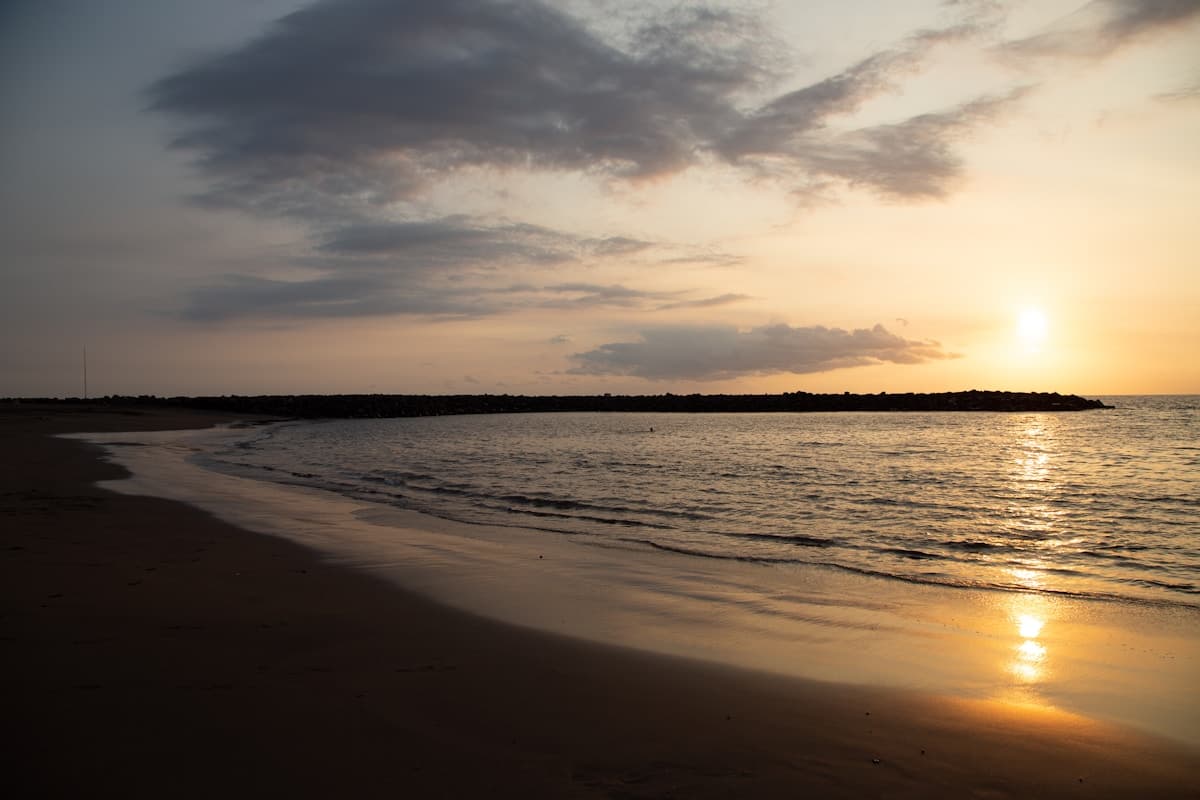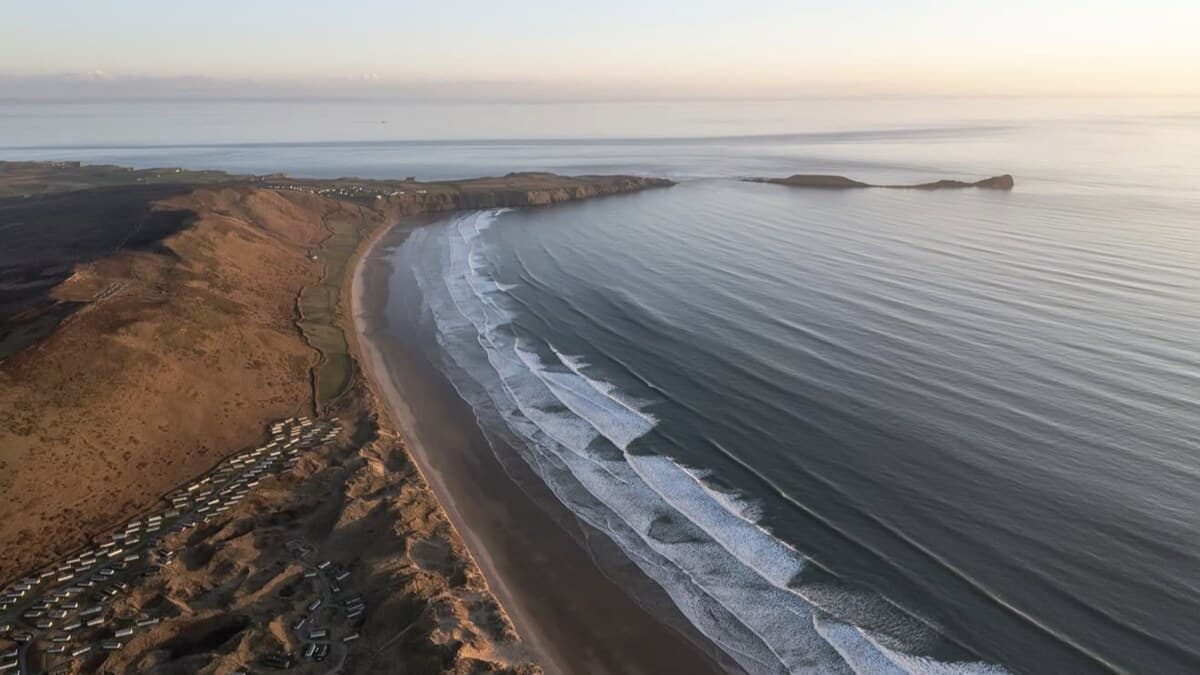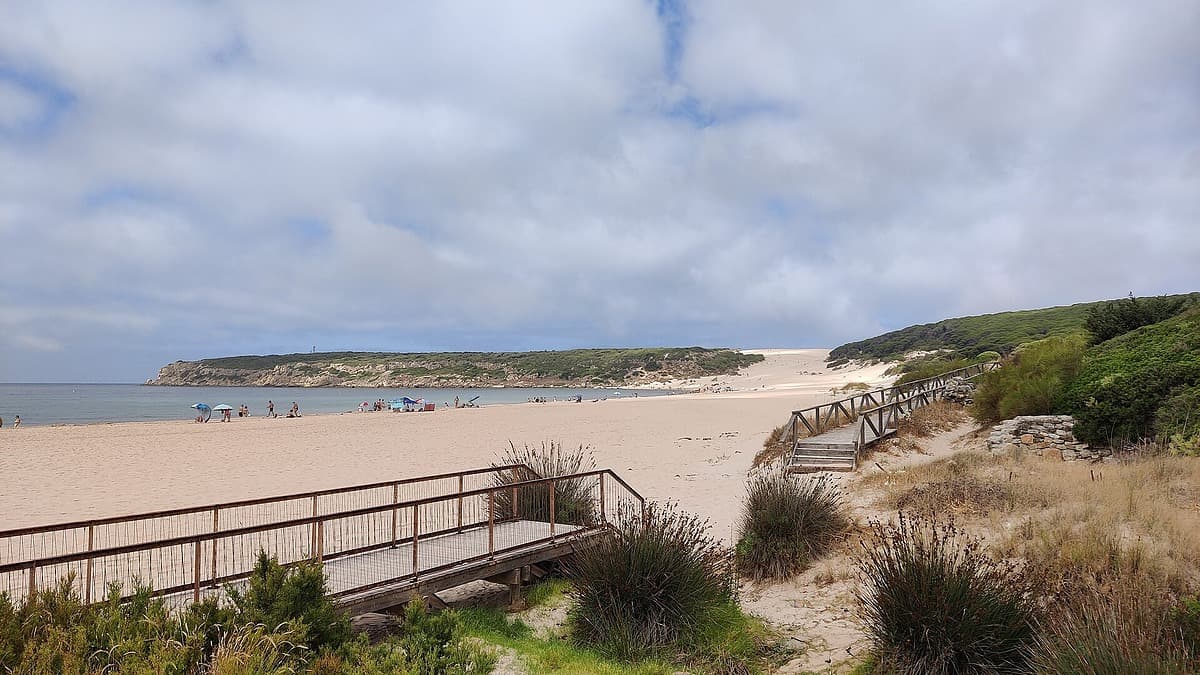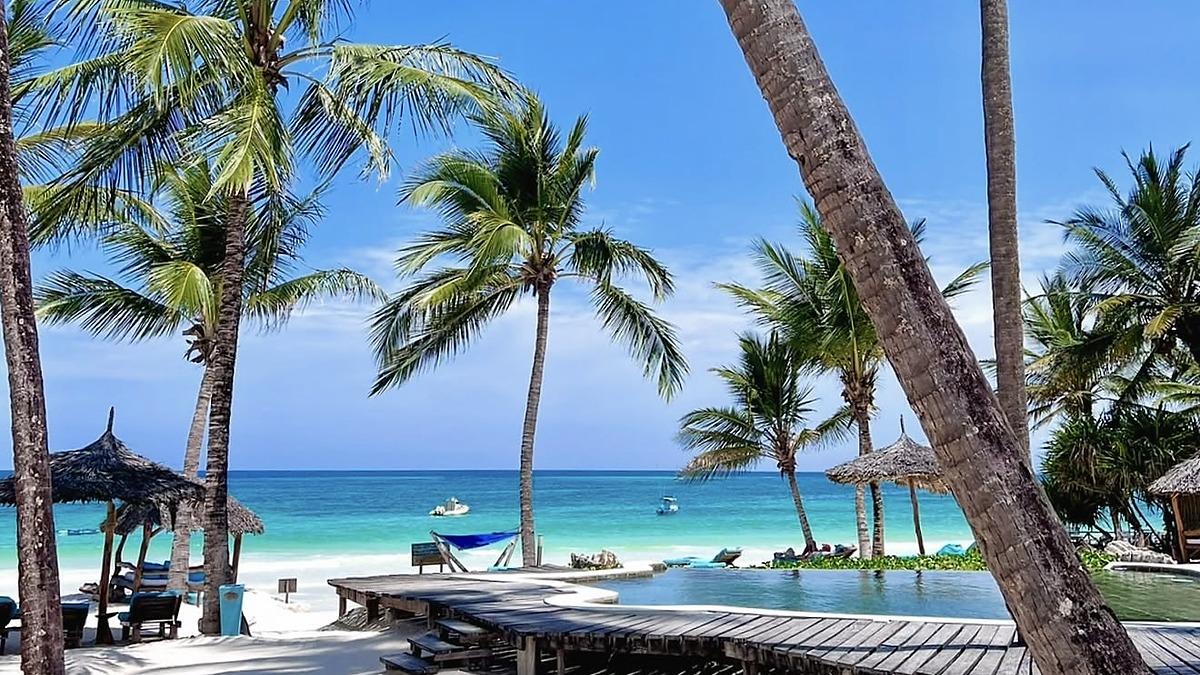
The short rains on Kenya's south coast should be over by mid-December, and through January and February the Indian Ocean off Diani Beach averages about 28°C. That puts Diani at the top of the best beach holidays in January and February 2027, and it has company: Palawan and Boracay in the Philippine dry season, Curaçao as its rains ease, Costa Rica in its driest months, and Cape Town and Tasmania at the height of summer.
The two months are not interchangeable. Boracay is noticeably wetter in January than in February, Curaçao's rainy season ends in January, and Tasmania's beaches quieten when the school year starts on 4 February. So the eight picks below run roughly in that order, from the places that are ready on New Year's Day to the ones worth saving for February.
For the Canaries, Cape Verde, the Red Sea, Jamaica, Mexico, Thailand, Aruba, Hawaii and Florida, see our winter sun beaches guide, which runs from December to March.
Where is hot in January and February: sea and air at a glance
Sea temperatures are January and February averages for 2022 to 2026, measured just offshore in NOAA's daily satellite record (OISST). Air temperatures are 1991 to 2020 average daily highs at the nearest station listed, as each country's weather service reports them to the World Meteorological Organization. None is published for Diani or Providenciales.
| Beach | Best month | Sea (°C), Jan / Feb | Air high (°C), Jan / Feb | The drawback |
|---|---|---|---|---|
| Diani Beach, Kenya | January or February | 28 / 28 | Not published | A tidal lagoon, and health checks before you fly |
| El Nido and Boracay, Philippines | January for El Nido, February for Boracay | 27 to 28 | 31 (Puerto Princesa), 29 (Roxas City) | Near Boracay, rain falls on about 11 days in January |
| Camps Bay, Cape Town | January or February | 15 to 16 | 27 / 27 | A cold Atlantic and a strong afternoon wind |
| Kokomo Beach, Curaçao | February | 27 / 27 | 30 / 30 | Sunbeds and lunch cost extra |
| Playa Flamingo, Costa Rica | January or February, mornings | 28 / 28 | 35 / 36 (Liberia) | Windy afternoons, windiest in February |
| Wineglass Bay, Tasmania | February, after the 4th | 18 / 19 | 22 / 22 (Bicheno) | A cool sea and a steep walk in |
| Grace Bay, Turks and Caicos | January or February | 26 / 26 | Not published | High-season prices, choppier water |
| Flamenco Beach, Culebra, Puerto Rico | February, on a weekday | 27 / 27 | 28 / 29 (San Juan) | Ferry seats sell out |
January: Diani Beach, Kenya, between the rains
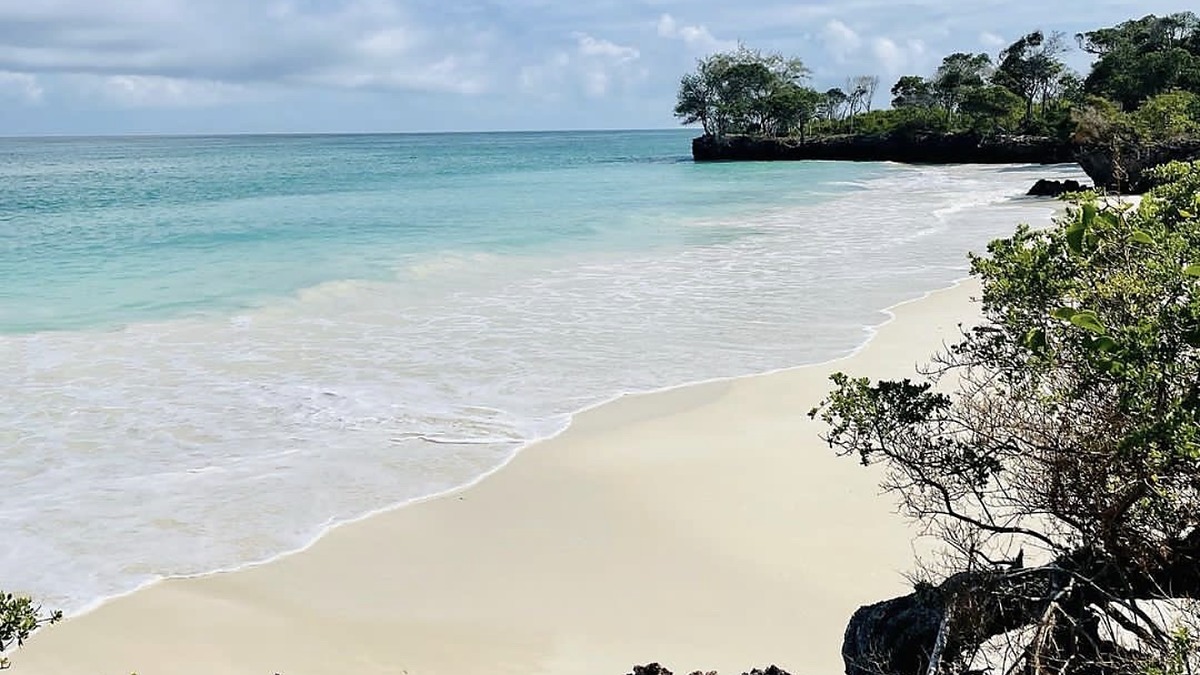
Diani is 17km of white sand on Kenya's south coast, about 30km south of Mombasa, with a reef offshore that holds a shallow lagoon against the beach. The tide decides the day: at low water you wade across sand and seagrass, at high water you swim. Our Diani Beach review has the tide pattern and the public access roads.
January and February fall between Kenya's two rainy seasons. In Kwale County the short rains should be above average this year and end in the first or second week of December, according to Kenya Met's October to December 2026 forecast. The long rains wait for March to May.
Getting there is simpler than it was. Since August 2024 the Dongo Kundu bypass has let drivers from Mombasa's Moi airport skip the Likoni ferry, so the 50km drive takes about an hour. From Nairobi, Safarilink flies to Ukunda airstrip twice a day in 1 hour 10 to 1 hour 15 minutes.
Sort the paperwork early. British visitors need an electronic travel authorisation, the FCDO says, and Kenya recommends applying at least two weeks ahead. Since 5 October 2026 most visitors must also buy Kenyan government travel health insurance as part of it. TravelHealthPro rates malaria risk as high everywhere in Kenya except Nairobi and the highlands above 2,500m.
Ebola is the other thing to watch. The World Health Organization's 6 November 2026 report counts nine confirmed cases in Kenya, two of them fatal, all in one cluster linked to a case imported from the Democratic Republic of the Congo. There has been no new case since 19 October and no evidence of spread outside that cluster. The US CDC places the cases in Nairobi, and WHO advises against travel restrictions. Read TravelHealthPro's Kenya page again before you pay a deposit and before you fly. Checked November 2026.
From East Africa, the same northern-winter dry season stretches across to the Philippines, though it does not reach every island at the same pace.
The Philippines in January and February: El Nido first, Boracay from February
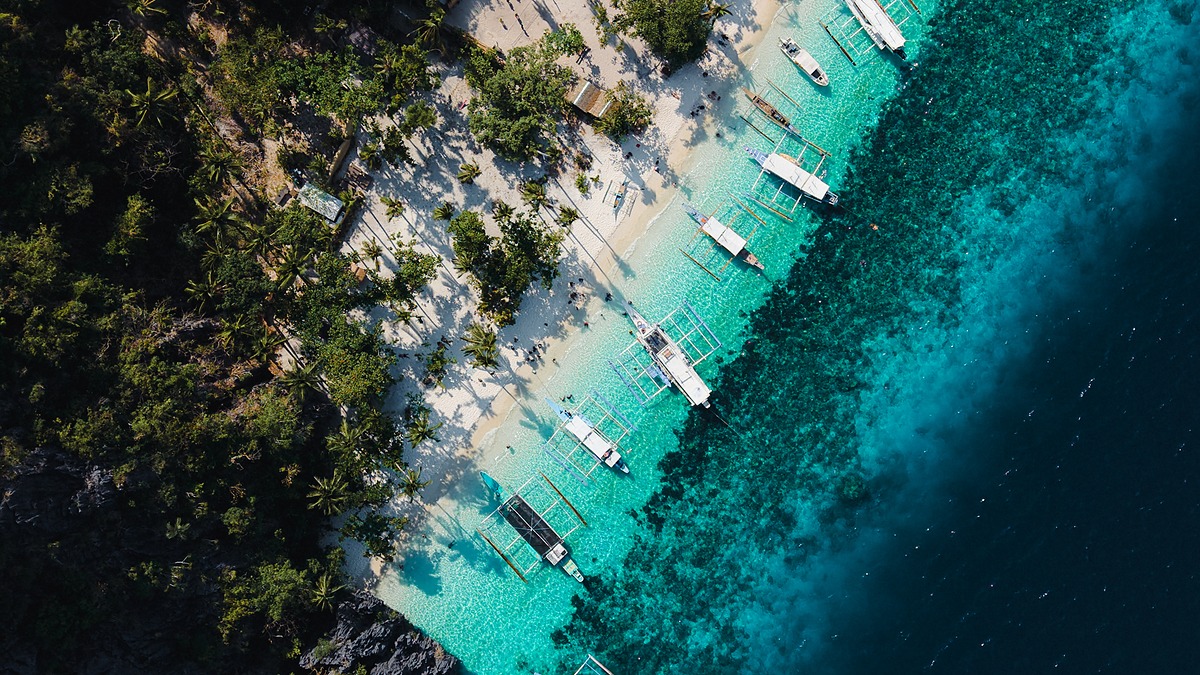
On Palawan the dry months start with the amihan, the north-east monsoon, which PAGASA, the Philippine weather service, declared under way on 27 October 2026. Coron, the nearest station to El Nido in the WMO's 1991 to 2020 normals, averages rain on only about two days in January. Further south, Palawan's capital, Puerto Princesa, averages a 31°C high in both months.
That makes January the month for El Nido's island-hopping boats. Entalula Beach, a strip of sand below limestone cliffs on the Tour B island-hopping route around Bacuit Bay, is reachable only by boat. Our guide to the best beaches in El Nido sets it beside Nacpan, Las Cabanas and the other island stops.
Boracay, almost 300km to the east, dries out later. Roxas City, the nearest station on Panay, averages rain on about 11 days in January and 8 in February. Go in February and head for Puka Beach, about 800m of coarse, shell-strewn sand at the island's northern tip. Rough Guides warns that the waves there can be stronger, so it suits confident swimmers.
Register and prepay the terminal and environmental fees online through Boracay iPass, a joint project of the Aklan provincial government, the municipality of Malay and local partners. It issues a QR code that is scanned at Caticlan port. Checked November 2026. Our Boracay beaches guide compares the island's other stretches of sand.
South of the equator, January is high summer, and in Cape Town the heat comes with almost no rain at all.
Cape Town in January and February: summer heat, a 16°C sea
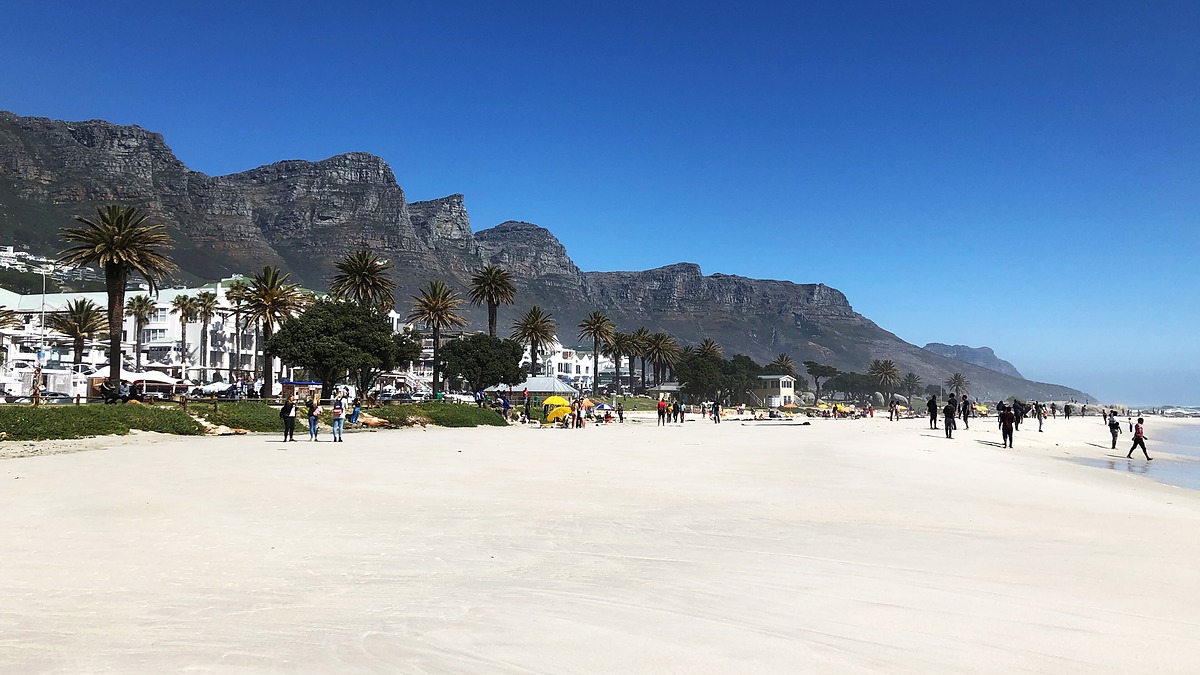
Camps Bay is a white-sand beach below the Twelve Apostles, with palms along the promenade and restaurants facing the sunset. In January and February it is in the middle of a long, dry summer: Cape Town airport averages a 27°C high in both months, rain on fewer than two days, and around 350 hours of sunshine in January, according to South Africa's weather service.
The sea is the problem. Cold water from the Benguela Current keeps the Atlantic off Camps Bay at about 15 to 16°C in both months, so most visitors paddle rather than swim. The south-easter, the summer wind Capetonians call the Cape Doctor, also blows hard on some days. Our Camps Bay Beach review has the morning-first plan for those.
Cape Town is two hours ahead of the UK in winter, so there is little jet lag, and from 13 December 2026 British Airways adds a third daily flight from Heathrow, according to its winter 2026 announcement.
For a sea you can swim in for an hour, February's best bet lies across the Atlantic, on an island where the rainy season is ending.
February: Kokomo Beach, Curaçao, as the rainy season ends
February is when Curaçao dries out. The island's statistics bureau puts the rainy season at about September to January, and the Atlantic hurricane season ends on 30 November, as the National Hurricane Center dates it.
The difference shows at Hato airport, which averages rain on about 9 days in January and 5 in February, with highs of 30°C, according to the island's meteorological department.
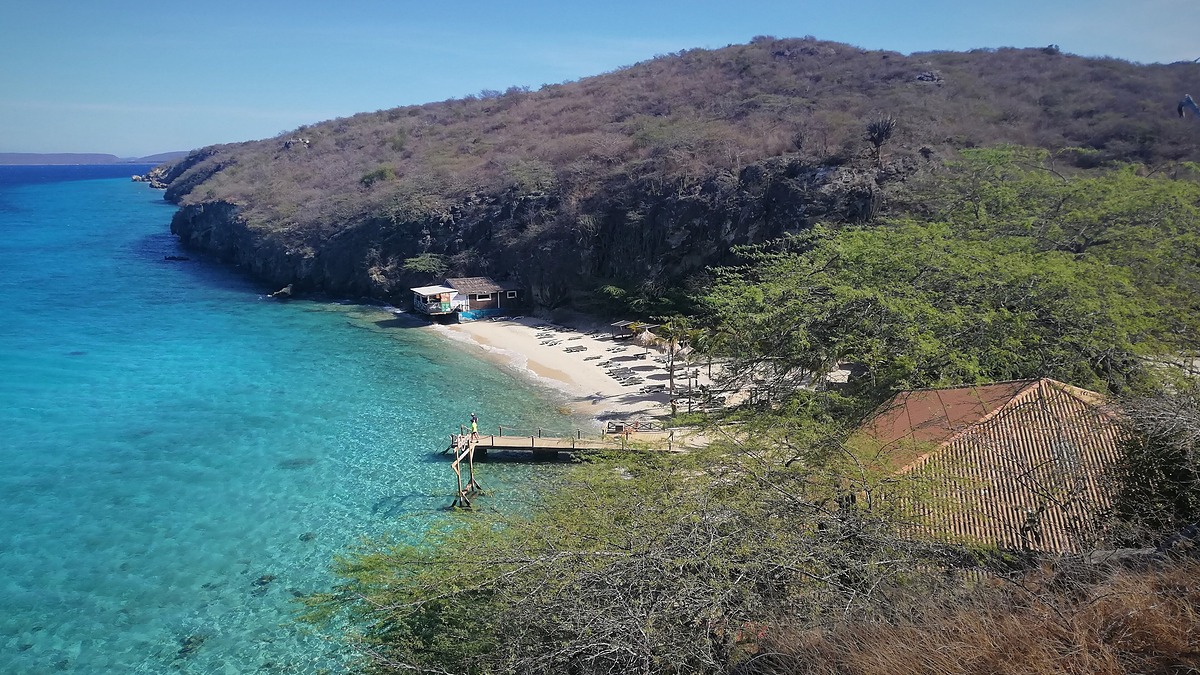
Kokomo Beach is a beach club at Vaersenbaai on the south coast, west of Willemstad, with reef a short swim from the sand. Kokomo says it charges no entrance fee, so you pay for a sunbed or lunch, not to get in. Our review covers sunbed prices and the way into the water.
From the UK, one route is through Amsterdam. KLM is increasing its Curaçao frequency for winter 2026/27, CAPA reported on 26 October 2026, and Corendon flies five times a week, according to the Curaçao Chronicle.
The other pick in the Americas is drier still, though the same months bring its strongest wind.
Playa Flamingo, Costa Rica: the driest months, and the windiest
On Costa Rica's north Pacific coast, the dry season is close to absolute. Liberia's airport averages under 2mm of rain in each of January and February, with highs of 35°C and 36°C, according to Costa Rica's national weather institute.
Wind is what you plan around. Cold surges from the north usually start in November and can run into March, strengthening the trade winds over Guanacaste.
At Liberia airport, the institute's 2005 to 2025 climatology shows the average wind peaking at about 14 knots in February, and afternoons from January to March average over 15 knots. Swim in the morning. Our Playa Flamingo review covers the beach and the marina.
Flamingo is about an hour's drive from Liberia airport. British Airways now flies to San José from Heathrow five times a week, but San José is four and a half to five and a half hours from Flamingo by road, so most Guanacaste beach trips start at Liberia.
February also brings a change at the far end of the world, where a school calendar decides how crowded the sand gets.
February in Tasmania: Wineglass Bay after the school holidays
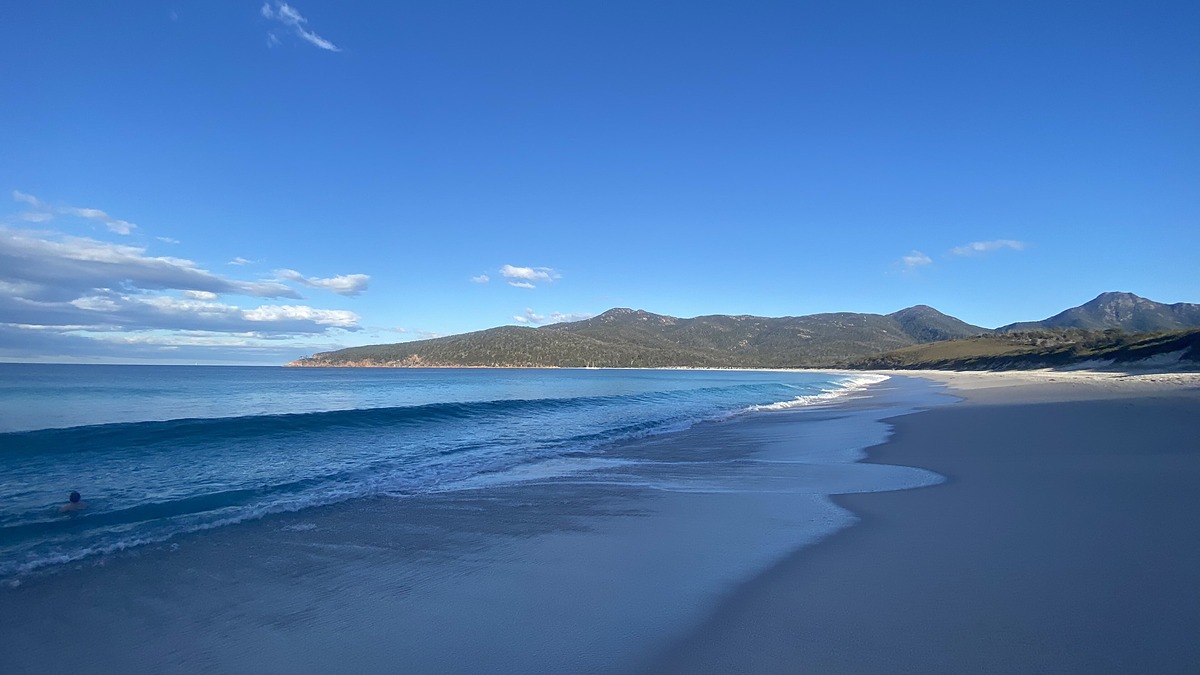
Wineglass Bay is a 1.7km curve of white sand inside Freycinet National Park, on Tasmania's east coast, and no road reaches it. Tasmania Parks and Wildlife Service puts the lookout at a steep 1.3km climb, and the beach is about 1,000 stairs further down. Every visitor needs a parks pass. Checked November 2026.
Expect a summer holiday rather than a tropical one. Bicheno, a Bureau of Meteorology station up the coast, averages a 22°C high in January and February, and the sea offshore is about 18°C in January and 19°C in February, cool enough for a quick dip.
Timing matters more than the weather. Tasmanian government schools break up on 18 December 2026 and students go back on 4 February 2027, according to the state's education department, so the weeks after that are quieter. Parks and Wildlife puts the park two and a half to three hours' drive from Hobart; our Wineglass Bay review covers the walk, the pass and the cruise.
Australians who would rather stay on the mainland can follow our Western Australia and Sydney beach guides. Readers in the US and Canada have shorter flights to the last two picks.
Best beach vacations in January and February for US and Canadian travellers
On Providenciales, Grace Bay runs in front of a long line of resorts, with a barrier reef about 1.6km (1 mile) offshore that only boats can reach. The sea averages 26°C in both months, and the airport is 10 to 20 minutes away by car.
Both months fall in the dry season, which Visit Turks and Caicos puts at January to April, and in its December to April high season, when rates are often 30 to 50% higher. The tourism board also warns that winter winds and swells make the water choppier in January and February.
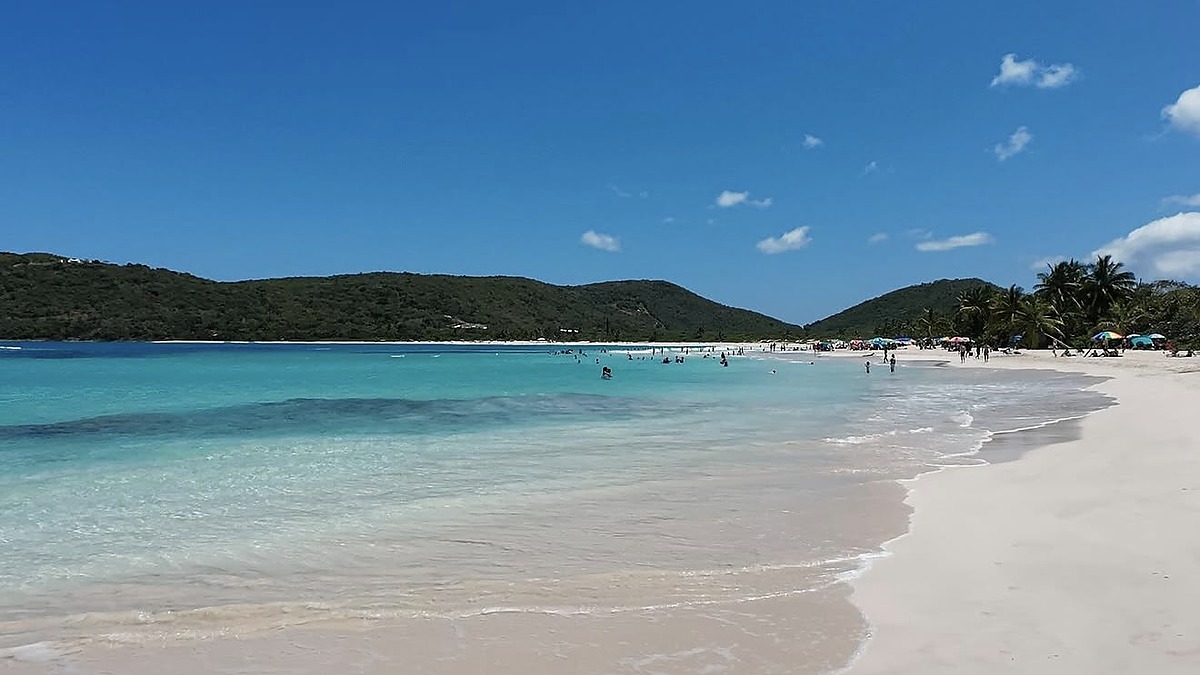
Puerto Rico's Flamenco Beach on Culebra is a sheltered horseshoe of white sand about 1.5km long, ranked 41st on the World's 50 Best Beaches list for 2026. NOAA's 1991 to 2020 normals give San Juan a high of 83°F (28°C) in January and 84°F (29°C) in February.
Getting to Culebra takes planning. Puerto Rico Ferry sells Ceiba to Culebra seats only for timetables it has published, and when checked in November 2026 the latest ran to 30 November. Book as soon as the winter one appears, or fly 20 minutes from San Juan with Cape Air. In winter, northerly swells regularly bring National Weather Service rip-current warnings for north-facing beaches in Puerto Rico and Culebra, so check the forecast before you cross. Checked November 2026.
The Bahamas run cooler. Off Harbour Island's Pink Sand Beach the sea averages about 25°C in January, and Nassau's average high is 26°C in the WMO long-term record. That is fine for walking the pink sand but cool for a long swim, so pick Grace Bay or Culebra if the water temperature matters.
The February week that most British families have to book around comes next.
February half-term beach holidays: dates and where to go
The UK has no single February half-term, and the four nations break in different weeks. Checked November 2026.
- England: councils including Ealing, Wirral and Croydon list Monday 15 to Friday 19 February 2027, so the break runs from Saturday 13 to Sunday 21 February. Academies set their own dates.
- Wales: all 22 local authorities break from Monday 8 to Friday 12 February 2027, according to the Welsh Government's approved term dates.
- Scotland: each council sets its own break, and some last only two or three days. West Dunbartonshire's pupils, for example, are off on 15 and 16 February, with an in-service day on the 17th.
- Northern Ireland: the Department of Education lists Thursday 11 and Friday 12 February 2027 as the mid-term break. Check your school's own calendar.
For an English half-term week, the best long-haul picks are the ones with the least jet lag. Cape Town, with almost no jet lag, is in its dry summer. Curaçao is four hours behind the UK and drier in February than in January, while the Philippines are eight hours ahead, a lot to ask of children in a nine-day break.
If nine days is too short for a long-haul flight, the nearest reliable warmth is in the Canary Islands, four to four and a half hours' flight from London. The sea off Maspalomas in Gran Canaria averages about 20°C in January and February. Our winter sun beaches guide and our Fuerteventura beaches guide cover the islands in detail.
Is it too cold for a beach holiday in Europe in January?
For swimming, yes, across the Mediterranean and Portugal. NOAA's record puts the sea off Málaga at about 16°C in January and February, and off Chania in Crete and the Algarve at 16 to 17°C, a few degrees colder than the Canaries.
The Canaries are the exception: they lie far south, off the coast of Africa, and our Tenerife beaches guide lists the sheltered southern beaches to choose in winter.
Several famous long-haul beaches are poor bets in these two months, because January and February bring their heaviest rain, cyclones or stingers.
Beaches to skip in January and February
- Bali: Bali's climatology station expects the 2026 to 2027 rainy season to begin in late November 2026 and peak in February 2027, Antara reported. Our Kuta Beach review recommends April to October instead.
- Mauritius: the FCDO says the cyclone season usually runs from November to May. In the WMO long-term averages for Plaisance airport, February is the wettest month of the year, with 263mm of rain, and January has 231mm. Our Le Morne Beach review suggests May to October.
- The Whitsundays: the Queensland Government says marine stingers, including box jellyfish and Irukandji, are present all year with a higher risk from November to May, and tells swimmers to consider a full-body lycra suit. February is also Hamilton Island's wettest month in the WMO long-term averages, at about 308mm. Our Whitehaven Beach review recommends June to September. Where the nets are and what to wear are in our Queensland stinger season guide.
- The Seychelles: the north-west monsoon brings the rain from December to March, and January is the wettest month at the international airport in the WMO long-term averages, with 427mm. Our Anse Source d'Argent review suggests April to May or October to November instead.
January or February: which month to choose
If you can take only one trip in these two months, take it in February. By then Boracay and Curaçao have dried out and Tasmania's schools are back. Diani and Palawan are as good on 10 January as on 20 February, so if January is your only window, go there. Costa Rica is dry in both months; just keep its beach days to the morning.