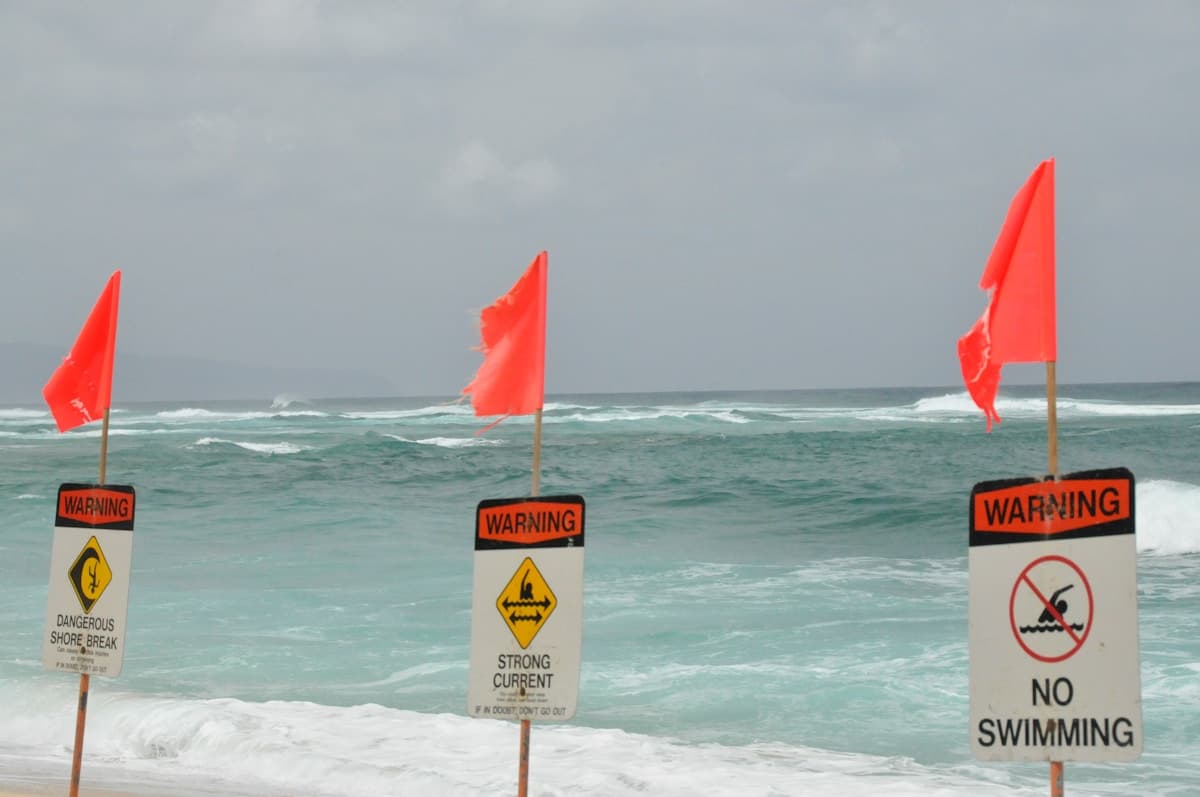
Queensland's stinger season runs from November to May, and this one opened with a warning for K'gari. From 1 November 2026, a Queensland Parks alert covers the island, Hervey Bay and the Great Sandy Strait, and until 31 May 2027 the alert says swimming is not recommended. Several visitors have been stung in recent years, some needing paramedics, and medical help on the island is limited.
Swimmers have mostly reported stingers on the island's western side, including Platypus Bay and around Wathumba and Awinya creeks. That is one island. Across the rest of tropical Queensland, the season belongs to two animals: the box jellyfish and the Irukandji.
You can still swim through 2026-27, from Port Douglas to the Whitsundays, if you choose the place and the kit. That means a netted, patrolled beach, a full-body lycra suit, or one of the coast's big public lagoons.
When does Queensland stinger season start and end?
The Queensland Government's dangerous marine creatures page is plain about it: dangerous stingers are present in tropical Queensland waters all year, and the risk is higher from November to May. For a trip being planned now, that means November 2026 through May 2027. June to October is quieter, not empty.
The stinger months overlap with the wet season: the Bureau of Meteorology's tropical cyclone season runs from 1 November to 30 April.
Storms damage the nets, too. In January 2026, ex-Tropical Cyclone Koji left the nets at Boathaven, Cannonvale and Dingo beaches needing repairs before anyone could use them, according to a Whitsunday Regional Council notice in Mackay and Whitsunday Life.
So the season has a fixed shape, but its edges move. Each council sets its own net dates, and a cyclone can take a net out halfway through the summer. For travellers further south, the first question is whether the season reaches them at all.
How far south do stingers go in Queensland?
No official source draws a line. The state's guidance is framed around tropical waters and names no southern limit, so be wary of any page that names a town where stingers stop.
What the official record does show is K'gari. The Parks alert covers the waters off the island, Hervey Bay and the Great Sandy Strait, well south of Cairns and the Whitsundays. No current official stinger warning in Queensland sits further south (checked November 2026).
Wherever you swim, including the south-east, bluebottles are a different problem. Healthdirect, the Australian Government's health advice service, classes them as non-tropical stingers and says theirs are the most common jellyfish stings in Australia. Their first aid is different too: no vinegar, which may make the pain worse. Soak the sting in hot water, as hot as is comfortable, for 20 minutes instead.
North of K'gari, the most reliable sea swimming in stinger season is inside a net. Who runs those nets, and where, changes from one council to the next.
Which Queensland beaches have stinger nets?
Stinger enclosures are run council by council, usually with lifeguards or surf lifesavers on the beach. They generally go in around late October or early November and come out in May.
For 2026-27, Townsville City Council said on 26 October 2026 that its nets were going in that week. Two days later, on 28 October, ABC News reported that the Whitsunday nets were back in. Douglas Shire, Cairns and the Cassowary Coast had not published 2026-27 dates when we checked in November 2026, so confirm with the council or Beachsafe before you go.
| Area | Netted beaches | Patrols | Before you swim |
|---|---|---|---|
| Port Douglas (Douglas Shire Council) | Four Mile Beach | Council lifeguards at certain times | Enclosure generally November to May; beach may close if stingers are found |
| Cairns northern beaches (Cairns Regional Council) | Including Ellis Beach, Palm Cove, Clifton Beach, Kewarra Beach, Trinity Beach | Varies by beach | North Queensland Surf Life Saving, 0429 501 380 (working hours), for current status |
| Cassowary Coast (Cassowary Coast Regional Council) | Etty Bay, Mission Beach, South Mission Beach, Kurrimine Beach | SLSQ at Etty Bay, Mission Beach and South Mission Beach in the Christmas and Easter school holidays | Council links to North Queensland beach safety updates |
| Townsville (Townsville City Council) | The Strand (north and south), Pallarenda, Picnic Bay and Horseshoe Bay on Magnetic Island, Balgal Beach | SLSQ lifeguards at key beaches including The Strand from 9am daily | Council said the nets were going in from 27 October 2026 |
| Whitsundays (Whitsunday Regional Council) | Cannonvale Beach, Boathaven Beach in Airlie Beach, Dingo Beach (permanent enclosure) | Varies; see Beachsafe | Nets reinstalled by late October 2026 (ABC News); Dingo Beach's rebuilt enclosure opened July 2026 |
Net status and closures for 2026-27: checked November 2026. For the day you plan to swim, Surf Life Saving Australia's Beachsafe shows patrolled beaches and conditions, and the councils post closures as they happen.
How long the nets last is a council decision too. In 2025 Cassowary Coast Regional Council, citing a cost to ratepayers of more than AUD 340,000 a season, asked residents whether any of its four nets should be moved or removed. More than 825 contributions showed strong support for keeping them, and all four stayed, according to the council's consultation page. A swim in the far north depends on a council budget.
A net is the best place to be in the sea, but it does not make the water safe.
What stinger nets stop, and what they don't
The nets are built for the box jellyfish, which is large enough to keep out. Douglas Shire Council says its enclosures give a high degree of protection against box jellyfish but are not completely stinger-proof.
Cassowary Coast Regional Council puts it more bluntly: the nets do not stop smaller jellyfish such as bluebottles and Irukandji. Irukandji are the reason a net alone is not enough.
An Irukandji sting can seem minor at first, and the Queensland Government warns that symptoms can take 20 to 40 minutes to develop. Healthdirect lists what follows: muscle pain, headache, nausea, vomiting, sweating and restlessness.
Because a net cannot stop them, lifesavers close netted beaches when stingers are found, and the closure stays until conditions change. A closed beach with a net in the water is still closed. The other layer of protection is what you wear.
Do you need a stinger suit?
In tropical Queensland between November and May, yes. The Queensland Government tells swimmers to consider a full-body lycra suit.
At Four Mile Beach, Douglas Shire Council tells swimmers to wear a wetsuit or full-body lycra suit even when the beach is open, and to swim inside the enclosure.
A suit covers the skin a tentacle would otherwise reach, which matters most against the Irukandji that can drift through a net. It is not a reason to swim at an unpatrolled beach or outside the nets.
On a reef or island trip, such as the day boats in our Whitehaven Beach review, ask whether suits are supplied when you book, and bring your own if they are not.
If you are stung: vinegar, then 000
Box jellyfish and Irukandji stings are medical emergencies. The steps below follow the Queensland Government and healthdirect, and they are not the same as for a bluebottle.
- Call triple zero (000) and ask for an ambulance.
- Pour vinegar on the sting for at least 30 seconds. For a box jellyfish sting, healthdirect says to then pick off the tentacles. If there is no vinegar, pick them off and rinse with seawater.
- Start CPR if the person stops breathing normally.
- Stay with the person until the ambulance arrives, even if the sting looks minor: Irukandji symptoms can take 20 to 40 minutes to appear.
Do not touch stingers washed up on the sand either: the Queensland Government warns they can still sting. Beyond that, a safe stinger-season trip comes down to where you stay.
Planning a Queensland beach trip, December 2026 to May 2027
The stinger months are also the hot, wet months of the tropical summer. The way to swim through them is to choose a base with a net or a lagoon close by.
Cairns
In central Cairns, the swim is the Esplanade Lagoon, a free saltwater pool on the waterfront. For the sea, stay on the northern beaches: Palm Cove and Trinity Beach both appear on the council's enclosure list.
Port Douglas and Mission Beach
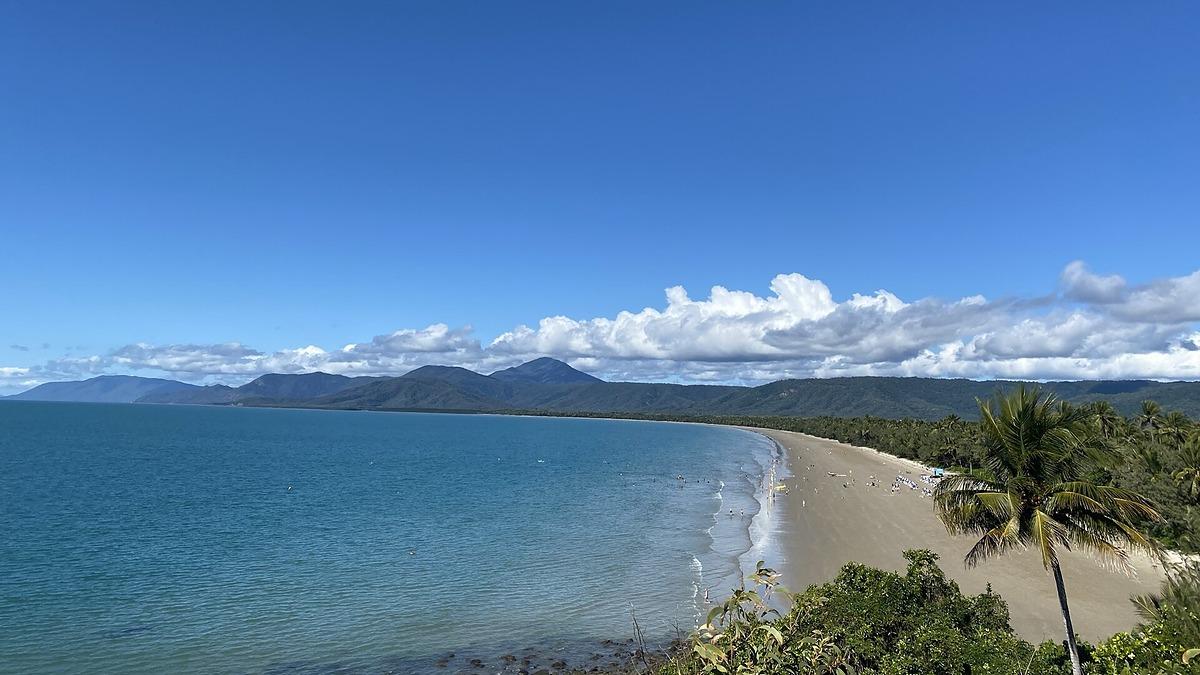
Port Douglas has one net, on the long sweep of Four Mile Beach, with lifeguards only at certain times. Mission Beach and South Mission Beach both have nets, but the council lists their surf lifesaving patrols for the Christmas and Easter school holidays, so outside those weeks check before you swim.
Airlie Beach and the Whitsundays
In the Whitsundays, the Airlie Beach Lagoon is the dependable swim. Whitsunday Regional Council describes a 4,300 square metre pool that is open to everyone and patrolled by lifeguards. Day trips to Whitehaven and the reef still run through the season, and you swim in a suit.
If you are coming from Europe
If you are coming from Europe in December to March mainly to swim, there are easier choices. Our winter sun beaches guide compares nine December to March options and how warm their sea really is, and our January and February beach holidays guide lists the Whitsundays among the places that are harder work in those two months.
Go June to October for the lower-risk months
If the point of the trip is swimming in the open sea and snorkelling off islands, aim for June to October 2027. The Queensland Government still says stingers are present all year, so the suit and the patrolled beach stay part of the routine.
Those months also fall outside the cyclone season, and our Whitehaven Beach review recommends June to September for its clear, calm weather. Book a December to May trip only if you are happy to swim in a net, in a suit or in a lagoon.