Fuerteventura doesn't look like most beach holiday destinations. There are no palm-lined shores or lush green backdrops. What you get instead is volcanic desert running straight into the Atlantic, endless sand, and a wind that rarely stops blowing. It sounds harsh, and honestly, parts of it are. But the beaches here are some of the best in Europe if you know which ones to pick for what you actually want to do.
The island is the second largest in the Canary Islands and sits just 100 kilometres off the coast of Morocco. That proximity to Africa means consistent sunshine (over 300 days a year) and warm temperatures even in winter. Flights from the UK take around four and a half hours, and package deals keep prices reasonable, especially outside of school holidays.
Here's the thing most guides skip: Fuerteventura is very windy. Trade winds blow steadily from the northeast for most of the year, and they get strongest between May and September. That wind makes certain beaches brilliant for water sports and others genuinely miserable for lying on a towel. Picking the right beach matters more here than almost anywhere else in Europe. If you're planning a broader trip, our best beach holidays in Europe guide covers more options across the continent.
Playa de Sotavento: Best for Kitesurfing and Wind Sports
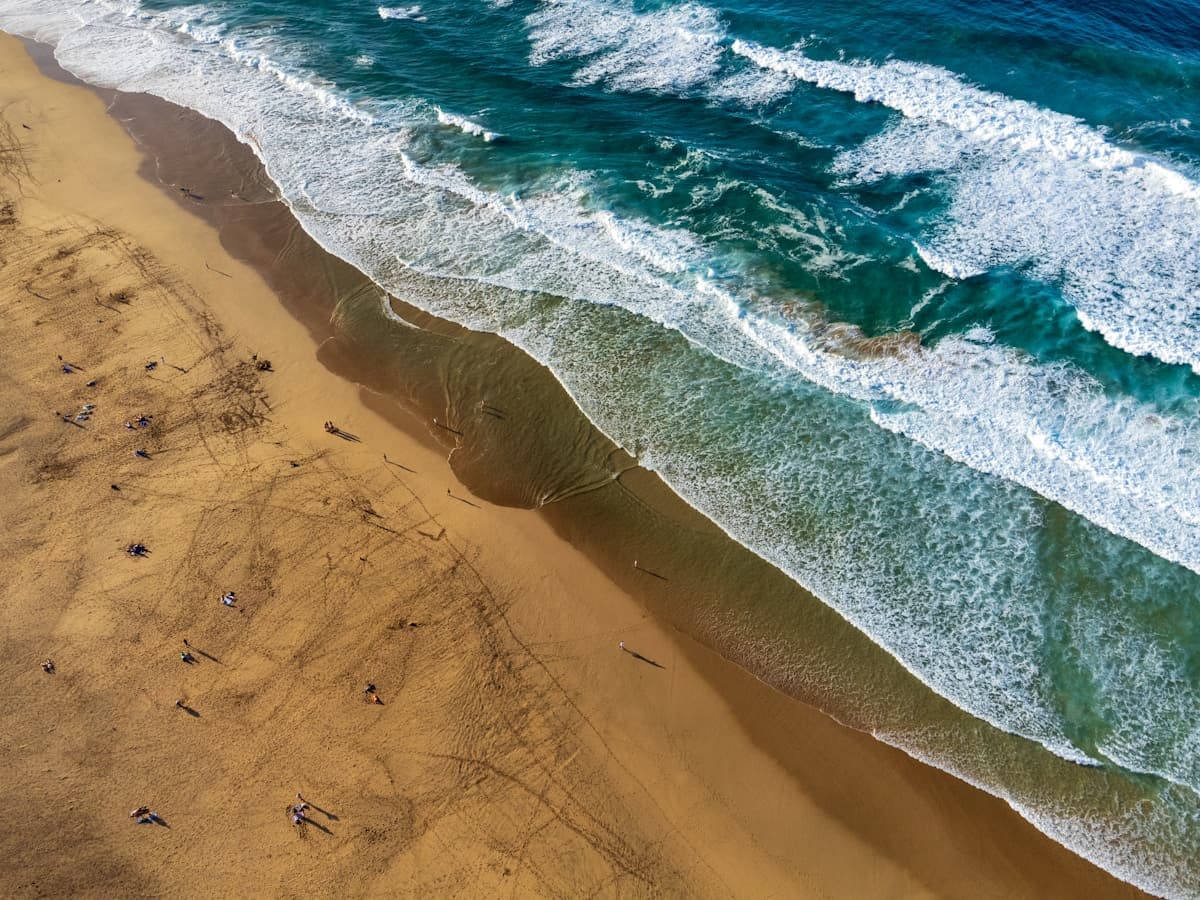
Sotavento is the reason half the kitesurfers in Europe know Fuerteventura exists. This massive stretch of sand runs for about nine kilometres along the southeast coast, and when the tide drops, a shallow lagoon forms between the beach and a sandbar further out. That lagoon creates flat, waist-deep water with consistent side-shore wind. Perfect conditions for kitesurfing and windsurfing.
The Kitesurfing World Cup has been held here for years, which tells you everything about the wind quality. Lessons are available from several schools along the beach, and a beginner group session runs around 60 to 80 euros for about three hours. Even if you have zero interest in kites, the beach itself is worth visiting. The sand stretches so far that you can always find space, and the turquoise lagoon at low tide is gorgeous for wading.
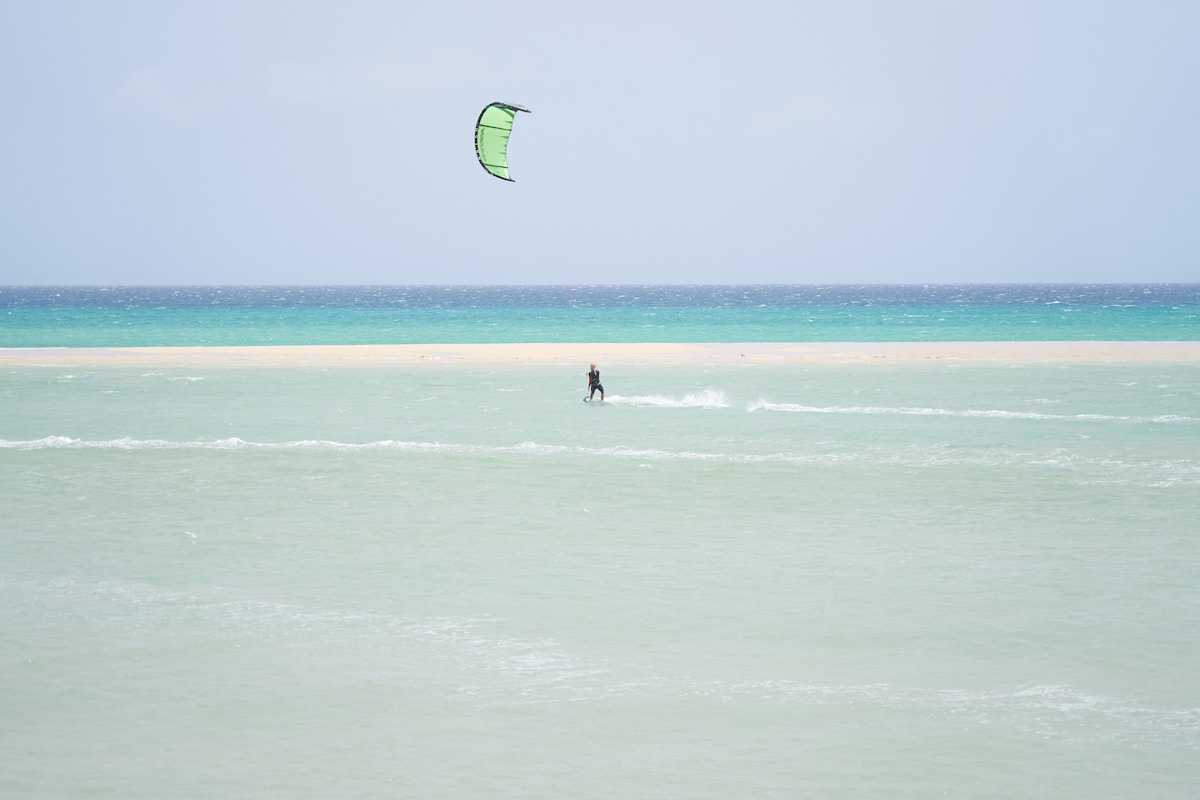
The wind is the whole point here, so don't come expecting a sheltered sunbathing spot. Bring a decent windbreak if you're setting up for the day. There are a couple of beach bars near the main access points, and parking is free along the FV-2 road. The best months for wind sports are June to September. Outside of that window, the wind is less reliable but the beach is quieter.
Playa de Cofete: Best for Raw, Empty Landscape
Cofete is the beach you visit when you want to feel like you've reached the edge of the world. Out on the remote Jandia Peninsula in the far south, this 12-kilometre stretch of wild sand sits beneath dramatic mountain ridges and faces the open Atlantic. There's nothing here. No sun loungers, no beach bars, no lifeguards, no phone signal in most spots.
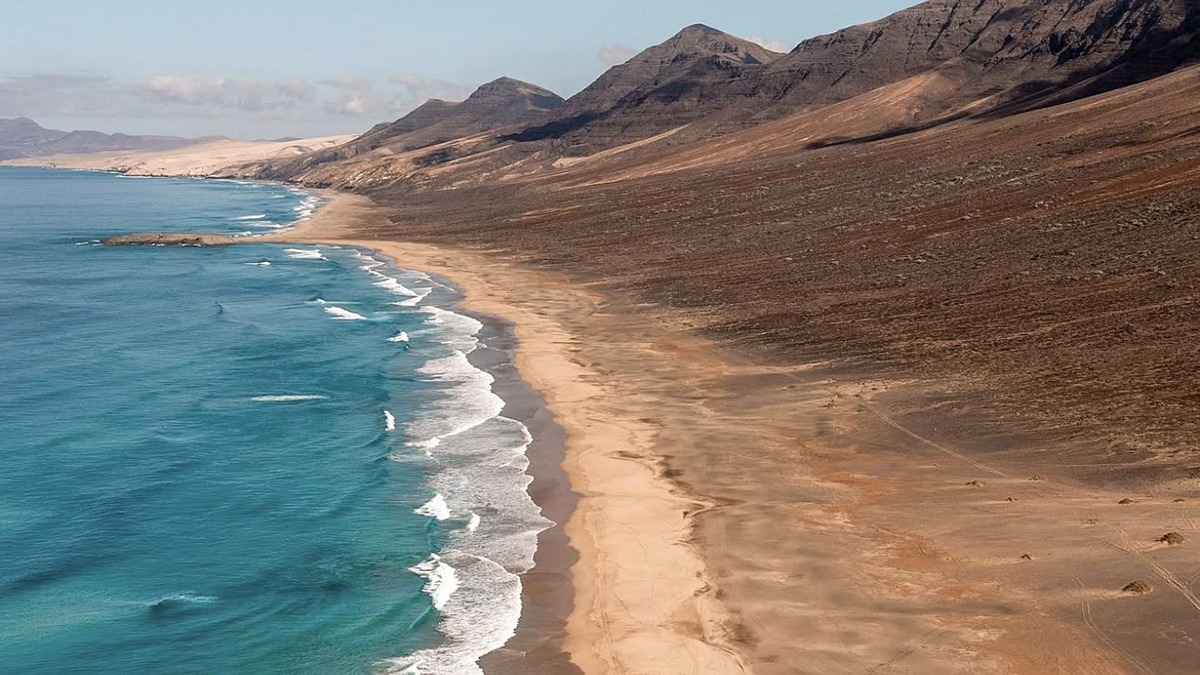
Getting to Cofete is part of the experience. From Morro Jable, you take a dirt track that climbs over the mountains and drops down to the coast. The road is rough and takes about 40 minutes in a regular car (go slowly). Some rental companies specifically exclude this road from their insurance, so check before you go. A 4x4 is easier but not strictly necessary if you're careful.
Swimming is not safe here. The Atlantic currents are strong and unpredictable, and waves can be powerful. People do swim, but locals and experienced visitors will tell you it's risky. Come to Cofete for the walk, the emptiness, and the views. The ruined Villa Winter, a mysterious German-built mansion on the hillside, adds an eerie touch to the whole setting. Pack water and food because there's nowhere to buy anything once you're there.
Corralejo Dunes: Best for a Classic Beach Day
The Parque Natural de las Dunas de Corralejo is what most people picture when they think of Fuerteventura beaches. Kilometres of golden sand dunes rolling down to clear blue water, with the islands of Lanzarote and Lobos visible on the horizon. It feels almost Saharan.
The main beaches sit along the FV-1 road between Corralejo town and the large hotel complexes at the southern end of the dunes. Flag Beach is the most popular stretch and has a good mix of swimmers and surfers. Further south, the beaches get quieter the further you walk from road access points.
Wind is a factor here, no surprise. The dunes face northeast and catch the full force of the trade winds in summer. A windbreak is practically essential equipment. On calmer days, though, this is as close to a perfect beach as Fuerteventura offers. Corralejo town is a 10-minute drive north and has plenty of restaurants, bars, and surf shops. The town itself has a decent local beach too, Playa Grande, which is more sheltered than the dune beaches.
El Cotillo Lagoons: Best for Calm Water and Snorkelling
El Cotillo, on the northwest coast, has two very different sides. The north side faces the open Atlantic with big waves and strong currents. Surfers love it. The south side is completely different. A series of natural rock pools and small lagoon beaches sit protected behind volcanic reef, creating pockets of calm, crystal-clear water.
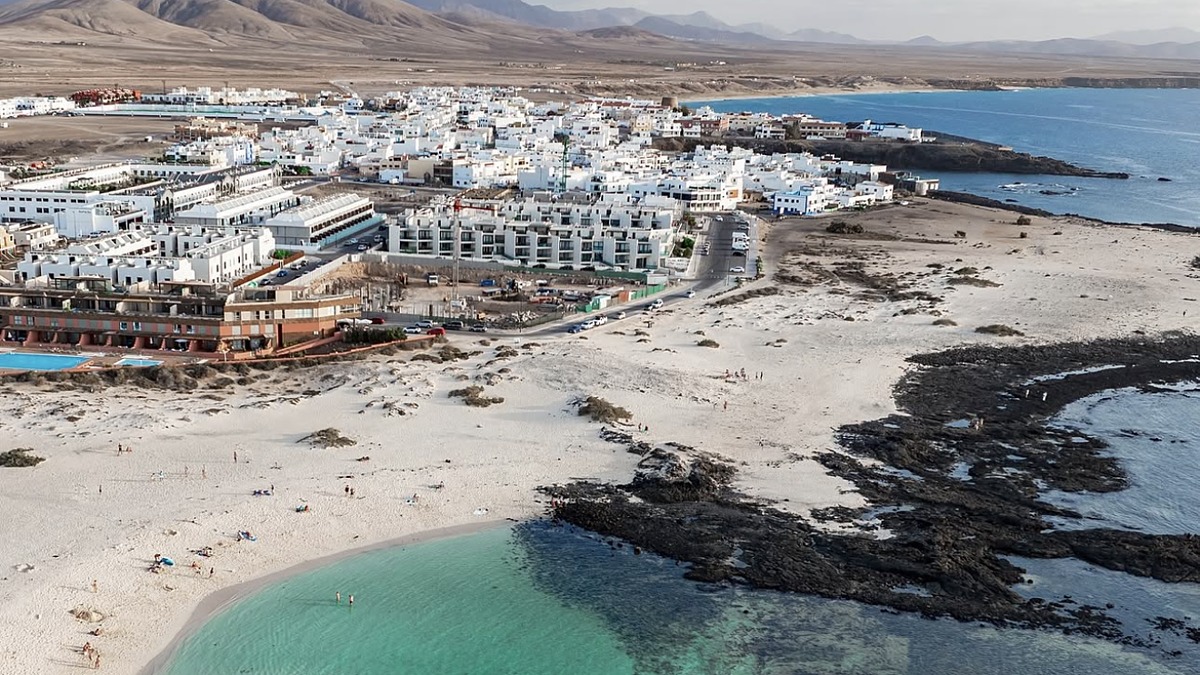
These lagoons are some of the best swimming spots on the island. The water is shallow and warm, visibility is excellent for snorkelling, and the rocky barriers block most of the wind and waves. Families with small children gravitate here for good reason. There's a small beach bar and some food trucks near the main lagoons, but facilities are basic.
Getting to El Cotillo takes about 30 minutes from Corralejo. The village itself is small and laid-back, with a handful of good seafood restaurants. Parking near the lagoons can fill up by late morning in peak season, so arrive early or walk from the village. If you're choosing between El Cotillo and Caleta de Fuste for a family day, El Cotillo has better water but less infrastructure.
Caleta de Fuste: Best for Families and Convenience
Caleta de Fuste won't win any awards for dramatic scenery. It's a purpose-built resort area on the east coast, about 10 minutes from the airport, and it looks the part. Hotels, shopping centres, and chain restaurants line the waterfront. Not exactly wild Canary Islands adventure.
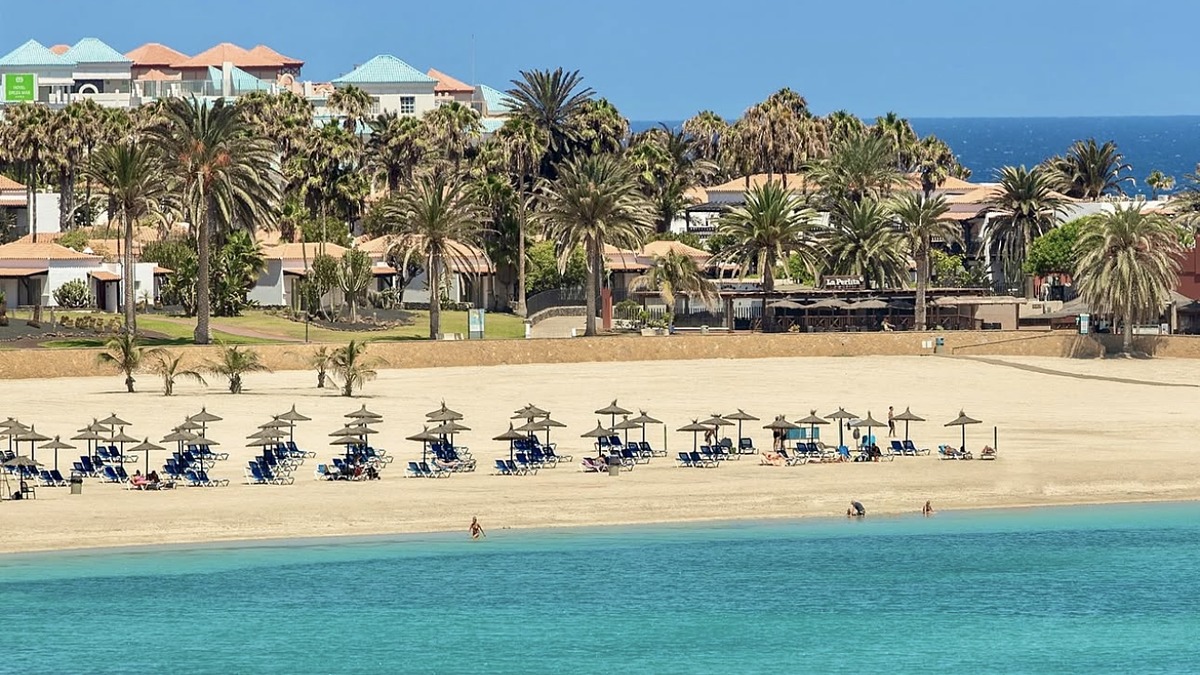
But for families, especially those with young children, it works extremely well. The beach sits inside a horseshoe-shaped bay that blocks the wind and keeps the water calm. You can wade out a long way before it gets deep, and there are lifeguards during the day. Everything you need is within walking distance, from supermarkets to pharmacies to ice cream shops. If you want a beach holiday where logistics are simple and the kids can splash safely, Caleta de Fuste delivers that without fuss.
The beach itself is a mix of natural and imported golden sand. It's not huge, and it gets busy during school holidays, but there's enough space for a comfortable day. Water sports like kayaking and jet skiing are available from operators on the beach. A sun lounger and umbrella set runs about 8 to 10 euros per day.
Pozo Negro: Best for Getting Away From Everyone
Pozo Negro is a tiny fishing village on the east coast that most tourists never find. The beach is a dark volcanic pebble cove surrounded by black lava rock, which gives it a completely different feel from the golden sand beaches elsewhere on the island. The water is calm and clear, and the village has just one or two small restaurants serving fresh fish.

This isn't a beach for sunbathing on soft sand. It's a place to eat grilled fish, watch local fishermen bring in their catch, and sit in genuine quiet. The drive from the main tourist areas takes about 20 to 30 minutes, and the road passes through some of the island's most striking volcanic landscape. If you want one afternoon that feels nothing like a tourist resort, Pozo Negro is the move. Bring water shoes for the pebbles.
Practical Tips for Fuerteventura Beaches
Wind management is the single most important factor on this island. Bring a windbreak (you can buy them in Corralejo or Caleta de Fuste for around 15 euros). Position yourself behind dunes or rock formations when possible. Check wind forecasts before choosing your beach for the day. Windy.com is genuinely useful here.
Rental cars are cheap and practically essential. Public transport exists but doesn't reach most beaches at useful times. Expect to pay 15 to 25 euros per day for a basic car. Get insurance that covers dirt roads if you plan to visit Cofete.
Sun protection is critical year-round. The UV index is high even on overcast days, and the wind makes you underestimate the heat because you don't feel as warm. Factor 50 and reapply often.
Water temperature ranges from about 18 degrees in winter to 23 in late summer. Comfortable for swimming from June to November without a wetsuit, though some people manage year-round.
The best time to visit depends on what you want. Kitesurfers should aim for June to September. Beach holiday visitors who want less wind and more lounging should look at October to April, when conditions are calmer and temperatures still sit in the low to mid 20s. Either way, Fuerteventura delivers beaches that can hold their own against anywhere in Europe. You just need to pick the right one for what you're actually after. For more seasonal advice, our beach holidays in October guide covers autumn travel across multiple destinations.