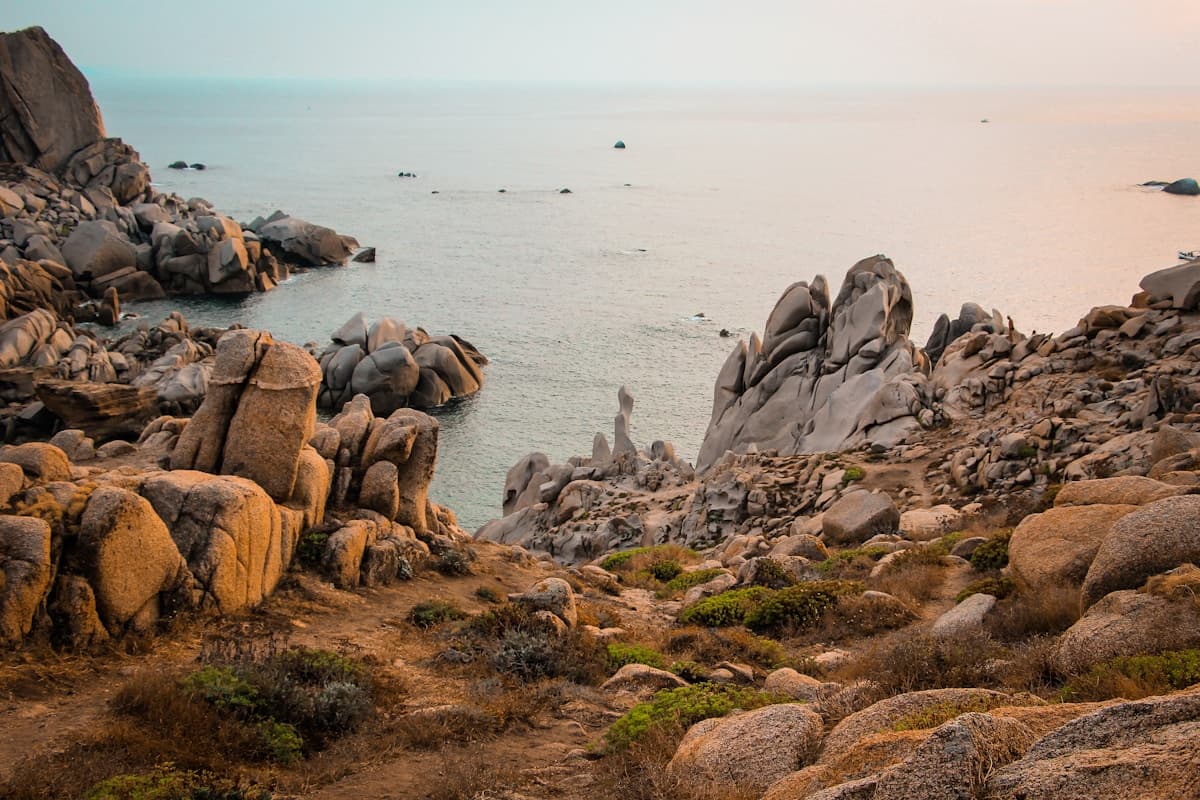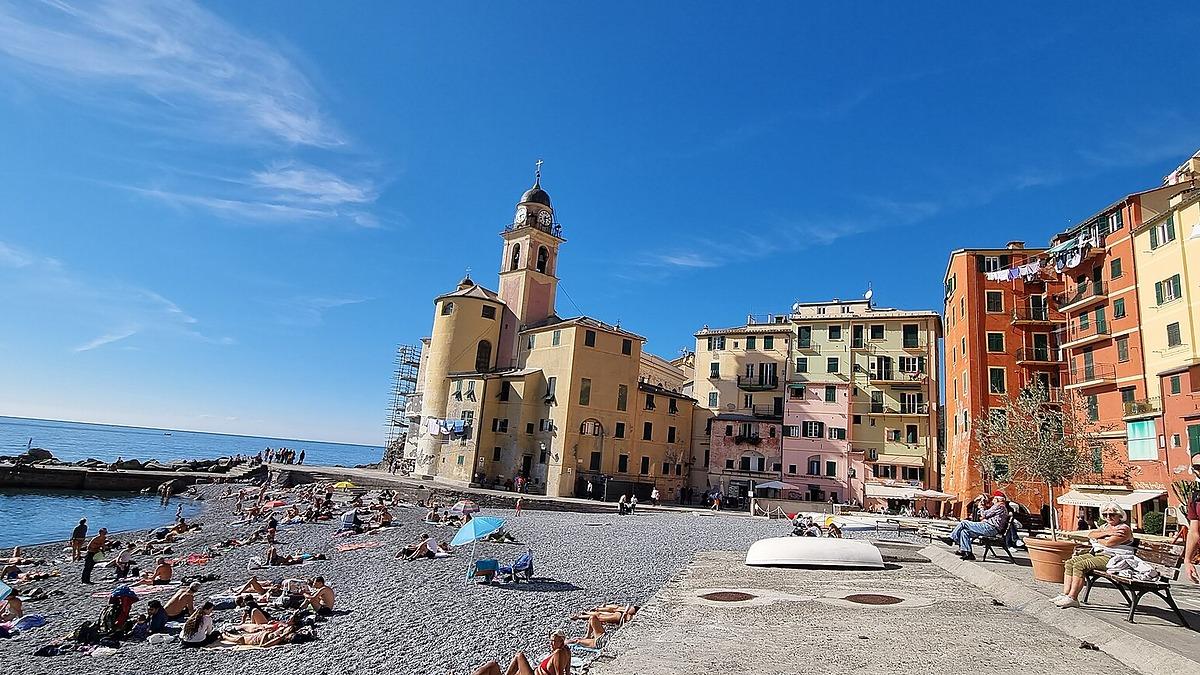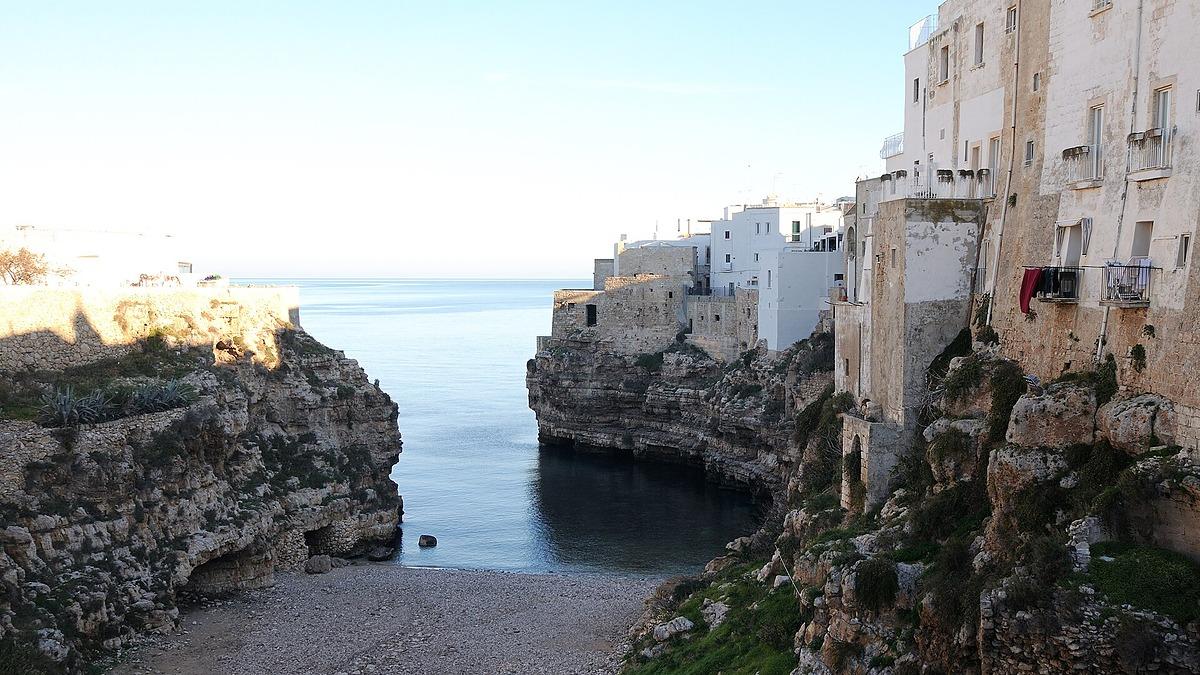
The best beaches in Italy start on Sardinia's Gulf of Orosei. At Cala Goloritzé, white pebbles lie under a limestone spire beside some of the clearest sea in the Mediterranean. Only 250 people are allowed on the beach at once, each with a €7 ticket and a steep walk behind them. Sicily answers with pale sand a city bus ride from Palermo, Puglia with cliff coves on the railway from Bari, and Liguria with the Cinque Terre's one proper beach.
Pick the region first and the beach follows: the regions differ in what the sand is made of, whether you need a car and how much of it you pay for.
In November the lidos are stacked away. Everything here is aimed at May to October 2027, with the 2026 prices and rules as the guide.
Which Italian region has the best beaches?
Sardinia has the best water, Sicily the warmest, Puglia the most free sand and Liguria the easiest trip without a car.
| Region | Best for | Sand or rock | Without a car | Best months |
|---|---|---|---|---|
| Sardinia | The clearest water, wild coves | White sand in the north-east, pebble coves in the east | Hard: hire a car | June and September |
| Sicily | Variety and the warmest sea | Sand, white marl cliffs | Bus to Mondello, summer coaches elsewhere | June and September |
| Puglia | Free sand, food and old towns | Pebble coves near Bari, white sand in Salento | Train to Polignano, summer buses from Lecce | June and early September |
| Liguria | Villages linked by train and boat | Mostly pebbles | Easy: one railway and the boats | June and September |
Sardinia's water comes with effort. The Gulf of Orosei coves are reached by boat or on foot, and buses won't take you to most beaches, so fly into Olbia or Cagliari and hire a car. From the US, United plans a Newark nonstop to Olbia from 27 May 2027, subject to government approval (our summer 2027 beach preview has the new routes).
Sicily runs warmest and latest, with everything from shallow family sand to white cliffs. Its beaches run on lidos, though, and the most photographed now has a gate.
Puglia writes free sand into law: its 2015 coastal law reserves at least 60% of each coastal town's state-owned shore for free public use. The north is limestone coves; the long white sand is in Salento, the heel.
Liguria has the least sand and the easiest travel. A single railway links the Cinque Terre, Sestri Levante and Camogli, and the boats fill the gaps.
Cala Goloritzé: Italy's best beach, if you book
Sardinia's effort pays most on the Gulf of Orosei. Cala Goloritzé is not a normal beach day: it takes a ticket bought three days ahead and a hike down a cliff path, so it stands apart from the eight below.
Cala Goloritzé is a short strip of white pebbles below the Aguglia, a limestone spire that climbers come for. The water shades from pale to deep blue just beyond the rocks.
Getting there is the whole plan. Every visitor needs a €7 ticket from the Heart of Sardinia booking platform, which releases each day's places at midnight three days ahead and caps the beach at 250 people at a time.
The ticket covers parking at Su Porteddu on the Golgo plateau above Baunei. From there a 3.5km trail drops to the cove: allow 1 to 1.5 hours down and up to 2 back. Boats from Cala Gonone cannot land and must stay 300 metres offshore, according to Sardegna Turismo. Checked November 2026.
There is nothing on the beach, so carry at least two litres of water each and wear shoes with grip. Skip it with small children or bad knees. Our Cala Goloritzé review has the trail and the booking rules in full.
The village to stay in is Cala Gonone, about 105km by road from Olbia airport. Its Spiaggia Centrale, next to the harbour, is light, coarse sand mixed with pebbles, and Sardegna Turismo calls it child-friendly for its shallow water. As a beach it is ordinary and often crowded; the reason to stay is the port, where boats leave in season for Cala Luna, Cala Mariolu and the Bue Marino sea cave. Our Cala Gonone review covers parking, the boat trips and the quieter Cala Fuili.
The 8 best beaches in Italy, from Sardinia to the Cinque Terre
One in Sardinia, three in Sicily, then two each in Puglia and Liguria.
1. Cala Brandinchi and Lu Impostu, Sardinia: shallow white sand near Olbia
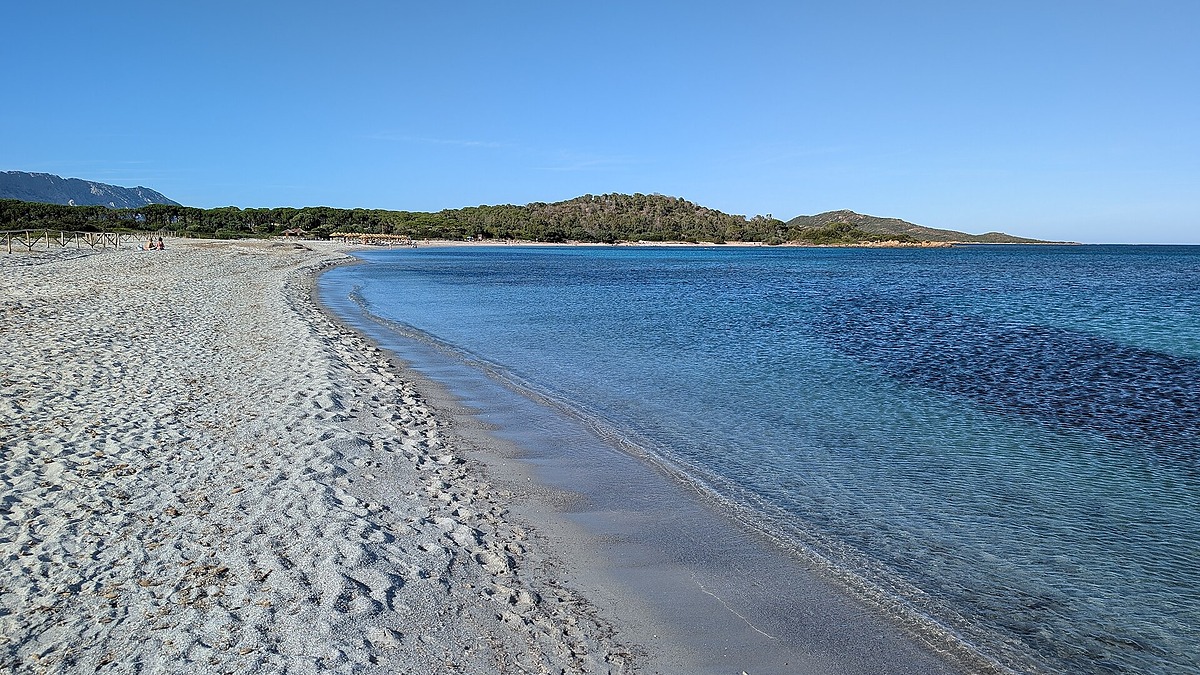
Cala Brandinchi, near San Teodoro on the north-east coast, is the white-sand bay locals call "Piccola Tahiti", with a lagoon and pine trees behind it. The water stays shallow a long way out, which makes it the pick for young children.
It is a short drive south of Olbia, and it is no longer walk-up. From 1 June to 30 September, access to Cala Brandinchi and neighbouring Lu Impostu needs a reservation on San Teodoro's beach portal, opening at 6pm two days ahead. Checked November 2026.
Lu Impostu, the next beach south, is on the same booking system. Both are close to their car parks, which fill first, so book early and arrive early. For La Pelosa and Is Arutas, see our best beaches in Sardinia guide.
2. Mondello, Sicily: the city beach on a €1.40 bus ticket
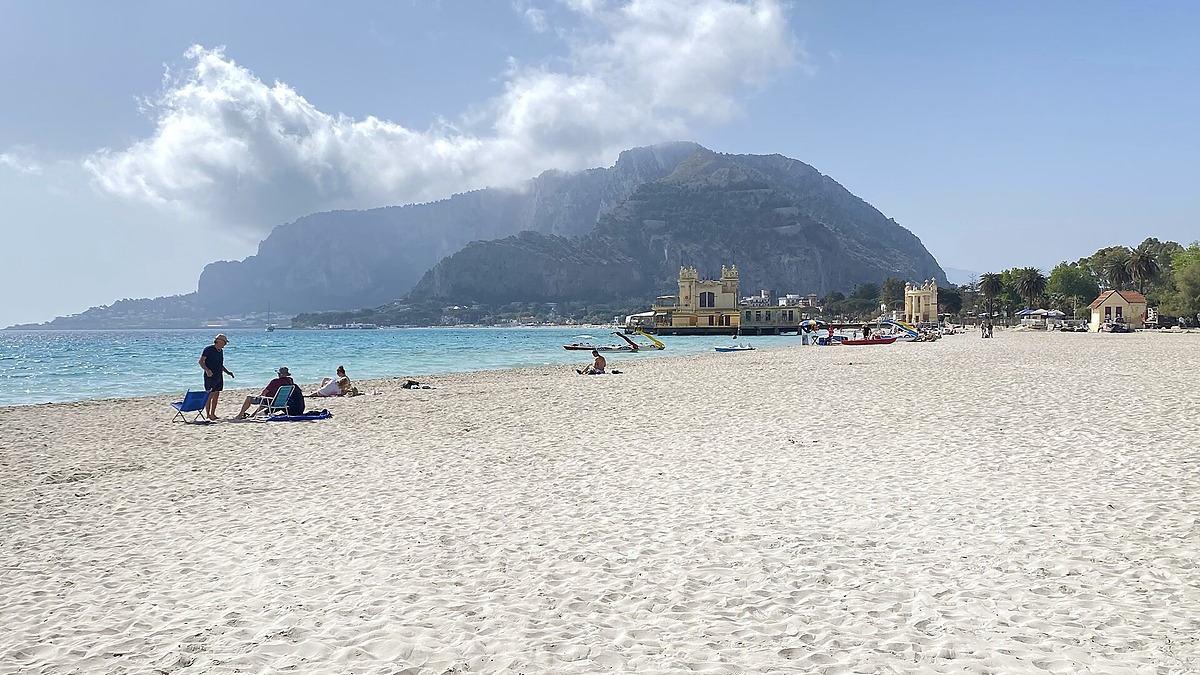
Mondello is Palermo's beach, a crescent of pale sand about 10km north of the centre, with a Liberty-style bathing pavilion standing in the water. AMAT's bus 806 runs there from Piazza Croci on Via Libertà, every 15 minutes in summer 2026, on a €1.40 ticket.
It is also the clearest lesson in how Italian beaches charge, with free sand between the lidos. In July and August 2026, two loungers and a parasol cost about €33 a day, according to local news site L'altroparlante. A basic area with lifeguards, toilets and showers cost €6.
Who runs those lidos in 2027 is not settled. The company that had operated them for more than a century lost its concession in 2026, the regional administrative court upheld that in November 2026, and the company has said it will appeal.
Expect crowds all summer. In 2026 the council also twice banned swimming on short stretches of the beach after failed water samples, from 27 August to 1 September and from 17 to 22 September. Our Mondello Beach review tracks the court case, parking and the bathing-water checks.
3. Scala dei Turchi, Sicily: the white cliff with a gate
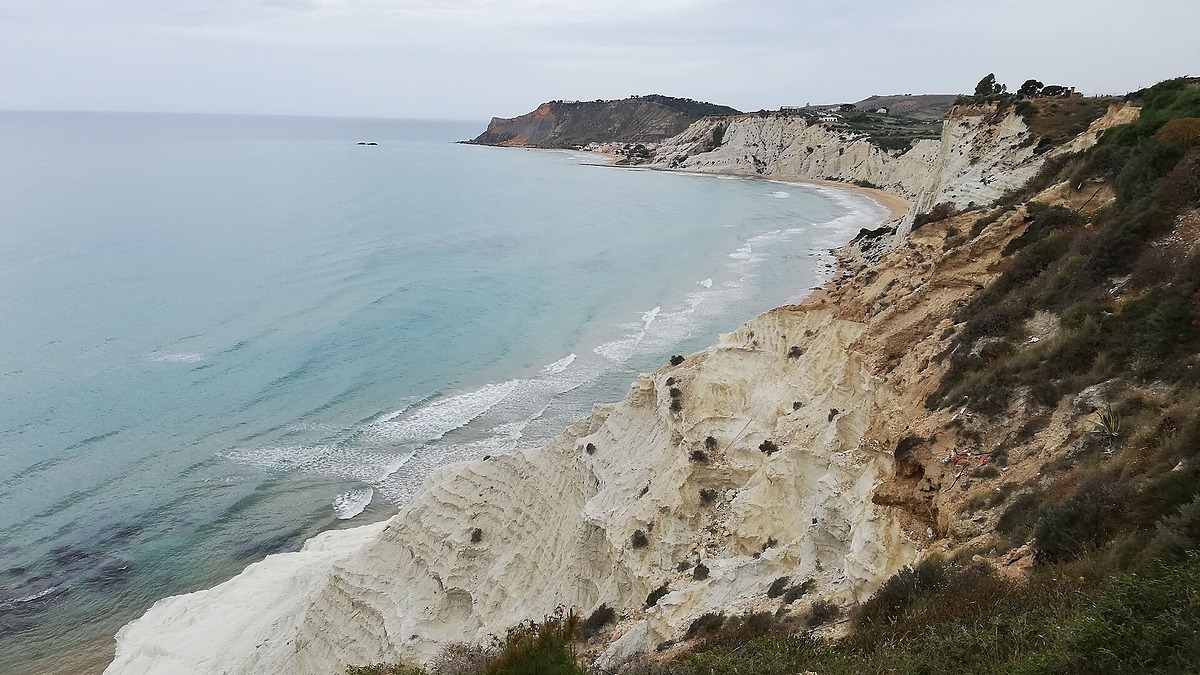
Scala dei Turchi, at Realmonte near Agrigento, is a staircase of white marl that steps down to the sea beside a sandy beach and glows gold at sunset. Crowds wore the soft rock down, and after years of closures the cliff now has managed entry.
In May 2026 Realmonte dropped online booking. Tickets cost €6, paid digitally on site, with visitors let in 50 at a time every 20 minutes and a cap of 1,800 a day, according to the Sicilian daily QdS. The 2027 arrangements have not been announced. Checked November 2026.
Come for the view and the light, not to scramble up the steps for a solo photo. Pair it with the Valley of the Temples in the morning, and read our Scala dei Turchi verdict on whether the ticket is worth it.
4. San Vito lo Capo, Sicily: the family sand of the west
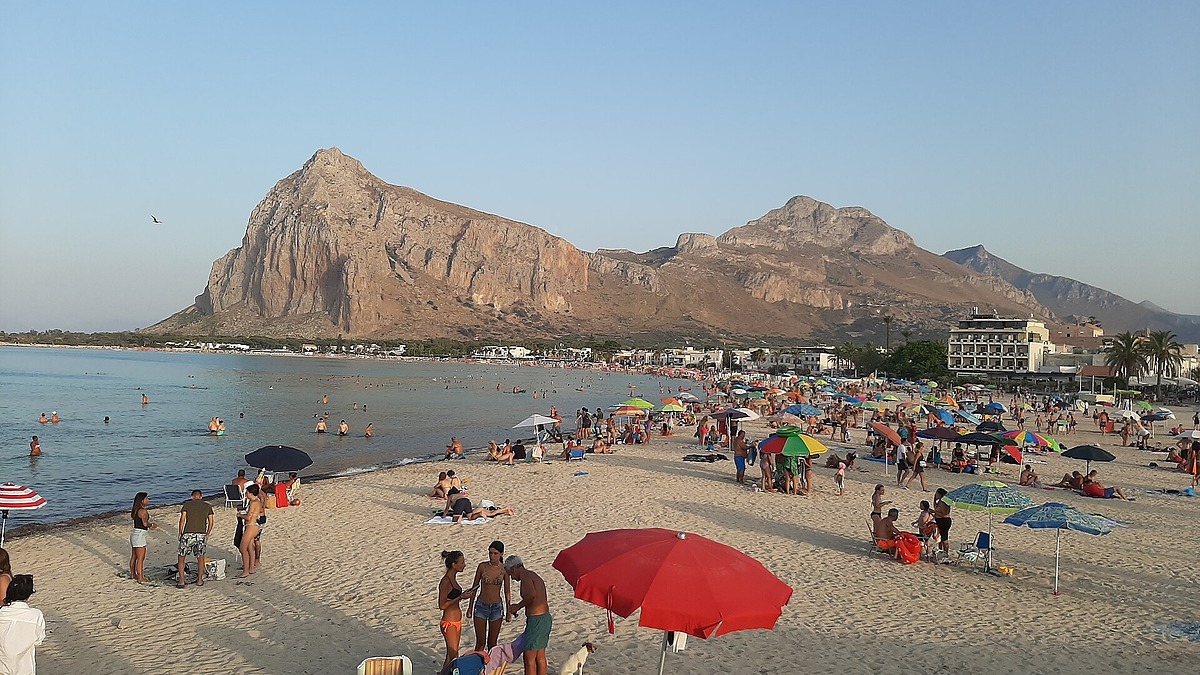
San Vito lo Capo, on Sicily's north-western tip, is a wide curve of pale sand below Monte Monaco, with shallow, calm water that suits small children. Lidos and free stretches share the sand, with the town behind.
There is no railway. Autoservizi Russo's coaches link San Vito lo Capo with Palermo and its airport; check the season's timetable on the company's site before you fly. By car it is about 40km from Trapani.
It is far from secret, so arrive early in high summer. Scopello and the Egadi Islands are close by, and both are in our best beaches in Sicily guide.
5. Lama Monachile, Polignano a Mare, Puglia: the cove you reach by train
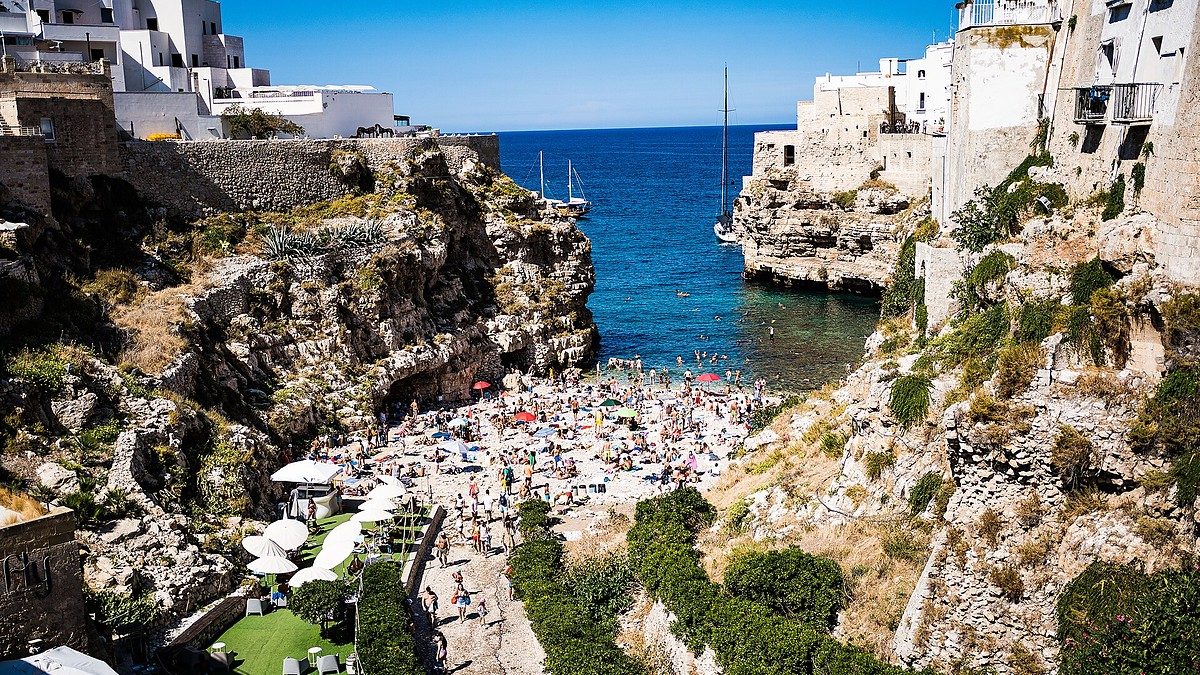
Lama Monachile is a wedge of pebbles at the end of a narrow inlet, with Polignano a Mare's old town built to the cliff edge on both sides and a road bridge across the gap. It suits anyone who wants a swim and a town in the same morning.
No beach on this list is easier to reach without a car. Trenitalia's planner showed about two direct regional trains an hour from Bari Centrale in November 2026, taking 23 to 43 minutes, and the station is a short walk from the old town. The cove is free, with no lido.
The cove is small, the pebbles are hard on bare feet and the steps make it awkward with a pushchair. Swim early and spend the middle of the day in the lanes. Our best beaches in Puglia guide covers Pilone, the sand below Ostuni, half an hour down the coast.
6. Torre dell'Orso, Puglia: Salento's white sand by bus
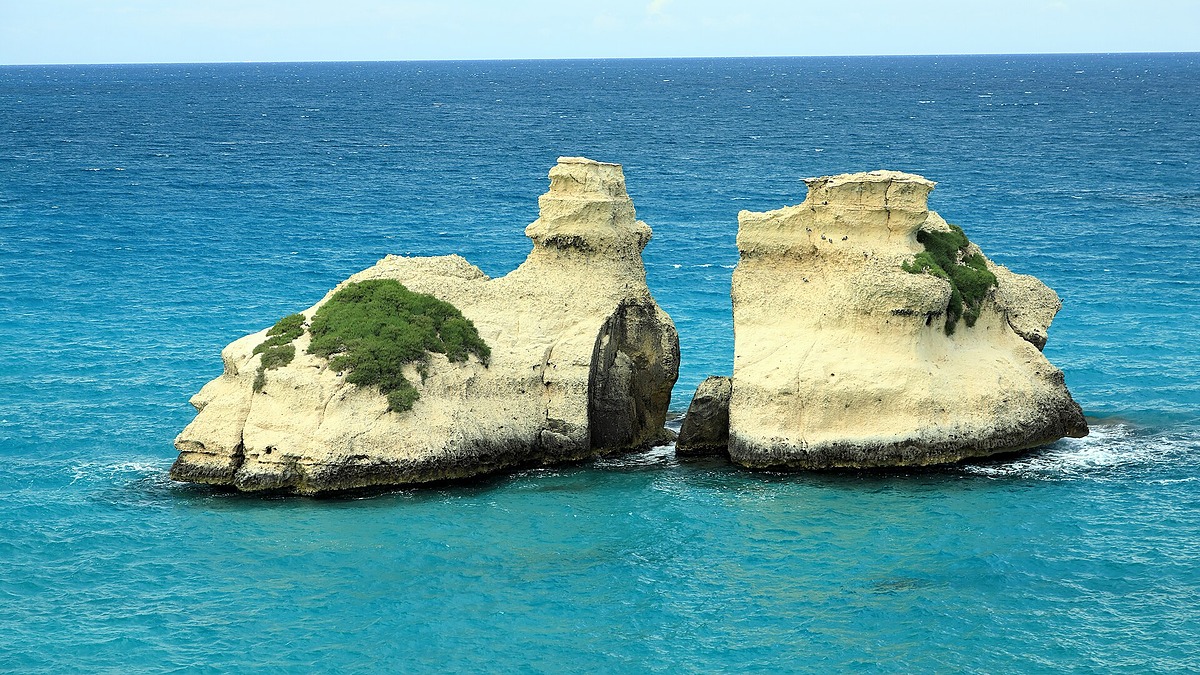
Torre dell'Orso is an 800m bay of very fine white sand between two cliffs, with a pine wood behind and two limestone stacks, Le Due Sorelle, off its southern end. It holds a 2026 Blue Flag, and if you have one beach day in Salento, this is the one.
In July and August 2026, Salento in Bus line 101 left Lecce six times a day and took 45 minutes to an hour, according to the Provincia di Lecce's timetable. Lidos alternate with free strips along the bay.
The free sand fills early in high summer, so be there by 9am or book a lido.
7. Monterosso al Mare (Fegina), Liguria: the Cinque Terre's only real beach
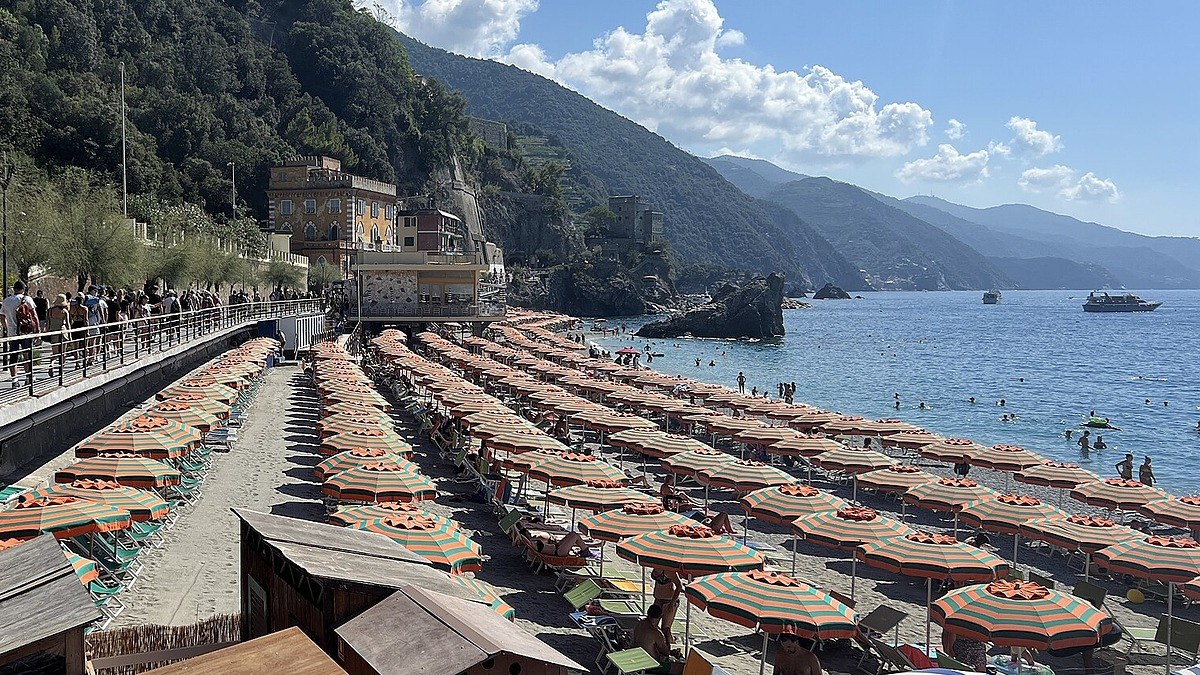
At Monterosso the train stops a few steps from the sand. Fegina beach runs west from the station, a long curve of sand and smooth pebbles that slopes gently into the sea, and it is the only beach in the Cinque Terre long enough to spread out on. The other four villages offer a harbour, a pebble cove or a rock ledge.
Lidos run most of it, with free strips by the station and below the Gigante, a huge Neptune carved into the cliff.
The train is dearer on this stretch. From mid-March to early November, Trenitalia charges a higher Cinque Terre fare on single tickets between Levanto and La Spezia. The park's one-day adult train card cost €22 to €35 from March to October 2026, depending on demand, according to the Cinque Terre National Park.
Levanto, one stop north, has a roomier beach. Our best beaches in Liguria guide covers it and the other villages.
8. San Fruttuoso, Liguria: the abbey cove with no road
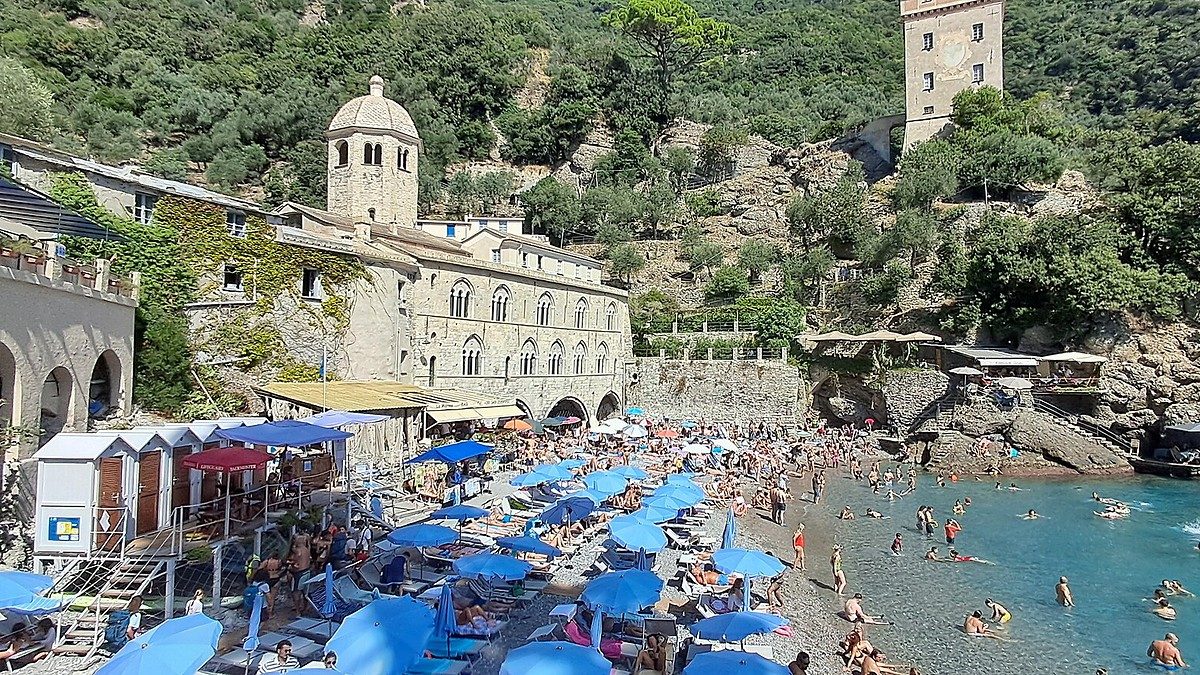
San Fruttuoso is a pebble cove at the foot of the Portofino headland, with a medieval abbey directly behind the beach. There is no road, and the boat is the easy way in.
Golfo Paradiso's boats run from Camogli all year, hourly from 9am in summer. In 2026 a return cost €17 for an adult, and the last boat back left at 7pm in July and August. Part of the beach is free and the rest is a lido.
The midday boats unload a crowd onto a small beach, and rough seas cancel sailings. Take the first boat of the day or one late in the afternoon.
Best beaches in Italy for families, couples and swimming
- Families: Cala Brandinchi and San Vito lo Capo, both sandy with shallow water, or the village beaches at Cala Gonone and Monterosso.
- Couples: Lama Monachile under the old town, San Fruttuoso for the boat and the abbey, Scala dei Turchi at sunset.
- Clear water: Cala Goloritzé first, then the Ligurian pebble coves. City beaches like Mondello can turn green with microalgae in late-July heat, according to Palermo news site Balarm.
Are beaches in Italy free? What a lido costs
The water's edge is free everywhere. National law (Law 296 of 2006) obliges every beach concession to let the public cross to the water's edge in front of it and swim there, at no charge. What you pay for is the sand behind it, let to lidos (stabilimenti balneari) that rent loungers and parasols in rows. A beach marked spiaggia libera is free for your own towel and shade.
How much is free depends on the region. Puglia's 60% rule is the most generous, and its 2026 beach ordinance also said a lido could not stop you bringing your own food or walking through to the sea. Checked November 2026.
Lido prices keep rising. Across ten resorts, the first week of August 2026 cost 6% more than in 2025 and 24% more than five years earlier, according to consumer group Altroconsumo's beach price survey, the best national benchmark.
| Where | What you got | Price | When |
|---|---|---|---|
| Mondello, Sicily | Two loungers and a parasol | About €33 a day (€28 outside July and August) | Summer 2026 |
| Mondello, Sicily | Basic area with lifeguards, toilets and showers, no lounger | €6 a day | Summer 2026 |
| Alassio, Liguria | Umbrella and two sunbeds, first four rows | €340 a week, the dearest of ten resorts | 2 to 8 August 2026 |
| Gallipoli, Puglia | Umbrella and two sunbeds, first four rows | €324 a week | 2 to 8 August 2026 |
| Alghero, Sardinia | Umbrella and two sunbeds, first four rows | €274 a week | 2 to 8 August 2026 |
| Lignano, Friuli | Umbrella and two sunbeds, first four rows | Under €160 a week, the cheapest of ten resorts | 2 to 8 August 2026 |
The bigger change is legal. Under Law 166 of 2024, councils must launch tenders for Italy's beach concessions by 30 June 2027, and current licences end on 30 September 2027. Most lidos should open under their current operators in summer 2027. Nobody has said what the tenders will do to prices, and our guide to the beach rules changing in 2027 follows the process.
Italian beaches that need a ticket or have a cap
Four beaches on or near this list limit numbers in summer. These are the 2026 rules; check each before you travel in 2027.
- Cala Goloritzé, Sardinia: €7 ticket, open 7.30am to 4pm, with no more than 250 people on the beach at once.
- Cala Brandinchi and Lu Impostu, Sardinia: reservation from 1 June to 30 September, opening two days ahead.
- Scala dei Turchi, Sicily: €6 paid on site, groups of 50 every 20 minutes, 1,800 visitors a day.
- Baia del Silenzio, Sestri Levante, Liguria: no ticket, but from 1 July to 31 August 2026 the council capped the bay at 450 people at a time between 8.30am and 5.30pm, according to Genoa listings site Mentelocale.
Checked November 2026. Our Europe beach rules guide lists the caps elsewhere.
Best beaches in Italy in September, June and August
September is the month to aim for in 2027. The sea is close to its August peak, the Ferragosto holiday on 15 August is over, and the lidos and boats are still running. Sicily stays warm longest; in Puglia, go in the first half of the month.
| Sea temperature | June | August | September |
|---|---|---|---|
| Sardinia (Olbia) | 20°C | 25°C | 23°C |
| Puglia (Bari) | 22°C | 26°C | 24°C |
| Liguria (Genoa) | 21°C | 25°C | 23°C |
These are Weather2Travel's long-term averages. Sicily runs warmer: in 2026 the sea off Mondello averaged about 25°C in June, 30°C in August and 28°C in September, according to Open-Meteo's marine model.
June is quieter, with the sea still cool in Sardinia. August is Italy's peak holiday month, so every beach here is at its fullest and the free sand goes early.
The season also ends earlier than the weather. In 2026 Puglia's lido season ran from 23 May to 13 September, and the Salento summer buses stopped the same day. May and October work for a walk on the sand more than a swim: the long-term average off Bari is about 18°C in May.
Which region to book for summer 2027
For the best water, book Sardinia's east coast in June or September, hire a car, stay in Cala Gonone and set an alarm for midnight three days before your Goloritzé day. For sand without a car, base yourself in Lecce for Torre dell'Orso or in Polignano on the Bari line. For warm water into autumn, pick Sicily, with Mondello on the bus and San Vito lo Capo by coach. For villages and boats, stay in Monterosso or Camogli, and swim early.
If the choice is Italy or Greece, our best beach holidays in Europe guide sets the two side by side with daily budgets for each.