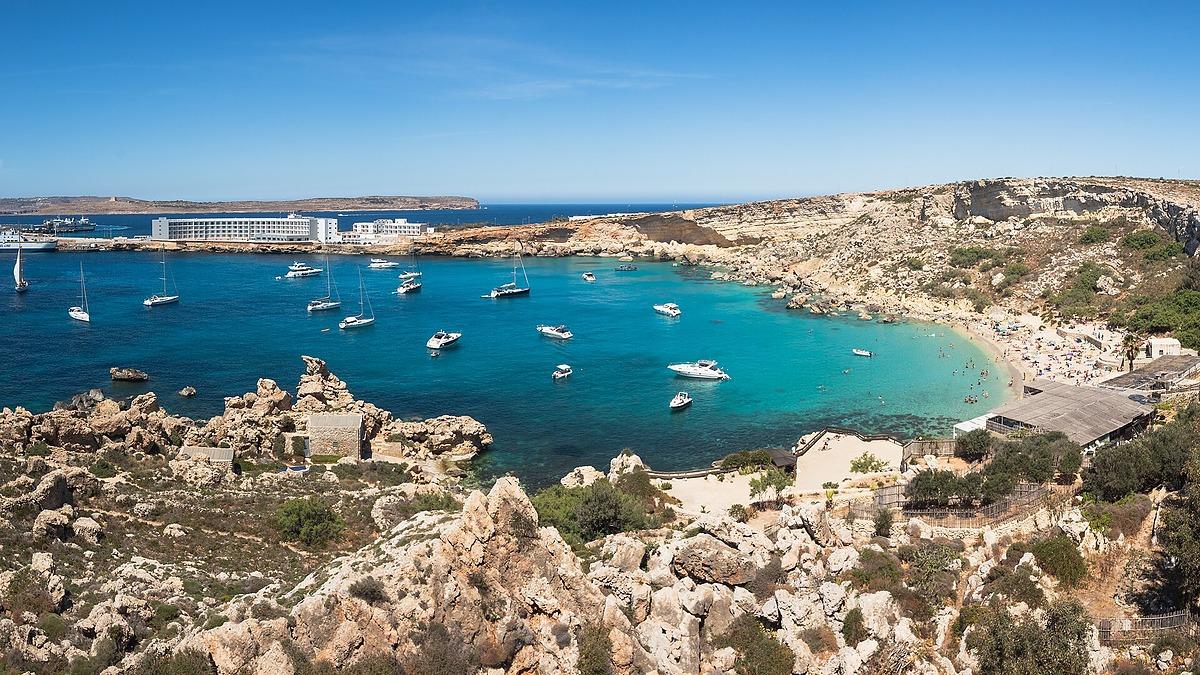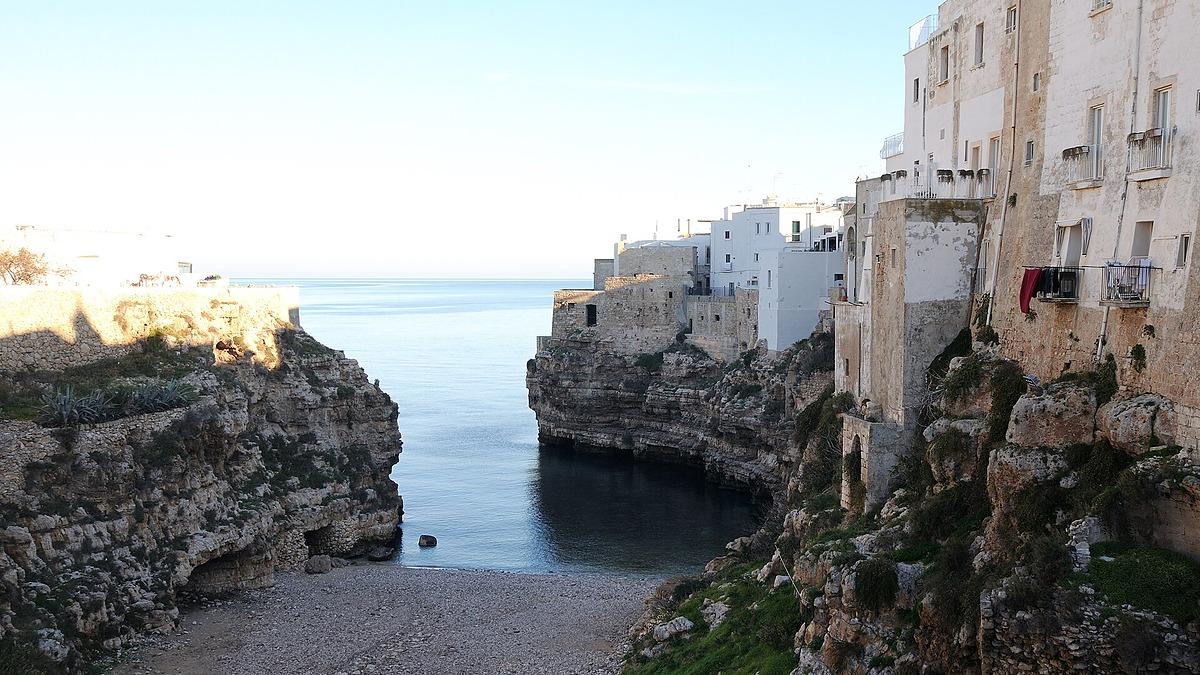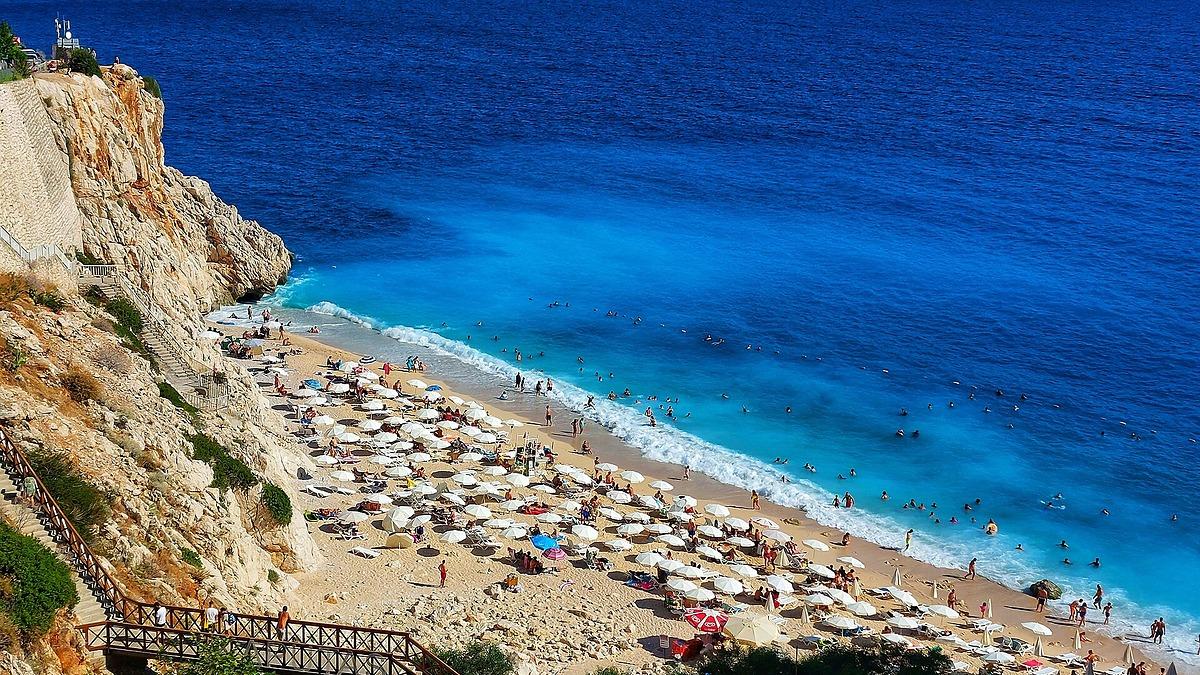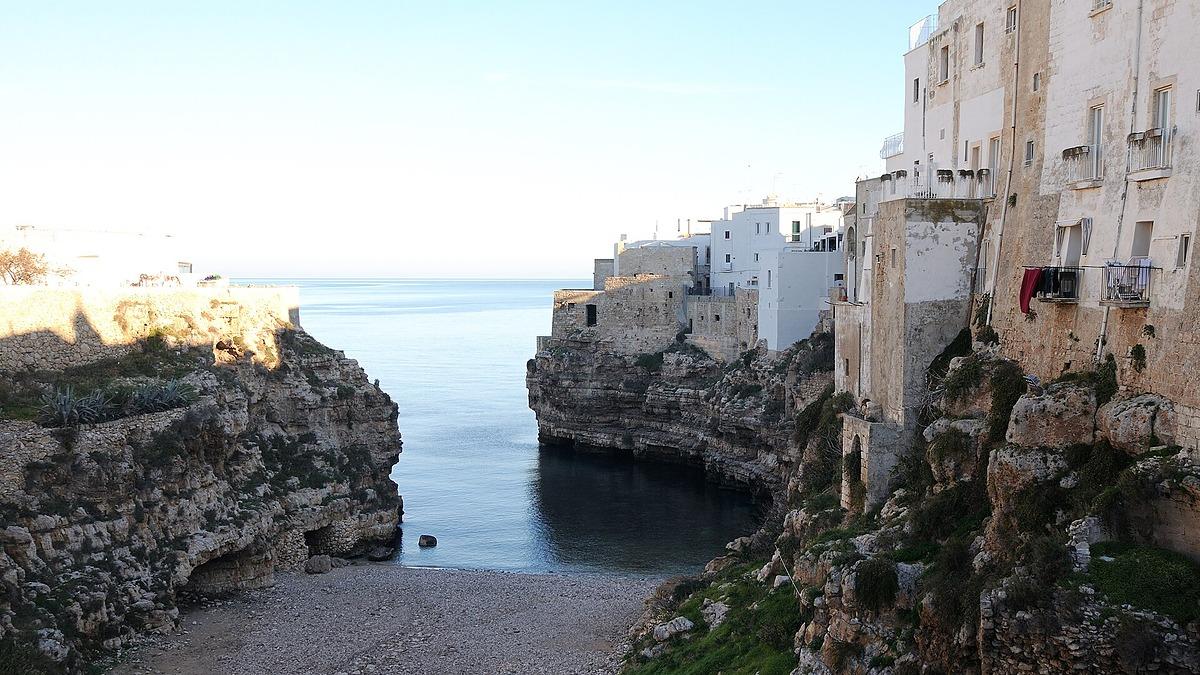
The best beaches in Puglia are spread across two seas, and the right one depends on what you came for: Torre dell'Orso for white sand, Lama Monachile in Polignano a Mare without a car, Punta Prosciutto for free, shallow water. Lama Monachile is barely a beach at all. It is a wedge of pebbles at the end of a narrow inlet, with the old town's houses built to the cliff edge on both sides, and on a summer afternoon there is more swimmer than stone.
The four below run as a road trip from Bari south into Salento: two on the Adriatic north of Brindisi, one on Salento's Adriatic side and one on the Ionian. After them come two free Ionian beaches, Punta Prosciutto and Porto Selvaggio, and four shorter notes.
Most lidos are packed away until spring. Everything below is aimed at next summer, with the 2026 bus timetables, beach rules and prices as the best guide to 2027 and a note of what to check before May.
Adriatic or Ionian: which coast for which trip
Puglia has two seas, and they make different beaches. North of Brindisi, the Adriatic coast around Polignano and Monopoli is low limestone cliff broken by small coves, and the sand starts around Ostuni, where dunes back the shore. Salento, the heel south of Lecce, has both: cliffs and sea caves on its Adriatic side around Otranto, and long, shallow sand on its Ionian side from Porto Cesareo to Pescoluse.
That matters more than any ranking. Families after shallow water head for the Ionian. People who want old towns and a swim off the rocks stay north, where the train does the driving.
| Beach | Coast | Sand or rock | Free or lido | Without a car |
|---|---|---|---|---|
| 1. Lama Monachile, Polignano a Mare | Adriatic, near Bari | Pebbles | Free | Yes: train from Bari |
| 2. Pilone, Ostuni | Adriatic, near Brindisi | Sand, dunes | Free stretches and lidos | Car advised |
| 3. Torre dell'Orso | Adriatic, Salento | White sand | Lidos and free strips | Yes: summer bus from Lecce |
| 4. Spiaggia della Purità, Gallipoli | Ionian, Salento | Sand | Free | Yes: summer bus from Lecce |
| Also worth knowing: Punta Prosciutto | Ionian, Salento | White sand, dunes | Mostly free | No |
| Also worth knowing: Porto Selvaggio | Ionian, Salento | Pebbles, rock | Free, no lidos | Summer bus, then a walk |
If you are weighing Puglia against the islands, our best beaches in Sicily and Sardinia guides cover the Italian alternatives, with more remote coves and fewer trains.
The 4 best beaches in Puglia, from Bari south to Gallipoli
1. Lama Monachile, Polignano a Mare: the cove you can reach by train
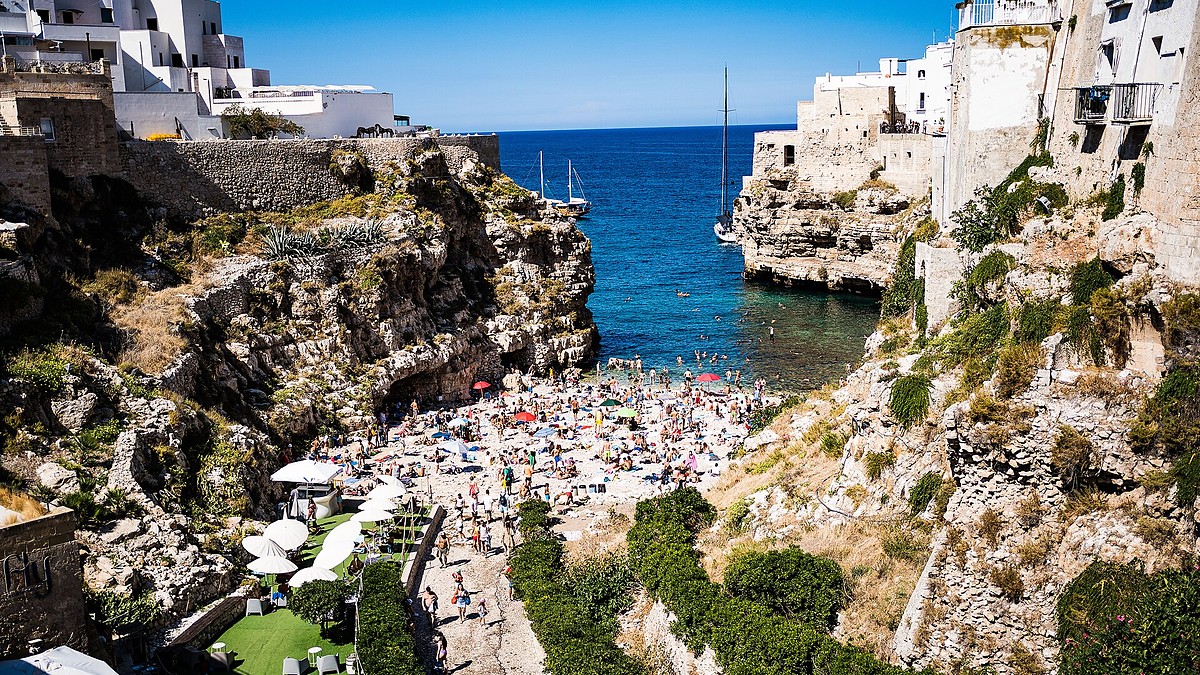
Lama Monachile is the beach on every Puglia poster. A lama is the bed of an old, dry watercourse, and this one cuts a narrow inlet into the limestone right under the old town, ending in a small cove of pebbles. A road bridge spans the gap above the water. Italy's national tourism site, Italia.it, suggests coming early in the morning in summer, or looking down from the town if the cove is full.
No beach in Puglia is easier without a car. For a weekday in November 2026, Trenitalia's journey planner listed 29 direct regional trains from Bari Centrale to Polignano a Mare, about two an hour for most of the day, taking 23 to 43 minutes. The station is about 10 minutes' walk from the old town, and the cove is free, with no lido.
Space is short. The cove is small, the pebbles are hard on bare feet and the steps down make it awkward with a pushchair. Polignano's 2026 Blue Flag covers its other bays, such as Cala Paura and San Vito, not this one. Swim early and spend the middle of the day in the old town. Pilone, the first real sand of the trip, is half an hour down the coast.
2. Pilone, Ostuni: dune-backed sand below the white town
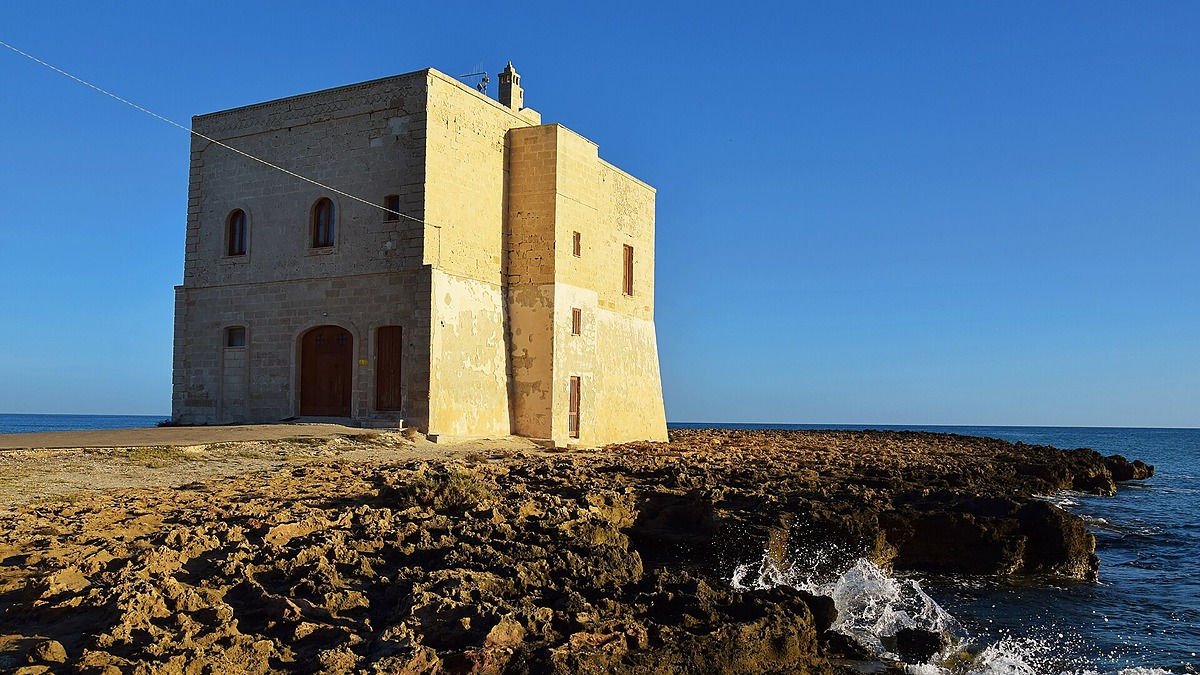
Pilone is the sand beach for anyone staying in Ostuni or the Itria Valley. It lies at the southern end of the Parco Naturale Regionale Dune Costiere da Torre Canne a Torre San Leonardo, and the old stone tower of Torre San Leonardo marks the Pilone shore. Behind the sand are dunes with juniper scrub, protected as part of the park.
Ostuni's park shore, listed as "Litorale Parco Dune Costiere", is on the 2026 Blue Flag list. The Il Pilone campsite's beach is free, with a kiosk and no sunbeds, and lidos such as Bosco Verde run along the rest. Our Pilone Beach review covers where to park and what the lidos offer.
Plan on a car. Pilone is about 12km from Ostuni, around a quarter of an hour's drive, and about 45km from Brindisi airport. From here the road runs south past Brindisi into Salento.
3. Torre dell'Orso: Salento's classic sand beach
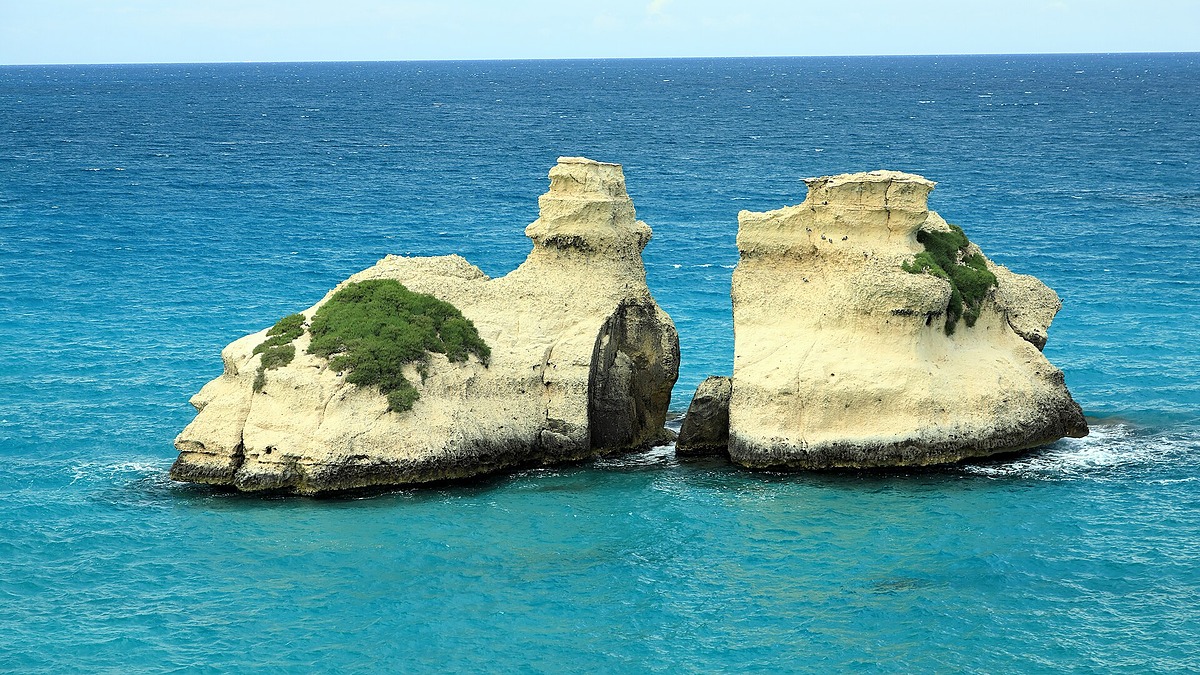
If you only have one beach day in Salento, make it Torre dell'Orso. Puglia's regional tourism portal describes an 800m bay of very fine white sand between two cliffs, with low dunes and a pine wood behind and two sea stacks, Le Due Sorelle ("the two sisters"), off the southern end of the bay. Melendugno, the town it belongs to, holds a 2026 Blue Flag for Torre dell'Orso and its neighbours.
Lidos alternate with free strips along the bay. The free sand fills early in July and August, so arrive by 9am or book a lido.
It is also the easiest Salento beach to reach without a car. In July and August 2026, Salento in Bus line 101 left Lecce's City Terminal six times a day and reached Torre dell'Orso in 45 minutes to an hour before carrying on to Otranto, according to the Cotrap timetable.
The stop before it is the Grotta della Poesia at Roca, a sea-filled sinkhole in the rocks just over a kilometre north, famous for the people jumping into it. From July 2026 the Comune di Melendugno, through its ArcheoRoca partnership, made it a ticketed archaeological area (€5 for non-residents of Melendugno, open daily through September), with swimming and diving banned. Whether the ticket returns in 2027 has not been announced. Checked November 2026.
Look at the grotto from above, then swim at Torre dell'Orso. Across the heel, an hour's drive west, the Ionian coast starts at Porto Cesareo and runs south to Gallipoli.
4. Spiaggia della Purità, Gallipoli: the town beach under the walls
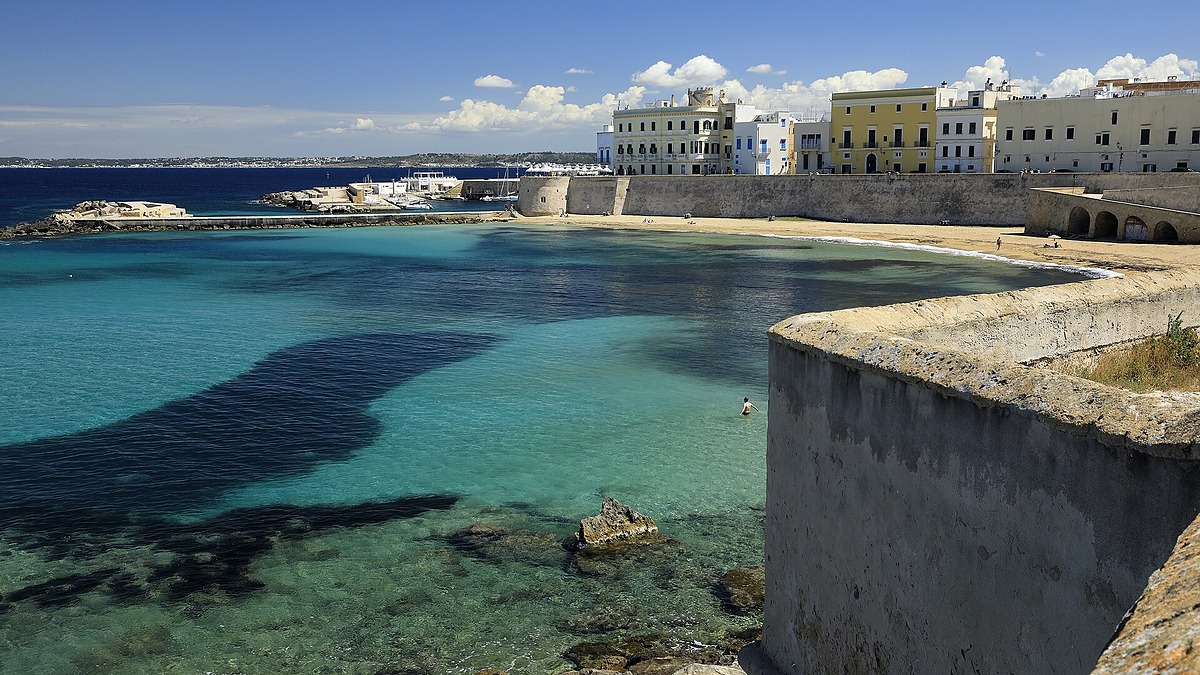
The Spiaggia della Purità (locals say "Puritate") is a narrow strip of sand below the old town of Gallipoli, named after the 17th-century church of Santa Maria della Purità that faces it. It is free, and you can walk to it from the restaurants and alleys of the old town.
Small and central means busy. Arrive early in summer, or come in June or September for space. Choose it to swim in town, then have dinner in the old centre without moving the car.
In July and August 2026, Salento in Bus line 108 ran from Lecce's City Terminal to Gallipoli in under an hour, then on along the Ionian shore to Pescoluse and Santa Maria di Leuca.
Two wilder Ionian beaches, and four more worth knowing
Both are wilder than the four above. Punta Prosciutto is a long run of mostly free sand that you need a car to reach, and Porto Selvaggio is a pebble cove with no lidos at the end of a walk through a regional park.
Punta Prosciutto: the long free beach on the Ionian
Punta Prosciutto is a long, wild beach of soft white sand at the north-west edge of Porto Cesareo, between Torre Colimena and Torre Lapillo. The regional tourism portal calls it mostly free, with a few lidos, and describes shallow, clear water suitable for young children. The dunes behind are protected in the Palude del Conte e Duna Costiera regional park. You need a car: it is about 42km from Lecce, and the 2026 summer shuttle, line 110, ended at Riva degli Angeli, short of the beach.
Porto Selvaggio: a pebble cove at the end of a woodland walk
Porto Selvaggio is a small pebble cove inside the Parco Naturale Regionale di Porto Selvaggio e Palude del Capitano, in Nardò, framed by Aleppo pines. There are no lidos and no road to the sand, only a small refreshment point. You walk in from the Villa Tafuri entrance on the coast road, from Torre Uluzzo, or down a steep mule track from Torre dell'Alto. It is on Nardò's 2026 Blue Flag list, and in July and August 2026 Salento in Bus line 104 from Lecce stopped on the coast road above it eight times a day.
Pescoluse, Baia dei Turchi, Torre Guaceto and Il Ciolo
- Pescoluse (Marina di Pescoluse): the shallow, pale-sand beach south of Gallipoli that Italian guides call the Maldives of Salento. Salve's Blue Flag for 2026 covers Torre Pali, Marina di Pescoluse and Posto Vecchio, and bus 108 stops in the village.
- Baia dei Turchi: a bay north of Otranto inside the Alimini pine woods, reached on foot through the trees.
- Torre Guaceto: a protected nature reserve and marine area on the Adriatic between Ostuni and Brindisi, with sand and dunes. The reserve has run a summer beach shuttle with STP Brindisi, so check its rules and shuttle dates before you go.
- Il Ciolo: a narrow rocky inlet near Gagliano del Capo, at the southern tip of the heel, for rock swimming rather than a beach day.
Free sand rules, and what a lido costs by the week
Puglia has more free sand than its reputation suggests. Its 2015 coastal law (Regional Law 17/2015) reserves at least 60% of each coastal town's state-owned shore for public use and free bathing. Lidos cluster at the popular bays such as Torre dell'Orso, while Punta Prosciutto is mostly free.
The Altroconsumo price survey gives the best benchmark. For the first week of August 2026, an umbrella and two sunbeds in the first four rows at Gallipoli averaged €324 for the week, up 10% on 2025, and among the ten resorts checked only Alassio in Liguria cost more (our best beaches in Liguria guide covers the Riviera and what a lido costs there). That is the busiest week of the year, and lidos also sell single days.
The 2026 regional beach ordinance, reported in April 2026, set two rules that save money. A lido cannot stop you bringing your own food and drink, and it must let anyone walk through to the sea free of charge. The same ordinance set the lido season from 23 May to 13 September 2026. Since it came out in April, expect the 2027 rules in spring. Checked November 2026.
When to go: crowds, seaweed and the August rush
Aim for June or the first half of September in 2027. The lidos are open, the summer buses are running, and the beaches are clear of the August peak, which builds to Ferragosto on 15 August, Italy's biggest beach holiday. In August, be on the sand by 9am at Torre dell'Orso, Lama Monachile and the Purità, or expect to hunt for space.
In 2026 the lido season and the Salento in Bus summer network both stopped on 13 September, and the buses ran a reduced service outside July and August, so a car matters more in June and September. Cotrap, the bus consortium, posted the 2026 timetable in June, so expect the 2027 one around then.
Seaweed is a spring and autumn issue. Posidonia, the Mediterranean's seagrass, sheds its leaves mainly in autumn, and autumn and winter storms pile them into banks on the shore. According to ISPRA, Italy's environment agency, the banks protect beaches from erosion, which is why they are often left in place. In May and October you can find drifts of dried leaves at the waterline, especially on free beaches outside the lido season.
Where to base yourself for the best beaches
For the most beaches without a car, stay in Lecce. Two of the four (Torre dell'Orso and Gallipoli), plus Porto Selvaggio, Pescoluse and the Grotta della Poesia, are on the summer buses from its City Terminal. Polignano is the other car-free base, on the train line from Bari, with Lama Monachile at the bottom of the old town.
Driving, the route runs like this, with distances and drive times from OpenStreetMap routing (allow more in August traffic):
- Bari to Polignano a Mare: about 35km, 35 minutes.
- Polignano to Pilone: about 41km, 30 minutes.
- Pilone to Lecce: about 79km, an hour.
- Lecce to Torre dell'Orso: about 28km, 35 minutes.
- Lecce to Punta Prosciutto, the first stop on the Ionian: about 42km, 50 minutes.
- Punta Prosciutto to the coast road above Porto Selvaggio: about 27km, 35 minutes.
- Porto Selvaggio to Gallipoli: about 19km, 20 minutes.
With a car, split the week: three nights near Ostuni for Pilone and Polignano, then four in Salento for the Ionian sand. To set Puglia against Sardinia, Sicily and Liguria, see our best beaches in Italy guide.