The best beaches in Turkey line the Lycian coast between Fethiye and Antalya, and most of them are pebble. The famous ones each make you work a little: 187 steps down to Kaputaş, a boat to Butterfly Valley, a gate fee for the lagoon at Ölüdeniz. For a whole holiday on one beach, Çıralı is the best of them, a long shore of pebbles and coarse sand below the ruins of Olympos, where loggerhead turtles still nest. For soft sand, go further east to Kleopatra Beach in Alanya.
The seven picks below run west to east along the Turquoise Coast, from the Fethiye peninsula to Alanya, grouped by the town you would stay in. After them come Patara and İztuzu, the two long sand beaches on nearly every list.
In mid-November 2026 the sea off Antalya is still about 22°C, according to seatemperature.info, but beach bars are closing and boats are coming out of the water. This guide looks ahead to May to October 2027. Fees and rules are the 2026 ones, with 2027 prices where they have already been published.
The best coast for beaches in Turkey, and where to land
For most people, the coast between Fethiye and Antalya. Mountains drop straight into the sea, the water is clear, and the beaches are small coves or long shingle bays rather than resort strips. Fly into Dalaman for the western end, an hour or a little more by airport shuttle to Fethiye, or into Antalya for the eastern end. Kaş and Kalkan, in the middle, are a long transfer from either.
East of Antalya the coast flattens and the sand gets finer, which is why Alanya, Lara and Belek fill with all-inclusive hotels. The Aegean coast around Bodrum is a different sea and a different holiday, with smaller bays and more beach clubs.
Pebble is the norm, so pack water shoes. The table sets each beach's surface beside what shapes the visit: how you get onto the sand.
| Beach | Sand or pebble | Getting onto it | Base and airport | Best for |
|---|---|---|---|---|
| 1. Ölüdeniz | Pebble and sand | Dolmuş from Fethiye; gate fee for the lagoon | Fethiye; Dalaman | Calm water, easy access |
| 2. Kabak | Sand and smooth pebbles | Dolmuş, then a steep 30 to 45 minute path | Fethiye; Dalaman | Camping, walkers |
| 3. Butterfly Valley | Pebbly sand | Boat from Ölüdeniz; 250 lira entry | Ölüdeniz; Dalaman | A day trip by sea |
| 4. Kaputaş | Sand with small pebbles | 187 steps from the coast road | Kaş or Kalkan; Dalaman or Antalya | One spectacular swim |
| 5. Çıralı | Pebbles and coarse sand | Bus to the junction, then dolmuş | Çıralı; Antalya | A week on one beach |
| 6. Konyaaltı | Pebble and sand | Free; tram and bus from the city | Antalya; Antalya | Families, city breaks |
| 7. Kleopatra Beach | Fine sand | Free, in town | Alanya; Gazipaşa or Antalya | Soft sand |
Fethiye: Ölüdeniz, Kabak and Butterfly Valley
Three of the best beaches in Turkey lie within 25km of Fethiye on the same mountainous peninsula, and none of them needs a car. Between them they show the whole range of this coast: a lagoon with a gate, a camp at the bottom of a path, and a valley you can only land at by sea.
1. Ölüdeniz and the Blue Lagoon: the famous one, and easy
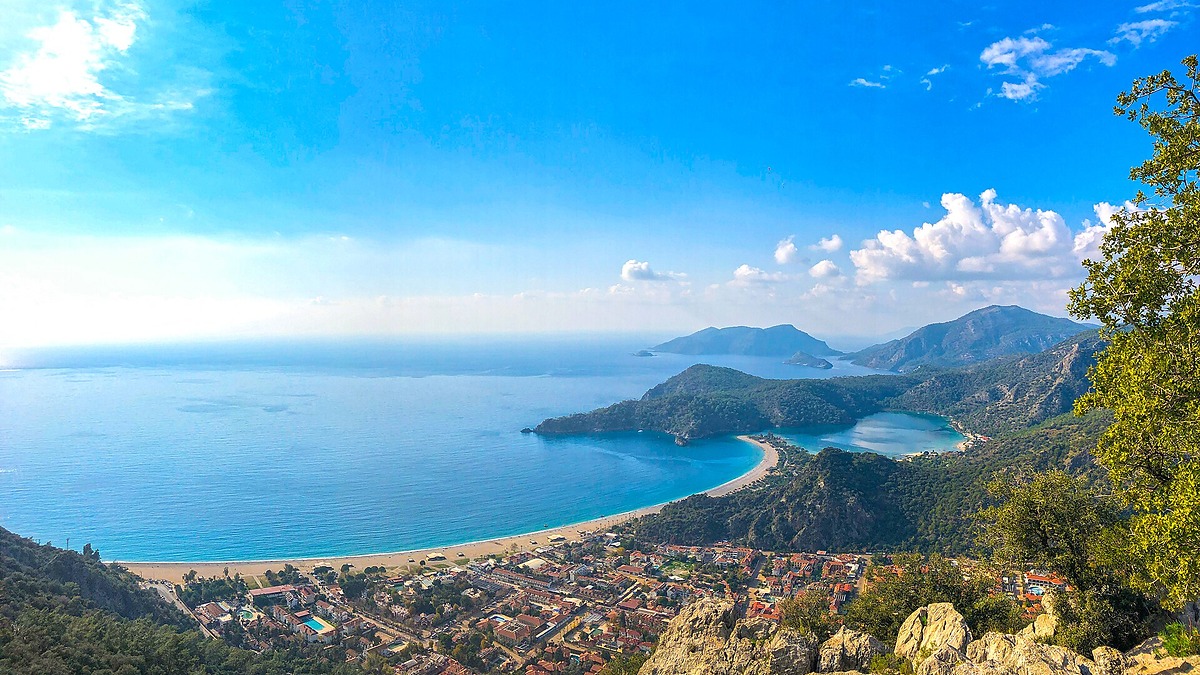
Ölüdeniz is two beaches. Belcekız is the long public sweep facing the open sea, where tandem paragliders from Babadağ, the mountain above, come in to land. The Blue Lagoon is the sheltered water behind the spit at its western end, inside Ölüdeniz-Kıdrak Nature Park, and you pay at the gate.
Under the Ministry of Agriculture and Forestry's 2026 tariff, entry on foot is capped at 85 lira (about €1.50) a person, and parks may charge foreign visitors five to ten times that: up to 850 lira (about €15). Checked November 2026.
The surface is pebble with some sand, and the enclosed lagoon is calm enough for small children. Getting there is easy: Muttaş, Muğla's municipal transport company, runs the 3-40 Fethiye to Ölüdeniz minibus several times an hour from about 7am to 11pm, even on its November 2026 timetable. This is the most developed of the three Fethiye beaches, and in July and August both sides fill up. It is also the jumping-off point for the next two, one up the road and one by boat.
2. Kabak: the camp beach at the end of the road
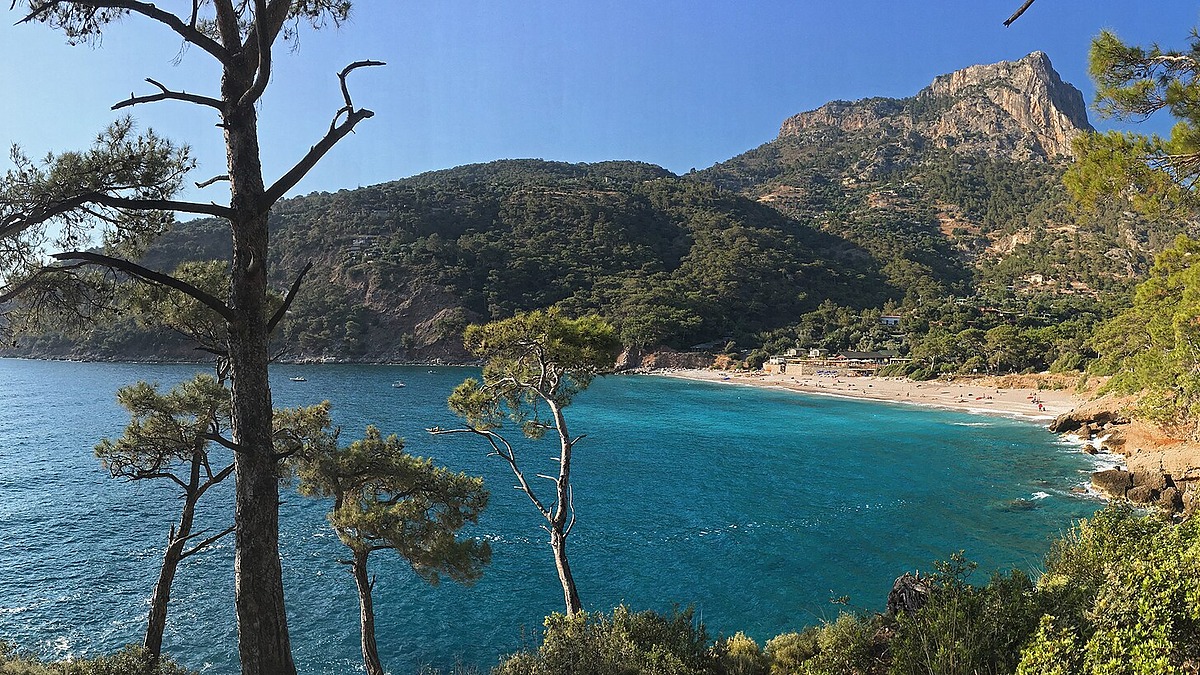
Kabak is a wide arc of sand and smooth pebbles at the foot of a pine-covered canyon, about 25km south of Fethiye and beyond Ölüdeniz. There are no hotels on the sand. Small camps, platforms and bungalows climb the hillside behind it, and a handful of cafés serve the beach.
Getting down is the effort. Dolmuş minibuses run from Fethiye and Ölüdeniz along the coast road to Faralya, and from there a steep trail takes 30 to 45 minutes on foot. The climb back up is steeper than it looks, the national tourism portal GoTürkiye warns. Some camps run 4x4 transfers down the narrow road for guests, booked in advance. The Lycian Way long-distance trail passes through, so walkers come and go all summer.
Kabak suits people who want to stay a few nights and not see a car. As a day trip from Ölüdeniz it is a lot of walking for one swim, and the next valley along is easier to reach by boat.
3. Butterfly Valley: the beach you reach by boat
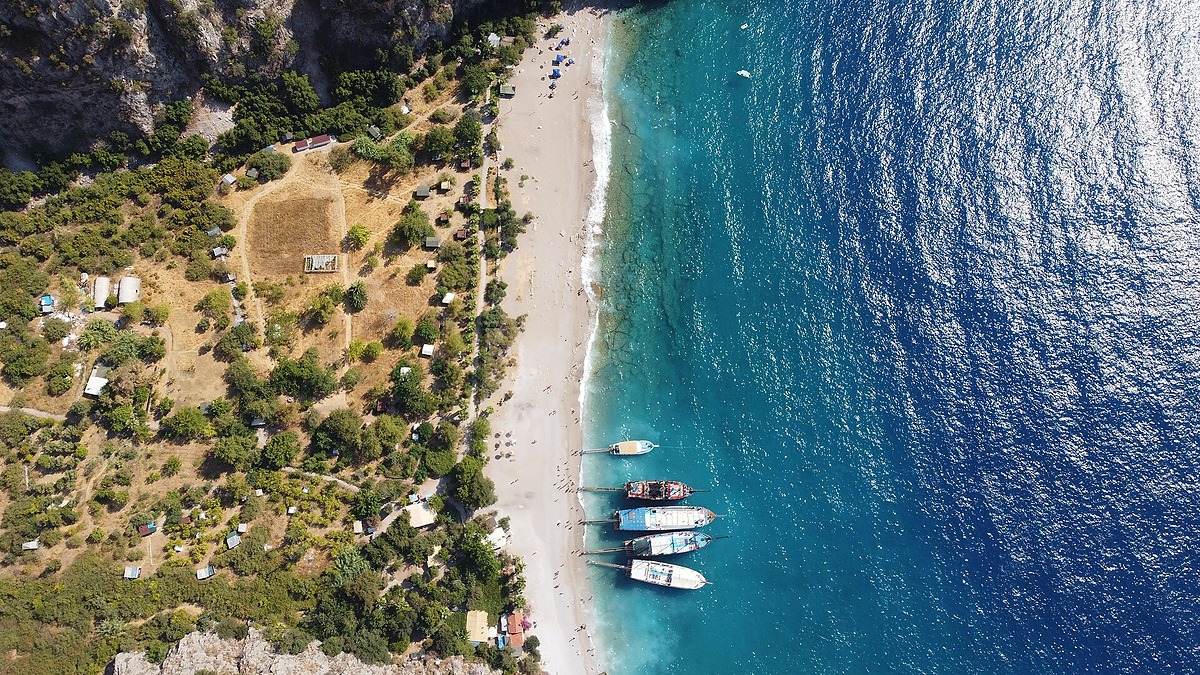
Butterfly Valley (Kelebekler Vadisi) is a short beach of pale sand and pebbles at the mouth of a gorge north of Kabak, closed in by cliffs on three sides. The valley is a first-degree protected natural site, so no concrete building is allowed and the places to stay are a tent camp and wooden bungalows. A path inside the valley leads to a 50-metre waterfall.
Come by sea. The path down the cliff from Faralya is steep and loose, and CNN Türk has reported walkers dying on it. Times and fees below are from Oggusto's July 2026 guide:
- Boats from Ölüdeniz: 11am, 2pm and 6pm, about 30 minutes each way
- Boats back from the valley: 9.30am, 1pm and 5pm
- Landing fee: 250 lira (about €4.50), checked November 2026
Stay a night in the camp and you have the beach to yourself once the last boat leaves. From Fethiye the coast road heads south-east towards Kaş, past the turning for Patara, to a cove you reach by staircase.
Kaş and Kalkan: Kaputaş
Kaş and Kalkan, the two harbour towns in the middle of the coast, share one famous beach, and it sits on the road between them.
4. Kaputaş: one cove, 187 steps
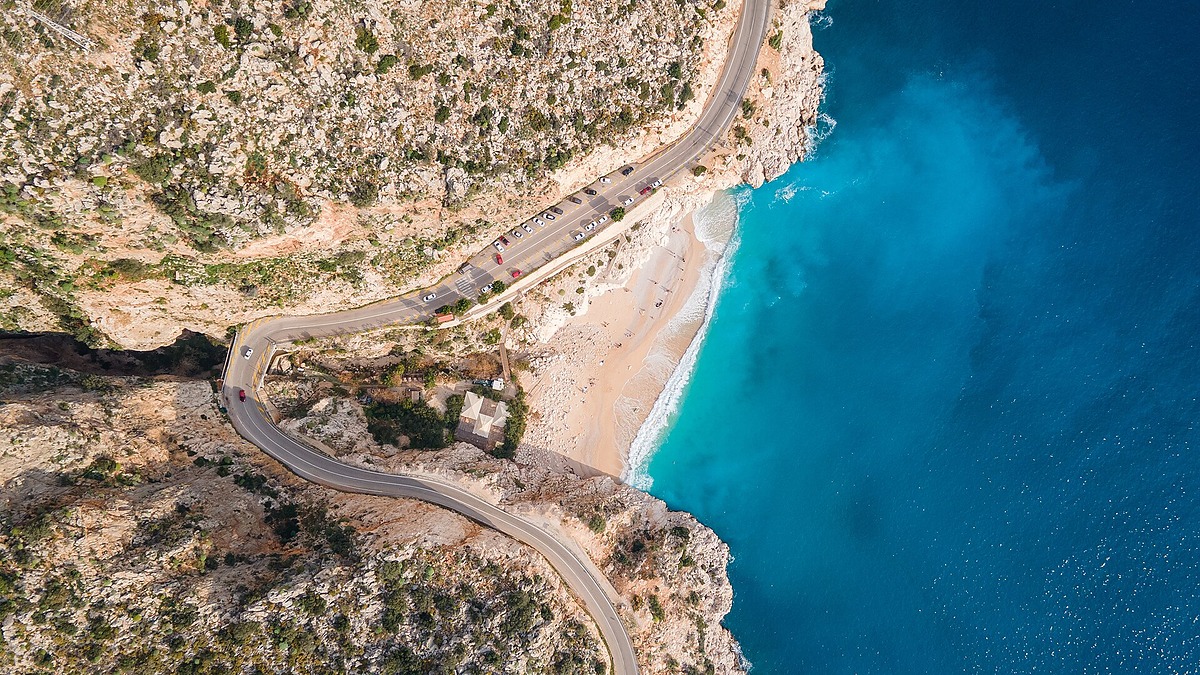
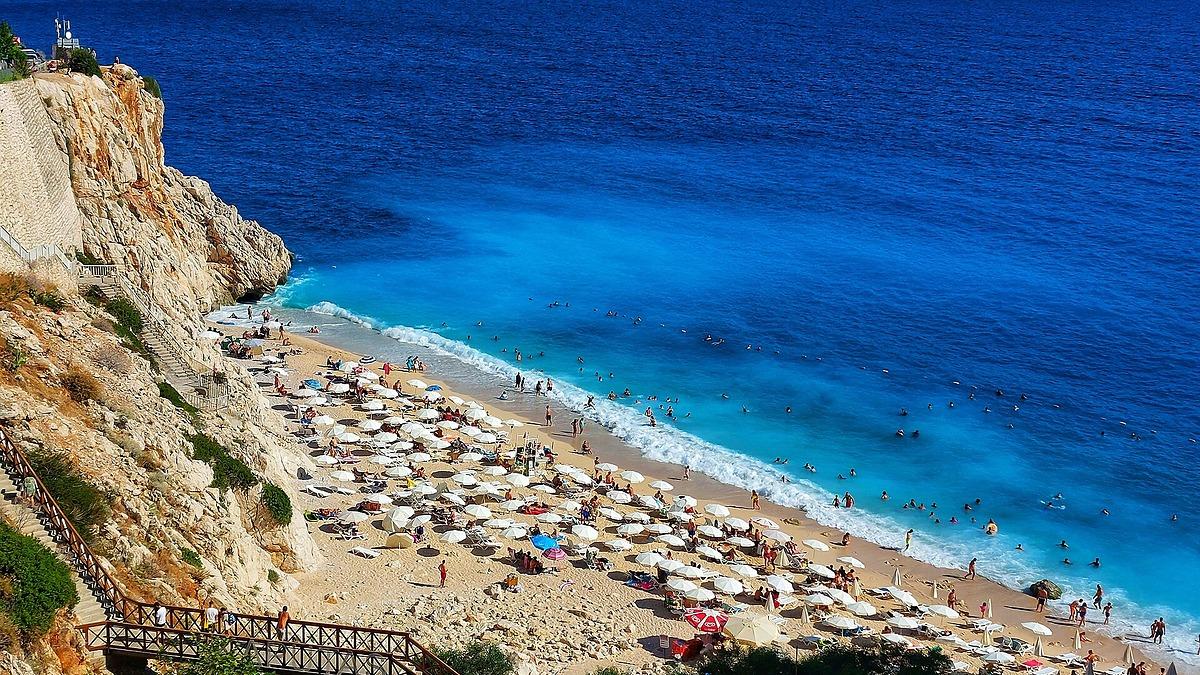
Kaputaş is a narrow beach at the mouth of a V-shaped gorge, between Kaş and Kalkan, with the coast road crossing the gorge on a bridge above it. The water shifts between pale green and blue over the sand. In May 2026 Habertürk reported that Kaputaş was ninth on European Best Destinations' Europe's Best Beaches 2026 list, the only Turkish entry. It is number 29 on our World's 50 Best Beaches list.
Entry is free, and the way down from the road is a staircase of 187 steps, by Antalya Metropolitan Municipality's count. Kaş is about 20km east and Kalkan about 7km west. The Kaş to Kalkan dolmuş stops at the top of the steps, which helps, because roadside parking is limited.
The sand is fine, with small pebbles at the waterline, and the beach is small for the numbers it draws. Book ahead around Turkish public holidays: over Kurban Bayramı in May 2026, Kaş's accommodation was full for about a week, Anadolu Agency reported.
Come early or late in the day, or in September, when our Mediterranean in September guide puts the water off Kaş at about 28°C. Then drive on east, to the beach that suits a whole week.
Antalya's coast: Çıralı and Konyaaltı
5. Çıralı: the turtle beach below Olympos
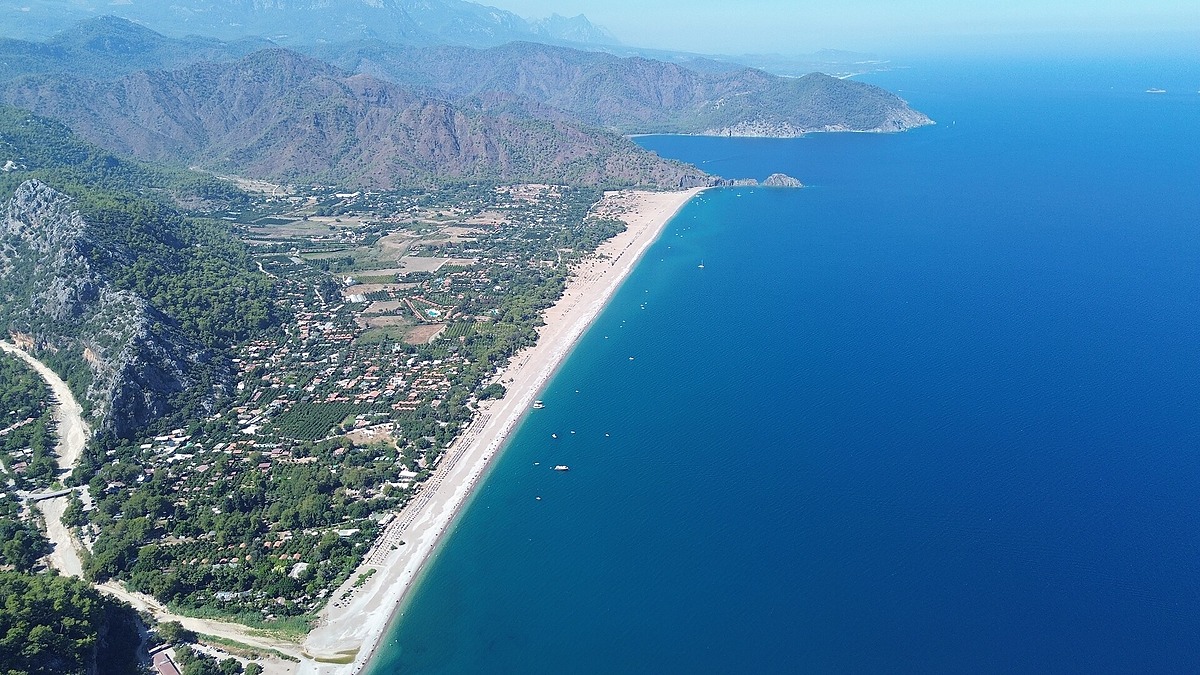
Çıralı is a village of low guesthouses behind a shore of pebbles and coarse sand. Antalya Metropolitan Municipality puts the beach at about 3.5km, running south to the ruins of Olympos inside Beydağları Olympos National Park. It stays dark at night for the loggerhead turtles that nest in the shingle.
The turtles set the rules. Olimpos-Çıralı is one of Turkey's 21 nesting beaches under the national night ban, which in 2026 shut the sand from 8pm to 8am, 1 May to the end of September, Habertürk reported. Çıralı also has its own rule, from the first nest until the last hatchling reaches the sea: no walking on the beach, fires or noise from 9pm to 6am, according to DHA. Tents and vehicles are banned on the sand too, and breaking the night ban carried a fine of 699,245 lira (about €12,500) in 2026. Checked November 2026.
You can walk along the shore to the Olympos archaeological site at the southern end. Entry for foreign adults is €10 on the culture ministry's Olympos ticket page, rising to €11 from 1 April 2027 under the ministry's new tariff.
Getting here takes some planning. Çıralı is about 95km by road from Antalya airport, CNN Türk says. Without a car, take a bus from Antalya's bus station towards Kumluca as far as the Çıralı junction on the main road, then a dolmuş about 7km down to the village.
Çıralı is the one to book for a quiet week. If you only have a weekend in Antalya, the city's own beach is a short bus ride from the old town.
6. Konyaaltı: Antalya's city beach
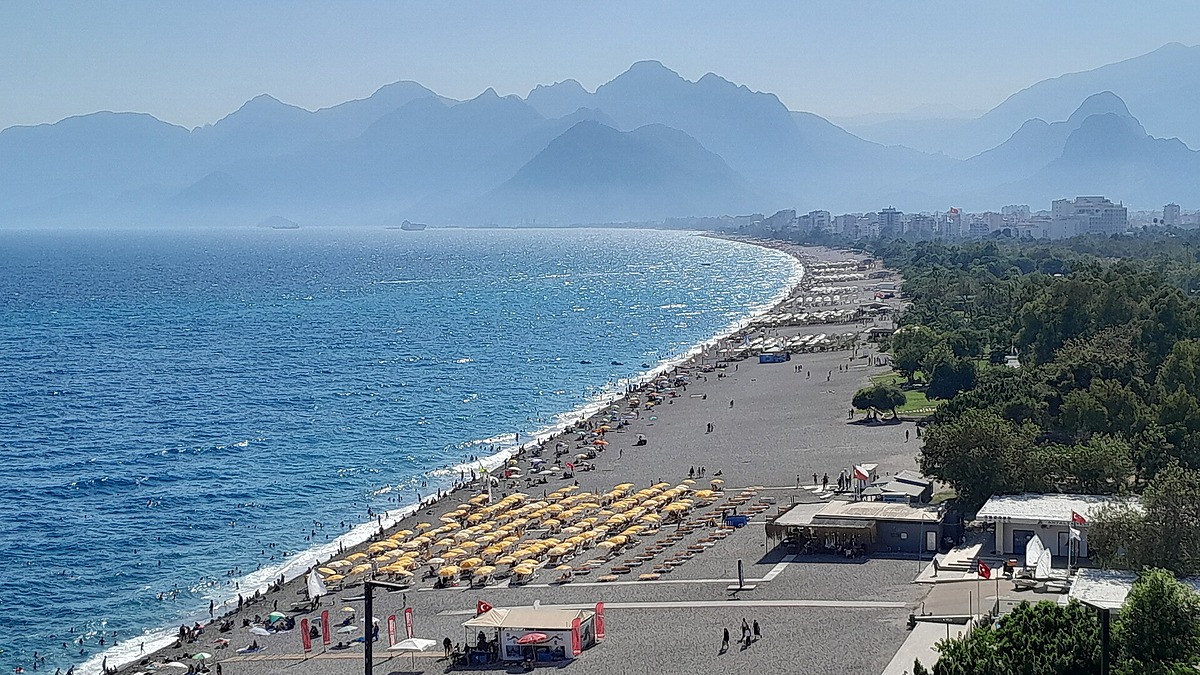
Konyaaltı is about 7km of pebble and sand, by Antalya Metropolitan Municipality's measure, running west from the city's cliffs towards the Beydağları mountains, with a beach park, cafés and hotels behind it. Entry is free. The mountains, not the hotels, are the view.
Sunbeds cost less than you might expect for a city. In summer 2026 a sunbed and umbrella at the metropolitan municipality's beach businesses cost 300 lira (about €5.50), against 400 to 800 lira (about €7 to €14) at private operators, the DHA news agency reported in May 2026. Bring your own towel and food to the public stretches and a day here costs nothing.
From the airport, the Havaş bus route ends at the Migros mall in Konyaaltı. In the city, the T3 tram reaches Müze, near the beach's eastern end. The T2 nostalgic tram between Müze and Zerdalilik has been suspended since a fire on board in June 2026, and the NT07 bus runs the same route (checked November 2026). For sand rather than pebbles, the next pick is 135km east.
Alanya: Kleopatra Beach
7. Kleopatra Beach: the soft sand under the castle
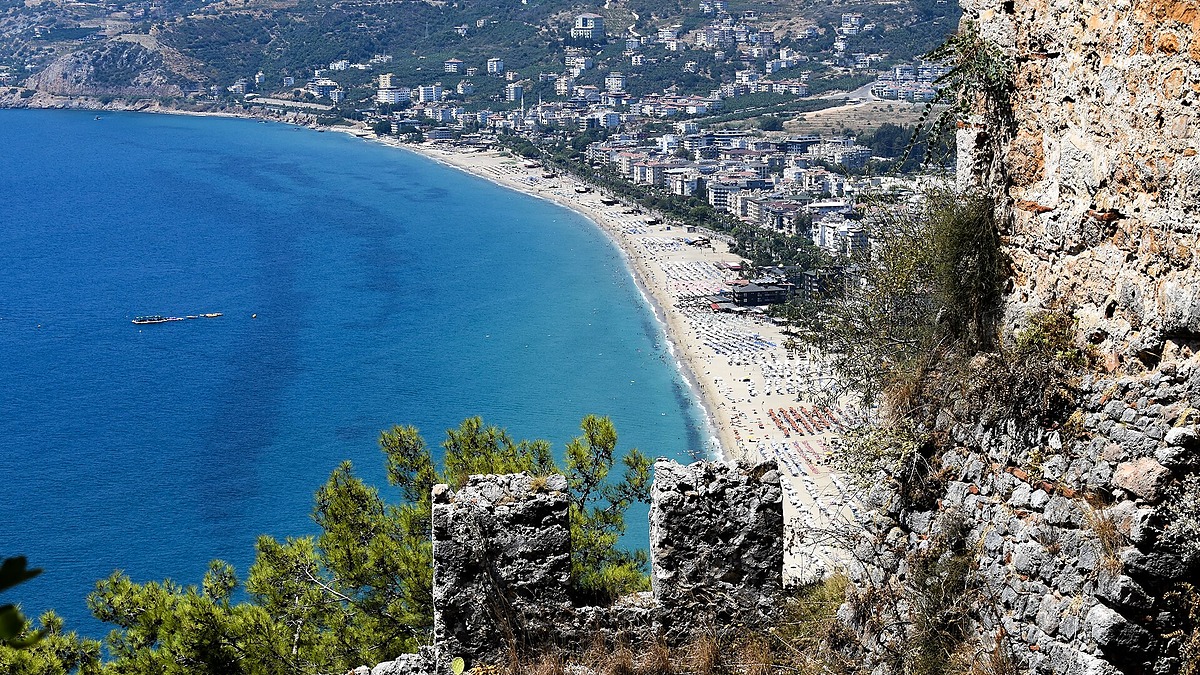
Kleopatra Beach is about 2km of fine golden sand on the west side of Alanya's castle headland, in the middle of town. Entry is free, with sunbeds and parasols for hire, and both public sections, Kleopatra East and West, flew the Blue Flag in 2026. If someone asks for the best sandy beach in Turkey, send them here.
The setting is urban, with hotels and apartment blocks along the road behind the sand, and the water is open sea rather than a cove. In return you get soft sand for children to dig in and a town to walk to for dinner. Gazipaşa airport is about 40km east, and Antalya airport about 120km west. For sand that is longer and far wilder, though shut at night for turtles, go back west.
Patara and İztuzu: the two long sand beaches
These two sit outside the seven because they work better as day trips than as places to stay: the road to Patara's sand runs through a paid site gate, and there is little natural shade. For a long walk on sand, though, nothing above beats them.
Patara, between Fethiye and Kalkan, is about 12km of sand backed by dunes, according to Antalya Metropolitan Municipality, with the ruins of an ancient Lycian city behind it. There is little natural shade, so bring your own. The road to the sand passes the archaeological site's ticket gate, and that sets the cost:
- Ticket: €15 for foreign adults on the culture ministry's Patara ticket page, rising to €16 from 1 April 2027 under its new tariff
- Summer hours: 8.30am to 7pm
- Beach pass: 10 entries for €60 under the same tariff
İztuzu, near Dalyan, is a long spit of sand between the river delta and the sea. You reach it by road, or by river boat from Dalyan through the reed beds. Both beaches are among the 21 turtle-nesting sites under Turkey's night ban, which in 2026 ran from 8pm to 8am, 1 May to the end of September, according to Habertürk's May 2026 report. Checked November 2026.
When the sea is warm: May to October 2027
The south coast's sea lags the sun by about a month, so the water is warmer in September than in June, and the beaches are quieter once European schools go back. Sea figures below are ten-year averages from seatemperature.info; air figures for Antalya are the Turkish State Meteorological Service's long-term averages.
| Month | Sea, Antalya | Sea, Fethiye | Average high, Antalya | Rainy days, Antalya |
|---|---|---|---|---|
| May | 21.4°C | 20.7°C | 25.7°C | 5 |
| June | 25.2°C | 24.1°C | 30.8°C | 3 |
| July | 28.3°C | 27.1°C | 34.2°C | 1 |
| August | 29.5°C | 28.5°C | 34.1°C | 1 |
| September | 28.4°C | 27.3°C | 31.2°C | 2 |
| October | 25.5°C | 24.7°C | 26.6°C | 5 |
| November | 22.6°C | 22.4°C | 21.4°C | 7 |
July and August are the hottest months on land, with average highs above 34°C in Antalya, and the most crowded on the sand. For most people, June and September are better. October still has water above 24°C and works well for Antalya and Alanya, as our October beach holidays guide explains, though more rain arrives later in the month.
May is warm in the air, but the sea is only just above 20°C, and the turtle closures start at Çıralı, Patara and İztuzu. For how the coast compares with the rest of the Mediterranean on price and timing, see our guide to the best beach holidays in Europe.
With one trip to plan, make it September. Fly into Dalaman, stay two nights in Ölüdeniz or Kabak, then drive east past Kaputaş to Çıralı for the rest of the week and fly home from Antalya.