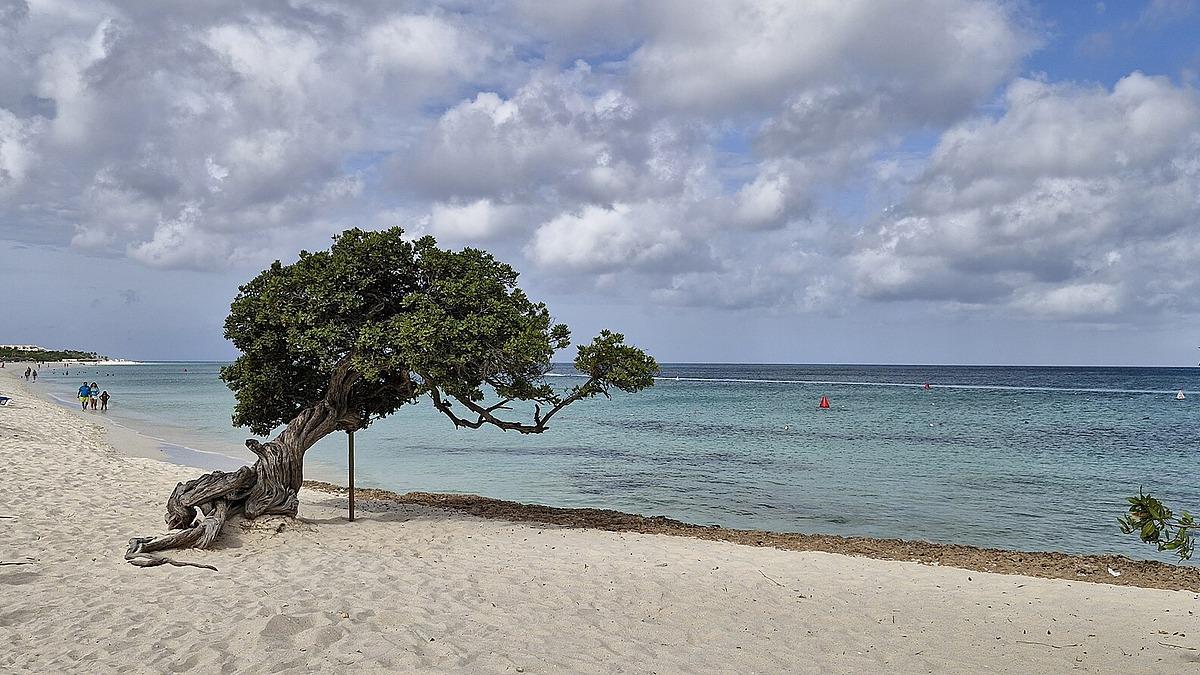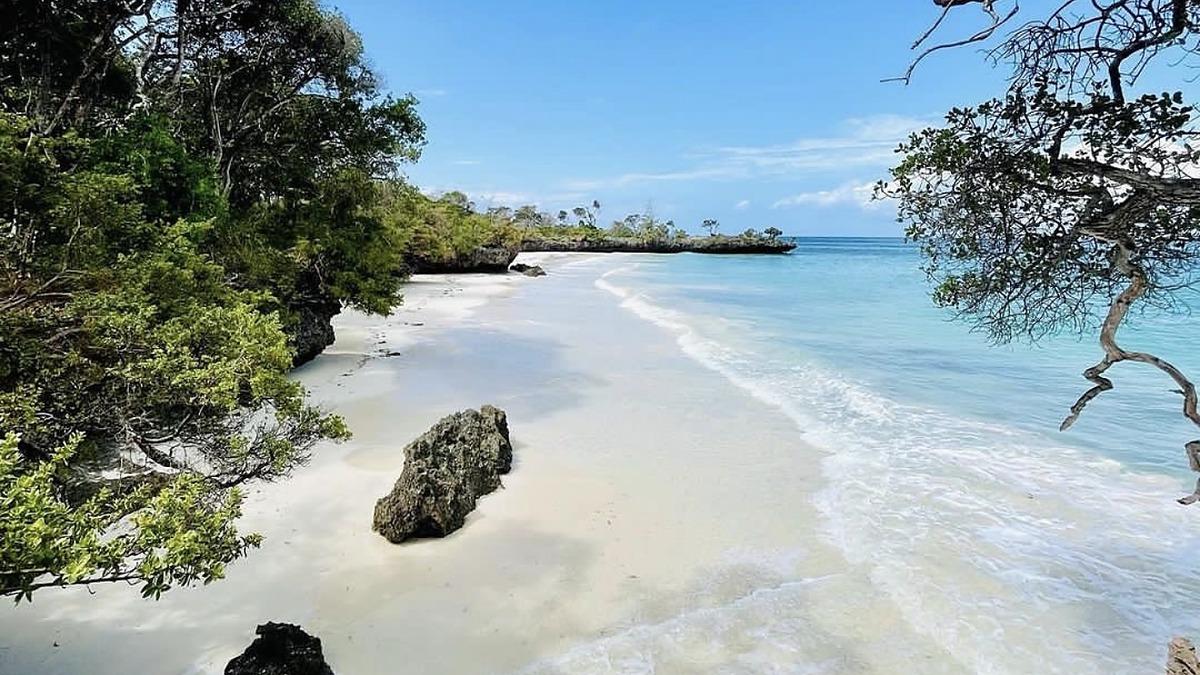
Diani is one beach: 17km of white sand behind a coral reef on Kenya's south coast, under an hour's drive from Mombasa's airport. Zanzibar is an island of beaches, with the old streets of Stone Town at its heart. For December to March, book Diani for the earlier dry season and an easy add-on to a Kenyan safari. Book Zanzibar's north coast for swimming at any tide, and aim for February.
From December 2026 to March 2027 the gap between Diani and Zanzibar is wider than usual. Kenya Met expects the short rains in Kwale County, which includes Diani, to end in the first or second week of December. The Tanzania Meteorological Authority expects rain on Unguja, Zanzibar's main island, to continue into January 2027, and blames a very strong El Niño.
Both countries also now make visitors buy a government insurance policy before they reach the sand, and a trip that takes in both needs two. Weather comes first, because in 2026-27 it moves the dates.
Diani or Zanzibar in December to March: Diani dries out first
Kenya's south coast and Zanzibar share a climate. The short rains fall from about October, the long rains from March, and in between comes a hot, drier spell while the north-east trade wind, the kaskazi, blows. The difference is how long that spell holds.
The World Meteorological Organization's long-term averages show the pattern in rain days per month at Mombasa, the nearest station to Diani, and at Zanzibar:
- December: 7 at Mombasa, 13 at Zanzibar.
- January: 4 at Mombasa, 7 at Zanzibar.
- February: 2 at Mombasa, 4 at Zanzibar.
- March: 5 at Mombasa, 12 at Zanzibar.
Daytime highs reach about 32°C at both in January and February, and NOAA's satellite record puts the sea off Diani at about 28°C in those months, as our guide to beach holidays in January and February sets out.
The 2026-27 forecasts tilt the odds further. Kenya Met's October to December 2026 forecast expects above-average short rains in Kwale that end by mid-December. The Tanzanian authority's Vuli outlook, issued in August, expects normal to above-normal rain on Unguja and Pemba, heaviest in November, with the season ending in January 2027 rather than December. Our El Niño guide covers what the same event means for beaches elsewhere.
So Diani works from mid-December, and Zanzibar is the safer booking from late January, with February the driest month at both. By March, Zanzibar's rain days climb back to 12. If Zanzibar is the trip you want and your dates are flexible, June to September is its classic season: about five rain days a month and highs nearer 29°C. Rain decides which weeks work. The tide decides which hours do.
Tides at Diani and Zanzibar: where you can swim all day
Both coasts have two high and two low tides a day, and both have a big range: more than 3m at spring tides on the Kenya Ports Authority's Mombasa tables, and about 3.2m around Zanzibar. What changes from beach to beach is how far out the reef lies.
At Diani the reef holds a shallow lagoon against the beach. You wade across sand and seagrass at low water and swim at high, and snorkelling is best in the hour or two before low tide. Little seagrass washes up between November and March; most comes ashore from March to October. Our Diani Beach review has the tide pattern, the public access roads and the reef-shoe warning.
Zanzibar splits in two. On the north coast, all of Kendwa can be swum through the day, according to the tide guide published by Altezza Travel, a Tanzanian tour operator. At Nungwi, the water pulls back about 30m on the western side of the tip at low tide and as far as 500m on the eastern side.
The east coast is a different place at low water. At Paje the reef is far offshore, and when the tide drops the inner lagoon empties, sending kitesurfers out to the sandbanks, according to IKSURFMAG's spot guide. On the ebb, women wade out across the flats to tend the seaweed farms.
On these beaches, plan swims around high water and check the tide table every day, because the times move later by roughly half an hour to 40 minutes each day. On Zanzibar, then, the coast you choose matters more than the island.
Which part of Zanzibar has the best beaches?
For a December to March beach week built around swimming, base yourself on the north coast. For kitesurfing or long walks on the flats, go east. Road distances below are from Abeid Amani Karume International Airport on OpenStreetMap's routing.
- North (Nungwi and Kendwa): about 61km to Kendwa and 64km to Nungwi. The best swimming on the island at any state of the tide, with Kendwa the more reliable of the two at low water.
- North-east (Matemwe, Kiwengwa, Pongwe): about 56km to Matemwe. Long, quieter beaches (Altezza calls Matemwe one of the island's most secluded), with tides it describes as noticeable but moderate. Check the tide before you plan a swim.
- South-east (Paje, Jambiani, Bwejuu): about 52km to Paje. Wide white beaches and a lagoon that drains at low tide. Paje placed 47th in the World's 50 Best Beaches 2026. In the kaskazi, mid-December to February, IKSURFMAG puts the wind at 12 to 25 knots from the north.
- Stone Town: about 11km from the airport. A base for a night or two of the old town, not for the beach.
Diani needs none of this sorting. It is one continuous beach from the Kongo River to Galu, and the only choice is which access road to stay near. The bigger split between the two is how you get there.
Getting there, and pairing a safari with either beach
From the UK, the usual gateway for Diani is Nairobi: British Airways and Kenya Airways fly nonstop from Heathrow in just under nine hours. Zanzibar has no nonstop flight from the UK in winter 2026-27. TUI's first, from Gatwick, starts on 3 November 2027, twice a week, according to TUI Group, so it is no help before winter 2027-28.
From Nairobi to Diani, Safarilink flies from Wilson Airport to Ukunda airstrip twice a day in about 1 hour 10 minutes, and Ukunda is five minutes from the beach by taxi. From Mombasa's Moi airport, the drive is about 50km on the Dongo Kundu bypass and takes under an hour. Drive it in daylight: some motorists avoid the bypass after dark because it is often deserted, the Nation reported in March 2026.
If a safari comes first, it may make the choice for you. After the Masai Mara or Tsavo, Diani keeps you in one country, with one travel authorisation and one insurance policy. After the Serengeti or Ngorongoro, Zanzibar does the same for Tanzania, because one Tanzanian policy covers the mainland and the islands.
Mixing the two countries is easy enough by air, starting with Kenya Airways' nonstop flights from Nairobi to Zanzibar. Jambojet has dropped its direct Mombasa to Zanzibar flights, citing fuel costs and Tanzania's insurance rule, Business Daily reported in September 2026. RwandAir and Safarilink still fly between the two. RwandAir's flight runs Kigali to Zanzibar to Mombasa, four times a week at its December 2025 launch (Mondays, Wednesdays, Fridays and Sundays), and Safarilink sells Nairobi to Zanzibar via Mombasa. Check that RwandAir sells the Zanzibar to Mombasa leg on its own before you plan around it. A two-country trip also means two sets of entry paperwork.
The two compulsory insurance policies and the visas
Kenya and Tanzania have each made a government insurance policy a condition of entry, and neither accepts your own travel insurance in its place. Keep your own policy as well, for everything else it covers. The rules below are from the UK Foreign Office pages for Kenya and Tanzania. Checked November 2026.
For Diani, in Kenya:
- Electronic travel authorisation: required for British visitors. Kenya recommends applying at least two weeks before you travel.
- Government travel health insurance: compulsory since 5 October 2026 for most visitors staying under 12 months. You buy it as part of the travel authorisation application, or through Kenya's eCitizen portal if you already hold an authorisation. It is valid for 90 days and covers multiple entries. Foreign policies are not accepted instead.
For Zanzibar, in Tanzania:
- E-visa: apply before you travel at visa.immigration.go.tz. The Tanzanian High Commission in London no longer issues visas.
- Government inbound travel insurance: compulsory for all visitors except residents, even with a personal policy, and valid for up to 92 days. Buy it once, for your first port of entry: from the Zanzibar Insurance Corporation if you land in Zanzibar first (online at visitzanzibar.go.tz or on arrival), or from the National Insurance Corporation if you land on the mainland first. You may be refused entry without it.
- Dates and price: Zanzibar's scheme began on 1 October 2024 at USD 44 per adult, according to the Tanzanian embassy's advisory, and RwandAir's November 2026 travel alert gives the same price. The mainland scheme followed on 1 October 2026, and its regulations set the premium at the equivalent of USD 44, payable in shillings.
- Yellow fever: Tanzania requires a vaccination certificate from travellers arriving from countries with a risk of yellow fever transmission. TravelHealthPro lists a risk in parts of Kenya, so if you fly from Diani to Zanzibar, check its Tanzania page before you book.
The paperwork is the same whichever beach you pick within a country. The days on the coast are another matter.
What Zanzibar adds, and what Diani offers instead
Zanzibar's advantage is Stone Town, the UNESCO-listed old town on the west coast, and it brings rules with it. Zanzibar's authorities can fine visitors USD 700 or more for inappropriate clothing in public, and women's shorts or sleeveless tops away from the resorts may offend, especially in Stone Town, according to the Foreign Office.

A February trip falls inside Ramadan, which is expected to run from about 8 February 2027 to 8 or 9 March, depending on moon sightings, according to The National. Outside hotels and restaurants, avoid eating or drinking in public during the day. Plastic bags are banned, and air passengers hand theirs over on arrival.
Diani offers fewer sights and more beach. Days out run to dolphins and coral at the Kisite-Mpunguti marine park, by boat from Shimoni, and the Angolan colobus monkeys in the forest behind the sand, with a conservation centre on Diani Beach Road.
Cost is harder to compare. When Jambojet dropped its Zanzibar route, its chief executive told Business Daily that as hotel prices rose, Zanzibar "became a very expensive destination". Price both on your own dates before you decide.
Is Diani or Zanzibar safer? Crime, malaria and Ebola
Neither is in an area the UK Foreign Office advises against. In Tanzania, its warning covers only the area within 20km of the border with Mozambique's Cabo Delgado province. In Kenya, the coastal areas it warns against are far north of Diani. It does say terrorists are very likely to try to carry out attacks in Kenya, and that attacks in Tanzania cannot be ruled out. Checked November 2026.
Crime is the everyday risk on both coasts. In Kenya, the Foreign Office advises against walking alone in isolated areas, even in daylight, and says crime often rises over Christmas and New Year. For Zanzibar, it reports incidents in Stone Town, at hotels and on popular beaches, advises against walking alone at night, and added advice on hotel burglary in its 30 October 2026 update.
Lifeguards are not a given at Diani: for Christmas 2023, Kenya News Agency reported Kwale's governor saying lifeguards would be deployed on Diani's beaches, so don't count on that cover at other times. Book boat trips through a reputable operator rather than a beach seller. Swim where other people are swimming, and on Zanzibar's east coast, mind the incoming tide on the flats.
Health is close to a draw. TravelHealthPro rates the malaria risk as high on both coasts, Zanzibar included, and recommends antimalarial tablets. Kenya also has Ebola to watch: by 11 November 2026, the European Centre for Disease Prevention and Control counted nine cases and two deaths, all in one cluster, with the last patient discharged that day. Kenya's health ministry is running a 42-day countdown from that discharge, so the outbreak can be declared over on 23 December 2026 if no new case appears. Check TravelHealthPro's Kenya page before you pay a deposit and again before you fly. Checked November 2026.
Diani or Zanzibar: which to book for your trip
- After a Kenyan safari: Diani. One country, one policy, and a short Safarilink hop from Nairobi.
- After a Tanzanian safari: Zanzibar, on one Tanzanian policy.
- A trip in mid to late December: Diani, where the rains should be over.
- Swimming whenever you like: Kendwa or Nungwi on Zanzibar's north coast.
- Families with small children: Diani, where the lagoon is shallow enough to wade at low water.
- Kitesurfing: Paje, for flat water in the lagoon in the kaskazi. Our Diani review covers Diani's kite seasons.
- Old streets, food and history: Zanzibar, for Stone Town.
- Both in one trip: possible, with two insurance policies, a check on yellow fever and a Safarilink or RwandAir flight between them.
If you can go only once between December 2026 and March 2027 and want the surest weather, go to Diani in January or February. If Zanzibar is the one you have been picturing, book February, stay on the north coast and keep Ramadan in mind for days in Stone Town.