On an average January afternoon at Tenerife South airport the thermometer reaches 21.7°C. At the Lanzarote and Fuerteventura airports it stops a degree lower. Those are the long-term averages of AEMET, Spain's weather agency, and that one degree settles the argument over the warmest Canary Island in winter: south Tenerife wins, narrowly. What you feel on the sand from December to March depends far more on which coast you choose than on which island.
Tenerife and Gran Canaria are high, steep islands, and their south and south-west coasts lie in the lee of the mountains. Lanzarote and Fuerteventura are low and open, sunnier on paper and more exposed in practice.
Which Canary Island is warmest in winter?
To settle it, the figures need to come from one source. These are AEMET's 1981 to 2010 climate normals for the four main airports, all close to sea level, for January, the coolest month:
- Tenerife South: 21.7°C by day, 15.2°C at night, 193 hours of sunshine, rain on about 2 days.
- Gran Canaria: 20.8°C by day, 15.0°C at night, 184 hours of sunshine, rain on about 3 days.
- Lanzarote: 20.7°C by day, 14.0°C at night, 203 hours of sunshine, rain on about 3 days.
- Fuerteventura: 20.6°C by day, 14.7°C at night, 190 hours of sunshine, rain on about 2.5 days.
South Tenerife is the warmest and has the fewest rain days. Lanzarote is the sunniest, with the coolest nights. Gran Canaria sits mid-table, though its airport is on the breezy east coast rather than in the resorts of the south.
The pattern holds through February, when every airport gains a few tenths of a degree and Tenerife South reaches 22.0°C. The real gap in the Canaries is not between islands but between north and south. At Tenerife North airport, 632m up on the cloudy side of the island, the January high is just 16.0°C, with rain on almost 8 days. That cloud is the first thing to avoid, and the second is the sea's slow cooling through the winter.
Winter sea temperature by island: can you swim in January?
Yes, in every island's sea, if you are used to British water. NOAA's daily satellite-based record (OISST), averaged over the five winters from December 2021 to March 2026, gives these January figures for the open sea off each coast:
- Off Costa Adeje, south-west Tenerife: about 20.8°C.
- Off Maspalomas, south Gran Canaria: about 20.5°C.
- Off the Jandía coast, south Fuerteventura: about 19.9°C.
- Off Puerto del Carmen, Lanzarote: about 19.8°C.
The western seas are about a degree warmer, so the order matches the air. December is the warmest month of the winter in the water, at about 22°C off Costa Adeje and 21°C off Lanzarote. February and March are the coolest: in February 2026 the sea off Lanzarote and south Fuerteventura averaged about 18.7°C.
Even Lanzarote's sea stays mild: in those five winters, the coldest single day off Puerto del Carmen was about 17°C. What sets the eastern islands apart is exposure to the wind.
Wind in winter: why Fuerteventura and Lanzarote feel cooler
The trade winds that made Fuerteventura and Lanzarote famous for windsurfing are mostly a summer story. In July, Gran Canaria's airport averages about 42km/h and Lanzarote's about 30km/h, according to NOAA's daily records for the island airports from 2016 to 2025.
Over December to February as a whole, the same records show about 18 to 19km/h at all four. February is the breeziest of the three months, at about 22km/h at Gran Canaria's airport.
So the eastern islands are not much windier in winter. They are less sheltered. Teide rises to 3,715m in the middle of Tenerife and blocks the north-easterly flow from the south-west coast, and Gran Canaria's peaks do the same for Maspalomas and Mogán. Lanzarote and Fuerteventura are low, so a breeze at 18km/h crosses a 20°C beach with nothing in its way, off a sea a degree cooler.
The difference shows up where the land does the sheltering. At the Santa Cruz de Tenerife station, below the Anaga hills, the January wind averages about 9km/h, half the airport figure. That is the rule for the whole archipelago in winter: look for a south- or west-facing beach behind high ground or a breakwater, starting with the island that has the most of them.
Tenerife in winter: stay in the south-west
Tenerife has the warmest numbers and the most reliable shelter, mainly along the resort coast from Los Cristianos through Playa de las Américas to Costa Adeje. AEMET's December high at Tenerife South airport is 22.8°C, the best of the islands for a Christmas trip. Playa del Duque, at the smart end of Costa Adeje, has calm water, and our Tenerife beaches guide covers the southern beaches one by one.
El Médano is the exception on the south side. A few kilometres from the airport on the south-east coast, it is the island's wind capital, so it suits kitesurfers more than anyone planning a long lie on the sand. The north, around Puerto de la Cruz, is greener and cloudier because it faces the trade winds that make Tenerife North airport so grey.
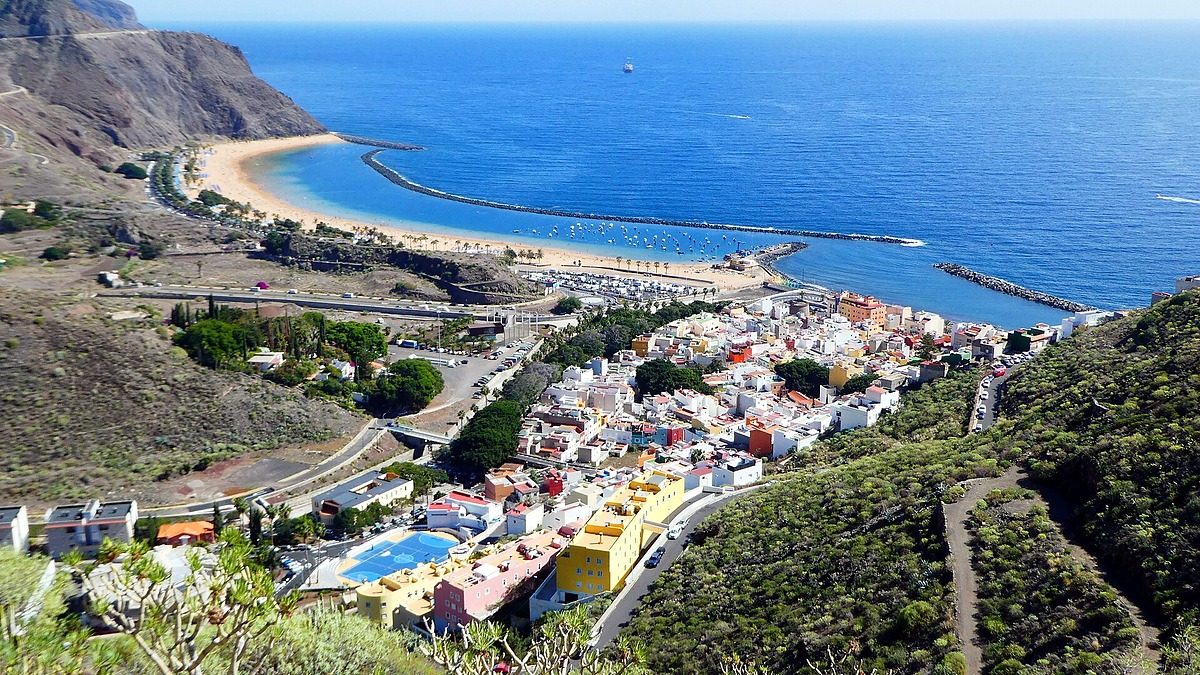
On the north-east coast, the calm option is Playa de las Teresitas, Santa Cruz's city beach of imported Saharan sand behind a breakwater. AEMET gives Santa Cruz a January high of 21.0°C and about 178 hours of sun, and the water stays flat enough for children and slow swimmers.
Gran Canaria in winter: Maspalomas and the Mogán coves
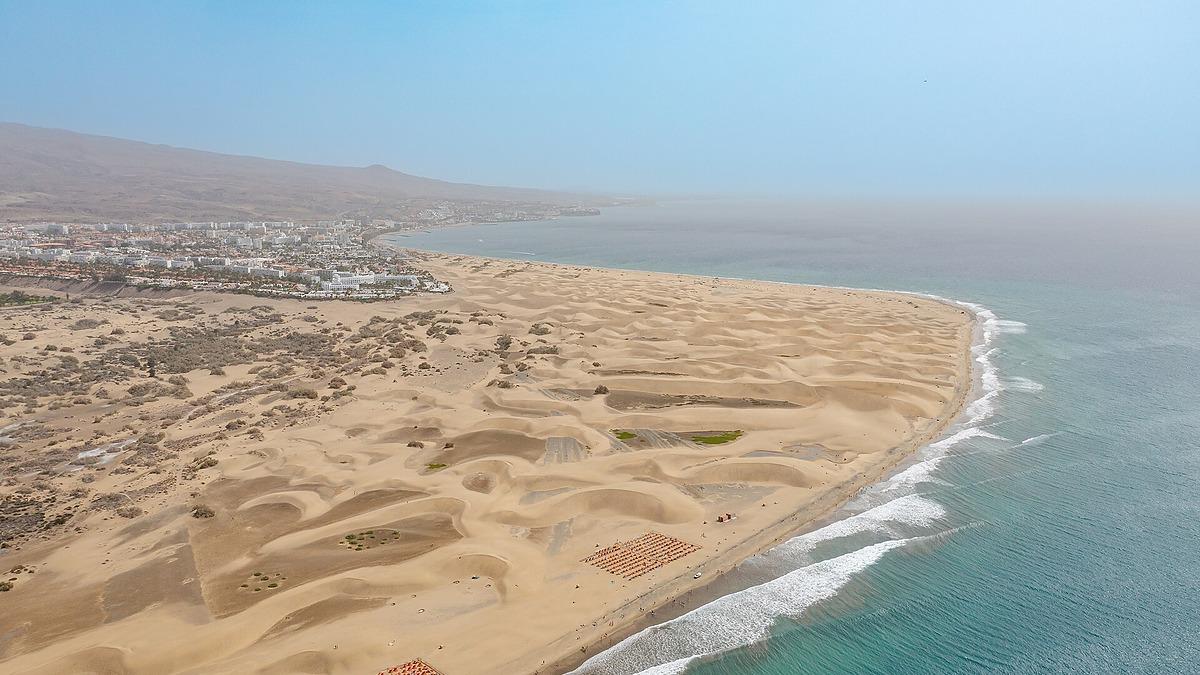
Gran Canaria's winter is a south-coast story. Maspalomas, with its 2.7km beach and protected dunes, faces south off the bottom of the island; our winter sun beaches guide covers it, with the sea there at 20 to 21°C in January. West of it, the coast turns into a string of smaller resort coves in the municipality of Mogán, where much of the shelter is man-made.
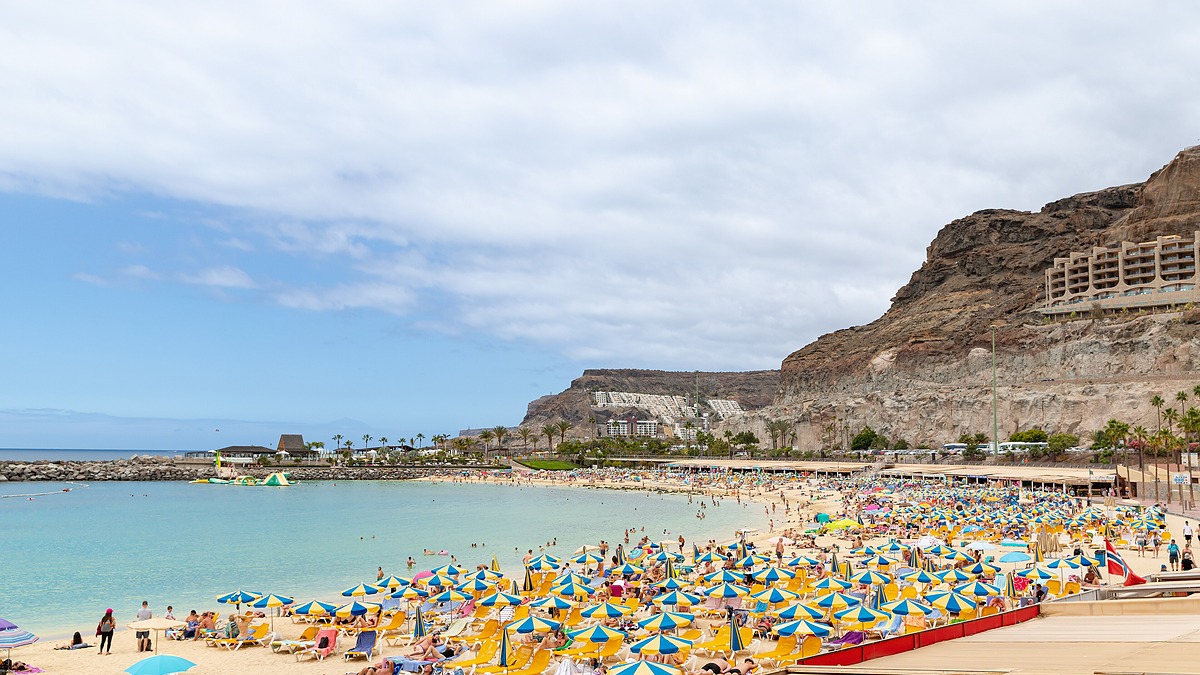
Playa de Amadores is the clearest example. Hello Canary Islands, the regional tourism board, describes a 488m beach of pale sand between two breakwaters, so the water stays calm, with sunbed hire, restaurants and a 1km promenade to Puerto Rico.
Hotels in Mogán's resorts, Amadores included, may ask for a tourist tax of €0.15 a person a night. The Canary Islands High Court annulled it in July 2026, but the ruling is not final, and Jet2 still lists the charge as payable at the hotel; our Fuerteventura tourist tax guide has the background. Checked November 2026.
The north-west is the other Gran Canaria. Guayedra Beach, a black-sand and boulder bay below the Tamadaba cliffs, is for a sunset walk in winter: the winter swell rules out swimming. East of Gran Canaria, the islands flatten out and the beaches get bigger.
Fuerteventura and Lanzarote in winter: more sun, less shelter
The regional tourism board calls Fuerteventura "the beach of the Canary Islands", and in winter the trick is finding calm water out of the breeze. On the Jandía coast in the south, Playa de Sotavento runs for about 9km south of Costa Calma. The beach itself is windy, but at low tide a shallow lagoon forms behind its sandbars, flat enough to wade.
The Atlantic side of the same peninsula is another matter: Playa de Cofete is several kilometres of empty sand at the end of a dirt road, with strong swell, no lifeguard and a sea the regional tourism board rates as dangerous.
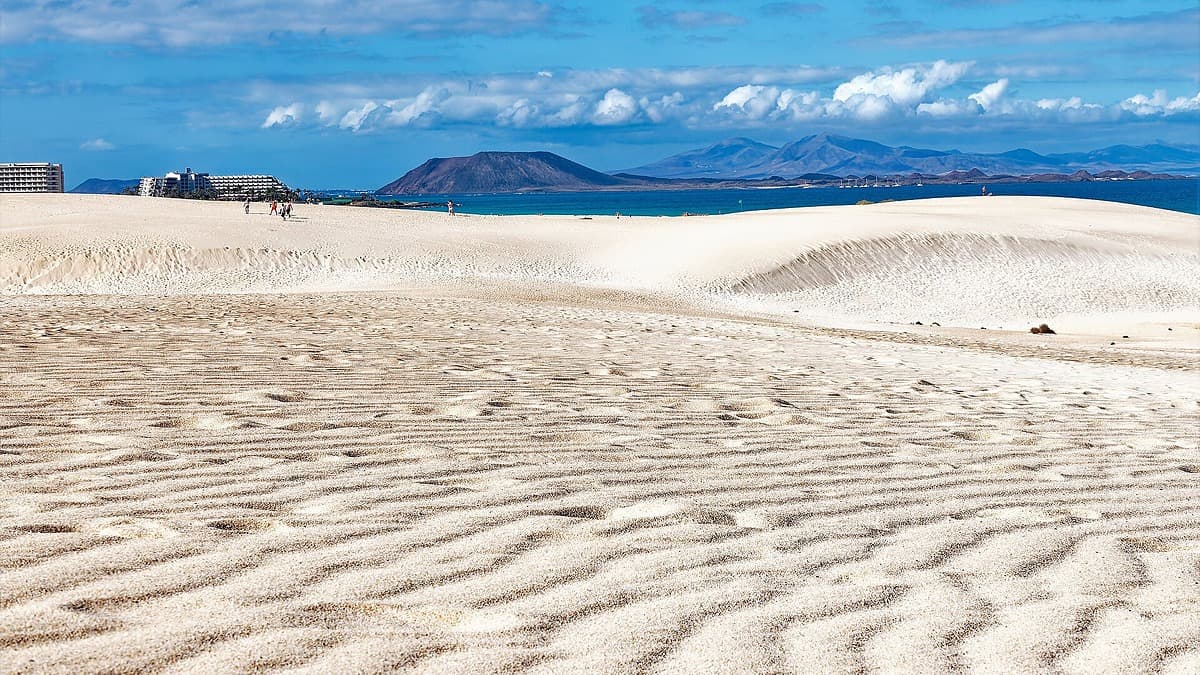
For a family week, our Fuerteventura beaches guide points to Caleta de Fuste, a protected bay on the east coast with calm water, about 10 minutes from the airport. In the north, Corralejo's dunes face the north-east, into the breeze. La Oliva council, which covers Corralejo, has given initial approval to a €0.56-a-night tourist tax that is not yet in force.
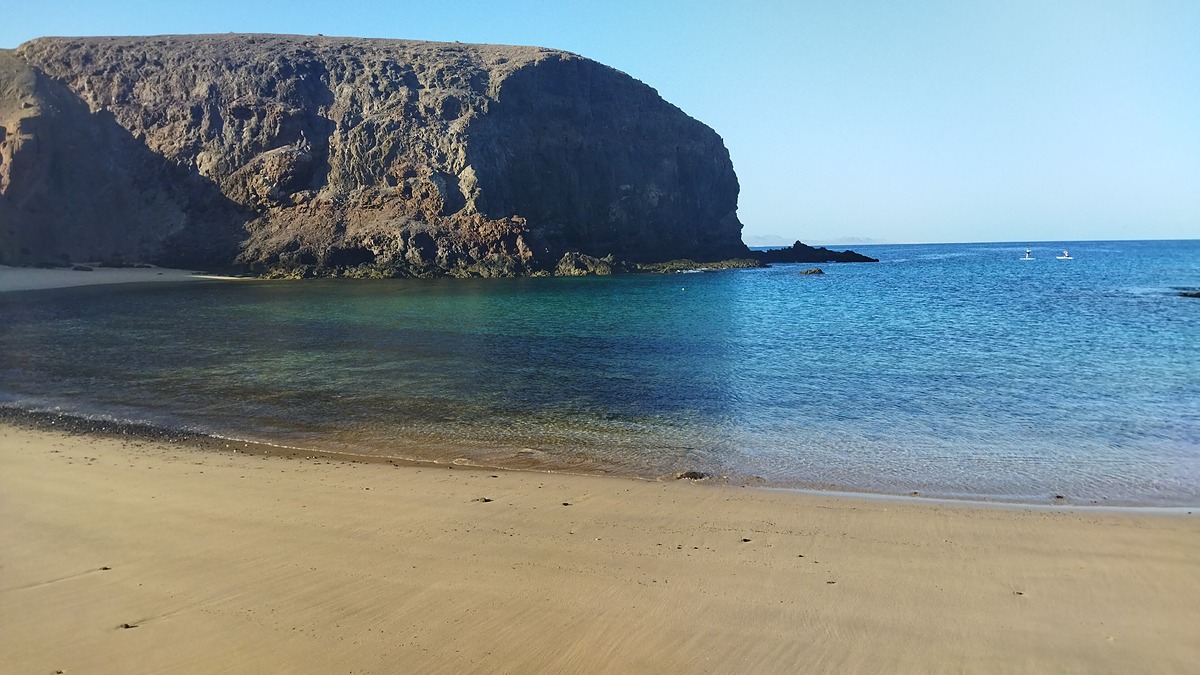
Lanzarote's best-known sheltered swim is at Papagayo, east of Playa Blanca in the south, inside the Los Ajaches natural monument. It is a 120m cove of pale sand that Hello Canary Islands describes as well sheltered from the wind, with still water and no lifeguard. The last stretch is a dirt track, and in 2025 the entry fee for non-resident cars was €3, according to La Voz de Lanzarote. Lanzarote is the sunniest island in winter, so a Papagayo afternoon in January is a strong bet, provided you bring a layer for the 14°C evenings.
La Gomera, La Palma and El Hierro: warmer sea, more cloud
The three western islands are quieter and greener, with fewer beaches, and their winter figures cut both ways. El Hierro has the warmest January sea of the islands, about 21.1°C off the south coast near La Restinga in NOAA's record, and the warmest nights: AEMET puts its airport's January low at 16.6°C. But it gets about 145 hours of January sunshine, against 203 on Lanzarote.
La Palma's airport records about 141 hours of sunshine in January and rain on about 5 days, so it suits walkers more than sunbathers. La Gomera is the easiest add-on: Fred. Olsen's fast ferry crosses from Los Cristianos in south Tenerife in about 50 minutes. A day trip there fits most easily into a stay in south Tenerife, which leaves the question of which month to go.
December, January or February: how the winter changes
Each month shifts the balance a little:
- December: the warmest sea of the winter, about 22°C off south Tenerife, and highs near 22°C, almost 23°C at Tenerife South. It is also the wettest of the winter months: Gran Canaria airport averages 4.5 days of rain, against 3.1 in January.
- January: the coolest air, with highs of about 21°C and nights near 14 to 15°C. Also the driest of the winter months at Tenerife South, with rain on about 2 days.
- February: a touch warmer in the air, but the sea is still cooling, to about 19°C off the eastern islands. February half-term, like Christmas, is a peak week for UK families, so book it early.
- March: the sun lasts longer, 226 to 241 hours across the four airports, and highs reach 22 to 23°C, while the sea is at its winter low, just under 19°C off Lanzarote.
For how these months compare with beaches outside the Canaries, see our guides to beach holidays in December and beach holidays in January and February.
One risk spans the whole season. Calima, dust blown in from the Sahara, can turn the sky orange for days. In February 2020 AEMET recorded one of the largest calima episodes on record in the islands. Gran Canaria and both Tenerife airports were out of action by the evening of Saturday 22 February, according to the airport operator Aena, and on the Sunday most Canary airports closed to flights from outside the archipelago. Episodes that severe are rare, but a milder dusty spell can still grey out a beach day, so check AEMET's forecast first.
Which island to pick for a winter beach holiday
TUI puts the flight from the UK at around four hours to Gran Canaria and, from Gatwick, about 4 hours 20 minutes to Tenerife South. From Canada there are new routes in winter 2026-27: Air Canada flies non-stop to Tenerife South from Toronto (Thursdays and Sundays, 25 October 2026 to 29 April 2027) and Montreal (Saturdays, 31 October 2026 to 24 April 2027), and Air Transat flies weekly to Las Palmas de Gran Canaria from Montreal and Toronto between 12 December 2026 and 4 April 2027.
The choice comes down to how much warmth and shelter you need, and what kind of beach.
- For the warmest, surest sun: south-west Tenerife, from Los Cristianos to Costa Adeje, with Las Teresitas as a calm day out.
- For dunes, long walks and choice of resort: south Gran Canaria, from Maspalomas west to Amadores.
- For young children: a protected beach such as Amadores, Las Teresitas or Caleta de Fuste.
- For the most sunshine and wide, natural sand: Lanzarote or Fuerteventura, staying in Playa Blanca or Costa Calma and bringing a windbreak.
- For wind sports: El Médano or Sotavento, though summer brings the stronger wind.
- For the warmest sea and quiet: El Hierro, accepting more cloud.
For a first winter in the Canaries, book south-west Tenerife: the highest afternoon temperatures, the fewest rain days and the most shelter. Go in December for the warmest sea, or in January for the driest weather. Go to Lanzarote for the sunniest skies, but pick a south-facing beach and pack for cooler evenings.