Mexico's tourist tax is going up. From 1 January 2027 the federal non-resident fee, the charge foreign holidaymakers pay to enter the country, rises from 983 to 1,158 pesos (about US$62 / £47). The Senate passed the Ley Federal de Derechos 2027 on 27 October 2026, two weeks after the Chamber of Deputies, Expansión reported.
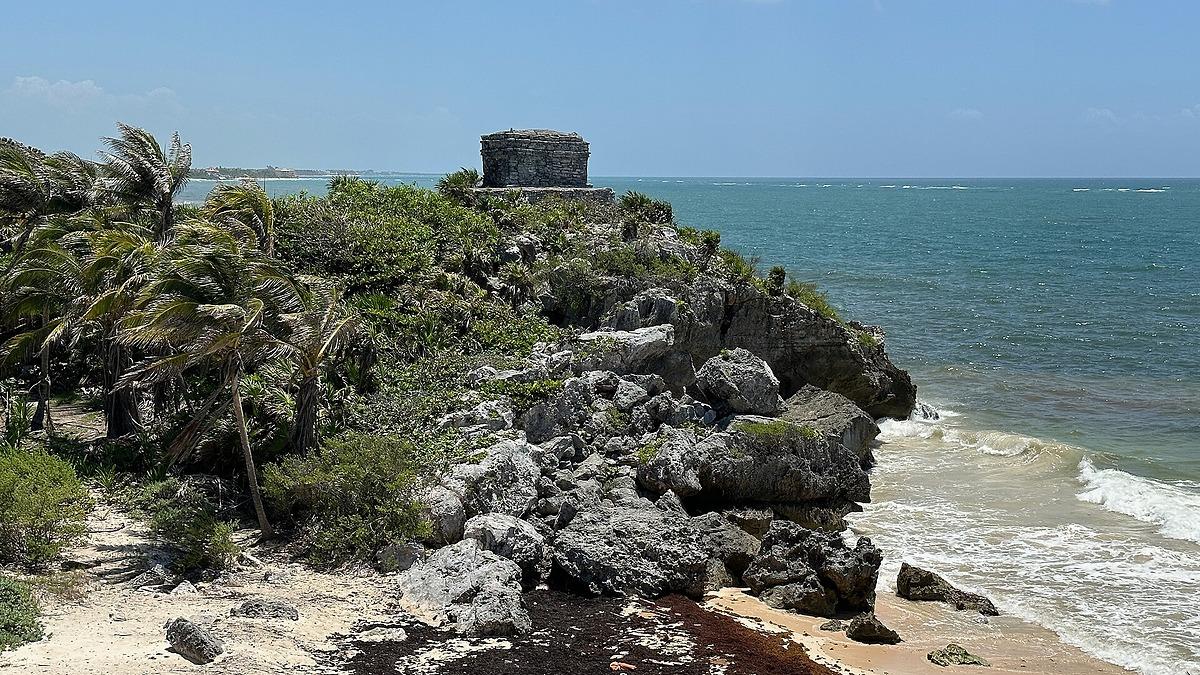
Most beach travellers never see that fee, because airlines fold it into the fare. The one they do see comes on the Caribbean side. Fly into Cancún for the cove below Tulum's clifftop ruins or the beach clubs of Playa del Carmen, and Quintana Roo adds Visitax, about 293 pesos a head, paid online before you fly home. Below is what each charge costs, who pays it and what a week on the coast adds up to, with dollar and pound conversions at 11 November 2026 rates.
Mexico's tourist fee rises to 1,158 pesos on 1 January 2027
The new figure is a compromise. In September the Finance Ministry proposed 1,334.80 pesos, a rise of more than a third, according to Expansión.
Morena deputies cut that to 1,158 after complaints from the tourism industry and the opposition, Bloomberg Línea reported when the Chamber of Deputies voted on 13 October 2026. Senators passed the deputies' text unchanged and sent it to the President for publication.
That last step had not happened by 12 November 2026. The Chamber of Deputies' official compilation of the law still listed 7 November 2025 as its last reform published in the Diario Oficial de la Federación, the gazette where Mexican laws appear, and the law in force still sets the fee at 983 pesos. Checked November 2026.
Expansión's figures show this is the second rise in two years (the 2025 fee was 860.56 pesos), and that under the 2027 bill 57% of the money goes to the Defence Ministry, with the rest split between the immigration institute (INM) and the treasury, so little of it is spent on tourism.
Do you pay the Mexico tourist tax? Flying in, driving in and cruising
How you arrive decides how you pay. The fee is charged for the visitor permit that lets a foreigner stay as a tourist without paid work. Article 8 of the Federal Law of Rights sets out who collects it, and Article 11 who is exempt.
- By air: the airline collects it from every foreign passenger and pays it to the tax authority, the SAT. You pay it when you buy the ticket.
- By land: visitors who cross by road and stay no more than seven days are exempt. Stay longer and the law says you pay on the way out.
- By cruise ship: a separate federal decree cuts the fee for foreign cruise passengers to a dollar amount, US$10 until 30 June 2027 (see the cruise section below).
The law has no age exemption, so children's tickets carry the fee too. Mexican citizens and residents with a Mexican residence card are not tourist visitors and do not owe it. That is where most of the "refund" searches come from.
Is the Mexico tourist tax already in my ticket? Airlines, TUI and refunds
For flights, yes. Because the law puts the collection on airlines, the non-resident fee appears among the taxes on your fare, not as a bill at the airport. Article 12 of the same law adds a second federal charge on the way out: 231.55 pesos (about US$12 / £9) for immigration services at the airport, which airlines also collect from passengers leaving on international flights.
Package holidays work the same way for the federal fees. TUI's Cancún travel advice says departure tax is already included in the holiday price, while Visitax and the hotel environmental tax are paid locally before you travel home. TUI puts that environmental tax at 30 to 140 pesos per room per night, paid at check-in or check-out.
There is no refund for tourists. If you live in Mexico and an airline charged you the fee anyway, the airline that collected it is the one to ask, with proof of your Mexican citizenship or residence. Ask about its process before you fly.
So the airline handles the federal fee. Visitax you deal with yourself.
Visitax: what Quintana Roo charges in Cancún, Tulum and Playa del Carmen
Visitax is Quintana Roo's own charge on foreign visitors, and it covers the whole state: Cancún, Isla Mujeres, Playa del Carmen, Tulum, Holbox, Bacalar and Cozumel. Article 51-Octies of the state's Law of Rights sets it at 2.5 UMA, Mexico's inflation-linked unit of account, due when a foreign visitor enters the state.
INEGI fixed the UMA at 117.31 pesos from 1 February 2026, which puts Visitax at about 293 pesos (US$16 / £12) per person. It moves with the UMA each February, so expect a small rise in February 2027 rather than on 1 January. TUI quotes the same 293 pesos.
Children are not exempt. State law lists no age exemption, and the official FAQ, asked whether children of every age and infants pay, answers that all foreign tourists must pay. Checked November 2026.
Two groups are exempt: visitors entering over the southern border from Belize, and cruise passengers, who pay a separate state fee in their fare. The FAQ says visitors to Cozumel owe it too, whether they leave by ferry or by air.
Collection at the airport has drawn complaints. In November 2026 the Diario de Yucatán reported foreign tourists saying SATQ collectors at Cancún airport had asked for up to 550 pesos a head. Quintana Roo's tourism secretary, Bernardo Cueto, acknowledged improper behaviour by some collectors and said the state finance ministry would review it. The official charge is about 293 pesos a head, and TUI advises paying before your trip home. Then you can show the QR receipt you already have if anyone at the airport asks for more.
Paying is simple. Choosing the right website is where people go wrong.
Is the Mexico tourist tax a scam? How to spot the fake Visitax sites
The tax is real, and some of the sites selling it are not. The state portal is visitax.gob.mx, run by Quintana Roo's tax authority, SATQ. The .gob.mx ending marks a Mexican government site. TUI tells its customers to use only that address because fraudulent sites are active.
The portal's own FAQ says you can also pay through companies SATQ has authorised, so not every other site is a fraud. The government site is still the simple choice, and a few habits keep you safe:
- Type the address yourself rather than tapping an advert at the top of a search page.
- Expect about 293 pesos per person. A much bigger total means someone has added a fee.
- If the receipt goes missing, "Recover your Receipt" on the official site finds it by passport number.
- Screenshot the QR code. TUI says proof of payment is checked at the airport, and the official FAQ says receipts stay downloadable for at least a year after your departure date.
SATQ's help line is contactus.satq@qroo.gob.mx, Monday to Friday, 8am to 5pm.
What a beach trip costs in fees: Cancún, Los Cabos and Puerto Vallarta
The federal fee follows you everywhere in Mexico, but each coast sets its own state charge, and that is where the gap opens. Visitax applies only in Quintana Roo. Los Cabos has Baja California Sur's Embrace It fee instead: 488 pesos in 2026 for foreign visitors over 12 who stay more than 24 hours, paid online, Seis Grados reported. Checked November 2026.
Puerto Vallarta has no state visitor fee and no hotel environmental tax, according to TUI's advice. In federal and state entry fees, a 2027 trip costs:
| Trip in 2027 | Federal fee (pesos) | State visitor fee (pesos) | Total (pesos) |
|---|---|---|---|
| Couple flying in, a week in Cancún or Tulum | 2,316 | About 587 (Visitax) | About 2,903 (US$156 / £117) |
| Two adults, two children flying in, Cancún or Tulum | 4,632 | About 1,173 (Visitax) | About 5,805 (US$311 / £234) |
| Couple flying in, Los Cabos | 2,316 | 976 (Embrace It, 2026 rate) | 3,292 (about US$176 / £133) |
| Couple flying in, Puerto Vallarta | 2,316 | None | 2,316 (about US$124 / £93) |
| Two adults, two children flying in, Puerto Vallarta | 4,632 | None | 4,632 (about US$248 / £187) |
Against the 2026 fee of 983 pesos, the January rise adds 175 pesos (about US$9 / £7) per person. A family of four pays 700 pesos more than in 2026, which is less than the hotel environmental tax on a week's stay at TUI's top rate. These figures leave out hotel charges and the 231.55-peso departure fee already in your fare.
Our guide to the best beaches in Cancún covers the coast these fees pay for, and if you are flying straight to Tulum, our Tulum airport flights guide explains which airlines land there. Arrive by cruise ship and the sums change.
Cruise passengers pay US$10 now and US$15 from July 2027
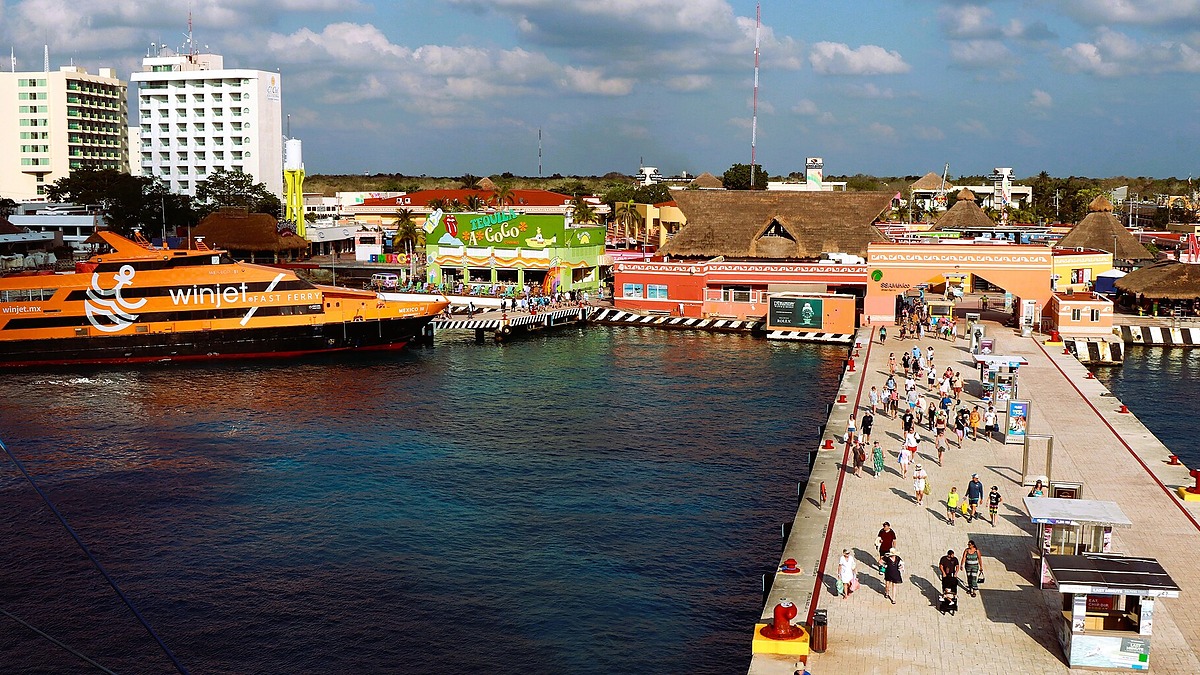
Cruise passengers pay the federal fee in dollars, not the 983 or 1,158 pesos that air travellers pay. A presidential decree published on 30 June 2025 gives foreign passengers arriving on cruise ships a tax credit that cuts the fee to a set dollar amount, converted at the Bank of Mexico rate. It is paid through the cruise line or its shipping agent under SAT rules.
| Period | Federal fee per cruise passenger |
|---|---|
| 1 August 2026 to 30 June 2027 | US$10 |
| 1 July 2027 to 31 July 2028 | US$15 |
| 1 August 2028 to 30 September 2030 | US$21 |
Because the credit is pegged to dollars, January's peso rise does not change what cruise passengers pay. The step that matters is 1 July 2027, when the fee goes up by half.
Quintana Roo adds its own US$5 for cruise passengers whose ship calls at a port in the state, such as Cozumel or Mahahual. Under Article 51-Nonies the cruise line charges it when you buy the cruise, only once per voyage, and it replaces Visitax. Ashore, beach-goers meet one more federal charge in the protected areas.
Park wristbands for reefs, islands and protected beaches
Many of the best days on Mexico's coasts are spent inside federal protected areas, and Article 198 of the Federal Law of Rights charges a fee per person per day for them. Licensed tour operators are liable for it, and some add it to the tour price as a wristband; go independently and you pay it yourself. Under-12s, older adults with an INAPAM card and visitors with disabilities are exempt. These are the 2026 rates, rounded to the nearest 5 pesos as the law requires:
- 125 pesos (about US$7 / £5): the marine park off Isla Mujeres, Punta Cancún and Punta Nizuc; Puerto Morelos reef; the Mexican Caribbean biosphere reserve; the Cabo San Lucas protected area; Balandra; Islas Marietas; Cabo Pulmo; Huatulco.
- 225 pesos (about US$12 / £9): Cozumel's reefs, Isla Contoy, Sian Ka'an, Yum Balam (which covers Holbox) and the whale shark reserve.
- 65 pesos (about US$3.50 / £2.60): Tulum National Park, cut from the 125-peso standard rate for foreign visitors.
That cut comes from a presidential decree of 17 July 2026 that applies through 2026 and 2027. The same decree sets 100 pesos for the Tulum ruins and 100 pesos for the Parque del Jaguar gate, so a foreign adult pays 265 pesos in all; Mexicans pay 80 pesos from Monday to Saturday. Checked November 2026.
You will meet these at Playa Balandra near La Paz, where the 125-peso wristband is also your place in a capped shift, and on the boat trips to Playa del Amor in the Marietas Islands. The beach below the Tulum ruins lies inside the Parque del Jaguar, which under the decree takes in both Tulum National Park and the archaeological zone. Private beach-club gates are a separate matter: at Xpu-Ha the main entrance charges 200 pesos, which you can spend on food and drink, according to the beach's own website. Checked November 2026.
Congress's 2027 law also changes environmental fees. The Senate has passed it, but until the decree appears in the Diario Oficial the new rates are not in force, so check the wristband price when you book a tour. Our best beaches in Mexico guide and Cabo San Lucas beach guide cover the coasts where these parks are.
Does the rise change what you've already booked?
For most people, by very little. Collecting the fee is the airline's job under the law, and the rise is 175 pesos per person. If anyone contacts you asking for the difference on a ticket bought in 2026, check it through the airline's or tour operator's own website or app before paying. We found no airline statement on whether tickets bought in 2026 for 2027 travel will be charged the difference. Checked November 2026.
Visitax is a state charge, untouched by the federal law, and it moves with the UMA in February, not in January.
The practical list for a 2027 beach trip is short. If you fly in, the federal fee is paid through your fare and needs nothing from you. If you are staying anywhere in Quintana Roo, pay Visitax on visitax.gob.mx before you head to the airport and keep the QR code on your phone. The official FAQ says every foreign passport in your party needs it, children and infants included. If you are booking for spring, our sargassum forecast for the Mexican Caribbean is the other thing to check before you choose a beach.