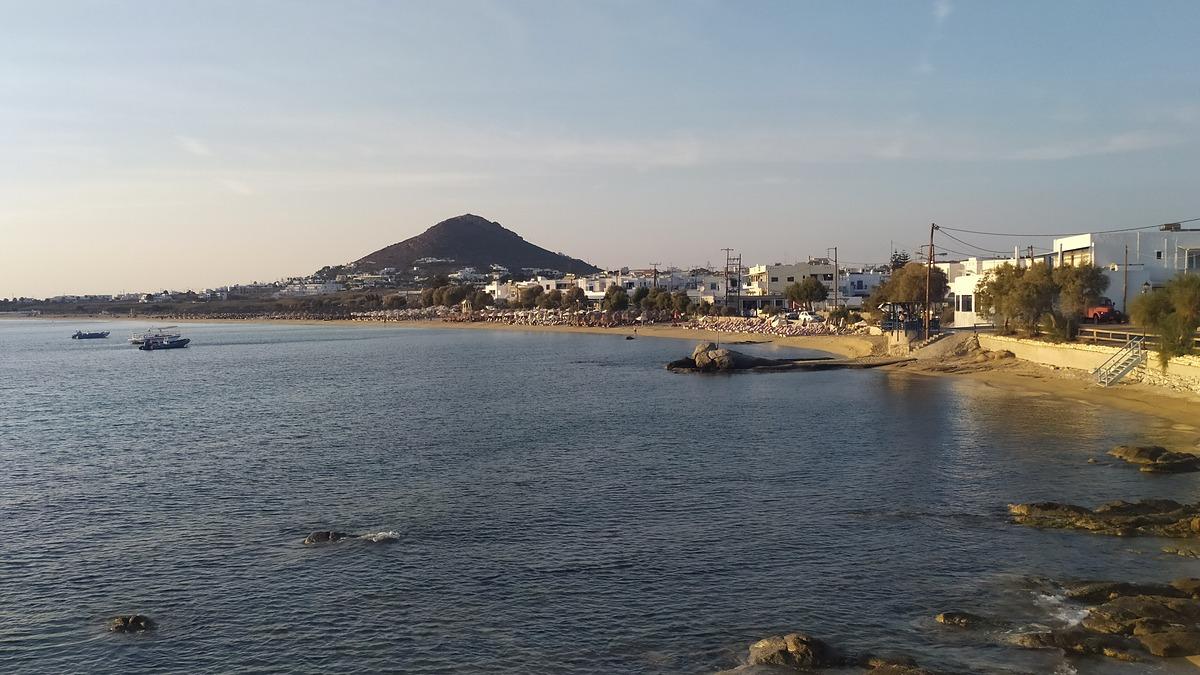
South of Chora, the west coast of Naxos, Greece, is one long chain of sand. Agios Prokopios runs into Agia Anna, Agia Anna into Plaka, and Plaka keeps going until the headland at Mikri Vigla splits the shore in two. The best beaches in Naxos are almost all on this side of the Cycladic island, and the best of them all, Agios Prokopios, is 15 minutes from the port on a public bus.
The wind decides your day. In July and August the meltemi blows down the Aegean from the north, and a beach that is calm first thing can be blowing hard by early afternoon, so what matters on Naxos is which way each bay faces. Below are the six best, north to south, with the bus that reaches each one and how it copes when the wind is up.
The 6 best Naxos beaches at a glance
The table reads north to south, which is also the order of the bus route. "North wind" is how each beach copes with the summer meltemi, as described in the sections below.
| Beach | Best for | From Chora | North wind | Sunbeds and food |
|---|---|---|---|---|
| Agios Prokopios | The best all-round swim | Line 1 bus, 15 min | Well protected | Sunbeds, bars, tavernas |
| Agia Anna | Easy bus day, calm water | Line 1 bus, 17 min | Well protected | Sunbeds, tavernas, small port |
| Plaka | Space, beach clubs, long walks | Line 1 bus, 25 min | Exposed | Beach clubs at the north end; wild further south |
| Mikri Vigla | Kitesurfing, and a calm cove | Line 1 or 3 bus, 35 min | North side exposed; south side sheltered | Tavernas, kite and windsurf schools |
| Alyko and Hawaii | Juniper dunes and coves | Line 3 bus, about 50 min; car easier | More sheltered than the main strip | None listed |
| Agiassos | Shallow water for young children | Car | Sheltered | Fish tavernas, no sunbeds |
If you're staying in Chora, you can skip the bus altogether. The town beach, Agios Georgios, begins just south of the waterfront, about 1km from the ferry port according to the Municipality of Naxos and the Small Cyclades. It has fine sand and clear, shallow water, is rated highly for families with young children and is wheelchair accessible. Checked November 2026.
Agios Prokopios: the best all-round swim on the island
The municipality calls Agios Prokopios the island's most acclaimed beach, with more awards than any other. It is very wide and well protected from north winds, and that shelter is what makes it the best all-round choice: on a windy August afternoon, when Plaka is churning, the water here is usually swimmable.
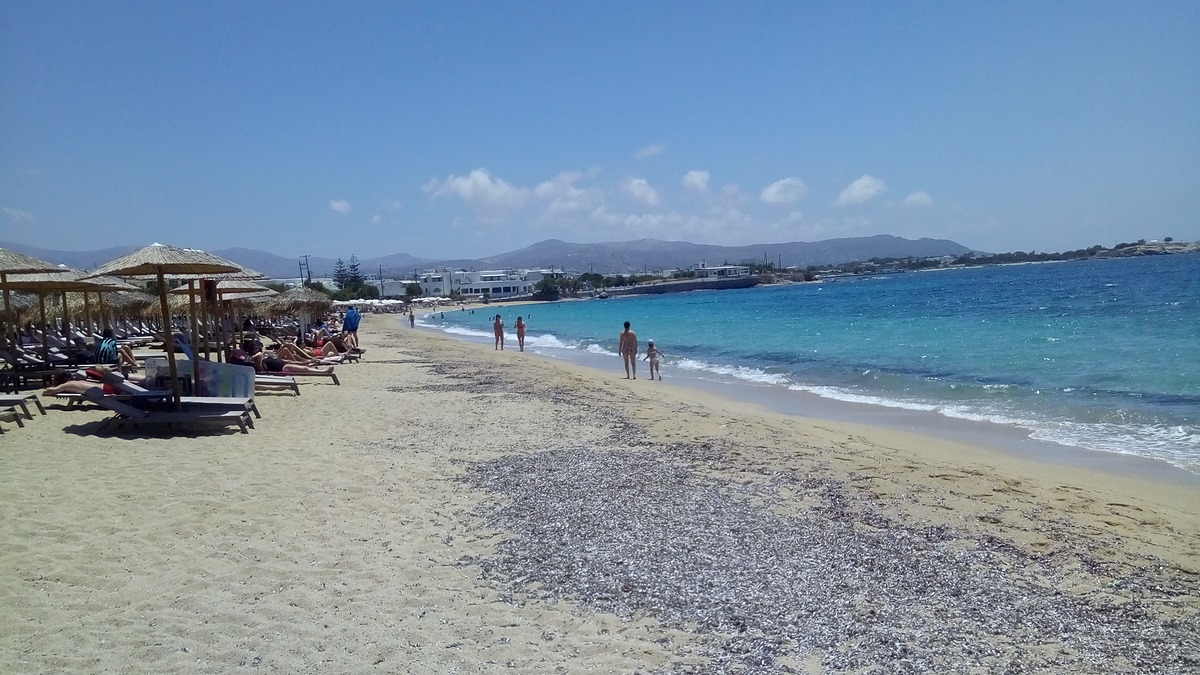
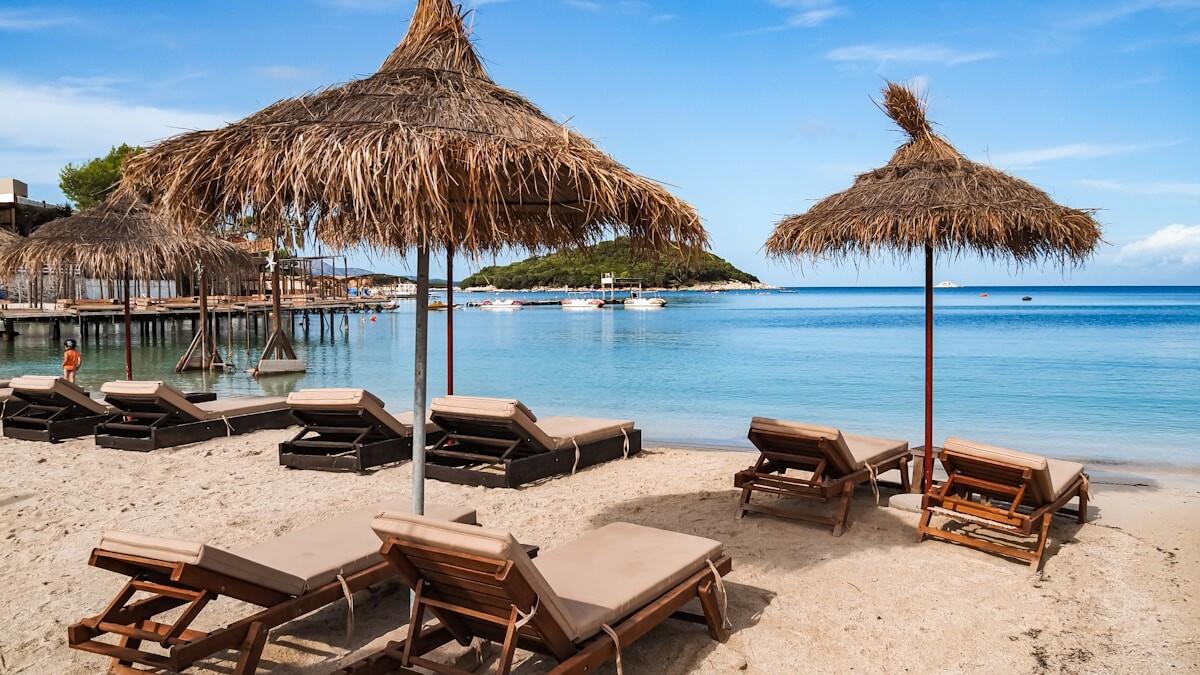
The sand is coarse and slightly golden, and the sea shades from pale blue over the shallows to deep blue further out. Most of the shops, tavernas and bars crowd the eastern end, by the bus stop. Walk west towards the small chapel that gives the beach its name and the crowd thins. Sunbeds and umbrellas cover most of the rest.
Herons feed in Kokkini Limni, the salt lake behind the beach. Follow the sand south and you reach Agia Anna without noticing the join.
Agia Anna: sheltered bays 17 minutes from Chora
Agia Anna is the continuation of Agios Prokopios, ending at a small harbour where fishing boats tie up beside the tavernas. It is well protected from north winds, and by the chapel the shore breaks into small bays that stay calm when the rest of the coast is blowing. A wooden ramp suitable for bikes and prams runs out to the chapel.
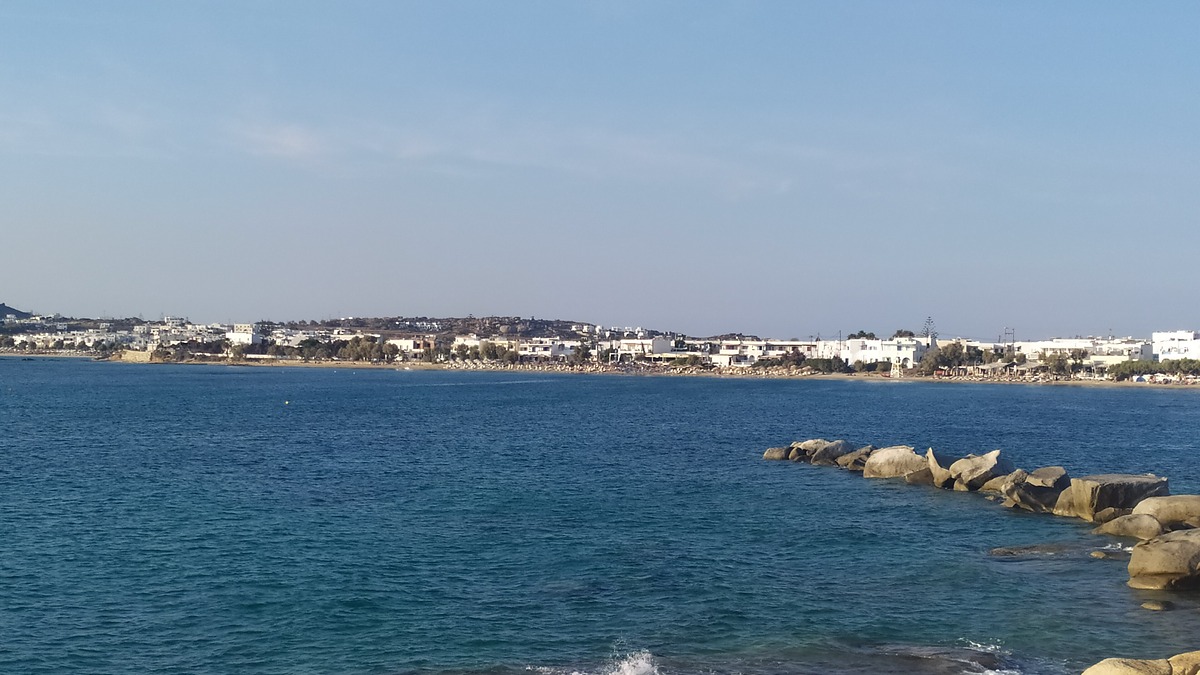
No beach on the island needs less planning. Line 1 reaches Agia Anna in 17 minutes, and in the July and August 2026 timetable buses ran from 7.15am until after midnight. It is also the most built-up: sunbeds and beach bars cover most of the sand, and in high season you share it with the hotels behind. For more room, walk south. The sand never stops, and within a few minutes it becomes Plaka.
Plaka: the longest sand on Line 1
Plaka is the beach for people who want space. The bus alone runs for nearly 3km along its coastal road, by KTEL's count, and the sand continues beyond the last stop. Golden sand backs onto dunes that fill with sea lilies after August, and junipers near the water throw a little natural shade.
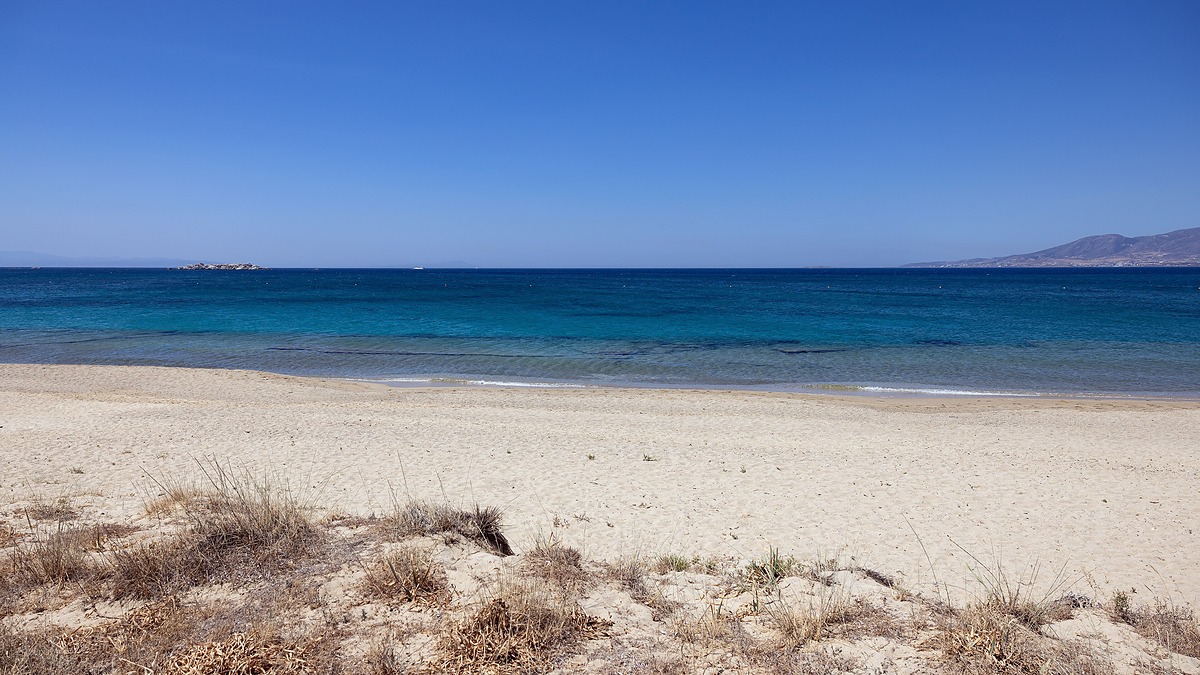
It works in two halves. The beach clubs, tavernas and hotels cluster at the northern end, near the Maragas stop. Further south the development thins, the sand turns finer and whiter, and long stretches have nothing on them at all.
Plaka's weakness is the wind. The main strip faces the meltemi head on. On a blowing day in July or August, ride two stops back to Agia Anna, or carry on to the next headland, which has both a kite beach and a calm cove.
Mikri Vigla: kites on one side, a calm cove on the other
A rocky headland at Mikri Vigla splits the beach in two, and the split is the best wind lesson on the island. The long northern beach, Parthena, catches the meltemi full on, and KTEL calls it one of the best places in the Aegean for windsurfing and kitesurfing. On the other side of the rock, the southern beach, which KTEL calls Limanaki and the municipality calls Sahara, is protected from north winds, with white sand and calm water.
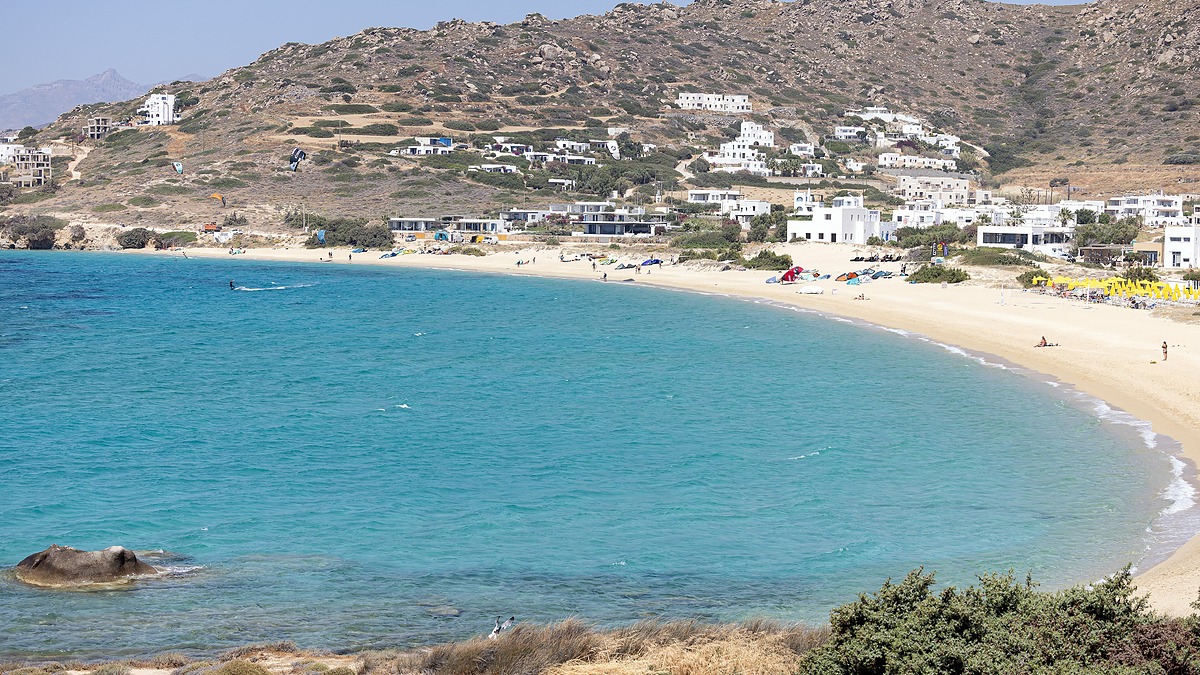
That makes Mikri Vigla the one beach that works in any weather. Kite and windsurf schools work the north side through the summer, and there are tavernas and small hotels behind the sand. Line 1 along the coast and Line 3 inland both get here in about 35 minutes. Buses are less frequent than to Plaka: the 2026 high-season timetable had nine departures a day from Chora, the last at 6.30pm, so check return times before you settle in.
Line 3 carries on south of the headland to Kastraki, about 40 minutes from Chora, with seven departures a day in the 2026 high-season timetable. The municipality describes a small cove of fine white sand and tranquil water there, with sunbeds and umbrellas available. Beyond it, the road and Line 3 run on to the coves at Alyko.
Alyko and Hawaii Beach: juniper dunes and small sandy coves
Alyko is a low peninsula covered in old juniper trees, often called the cedar forest, whose roots hold the sand dunes together. The municipality says it is one of the largest and densest juniper forests in Greece, and lists the juniper dunes of south-west Naxos among the island's natural habitats. Below the trees the shore breaks into small sandy coves: Alyko, Small Alyko, Kedros and Hawaii.
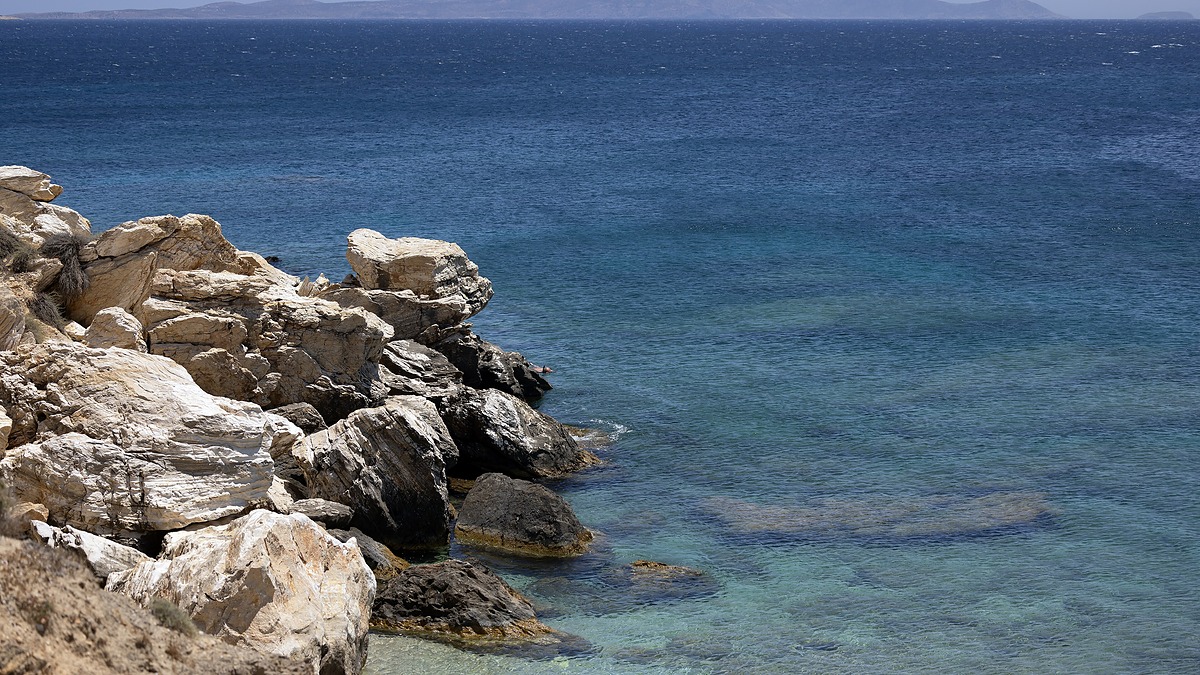
When the meltemi blows, the coves are a refuge. The Common Wanderer's guide, updated in June 2026, names the coves around Alyko and Hawaii Beach as more sheltered than the main west-coast strip on meltemi days. There is parking but no facilities, so bring water, shade and food.
The peninsula is public forest land inside the Natura 2000 network, according to Naxos Press, which also reported the end of its best-known ruin. The unfinished 1970s hotel above the coves, long known for its street-art murals, is no longer there to explore: demolition began in November 2025, and by the end of that month most of the concrete was down and the murals lost with it. Checked November 2026.
Line 3 stops at Alyko about 50 minutes from Chora, with seven departures in the 2026 high-season timetable and the last bus back at 7pm. KTEL says to get off at the crossroads for Alyko and Pyrgaki for the bays, though a car is far easier. Just south, at the end of the bus line, Pyrgaki is a run of three sandy coves with a couple of tavernas, 55 minutes and €3.10 from Chora. The road beyond it leads to the last beach on this list.
Agiassos: a shallow, sheltered bay in the far south-west
Agiassos is where Naxos runs out of bus. KTEL's 2026 summer timetable ends at Pyrgaki, and the municipality puts Agiassos about 3km beyond it on a dirt road, or 12km on asphalt from the inland village of Sagri. At the end of the drive are 750m of fine sand and clear, shallow water.
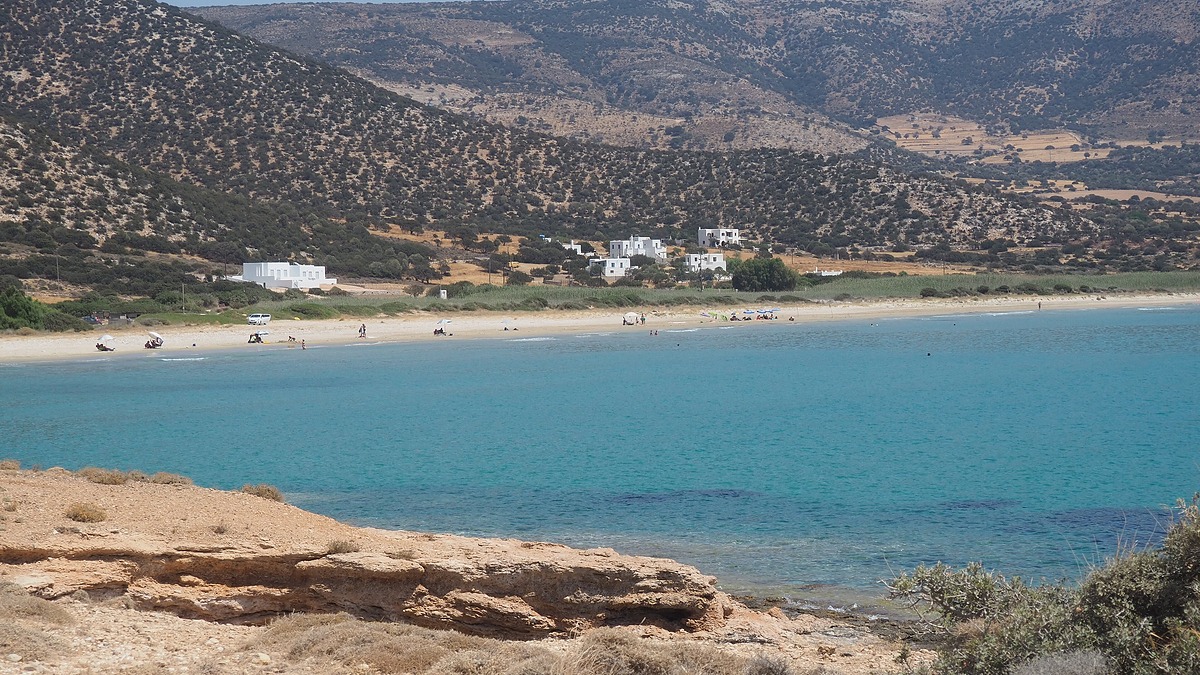
Greeka describes the bay as protected from strong winds, with shallow water that is safe for children. Small inlets and sea caves line the sides, and a little wetland at one end draws birds. Fish tavernas and rooms sit behind the sand, but there are no umbrellas or sunbeds to rent, so bring your own shade.
Where to go in Naxos when it's windy
The meltemi blows from the north, strongest in July and August and usually through the hottest part of the day, so pick a beach facing south or tucked behind a headland. Exposed stretches such as Plaka's main strip and the north side of Mikri Vigla get the wind, the waves and the blowing sand.
Swap like this on a windy day:
- Plaka main strip: go back to Agia Anna, the bays by its chapel, or Agios Prokopios.
- North side of Mikri Vigla: walk over the headland to the south side.
- Anywhere, if it's really blowing: drive to Agiassos or Pyrgaki.
If you want the wind rather than shelter, the municipality's water-sports guide points to two places. The shallow, calm lagoon at the southern end of Agios Georgios is one of the friendliest places in Greece to learn windsurfing, and a water-sports centre works the beach. Mikri Vigla is an international meeting point for windsurfers and kitesurfers, with kite schools on the sand.
June and September bring lighter wind and still-warm water. In high summer, mornings are often calmer than afternoons, so on a windy-forecast day swim early on the exposed beaches and move south after lunch.
Sunbeds, beach clubs and the free stretches
You never have to rent a sunbed on Naxos. Under Greek Law 5092/2024, rented concessions may cover at most half of each stretch of beach, by area or by length of shoreline, so on every organised beach on this list at least half of each stretch should stay free for anyone with a towel. Checked November 2026.
Each beach bar sets its own sunbed prices, and the front row costs the most. The Common Wanderer's guide, updated in June 2026, puts a front-row set at Agios Prokopios at around €30, dropping to about €15 at the far end of the developed strip, and a set at Plaka's beach clubs at €25 to €30 including towels and water, with lower prices in May, June and September than in July and August.
At Agiassos and the Alyko coves there is nothing to rent: Greeka lists no sunbeds at Agiassos, and the Alyko coves have no facilities, so the shade there is yours to bring.
When to go to Naxos beaches in 2027
The beach season runs from May to October, and June and September give warm water with less meltemi and fewer people. Our guide to the Mediterranean in September explains why the sea stays warm after the summer peak. Around Naxos, seatemperature.info's ten-year averages put the sea at:
- May: 18.9°C
- June: 22.3°C
- July: 23.9°C
- August: 24.5°C
- September: 23.8°C
- October: 21.7°C
Plan around the bus timetable. KTEL Naxos publishes a new one each season at naxosbuses.com; in 2026 the high-summer timetable ran from 29 June to 30 August, with buses to Plaka every 30 minutes until 2am. Out of season the service shrinks. The timetable for 7 to 30 November 2026 has:
- Agios Prokopios and Agia Anna: two weekday buses.
- Mikri Vigla and Kastraki: a single 1pm weekday bus, whose only return leaves at 7.10am.
- Plaka, Alyko and Pyrgaki: no buses.
- Weekends: no coast buses.
Tickets are sold at the bus office at the port, not on board. KTEL lists adult fares from €1.80 to Agios Prokopios to €3.10 to Pyrgaki, and children up to six travel free. Checked November 2026.
Naxos or Paros for beaches?
Naxos, if the beaches are the point. Its west coast is one almost unbroken run of sand from Agios Prokopios to Plaka, with longer, emptier beaches beyond. Paros has prettier small coves, like the granite boulders at Kolymbithres, and a busier harbour town. Our guide to Santorini alternatives compares the two islands, and Ionian vs Cyclades beaches covers the bigger choice of which side of Greece to pick.
For a first trip, stay near Agios Prokopios or Agia Anna, where Line 1 makes a car optional and the beaches stay calm in the meltemi. Hire a car for two or three days to reach Alyko and Agiassos. For the rest of the country, start with our guide to the best beaches in Greece.