The bluff at Princeville rises 200 feet straight up from the ocean, with luxury condominiums and the rebranded 1 Hotel Hanalei Bay (which most maps still call the St. Regis Princeville Resort) sitting on top. Below them, accessible only through a public stairway tucked beside the resort gate house, is Pu'u Poa Beach. It is a reef-protected lagoon in summer, a closed-out swell zone in winter, and one of the best North Shore swims that almost no one finds because the descent is 191 steps and the parking is hostile.
If you are willing to walk down (and, more importantly, walk back up), Pu'u Poa is one of the more peaceful North Shore beaches on the island.
The 191 Steps and the Parking Game
Start with the access. Pu'u Poa is technically a public beach, as all Hawaiian beaches are, but the resort property between you and the sand makes the route feel less than welcoming. The route is:
- Drive to the small public parking lot on Ka Haku Road, around 100 feet before the resort gate house, on the right side of the road. The lot has space for fewer than ten vehicles.
- Walk to the public access path that starts on the left side of the gate house. Signage is small but legal.
- Descend the 191 concrete steps to the beach. This takes about five minutes going down. Going back up takes more.
What you cannot do: park on the residential streets in Princeville, even briefly. Tow trucks here are quick and the homeowners' association is enthusiastic about reporting violations. If the public lot is full, come back later or pick a different beach. There is no reasonable workaround.
The 191 steps are concrete and sturdy but get slippery after rain. The trail below the stairs can also be muddy in wet weather. If you have mobility issues, this is not the beach for the trip.
Pu'u Poa vs Hideaways: The Confusion
Princeville has two famous beaches at the bottom of cliff trails, and travel articles routinely confuse them. The shorter version:
Pu'u Poa Beach is the larger, calmer reef-protected lagoon directly below the resort building. Wider sand, shallower entry, more snorkel area, the easier of the two trails (though "easier" is relative when 191 steps are involved).
Hideaways Beach is the smaller pocket beach reached via a separate, rougher trail near the Pali Ke Kua Resort, about a five-minute drive west. Hideaways is more photographed, more famous, and harder to reach (the trail is a near-vertical mud slide after rain). Hideaways gets the Instagram love. Pu'u Poa gets the swim.
If you are choosing one for swimming and snorkelling, pick Pu'u Poa. If you want the wilder, harder-to-reach photo, go to Hideaways. Both, on the same day, is fine if your knees are good.
What the Beach Itself Delivers
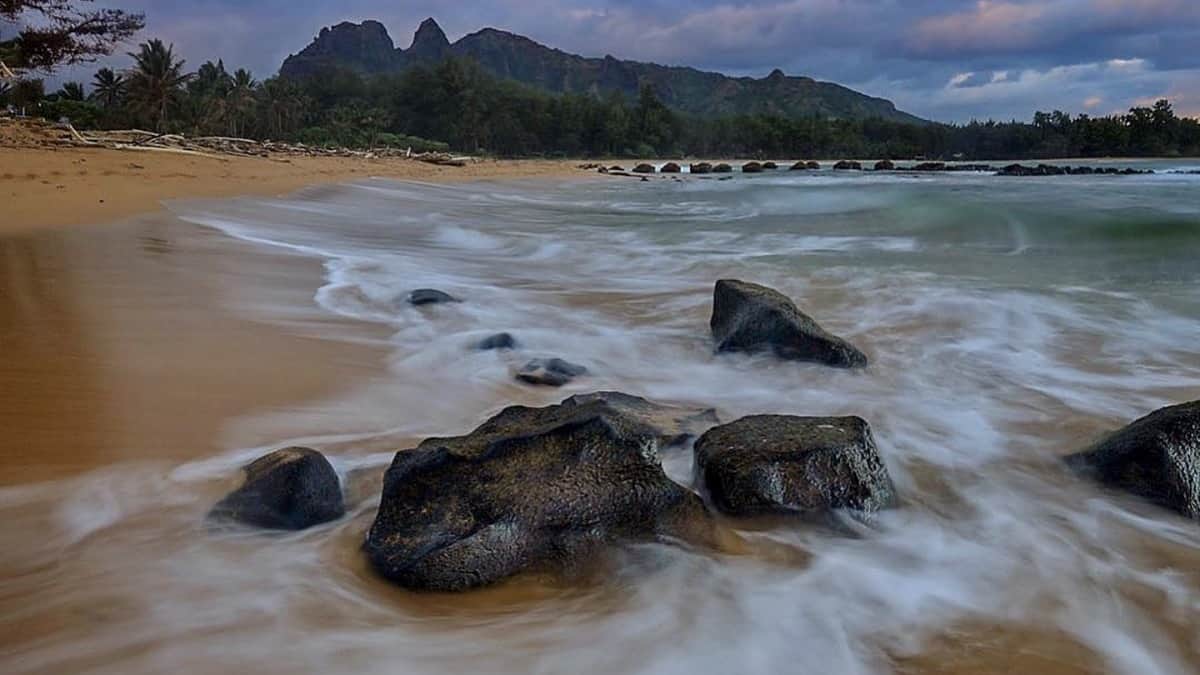
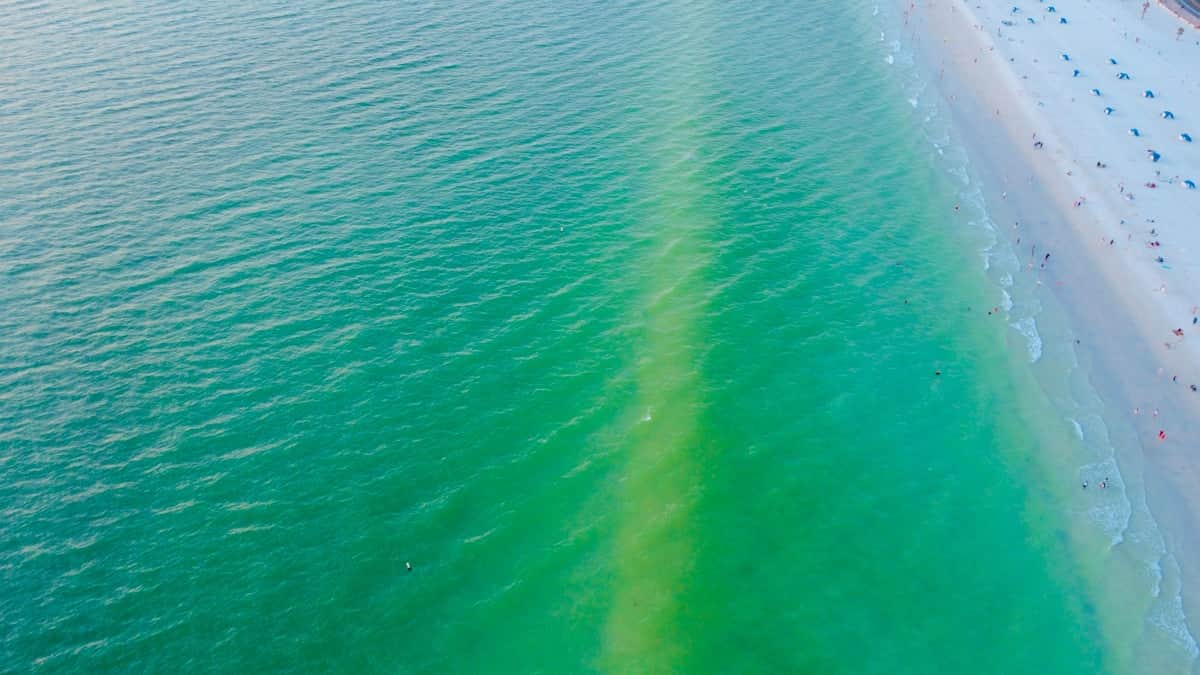
Pu'u Poa is a long curved sandy beach with a fringing reef sitting offshore in around 6 to 12 feet of water. The reef does the same job here that it does at Tunnels and Salt Pond: it breaks summer swell into manageable inner-lagoon ripples and lets the sand stay warm and the water stay clear. On a calm summer morning the inside is one of the better snorkel sites on the North Shore, with reef fish working the coral heads and sea turtles cruising through several times an hour.
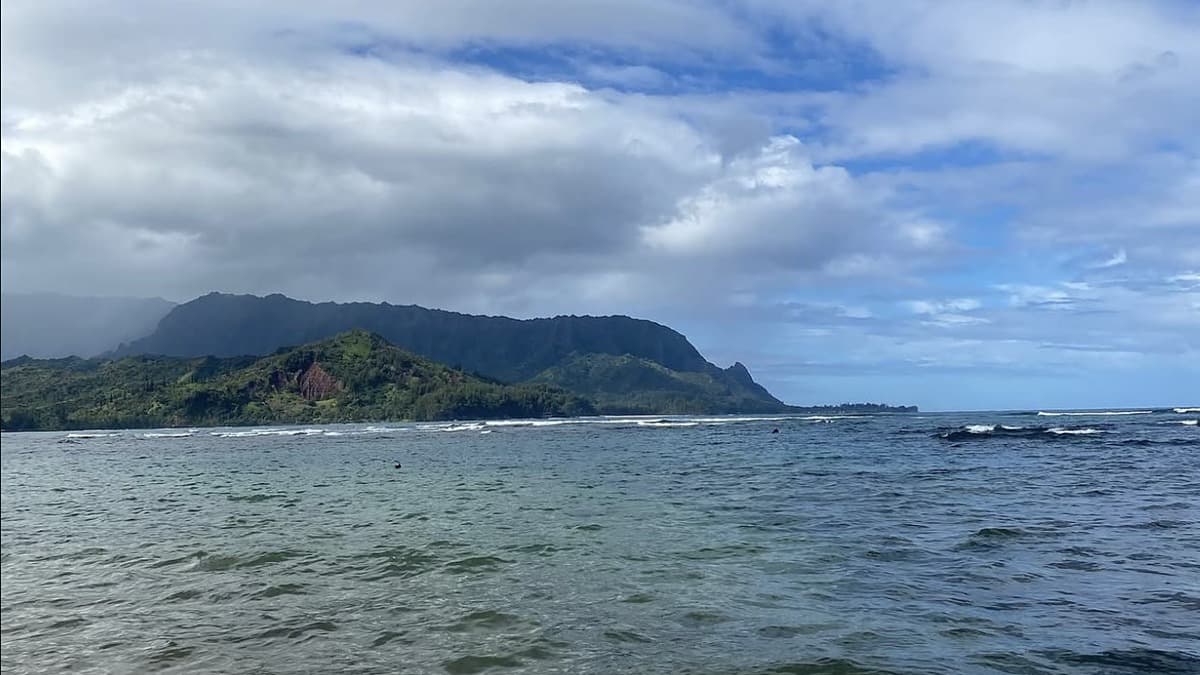
The view is the second reason to come. The beach faces west across the wide opening of Hanalei Bay, with the green pyramid of Bali Hai (the proper Hawaiian name is Mount Makana) rising on the far side. Late afternoon and sunset deliver light that feels like it was made for postcards. Whales pass within sight from December through March, even though the beach itself is not safely swimmable in those months.
The crowds are usually thin. The 191-step gate filters out most casual visitors, and what is left is a mix of resort guests using the back stairs from above and the small handful of mainland visitors who did the parking research. On a weekday morning in summer you might have a quarter-mile of beach to yourself.
Summer Only, and the Winter Reality
The reef does its work only when the swell is small. From November through March, North Pacific winter swells march into the bay and the inner lagoon at Pu'u Poa fills with churning whitewater. There is no lifeguard, the shorebreak gets dangerous, and the currents pulling around the reef end can knock confident swimmers off their feet.
In winter, treat Pu'u Poa as a viewpoint, not a swim. The beach is still beautiful, the view is still excellent, and walking the sand at low tide is still pleasant. But do not get in the water. May and October are transition months that flip day to day, so check the surf report on the morning of your visit.
Should You Make the Climb?
Yes, if you are physically able and you have already done Hanalei, Tunnels, and Ke'e and want a quieter North Shore swim with a better view than any of them. The 191 steps act as a filter that keeps Pu'u Poa less crowded than it should be given how good the swim is. The beach is also one of the more photogenic stretches of sand on Kauai, especially in late afternoon.
No, if you have weak knees, bad ankles, small kids who cannot manage the stairs, or limited time on the island. The lifeguard-staffed beaches (Hanalei pier end, Ke'e, Salt Pond) are easier picks for similar swimming and far less effort. For broader North Shore context and how Pu'u Poa compares to its neighbours, see our Best Beaches in Kauai guide. For Hanalei and Ke'e specifically, those reviews are worth reading first since both are easier-access alternatives that visitors usually pick before committing to a 191-step descent.