Most travel pages about Rockport Beach will tell you it is the only Blue Wave Certified beach in Texas. That is not true. They will also tell you it is a pristine natural gem on the Gulf. Also not true. Rockport Beach is a mile of engineered bay shore that the Aransas County Navigation District built on purpose in 1935, and once you understand what it is and what it is not, it becomes one of the more honestly useful beaches on the Texas coast.
Wait, Rockport Beach Is Not on the Gulf
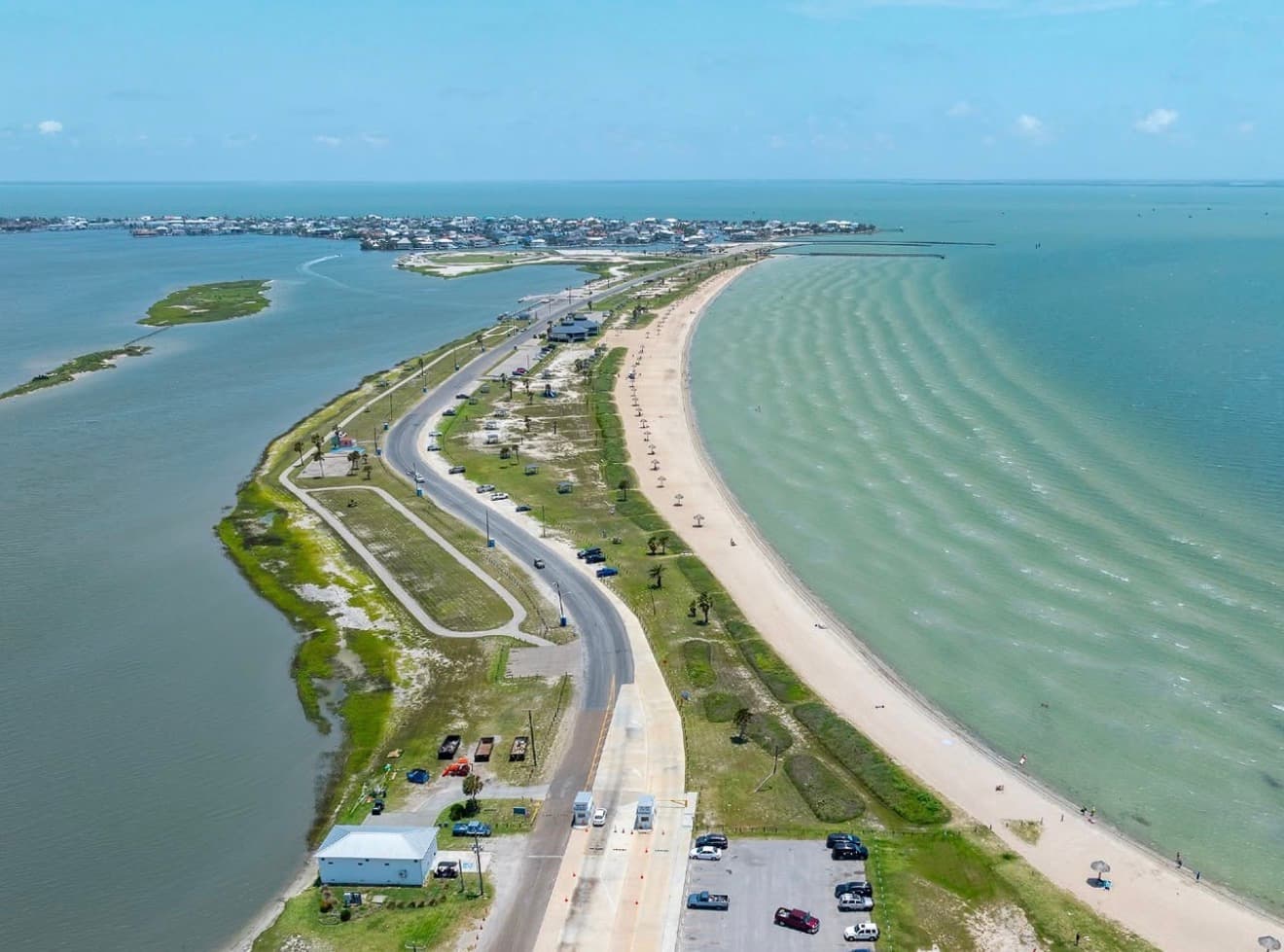
The biggest misunderstanding about this place is geography. Rockport Beach sits on Aransas Bay, sheltered behind San Jose Island and the barrier-island chain that shields the mid-Texas coast. The open Gulf of Mexico is about fifteen miles east, across the pass at Port Aransas. You do not get Gulf surf here because the geography will not let you. You get calm, shallow, slow-sloping bay water. For a parent chasing a toddler, that is the whole point.
The beach itself is a crescent that the county dredged and built in 1935 when the Navigation District cut the harbour and decided the town needed a protected swimming area. Most articles quietly skip this detail. Finding out later that your "natural" beach day is taking place on a ninety-year-old engineering project is the kind of thing that changes how you feel about the experience. Knowing up front just sets the right frame.
The Blue Wave Thing, Explained
Rockport Beach earned Blue Wave Certification from the Clean Beaches Coalition. The certification requires things like twice-weekly bacterial water testing with results posted publicly, ADA accessibility, clean restrooms, no litter programme, and conservation measures. Rockport meets all of it.
Where every travel article fumbles is claiming Rockport is the only Blue Wave beach in Texas. It was the first. It is not the only. Three beaches inside Padre Island National Seashore, Malaquite, Little Shell, and Big Shell, also carry the certification. If you are shopping for a Blue Wave Texas beach day, you have options. Rockport is the most amenity-heavy. The Padre beaches are wilder and free.
What Ten Dollars at the Gate Buys You
A day vehicle pass is 10 USD. For that you get access to roughly a mile of groomed sand, a paved three-quarter-mile walking path along Little Bay, 65 covered picnic sites with grills, a fishing pier, a saltwater swimming pool maintained by the city, multiple playgrounds, volleyball courts, bird-sanctuary viewing, clean restrooms, and rinse-off showers. Annual passes are 20 USD for Aransas County residents and 50 USD for non-residents. Service-disabled veterans get a free annual pass at the Navigation District office. Pedestrians and cyclists enter free all the time.
Hours are 6am to 11pm Sunday through Thursday, extending to midnight Friday and Saturday. The gate is a vehicle-tag system, not a wristband.
The Water: Calm, Shallow, Green-Tinged, Honest
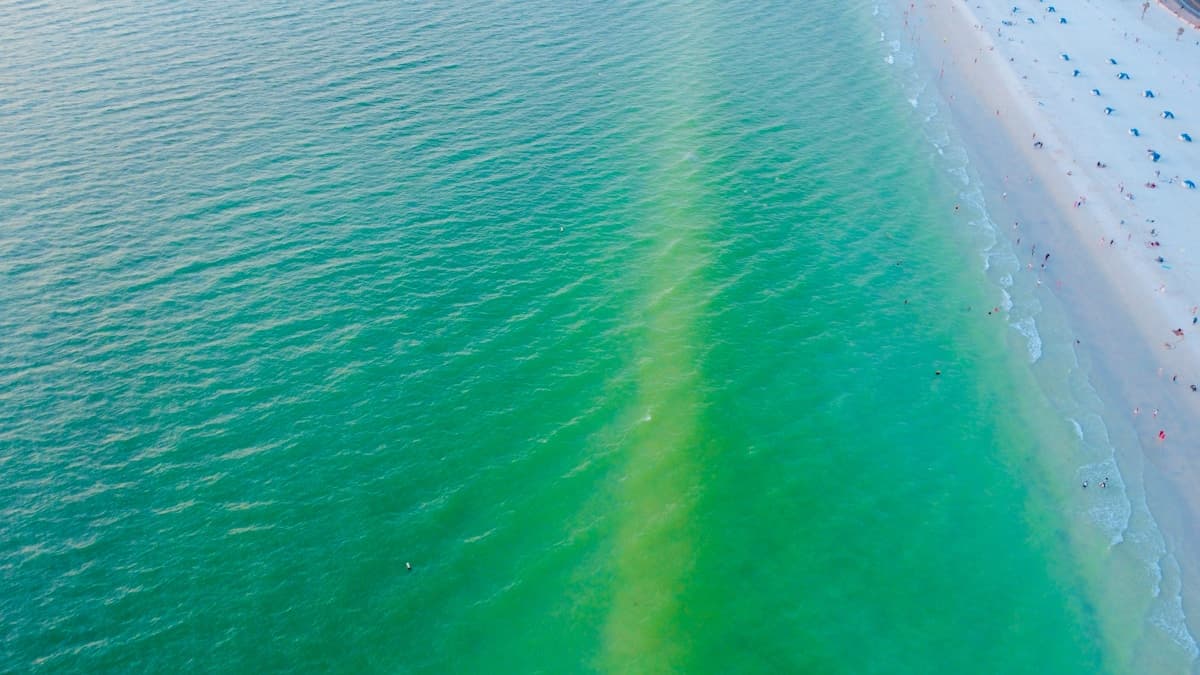
This is where expectations need to meet reality. Aransas Bay water is not Caribbean-clear. It is bay water, usually tinted green, sometimes cloudy after wind events, with visibility measured in inches rather than feet. If you booked Rockport expecting transparent turquoise, that is not what the geography produces here or anywhere on this section of the Texas coast.
What you get instead is shallow and warm and forgiving. The bottom slopes out slowly. A bacterial test result is posted twice a week at texasbeachwatch.com, and the data for Rockport has been generally clean. Jellyfish and Portuguese man-of-war appear seasonally, most commonly from March through October, peaking after strong southeast winds push them in. Check the state park social feeds before wading on a windy spring day.
Sargassum is the other 2026 concern on Texas beaches. Record Atlantic blooms are hitting the Gulf-facing beaches at Port Aransas and South Padre hardest. Bayside Rockport is materially less affected, which is another under-sold advantage this summer.
When to Come: Spring for the Beach, Winter for the Cranes
March through May is the best window overall. Daytime temperatures sit in the seventies and eighties, jellyfish are still thin, wildflowers are up along the coast, and spring break crowds concentrate around one March week.
June through August is hot. Coastal humidity pushes the heat index well past 100 degrees on most afternoons, the beach fills with family RVs, and hurricane season officially opens June 1. Peak storm risk runs August through September.
November through February is underrated. Air temperatures stay in the fifties to seventies, the beach is usable on warm days, and Rockport turns into the staging base for whooping crane season at Aransas National Wildlife Refuge, 35 minutes up the road. The last wild flock in the world winters there, with a 2024 to 2025 count of 557 birds. Boat tours from Rockport harbour run November through March. Pairing a quiet beach morning with an afternoon crane tour is one of the more distinctive Texas coast trips you can put together.
Eight Years After Harvey: What You Will Still See
Hurricane Harvey made landfall just south of Rockport as a Category 4 on 25 August 2017. The town was hit as hard as anywhere in Texas. Ninety percent of homes were damaged. Thirty percent were destroyed.
Eight years on, Rockport is back. The beach reopened quickly. Downtown has rebuilt most of what was lost, though a walk along the main street still shows occasional empty lots where buildings never came back. At the beach itself, the bandshell that stood on the south end was flattened in 2017 and is still not rebuilt as of April 2026. The Navigation District reviewed 85 thousand to 135 thousand dollar reconstruction proposals earlier this month. If you visit and wonder why the south-end stage area feels incomplete, that is why.
Saying none of this happened, or pretending the recovery is total, is the kind of travel writing that visitors see through. The recovery is real, the town is open for business, the whooping cranes are back. The bandshell is still gone.
Is Rockport Beach Worth Visiting?
Yes, for the right trip. It is not a Gulf surf beach, it is not a clear-water beach, and it is not a wild-shore beach. It is a carefully engineered, fee-gated, amenity-heavy bay swimming area on one of the friendlier stretches of the Texas coast, and for families, older travellers, and birders, it does a job that Port Aransas and Padre Island cannot. Come in spring for the beach itself. Come in winter for the cranes. Bring ten dollars, a towel, and realistic expectations, and Rockport Beach will quietly deliver what it was built to deliver ninety years ago.