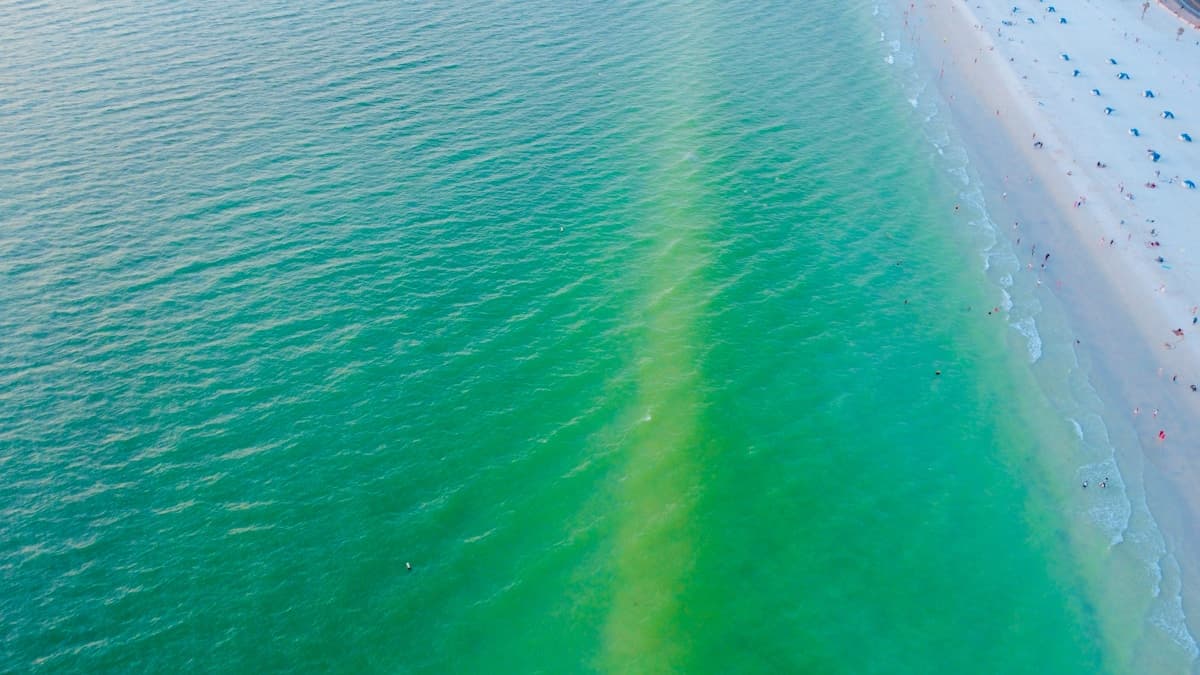
Almost every travel article about Del Monte Beach starts with "great for swimming" or "perfect family beach." Both are wrong, and you only have to stand on the sand for ten minutes to see why. The water is in the low fifties. There are no lifeguards. California State Parks posts standing sneaker-wave warnings for this stretch of coast. What Del Monte Beach actually is, once you drop the copied marketing copy, is one of the more unusual beaches in California. It is a quiet, mostly locals' walking beach named after a grand 1880 hotel that no longer exists, backed by a railroad trail that has also been gone for more than fifty years. Understanding that history is the point of coming here. The swim, if you want one, happens 300 yards away at a different beach.
Where Del Monte Beach Sits and What It Actually Is
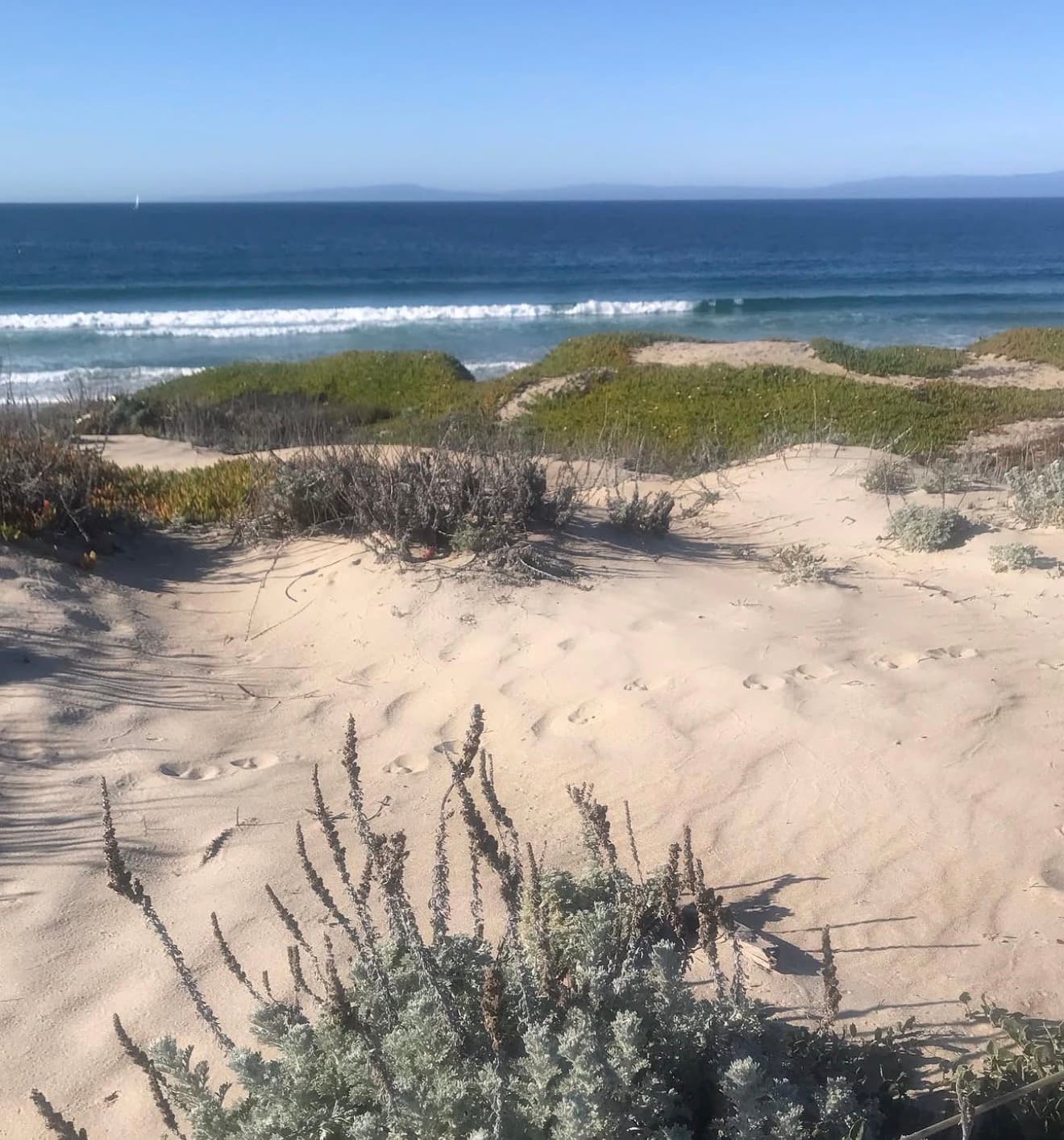
Del Monte Beach is the pale-sand stretch that runs east from Wharf #2 along Del Monte Avenue, backed by low vegetated dunes, the paved Monterey Bay Coastal Recreation Trail, and the grounds of the Naval Postgraduate School. The local name "Del Monte Beach" covers the Monterey-side segment of Monterey State Beach, a California State Park that is actually made up of three separate stretches shared between Monterey and Seaside.
That naming confusion is the first thing most visitors hit. Your phone says Monterey State Beach. The signage at the dune path says Del Monte Beach, City of Monterey. The state parks page says both. All of these are correct. The easiest way to think about it: Del Monte Beach is the Monterey chunk, roughly a mile and a half long, and it sits inside the larger state park the way a neighborhood sits inside a city. From the end of the sand it is a ten to fifteen minute flat walk along the coastal trail west to Fisherman's Wharf and Cannery Row.
The Cold Water Problem No One Tells You About
Here is the number that settles most of the swim-versus-walk debate. Monterey Bay water temperature sits at roughly 50 to 58 degrees Fahrenheit year round, coldest around April and only warming to the high 50s by September. That is cold enough to shock-gasp on entry, and cold enough that summer locals surfing here wear 4/3 wetsuits with hoods in the winter months. It is the same upwelling cold water that makes Monterey Bay one of the most biologically productive marine ecosystems in North America. You cannot have the kelp forests and the sea otters and the whale feeding grounds without the cold.
Layer on top of that the Monterey District sneaker-wave advisory. California State Parks explicitly warns visitors never to turn their back on the ocean here, keep off wet sand during large swells, and expect temporary closures during storm events. Rip currents happen. Lifeguards do not. Most people who come to Del Monte Beach walk the sand, sit on a driftwood log, watch the occasional beginner surfer, and then go warm up somewhere else.
If you came for an actual swim, the fix is nearby. Head west past Wharf #2 to Monterey Municipal Beach, the small pocket beach inside the breakwater. Calm, still cold, but swimmable on a warm afternoon and used by the local kayak operators and swim clubs.
The Hotel the Beach Was Named After
This is the editorial hook almost no Del Monte Beach guide leans on. The beach is named for the Hotel Del Monte, which opened on 3 June 1880, built by Southern Pacific Railroad baron Charles Crocker through his Pacific Improvement Company. In its heyday the hotel sat on 7,000 acres with 125 acres of formal gardens, drew presidents and robber barons, and anchored the whole idea of Monterey as a destination. It burned and rebuilt in 1887 and again in 1924, with the current Spanish Revival building dedicated in May 1926.
During the Second World War the Navy leased the hotel for pre-flight training, then purchased it outright in 1947 for 2.5 million dollars. In 1951 the Naval Postgraduate School moved west from Annapolis into the building, and in 1956 the former hotel was renamed Herrmann Hall, which is what it is still called today. The grounds behind the beach, including the palm-lined driveway and the formal gardens, are still the NPS campus. You cannot walk in without a sponsor, but you can see the old hotel clearly from the coastal trail.
The train that brought Gilded Age guests from San Francisco was called The Del Monte, running on Southern Pacific tracks from 1889. The final passenger run was in 1971. The rail corridor it used became the Monterey Bay Coastal Recreation Trail, which is the paved path now running directly behind the beach. The beach, the avenue, the old train, and the trail all take the hotel's name. The hotel is gone. The word remains everywhere.
What to Actually Do Here
- Walk the coastal trail. The paved 18-mile path from Castroville to Pacific Grove runs along the back of the beach. The Del Monte stretch is flat, bikeable, and the easy connector into downtown Monterey.
- Photograph the dunes and Santa Cruz view. On clear afternoons the opposite coast is visible across the bay.
- Beginner surfing. Del Monte is a mellow, forgiving beach break with a sandy bottom, which is why local surf schools like it. Winter produces the cleanest waves.
- Kayak launch. Monterey Bay Kayaks runs rentals from the state beach across from Window on the Bay.
- Beach volleyball. Courts sit on the grass at Window on the Bay immediately adjacent.
- Dog walking. On leash, south of the Monterey Tides Hotel only.
What does not happen here: reliable swimming, lifeguarded lanes, bonfires (banned on Monterey District state beaches since 16 September 2014), guaranteed otter sightings (go to the harbor or Elkhorn Slough for that), or Monterey Bay Aquarium (that is on Cannery Row, a 15 minute walk west).
Fog, Seasons, and When to Actually Come
The single biggest mistake first-time visitors make is coming in July. Monterey's summer is defined by morning fog that often does not burn off until afternoon, and coastal highs sit in the mid 60s. The locals call it May gray, June gloom, and in a bad year it extends into August. It is beautiful if you want a moody Steinbeck Monterey. It is disappointing if you wanted sunshine.
The reliably clear window is September through October, sometimes called the local's summer. Fog thins, water hits its yearly warmest, and tourist volume drops sharply after Labor Day. November through February is storm season with real sneaker-wave hazard but outstanding wave watching and empty sand. March through May is bright, cooler, with wildflowers behind the dunes and the start of the snowy plover nesting window on 1 March.
Monterey Bay is part of the Monterey Bay National Marine Sanctuary, designated in September 1992, covering 6,094 square miles and 276 miles of coastline. Del Monte Beach is sanctuary shoreline. That designation is why the kelp forest offshore is healthy and why the otters came back.
Del Monte vs Carmel vs Lovers Point
If you are choosing between Monterey Peninsula beaches, a quick reality check:
| Beach | Sand | Swimming | Crowds | Best for |
|---|---|---|---|---|
| Del Monte | Pale, soft | No, cold and unguarded | Moderate | Walking, history, dog on leash |
| Carmel | White, fine | No, rip currents | Heavy | Scenery, postcard photos, dog off leash |
| Lovers Point | Pocket cove | Sheltered, still cold | Moderate | Family, calm water, grass picnic |
| Asilomar | Rocky, wild | No, open ocean | Low-moderate | Tide pools, photography |
| Monterey Municipal | Small | Yes, breakwater | Low | Actual swim inside Monterey |
Del Monte is the easy one if you want space, history, and a quiet walk. Carmel is the postcard. Lovers Point is the family cove. None of them is a summer swim beach in the way an East Coast or a Guanacaste visitor expects.
Is Del Monte Beach Worth It in 2026?
Yes, if you understand what it is. Come for the walk along the old railbed, the view across the bay to Santa Cruz, the sight of the Naval Postgraduate School rising where the Hotel Del Monte used to take in presidents, and the chance to stand on sanctuary shoreline in quiet off-season light. Come in September or October if you want sunshine. Come in winter if you want swells and storm air. Skip the swim, or walk ten minutes west to the Municipal Beach if that was the point of the trip. The 1880 hotel is long gone. The name it gave the beach, the avenue, the old train, and the trail is still the clearest way to understand what you are actually looking at.