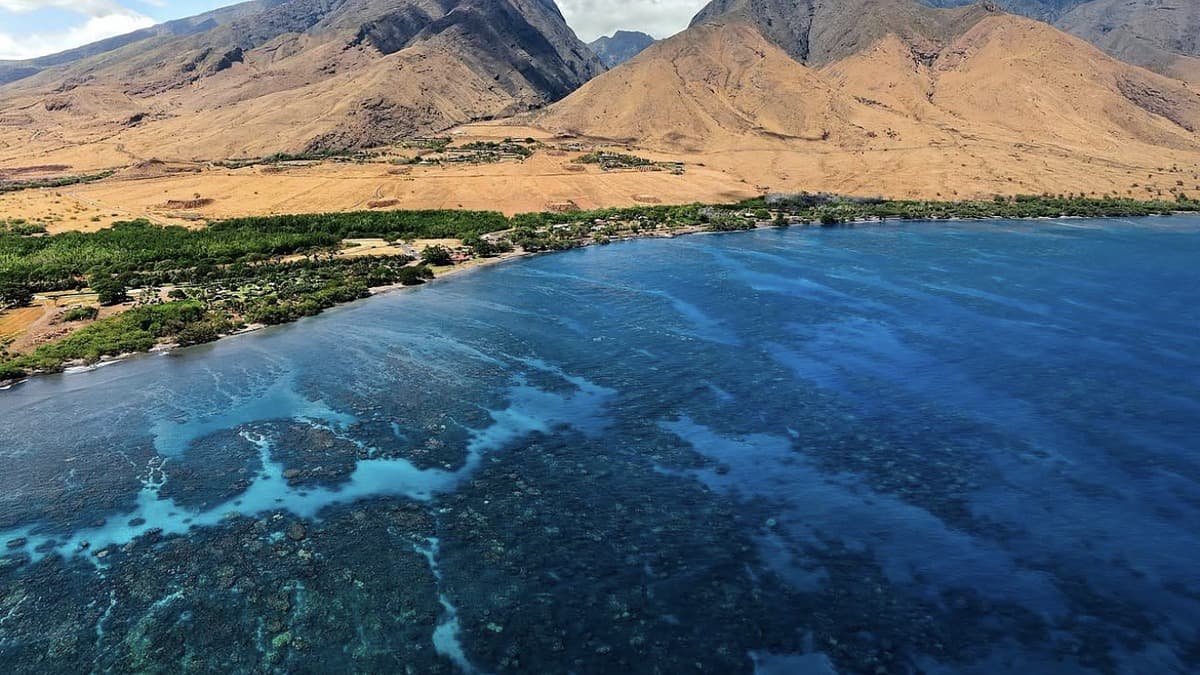
Most West Maui snorkel articles will tell you to drive to Honolua Bay or Kapalua. The reef at Olowalu sits halfway down the same highway, has 450 acres of coral, the most reliable turtle sightings on the west side, occasional manta rays in the deeper water, and a free shoulder you can pull onto at the literal Mile Marker 14 sign. The catch is the tide. Show up at low tide and the coral pokes out of the water and the snorkel is ruined. Show up at high tide on a calm morning and Olowalu is the easiest world-class snorkel on Maui.
Where Mile Marker 14 Actually Is
Olowalu Beach is on West Maui at Mile Marker 14 on Honoapiilani Highway (Route 30), seven miles south of Lahaina town and around 35 minutes from Kahului Airport. From Kaanapali the drive is 25 minutes south. The "Mile Marker 14" name is literal: there is a small green-and-white state highway sign with a "14" on it, and the snorkel entry is the strip of sandy beach right by that sign.
There is no formal parking lot, no entrance fee, and no facilities. Park on the dirt shoulder on the makai (ocean) side of the highway, anywhere you can find a legal pull-off. Be careful with rental car tires in soft sand, and watch for highway traffic when you leave since the road has no turn lanes through this section.
The Tide Rule
This is the part that most travel pages bury. The Olowalu reef is shallow, in places less than a foot of water at low tide, and on the lowest tides of the year (new and full moons) the coral literally sticks out above the surface. Trying to snorkel across it then means either scraping the coral (which kills it and cuts you) or aborting the swim.
The fix: time your visit for high tide, ideally 1 to 2 hours either side. Use a Hawaiian tide chart, not a generic one, since Hawaiian tides have unique patterns. Aim for a morning slot before the trade winds chop the surface, generally 7am to 10am. Avoid the days around new and full moons if you have flexibility.
What's Actually on the Reef
The Olowalu reef is one of the most biologically rich in the state. Hawaiian green sea turtles (honu) are the headline; the reef functions as a cleaning station where wrasse and tangs pick parasites off the turtles, and the turtles cycle through every 30 to 60 minutes during daylight. You will see one. You will probably see five.
Reef fish density is high. Parrotfish working the coral, butterflyfish in pairs, moorish idol singles, goatfish on the sand, occasional octopuses tucked into reef holes, and moray eels in the deeper rock crevices. From November through April you can hear humpback whales singing underwater while snorkelling. Pacific manta rays feed in the deeper water past the outer reef edge, more visible to confident swimmers willing to range further out.
The coral itself matters. Olowalu has been called the "mother reef" of West Maui because it is one of the largest and oldest fringing reef systems in Hawaii, and seed coral from here has been used to recover damaged reefs elsewhere. Bring reef-safe sunscreen and avoid touching, standing on, or kicking the coral. The reef does not survive contact.
Practical Notes
There are no toilets, no showers, and no lifeguard at Olowalu. Use the bathroom before you drive out. Bring water shoes; the entry is sand but there is rocky reef close to shore. Bring your own snorkel gear if you can, since the closest rental is in Lahaina (10 minutes back). Pack out your trash; the shoulder bins fill quickly.
The general store across the highway, Olowalu Juice Stand, has cold drinks, fresh fruit smoothies, and shave ice. Stop there on the way back to the car. It is the only food option for miles.
Should You Make the Drive?
Yes, if you can time the tide. Olowalu beats most West Maui snorkel options for turtle reliability and reef variety, costs nothing, and requires no boat. The catch is the tide-and-trade-wind window: get the conditions wrong and you will waste an hour. Get them right and you will see more marine life in 90 minutes than at most paid Maui snorkel charters.
For the easier West Maui alternative with lifeguards and free parking, our Kahekili Beach Maui review covers Airport Beach in Kaanapali, where the reef is also directly off the sand and the conditions are less tide-dependent. For wider Hawaii context, our Best Beaches in Kauai and Best Beaches in Oahu guides cover the snorkel options on the other islands.