From the sand, a rip current often looks like the safest place to swim: a dark, smooth lane of water between lines of breaking surf, with no white water in it. In fact it is a narrow channel flowing out to sea, and it can carry a swimmer beyond the breaking waves. If one takes you, don't fight it. Stay calm, float, raise an arm and shout, or swim parallel to the beach until the pull eases.
Rips are the main reason lifeguards go into the water. The Met Office says over 60% of RNLI lifeguard incidents in the UK involve them, and the US National Weather Service puts rip current deaths at more than 100 a year. Checked November 2026.
Australia's summer is starting: surf lifesavers in New South Wales raised their flags on 26 September 2026 for a season running to late April 2027, while British beaches head into a winter with few lifeguards. Reading the water works the same everywhere. The warnings differ, and the second half of this guide takes them country by country.
How to spot a rip current before you swim
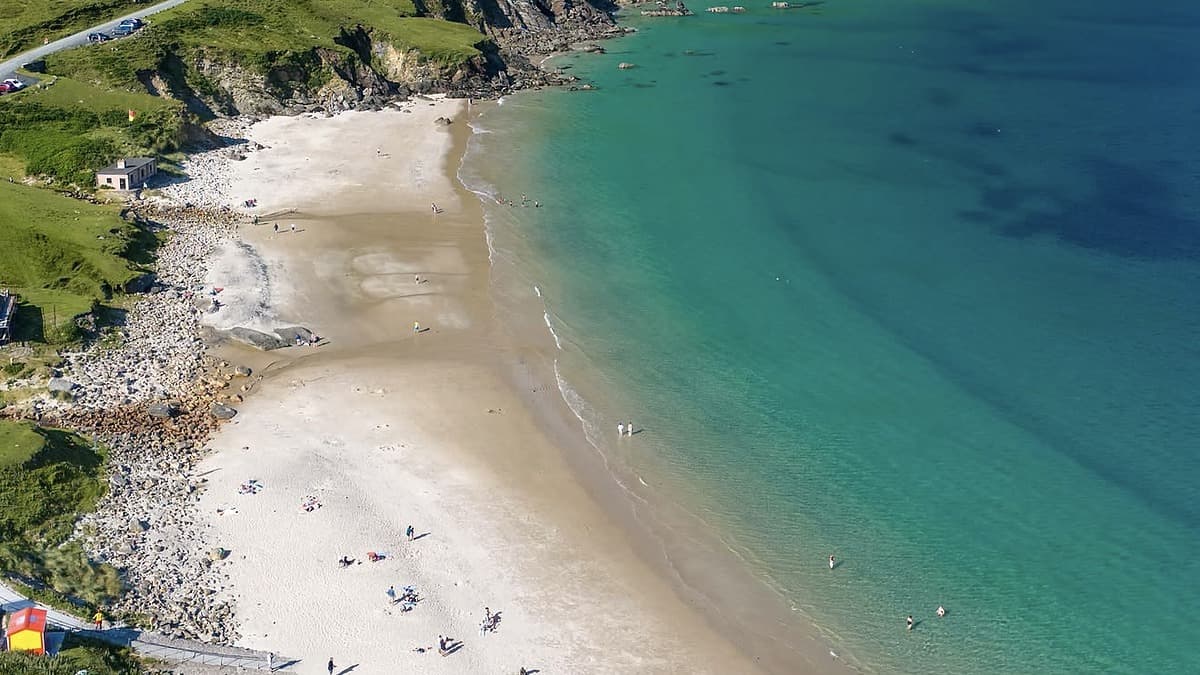
Rips run where waves break unevenly. They form in a stretch with less wave breaking between stretches with more, often where a deeper channel cuts through a sandbar, the National Weather Service explains. That is why the danger looks like the quiet patch.
Conditions change between sets of waves, so watch the water for a few minutes before you go in. Look for:
- A gap in the surf: a darker, narrow lane of water heading out between areas of breaking waves. It looks darker because it is deeper, Surf Life Saving NSW notes.
- Choppy, rippled water: a channel of churning surface water moving seaward.
- Things drifting out: foam, sand, seaweed or debris moving away from the beach, or a cloudy plume of sandy water beyond the breakers.
- A scalloped shoreline: a bite-shaped dip in the edge of the beach.
A rip may show only one of these signs, and on a busy beach they are easy to miss. The simplest check is to ask a lifeguard to point out any rips, as the National Weather Service advises.
What to do if you're caught in a rip current
The danger is exhaustion. Rips usually flow at 1 to 2mph but can reach 4 to 5mph, faster than an Olympic swimmer, according to HM Coastguard. Swimming straight back against that wears out strong swimmers too.
The Met Office and HM Coastguard in the UK, the US National Weather Service and Surf Life Saving NSW in Australia differ in emphasis but agree on the essentials:
- Don't swim against it. Every one of them says so.
- Stay calm and float. A rip will not pull you under, and floating saves energy, the National Weather Service says. If you have a board or inflatable, the Met Office's advice is to hold on to it.
- If you can stand, wade. The Met Office and HM Coastguard both advise wading rather than swimming while your feet still touch the bottom.
- Raise an arm and shout, so lifeguards and people on the beach can see you need help.
- Swim parallel to the beach if you can, then head back to shore at an angle once you are out of the pull. Surf Life Saving NSW suggests swimming towards the breaking waves, where the water is moving shoreward.
Australian lifesavers put floating first, under the slogan Relax, Raise, Rescue: Surf Life Saving NSW says a floating swimmer may be carried round in a circle back onto a sandbar. If one approach isn't working, try the other.
If someone else is caught
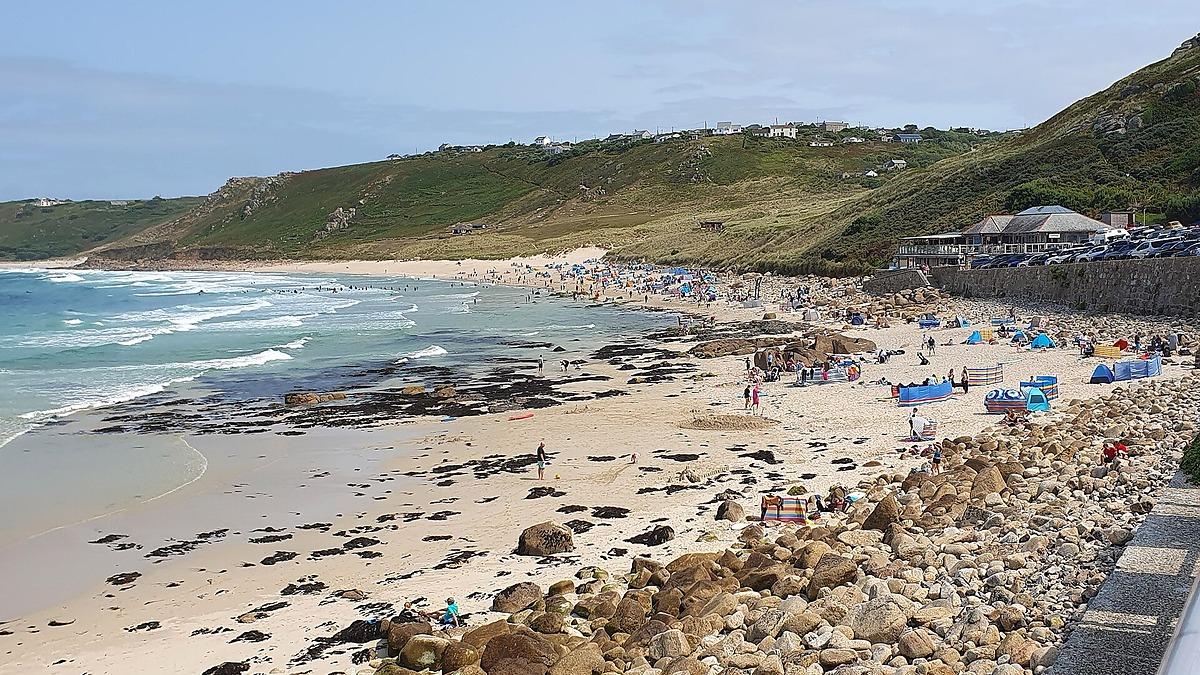
Don't swim out after them. The National Weather Service warns that many people have died trying to rescue rip current victims. In August 2018 RNLI lifeguards at Sennen Cove in Cornwall rescued a young child caught in a rip, along with her mother, who had gone in after her.
- Get a lifeguard first. If there isn't one, call for help: 999 or 112 in the UK, asking for the Coastguard; 911 in the US; 000 in Australia; 112 across the EU.
- Throw something that floats. A life ring from a beach station, a cool box, anything buoyant, as the National Weather Service suggests.
- Keep watching the swimmer, so rescuers know exactly where to go.
Staying calm is easier if you know what a rip can and cannot do, and the everyday words for it don't help.
Rip current, rip tide or undertow: what the words mean
Rip current is the correct term. Rip tide is a loose popular name for it, which the National Weather Service says causes confusion: rips are driven by breaking waves, and while the tide can strengthen or weaken them, they are not tides. NOAA's Ocean Service uses rip tide for something different, a strong tidal current flowing through an inlet or the mouth of an estuary or harbour.
The National Weather Service uses undertow for a third thing, the seaward flow of water close to the seabed driven by breaking waves, and says it is usually slower than a rip. Neither pulls people under the water. A rip carries you away from the beach, and the risk comes from what a swimmer does next.
Whether a rip is running at all depends on the shape of the beach and the state of the sea.
Where and when rip currents form
Rips form on any beach with breaking waves, and the National Weather Service picks out two settings. One is a gap in a sandbar, where water flows back out to sea through the deeper channel; these channel rips are typically 5 to 100 yards wide (about 5 to 90m) and move as the sand shifts. The other is beside hard structures such as groynes, jetties, piers, reefs and rocks, where rips tend to recur in the same spots. Fine weather doesn't rule them out: rips often form on calm, sunny days.
The tide matters too. On beaches with a tide range under 6 feet (1.8m), rips often flow fastest an hour or two either side of low tide and may stop around high tide, according to the National Weather Service. Britain's big tides complicate that rule. Where the sandbars dry out at low tide, the same source says, rips shut off and run hardest around mid tide.
Headlands and tidal streams shape rips too. At Saunton Sands in North Devon, Coastwise North Devon says tidal currents of up to 2 to 4 knots, together with the Downend headland, produce rips at the north end of the beach. Sandbars shift over days to months, or within hours in a big storm, the National Weather Service says. A beach you knew last summer may have its rips in new places, which is where each country's warnings come in.
Rip current warnings in the UK
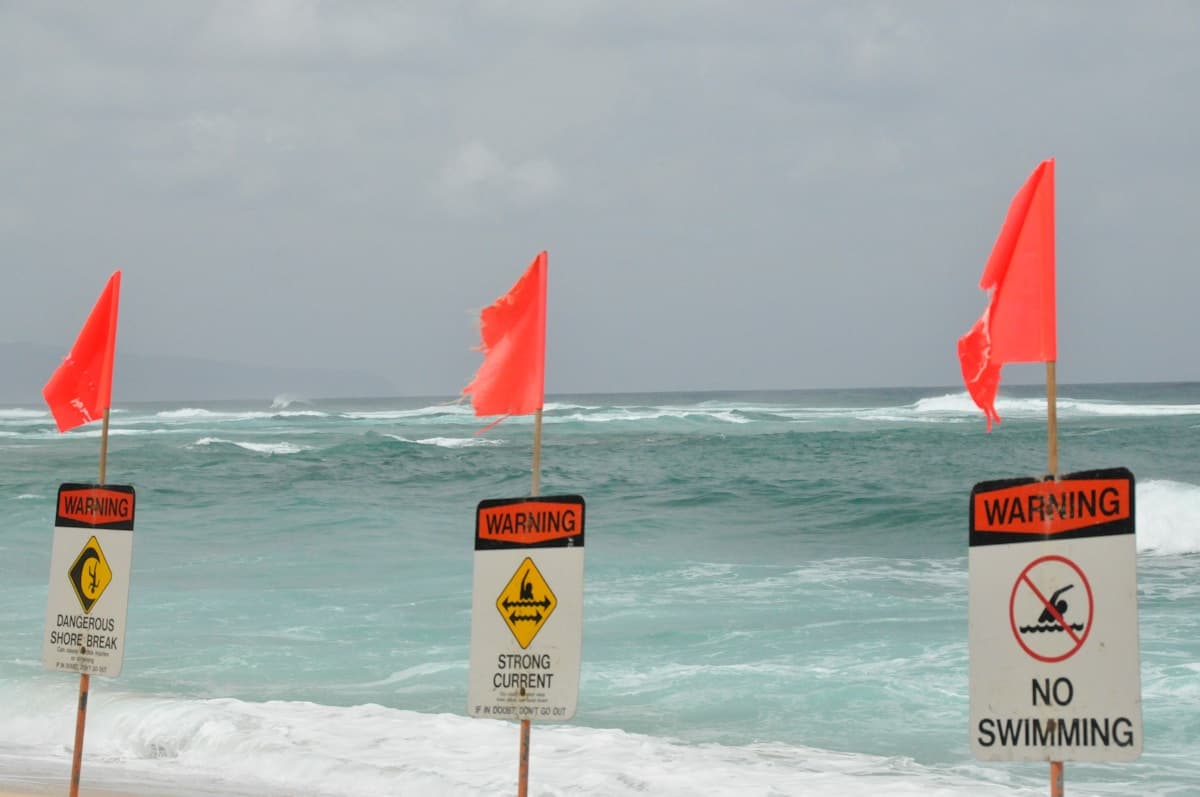
On a lifeguarded British beach, RNLI lifeguards mark the area they are watching with red and yellow flags, and the Met Office's advice is to swim between them. A red flag on its own means danger: stay out of the water. Black and white chequered flags mark the zone for surfboards, paddleboards, kayaks and other craft without engines, and swimmers and bodyboarders keep out of it.
Cover is seasonal, and no flags means no lifeguards. In Cornwall the RNLI's last 2026 patrols ended on 1 November, after the October half-term, CornishStuff reported, so there are no RNLI lifeguards on the county's beaches over the winter. Cover usually restarts around Easter: in 2026 the RNLI began patrols on 25 beaches across Devon and Cornwall on Good Friday, 3 April. Easter Sunday 2027 falls on 28 March, so check the RNLI's beach pages for the 2027 dates before you go. At Three Cliffs Bay on Gower, lifeguards patrol from late May to early September; in 2026 that was at weekends only from June until 18 July, according to the RNLI.
On 25 May 2026, a bank holiday, RNLI lifeguards at Three Cliffs dealt with a mass rescue after a strong rip pulled several beachgoers into difficulty, the RNLI reported. Saunton Sands has no RNLI lifeguards; our review sets out the beach operator's advice for swimming there.
The Met Office's rip current guide sets out the same escape advice. Checked November 2026.
Rip current risk in the US: Low, Moderate and High
In the US the warning starts with a forecast. National Weather Service coastal offices issue a surf zone forecast with a rip current risk on a three-step scale:
- Low: the risk is low, but life-threatening rips often occur near groins, jetties, reefs and piers.
- Moderate: life-threatening rip currents are possible in the surf zone.
- High: life-threatening rip currents are likely in the surf zone.
The National Weather Service's rip current forecast page lists the offices that issue one, so you can find the forecast for your stretch of coast. At Flamenco Beach on Culebra, Puerto Rico, a visitor died after being pulled by currents on 19 March 2025, Puerto Rico Police said, while a high rip current risk from the National Weather Service in San Juan was in force for Culebra.
Patrolled beaches are far safer. The National Weather Service, quoting the US Lifesaving Association, puts the chance of drowning at a beach with lifeguards at 1 in 18 million. A 2019 study by Brewster, Gould and Brander in the journal Natural Hazards and Earth System Sciences, using the association's records from 1997 to 2016, found rip currents were the main cause of about 82% of rescues on US surf beaches.
The National Weather Service's preliminary count shows 61 surf zone deaths in US waters in 2026, with the latest entry dated 5 November. Flag colours on US beaches are set locally; our guide to beach flag colours covers the common set, including double red.
Australia: swim between the red and yellow flags
In Australia, volunteer surf lifesavers and paid lifeguards patrol between red and yellow flags, and Surf Life Saving NSW urges swimmers to choose a patrolled beach. Surf Life Saving's Beachsafe site and app list patrolled beaches with their patrol times, weather and hazards.
The figures show why. Surf Life Saving Australia counted 50 coastal drowning deaths between 1 December 2025 and the end of February 2026, and 66% of them happened more than 1km from a surf life saving service. Its report counted 10 rip-related drowning deaths that summer, 43% below the five-year average.
Beachsafe also rates each beach's hazards. It gives Wharton Beach near Esperance 6 out of 10, with up to 12 rips along the eastern half of the beach, including a permanent one below the car park, and Surf Life Saving provides no service there. Our Bondi Beach review covers the rips on Sydney's best-known beach.
Patrol seasons vary by state, and the flags fly only during patrol hours, so check Beachsafe for the beach and the day.
Europe: red means stay out, and the rest varies
Europe has no single system. In the UK, France and Portugal a red flag means stay out of the water, but the other colours, and whether a beach flies flags at all, are set nationally or locally. Ask the lifeguard or read the beach board. In Portugal, for example, the national beach notice from the Autoridade Marítima Nacional says a yellow flag already means no swimming. France spells out its system on Service-Public, the government's information site:
- Green: supervised swimming with no apparent danger.
- Yellow: supervised swimming with a limited or marked danger, so take care.
- Red: swimming is banned.
- Red and yellow: the edges of the supervised zone while the lifeguard post is open.
Service-Public also warns about baïnes, a series of hollows in the sand that look like natural pools and can create a current that carries swimmers out to sea.
Some of Europe's best-known beaches have no lifeguards. Playa de los Muertos in Almería lies inside a natural park and cannot take a fixed lifeguard post, Carboneras council's civil protection chief told La Voz de Almería in August 2025; our review explains why it is a beach for flat-sea days only. A Blue Flag doesn't settle it either. The award covers water quality, environmental management and safety provision, but says nothing about today's sea.
On a beach with no lifeguards and no flags
Many beaches have no lifeguards, and most have none out of season. There, a few habits do the lifeguard's job:
- Watch first. Look for the signs above for a few minutes before anyone goes in.
- Don't swim alone. The National Weather Service, citing the US Lifesaving Association, notes that many drownings involve lone swimmers.
- Keep children within reach. The National Weather Service warns that the flat water of a rip looks safe, especially to children.
- Know the emergency number and the name of the beach before you need them.
- Stay within your ability. Check the weather, tide and surf first, and stay out when waves are big or a rip is visible.
If in doubt, choose a lifeguarded beach and swim where the lifeguards are watching, which in the UK and Australia means between the red and yellow flags. It is the advice the safety bodies of the UK, the US and Australia all agree on.