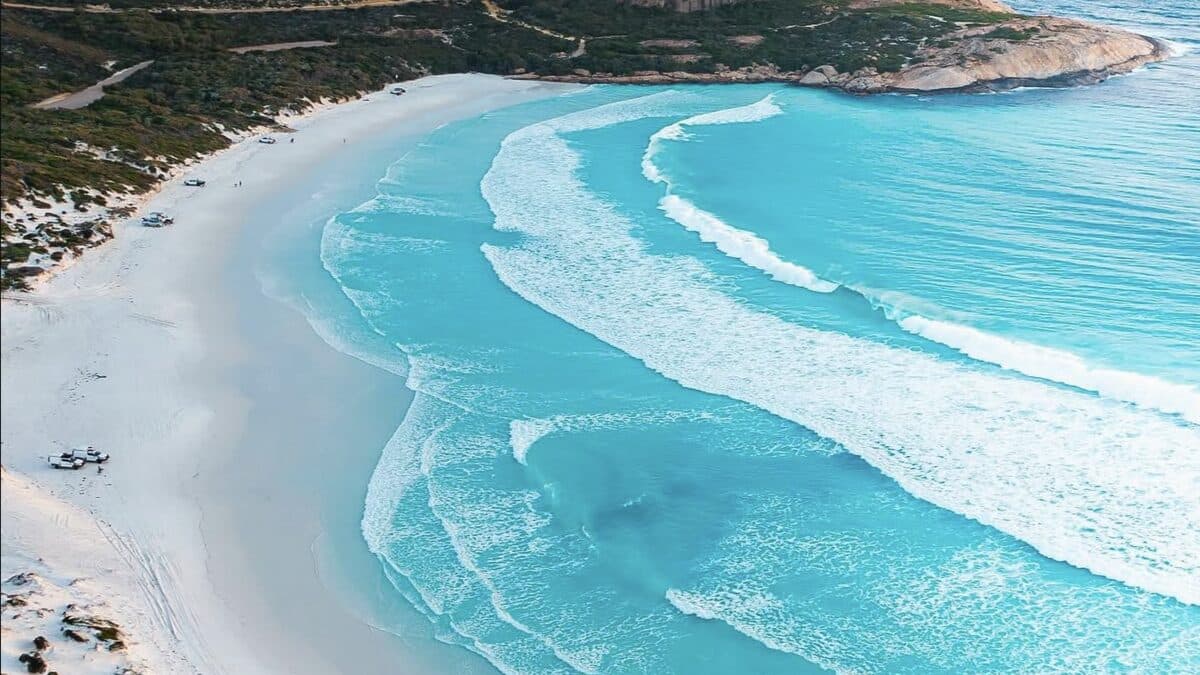
Wharton Beach jumped 18 places to be crowned the world's 3rd-best beach for 2026, and the strange part is what it didn't gain along the way: no entry gate, no kiosk, no kangaroos. This 4.5km arc of white sand and turquoise water sits an hour east of Esperance in Duke of Orleans Bay, a separate run from the Lucky Bay circuit most day-trippers settle for, and that extra commitment quietly keeps the crowds thin.
So is the world's 3rd-best beach hype actually justified?
The ranking is real and recent. The World's 50 Best Beaches list, compiled from over 1,000 travel professionals and "Beach Ambassadors," named Wharton third for 2026 on 28 April, up from 21st the year before, behind only Entalula Beach in the Philippines and Fteri Beach in Greece. It was the highest-ranked Australian beach, ahead of Turquoise Bay near Exmouth and Tasmania's Wineglass Bay.
Does it earn it on the ground? Mostly, yes. The clear, pale turquoise water and squeaky white sand run in a long crescent between granite headlands toward Cheyne Point. What lifts it above dozens of other gorgeous WA bays is that scenery with no fee, thin crowds and the freedom to drive onto the sand; you pay in driving time, not dollars.
How to get to Wharton Beach from Esperance (and how long it takes)
Plan on roughly an hour from Esperance; distances are quoted from about 80km to 100km, so trust the drive time over the kilometres. You head east on Fisheries Road toward Condingup, then south toward Duke of Orleans Bay, following Wharton Road and the signed turns in. There's no public transport, so bring your own vehicle and fuel up at the Condingup Tavern, 24km north and the last dependable food and fuel before the beach.
Driving on the beach: 4WD access vs the 2WD car park
The 4WD-only headlines mislead: the access road is sealed bitumen all the way to the main car park, so a standard 2WD car can reach the top and walk down. The "4WD only" line you'll see online applies to driving on the beach, not to reaching it.
To drive on the sand you need a high-clearance 4WD and should deflate your tyres first; the sand runs from firm to very soft, worst near the entrance car park. From there a 4WD can cover about 4.5km toward Cheyne Point, no permit required, but leave any 2WD or motorhome up top, where a rental motorhome was recently seen badly bogged.
Wharton Beach vs Lucky Bay: which one should you actually drive to?
The differences come down to money, crowds and kangaroos. Wharton sits between Cape Le Grand and Cape Arid National Parks, not inside either, so there's no entry fee. Lucky Bay is inside Cape Le Grand, where the WA national-park day fee is AUD $17 per standard vehicle as of 2026, not the "$8 per person" older blogs still quote.
Lucky Bay's trump cards are the famous kangaroos on the sand and the tested title of Australia's whitest sand, confirmed by quartz testing in 2017. Wharton has neither, despite the news cycle implying otherwise; both are dazzling white, but Lucky Bay holds the lab result. Choose Lucky Bay for the kangaroos and easier facilities, Wharton for solitude, the saved fee and on-beach driving; it now ranks among the best beaches in Western Australia.
Swimming, rips and snorkelling: what the water is really like
On a calm day the central beach is easy to swim, with a gentle slope and shallow entry, but it's not patrolled. Surf Life Saving Australia's BeachSafe rates it moderately hazardous, 6 out of 10, with up to 12 possible rips, the strongest in the eastern corner near the rocks.
There's a harder truth too. In March 2025 a surfer was killed here by a great white shark estimated at over three metres, in chest-deep water. The beach reopened two days later, but it's a reminder to avoid dawn and dusk and never swim alone. In settled water, snorkelling around the western outcrops turns up small fish, rays and seasonal dolphins.
What you won't find here: facilities, food and phone signal
There are public toilets and picnic areas at the main car park, and Little Wharton has a toilet too, so the most important facility is covered. Beyond that there's nothing: no shop, no kiosk, no café, no shade, and phone signal is patchy to non-existent, even on Telstra. Bring your own food, water and sun cover, and top up fuel at Condingup or Orleans Bay; a forgotten water bottle becomes a real problem an hour from the nearest store.
Little Wharton, the lookout climb and camping at Duke of Orleans Bay
Just around the rocks sits Little Wharton Beach, a smaller, sheltered cove reached by a ten-minute walk or its own small car park. It's a seabird breeding ground with a protection period running roughly August to February, so tread lightly. Near the main beach, a short, easy hill climb delivers the elevated view over the bay and granite headlands.
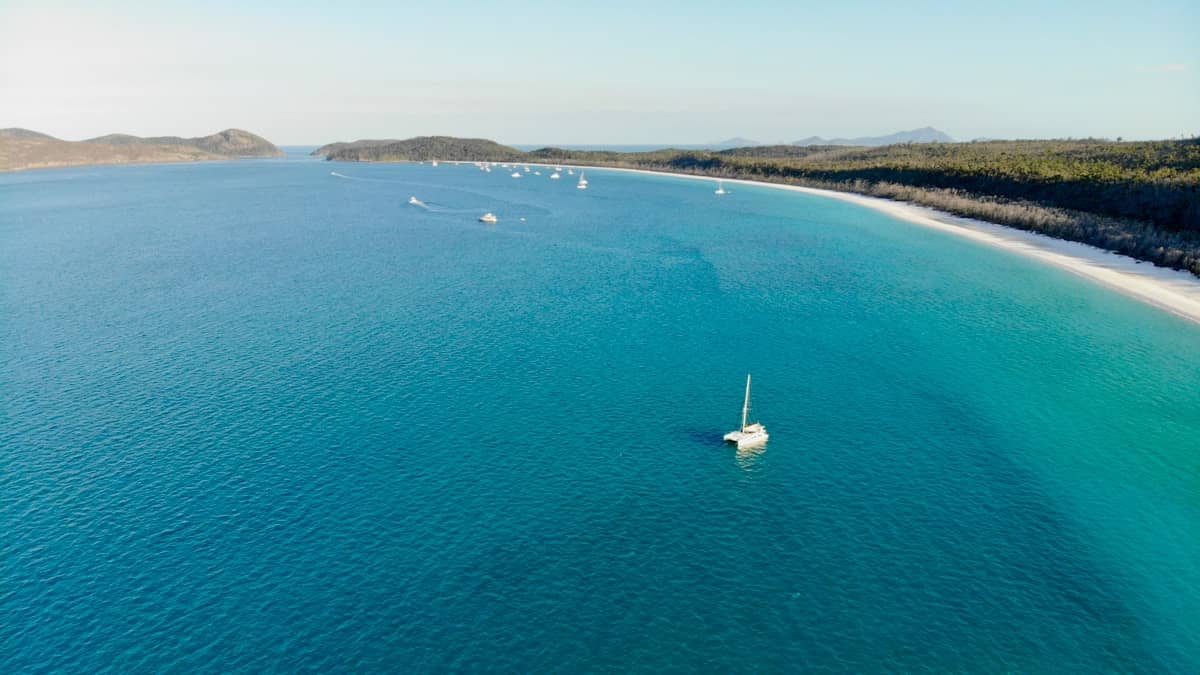
You can't camp on the sand, so the nearest base is Orleans Bay Caravan Park, about 85km from Esperance and a few minutes from the beach. As of 2026 it lists unpowered sites from AUD $38, powered from $46 and chalets from $250 a night, with an on-site shop, fuel and kitchen, and pets allowed (unlike the national-park campgrounds). For squeaky white sand on the other side of the country, see how Wharton compares to Whitehaven Beach in the Whitsundays, reachable only by boat or seaplane.
The best time of year to catch Wharton calm and clear
December to February is the sweet spot for swimming, when the water warms toward 25°C at its summer peak. The flattest, clearest conditions arrive with north or north-easterly winds, so go on a northerly morning before the afternoon sea breeze picks up. Outside summer the water cools to around 15-20°C, and autumn and winter swells turn it into more of a surf beach than a swim.