At the end of July 2026, nine beaches on the Greek islands of Paros and Chios lost their Blue Flags, though the sea at every one of them was still rated excellent. The flag is about how a beach is run, not only how clean the sea is. A Blue Flag beach has met an international standard run by the Foundation for Environmental Education (FEE): excellent bathing water first, then lifeguards or rescue equipment, clean toilets, bins and an information board, checked one season at a time.
It is not a forecast: it cannot tell you whether today's sea is rough, whether a lifeguard is on duty this afternoon, or whether the beach is beautiful. For a trip, the useful questions are what the flag guarantees, what it leaves out, and whether it will be flying on your dates.
What a Blue Flag beach means
On the sand, a Blue Flag means a beach with an excellent water record, toilets, bins, some form of safety cover and an information board showing the lifeguard hours and the latest water results. The award is voluntary and judged season by season, and the beach must be open to everyone: FEE prefers free entry, and any fee above US$30 needs special approval. During its season the flag flies either day and night, with signs giving the lifeguard and toilet hours, or only while every criterion is met.
The scheme started in France in 1985 and has run across Europe since 1987, according to FEE's criteria document. South Africa became the first country outside Europe to join, in 2001. Today it covers beaches, marinas and tourism boats in 52 countries. Spain leads by a distance, with a record 794 flags for 2026, 677 of them on beaches.
What are the criteria for a Blue Flag beach?
FEE's beach criteria and explanatory notes, last revised in 2024, set out 33 numbered criteria in four groups. Most are mandatory: miss one and there is no flag. A few, such as a beach management committee and drinking water on the beach, are only recommended.
- Water quality: the gate. In EU countries the beach must hold an Excellent official classification. Everywhere, samples taken by an independent sampler and tested in an accredited laboratory must keep E. coli below 250 and intestinal enterococci below 100 colony-forming units per 100ml of seawater. There must be at least five samples a season, never more than 31 days apart, plus results from the four previous seasons.
- Safety and services: lifeguards on busy beaches, first aid, an emergency plan for pollution, clean toilets with controlled sewage disposal, and at least one Blue Flag beach in each municipality with access for disabled visitors.
- Environmental management: a clean beach, enough bins, recycling, strict control of dogs, and no unauthorised camping, driving or dumping. Seaweed is left on the sand unless it becomes a hazard or a nuisance.
- Education and information: at least five environmental education activities, and an information board showing the latest water results, a beach map, a code of conduct and the dates of the Blue Flag season.
These are minimums. A national operator can set stricter rules but never weaker ones, which is why the bar can differ slightly between countries.
How a beach earns a Blue Flag
The applicant is whoever runs the beach: a council, a hotel, a national park or a private operator. The beach must be legally designated for bathing and must show four seasons of clean water results, or at least 20 samples if it is new to the scheme. A national jury reviews the application and sends it on to FEE's international jury.
For now the cycle is longer than usual. In April 2026 FEE made the 2026 award a two-year one, valid for the 2027 season as well, because of new EU rules on environmental labels. The criteria are unchanged, awarded sites still get a yearly review and inspections, and new beaches can apply for 2027 only in countries outside the EU. Checked November 2026.
Winning the flag starts the checks rather than ending them. During the season, Blue Flag beaches face announced and unannounced visits from the national operator and from FEE's own inspectors. That scrutiny is the award's strength, but it only tests what the criteria ask for.
What a Blue Flag does not tell you
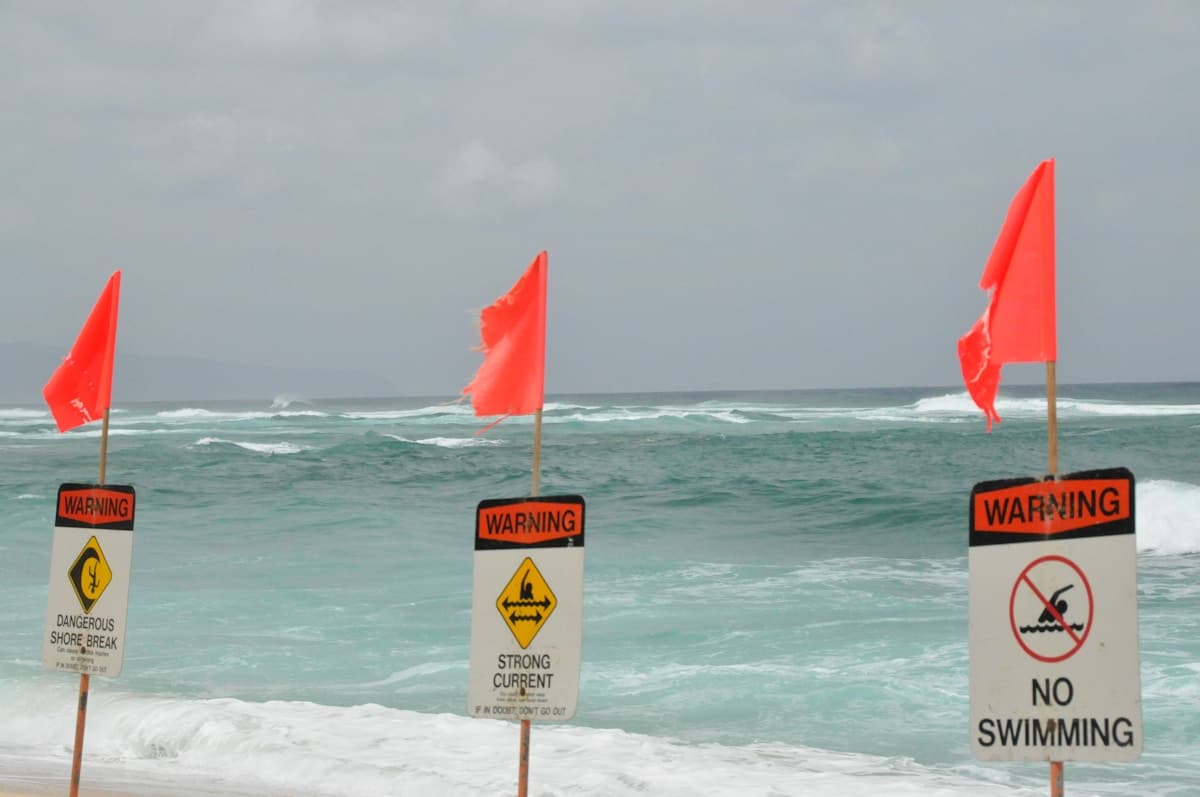
A Blue Flag is not a sea-conditions flag. It stays up on a day of big surf and strong rips. For conditions, read the lifeguard flags: on RNLI-patrolled beaches in the UK, swim between the red and yellow flags and stay out of the water when a red flag flies. Our guide to beach flag colours covers the full set, including the different systems in the US and Australia.
The water rating behind it is a record, not a reading of today's sea. England's official classification, which a Blue Flag depends on, is based on four years of samples, and Blue Flag sampling can be as infrequent as once a month. A storm can push bacteria up for a day or two between samples. FEE's rules tell beach managers to take the flag down and post a notice after an oil spill, abnormal weather or a similar event, so a bare flagpole on the morning after heavy rain is worth noticing.
Nor does the flag guarantee a lifeguard. On low-hazard beaches with fewer than 50 users a day, averaged over four weeks of high season, public rescue equipment such as lifebuoys can stand in for lifeguards. The lifeguard season is also set separately from the flag season: at Sandbanks in Poole, RNLI lifeguards patrolled from 28 March to 27 September 2026, while the Blue Flag season listed by FEE runs from 15 May to 30 September.
The flag season may also be shorter than your holiday. Each site sets its own dates, listed on FEE's map:
- Pissouri, Cyprus: 1 May to 31 August, so a September week at Pissouri Beach falls outside it.
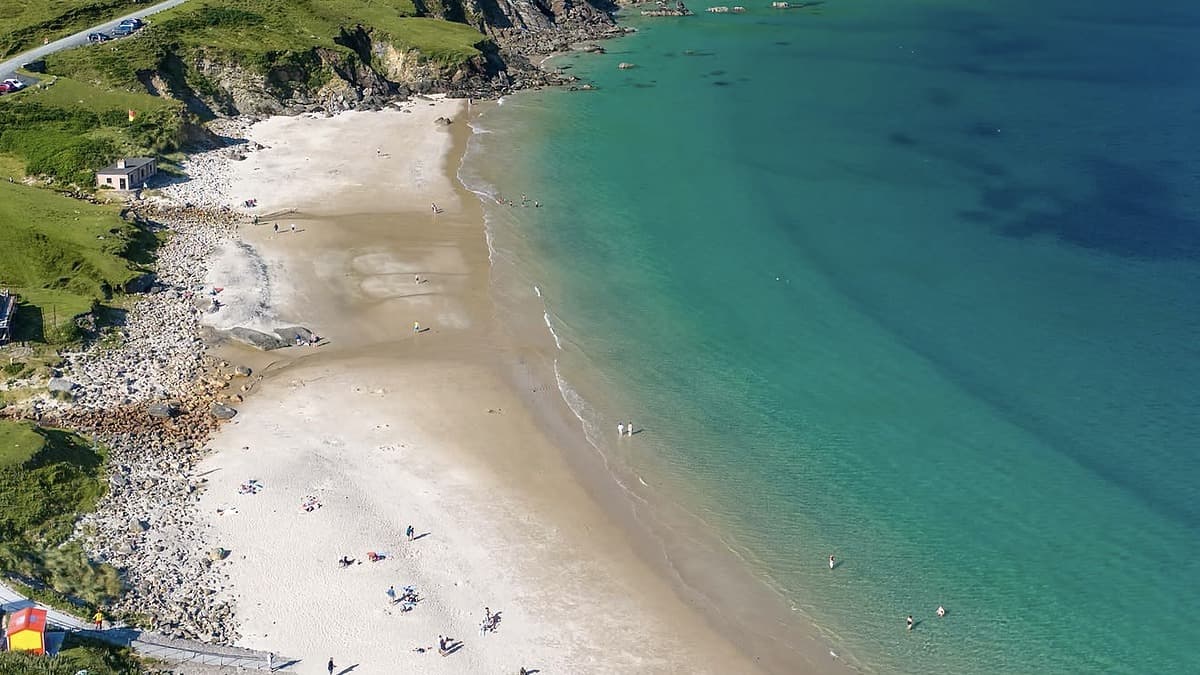
- Keem Beach, Achill Island: 1 June to 15 September, though lifeguards are on duty daily only in July and August, plus June weekends and the first weekend of September, as our Keem Beach review explains.
- Portrush East and West Strands, Northern Ireland: 1 July to 31 August.
Finally, the flag is not a ranking of the best beaches, and a missing flag is not a warning. Wild beaches with no toilets, lifeguards or road can never qualify, however clean the sea: our Blue Flag beaches in Wales guide explains why Barafundle Bay has no flag. Some absences run for decades. Playa de las Teresitas in Tenerife lost its flag in 2003 after a sewage discharge. Diario de Avisos reported in August 2026 that Santa Cruz's council aims to win it back in 2027, although FEE's transitional rules accept new applications for 2027 only from outside the EU.
On a British or Irish beach, the Blue Flag is also one of several signals that look alike and mean different things.
Blue Flag vs lifeguard flags, the Seaside Award and water ratings
| Signal | Who runs it | What it tells you | Water standard | How often it changes |
|---|---|---|---|---|
| Blue Flag | FEE, through a national operator in each country | The beach meets FEE's water, safety, management and education criteria this season | Excellent | Reviewed each season (the 2026 award also covers 2027); can come down within days |
| Lifeguard flags | RNLI and councils in the UK; surf life saving clubs in Australia | Where to swim right now, and whether to go in at all | None | Through the day |
| Seaside Award | Keep Britain Tidy (England), Keep Wales Tidy, Keep Northern Ireland Beautiful | A well-managed beach with facilities and visitor information | Sufficient or better | Each season |
| Green Coast Award | An Taisce (Ireland), Keep Wales Tidy, Keep Northern Ireland Beautiful | An unspoilt natural beach managed with the local community, often with few built facilities | Excellent | Each season |
| Bathing water classification | Environment Agency (England), Welsh Government, EPA (Ireland) | The official water record: Excellent, Good, Sufficient or Poor | It is the standard | Once a year: November in England and Wales, May in Ireland |
The overlap is large but not complete. Keep Britain Tidy gave 63 Blue Flags in England for 2026 (61 beaches, one marina and Rutland Water's inland bathing beach) and 106 Seaside Awards, with 41 sites holding both.
The gap between the two is often the water. Budleigh Salterton in East Devon flies only a Seaside Award for 2026 because its bathing water was rated Good, East Devon councillor Geoff Jung said in May.
The classification row matters most for next summer. England's 2025 ratings came out on 25 November 2025, and the 2026 ratings, expected on a similar timetable, decide which beaches keep or win a flag for 2027: FEE's rules say an award stands only once the official water data confirms it.
How to check whether a beach has a Blue Flag this year
Timing comes first, and 2027 is an unusual year. Most Northern Hemisphere flags came down by the end of September. Under FEE's transition, a beach awarded in 2026 keeps its award for 2027 after a review rather than a new application, and only beaches outside the EU can join as newcomers. Inside the EU, FEE has yet to publish how the flag can be displayed under the new labelling law (see below), so before relying on the flag for a summer 2027 trip to Spain, Greece, Portugal or Ireland, check with that country's operator. Checked November 2026. For reference, the 2026 lists came out in May: Spain in early May, Wales on 14 May, and England and Ireland on 15 May.
In the Southern Hemisphere the season is about to start. South Africa's 2026-27 awards, announced by WESSA in October, cover 50 beaches with full Blue Flag status, 20 pilot beaches, five marinas and seven tourism boats. In recent seasons most of its beaches have raised the flag on 1 December.
- Start with the official map. The Blue Flag sites map plots every awarded beach, marina and boat, and each entry lists that site's season dates.
- Check the national list. The country's operator publishes the latest awards and any withdrawals, and is usually quicker to update than the global map.
- Read the board on the day. Every Blue Flag beach must display its season dates, the latest water results and lifeguard hours. If the flag has been withdrawn, the board must say so and why.
- Check the water in season. In England, the Environment Agency's Swimfo shows sample results and pollution warnings for each bathing water; in Ireland, the EPA's beaches.ie does the same.
The main national operators (checked November 2026):
- England: Keep Britain Tidy, which also runs the Seaside Award.
- Wales: run by Keep Wales Tidy, which awarded 18 beaches for 2026.
- Northern Ireland: Keep Northern Ireland Beautiful.
- Scotland: no Blue Flags since 2016. Keep Scotland Beautiful runs Scotland's Beach Awards instead, given to 52 beaches for 2026.
- Ireland: An Taisce, through beachawards.ie, with 85 beaches and nine marinas for 2026, according to RTÉ.
- Canada: run by Swim Drink Fish, with 13 beaches and 10 marinas for 2026.
- United States: Blue Flag USA, run by the American Shore and Beach Preservation Association for the continental US, Alaska and Hawaii. Three beaches flew it in 2026: Delray Beach and Spanish River Park in Florida, and Westward Beach in Malibu.
- Australia: FEE's map lists no Australian sites. The signal that matters on an Australian beach is the red and yellow flags marking the area patrolled by surf lifesavers.
One change affects the EU. A new consumer law on environmental labels, Directive 2024/825, applied from 27 September 2026, and FEE told EU sites whose seasons ran past that date to stop displaying the flag unless their national operator had confirmed arrangements for them. FEE says Blue Flag is continuing and will publish arrangements for coming seasons. Until then, a missing flag at an EU beach, this winter or next summer, may be paperwork rather than pollution. UK sites are not covered by the directive.
Why a Blue Flag comes down mid-season
FEE's 2024 rulebook sets three levels of failure. A single minor problem fixed on the spot leaves the flag flying. If it cannot be fixed at once, or two or three minor failures turn up, the flag comes down and the beach has ten days to put things right; miss that deadline and the flag stays down for the rest of the season. A major failure that affects health, safety or the environment takes the flag down immediately for the rest of the season, and the beach board must say so.
Many withdrawals follow an inspection rather than a water sample. The nine Greek beaches stripped in July 2026 were Livadia, Logaras, Golden Beach and Pounda on Paros, and five on Chios, including Agios Isidoros and Daskalopetra. Inspectors found failings in accessibility, safety, cleanliness and visitor information, To Vima reported, and officials stressed that the water was still rated excellent.
Staffing can bring a flag down too. In July 2024 ADEAC, Spain's Blue Flag operator, withdrew the flags from four beaches in El Puerto de Santa María, near Cádiz, because the town's lifeguard service was still incomplete in late July, according to the Cádiz paper Diario Bahía de Cádiz.
Sometimes it is the water, and the flag goes back up. In December 2024, at the start of the South African summer, George Municipality lowered the Blue Flag at Victoria Bay as a precaution after water monitoring, advised against swimming, and said the flag would return once new samples met the standard.
Why some beaches miss out, and how flags come back
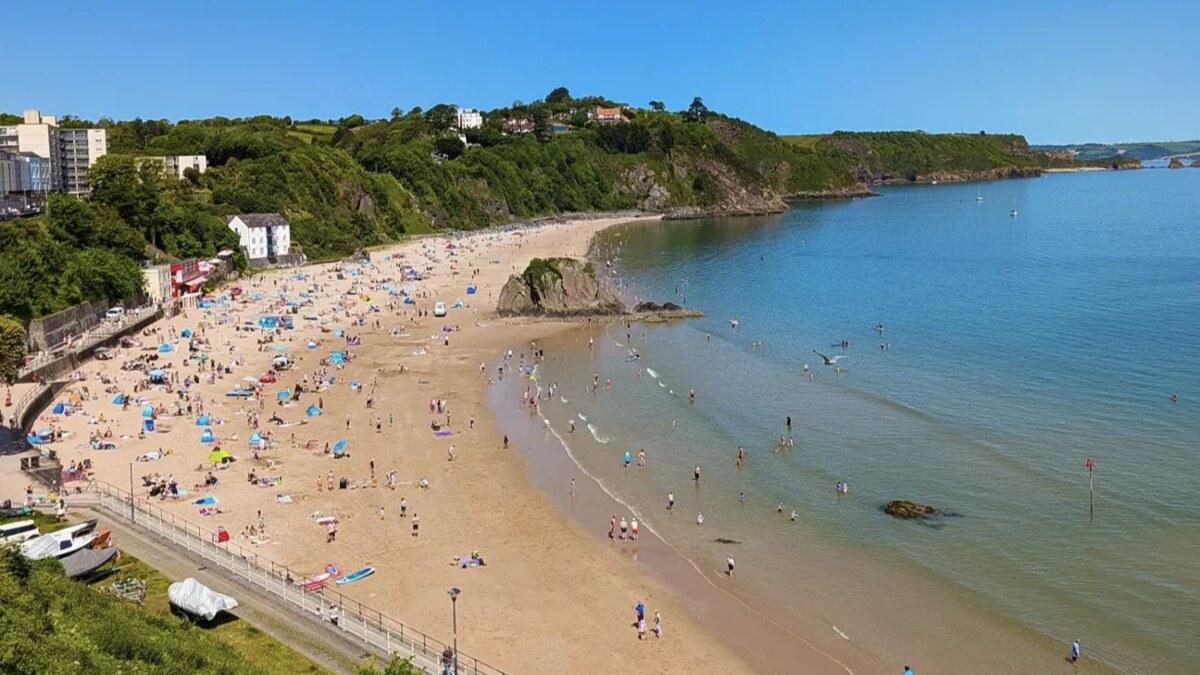
Often a missing flag was never raised that season, and the annual water classification is a common reason. Six Irish beaches that held flags in 2025 did not get them for 2026, including Lahinch in Co Clare and Fountainstown in Co Cork, because their water was rated Good rather than Excellent, RTÉ reported in May. Tenby North in Pembrokeshire missed out for the same reason, a story our Wales guide covers in full.
Other beaches drop out because the council stops applying or cannot staff the lifeguards and facilities the criteria demand. Flags do come back, sometimes after a long gap: Duncannon in Co Wexford flew a Blue Flag in 2026 for the first time in 19 years, after a new sewage system and a scheme helping local farmers keep run-off out of streams, according to FEE.
How to use a Blue Flag when you book
Treat the flag as a shortlist, not a verdict. It reliably points to beaches with a clean multi-year water record, toilets, bins and some form of safety cover, which suits families and anyone who wants facilities without research. It says nothing about scenery or crowds, so a great wild beach without one is not a lesser choice.
Before you travel, confirm the beach on the official map and check that its season dates cover your trip. On the day, read the information board, then look at the lifeguard flags before you swim. The Blue Flag tells you the beach is well run this season. Only the lifeguards and the board can tell you about today.