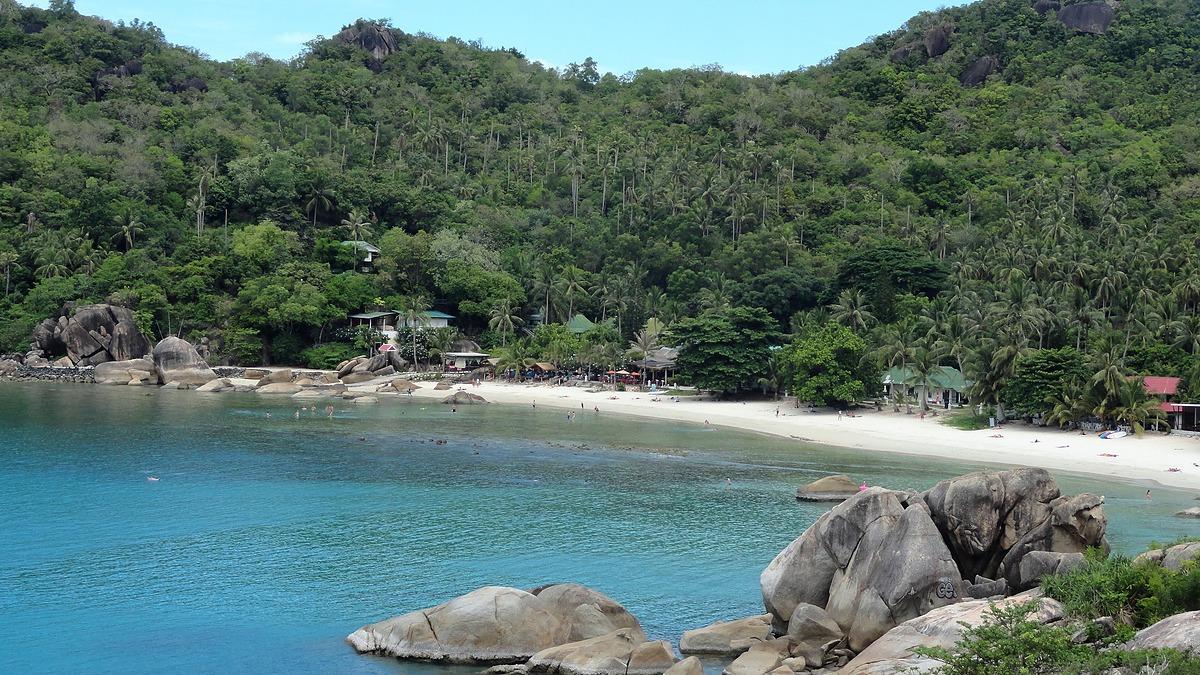
Koh Samui's best beach for a swim is one of its smallest. Silver Beach is a 250-metre cove of pale sand between Chaweng and Lamai, held in place by granite boulders at both ends, and on a calm day you can snorkel off the sand. Elsewhere among the best beaches in Koh Samui, Chaweng is the pick for nightlife, Lamai for a quieter east-coast base, and Lipa Noi on the west coast for shallow water and sunsets.
Which coast you choose matters as much as which beach. Samui gets its rain late in the year, and November and December are the island at its wettest, with November by far the worst. The northeast monsoon pushes surf onto the east-facing beaches until the turn of the year, while the west coast stays more sheltered. The nine beaches below run clockwise from Chaweng, each with its coast and the months it is at its best.
Which part of Koh Samui is best for beaches?
Samui is roughly round, with a ring road that takes in nearly every beach. The east coast has the whitest sand, the clearest water and most of the hotels. The north coast is quieter, looking across to Koh Phangan, and its swimming varies from beach to beach. The west coast is where people watch the sun go down, and the south coast is mostly a place for fishing piers and boat departures.
Distance shapes the choice too. Bangkok Airways puts Samui Airport 2 to 5km from Chaweng, in the island's northeast corner, while Lipa Noi on the west coast is about 26km from Chaweng by road.
| Beach | Coast | Best for | Water | October to December |
|---|---|---|---|---|
| Chaweng | East | Nightlife, long walks | Clear, gently shelving | Often rough, red flags |
| Silver Beach | East | Swimming, snorkelling | Clear cove over rocks | Exposed to swell |
| Lamai | East | A quieter resort base | Clear | Often rough |
| Taling Ngam | Southwest | Sunset, seclusion | Clear | More sheltered |
| Lipa Noi | West | Families, sunset | Shallow | Usually the calmest |
| Bang Po and Ban Tai | Northwest | Seafood, quiet | Shallow | Check flags |
| Maenam | North | Long quiet stays | Varies along the beach | Swell on bad days |
| Bophut | North | Fisherman's Village base | Coarse sand, deep water | Swell on bad days |
| Choeng Mon | Northeast | Families, short stays | Calm, sheltered bay | Check flags |
Chaweng, the longest beach and the loudest
Chaweng runs for about 6km down the east coast, white sand split into north, central and south sections plus Chaweng Noi, the smaller bay over the southern headland. Bangkok Airways, which runs the island's airport, calls it Samui's main tourist area, and the beach road behind it is lined with bars, beach clubs and dive shops.
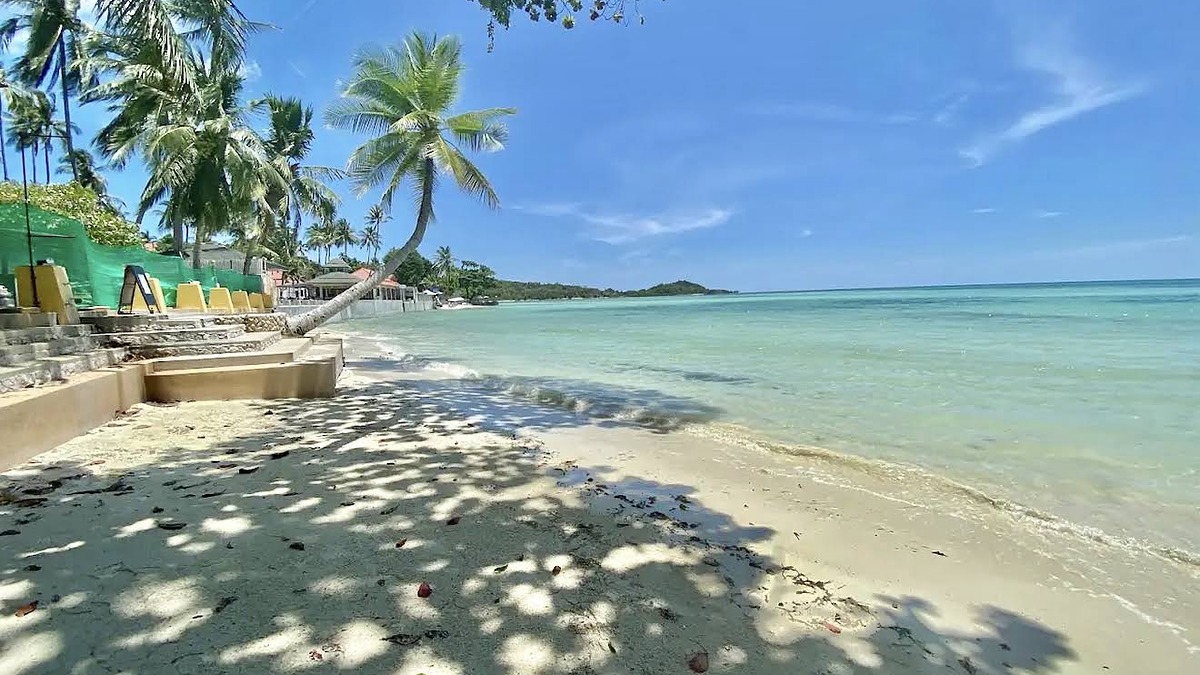
The water is usually clear and shelves gently over fine white sand. The north end is the busiest after dark; the south end and Chaweng Noi are calmer.
From October to December the swell rolls straight in. In November 2024 police put up warning flags on Chaweng while the Koh Samui Marine Department told small boats to stay ashore, Pattaya Mail reported.
For the clearest water nearby, though, people leave Chaweng and head a few kilometres south.
Silver Beach, the small cove everyone swims at
Silver Beach (also called Crystal Bay) is a single bay of about 250 metres, roughly 3.5km north of Lamai. Bangkok Airways' island guide describes clear water for swimming and snorkelling, deeper off the boulders at each end, where there are enough fish to make a mask worthwhile.
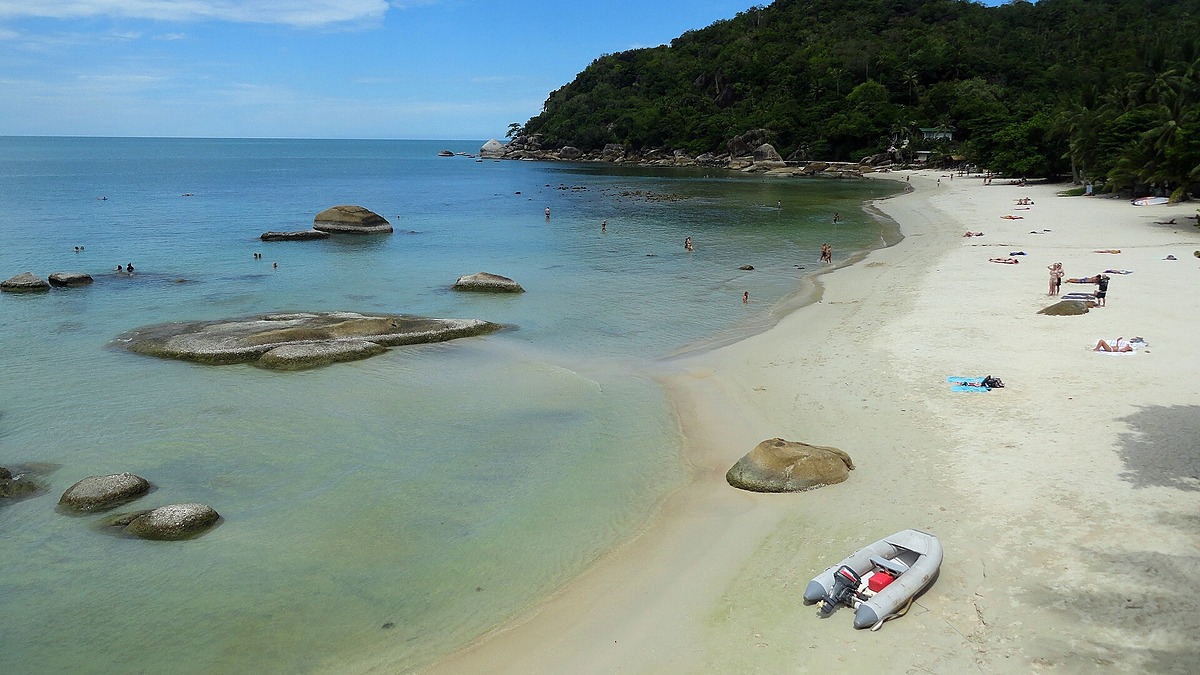
It is small, so by late morning the sand fills with day visitors. Arrive early or late. Coral Cove, a smaller rocky inlet a short way north towards Chaweng, is the overflow choice for snorkellers when Silver Beach is full. Both face the open Gulf to the east, so both take the monsoon swell.
Lamai, Chaweng's calmer neighbour to the south
Lamai is the island's second resort strip, a 4km curve about 11km south of Chaweng. It has the same east-coast sand and clear water with fewer late-night bars. At the south end are Hin Ta and Hin Yai, the Grandfather and Grandmother rocks, whose shapes make them the island's most photographed joke.
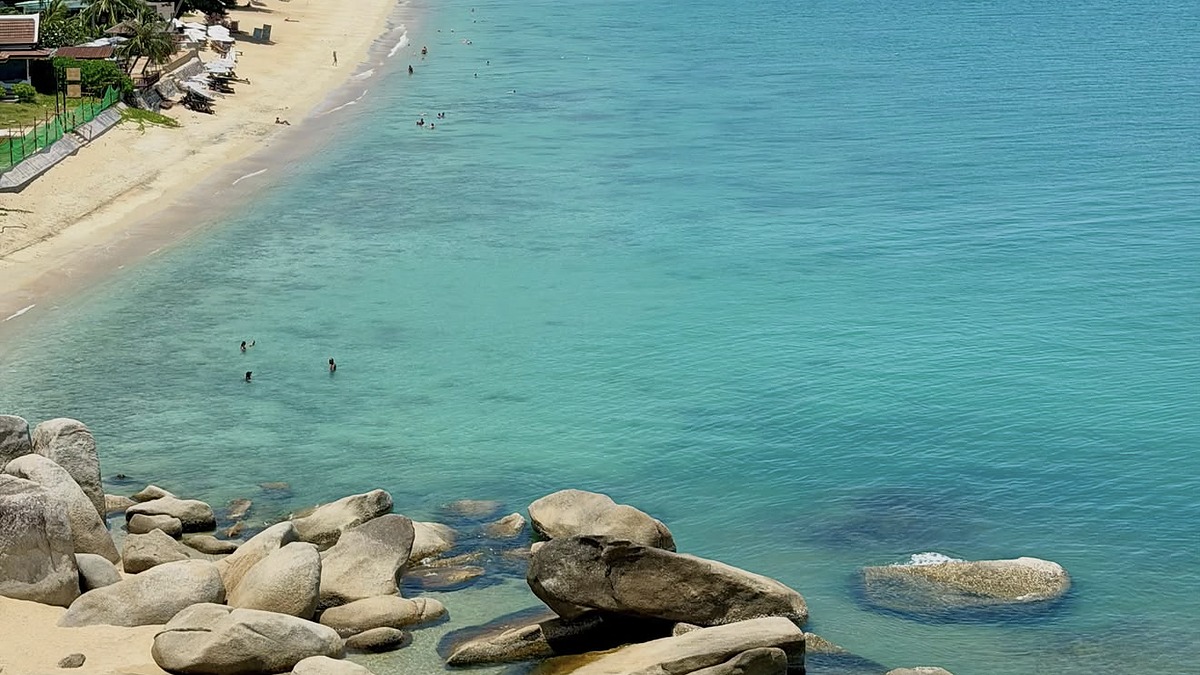
Box jellyfish nets have been strung off Lamai in past seasons (more on that below), and it takes the same northeast swell as Chaweng.
The choice between the two comes down to evenings. Chaweng has more to do after dark and is closer to the airport. Lamai goes to bed earlier, with Silver Beach a few minutes up the road.
Beyond Lamai the ring road turns inland, and the coast changes character completely.
The south coast is for boats
Bang Kao, on Samui's south coast, and Thong Krut further west matter mostly as departure points. Longtails from the fishing village at Thong Krut run to Koh Tan and Koh Madsum, the small islands just offshore.
Taling Ngam, the sunset coast
Taling Ngam, on Samui's southwest coast, has a long view west over the water to the Ang Thong islands. The sun drops straight into the sea here, which is the reason to come.
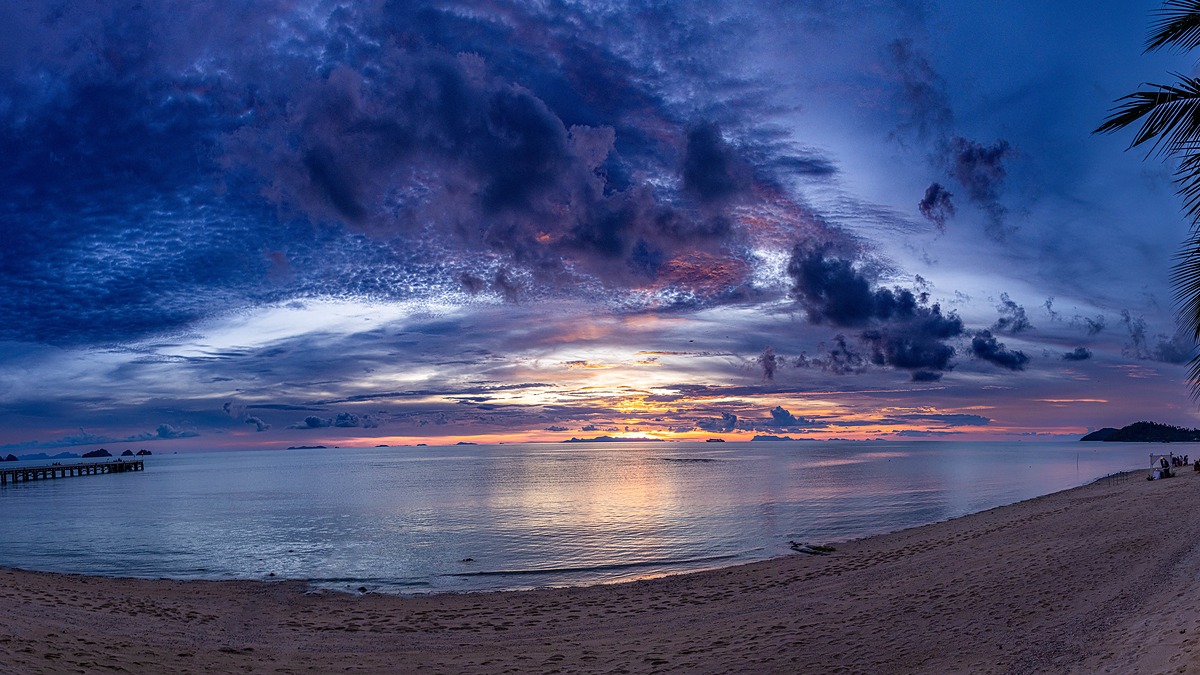
Taling Ngam faces away from the northeast monsoon, which makes it one of the more sheltered places on the island in November.
The archipelago on the horizon is Mu Ko Ang Thong National Marine Park. It closes every year from 1 November to 15 December under the national parks department's seasonal closure schedule, and day trips resume from 16 December. Check the park's status before booking. Checked November 2026.
Lipa Noi, where the west coast goes shallow and calm
Lipa Noi is a long, quiet beach on the west coast with shallow water, which is why it is the family pick, and the sunsets are as good as Taling Ngam's.
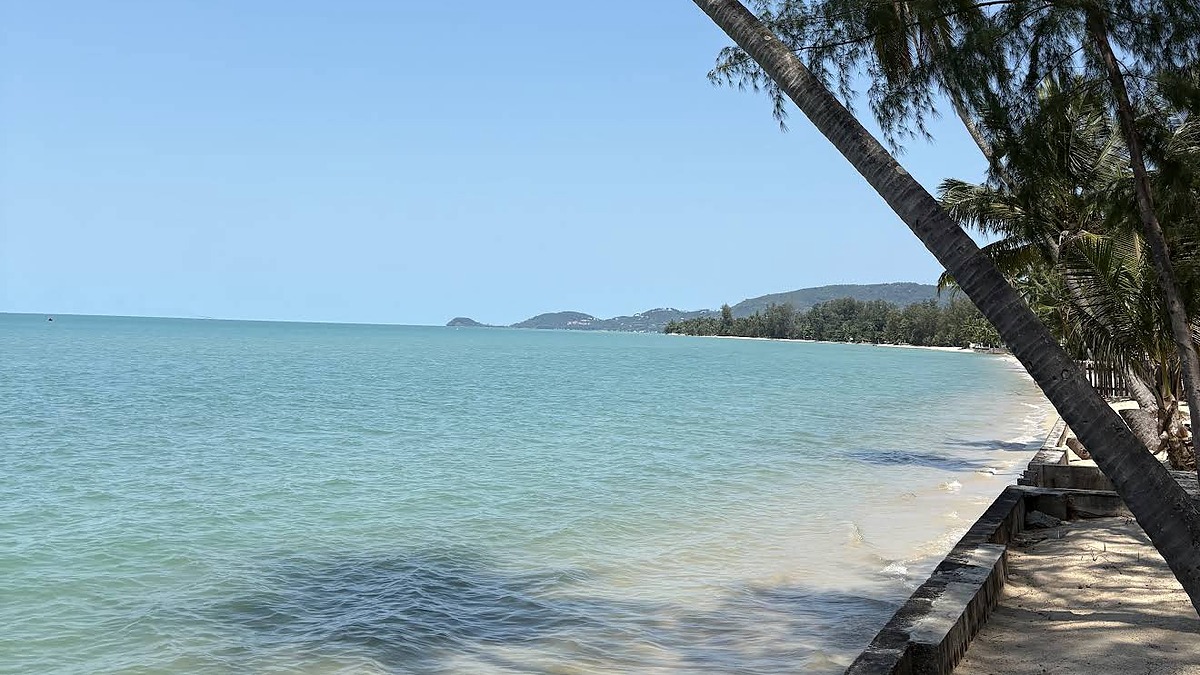
In the October to December monsoon, Lipa Noi is usually the calmest beach on Samui, though it gets the same rain as everywhere else. On a beach this shallow the tide matters, so check a tide table before you go. The car ferry from Donsak on the mainland docks at the Raja Ferry pier nearby.
Bang Po and Ban Tai, the north coast's seafood end
Bang Po (also spelled Bang Por) is a long beach at the western end of Samui's north coast, with Ban Tai running on from its eastern end towards Maenam. Samui's Ban Tai, a quiet residential stretch, is not the beach of the same name on Koh Phangan. Simple seafood restaurants put tables on the sand, and the evenings are slow.
The water is shallow and calm most of the year. The beach suits a long stay with a scooter more than a swimming holiday.
Maenam, a long quiet strand facing Koh Phangan
Maenam is 5km of sand on the north coast, looking straight across the water at Koh Phangan, with the hills of Samui's interior behind. It suits people who want an easy beach and a village with markets and restaurants rather than a nightlife strip, and a walking street runs in the village on Thursday evenings.
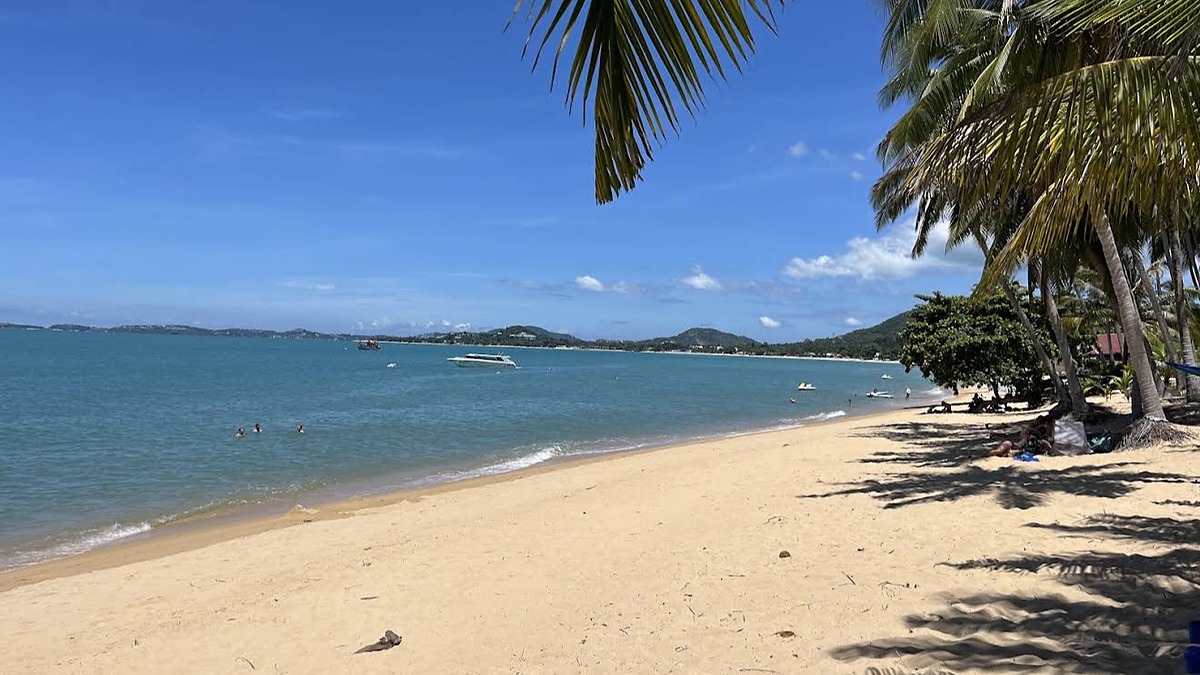
The water is calm and mostly shallow, but fishing boats moor off parts of the beach and the seabed changes along its length, so pick your spot.
Maenam is not immune to the monsoon either: on 29 November 2024 waves knocked down coconut trees and damaged beachfront bungalows there, Pattaya Mail reported.
Bophut, a base for Fisherman's Village more than for swimming
Bophut is a 2km crescent on the north coast, and its draw is Fisherman's Village: a row of old wooden Chinese shophouses turned into restaurants, bars and boutiques, with a Friday-evening walking street that runs from about 5.30pm to 10.30pm, according to Bangkok Airways.
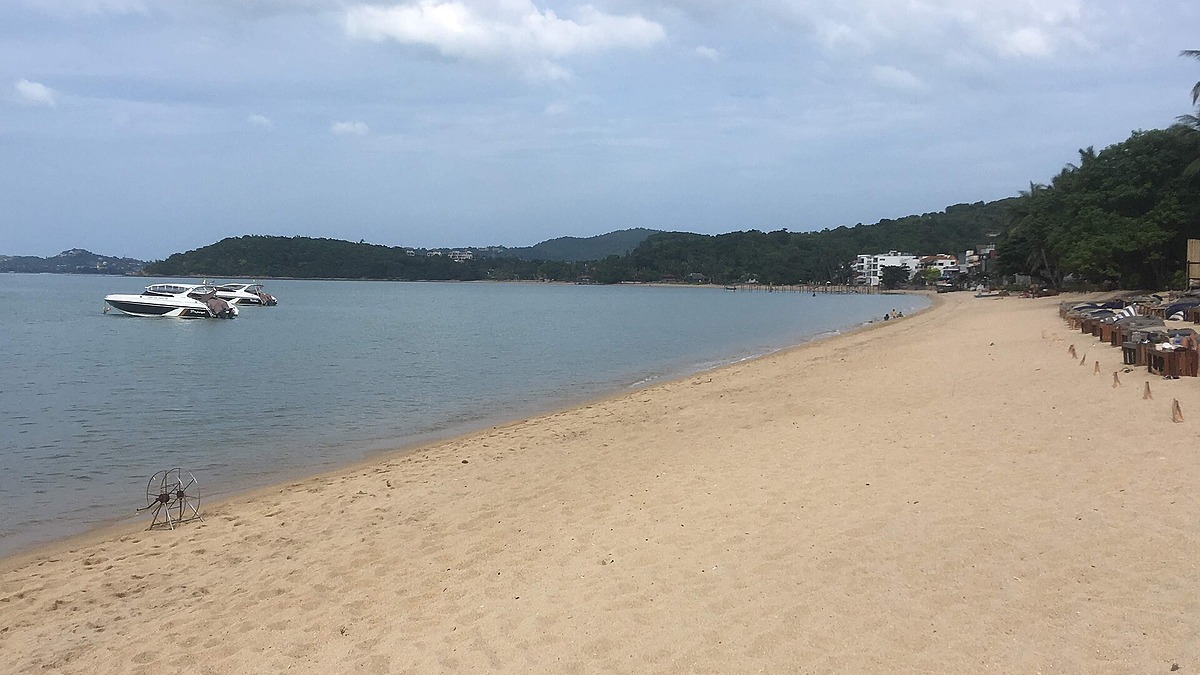
The beach in front is a poor choice for a swim: Bangkok Airways' Bophut guide calls it unsuitable because of the rough sand and deep water. People choose Bophut for the village and for its position, a short hop from the airport and the Koh Phangan boats, and drive to the east coast to swim. For families, it pairs well with a beach day at Choeng Mon, a short drive east.
Choeng Mon, a sheltered crescent in the northeast
Choeng Mon is a 700-metre crescent of white sand in Samui's northeast corner, with a small island just offshore. The bay is calm and shallow and enclosed by headlands, which makes it the island's easiest beach for small children.
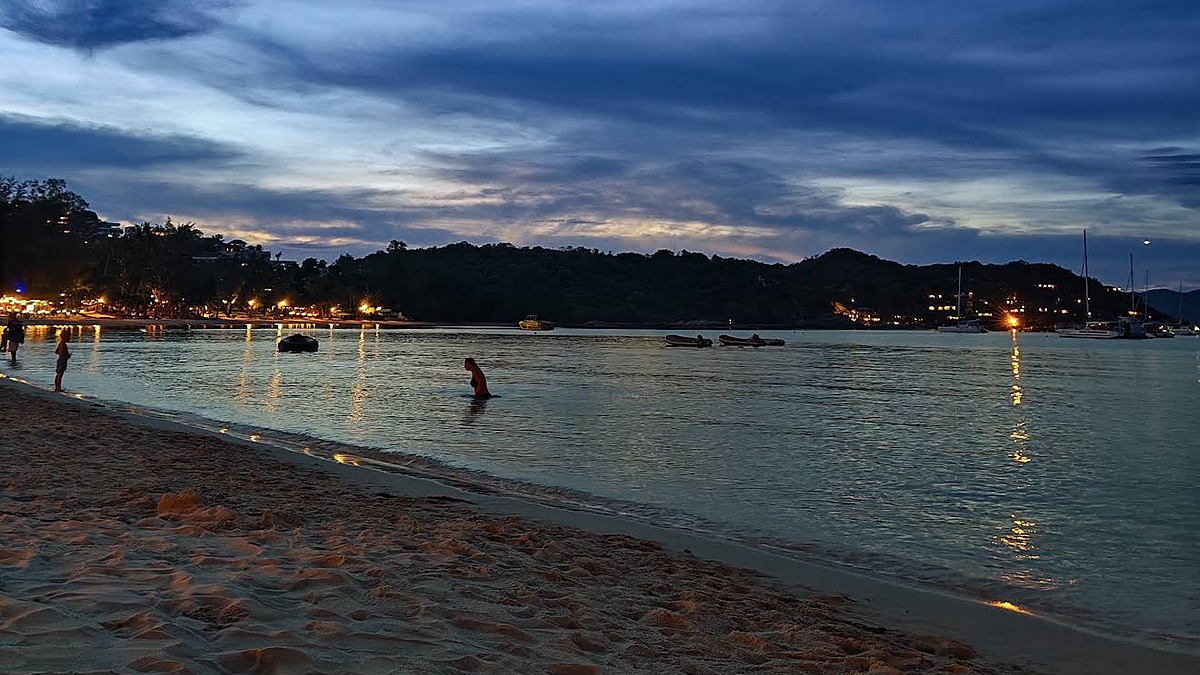
Resorts line most of the sand, so it feels more private than public, and evenings are low-key. The airport is close by, which makes Choeng Mon the sensible stop for a short stay or a final night. In the monsoon, check the flags here as anywhere on the northeast corner.
Which beaches stay calm from October to December
Samui's rainy season runs the opposite way to Phuket's, and November is its peak. The Thai Meteorological Department's 1991 to 2020 averages for its Ko Samui station put November at 445mm of rain over 16 or 17 wet days, with October (295mm) and December (263mm) not far behind.
The northeast monsoon drives the swell, so the beaches facing it, Chaweng, Silver Beach and Lamai, get the roughest seas and the most red flags. The west coast is the refuge. Lipa Noi and Taling Ngam face away from the wind and are usually calm when the east coast is not, though it rains on them just as hard.
The north coast sits in between: often fine, but exposed on the worst days, as Maenam found in 2024.
For people booking now, the better window starts after the new year. January is a transition month with about 127mm of rain. February is the driest, at 64mm over about four wet days, and with March and April also settled, February to April 2027 is the safest bet for a beach trip.
June to September 2027 is the second window, with 100 to 135mm a month spread over 10 or 11 wet days. The calendar is not a guarantee: red flags went up on Samui's beaches again in February 2026, according to Khaosod English.
The Andaman coast runs on the opposite clock, and its dry season is starting just as Samui's rains peak. That is when a trip to Maya Bay on Ko Phi Phi Leh makes more sense, and our guide to Thailand's best beaches by coast sets the two seasons side by side. If your dates fall in November or December and you can go elsewhere, our winter sun beaches guide covers warm, drier options for those months.
Box jellyfish, flags and what to do if stung
Box jellyfish are found in the seas around Samui. The Tourism Authority of Thailand's jellyfish advice lists Koh Samui and Koh Phangan among the areas with occasional reports, and says protective nets are installed in some places but cannot be fitted everywhere.
In October 2022 the director-general of the Department of Marine and Coastal Resources named July to December as the risk season for the two islands.
Nets go up beach by beach rather than island-wide, and in past seasons municipal and marine crews have strung them off Lamai. Swim inside them where they exist, and stay out at dusk and at night, when researchers say box jellyfish come closest to shore.
The Department of Disease Control also advises staying out of the water after rain.
Hotels, beachside restaurants and dive operators are required to keep vinegar to hand, TAT says, and it suggests carrying a bottle of your own.
If someone is stung, these are the Department of Disease Control's first-aid steps, with TAT's advice on CPR:
- Get them out of the water and call the emergency medical line, 1669.
- Keep them still and do not rub the sting.
- Pour household vinegar (4 to 6% acidity) over the area continuously for at least 30 seconds. Do not use fresh water, drinking water or alcohol.
- Take them to hospital if symptoms persist or get worse, and start CPR if they lose consciousness.
Rough surf and rip currents are the other risk. People have drowned in strong riptides in Thailand, according to the UK Foreign Office, which notes that Thailand has lifeguards on duty at designated beaches and a flag system, and that red flags should always be obeyed. On Samui, expect red flags most often on the east coast between October and December. Checked November 2026.
Getting between Samui's beaches
Most visitors fly in, and the ring road keeps every other journey short.
- Flights: Bangkok Airways says the direct flight from Bangkok takes about 1 hour 10 to 20 minutes, and the airport is 10 to 15 minutes by road from Chaweng.
- Car ferry: the Raja Ferry runs from Donsak on the mainland to Lipa Noi in about 1 hour 30 minutes, with a foot-passenger fare of 220 baht.
- Songthaews: the shared pick-up taxis have no posted fares. Inside Samui suggests 50 to 60 baht as a fair price from Chaweng to Lamai, with far fewer running after dark, when Grab is the easier option.
- Scooters: hire runs from about 150 to 250 baht a day, according to the same guide.
Where to base yourself
For a first trip with a swim every day, stay at the south end of Chaweng or in Lamai and walk or ride to Silver Beach in the morning, before the crowds. Families with small children do best at Choeng Mon or Lipa Noi, where the water stays shallow and calm. Couples after quiet and sunsets should look west to Taling Ngam, and anyone who wants restaurants on the doorstep without Chaweng's noise should take a room in Bophut's Fisherman's Village.
If your dates fall between October and December, book the west coast and treat the east-coast beaches as day trips for calm mornings. From February, the whole island opens up again.