Crete's best beaches split neatly by coast. The west has the famous pair, the shallow lagoon at Balos and the pink-tinged sand of Elafonissi, plus the long sweep of Falassarna. The south has wild coves under the mountains, the east has quiet sand and a palm forest at Vai, and the north coast around Heraklion has the convenience. Below are the 12 best, coast by coast, with how to reach each one and where to go when the summer wind gets up.
The famous two keep getting more famous. In Tripadvisor's 2026 Travellers' Choice awards, published in February, Elafonissi ranked second in the world and Balos third, with Falassarna eleventh. By August the Municipality of Kissamos, which covers all three, was drawing up an action plan that could put them behind an online time-slot booking system, and its environmental adviser expected it to be finished in 2027. Nothing had been adopted when we checked in November 2026. If you are planning for May to October 2027, look again before fixing a west-coast day.
For how Crete compares with the Ionians and the Cyclades, see our guide to the best beaches in Greece.
Crete's beaches by coast, and how the meltemi picks between them
Crete is long, thin and mountainous, and the mountains decide your beach day. From late May into October the Aegean's north wind, the meltemi, blows in spells of a few days. It is strongest in July and August and in the early afternoon, and it usually drops after sunset, according to University of Crete research summarised on aegeanislands.gr.
The north coast faces straight into it. On meltemi days through summer 2026, Crete Direct's daily sea reports showed waves of up to 2 metres on open north-coast beaches and around a metre or less on the south coast, though gusts can still be strong there. When it blows, check the sea forecast and head south.
| Beach | Coast | Sand or pebble | Getting there |
|---|---|---|---|
| Balos | West (Chania) | White sand | Boat from Kissamos, or dirt road and path |
| Elafonissi | Southwest (Chania) | Pale sand with a pink tinge | Road, about two hours from Chania |
| Falassarna | West (Chania) | Long sand | Road from Kissamos |
| Kalathas | North (Chania) | Sand | Road from Chania |
| Bali coves | North (Rethymno) | Sand | Road to the village |
| Ammoudara | North (Heraklion) | Long sand | City bus or car |
| Preveli | South (Rethymno) | Coarse sand | Path from the car park, or boat |
| Sweetwater | South (Sfakia) | Pebble | Coastal path or water taxi |
| Matala | South (Heraklion) | Coarse sand | Road to the village |
| Vai | East (Lasithi) | Sand | Road from Sitia |
| Voulisma | East (Lasithi) | Fine sand | Road or bus from Agios Nikolaos |
| Karoumes | East (Lasithi) | Pebble and coarse sand | Gorge walk of 70 to 90 minutes |
Start with the west.
West Crete: Balos, Elafonissi and Falassarna
The far west is where Crete's best-known beach photographs are taken, and all three of its headline beaches lie inside Natura 2000 protected areas. Chania is the natural base, and the port of Kissamos, 43km west of the city according to the Balos boat operator, is the jumping-off point for the north-west corner.
Balos Lagoon
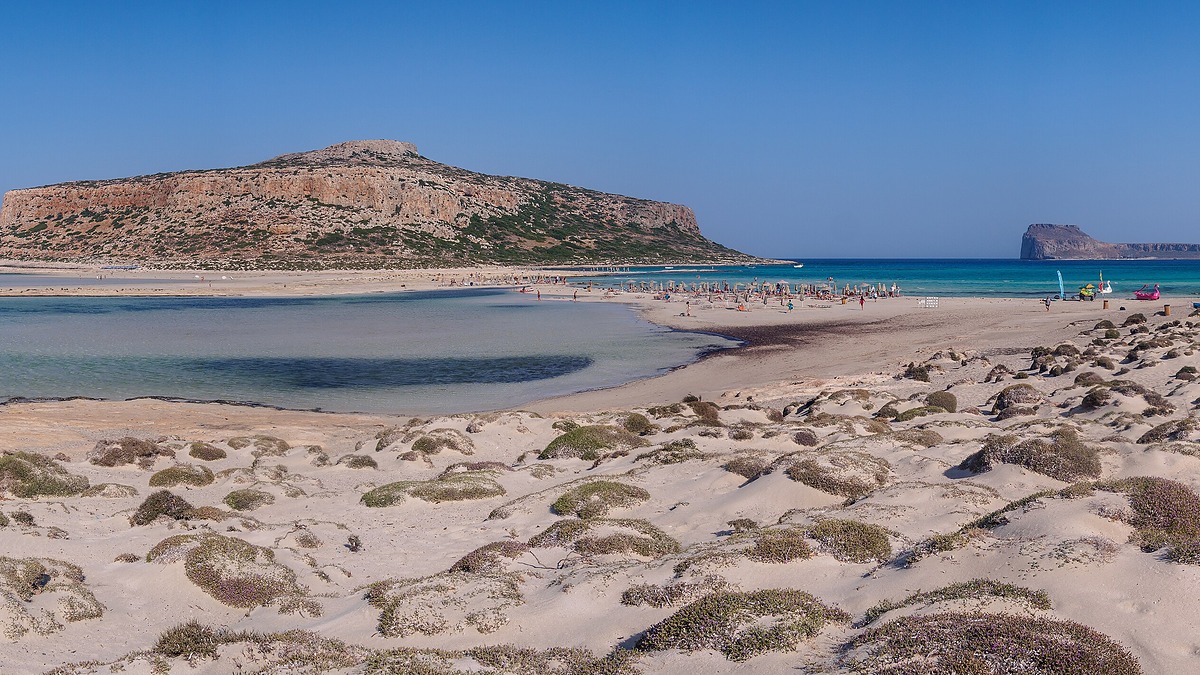
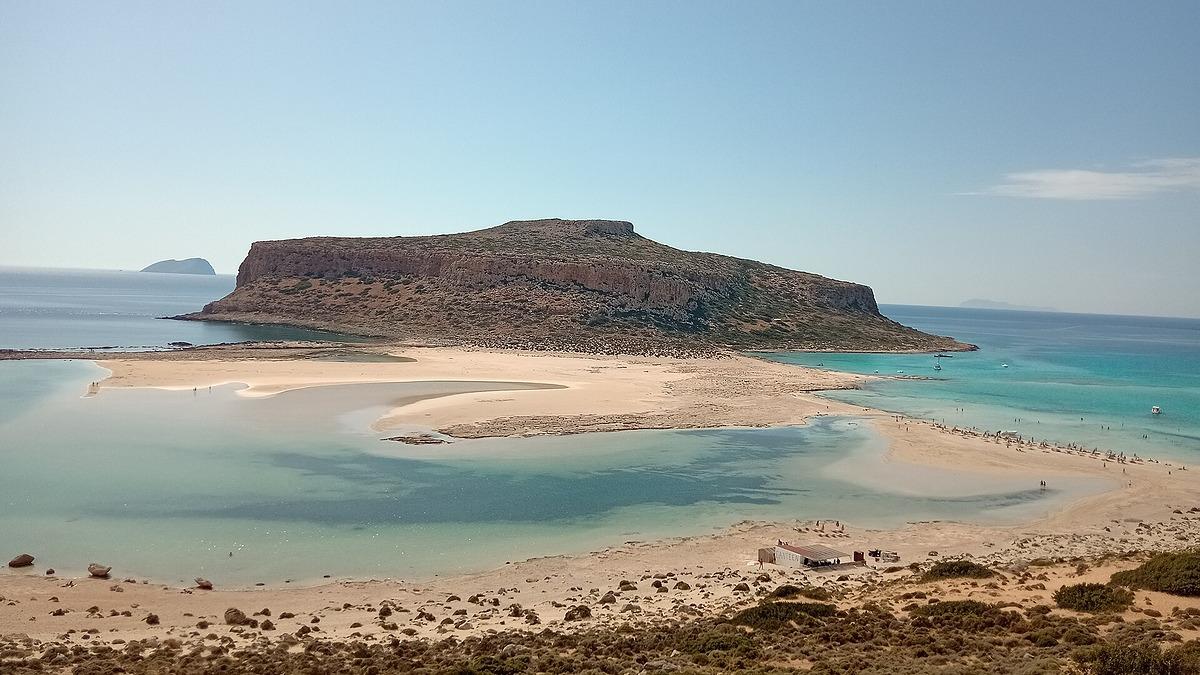
At the tip of the Gramvousa peninsula a white sand spit almost closes off a lagoon so shallow it looks painted on. From the path above you see three blues at once: the pale lagoon, the deeper bay and the open sea beyond the Tigani headland. It is busy from late morning in summer.
The easy way in is by sea. Cretan Daily Cruises runs boats every day from Kissamos port from April to October, and its price list still shows the 2026 fares for passengers aged 13 and over, so check the 2027 prices before booking (Checked November 2026):
- Balos and Gramvousa island, about 7 hours: €40, or €45 between 15 July and 15 September.
- Balos only, about 5 hours (high season only): €36, or €40 between 15 July and 15 September.
- Municipal fee: the Municipality of Kissamos collects €1 per passenger over 13 before boarding.
- On board: card or instant payment only, and parking at the port is free.
The full cruise allows about 2.5 hours at the lagoon, and the operator warns that the landings are not suitable for people with serious mobility problems. Driving is the other option: Crete Direct's June 2026 guide describes a 9km unpaved track beyond Kaliviani, 30 to 40 minutes of slow driving, then a steep 20-minute walk down with no shade, and harder going back up.
Shade is scarce and getting scarcer. Greek City Times reported in August 2026 that Balos's sunbeds had been cut to about 150, down from roughly 400 a few years earlier, and stretches of the surrounding Gramvousa peninsula coast are on Greece's 2026 list of "untrodden" beaches, where sunbeds and snack bars are banned (Checked November 2026).
Come for the view and the wade. Skip it if you need shade or a gentle walk, or if you hate sharing a beach.
Elafonissi, with Kedrodasos next door
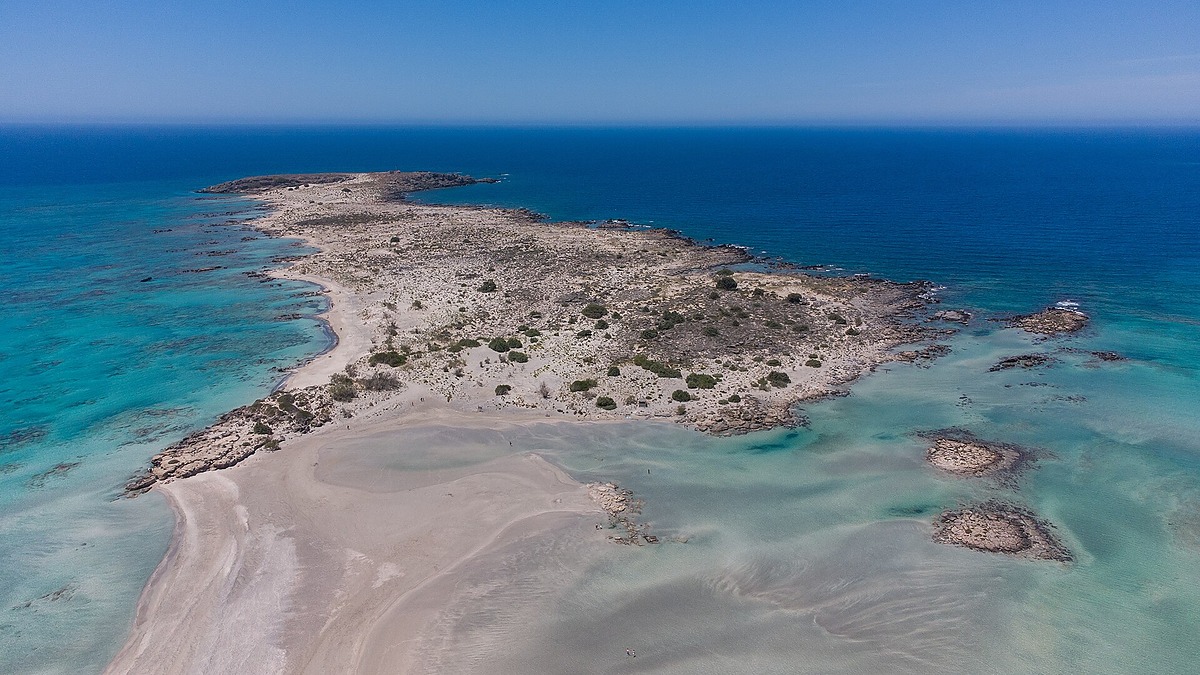
Elafonissi (often spelled Elafonisi), at the island's south-west corner, is the beach to choose for a whole day in the water. A sandbar joins a low islet to the shore, the lagoon between them is shallow enough for small children to wade, and the wet sand at the waterline shows a pink tint from crushed shells. Our Elafonissi review covers the day in detail.
It is about 76km from Chania, close to two hours on winding roads, and the rules at the end of them are tightening. The islet and its coastal waters are named in the annex to Greece's April 2026 decision on untrodden beaches, which bans sunbeds, umbrellas and snack bars on the listed stretches, so the islet is sunbed-free and there is nothing to rent once you cross (Checked November 2026). The annex also lists a few short stretches of the mainland coast, inside the protected area that runs from Chrysoskalitissa to Cape Krios and takes in the mainland beach and Kedrodasos.
Sunbeds were still rented on the mainland beach in August 2026, though far fewer: Greek City Times counted about 200, down from around 800. Check what is on offer before you rely on renting shade in 2027.
Kedrodasos is the escape hatch. It lies roughly 2km east along the E4 coastal path, a rocky 30 to 45 minutes on foot, with small sandy coves backed by twisted juniper trees and no facilities at all. In the 2026 fire season the Region of Crete closed the E4 path from Krios to Elafonissi on category 4 (very high) fire-risk days, so you could not walk in that way, and closed Kedrodasos itself on category 5 days (Checked November 2026). Wear proper shoes, carry water, and take your rubbish out.
Falassarna
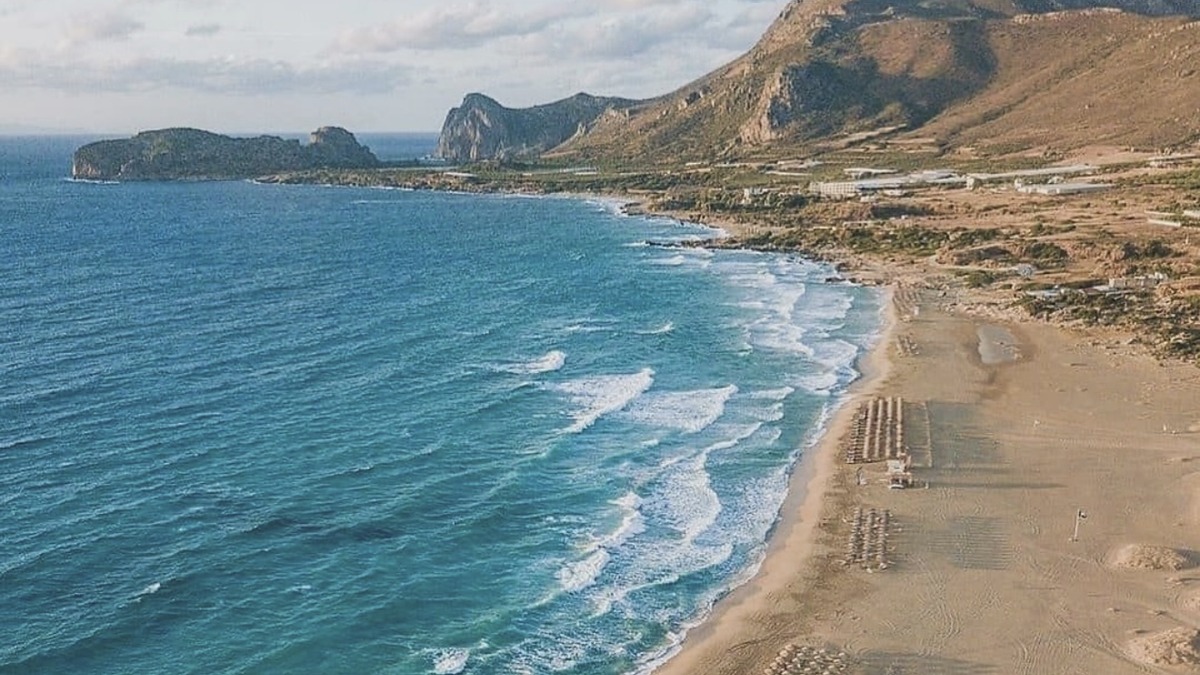
Falassarna is the west coast at full width: a long open sweep of pale sand facing straight out to sea, with nothing between you and the sunset. The Region of Crete lists it as a beach with lifeguards and sunbeds, reachable by car.
The same openness is its weakness. The Region lists the water as deep and the beach as one for surfing, so expect waves when the wind is up. Bring toddlers on a calm morning; everyone else, stay for the sunset.
Balos or Elafonissi, if you only have one day
Choose Elafonissi if you are travelling with children, want to swim more than look, or prefer to drive yourself. The road ends at the beach and the lagoon is knee-deep in places.
Choose Balos if the view is the point and you are happy on a boat. The cruise from Kissamos adds the Venetian castle on Gramvousa island, built between 1579 and 1584, a 20-minute climb from the landing according to the operator.
Don't try both in one day. They sit at opposite corners of the west. In July and August, Balos by boat beats Balos by dirt road every time.
The north coast, from Chania to Heraklion
The north coast has both main airports, at Heraklion and Chania, and takes the meltemi head-on. Its best beaches are small sandy bays, or long sand you choose for convenience rather than scenery.
Kalathas
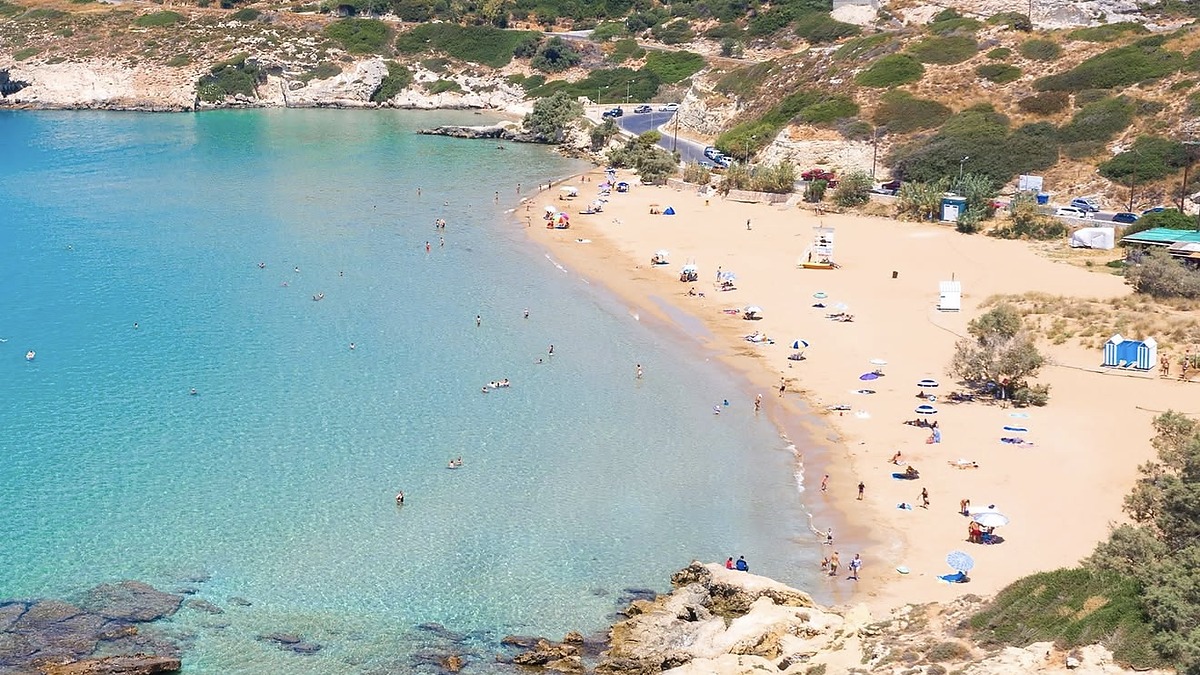
Kalathas is Chania's easy beach day: a sandy, shallow bay about 11km north-east of the city, according to Chania's tourism office, with a small islet just offshore. There is a beach bar with sunbeds, and the shallow water makes it an easy morning with children.
It is also where to go instead of the Akrotiri peninsula's famous inlet. The paths down to Seitan Limania have been closed until further notice since a rockfall on 9 April 2026, and in June Chaniotika Nea reported no-entry signs in place. We found no reopening notice (Checked November 2026).
Bali's coves, Rethymno
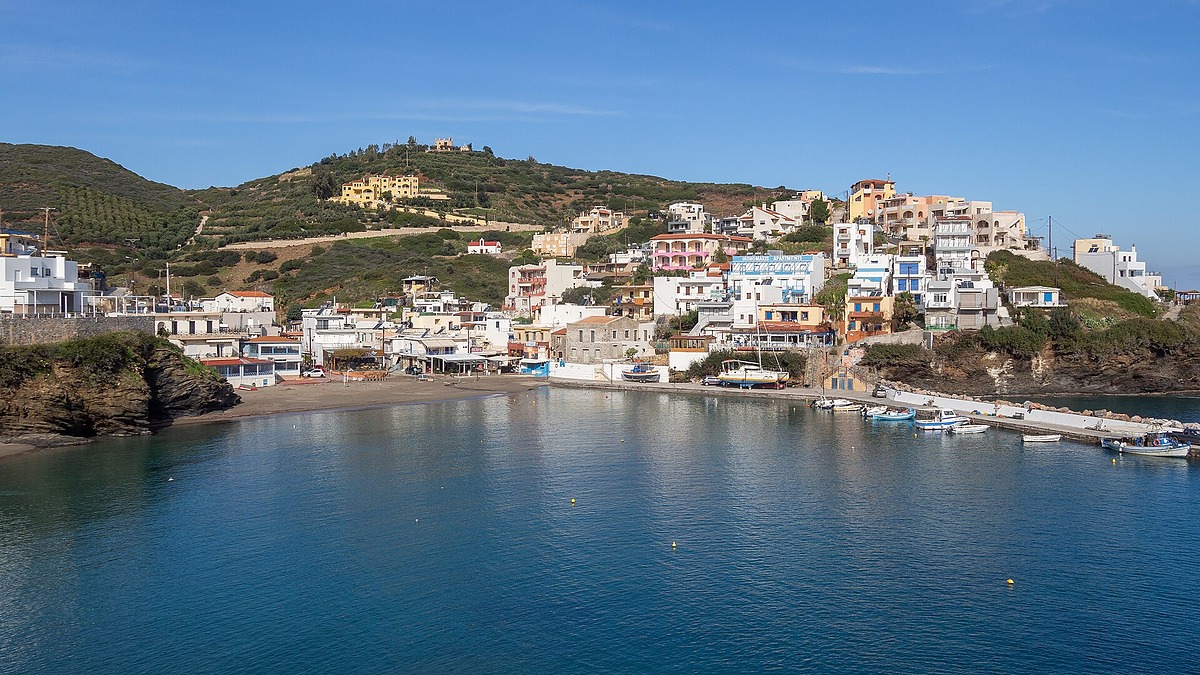
Bali is a village built around a cluster of small inlets in the mountains' shadow, each with its own strip of sand: Livadi, Varkotopos, Limani and Karavostasi among them. According to the Region of Crete, it lies 34km east of Rethymno, and the inlets have shallow water, Blue Flag status, sunbeds and lifeguards but no natural shade.
The village has plenty of tavernas, hotels and rooms, which makes Bali a practical north-coast base. The coves are small, so in high season arrive early.
Ammoudara, Heraklion
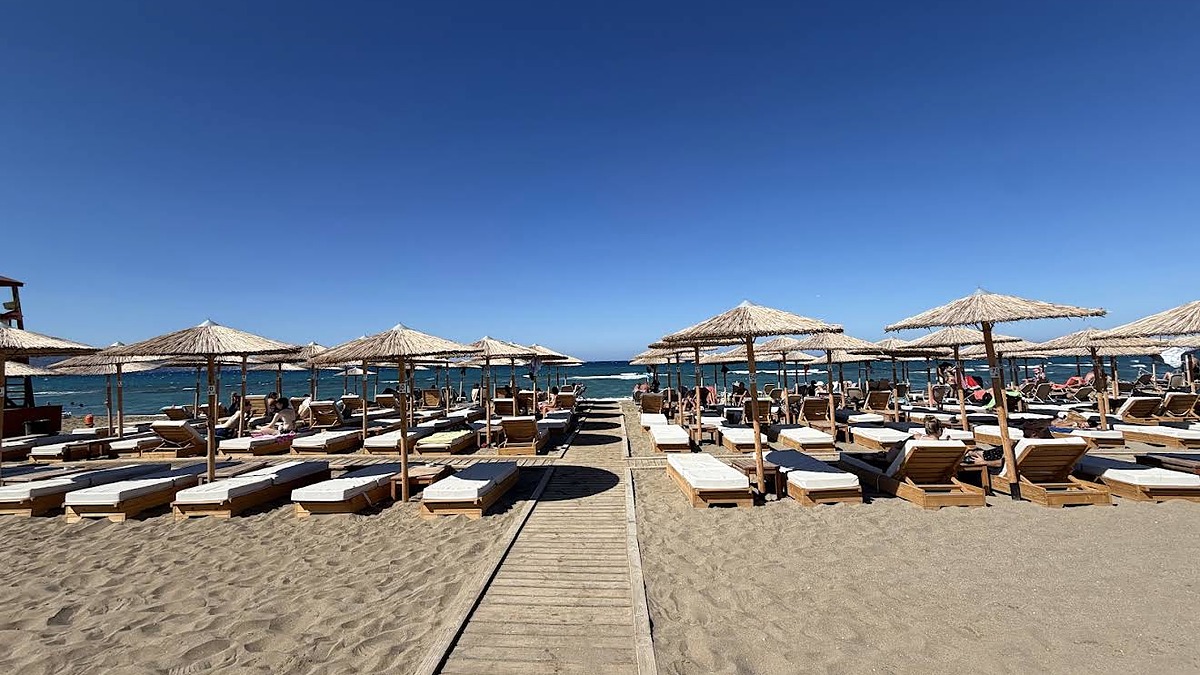
Ammoudara is Heraklion's beach, a long strip of sand beginning a few kilometres west of the city centre and running for several kilometres in front of hotels and apartments. It is the practical pick if you are staying in or near the capital, or have a spare day before a flight. Don't confuse it with the smaller Ammoudara near Agios Nikolaos.
It is not the prettiest beach on the island, and meltemi afternoons bring waves. On calm days it is an easy family beach.
To escape the waves, cross the mountains.
The south coast, where the sea stays calmer
Over the island's spine Crete changes. The resorts thin out, the roads narrow and twist, and the Libyan Sea usually stays flatter when the north coast is churning.
Preveli
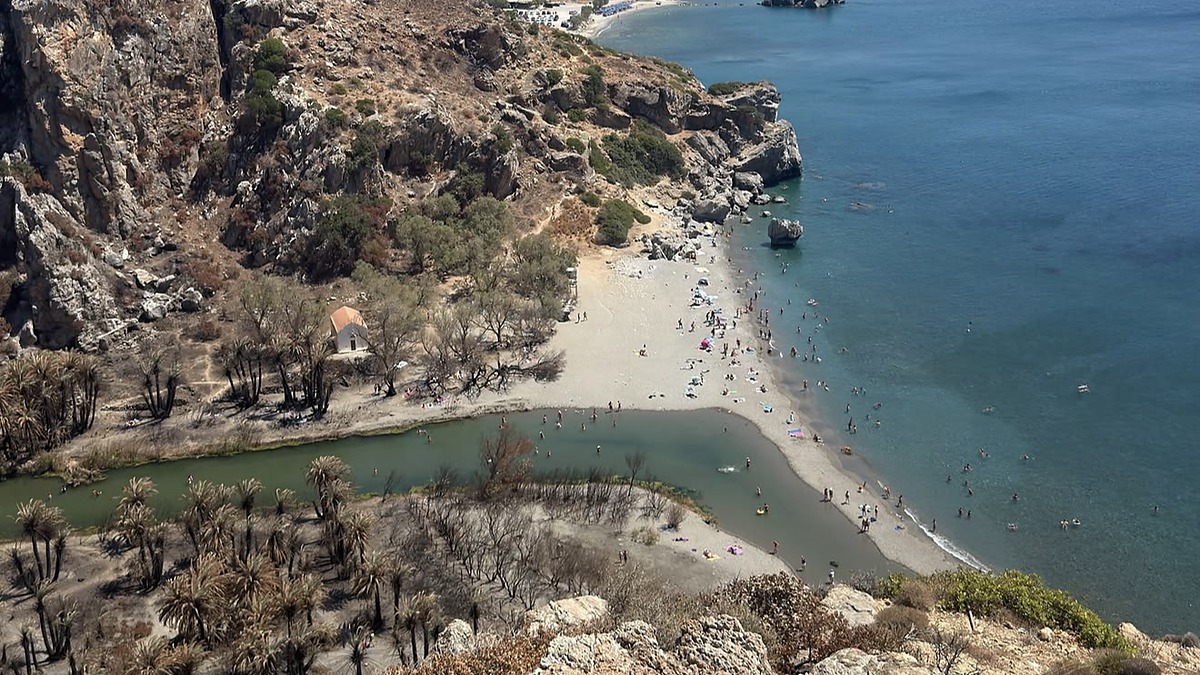
At Preveli the Kourtaliotis river runs out of its gorge and across a sandbar into the sea, so a swim can start in cool river water and end in the salt. Its palm grove, Crete's largest after Vai, was partly burned in late July 2026. On 30 July a wildfire from southern Rethymno reached the river mouth, and the Coast Guard, helped by private boats, took 59 people off the beach to Agia Galini.
The damage was concentrated near the river mouth, while a stretch deeper in the gorge was untouched, Aftodioikisi.gr reported in August. The burned section is the one beside the beach, so expect charred trunks and little shade. Eleftheria Antaloudaki, a botanist at the Natural History Museum of Crete, said the palms could start to turn green again within two to three years, unless another fire or other serious damage follows.
Preveli is 38km south of Rethymno. According to the Region of Crete, a track before Preveli Monastery leads to a car park, then a stepped path takes about 15 minutes down and longer back up. We found no official closure of the beach, path or car park (Checked November 2026). Boats from Plakias and Agia Galini skip the steps from May to October, weather permitting, says Crete Direct, which makes Plakias the best base.
Go for the river swim and the gorge mouth; skip it in 2027 if you want the shaded palm grove of older photos.
Sweetwater (Glyka Nera)
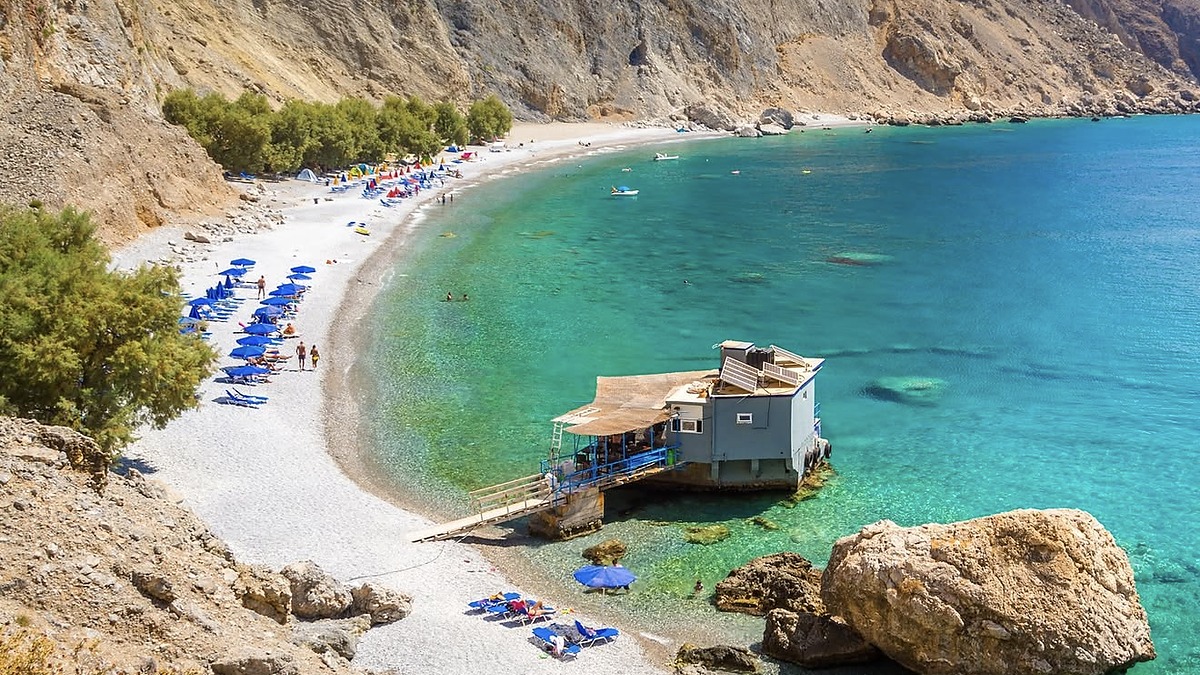
Sweetwater, Glyka Nera in Greek, is a long pebble beach under sheer cliffs between Chora Sfakion and Loutro, with no road. Fresh water seeps up through the pebbles from springs, which is where the name comes from.
You reach it on the E4 coastal path out of Chora Sfakion, about 40 minutes on foot according to thisiscrete.gr, or by water taxi in summer. The Anendyk ferry links Chora Sfakion and Loutro, so you can walk past Sweetwater to Loutro and catch the boat back (check the Anendyk timetable first). Facilities run to a seasonal taverna and a few sunbeds, and parts of the beach are popular with naturists.
Matala
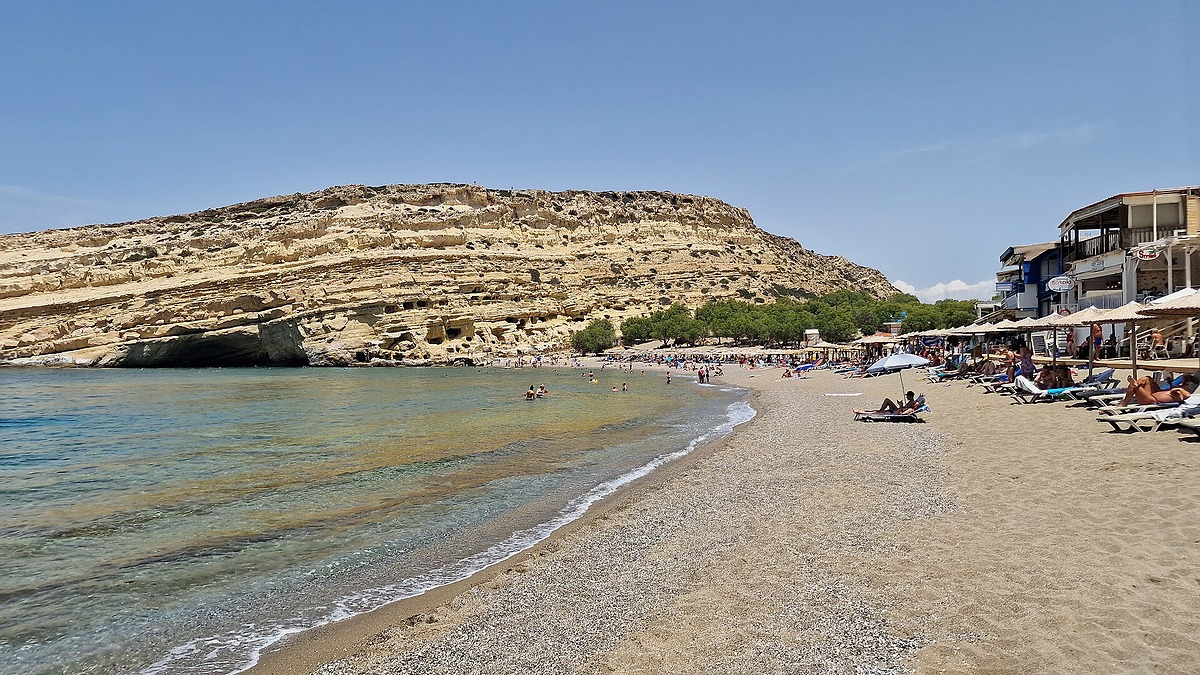
Matala is the south coast's sociable beach: a sandy bay beside a headland of soft, porous rock hollowed into dozens of caves. The bay was a harbour in Minoan and Roman times, according to the Region of Crete, and in the 1960s and 1970s the caves drew hippies from around the world. Today the caves are a fenced archaeological site with a ticket, and the village behind the beach is full of bars and tavernas.
The beach is organised and busy, about 68km south-west of Heraklion. For something wilder, Red Beach lies 800m to the south, a 15- to 25-minute walk over the hill according to the Region of Crete, with a rocky scramble at the start and a steep drop at the end, or a short boat ride from Matala.
East Crete and Lasithi
The east is drier and emptier than the west, and a long drive from Chania. Agios Nikolaos and Elounda are the comfortable bases on the Mirabello Gulf; Sitia puts you within reach of the far eastern beaches.
Vai
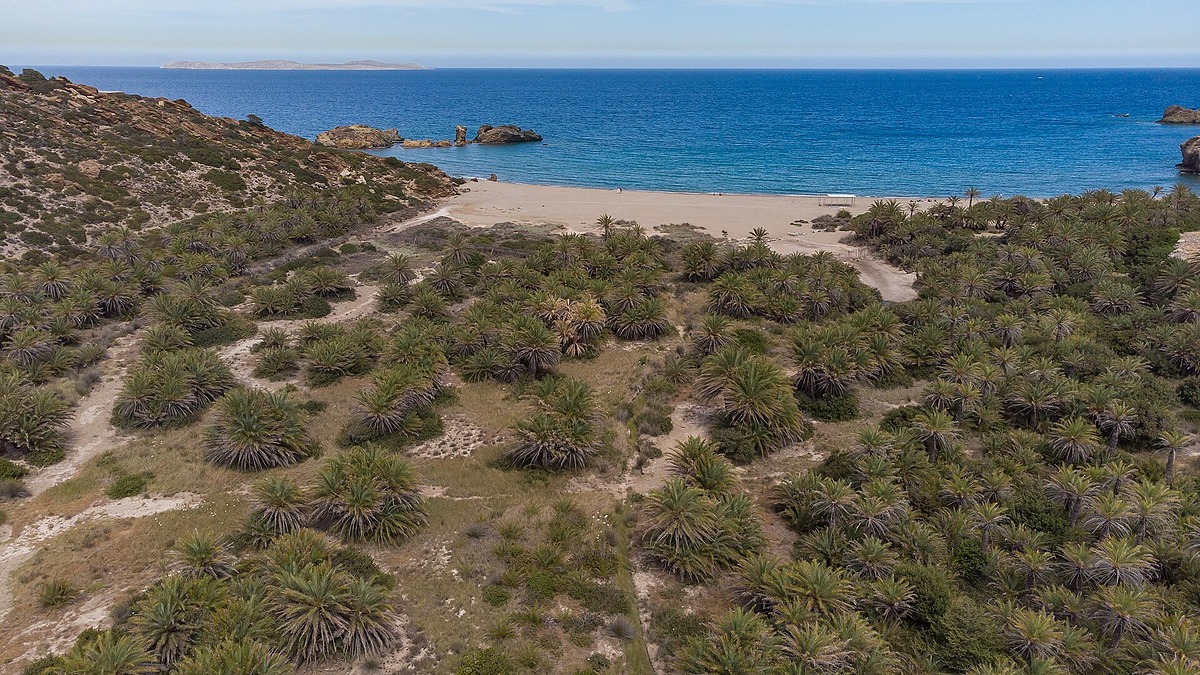
Vai is the beach with the palm forest: about 60 hectares of Cretan date palms behind a sandy bay, protected by the Forest Authority, according to the Region of Crete. The beach is organised, with sunbeds and lifeguards, and the shallow water suits children.
It is 24km from Sitia and 6km from Palaikastro. As the far east's best-known beach it fills in the middle of the day, so come early or late. Kouremenos, the windsurfing beach near Palaikastro, is the alternative when Vai is packed.
Voulisma
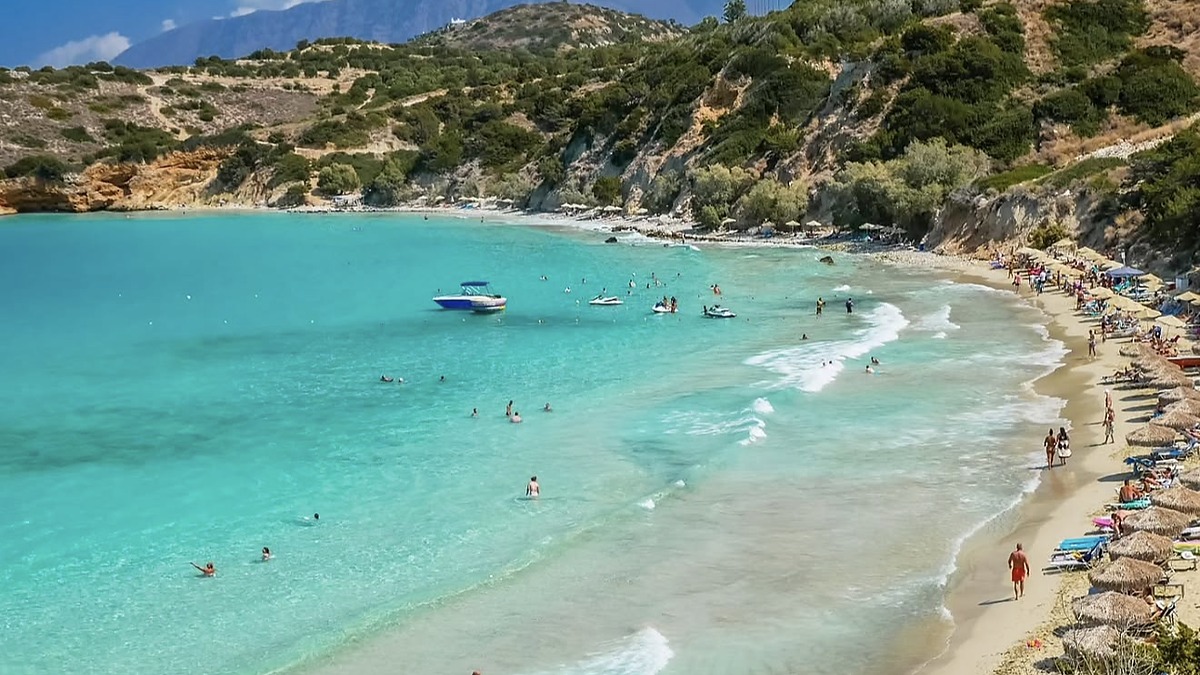
Voulisma, at Istron on the Mirabello Gulf, is a bay of fine pale sand where the water stays shallow a long way out and is usually calm. With a lifeguard in season and buses from Agios Nikolaos, it is the most reliable family beach in the east.
Driving there is the weak point. Crete Direct notes that the beach has no dedicated car park and is usually busy, so arrive early or take the bus. Our Voulisma review covers parking, facilities and the best hours.
Karoumes
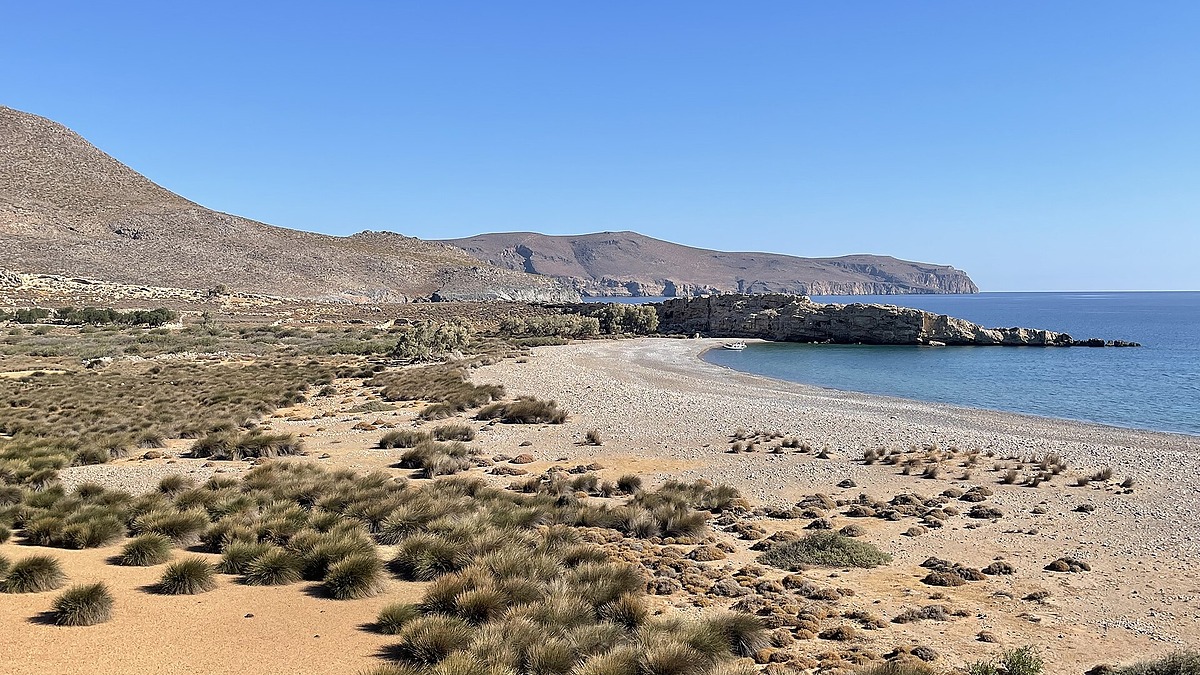
Karoumes is the opposite of Voulisma. From Chochlakies, 8km south of Palaikastro, a gorge path drops to the sea in about 70 to 90 minutes, according to the Region of Crete, ending at a small bay with clear, deep water and little else. There is no road or taverna, and almost no shade. Our Karoumes review has the full walk, what to carry and when to avoid it.
It suits fit walkers who start early with plenty of water. It does not suit anyone who wants a sunbed or a short day.
Chrissi island, reached by day boat from Ierapetra, has stretches of coast on the same 2026 untrodden list as Elafonissi, so expect no sunbeds on those beaches. Xerokampos, in the far south-east, is a run of sandy coves far from any resort.
Best Crete beaches for families with small children
For toddlers, shallow water and a short walk matter more than fame. Four beaches on this list do both:
- Elafonissi: a shallow lagoon, calm on most mornings, with tavernas and parking.
- Voulisma: fine sand, shallow water and a lifeguard in season.
- Kalathas: shallow sand, a beach bar and sunbeds.
- Ammoudara: best on calm days.
Leave Karoumes, Sweetwater and the Preveli steps until the children are older.
Where to stay in Crete for beaches
No single base covers Crete. The island is too long and the mountain roads too slow, so pick the coast that matches your list and plan one move if you want two. Most of these beaches need a hire car; Ammoudara is on Heraklion's city bus line 6, and KTEL buses from Agios Nikolaos stop at Istron, above Voulisma.
- Chania: for Balos, Elafonissi, Falassarna and Kalathas.
- Plakias or Rethymno: for Preveli (the summer boats leave from Plakias), and Bali on the north coast.
- Heraklion: for Ammoudara and Matala.
- Agios Nikolaos or Elounda: for Voulisma; move to Sitia for Vai and Karoumes.
For May to October 2027, time it by the sea and the wind. The water off Chania averages about 19°C in May, 26°C in August and 23°C in October, according to seatemperature.org, and it was still around 21°C in early November 2026. June and September give warm water without the July and August meltemi peak. October still works for swimming, as our October beach holidays guide explains.
If you have one week, base yourself in Chania for the west and add three nights on the south coast at Plakias or Chora Sfakion. That covers the famous beaches and gives you a fallback for windy days.