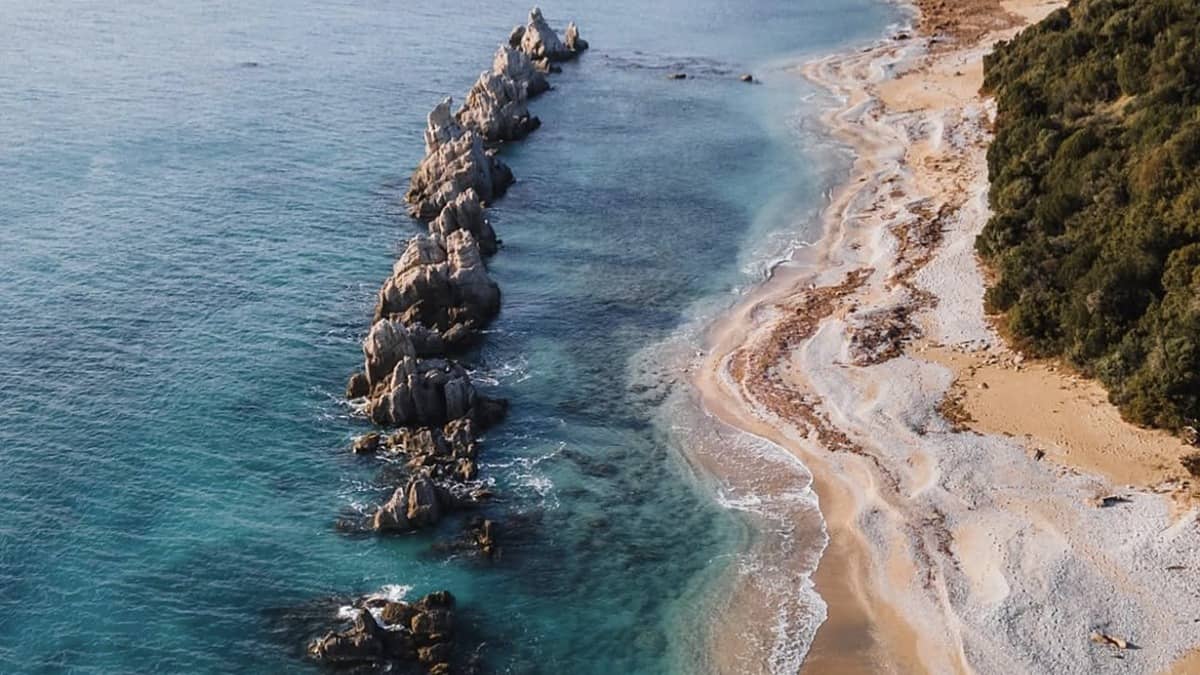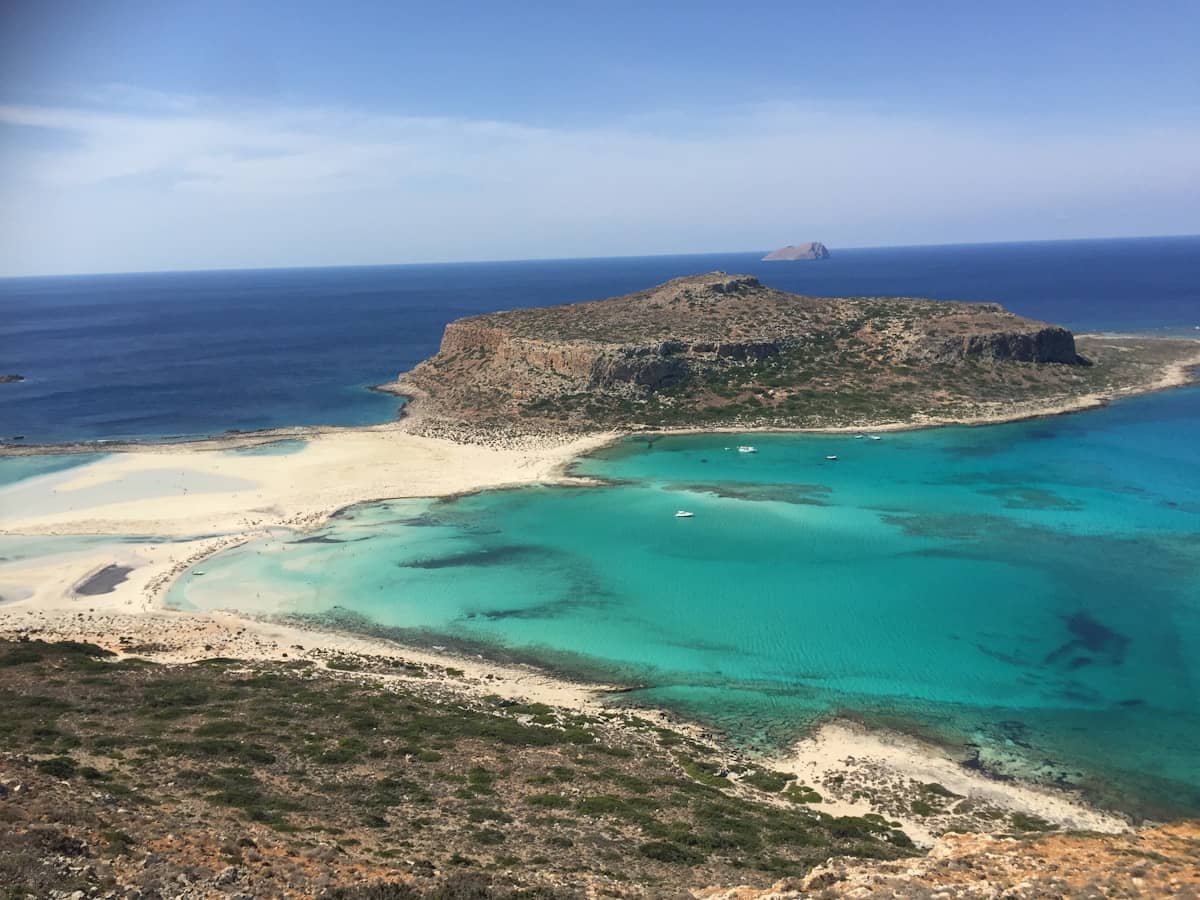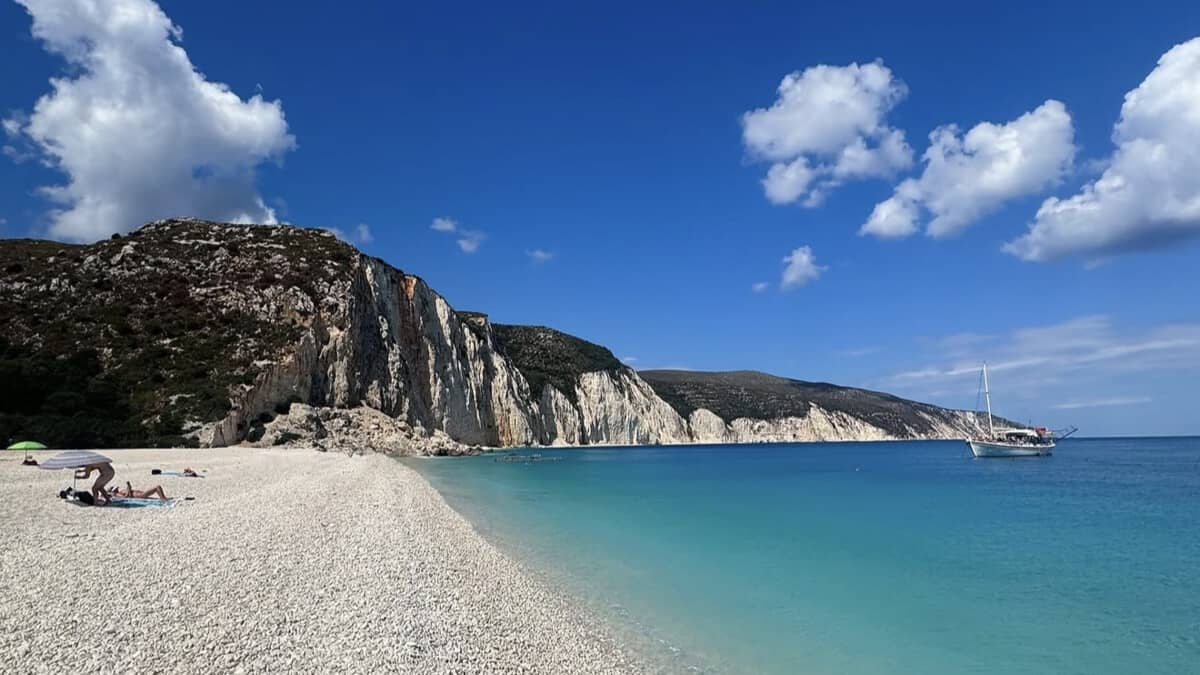
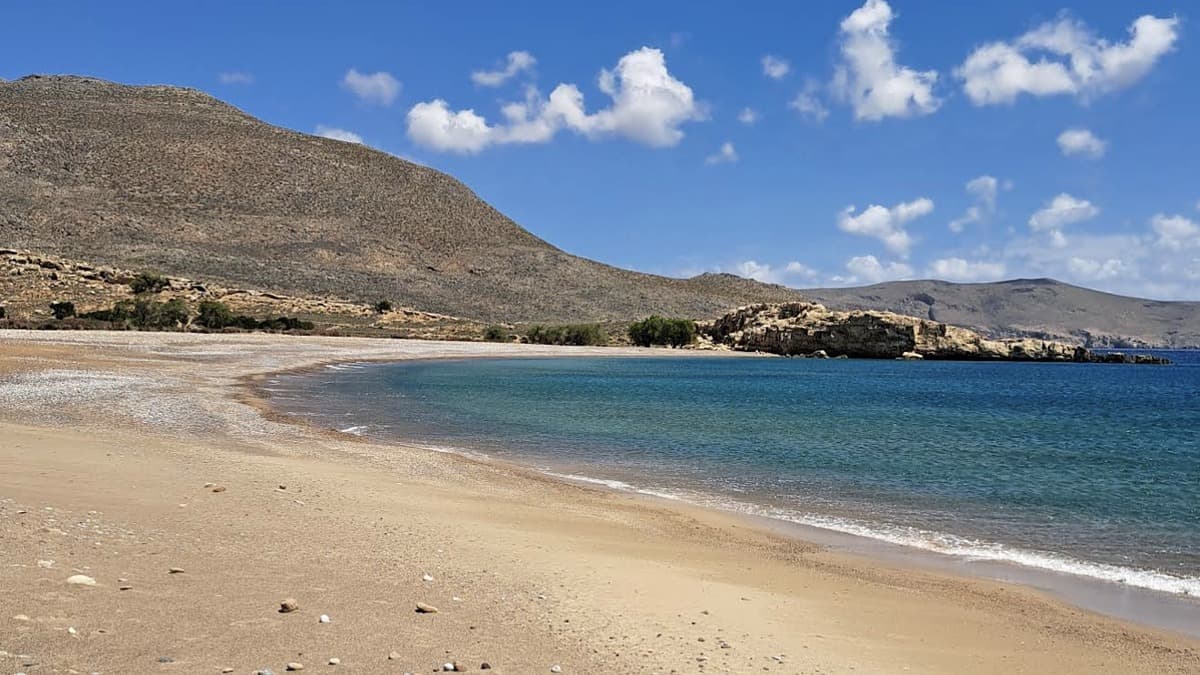
Most Crete beaches advertise themselves with paved access roads, beach bars, and rows of organised loungers. Karoumes is the opposite. The only way to reach this east-Crete pebble beach is a 3.5-kilometre hike through Chochlakies Gorge, or a private boat from Kato Zakros. There is no road. There are no facilities. There is no shade structure. There is no signal. The reward is one of the most genuinely isolated beaches still accessible on the island, with calm clear Aegean water and the kind of total quiet that almost no Greek beach delivers anymore.
This is a hiker's beach, not a tourist's.
Where Karoumes Sits and How to Reach It
Karoumes Beach is on the far eastern tip of Crete, 110 kilometres east of Agios Nikolaos and 29 kilometres south-east of Sitia. The beach faces the Cretan Sea on the easternmost coast of the island, with no road within 3 kilometres in any direction. Two access options exist.
The hike from Chochlakies. Drive to Chochlakies village (around 25 km from Sitia by paved road), park at the marked trailhead 1 kilometre east of the village, and follow the E4 European Long Distance Path through Chochlakies Gorge for 3.5 kilometres to the beach. The trail descends roughly 400 metres elevation through the gorge, with loose scree in places and a few boulder scrambles. Plan 1.5 hours down, 1-2 hours at the beach, 2 hours back up. The return climb is harder than the descent.
The boat from Kato Zakros. A private boat from the small port of Kato Zakros takes around 30 minutes to reach Karoumes by sea. Local boat hire is bookable on arrival in Kato Zakros; ask at the port for current rates. This is the option for visitors who want the beach but cannot do the gorge hike. Boats do not run in rough seas.
There is no other way in. No road. No vehicle access. The isolation is the point.
The Chochlakies Gorge Hike
The hike is moderate but real. The Chochlakies Gorge cuts through limestone formations on the eastern Crete coast, with the trail descending the gorge floor toward the sea. The E4 trail markers are clear, but the path is rocky underfoot, with loose scree in places and a few sections where you scramble over boulders. Sturdy hiking shoes are essential. Flip-flops are dangerous.
Bring at least 2 litres of water per person and start early. The gorge has almost no shade once the sun is up, and from mid-June through August the heat in the middle of the day climbs above 35°C. Starting the hike by 8am and being back at the trailhead by mid-afternoon is the safe pattern.
The gorge itself is beautiful. Limestone walls, wildflowers in spring, occasional goats on the high cliffs, and the geology of the eastern Crete coast on full display. Many hikers find the gorge as much of a draw as the beach.
The Beach Itself
Karoumes is a small pebble beach about 200 metres wide, with calm east-facing water and a sparse line of trees at the back offering limited shade. The pebbles are small and round; water shoes help but are not essential. The water is consistently clear and deep enough for snorkelling close to shore. Sea urchins inhabit the rockier sections; wear water shoes if you are unsure.
The east-facing aspect means morning sun on the water and afternoon shade against the cliffs behind. Calm conditions are normal; the beach is sheltered from the prevailing west and north winds. On a calm morning in June, the water is glass.
There is no lifeguard, no facilities, and no signal. You are responsible for yourself and anyone with you. Walk-out depth increases steeply close to shore, so beginning swimmers should stay close in.
When to Go
May, June, September, and early October are the best months. The water is warm enough to swim, the trail is dry, and the temperatures are manageable. July and August are the hottest months and the gorge hike becomes difficult by mid-morning. Late September delivers the rare combination of warm sea (still 22-24°C) and quieter trails.
Avoid winter and early spring. The gorge can flood after heavy rain, the trail becomes slippery and dangerous, and the beach is exposed to winter winds. The trailhead may be effectively closed in wet weather.
What to Bring
The full list for a comfortable day, in order of importance:
- At least 2 litres of water per person (no water source on the trail or at the beach)
- Sturdy hiking shoes or trail runners
- Sun hat and sunscreen
- Snacks or a packed lunch
- Swimsuit and quick-dry towel
- Water shoes for the pebble beach
- Snorkel gear if you want it
- Small backpack with everything in one bag
- Phone with offline maps loaded
Pack out everything you carry in. There are no bins.
Should You Go?
Yes, if you are reasonably fit, willing to commit a full day, want one of the most genuinely isolated beaches still accessible on Crete, and you can do without facilities. No, if you have mobility issues, limited time, or expect Crete beaches to come with bars and loungers. For broader Crete and Greek-island context, see our Best Beaches in Greece guide. For the more accessible Crete pink-sand alternative, our Elafonissi Beach review covers the western Crete option.