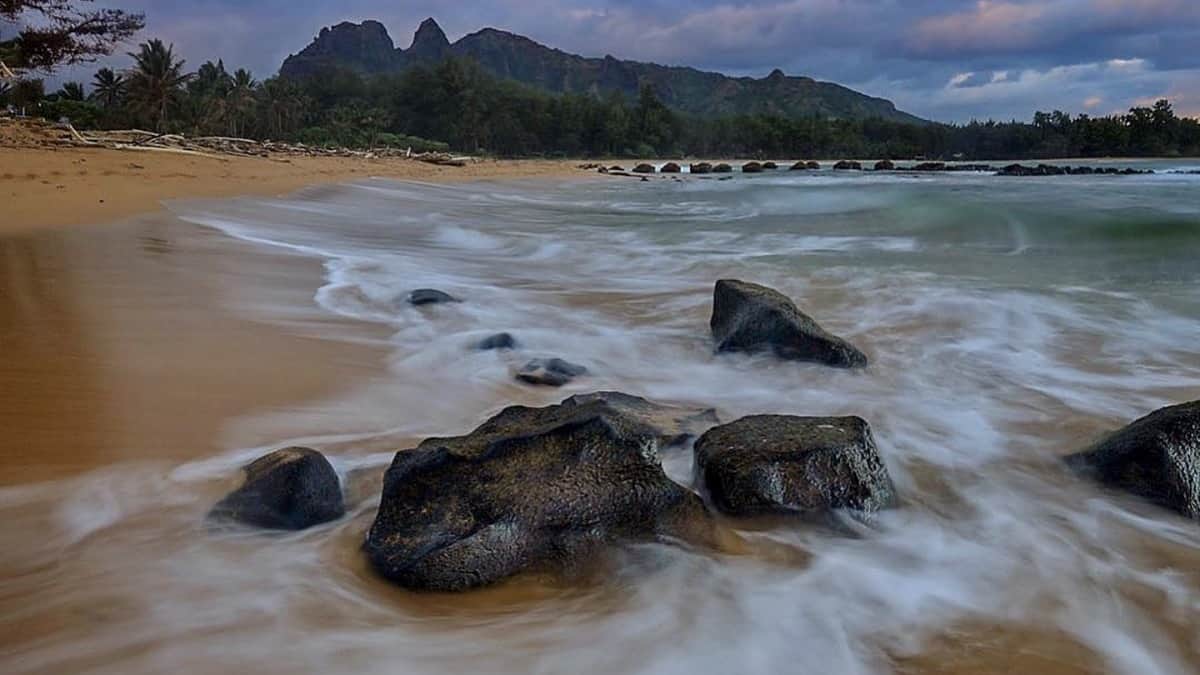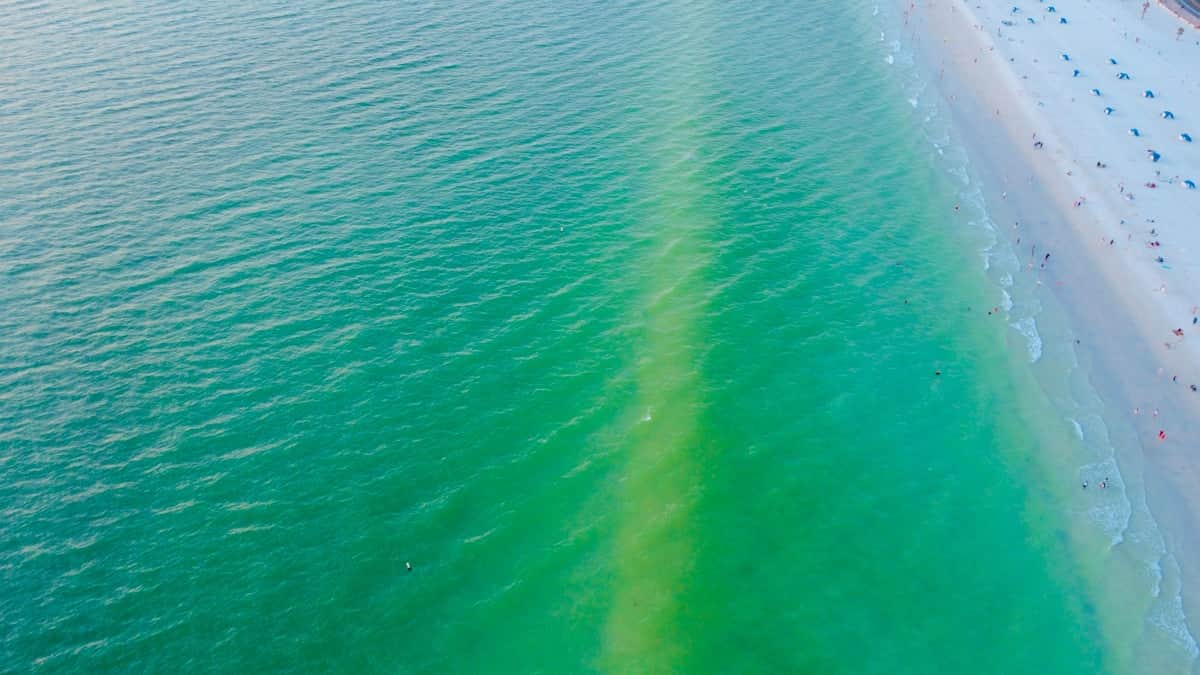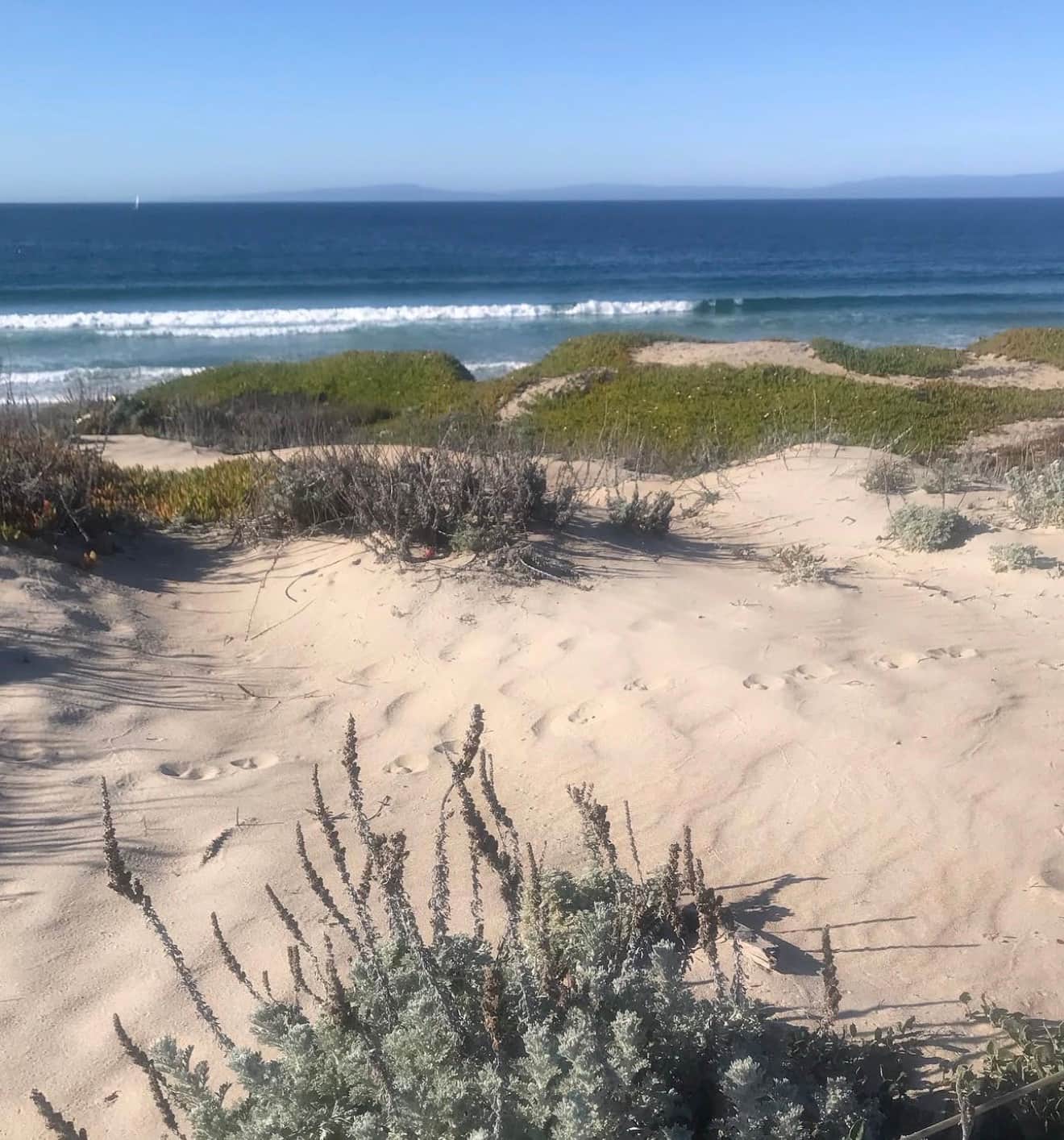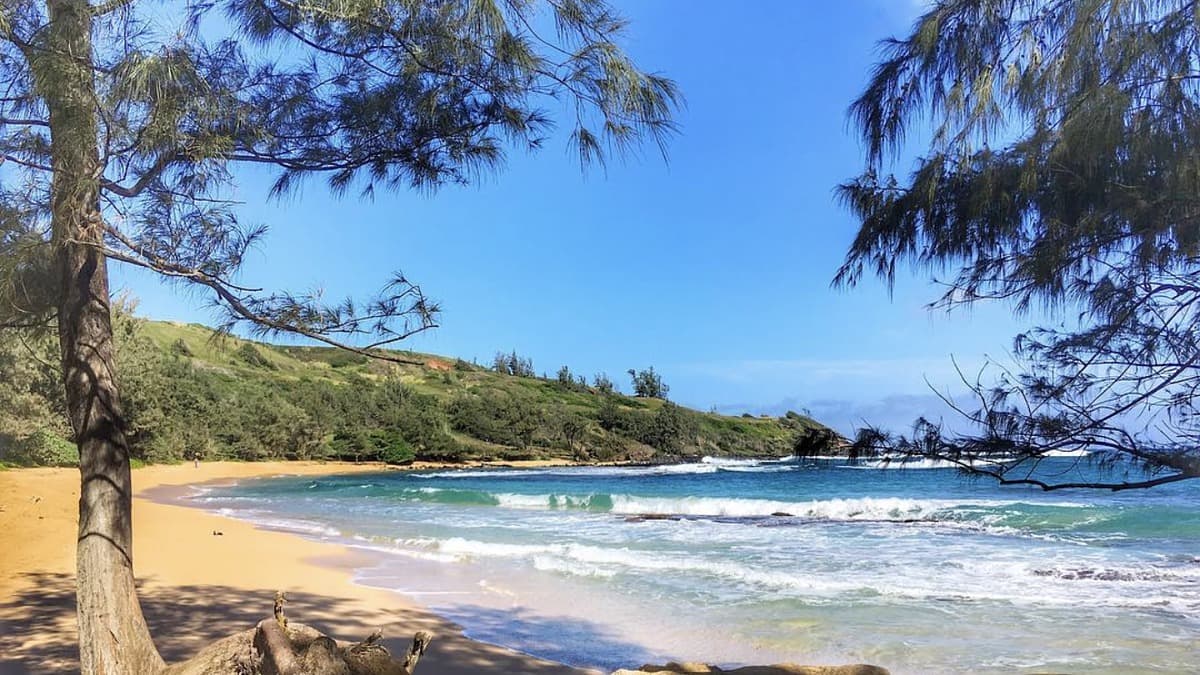
Find a quiet half-moon bay on the north-east coast of Kauai, frame it with green cliffs and ironwood trees, hire a boat with a broken engine and tow it out from Honolulu, and you have the opening shot of one of the most-watched American sitcoms of all time. Moloa'a Beach is where Gilligan's Island was filmed in November 1963, and 60 years later it is still essentially the same bay. White sand, hilly green cliffs, no boat, no S.S. Minnow, no crowd, almost no parking. The cultural footnote is real and the beach is genuinely good. Almost nobody on Kauai mentions it.
This is the kind of beach that does not advertise itself.
How to Find It
Moloa'a sits on the north-east shore of Kauai, between Anahola to the south and Kilauea to the north. The drive is around 25 minutes from Lihue Airport. The turn off Kuhio Highway is unmarked except for a small "Koolau Road" sign between mile markers 16 and 17. Take Koolau, then turn right onto Moloa'a Road, and follow the narrow lane down through a residential neighbourhood of small homes and tropical fruit farms.
The road ends at a dirt pull-off with informal parking for perhaps eight vehicles. There is no signage at the parking area, no toilets, no bins, and no lifeguard. The beach is a short walk through low vegetation. If the pull-off is full when you arrive, the beach is full; do not park on the residential street. Come back later or drive 10 minutes south to Anahola.
The Gilligan's Island Story
The pilot episode and first episode of Gilligan's Island were filmed at Moloa'a Bay over four days in November 1963. The producers, scouting locations on Kauai for the show's "uncharted desert isle," landed on Moloa'a because of the dramatic half-moon bay shape, the green cliffs, the lack of any visible development, and the soft white sand. The show's tropical island aesthetic was set here.
The catch is that the producers could not find a suitable boat for the S.S. Minnow on Kauai. They eventually sourced a small fishing boat with a broken engine from a Honolulu shipyard, paid to have it lifted onto a barge, and had the barge tow the boat across to Moloa'a for the filming. After the four-day shoot the boat was returned. Subsequent episodes used a studio set in Los Angeles, but the bay shots and many of the establishing scenes you remember from the opening credits were filmed here.
There is no marker, no plaque, and no Gilligan's Island museum on the beach. The bay is just the bay, exactly as it was when the cameras left in 1963. That is most of why it is worth coming.
Where to Swim and Where Not To
Moloa'a is one of those beaches that looks calm and is not. Even on summer days when the surface appears glassy, currents can form along the lava points at both ends of the bay and pull strong across the centre. The local rule is the right one: do not swim across the bay or out past either point.
Safe swimming, on calm summer days, is on the southwest (left as you face the ocean) end of the bay close to shore. Stay in waist-deep to chest-deep water, keep an eye on movement around you, and exit if you feel the current change. The southwest end also has the better of the two snorkel sections, with coral close to shore and reef fish working the rocks.
Winter is different. From October through March, North Pacific swells make the bay genuinely dangerous and any water entry should be avoided. The same swells that close out Hanalei and Ke'e turn Moloa'a into a churning bay with submerged rip currents that have caught experienced ocean users.
There is no lifeguard. There is no posted hazard map. The conditions you see when you arrive are the conditions you have to read for yourself.
The Tide Pools and the Kid-Friendly Section
At low tide, shallow sandy pools form among the lava rocks at both ends of the beach, and these are excellent for small children. Hermit crabs, small reef fish, and a variety of sea snails live in the pools. Bring water shoes since the lava is sharp and the pool edges are slippery.
The pools fill back up at high tide and become part of the bay current system, which is why timing your visit for low tide matters if tide pools are the main draw. Check a Hawaiian tide chart and aim for the morning two hours either side of the low.
Why It Stays Quiet
Moloa'a stays quiet because of three things. The road in is narrow, residential, and easy to miss. The parking is informal and capped at around eight cars. And the lack of any facility means most casual visitors give up and drive to Anahola or Kilauea instead. Add in the genuine swimming hazard and you have a beach that filters out almost everyone who would otherwise crowd it.
This is also a working farming community. The land behind the beach is private, much of it growing tropical fruit, and the residents prefer their road quiet. Be a polite guest. Do not park on the street. Carry out everything you carry in. Do not photograph the houses on the way down.
Should You Visit?
Yes, if you want a genuinely uncrowded Kauai beach with a real cultural footnote attached, you can read ocean conditions for yourself, you have small kids who would enjoy tide pools, and you do not need facilities. Moloa'a delivers the Hawaii-postcard half-moon bay without the crowds that everyone else's Hawaii postcard now has.
No, if you want a guaranteed swim with lifeguard cover, you have a small parking-bay-full window of frustration in you, or you cannot read the ocean. The lifeguarded options on the east shore (Anahola, Lydgate) are easier picks for swim-first family days.
For broader context including how Moloa'a fits between the more accessible east-shore beaches and the famous North Shore ones, see our Best Beaches in Kauai guide. For the next bay south on the same coast, our Anahola Beach Park review covers the lifeguarded family-friendly alternative ten minutes down the road.