Most North Shore Kauai beaches advertise themselves. Hanalei has the bay and the pier. Tunnels has the reef and the crowds. Ke'e has the reservation system and the Kalalau Trail. Kalihiwai has none of that. It sits between Kilauea and Princeville, signposted only by a small "Kalihiwai Road" sign off Highway 56, and the road ends at a dirt lot with no facilities, no lifeguard, and a bay that almost no rental car convoy ever finds.
What it has is a river, a curve of sand, lava cliffs at the east end, a winter surf break that locals respect, and the rare combination of a beach where you can swim in the morning and kayak inland in the afternoon.
How to Find It (and the Bridge That Isn't There)
Kalihiwai is reached via Kalihiwai Road, which branches off Kuhio Highway near mile marker 24 between Kilauea and Princeville. The catch is that there are two separate roads called Kalihiwai Road, and they are not connected to each other. The old bridge across the Kalihiwai River that used to link them washed out decades ago and was never rebuilt, leaving two dead-end arms instead.
For the main beach access, take the second (more western) Kalihiwai Road, the one closer to Princeville. The road descends through a residential community and ends at a small dirt lot a few hundred yards from the sand. The first (eastern) Kalihiwai Road dead-ends at a different access point on the river side and is mainly used by locals who launch kayaks from there. If you take the wrong one and find yourself looking at the river without a clear way to the beach, drive back up to the highway and try the other.
Park in the dirt at the end of the road or on the wide shoulder. There are no marked spaces and no enforcement, but neighbours will speak up if you block driveways.
What the Bay Itself Delivers
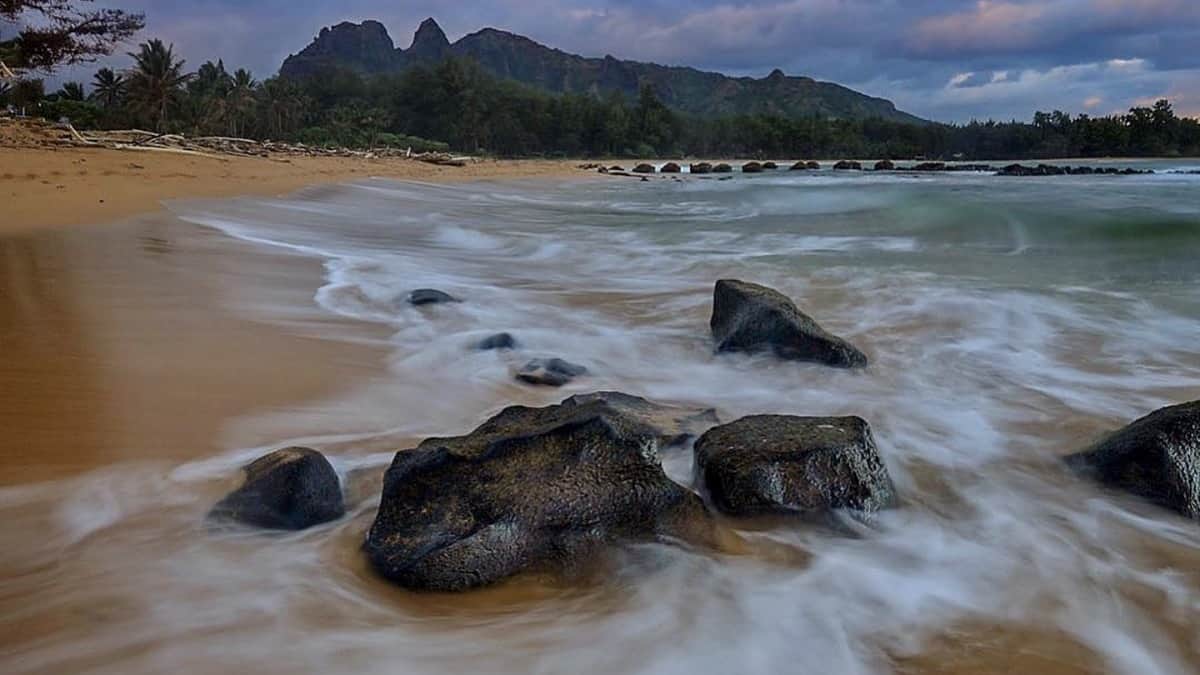
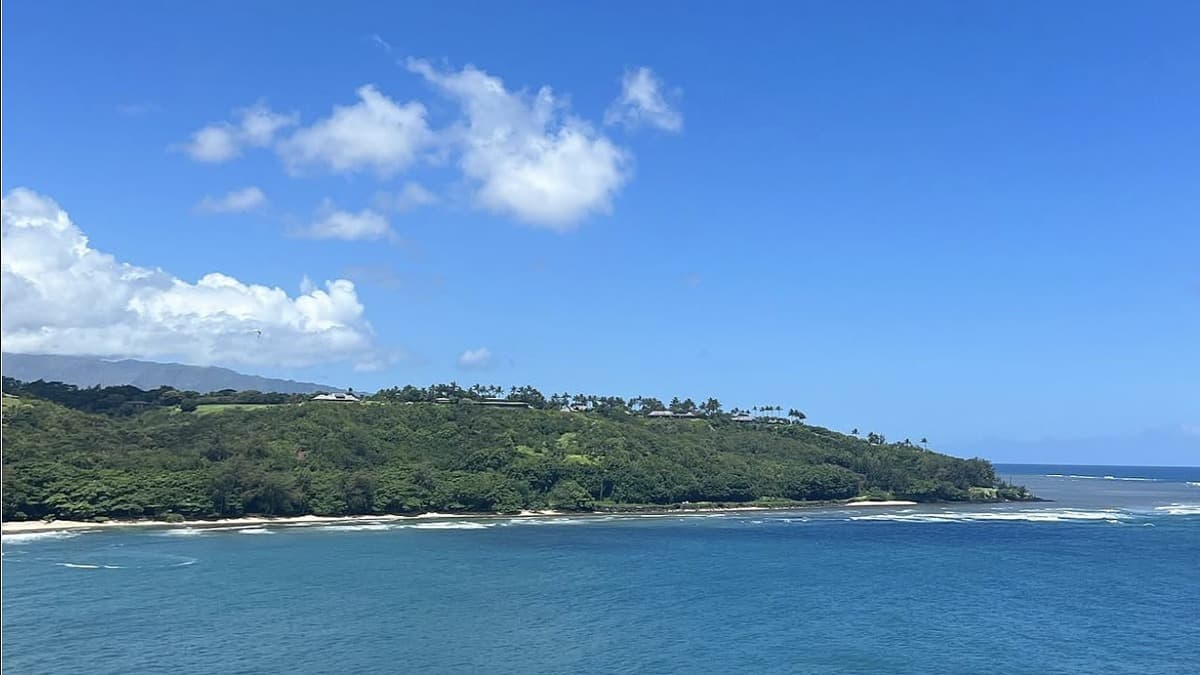
The beach is a half-moon of golden sand around a quarter-mile long, backed by a thick row of ironwood trees and edged by lava cliffs at the east end. The Kalihiwai River meets the ocean at the western end of the beach, creating a brackish lagoon at the river mouth that is shallow, warm, and one of the better spots on the North Shore for small children to splash safely. Sand flats extend out into the bay at low tide.
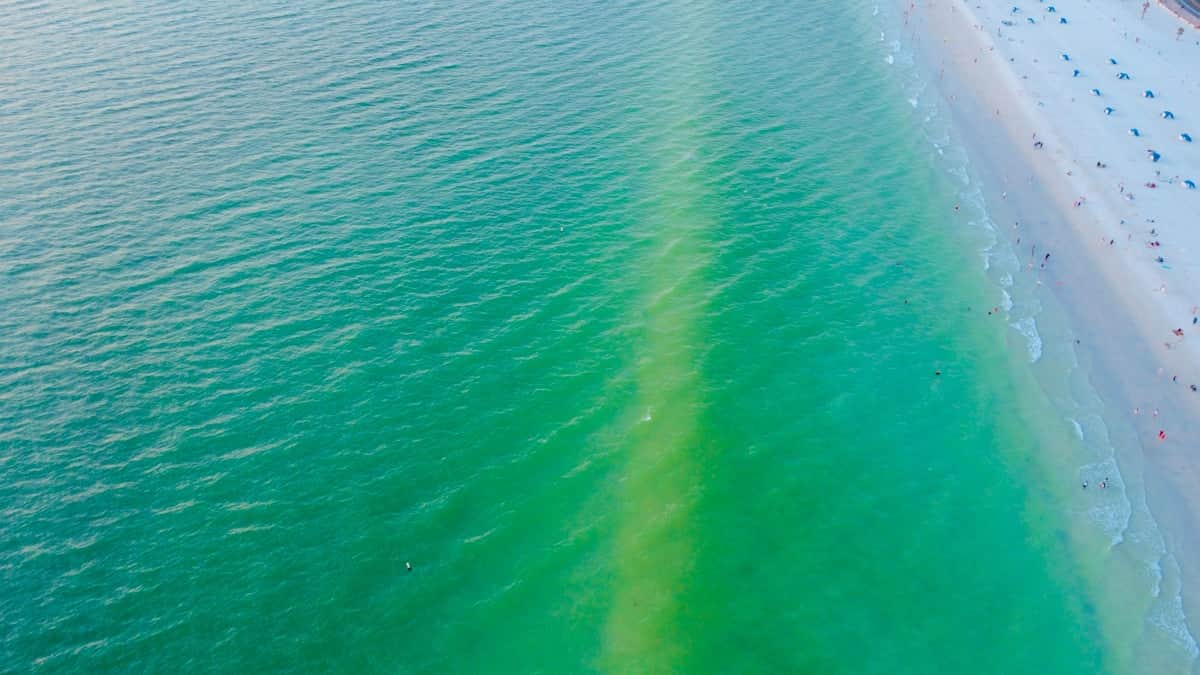
In summer (roughly May through September) the bay is calm and the swimming is good. The cleanest water is on the west side near the river mouth and toward the centre of the bay. Avoid the east end during any swell, since waves wrap around the cliff and the bottom turns rocky.
The light here in late afternoon is among the best on the North Shore. The bay faces north which means the cliffs catch side-light at sunset rather than direct light, and the rock formations turn warm orange against the green vegetation behind. This is a sunset photographer's beach, even though most photographers go to Hanalei or Ke'e instead.
The River, the Kayak, and the Rope Swing
The Kalihiwai River runs flat and calm for at least a mile inland from the beach, weaving through tropical forest and past a few private homes. This is one of the more pleasant short kayak or stand-up paddleboard runs on Kauai, and locals do it often. There are no rentals at the beach itself, so bring your own gear or pick it up in Hanalei or Kapa'a before driving out. The water is fresh and brown-tinged with tannins from the upstream forest, slow-moving, and easy paddling at any skill level.
A note on safety: do not enter the river with any open cut. Leptospirosis bacteria are present in Hawaiian fresh water and the Kalihiwai is no exception. Skip the river entirely for 24 to 72 hours after heavy rain, both because the current rises and because the bacterial load spikes.
A rope swing has historically hung from a tree at one of the river bends, used by local kids and visitors alike. Whether it is up on the day you visit depends on weather and the latest replacement; do not count on it.
The Winter Surf Break
From October through April, North Pacific swells transform the eastern edge of Kalihiwai Bay into a serious surf break. The wave is a long right-hander that wraps around the lava point at the east end of the bay, with a takeoff zone over reef in shallow water and a long ride along the inside of the bay. On a strong north or northwest swell, the wave can run head-high to double overhead.
This is a local break. Etiquette is strict, the lineup tight, and the rocks unforgiving. Beginners should not paddle out. Watch from the beach and you can usually see five to ten local surfers working the wave on a good day, often by 7am before the trade winds rough up the surface.
The same swells that build the wave also make the bay unsafe for swimming. From October through April, treat Kalihiwai as a viewpoint and a walking beach unless you are an experienced surfer or you have checked conditions and the surf is genuinely small.
Should You Visit?
Yes, if you want a North Shore swim that is not crowded, you have your own kayak or paddleboard, and you can do without facilities for half a day. Kalihiwai is the kind of beach that feels found rather than visited, and the lack of bathrooms and snack stands is exactly why it stays that way.
For wider context including how Kalihiwai compares to its more famous neighbours, see our Best Beaches in Kauai guide. For the easier nearby alternatives, our reviews of Tunnels Beach and Ke'e Beach cover the next bays west and the trade-offs between them.