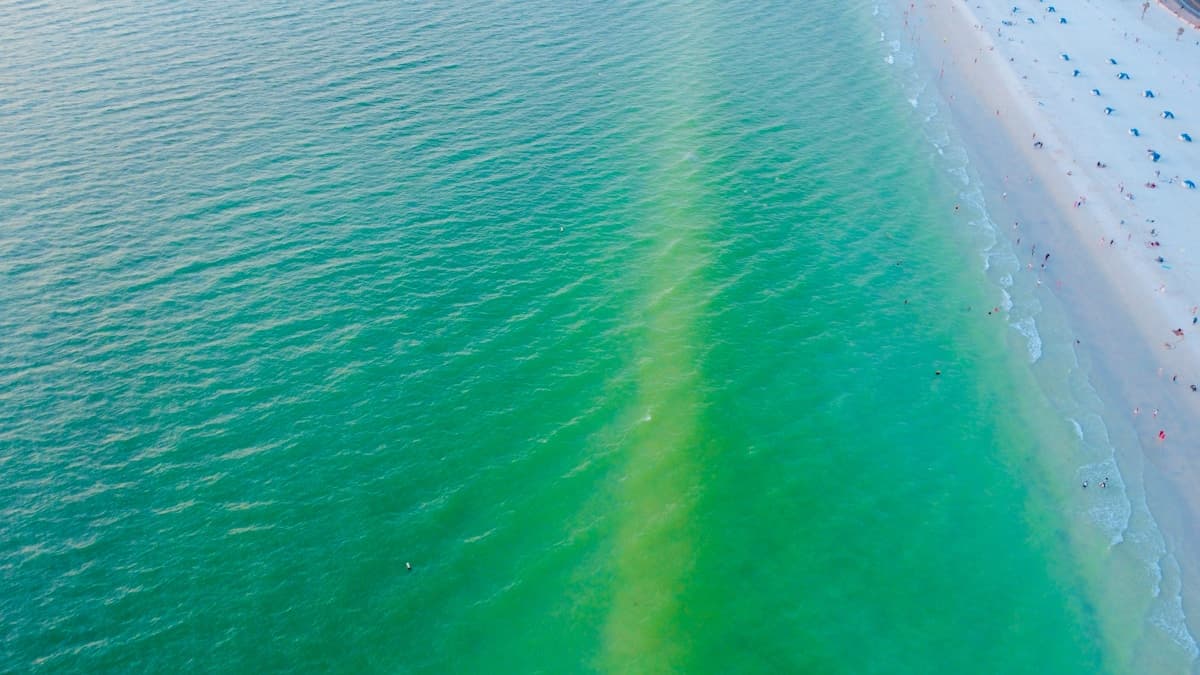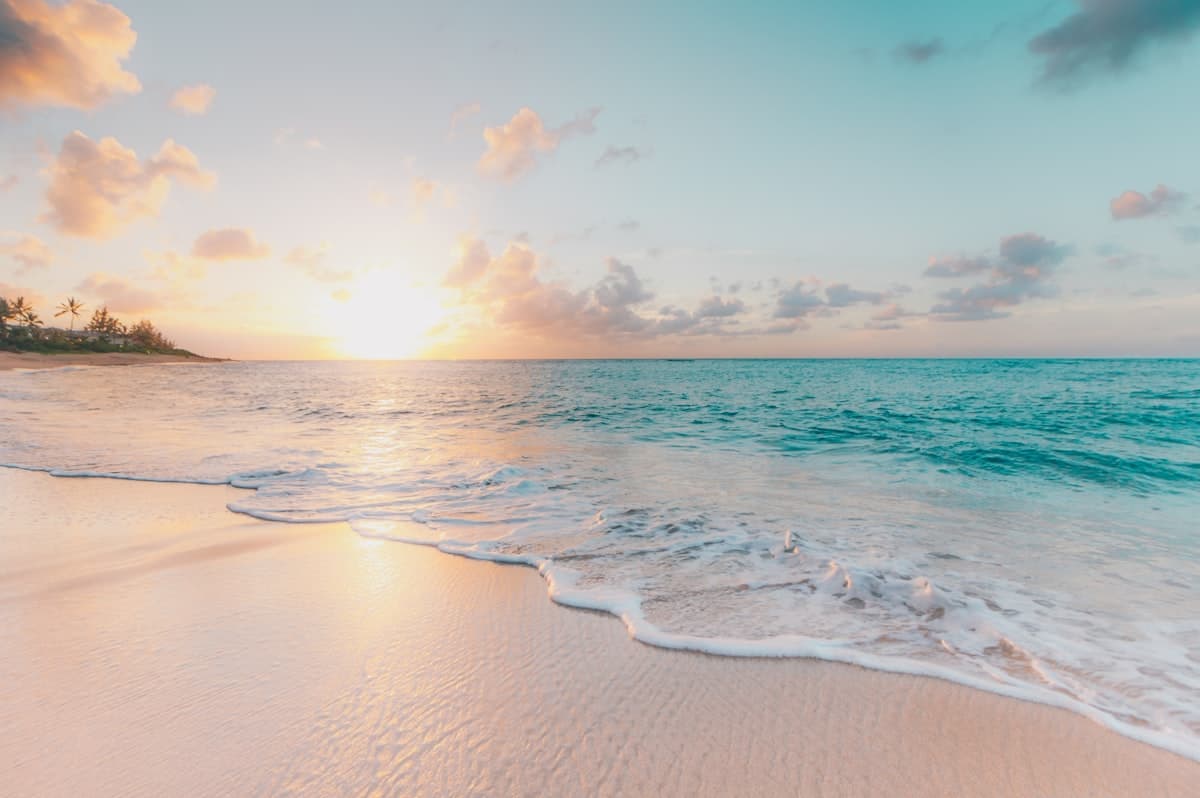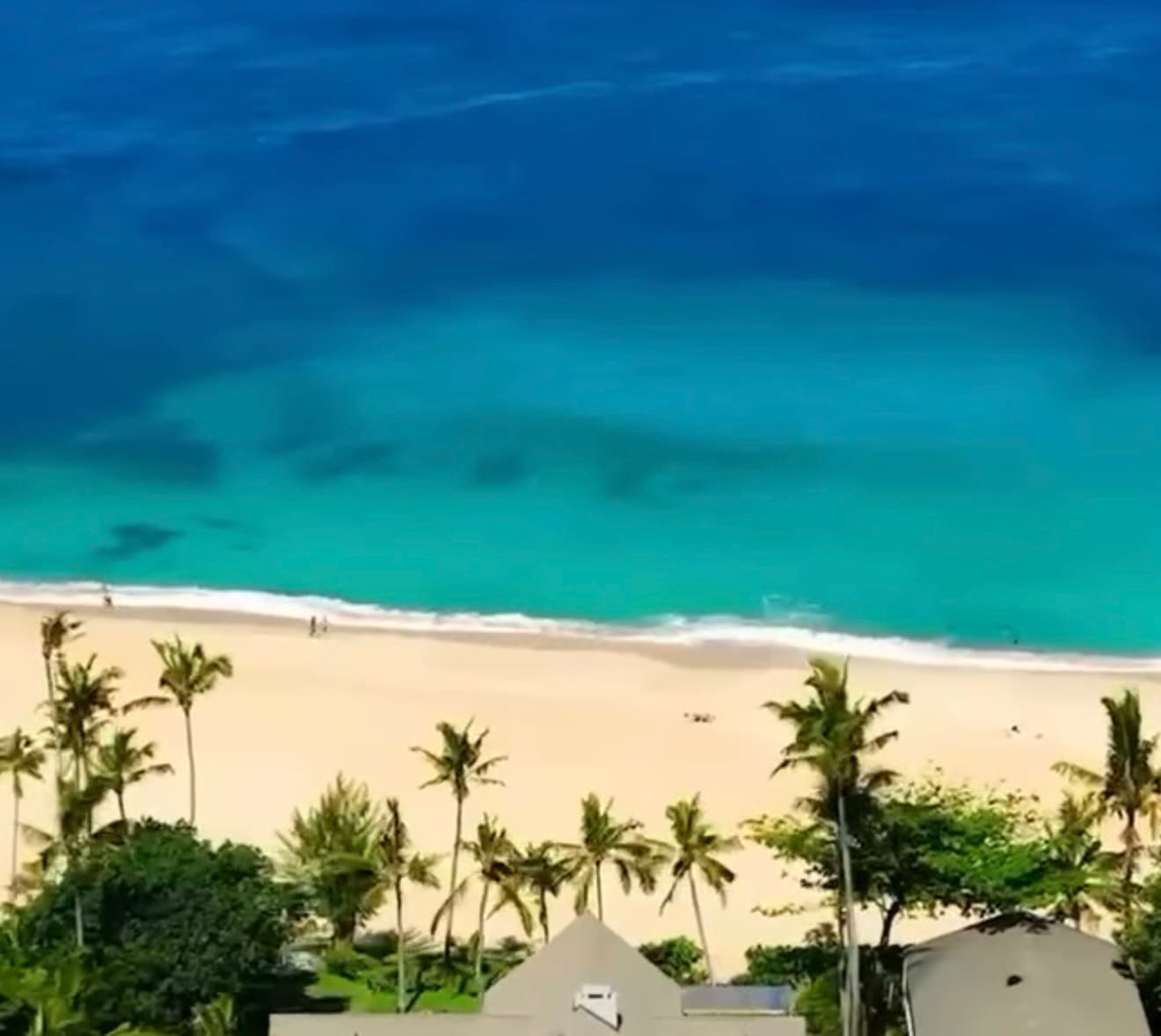
Ke Iki Beach is two beaches. In summer the ocean lies flat, the sand is wide and soft, and a mile of pale shore curves past palm-fringed bungalows toward a rocky lava point. In winter the same stretch becomes one of the most punishing shorebreaks in Hawaii, where waves lift off a sandbar three feet from shore and land on the sand hard enough to break bones. Same coordinates. Entirely different beach. Knowing which one you are walking into is the whole story.
Where Ke Iki Beach Actually Sits on the North Shore
Ke Iki sits in the Pupukea district of Oahu's North Shore, between two beaches that get more attention. Shark's Cove sits at the western end, just past a low lava outcropping. Banzai Pipeline is a short walk east. Waimea Bay is a couple of miles further down the coast. The whole stretch from Haleiwa town up to Sunset Beach is what surfers call the Seven Mile Miracle, and Ke Iki sits dead in the middle of it.
The beach runs roughly a mile in length and several hundred feet wide at low tide. The sand is fine and pale, soft enough that you sink to your ankles walking to the waterline. Behind the beach is a low green bluff with private homes and the famous Ke Iki Beach Bungalows scattered under palm canopy. In front of the beach is open North Pacific, nothing between you and Alaska.
Access is through Beach Access #276C, a right-of-way marked with a blue public-access sign off Ke Iki Road. The path is short and unpaved, flanked by beach-pea plants and palms, and it drops you onto the sand roughly in the middle of the strip. Hawaii beaches are public below the high tide line by state law, but homes line most of the upper beach, so this right-of-way is the easiest way down.
One thing worth clearing up because search engines keep confusing them: Ke Iki Beach on Oahu is not the same as Ke'e Beach on Kauai. Different island, different beach, different vibe. If you came here looking for the one at the end of the road in Haena, you want Kauai.
The Shorebreak That Pulls People Off Dry Sand
This is the part most travel guides gloss over, and the part that matters most. A sandbar sits about three feet offshore at Ke Iki. When North Pacific swells push toward the island between roughly October and April, those swells hit the sandbar and rear up into thick, heavy waves that fold over and slam into dry beach. There is no gentle outer break to soften them. They form and they land, and the landing is violent.
Ocean Safety officers have called Ke Iki one of the three most dangerous shorebreaks on the island, alongside Sandy Beach and Waimea Shorebreak. One lieutenant compared getting hit by a Ke Iki wave to getting hit by a car. That quote is not hyperbole. Five people have died here in the past three years. Most of them were not surfing or even swimming. They were walking the waterline or sitting near the edge of the wet sand when a larger-than-average set washed up, dragged them back, and pulled them out through the shorebreak.
The beach does not have a permanent lifeguard tower. Ocean Safety patrols the stretch by ATV and jet ski from the staffed towers at Pupukea and Ehukai, which means response is minutes away, not seconds. On high-surf days they plant temporary warning signs in the sand, but there is no one sitting on a chair watching you. If you get in trouble at Ke Iki, you are mostly on your own until help arrives.
The practical takeaway is simple. In winter, do not turn your back on the ocean. Do not let children play at the waterline. Do not assume you can stand in ankle-deep water because ankle-deep water at Ke Iki is where the waves actually land. Watch from at least thirty feet back, and take the temporary signs seriously even when the ocean looks calm between sets. The set that gets you will be the biggest one of the hour, and it only takes one.
When to Come: The Two Ke Ikis
The ocean here runs on a calendar, and the calendar is non-negotiable. From roughly May through September, North Pacific swells go quiet, the sandbar stops working as a wave machine, and Ke Iki flattens into the kind of soft turquoise beach that Oahu sells on postcards. You can swim. You can float. You can wade out and see your feet on sand fifteen feet down. The water clarity in summer is excellent because there is no churn.
From October through April, the swells arrive. The shorebreak ramps up through autumn, peaks in December and January with faces that can exceed thirty feet on the biggest days, and gradually eases through March and April. In between those two windows there is no predictable middle ground. A flat week in late October can flip to a twelve-foot shorebreak overnight when a storm spins up north of the Aleutians.
The safest approach is to check the National Weather Service surf forecast for Oahu's North Shore the morning you plan to visit. If the forecast calls for anything over two feet on the north-facing shores, Ke Iki will be breaking harder than the forecast implies because of the sandbar geometry. Treat that as a watch-only day and stay dry.
Summer mornings are the window most visitors never take advantage of. By 10am in July the water is warm, the sand is uncrowded, and you have most of a mile of beach to pick a spot on. By afternoon the wind picks up and small swells return, but nothing dangerous. It is the closest this beach gets to the postcard version of itself.
What There Is to Do Here (When the Ocean Lets You)
Ke Iki is not a do-everything beach. Once you accept that, it becomes one of the more interesting patches of sand on Oahu.
Wave watching is the main winter activity and it is free. The shorebreak is a genuine photographic subject. Clark Little, the photographer famous for shooting inside the lip of breaking waves, shoots here regularly. If you come in December or January with a camera and a long lens, you will understand why. The wave faces are thick and glassy, they throw spray in sheets, and they break with a sound you can feel in your chest from the dry sand.
Beachcombing is the summer-morning payoff. Ke Iki is one of the reliable spots on Oahu where rare Hawaiian sunrise shells wash up after winter storms, and puka shells turn up all year. Walk the waterline at low tide with your eyes down and you will find something. Start at the Shark's Cove end where the rocks collect the best material.
Turtle watching has become a quiet feature of this beach in recent years. Hawaiian green sea turtles, called honu locally, nest on the upper beach. In 2025 the first nest in four years produced 56 hatchlings that made it to the ocean, and volunteers now monitor the marked nesting areas through the spring and summer. If you see a resting turtle on the sand, stay at least ten feet back. They are federally protected under the Endangered Species Act and touching or crowding them is a federal offence as well as a cruddy thing to do.
Sunset viewing works here, though Ke Iki is not the best sunset beach on the North Shore. The rocky point at the Shark's Cove end blocks part of the horizon, so the sun often drops behind the lava before it touches the water. Sunset Beach a mile east gets the cleaner drop. Ke Iki's version is softer and more frame-filling with palms, which suits some photographers better.
Swimming is for summer mornings only, and even then, keep an eye on the sandbar. If you see a defined sand step a few feet out, that means the bar is still active and any unexpected swell will find it. Most swimming visitors stick close to shore and do not bother with the deeper water, which is fine.
Snorkeling is not worth attempting at Ke Iki. The bottom is sand, the visibility drops with any current, and the best reef on this whole stretch of coast is five minutes away inside the Pupukea Marine Life Conservation District at Shark's Cove and Three Tables. Walk over there instead.
Ke Iki vs. Shark's Cove vs. Waimea Bay
The three beaches are close enough to visit in a single afternoon and different enough that picking the right one matters.
Ke Iki is the sand and the shorebreak. You come here for the beach itself, for summer swimming, for winter wave watching, and for the walk along a mile of soft shore lined with palm-front bungalows. You do not come for snorkeling or for facilities.
Shark's Cove is the snorkeling answer. Inside the marine conservation district, the reef is protected, the tide pools are excellent at low tide, and the visibility on a calm summer day is as good as anywhere on Oahu. Winter conditions here are dangerous too and the cove closes to swimming during big swells, so the seasonal calendar still applies. Restrooms and food trucks on Kamehameha Highway make it an easier mid-day base than Ke Iki.
Waimea Bay is the swim-with-facilities answer. Staffed lifeguard tower year-round, big parking lot, restrooms, showers, and a bay that offers calm summer swimming and a legendary big-wave surf spot in winter. If you are travelling with kids or anyone who wants a proper beach-day setup, Waimea is the pick.
If you have been down to Waikiki Beach and found it too busy, too developed, and too far from the kind of Hawaii you imagined, the North Shore is the correction. Ke Iki in particular is the opposite of Waikiki. Residential rather than hotel, empty rather than packed, unstaffed rather than managed. For a quieter family-friendly Oahu alternative on the opposite coast, Ewa Beach is worth a look, though the water character is different.
Parking, Access, and Where to Stay
Parking is the annoying part of visiting Ke Iki. There is no dedicated lot. The only real option is street parking along Ke Iki Road, and the spaces fill by mid-morning on weekends and holidays. Arrive before 9am for the best chance at a spot near the access point.
If Ke Iki Road is full, some visitors park across Kamehameha Highway at the public lot near Sunset Beach Elementary and walk through the neighbourhood, which adds about ten minutes each way. This works but is less direct. Do not park on private driveways or in the neighbourhood beyond clearly marked public spots, and do not block mailboxes. Neighbourhood tensions over beach access here are real and have flared up in recent years around erosion disputes.
For accommodation, Ke Iki Beach Bungalows is the signature property on the sand. Fourteen bungalows spread across about an acre and a half directly on the beach, built low under the palm canopy, with daily yoga and a loyal returning clientele. Rates have climbed sharply in recent years under new ownership, so check the current website before you plan the trip. The experience of waking up thirty feet from the waterline is a real one, and for North Shore lovers it is worth the money when the ocean is calm.
If the Bungalows are booked or over budget, the Ke Iki Beach Cottage and several VRBO rentals operate on the same strip of sand. Further afield, Haleiwa town, fifteen minutes west, has a handful of inns and B&Bs that put you within a short drive of the whole Seven Mile Miracle.
Facilities on the beach itself are none. No restrooms, no showers, no drinking water, no food vendors. For any of that, walk five minutes west to Shark's Cove or drive to Waimea Bay. Bring water, shade, and whatever you need for the day.
Is Ke Iki Beach Worth Visiting?
Yes, with a date restriction. If you are on Oahu between May and September, Ke Iki is one of the most beautiful mile-long beaches on the island and you should make time for a morning here. If you are visiting between October and April, it is still worth going, but only to watch. Pack a long lens, stay well back from the water, and treat the shorebreak as the spectacle it is rather than as a swim you can talk yourself into.
The people who have the best experience at Ke Iki are the ones who understand what the beach is and what it is not. It is not a family swim beach with lifeguards and restrooms. It is not a snorkel spot. It is not a resort beach with chairs for rent and umbrellas for hire. It is a long, soft, North Shore-typical stretch of residential coast, ruled by a shorebreak that flips on and off with the seasons.
Come in summer and you will understand why people fall in love with this beach and build their Oahu trips around it. Come in winter and keep your feet dry and you will understand why its photographers are some of the best in the sport. Come in winter and ignore the signs and you will understand, too late, what the lifeguards have been trying to tell people for years. The beach is worth the trip. The ocean here just does not forgive mistakes.