There's probably no beach on earth that carries more baggage than Waikiki. It's the beach that launched a million postcards, the birthplace of modern surfing, the place where Elvis filmed Blue Hawaii. It's also a narrow strip of partly imported sand squeezed between a concrete jungle of hotels and a reef-protected ocean that, on its busiest days, looks more like a public pool than a Pacific paradise.
Is Waikiki Beach Still Worth the Hype?
So is Waikiki still worth visiting? Yes, but not for the reasons the brochures suggest. The magic of Waikiki in 2026 isn't the untouched tropical fantasy. That ship sailed decades ago. The magic is in the warm water that feels like a bath, the gentle waves that let absolute beginners stand up on a surfboard, and those 6am mornings before the crowds arrive when Diamond Head glows pink and you have the beach almost to yourself.
The Beach That Isn't Quite a Beach
Here's something most first-time visitors don't know: Waikiki Beach is largely man-made. The original shoreline was a mix of wetlands, fishponds, and narrow sandy stretches. Starting in the 1920s, sand was brought in from Manhattan Beach (California, not New York), Papohaku Beach on Molokai, and offshore dredging sites. The most recent major sand replenishment happened in 2012.
The result is a beach that looks beautiful from certain angles but feels engineered up close. The sand is real sand, and it's soft and pleasant enough. But the beach is narrow in places, barely 15 metres wide along some stretches, and the constant foot traffic compacts it. During high tide or big south swells, sections of the beach nearly disappear.
None of this ruins the experience, but it's worth knowing so you don't show up expecting a wide, endless stretch of Hawaiian sand. For that, head to the North Shore or Kailua. Waikiki is a city beach with a tropical climate, and once you accept that framing, it's a very good one.
The Different Sections (This Matters)
Most people talk about Waikiki Beach as if it's one thing. It's actually a 3-kilometre stretch with distinct sections, and which part you plant yourself on makes a significant difference in your experience.
Fort DeRussy Beach on the western end is the widest stretch of sand and tends to be the least crowded. It sits in front of a military recreation area with open grassy space behind it. This is where locals come. The swimming is good, the sand is broader, and the vibe is noticeably more relaxed than the central strip.
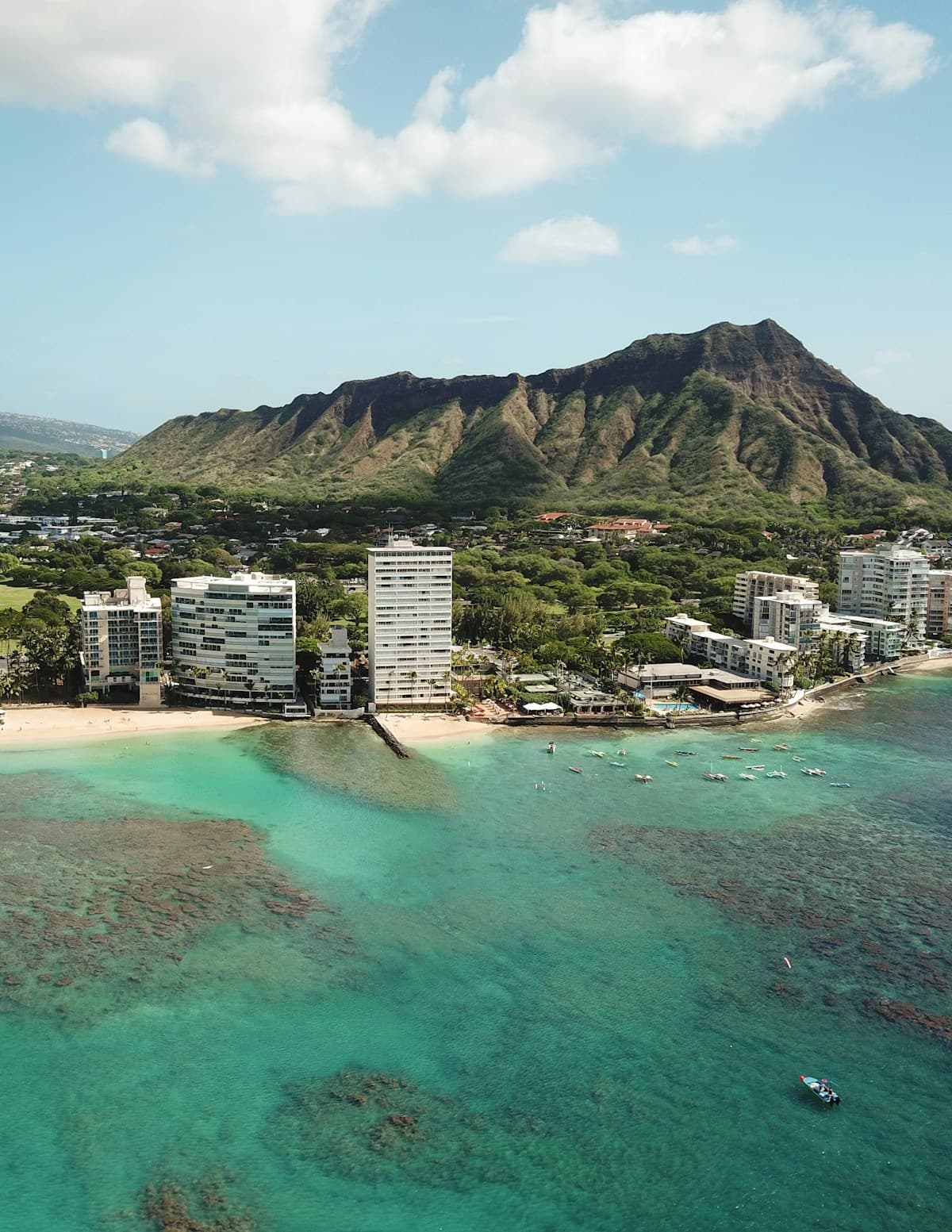
The Royal Hawaiian/Sheraton stretch in the middle is where the iconic photos come from. The pink facade of the Royal Hawaiian Hotel, rows of beach umbrellas, and Diamond Head rising behind it all. This is also where the crowds concentrate. By 10am on any day between November and April, the sand is a patchwork of towels and rented chairs. If you want this section, get there early.
Kuhio Beach has the famous "Wizard Stones" and a concrete seawall that creates a protected wading area. Good for small kids. Can feel cramped.
Queen's Beach at the eastern end near the Waikiki Aquarium and Kapiolani Park is a local favourite. It's quieter, has more space, and is popular with the LGBTQ+ community and families. The grass park behind it gives you a place to set up that isn't sand.
Getting in the Water
This is where Waikiki genuinely excels. The water temperature sits between 24 and 27°C year round. A protective offshore reef breaks up the incoming swells, creating gentle, rolling waves in the 1 to 3 foot range along most of the beach. These waves are tailor-made for learning to surf.
Waikiki is where Duke Kahanamoku popularized surfing in the early 1900s, and the tradition of surf lessons here is strong. You'll find surf schools and independent instructors on the beach every morning. A group lesson runs about 30 to 50 USD per person for 90 minutes, and most schools guarantee you'll stand up. The waves are forgiving enough that this isn't an empty promise. Compared to the more powerful breaks you'd find near Kuta Beach in Bali, Waikiki feels almost gentle.
Outrigger canoe rides are another Waikiki classic. Two-person canoes with a guide paddle out, catch a wave, and ride it in. It costs about 25 to 35 USD per person and gives you a taste of traditional Hawaiian ocean culture. It's genuinely fun, not just a tourist gimmick.
The water clarity is decent. Not Caribbean clear, but you can see your feet and the occasional fish around the reef. Snorkeling is better at Hanauma Bay, about 20 minutes east by car, but the reef off Queen's Beach holds some marine life worth exploring with a mask.
The Hotel Wall and the Cost of Everything
From the street side, you can barely see the ocean. Waikiki's famous stretch of high-rise hotels, built mostly in the 1960s and 70s, creates an almost unbroken wall between Kalakaua Avenue and the beach. You walk through hotel lobbies, down narrow public access paths, or along the beach walk to reach the sand. All beaches in Hawaii are public by law, so you have every right to be there, but the approach can feel like navigating a resort complex.
And then there's the cost. Waikiki is expensive. A basic hotel room starts around 200 to 300 USD per night. An oceanfront room at one of the nicer properties runs 500 to 800 USD. Parking at your hotel is 35 to 55 USD per night on top of the room rate. A plate lunch from a food truck runs 12 to 18 USD. A sit-down dinner on Kalakaua Avenue easily hits 50 to 80 USD per person.
It adds up fast. A week in Waikiki for two people, with a mid-range hotel, eating out twice a day, and doing a couple of activities, will comfortably clear 4,000 to 5,000 USD. That's real money. If budget matters, consider staying in a vacation rental outside Waikiki and busing in for beach days. TheBus costs 3 USD per ride and connects all of Honolulu.
The Early Morning Secret
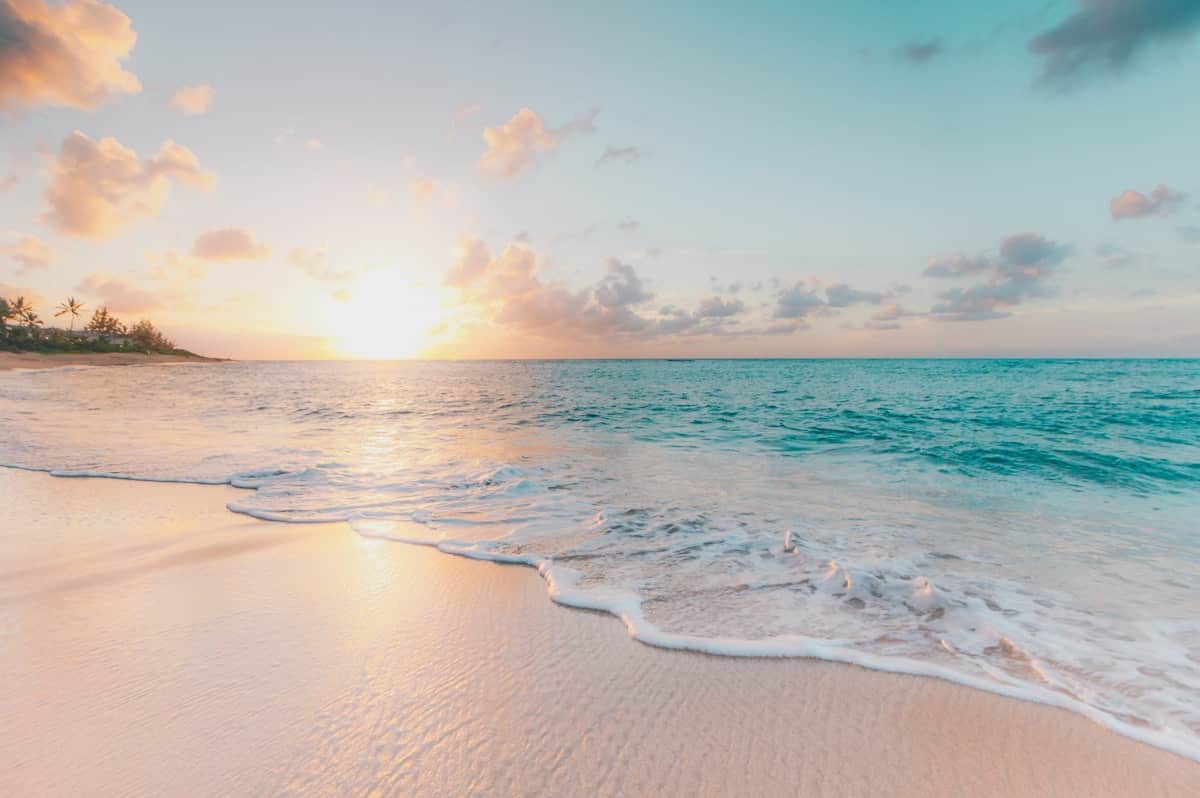
Here's the thing that separates a good Waikiki visit from a frustrating one: time of day. Between 6 and 8am, Waikiki Beach transforms. The crowds haven't arrived. The tour groups are still at breakfast. The sand is freshly smoothed by the overnight tide. Diamond Head catches the early light and turns shades of pink and gold. The water is glassy calm.
This is when Waikiki feels closest to what it must have been like before the hotels went up. Swimmers do laps in the calm water. A few surfers sit on the break waiting for sets. Joggers run along the beach walk. It's peaceful in a way that seems impossible by noon.
If you're staying in Waikiki, make a point of getting up for at least one sunrise beach walk. The sun rises over Diamond Head and the light is beautiful. By 9 or 10am, the beach chairs are out, the rental umbrellas are planted, and the crowds settle in for the day. That window between dawn and mid-morning is worth setting an alarm for.
What Locals Actually Think
Ask a Honolulu local about Waikiki and you'll get an eye roll, usually followed by something like "I haven't been to Waikiki in years." Locals head to Ala Moana Beach Park, Kailua, Lanikai, or the North Shore. Waikiki is tourist territory, and there's a cultural divide between the visitor experience and the local one.
That said, plenty of locals surf the breaks off Waikiki, swim at Queen's Beach in the evenings, and eat at the less touristy restaurants along Kapahulu Avenue, just inland from the main strip. The Marukame Udon noodle shop usually has a line out the door, and Leonard's Bakery for malasadas (Portuguese doughnuts) is a local institution that happens to sit near the tourist zone.
The honest local take is that Waikiki is fine, just overdeveloped and overpriced for what it is. They're not wrong. But they also live here and have access to the rest of Oahu's coastline. If you're visiting Hawaii for a week, spending a day or two at Waikiki and the rest exploring the island's quieter beaches is the right balance.
Is Waikiki Beach Still Worth Visiting in 2026?
Yes, with an asterisk. Waikiki is not the pristine Hawaiian paradise of the imagination. It's a heavily developed, extremely crowded, very expensive urban beach in the middle of a resort district. If that's all you see, you'll be disappointed.
But look past the hotels and the ABC stores selling macadamia nuts and you'll find warm, swimmable water that feels like a warm bath, beginner-friendly surf, one of the best crater views from any beach in the world, and a history that genuinely shaped global beach culture. Go early in the morning. Find the quieter sections. Take a surf lesson. Eat a poke bowl from a side-street shop instead of a beachfront restaurant. Skip the overpriced umbrella rental and bring a towel.
Waikiki isn't the best beach in Hawaii. It's not even the best beach on Oahu. But it's Waikiki, and that still counts for something. If you're comparing it to Ewa Beach on the other side of Honolulu or the jaw-dropping scenery at Whitehaven Beach in Australia, Waikiki won't win on natural beauty. What it offers instead is warm water, easy waves, and a front-row seat to one of the most famous stretches of coastline on earth. Just bring your wallet and set your alarm for sunrise.