Thessaloniki gets its beach reputation from Halkidiki, the three-finger peninsula 90 minutes south of the city. Almost nobody mentions that Macedonia's mainland coast also has 3 kilometres of Blue Flag sand-and-pebble beach an hour east of the city at Nea Vrasna, with shallow water for kids, organised loungers, and the same Aegean sun without the Halkidiki traffic. The beach is local, low-key, and consistently rated one of the easier family beach days from Thessaloniki.
Drive 90 minutes east instead of south and the holiday is simpler.
Where Vrasna Sits
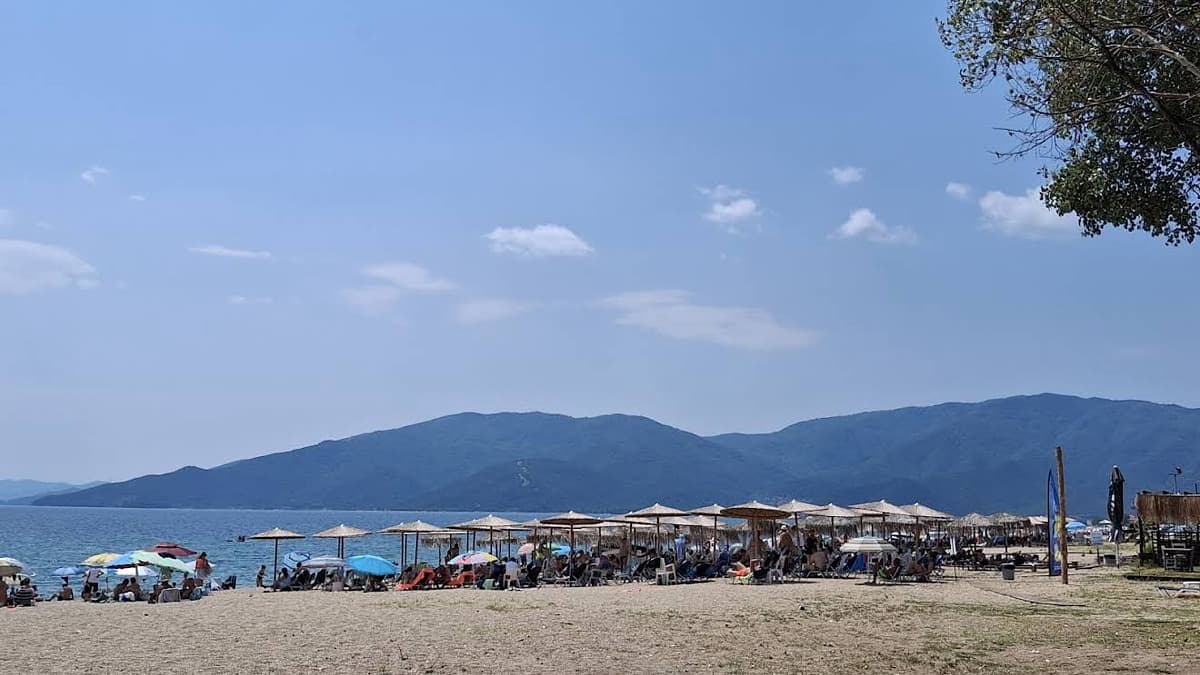
Vrasna Beach is on the Macedonian coast about 90 kilometres east of Thessaloniki, around 90 minutes by car via the EO2 motorway toward Kavala. The community has three connected settlements: Vrasna (the original inland village), Nea Vrasna (the modern resort town on the beach), and Paralia Vrasna (the beach itself). When travel guides say "Vrasna Beach," they typically mean the 3-kilometre Blue Flag strip running along Nea Vrasna and Paralia Vrasna.
From Thessaloniki, take EO2 east, exit at Asprovalta or Stavros depending on which section of the beach you want, and follow signs for Nea Vrasna. There are multiple parking areas along the beach access road, some free and some paid. KTEL Macedonia runs buses from Thessaloniki to Nea Vrasna; the journey takes around 2 hours and works for day trippers without a car.
What Makes the Beach Work for Families
The beach has been a Blue Flag site for years, and the certification reflects what the beach actually delivers. Water is consistently clean. The bottom slopes gently into shallow shoals, with waist-deep water extending 30 to 50 metres from shore. The sea is generally calm because the coast faces south-east and is sheltered from the Aegean meltemi winds that hit the islands and southern peninsulas. Lifeguards staff the beach during summer (roughly June to early September).
Organised sections of the beach have sunbeds and umbrellas, some free with a beach cafe order, some paid daily. Beach bars and tavernas line the access road. The town behind the beach has supermarkets, pharmacies, playgrounds, and the kind of mid-range family hotels and pensions that work for week-long stays.
The mix of sand and small pebbles is the regional characteristic. Pure-sand beaches are rare on this stretch of coast; what Vrasna has is fine sand near the water with patches of small smooth pebbles toward the back of the beach, which is comfortable underfoot in water shoes and easier on swimsuits than pure pebble beaches further south.
The Quiet Sections of the 3-Kilometre Strip
The Vrasna beach strip runs around 3 kilometres along the coast, with the busiest sections concentrated near the main Nea Vrasna access points. Walk 10 minutes east or west and the loungers thin out, the umbrellas give way to unorganised sand, and you can find a quiet stretch even on a August weekend. This is one of the practical strengths of the beach; it is long enough to absorb crowds without feeling oppressive.
The eastern end toward Asprovalta is the busiest. The western sections approaching Stavros are quieter and more local. Cars can park along most of the access road, which makes choosing a quiet section practical.
When to Visit
June through September is the swim window. Late June to mid-September delivers the warmest Aegean temperatures (around 24-26°C). July and August are the loudest and busiest; September is the sweet spot with prices dropping, schools restarting, and the water still warm from summer. Mornings before 11am are quietest year-round.
Avoid August weekends if you are sensitive to crowds, since Thessaloniki day-trippers fill the beach on Saturdays and Sundays. Weekdays in shoulder season (early June, September) are the best combination of weather and quiet.
Should You Visit?
Yes, if you are based in or near Thessaloniki and want a family-friendly Blue Flag beach without the Halkidiki commitment. Vrasna is the kind of beach that does not advertise itself but consistently delivers a clean, safe, easy swim day. For dramatic scenery and the more famous Greek beach experience, drive the extra 90 minutes south to Sithonia in Halkidiki. For convenience, calm water, and a local resort-town pace, Vrasna is the closer answer.
For wider context on Greek beaches, see our Best Beaches in Greece guide for how the Macedonian coast fits with the Cyclades, Crete, and the Ionian islands. The Crete coverage in particular includes the Elafonissi Beach review for the famous pink-sand alternative.