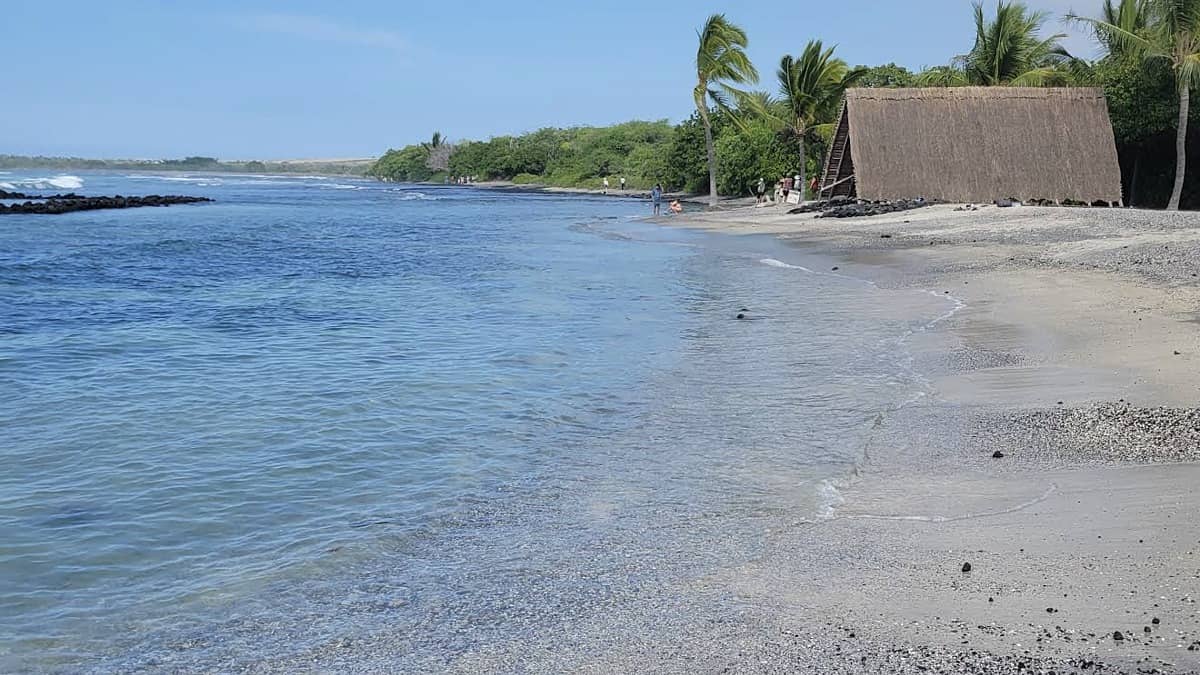
The south Kona coast is where Big Island tourism thins out and the working Hawaiian fishing villages take over. Ho'okena is the most welcoming of them. The village sits at the bottom of a steep 2.5-mile access road, fronts a small black-sand bay protected by lava points, and runs a community-managed beach park that lets visitors swim, snorkel, kayak, and camp in a setting where Native Hawaiian families still live and fish. Spinner dolphins visit most mornings. Sea turtles work the reef edges. The concession stand is staffed by villagers and the camping is booked through the community nonprofit.
This is the Big Island beach where you remember you are a guest.
How to Find Ho'okena
Ho'okena Beach Park is on the south Kona coast, around 30 minutes south of Kailua-Kona off Highway 11. The turn-off is at mile marker 102, where Ho'okena Beach Road descends 2.5 miles down a steep, narrow lane to the village. The road has tight curves and limited passing points; drive carefully and watch for residents going the other way.
The parking lot at the beach is free but small. It fills by mid-morning on weekends. Arriving before 9am is the practical play, or expect to walk in from overflow further up the access road. From Kona International Airport, the drive is around 45 minutes total.
The Spinner Dolphin Window
Hawaiian spinner dolphins use Ho'okena Bay as a daytime resting area. Pods of 20-100 dolphins typically arrive between dawn and around 10am, then move offshore for the afternoon feeding cycle. Watching them from the beach or shallow water is one of the most reliable wildlife experiences on the Big Island.
Federal regulations now prohibit deliberately swimming with or approaching the dolphins; a 50-yard buffer rule applies. The intent is to protect the dolphins' resting time, which is critical for their nightly hunting cycle. Watch from the beach, snorkel quietly without approaching, and let the dolphins decide whether to come closer. They often do.
The early-morning timing is non-negotiable. Show up at noon and you have likely missed them.
The Snorkelling
Both ends of the bay have rocky reef sections that hold the marine life. The south end is the better swim entry, with a sandier bottom that slopes gently into the water. The north end has slightly more dramatic underwater terrain but a rockier entry.
What you see: reef fish in good variety (parrotfish, butterflyfish, moorish idol, goatfish), the occasional Hawaiian green sea turtle, coral cover that has been improving since the village restricted access patterns, and on quiet mornings the dolphins themselves cruising past. The concession stand rents mask-and-fin sets if you do not bring your own.
Visibility is best in the morning before trade winds chop the surface. After heavy winter rain, the small village stream can muddy the water briefly; check conditions before driving down.
The Camping (Community-Run)
Ho'okena is one of a handful of Big Island beaches with on-site camping, and the system is unusual: the camping is managed by Friends of Ho'okena Beach Park, a community nonprofit that the village formed to maintain visitor access while protecting cultural sites and the bay itself.
Booking: Reservations required at least 72 hours in advance through hookena.org. Weekends fill 2-3 months ahead. Major holiday weekends fill up to a year in advance.
Fees (2026): Around 20 USD per person per night for non-residents; Hawaii residents pay around 5 USD. The fees fund park maintenance and the community projects.
Setup: Tent sites along the back of the beach, with brick BBQ grills, picnic tables, restrooms, outdoor showers, and a small pavilion. The concession stand handles food, cold drinks, ice, ice cream, and camping supplies during daytime hours.
This is true beachfront camping in a working village. Keep noise reasonable, respect the residents whose homes back onto the park, and do not touch any of the cultural sites or artifacts you may see in the area.
What the Beach Itself Delivers
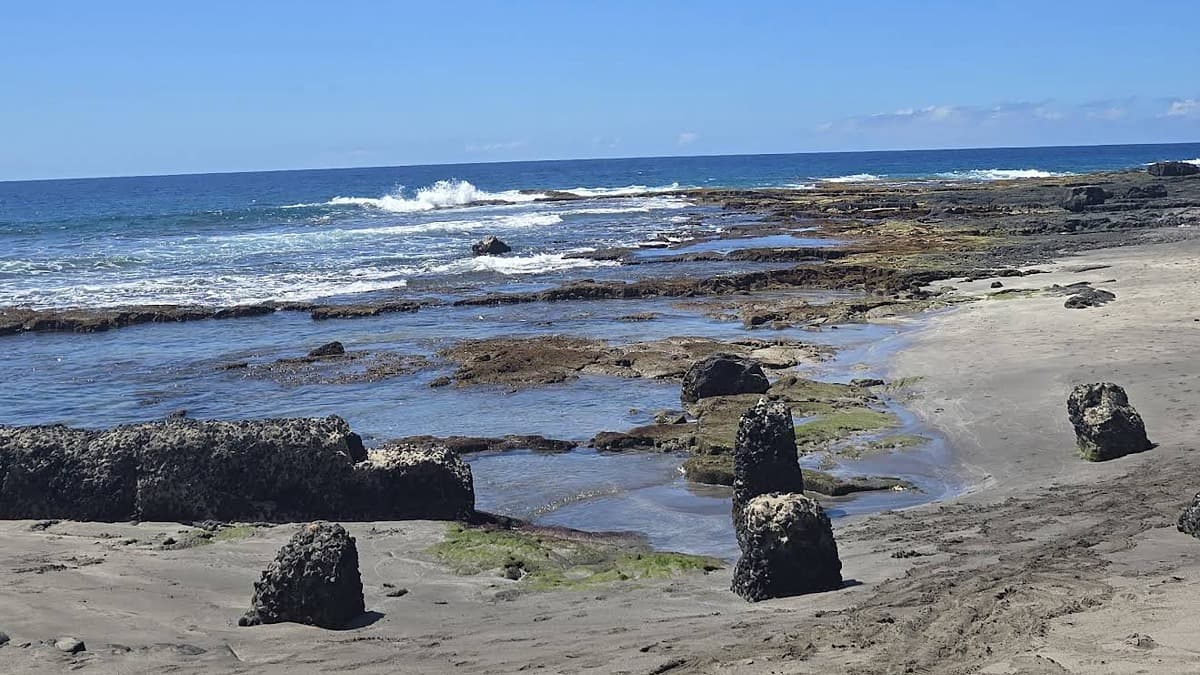
The bay is around 200 metres across, framed by black lava points at both ends and a row of palm trees behind the sand. The sand is a mix of black volcanic grains, small pebbles, and crushed coral, giving the beach a distinctly darker grey-black look rather than the pure white of north Kona's beaches. The colour gets warmer to walk on in midday; water shoes help if your feet are sensitive.
Swimming is safest at the south end where the bottom is gentlest. The north end has the slightly more dramatic underwater terrain but a rockier entry. The water is generally calm in summer; winter storms can produce shore break that demands more care.
No lifeguard is permanently on duty. The concession stand staff and village families keep an informal eye on conditions; check in if you are unsure.
What to Bring and Respect
A short list:
- Reef-safe sunscreen (state-wide rule)
- Water and snacks (the concession stand sells these but bring backup)
- Snorkel gear (or rent from the stand)
- Cash for the concession and rentals
- Camera with a long lens for dolphins (you cannot get close)
- Quiet voices, especially during early-morning dolphin visits
Do not touch cultural sites, lava-rock structures, or any items you see along the village edges. Some of what looks like beach decoration is centuries-old archaeology. Pack out everything you bring in.
Should You Visit?
Yes, if you want a Big Island beach experience that is genuinely Native Hawaiian rather than a resort-style beach day, and you can be a respectful guest in a working village. Ho'okena is one of the more meaningful beach visits available on the Kona coast, and the community-run setup is part of what makes it work.
For wider Big Island context, our Kohanaiki Beach Park review covers the local surf beach 30 minutes north (Pine Trees), and our Kua Bay Beach review covers the white-sand Kekaha Kai option. For the Hawaii-wide picture, see our Best Beaches in Oahu and Best Beaches in Kauai guides.