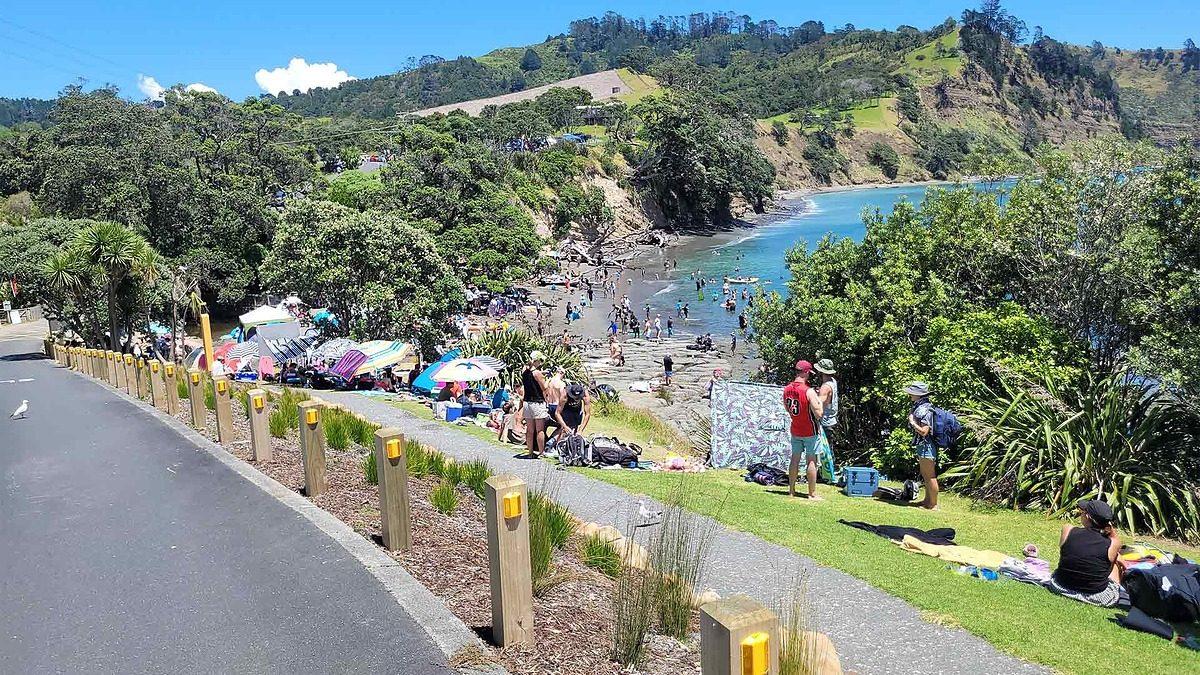
The fish at Te Hāwere-a-Maki / Goat Island, near Leigh, have been safe from hooks and nets since 1975, and you can see snapper and blue maomao by wading in with a mask. From December 2026, the car park above them will cost money. On 16 November, New Zealand's Department of Conservation (DOC) confirmed the charges: the first 10 minutes free, then NZ$2.50 for every half hour.
There is no daily cap outside May to September. In those months a day costs no more than NZ$15. For the more than 300,000 people a year who visit New Zealand's first marine reserve, by DOC's estimate, the fee now shapes how long a day at Goat Island lasts and when it makes sense to go.
What Goat Island parking costs from December 2026
DOC's paid car parks page sets out the Goat Island rates:
- First 10 minutes: free, for drop-offs and pick-ups.
- After that: NZ$2.50 per half hour, counted from the moment you drive in.
- October to April: no cap on the daily total.
- May to September: no more than NZ$15 for the day, with unlimited exits and re-entries.
- Breach notice: DOC can issue one for NZ$75 if you overstay or don't pay.
Payment is at machines in the car park, which take debit and credit cards but not cash. You can't book a space or pay before you arrive. You can pay on arrival or before you leave, and top up in half-hour blocks if the snorkelling runs long. Number-plate cameras watch the entrance and exit, and Stellar, DOC's parking contractor, enforces unpaid stays.
The exact start day is less clear. DOC's August consultation leaflet said 1 December 2026, while the November release says only "December 2026". Plan as if the cameras are live from the first day of the month. Checked November 2026.
DOC says the fees will go towards the long-term care of places like Goat Island, including a refitted toilet block and resurfaced car parks. Its August leaflet adds that the pricing is designed to encourage people to stay "for a few hours as opposed to a full day".
What a Goat Island snorkel day costs now
DOC's summer rate is NZ$5 an hour with no ceiling, so the bill grows with the day. Sessions run in half-hour blocks from the moment you enter:
- Two hours (one swim and a sandwich): NZ$10.
- Four hours (a morning in the water): NZ$20.
- Six hours: NZ$30.
- Eight hours (a full summer day): NZ$40.
From May to September the bill stops at NZ$15, so anything longer than three hours costs the same.
Gear hire doesn't eat into parking time, because Goat Island Dive & Snorkel fits you out at its shop on Pakiri Road in Leigh, about 3km from the reserve. Its snorkel hire price list charges adults NZ$45 for mask, snorkel and fins, and NZ$59 with a full wetsuit, for the day. Gear has to be back by 5pm. A couple hiring wetsuit sets and parking for four hours on a summer Saturday will spend about NZ$138 before lunch.
The glass-bottom boat is the cheapest outing to park for. The operator asks passengers to check in 30 minutes before a 45-minute tour, so allow about an hour and a half, or NZ$7.50 to NZ$10 of parking.
How to get to Goat Island from Auckland, and when to arrive
The reserve is about an hour and a half's drive north of Auckland, according to DOC: State Highway 1 to Warkworth, then follow the Goat Island Marine Reserve signs through Leigh. Bring food. The glass-bottom boat's visitor page warns that nothing is sold at the beach, and that on busy summer weekends and public holidays the drive can take up to three hours.
Check the sea forecast before you set off. DOC's reserve page states plainly that people have died here, and advises against swimming, snorkelling or diving when easterly or north-easterly winds blow above 20 knots or swell from those directions tops a metre. On those days, keep the parking money and pick another date. Our guide to rip currents explains how to read the water at any beach before you go in.
Snorkelling at Goat Island, straight from the beach
The reason the car park fills is simple: you don't need a boat. Goat Island lies about 100 metres offshore, across a shallow channel, and snorkellers walk in from the beach. Further out the reef drops into kelp forest. The reserve, officially Cape Rodney-Okakari Point, was set up in 1975 and protects the water up to 800 metres offshore, according to DOC.
DOC describes seaweed forests, sponge gardens and "abundant and friendly" fish. The operators list snapper, red moki, goatfish, leatherjackets, blue maomao and the occasional eagle ray. Water shoes help on the rocky entry. A wetsuit is worth hiring even in summer, because the sea here averages only about 21°C at its warmest.
The rules are enforced. You can't fish, take shellfish, or remove rocks or shells. You also can't feed the fish, which DOC says changes their behaviour. Dogs are banned throughout the reserve. Report poaching to 0800 4 POACHER (0800 476 224).
First-timers can join Goat Island Dive & Snorkel's beginner guided snorkel, which includes a wetsuit and flotation and takes about two and a half hours with fitting and briefings. If getting wet doesn't appeal, there's another way to see the reef.
The glass-bottom boat, if you would rather stay dry
The Glass Bottom Boat loads passengers straight from the sand and runs a 45-minute narrated loop of the reserve, including the caves on the far side of the island. It doesn't land on the island. The operator recommends booking online at busy times. Walk-ins can pay on the beach by cash, EFTPOS or card.
Prices weren't published on the operator's own site in November 2026, so book through it to see the current fare. Trips are cancelled when the sea is rough, and that tends to happen on the same days DOC warns snorkellers away. Plan a boat trip for a calm morning and you can get the snorkel and the boat out of the same parking session.
Winter is the cheap season, if you have a thick wetsuit
From May to September 2027, a day costs no more than NZ$15, which beats the half-hour rate on any visit longer than three hours. The sea is the price you pay for that. In the University of Auckland's daily record from the Leigh Marine Laboratory, beside the reserve, the water averaged about 21°C in February and March between 2014 and 2023. It dropped to about 14.5°C in August and September.
May is the best compromise: the NZ$15 daily limit applies and the sea still averaged about 18°C over the same decade. The dive shop rents an extra-warm wetsuit, 6mm to 10mm thick, for NZ$59 a set for adults, the same as a standard one.
Who doesn't pay at Goat Island
Locals pay NZ$10 once for an annual permit covering two number plates, with unlimited parking. To qualify you must live inside DOC's boundary map, which covers the Leigh peninsula and the land behind the reserve. Omaha, across the Whangateau Harbour, is outside it. Applications open online on 1 December 2026 and need proof of address such as a rates or utility bill. Permits don't guarantee a space.
There is no NZ$60 general annual pass at Goat Island, unlike at Franz Josef and Punakaiki, so regular visitors from Auckland pay by the half hour like everyone else. School groups, DOC volunteers, community groups and contractors can apply for exemptions from December. Tourism operators with a valid DOC concession are exempt. Checked November 2026.
For most visitors, the best way to keep the fee small is a calm February or March weekday. Arrive early, hire gear in Leigh before you park, snorkel the channel and keep it to three or four hours. That costs about NZ$15 to NZ$20 for the car, in the warmest water of the year.