The only useful list of the 10 best beaches in Scotland ranks them by what each one is actually for, not just by which photographs best. These are ordered by a mix of how good they look, how hard they are to reach, and whether you'd actually want to swim, walk or bring kids. One caveat up front: the "Scottish Caribbean" only exists on a clear day with the sun out, and the water underneath that turquoise sits at around 13C. Get the timing right and these are some of the finest beaches in Europe. Get it wrong and you're walking a grey, gorgeous, wind-scoured arc of sand with a flask.
How we picked Scotland's best beaches (and why Luskentyre tops the list)
The list skews to the Outer Hebrides because that's where the white shell sand and shallow turquoise water actually are. But we've kept two East coast beaches you can reach without a ferry, and one Inner Hebrides bay families can drive to. Every entry had to clear the same bar: a genuine reason to choose it over the others, and a real account of the access cost.
Luskentyre tops it because the numbers back the hype. It holds a 4.9 out of 5 TripAdvisor rating from over 1,100 reviews, sits second of 21 things to do on Harris, and a 2022 study found it the highest-rated beach in the whole UK. No other Scottish beach carries that weight of public verdict. The order then rewards the beaches that deliver the look without a four-mile walk, then the ones worth the walk, then the accessible East coast pair you can fit around a city break.
Luskentyre and Seilebost: the white sand beaches that started the Caribbean comparison
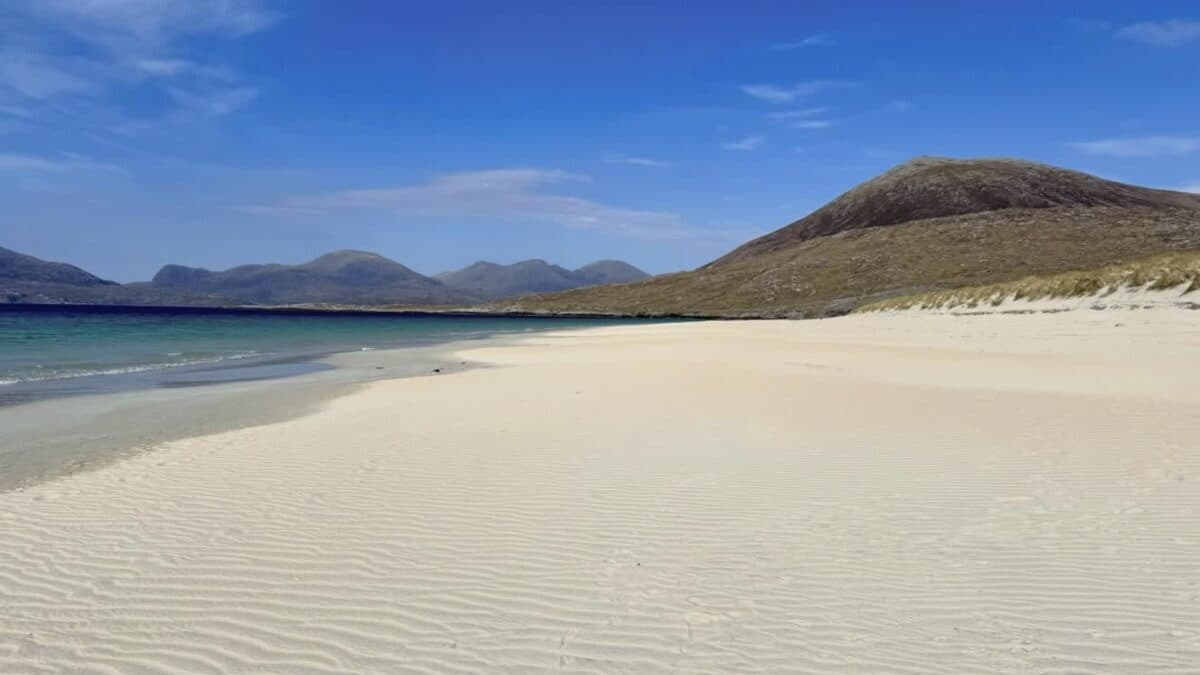
This is the view that launched the whole "Scotland looks like the Caribbean" genre. Luskentyre is a vast stretch of white shell sand on the west side of Harris, with turquoise channels that snake across the flats at low tide and the green island hills behind. On a bright day the colour is hard to believe.
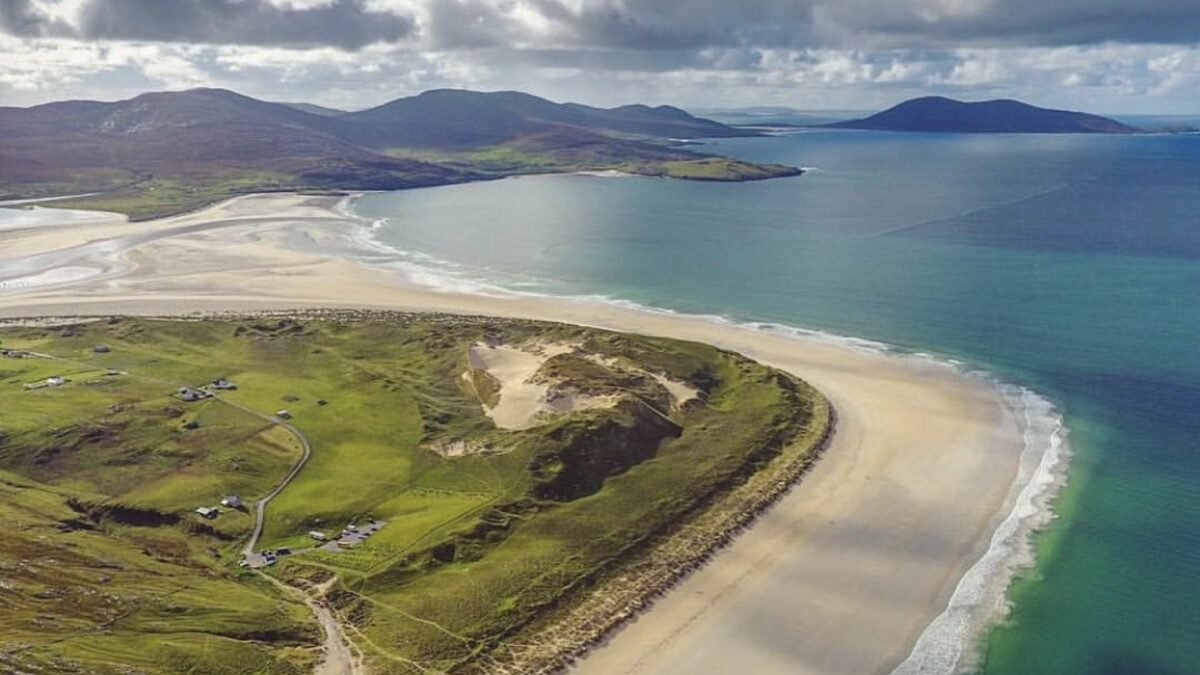
The accolades are real but worth dating properly. The "world's top 25 beaches" line you'll see quoted everywhere is a TripAdvisor 2020 figure, when it placed 13th; more current is TripAdvisor naming it the UK's top beach and 7th in Europe in February 2022. The car park at the road-end, about three miles off the A859, has toilets and drinking water, reportedly the only one on Harris with both. It fills up in good weather from June to August, so arrive early. Campervans can't just pull in overnight: the West Harris Trust runs a handful of bookable overnight spots at around 10 GBP a night, capped at 6m, with none allowed at the cemetery car park and no waste dumping.
Seilebost is Luskentyre's quieter twin, the beach on the south side of the same estuary, joined to it by shifting sand at low tide. Same colours, far fewer people. The trick is that the best photograph isn't from the Seilebost sand at all; it's from the A859 viewpoint on the road above, looking down across the estuary toward Luskentyre.
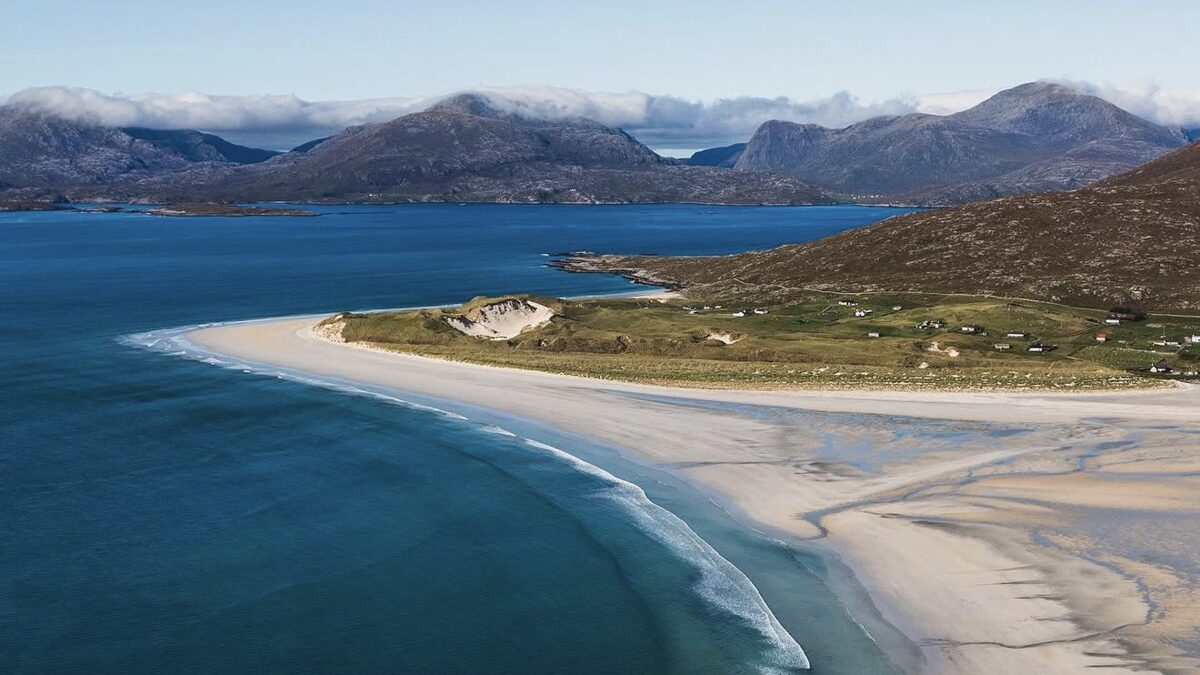
To reach either you'll take the CalMac ferry from Uig on Skye to Tarbert, about an hour and forty minutes. Vehicle tickets must be booked online and sell out months ahead in peak summer 2026, so don't turn up hoping.
Camusdarach: the Local Hero beach with Skye on the horizon
This is the cultural one. Camusdarach, on the Road to the Isles near Arisaig and Morar, was the beach in Bill Forsyth's Local Hero (1983), standing in for the fictional Ferness, with a mock-up church built beside the sand for filming. One catch worth knowing: the famous village in the film was shot at Pennan in Aberdeenshire, about 175 miles away, so the beach and the village are two completely different places on opposite coasts.
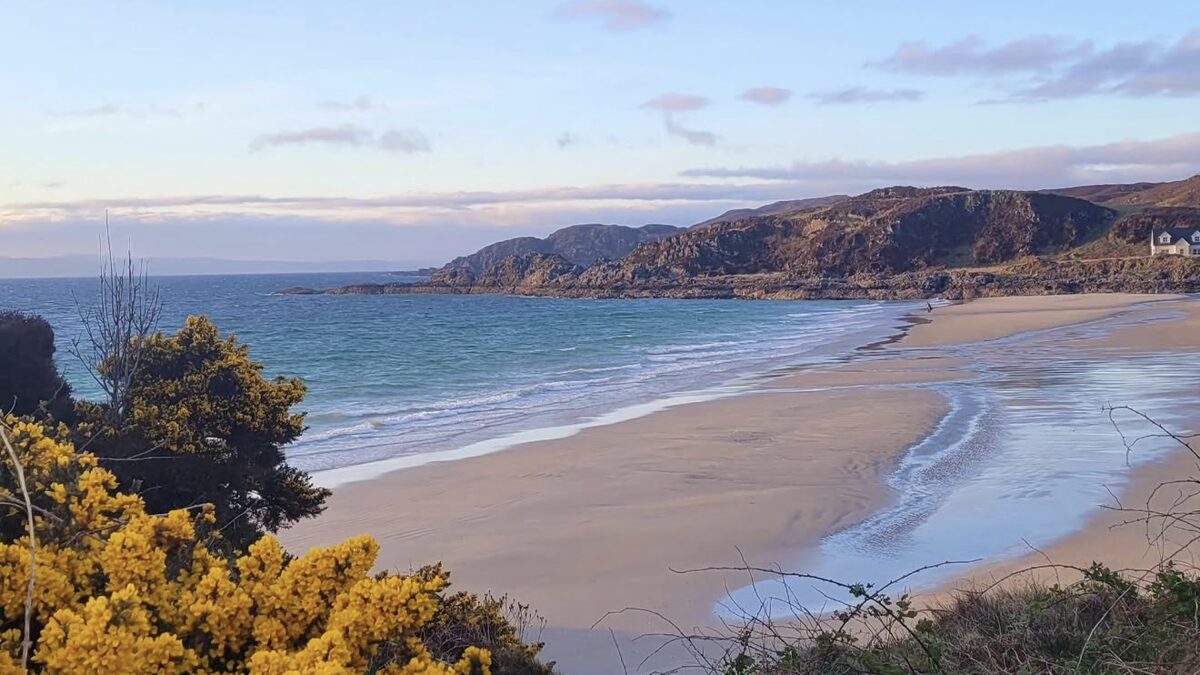
The beach itself is a sheltered silver-sand cove that looks out to the Small Isles and Skye, and it's best at low tide when the separate bays open up. Access is from a small car park near Glenacross on the B8008, then a short sandy footpath through the dunes. The big 2026 change: Highland Council approved mandatory pay-and-display parking here on 11 May 2026, with charging expected to begin in June or July once the machines go in. There's a free period of up to one hour and no overnight parking between 10pm and 8am, though the exact tariff hadn't been published when this went up. The whole Morar-Arisaig coast road has been under traffic-control measures for a while now, so summer access here is actively managed. If you want the full picture before you go, read the full review of Camusdarach, the Local Hero beach near Arisaig.
Sandwood Bay and Achmelvich: the wild Highland beaches off the North Coast 500
Sandwood Bay is Britain's most famous walk-in beach, and you earn it. There's no road and no car park at the sand. You walk about four miles each way, an eight-mile round trip, from Blairmore car park near Kinlochbervie in Sutherland. What you get is a mile of empty Atlantic beach backed by dunes and a loch, with the Am Buachaille sea stack off the southern end. It's owned and managed by the John Muir Trust.
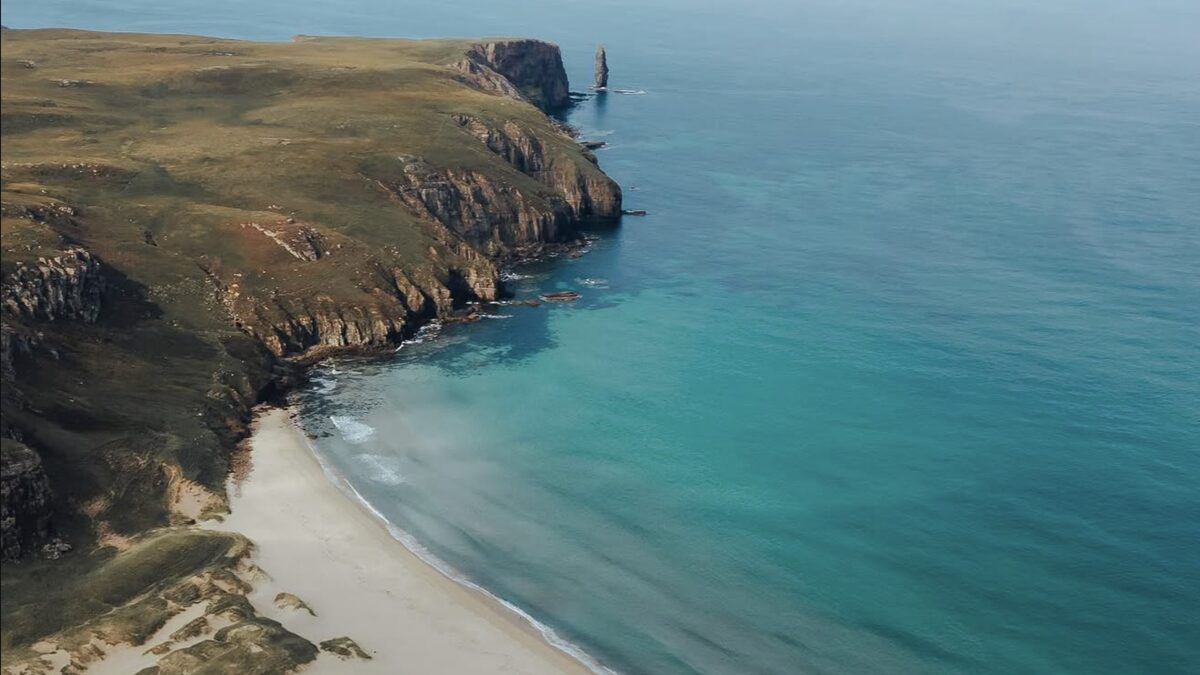
The Blairmore car park is free with toilets and allows overnight parking. The old roadside donation box was stolen in March 2023, so donations now go via a QR code on the toilet block. Bring everything you need and check the weather, because there's no shelter and no bailout once you're out there.
Achmelvich is the opposite proposition: the easiest great swim on the North Coast 500. It's a small, sheltered white-sand cove about three miles north of Lochinver, screened by rocky outcrops, with the clearest, shallowest, calmest water on this list, genuinely safe for families. A new 70-space car park opened in autumn 2024 after a roughly 1.1 million GBP upgrade, and new public toilets plus two outdoor cold-water showers opened in April 2025 (the toilets close in winter). Parking is being made chargeable to fund the work, though no firm tariff was published.
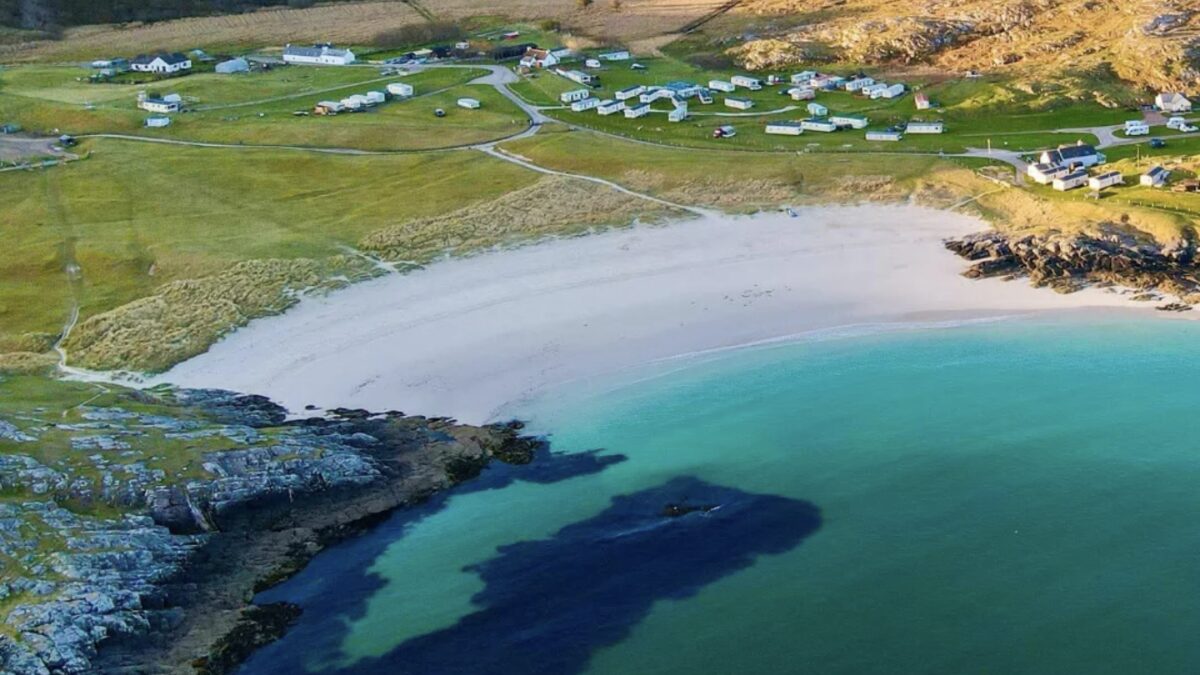
The SYHA youth hostel about 300m back from the beach is still running in 2026, with dorms, private rooms, a self-catering kitchen and a small shop, and a campsite operates by the bay. The single-track access road is narrow. If you're touring the NC500 in a campervan, note that Highland Council's 2026 rules limit overnight council-car-park stays to one night with a 72-hour no-return rule, and seasonal orders can ban overnight stays at hotspots at zero notice.
Outer Hebrides beaches beyond Harris: Scarista, Berneray and the quiet ones
Once you've done Luskentyre, the Hebrides keep giving. Scarista is Harris's surf beach, a west-facing sweep off the A859 between Leverburgh and the coast, over three miles of golden sand backed by flower-rich machair. It's wilder and windier than Luskentyre, with reliable Atlantic surf that makes it the best surf beach on the island. You come here to walk a huge empty sweep of sand, not to paddle. Facilities are minimal, just public toilets at a layby, with the nearest cafes a short drive away at Northton.
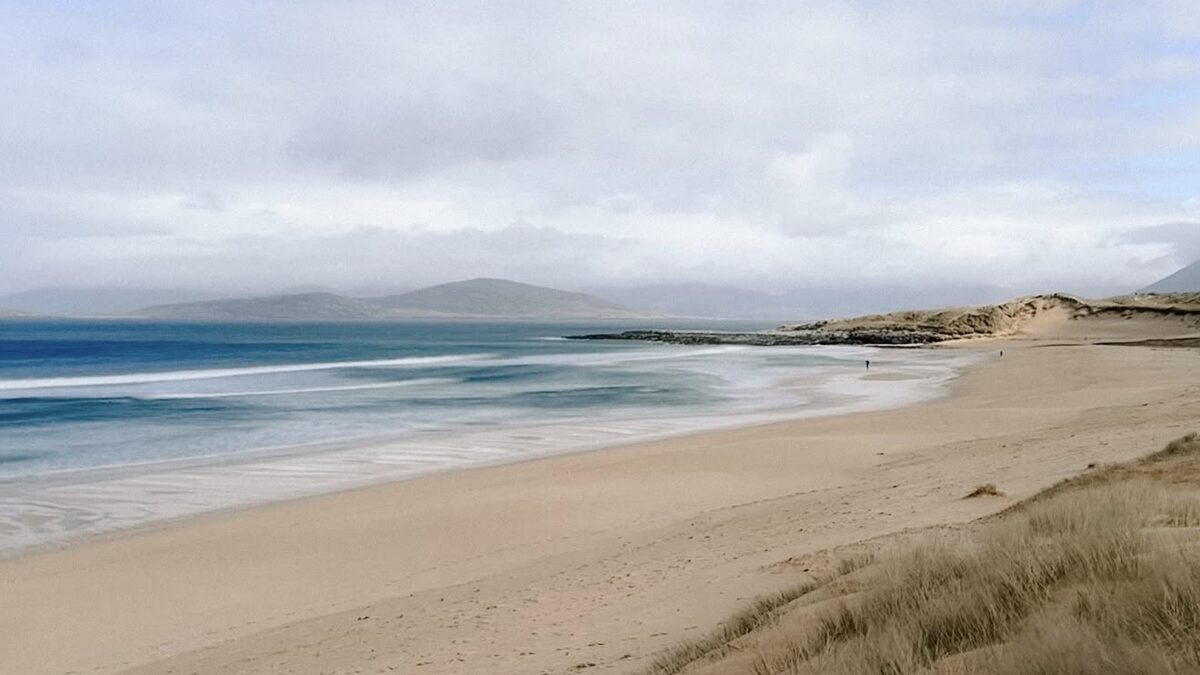
Berneray's West Beach is the one almost nobody reaches, and it's worth the detour. It's a roughly three-mile arc of white sand sliding into turquoise sea, backed by dunes and machair, with the Harris mountains on the horizon across the sound. Lonely Planet ranked it in its Top 20 European beaches list in 2021, placing it third, ahead of beaches in Greece, Portugal and Sardinia. Berneray sits in the Sound of Harris and is connected to North Uist by a 900m causeway, so you reach it by road from Uist, or by the small Berneray-Leverburgh ferry from Harris.
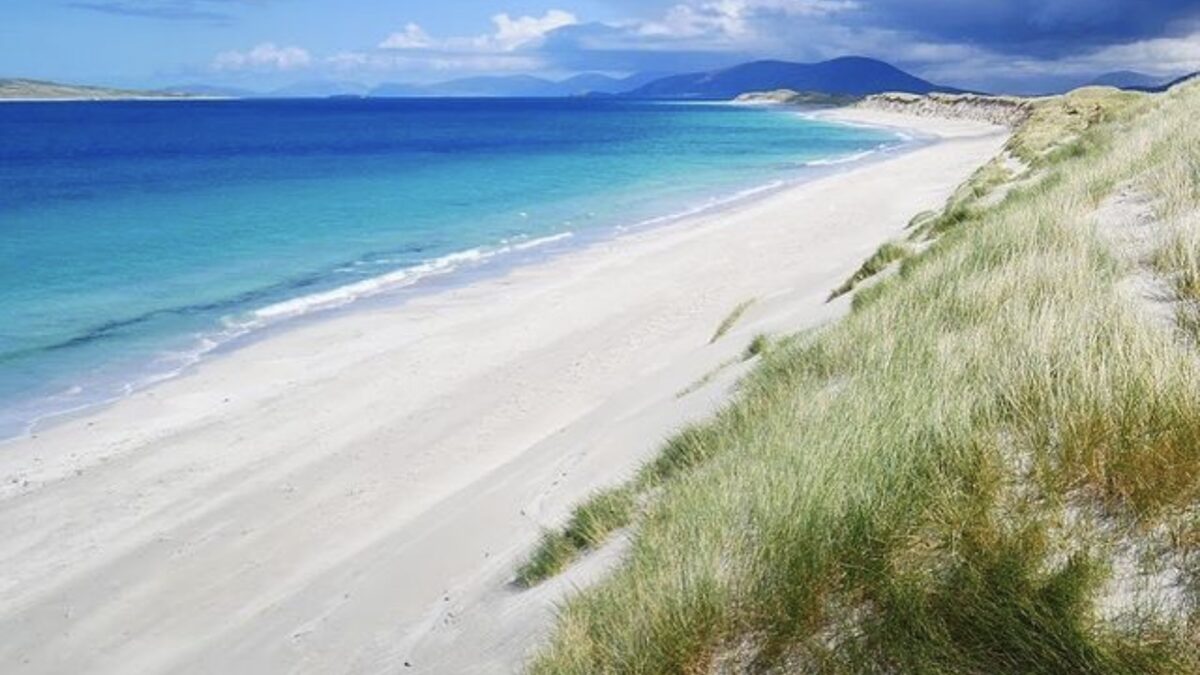
For the Inner Hebrides without an Outer Hebrides ferry, Calgary Bay on the north-west of Mull is the most family-friendly island beach on the list. It's a sheltered horseshoe of white shell sand backed by machair, with parking right behind the beach on the north side, roughly 100 yards from the shore, and toilets by the campsite to the south. There's a cafe at the bay plus seasonal ice-cream kiosks, which is more than most Hebridean beaches offer. From the headland walks you can see Coll and Tiree offshore.
Best Scottish beaches on the East coast: Lunan Bay and West Sands
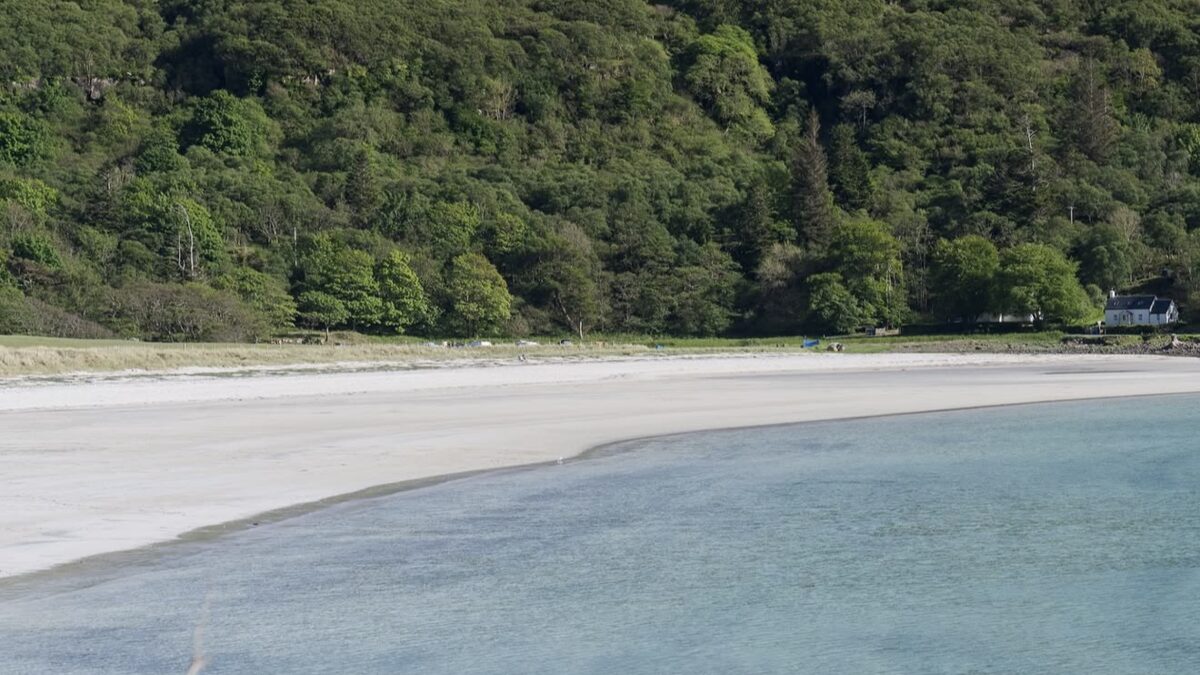
The East coast trades turquoise for accessibility, and for staying midge-free. Lunan Bay is the pick, an east-facing Angus beach off the A92 between Arbroath and Montrose, about three miles south of Montrose, running roughly two miles from Boddin Point to Ethie Haven. The sand is pink-gold under red sandstone cliffs, with the ruined 12th-century Red Castle, built for King William the Lion, overlooking the bay (it sits behind safety fencing). It's good for surfing, horse riding and rock-pooling with kids.
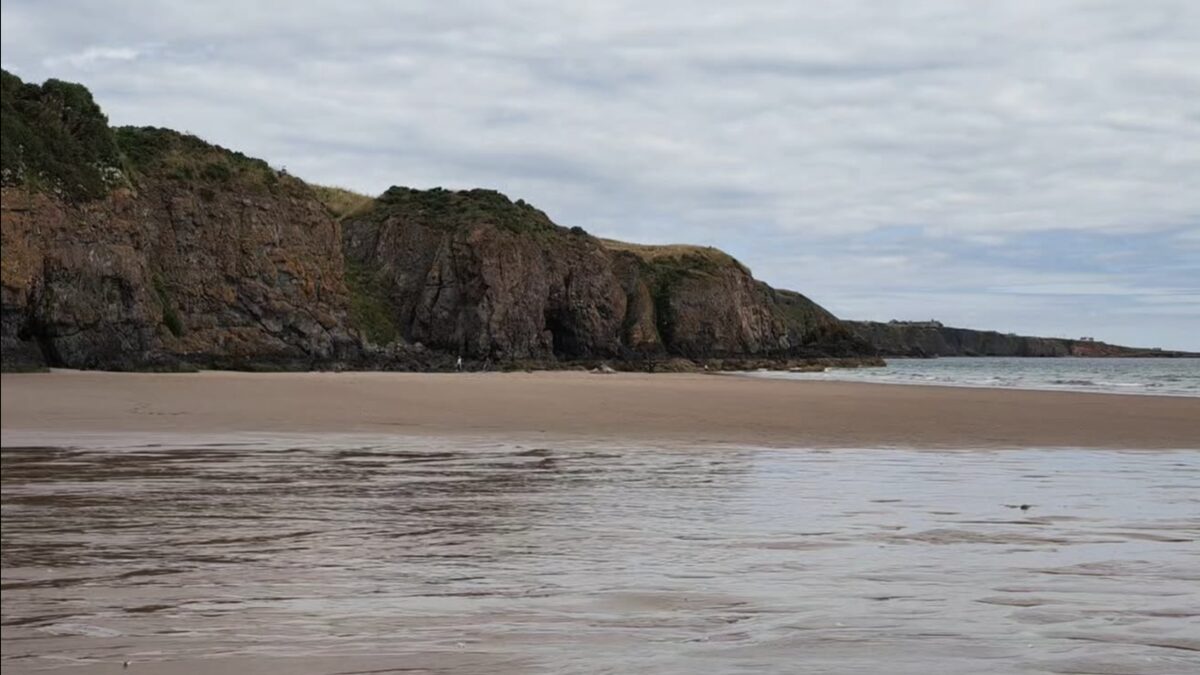
You reach the car park through Lunan Farms; it's generally free but closes overnight, so check on arrival. There's a farm shop with a cafe and public toilets, and a new accessible viewing platform was added in 2025 for mobility-impaired visitors and buggies.
West Sands at St Andrews is the most accessible big beach in Scotland, and the most cinematic: this is the beach from the opening running scene of Chariots of Fire (1981). It's almost two miles of flat golden sand backed by dunes and the Old Course, and you can walk to it from the town centre.
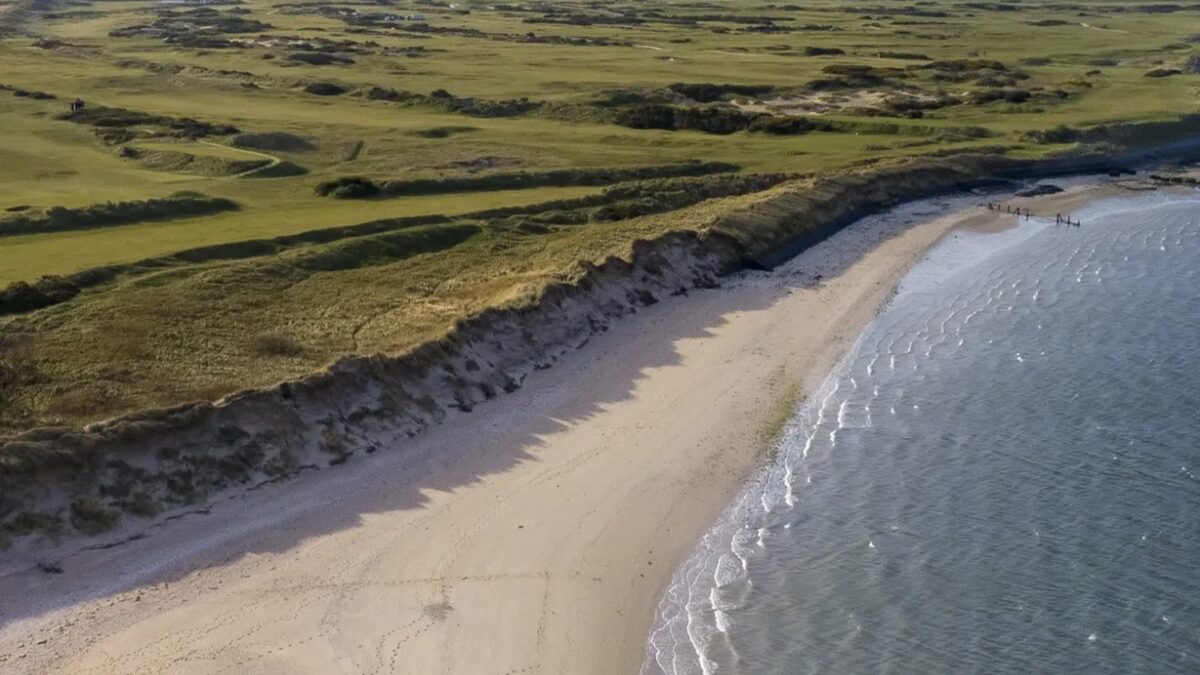
It's an RNLI-lifeguarded beach with seasonal summer patrols, the only beach here with that cover, and a dog-free zone applies at the town end from 1 May to 30 September. Beach-road parking is generally free, while nearby town car parks are paid (Fife Council raised its basic rate to 1.20 GBP from 1 June 2026), so check the signage where you pull in.
Can you actually swim at beaches in Scotland? Water, safety and what to wear
Yes, where there are no current or rip warnings, but go in clear-eyed about the temperature. Scottish summer sea sits around 10-15C from June to September, and the Hebrides average about 13.5C in July and August. That's swimmable for a hardy dip and properly cold for anything longer, so a wetsuit is the sensible call for more than a quick plunge. Luskentyre's water rarely climbs out of the low teens and suits experienced swimmers, not casual paddlers.
For easy, family-grade swimming, Achmelvich and Camusdarach are the calmest and shallowest, with clear sheltered water. Lunan Bay and West Sands are gentler East coast options, and West Sands is the only beach here with lifeguard cover in summer. White shell sand means clear water, but it also means cold; the two go together. None of these beaches have warm water, and any list that implies otherwise is selling you a photo, not a swim.
When to visit and how to dodge the midges and crowds
June is the answer. You get the best odds of settled, sunny weather, the only condition under which the Caribbean comparison holds, and you slip in before two problems peak. The first is midges: Scotland's season runs roughly late May to mid-September, peaking in July and August, and it's worst on the west coast, Skye and the Hebrides, exactly where the best beaches are. The East coast beaches, Lunan Bay and West Sands, stay largely midge-free all summer, which is a real reason to keep them on your route.
The second is crowds. The Luskentyre car park fills by mid-morning in July and August, and the NC500 campervan traffic near Achmelvich is heaviest then too. Arrive before 10am at the popular Hebridean car parks and you'll often have the sand to yourself for an hour. If you're weighing a Scottish trip against elsewhere, see how Scotland's beaches stack up against the best across the UK before you commit the ferry budget. And if you walk a beach head-down looking for treasure, these wild Atlantic shores feed straight into the best UK beaches for sea glass. Pick your beach for what it's for, bring a wetsuit and a midge net, and Scotland delivers on the photographs more often than you'd expect.