There are dozens of beaches in Lisbon's orbit, but the 10 that matter sort cleanly by one question: how do you get there without a car? Pick the wrong one and you'll spend half your day on connections. This list runs from the closest, Carcavelos at 19 minutes by train, out to the wild Sintra cliffs and the turquoise Arrabida coves near Setubal, with the exact transport, travel time and a swim-safety check for each. Most of these are a single Cascais-line train ride, a couple need a ferry-and-bus, and two of the best demand a real walk. If you've got one free day, read the quick-answer section first, then jump to the beach that fits.
Which beach near Lisbon should you pick? Quick answer by trip type
Want the least effort? Take the Cascais line. Carcavelos for surf and space, Tamariz if you want to step off the train onto the promenade, Conceicao in Cascais for calm family water, Santo Amaro de Oeiras if you'd rather dodge the crowds.
Want the prettiest water? Head to Arrabida, south of the river near Setubal, where Galapinhos and Portinho look Mediterranean and run a few degrees warmer. Just plan around the summer car ban (more on that under Arrabida). Want drama and emptiness? The Sintra coast: Adraga if you'll drive, Praia da Ursa if you'll scramble down a cliff for it. Want miles of open sand? Costa da Caparica on the south bank, reached by ferry or direct bus.
Carcavelos: the closest proper beach day, 19 minutes by train
Carcavelos is the default answer for a reason. It's the closest full beach day from the centre, about 19-20 minutes on the Cascais line out of Cais do Sodre, with trains running roughly every 20 minutes through the day. First trains leave at 05:30 from both ends and the last is around 01:30, so you can stay for sunset without watching the clock. A single zone ticket runs about 1.95 euros, plus the reusable 0.50 euro Navegante card the first time you buy.
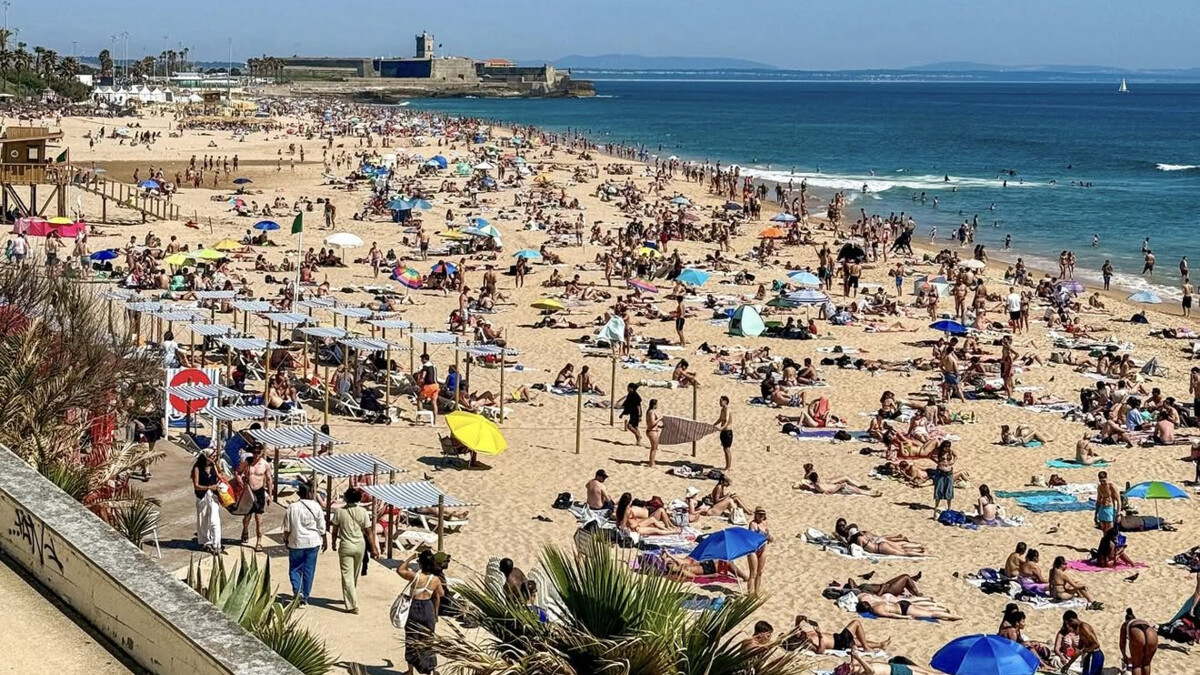
You get about 1.5km of sand here, with the Forte de Sao Juliao da Barra anchoring the eastern end. This is Lisbon's main surf beach: several schools operate on the sand, including Carcavelos Surf School, the first of them, open since 2001. Lifeguards work it in summer and keep the swimming zones separate from the surfing, which matters on a busy August afternoon. It's the closest Blue Flag beach to the city by train, and the obvious starting point if you're learning to surf near Lisbon.
Costa da Caparica: miles of sand, reached by ferry or bus
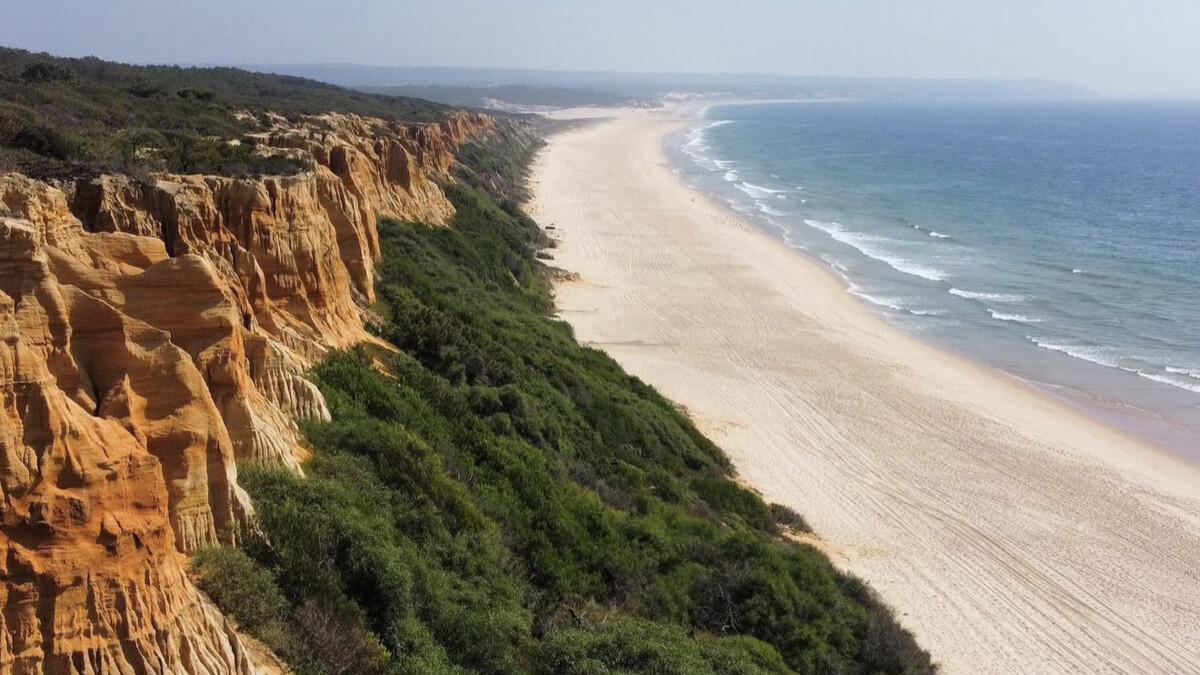
If the Cascais-line beaches feel packed, cross to the south bank. Costa da Caparica is a long, open stretch of Atlantic sand in the Almada district, and it's the locals' choice when they want room to spread out. The trick is that it gets emptier and wilder the further south you walk toward Fonte da Telha, with naturist sand at Praia da Bela Vista around stop 17 and the predominantly gay Praia 19 further along.
Getting there without a car is easy. Carris Metropolitana bus 3710 runs direct from Areeiro to the Caparica bus station, about 55 minutes for 2.60 euros, with at least two departures an hour rising to every 15 minutes at peak. The scenic alternative is the 10-minute ferry from Cais do Sodre to Cacilhas (around 1.55 euros), then bus 3022, about 45 minutes, or the faster 3011 express; the whole ferry-and-bus run is roughly 40-55 minutes. One note for older guides: the Transpraia beach mini-train that used to shuttle people down the coast has been suspended since 2020. A relaunch is hoped for, but don't count on it running this summer.
The Cascais line beaches: hop off the train and you're on the sand
Two beaches on the line ask almost nothing of you. Praia do Tamariz in Estoril sits about 50m from the train station, right on the seafront promenade, the Paredao, which runs 1.7km along to Cascais. It's sheltered, central, backed by the Estoril Casino, and usually calm enough for kids. There are showers, summer lifeguards and a row of cafes right behind the sand, plus sunbed-and-parasol sets at roughly 18-20 euros a day in peak season. If you want a beach you can reach with a buggy and a cool box, this is the one.
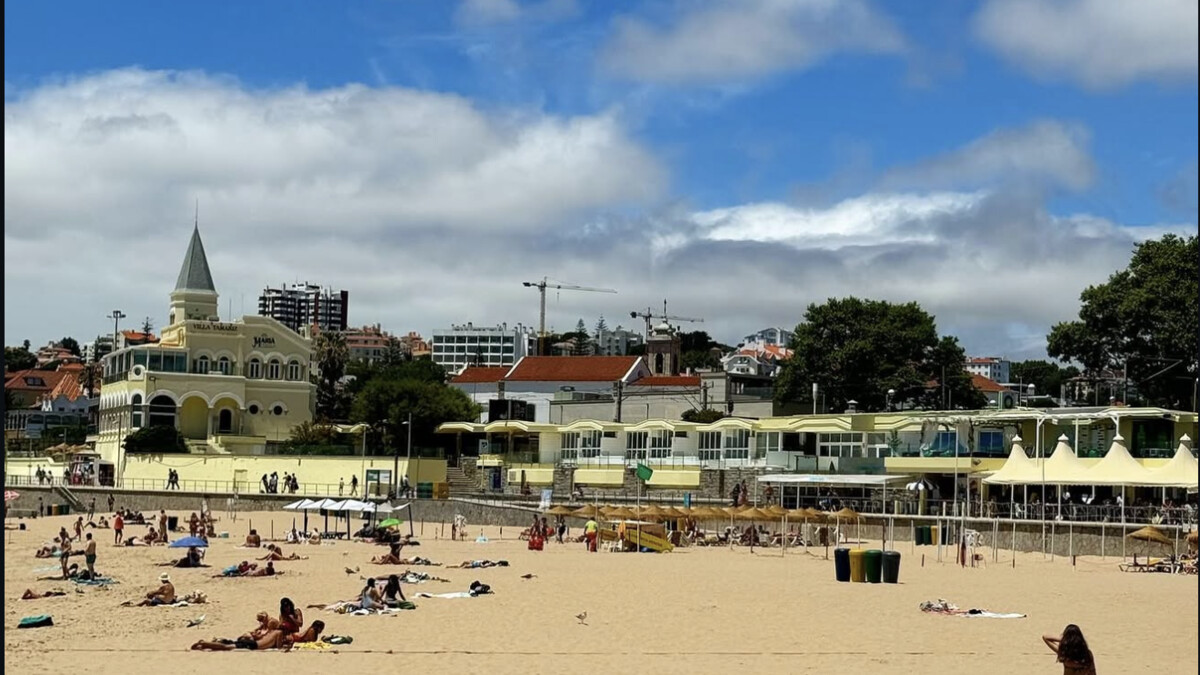
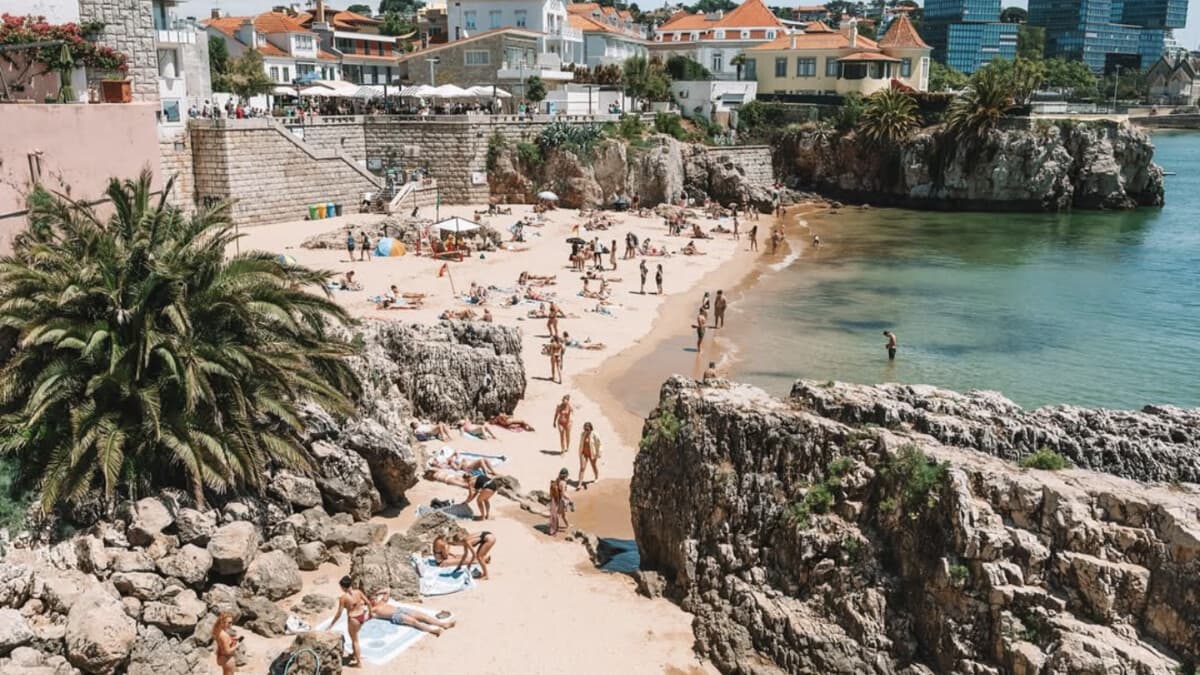
A few stops on, where the line terminates, Praia da Conceicao is under a five-minute walk from Cascais station. The bay is sheltered so the sea stays calm and shallow, it's lifeguard-supervised in season, and it has showers, toilets and sunbed rentals. It runs into Praia da Duquesa to form the town's largest sand stretch, and it's the strongest family pick in Cascais.
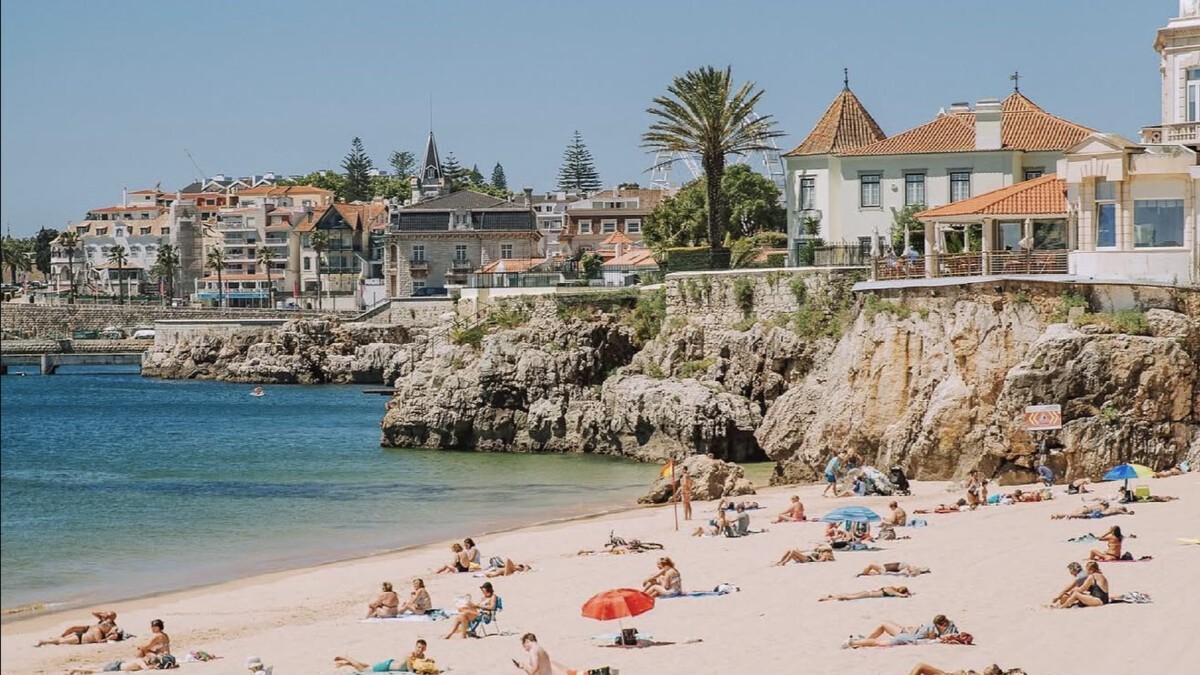
For a quieter version of the Carcavelos experience, get off two stops earlier at Praia de Santo Amaro de Oeiras, about 20-22 minutes from Cais do Sodre and a five-minute walk from the station through an underpass. It has a Blue Flag, around 1km of sand on a shallow Tagus-mouth bay, a promenade, lifeguards, showers and a beach playground. The water is calmer than Carcavelos and it's mostly locals, which is exactly the point.
Praia do Guincho and the wild Sintra coast: worth the cliff scramble?
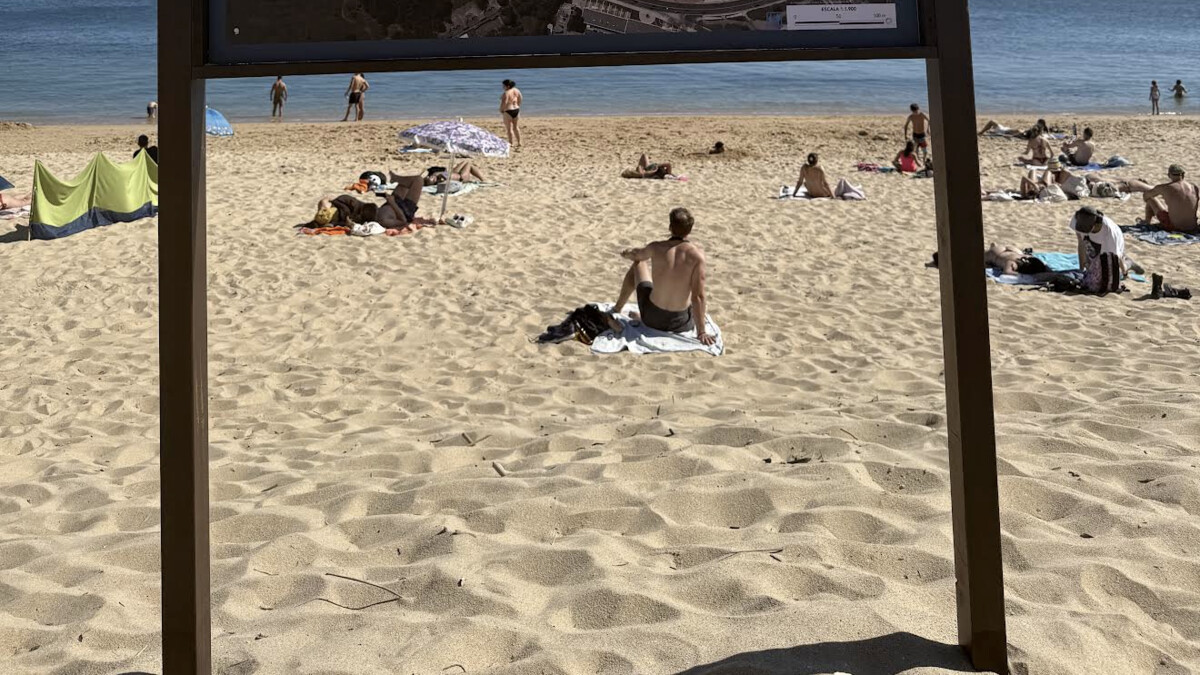
Past Cascais the coast turns dramatic and the swimming gets serious. Just past town, Praia do Guincho is a windswept, dune-backed beach inside the Sintra-Cascais Natural Park, with the mountains rising behind it. It's about a 20-minute bus ride from Cascais on the 405 or 415, which loop the same circular route in opposite directions. The catch is the conditions: strong northerly winds and powerful hidden currents make Guincho a renowned windsurf, kitesurf and experienced-surfer beach, not a spot for children or weak swimmers. Go to watch the kites; swim with real caution.
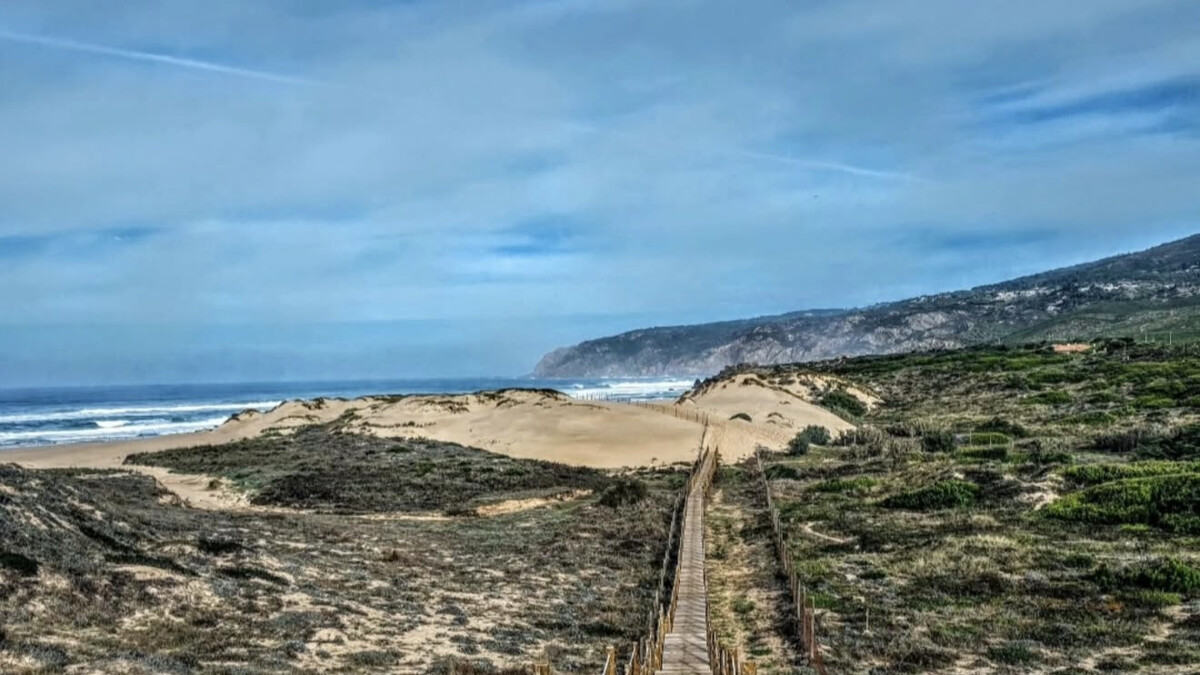
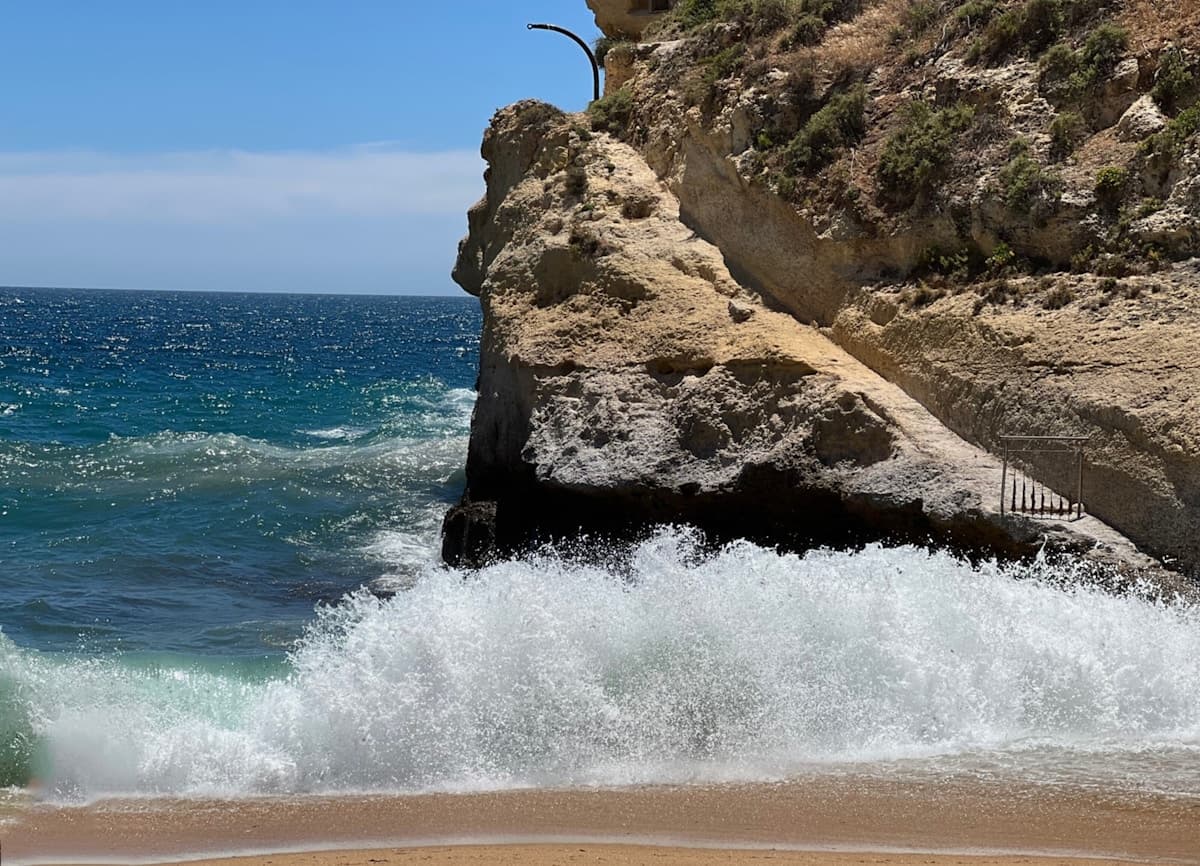
Up on the Sintra coast proper, Praia da Adraga near Almocageme is the one to drive to: roughly 35-40 minutes from Lisbon, with no direct public transport. It sits at the mouth of a rocky gorge between Praia da Ursa and Praia Grande, and it's that rare wild beach with a well-regarded restaurant, free roadside parking that fills by late morning in August, showers, toilets, summer lifeguards and Blue Flag water. You get the cinematic volcanic rock without giving up a coffee and a clean loo.
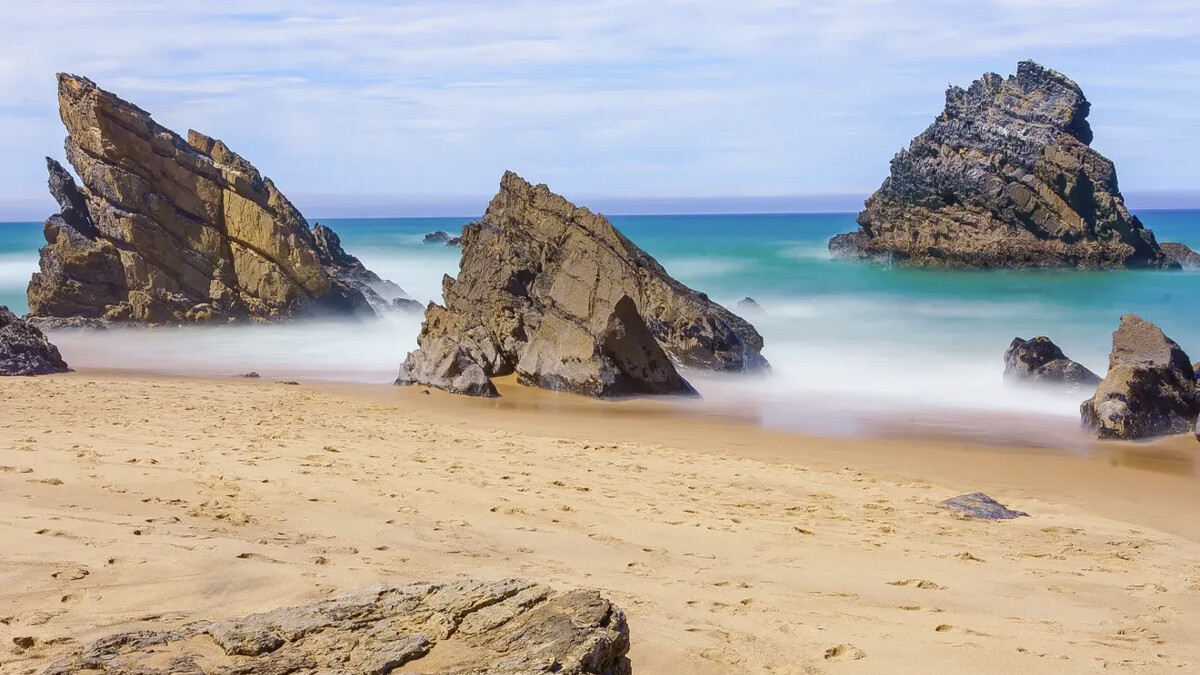
Praia da Ursa is the trade-off in reverse: it regularly tops Portugal's wild-beach lists, with black sea stacks rising off the sand, and absolutely nothing in the way of facilities. It's reached only on foot, down a steep descent of about 90m that takes roughly 20-40 minutes each way. You'll need proper footwear, a head for heights and your hands on the steepest section, and you bring your own water and food because there is none. Worth it if you're fit and prepared; skip it if you're not.
Galapinhos and the Arrabida coves: Lisbon's turquoise water (and the 2026 access rules)
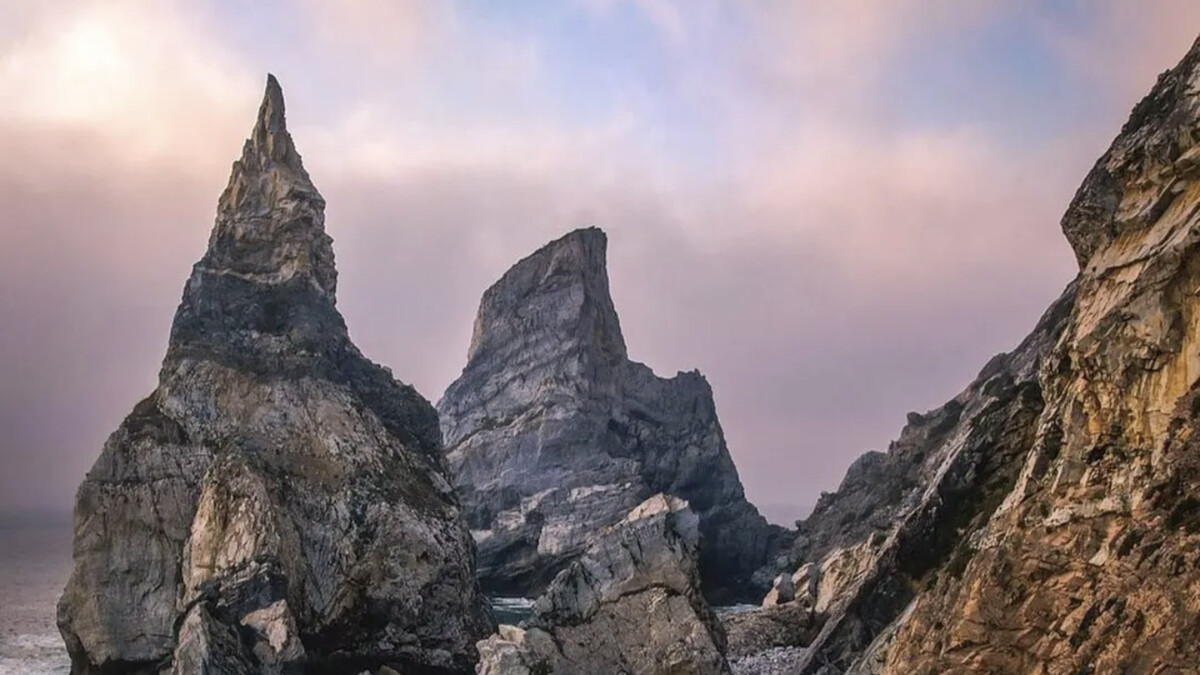
The Arrabida coves near Setubal are the surprise of this list. The water here is transparent and turquoise, the cliffs are forested limestone, and the whole thing looks more like the Med than the Atlantic. Praia de Galapinhos is the headline: European Best Destinations voted it the most beautiful beach in Europe back in 2017, an old accolade rather than a current one, but the water lives up to it.
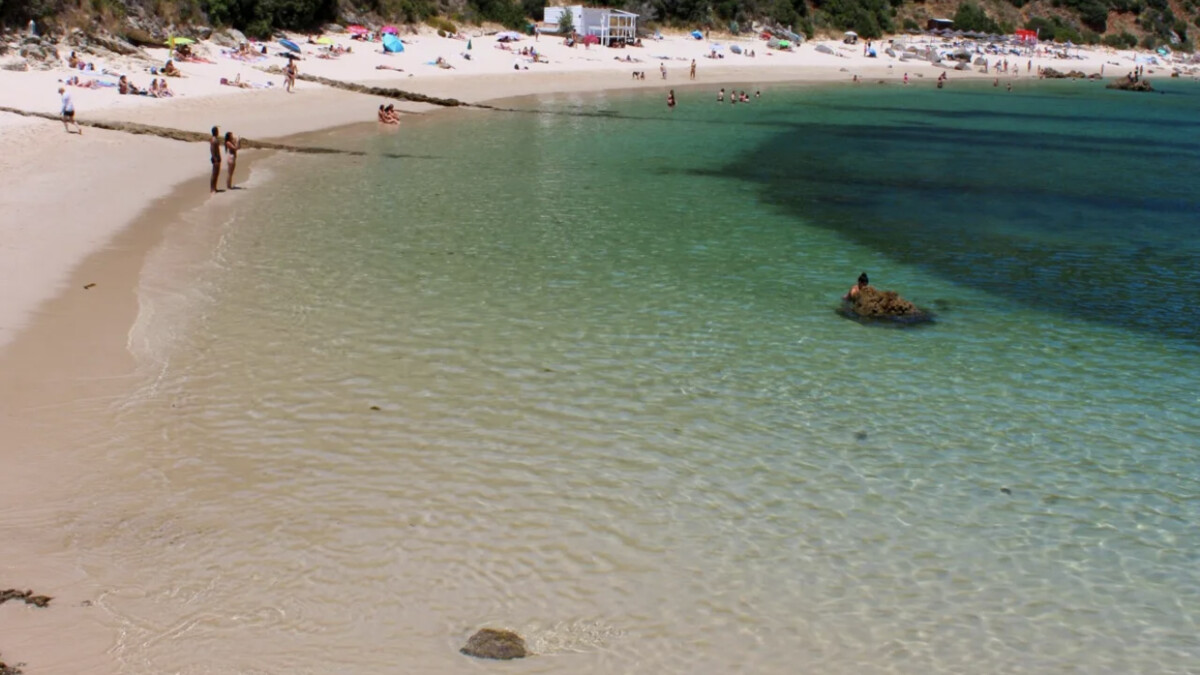
The 2026 access rules are the thing most evergreen lists get wrong. Through the bathing season, June to September, the ER379-1 road between Creiro and Portinho is closed to private vehicles from 07:00 to 19:30, and when the car parks fill the access shuts entirely. So you either park early at Creiro (around 5 euros a day, full before 10:00 on summer weekends) and walk about 30 minutes to Galapinhos, or use Setubal's free seasonal bus from the Secil factory car park on the EN10. Reach that car park before 09:00 on a weekend or you may not get on. To get to Setubal from Lisbon, the train takes about 49-50 minutes for roughly 5 euros, every half hour.
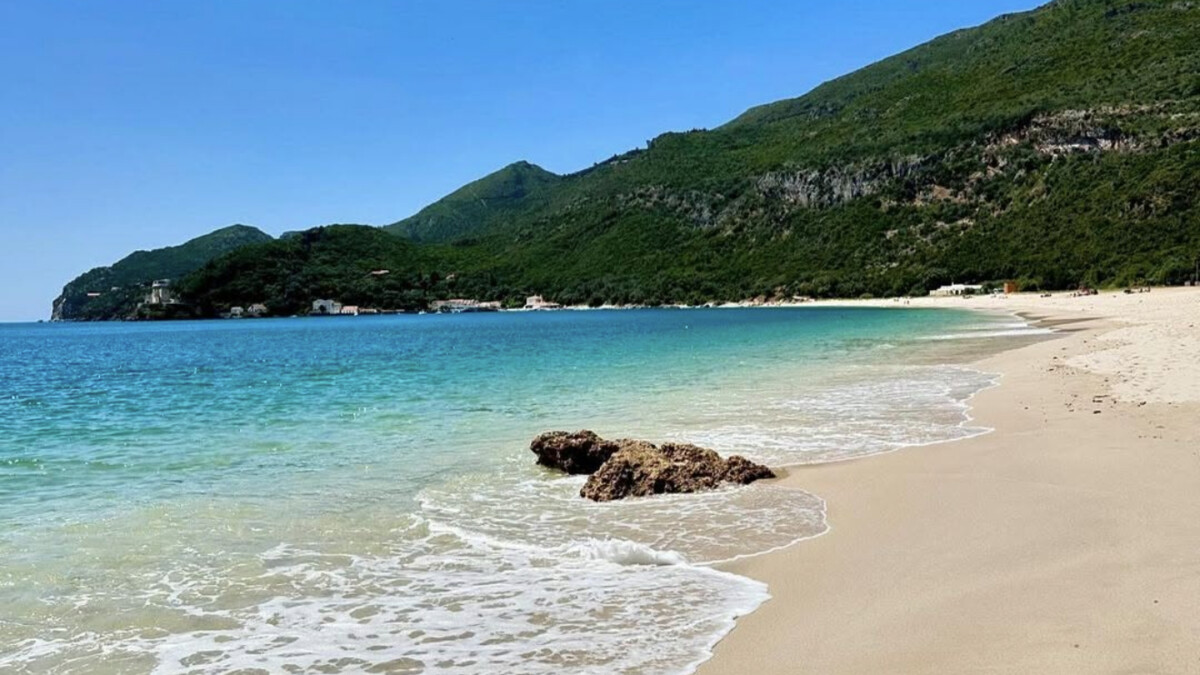
Portinho da Arrabida is the cove most people picture: sheltered, near-transparent, comparatively warm, tucked under the green cliffs. The same summer car ban applies, so it's about a 45-minute walk in from the EN10 or the free bus. Of every beach on this list, Portinho has the calmest water, which makes it the best swim near Lisbon for nervous swimmers and small children, if you can manage the logistics.
Is the water cold, and can you actually swim? Atlantic temperatures and safety
Short version: yes, you can swim, but the Atlantic is fresh. At Lisbon's beaches the sea averages about 19C in July and sits around 19-20C in August, occasionally nudging above. It's cool but fine for a summer dip, and cold for much of the rest of the year. The Arrabida coves run warmer, roughly 20-23C in July and August, with 10-15m visibility on a calm day, which is why they feel like a different sea.
The bigger issue on the open beaches is movement, not temperature. Carcavelos, Caparica and especially Guincho have real currents, so swim between the flags and only when lifeguards are on duty, typically through the summer bathing season. The sheltered spots, Conceicao, Tamariz, Santo Amaro and the Arrabida coves, are the safe bets for families. If you want consistently warmer, calmer water, the Algarve's beaches are the gentler southern alternative, and a beach like Praia da Marinha shows just how different the south coast looks from Lisbon's wild Sintra cliffs.
Getting to the beaches near Lisbon by train, bus and ferry
Most of these beaches near Lisbon are a single ride from the centre, so here's the cheat sheet. The Cascais line from Cais do Sodre covers Santo Amaro de Oeiras (about 20 minutes), Carcavelos (about 19-20 minutes), Estoril for Tamariz, and Cascais for Conceicao, all at the train terminus. Trains run roughly every 20 minutes, first at 05:30 and last around 01:30, with a single ticket about 1.95 euros plus the 0.50 euro Navegante card. Guincho is a 20-minute bus (405 or 415) onward from Cascais.
Costa da Caparica is the ferry-or-bus option: bus 3710 direct from Areeiro, or the Cais do Sodre ferry to Cacilhas then bus 3022/3011. Arrabida and Galapinhos mean a train to Setubal (about 50 minutes) and then the free seasonal bus or an early car park, never a midday drive in summer. The Sintra-coast beaches, Adraga and Ursa, are the ones that really want a car or a tour.
If you can travel further for your water, it's worth seeing where the country sits among the best beach holidays in Europe, and how the warmer, calmer beaches of the Algarve compare with Lisbon's bracing Atlantic coast. But for a day trip from the city, pick by access first: closest, calmest, wildest or warmest. The right beach near Lisbon is mostly a question of which train, bus or ferry you're willing to take.