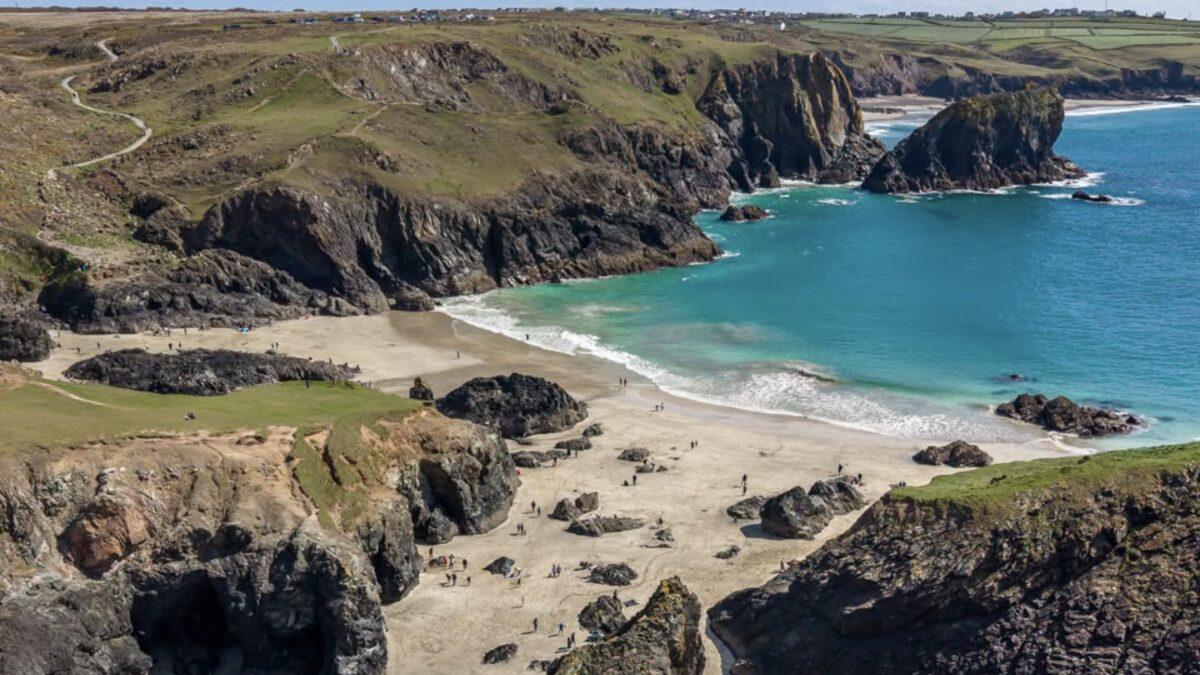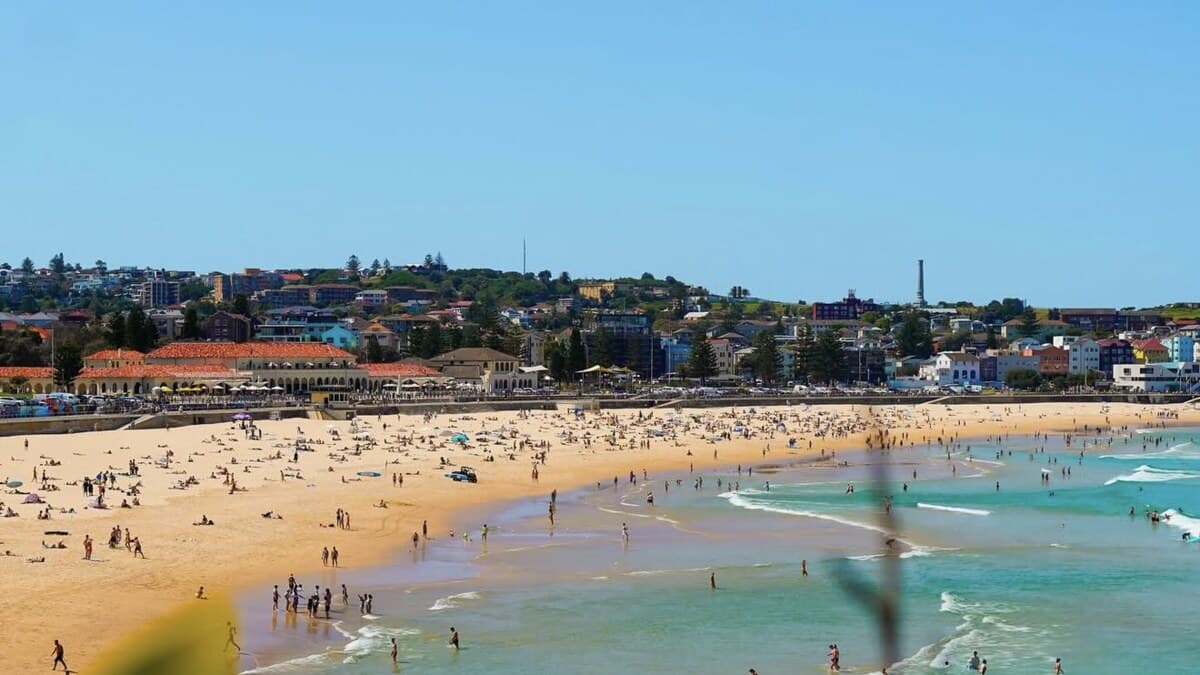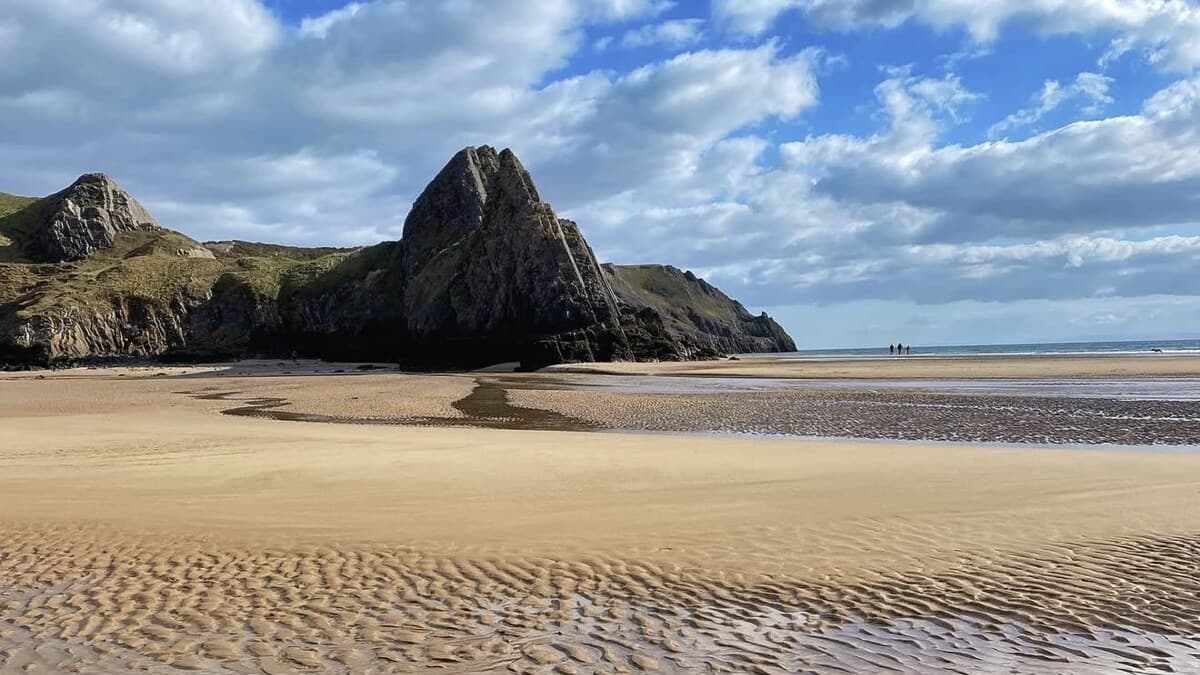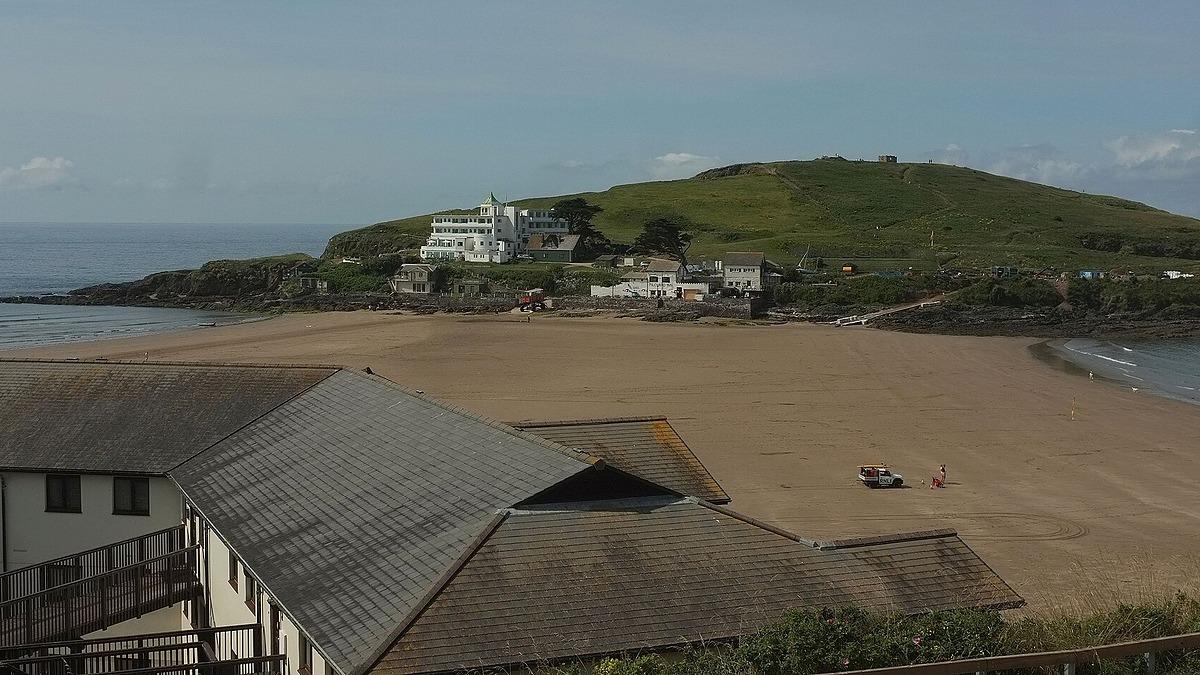
Devon has two coasts that face different seas. The north coast takes the full Atlantic swell on long, dune-backed beaches, while the south coast is a run of estuary mouths and sheltered sand. The best beaches in Devon follow that split: Saunton Sands for space, Croyde for surf, Bigbury-on-Sea for the low-tide walk to Burgh Island, Bantham for south-coast waves, and North Sands in Salcombe for a calm family day.
Saunton is the one to choose if you can only go to one. It has more than three miles of sand, gentle waves for learner surfers, and it lets dogs on all year, which few North Devon beaches do. Croyde, round the next headland, has better surf and more people.
What decides a Devon beach day is rarely the sand. It is whether your dog is allowed on it in July, whether there is a lifeguard, where you park and what the tide is doing. Below are all four for each beach, north coast first, then the south coast from west to east. Dog rules and lifeguard dates were checked in November 2026.
Devon's best beaches compared
| Beach | Coast | Best for | Dogs in summer | Lifeguards in 2026 |
|---|---|---|---|---|
| Saunton Sands | North | Space, learner surfers, dogs | Allowed all year | No RNLI patrol |
| Croyde | North | Surf | Banned 1 May to 30 September | RNLI daily from 2 May through summer |
| Bigbury-on-Sea | South | Burgh Island, families | Part of the beach closed, May to September | RNLI in summer, to early or late September by section |
| Bantham | South | South-coast surf, dunes | Restricted to certain areas | RNLI daily in summer, to the end of September |
| North Sands, Salcombe | South | Sheltered sand, small children | Welcome all year, says Visit South Devon | No RNLI patrol |
From October the summer dog bans are lifted, RNLI cover shrinks to a few weekends and the half-term week before it ends, and Saunton's car park charges only until 5pm from 16 October to 15 March. Everything below is written for summer 2027, with notes on what changes for a winter walk.
The 5 best beaches in Devon, north coast first
1. Saunton Sands: more than three miles of sand, and dogs all year
Saunton Sands runs straight and flat from the village of Saunton south towards the Taw and Torridge estuary, three and a half miles by the North Devon Coast National Landscape's measure. Behind it lie the dunes of Braunton Burrows, the core of North Devon's UNESCO Biosphere Reserve, so the view inland is grass-topped sand hills rather than houses. Our Saunton Sands review has the full parking tariff, tide notes and dog rules.
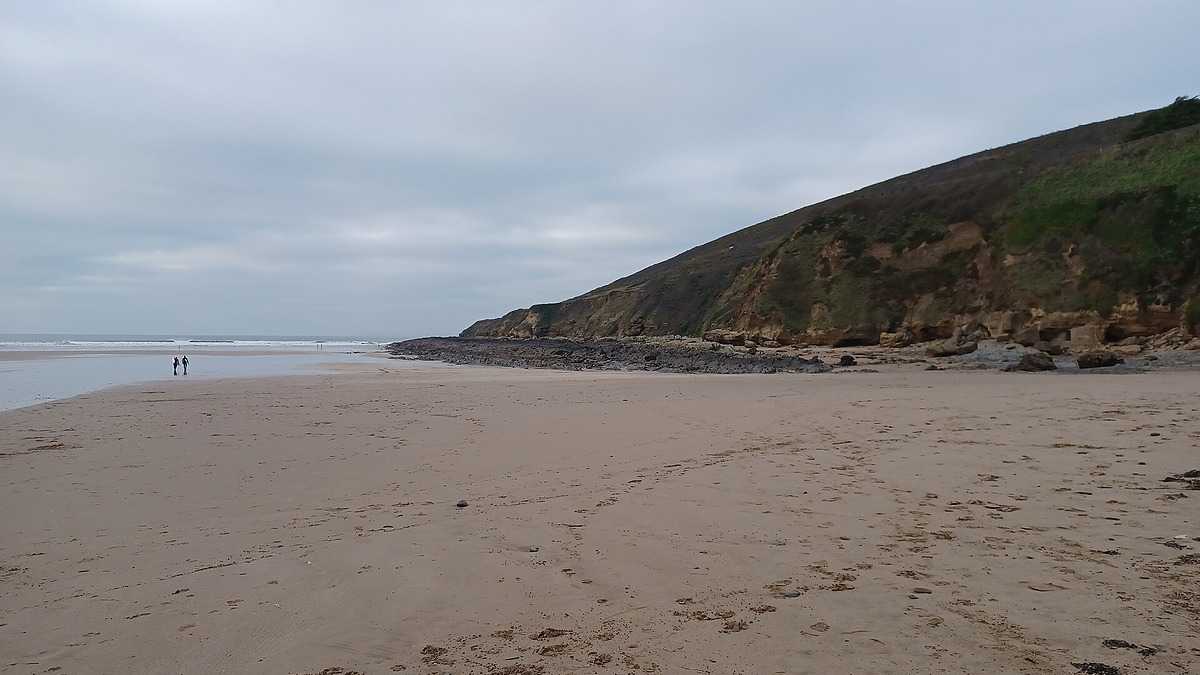
It suits beginners and longboarders: Visit Devon describes long, slow-breaking waves, good for practising balance. Rip currents are the hazard, notably at the north end where the Downend headland meets the tidal flow, Coastwise North Devon's beach profile warns. That matters, because Saunton was not on the RNLI's 2026 lists of lifeguarded Devon beaches.
Dogs are welcome all year, which the beach's operator says few North Devon beaches can claim. Its main car park is pay-on-exit with no ticket, and Saunton Beach's car park page lists the first 20 minutes free, then £1.75 for an hour, £6 for three hours and £8.50 for four, plus £1 for each extra hour. Charges run from 8am to 9pm between May and August, 8am to 7pm from 16 March to 30 April and 1 September to 15 October, and 8am to 5pm from 16 October to 15 March. Arrive and leave outside charging hours and it is free. Stagecoach's 21C bus from Barnstaple and Braunton stops at Saunton Sands on its way to Croyde.
Length is the point. Crowds gather near the car park, and the further you walk along the sand, the more room there is for dogs, kites and learner surfers. That space is what Croyde, round the next headland, does not have.
2. Croyde: the surf beach, and its summer crowds
Croyde is a short bay between Baggy Point and Downend, and it is where Devon surfs. Visit Devon calls its waves fast and world class, a step up from Saunton's gentler break. It is also on Keep Britain Tidy's 2026 Blue Flag list.
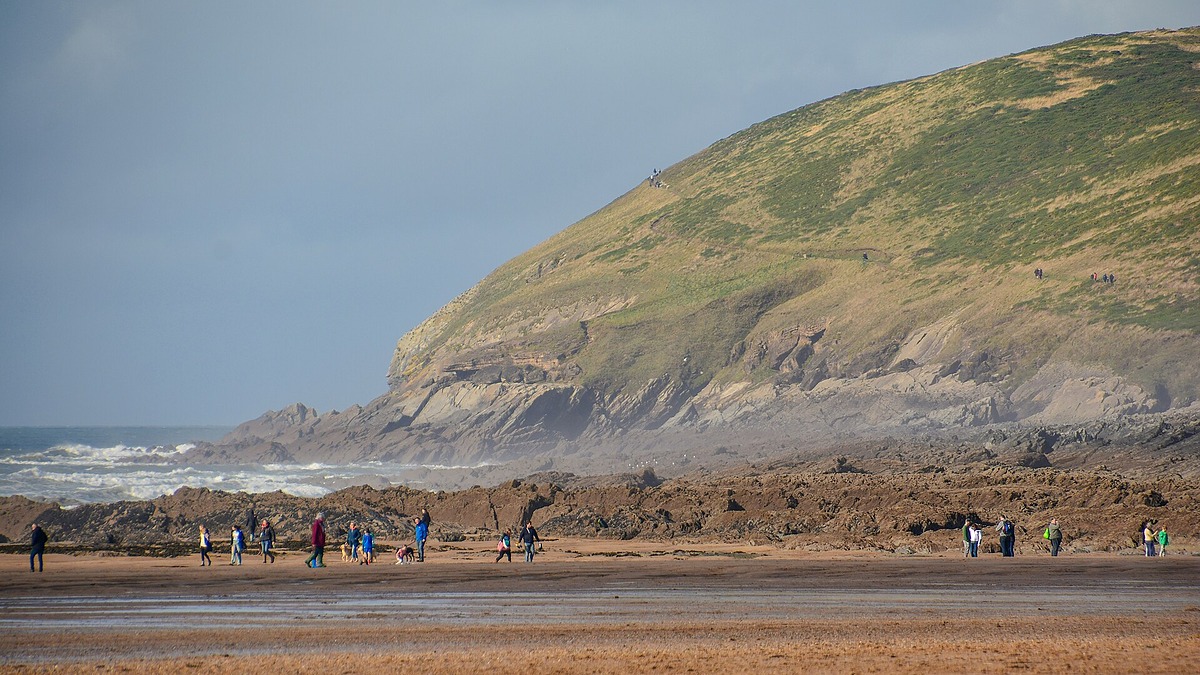
Unlike Saunton, Croyde has lifeguards, which makes it the safer north-coast surf beach for a mixed group. In 2026 the RNLI patrolled Croyde daily from 2 May through the summer, and in 2025 it also covered October weekends and the October half-term. Dates for 2027 go up on the RNLI's Croyde page in spring.
Dogs are a different story. North Devon Council's dog control order excludes them from Croyde Beach from 1 May to 30 September, and a breach can bring a fixed penalty notice. Outside those months the beach is open to them.
Parking is the pinch point. North Devon Council's off-street parking order sets charges at its Croyde car park from 8am to 6pm every day, with lower winter rates from 1 November to 14 March. Check the current tariff on the pay machine, or take the 21C bus and avoid the lanes in August. If Croyde is full, the space is back at Saunton.
3. Bigbury-on-Sea: the beach with a tidal island
On the south coast, the beach at Bigbury-on-Sea is defined by what lies just offshore. Burgh Island, home to a hotel and the Pilchard Inn, is joined to the mainland by a sand causeway that the tide covers and uncovers twice a day. A walk around the 26-acre island takes no more than 20 minutes, according to the Burgh Island Hotel.
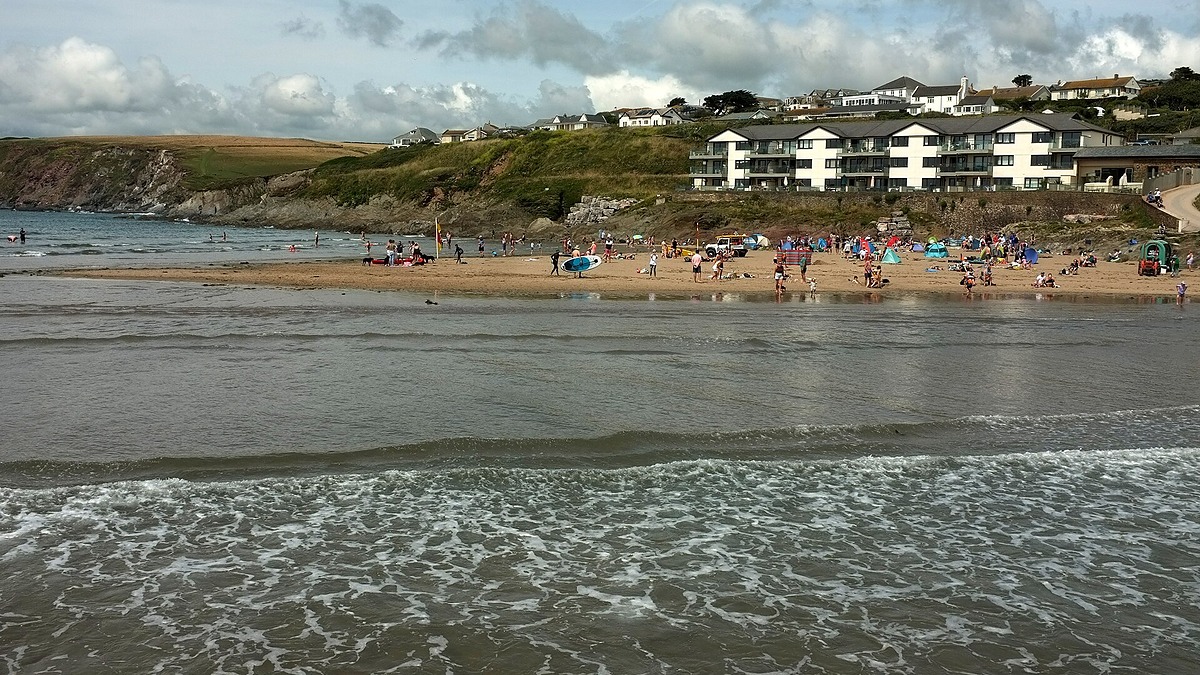
At low tide you walk across. When the water is up, the hotel's sea tractor, a passenger platform on tall legs designed in 1969, wades over for £2 each way. Members of the public can ride, though the hotel warns that the tractor cannot always run in bad weather. The Pilchard Inn takes non-residents, and the hotel's restaurants do too if you book.
Sand either side of the causeway makes this a good family beach, and the RNLI covered it in summer 2026: the Burgh Island Causeway stretch until early September and Sedgewell Cove daily from 10am to 6pm until the end of September.
Dog owners need to know where the line is. South Hams District Council closes part of Bigbury Beach to dogs from 1 May to 30 September, and its dogs on beaches page has maps of the restricted sections. In high season, the hotel adds, dogs may use only the side of the beach towards Challaborough. Checked November 2026.
The South West Coast Path's Burgh Island walk notes start from the Marine Drive car park on the seafront, with one sensible rule: make sure you can get back before you cross on foot. Across the mouth of the River Avon is Bantham.
4. Bantham: south Devon's surf beach at the mouth of the Avon
Bantham faces Burgh Island across Bigbury Bay, a wide beach of pale sand with dunes behind and the River Avon running out to sea beside it. Visit Devon calls it South Devon's most popular surfing beach.
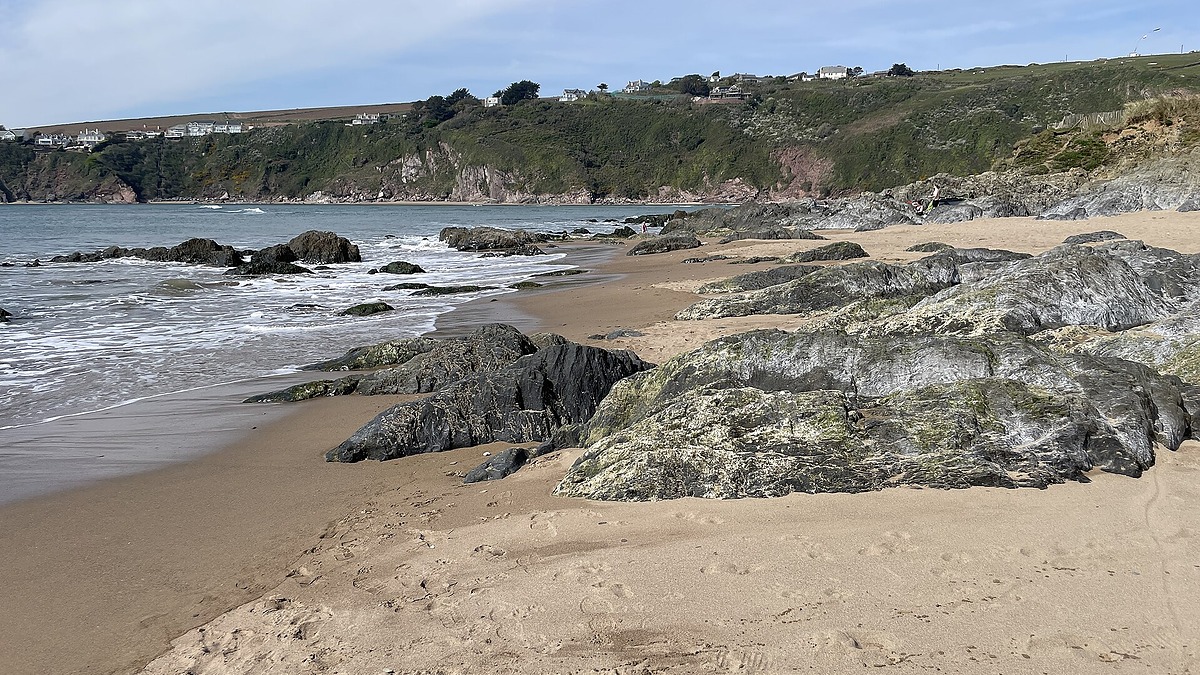
Rip currents are the hazard. On one Sunday in October 2024, Kingsbridge Today reported, RNLI lifeguards at Bantham were called out 27 times as a big swell and strong rips caught surfers and kayakers. In 2026 the RNLI patrolled daily from 10am to 6pm until the end of September. Swim between the red and yellow flags, and outside the season stay out of the water when the surf is big.
A substantial car park lies behind the dunes. Thurlestone Parish Council says dogs are restricted to certain areas of the beach in summer and points visitors to the Bantham Estate for dog and parking details. Check the signs at the car park entrance before you let a dog off the lead.
Bantham suits a long day by car, with a surf lesson, a walk into the dunes and the view across to Burgh Island. For calmer water and a café by the sand, the next pick is further east, in Salcombe.
5. North Sands, Salcombe: sheltered sand below a ruined castle
North Sands is a small, sheltered cove just inside the mouth of the Kingsbridge estuary, below the town of Salcombe. On the foreshore just before the beach stand the ruins of Fort Charles, a fort built in Henry VIII's reign after a French invasion scare. Explore Devon, the county council's visitor site, says you can reach it only at low tide, over rocks. Its water is the calmest of the five, which suits small children and swimmers who do not want surf.
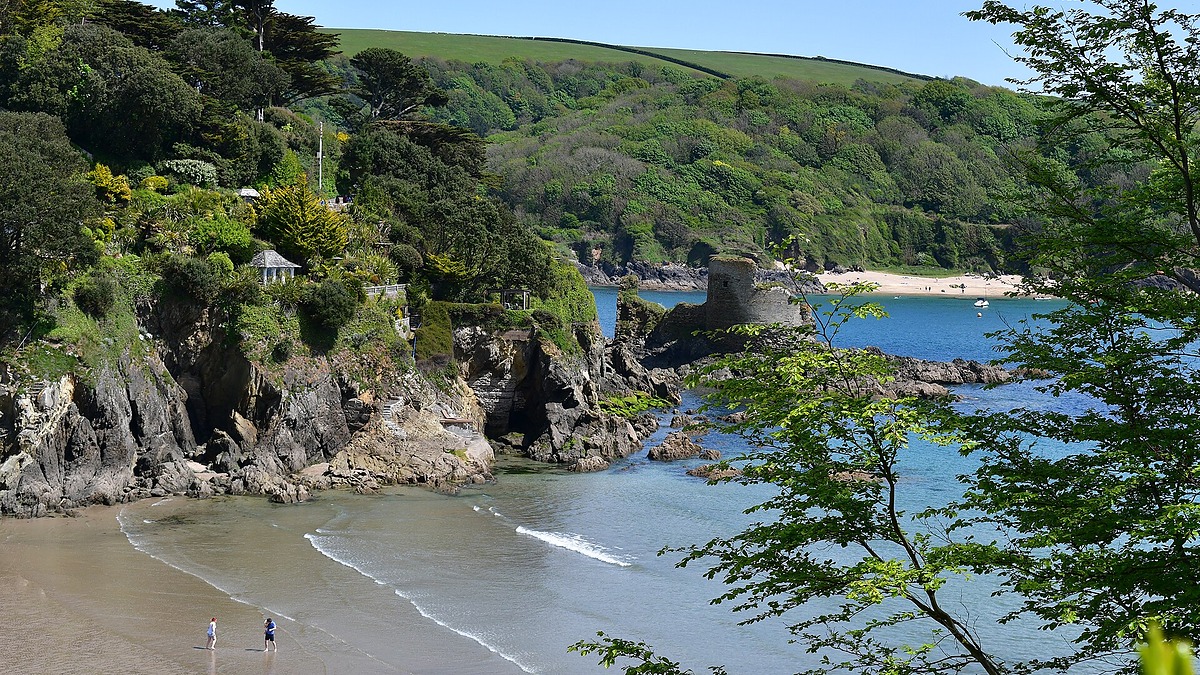
Visit South Devon calls it a 15-minute level walk from the centre of Salcombe along Cliff Road, with the Winking Prawn café and restaurant beside the beach and a council car park next door. In 2026 the Salcombe park and ride, run by Tally Ho!, was scheduled from 23 May to 30 October, which keeps you out of the town's narrow streets altogether.
North Sands was not on the RNLI's 2026 patrol lists for the South Hams, so the shelter is the only safety margin. Dogs are allowed: Visit South Devon says they are welcome at North Sands throughout the year, unlike at many beaches in the area. How much sand there is depends on the tide, so plan the day around low water.
Which Devon beaches allow dogs in summer?
Devon has no single dog rule. Each district council sets its own order, and some beaches, such as Bantham and Woolacombe, publish their own zones. This table covers the five picks and Woolacombe, the big north-coast beach most dog owners ask about. Checked November 2026.
| Beach | Source | Summer rule | Rest of the year |
|---|---|---|---|
| Saunton Sands | Beach operator | Dogs welcome | Dogs welcome |
| Croyde | North Devon Council | Banned 1 May to 30 September | Allowed |
| Woolacombe | Woolacombe Tourism | Zoned by beach section, 1 April (or Good Friday) to 30 September | Allowed on the whole beach |
| Bigbury-on-Sea | South Hams District Council | Part of the beach closed, 1 May to 30 September | Allowed |
| Bantham | Bantham Estate | Restricted to certain areas | Check the estate's signs |
| North Sands, Salcombe | Visit South Devon | Dogs welcome | Dogs welcome |
At Woolacombe the zones apply from 9am to 6pm: the north end is dog-free, the middle is on leads and the stretch beyond Mill Rock is off-lead. Rules may change before next summer. North Devon Council consulted on renewing its dog order, which covers Croyde, in a survey that closed on 30 September 2026. Check the council's dog controls page before a 2027 trip, and the South Hams maps for Bigbury.
If your dog decides the holiday, the north coast is the better bet: Saunton all day, and the south end of Woolacombe. That points to the bigger question of which coast to base yourself on.
North Devon or South Devon: which coast suits you?
Choose the north coast for surf and size. Saunton, Croyde and Woolacombe sit within a few miles of each other between Braunton and Woolacombe, so one base covers all three, and Barnstaple, at the end of the railway from Exeter, is the bus hub. Out front is open Atlantic, the beaches are long, and Croyde and Woolacombe both had daily RNLI patrols from 2 May in 2026.
Choose the south coast for calmer water and estuaries. Bigbury, Bantham and Salcombe are spread around the mouths of the Avon and the Kingsbridge estuary in the South Hams, so treat each as its own day out. In return you get sheltered swimming at North Sands, the Burgh Island crossing, and sailing towns rather than surf villages.
Devon against Cornwall is mostly a question of distance and dogs. Cornwall keeps RNLI lifeguards on more beaches into October, but many of its Blue Flag beaches ban dogs between 10am and 6pm from 15 May to 30 September, according to Cornwall Council, as our guide to the best beaches in Cornwall sets out. Devon is a shorter drive from London and the Midlands than most of Cornwall, and Saunton takes dogs all summer. For the rest of the country, see our guide to the best beaches in the UK.
Devon's beaches in winter, and planning for summer 2027
Out of season, Devon's beaches belong to walkers, surfers in thick wetsuits and dogs. Summer bans have lifted, Saunton's car park stops charging at 5pm, and Croyde and Bantham are at their emptiest. What has gone is the safety net: RNLI lifeguards do not patrol in winter. In recent seasons the last South West patrols ended with the October half-term (on 2 November in 2025), and cover returned in spring.
Cold water is the reason to be careful. The Met Office and the RNLI warn that water below 15°C can trigger cold water shock, an involuntary gasp that can make you breathe in water, and that UK seas can stay cold enough to cause it even on hot days. If you fall in, float to live: tilt your head back with your ears under, relax and get your breathing under control, then call for help or swim to safety.
For summer 2027, check the North Devon dog order and the RNLI's beach pages in spring, since both set the dates that shape a visit. In the school holidays, the 21C bus saves queueing for Croyde's council car park. Our guide to the best UK beaches for August covers the peak-season picks across the country.
Other Devon beaches worth knowing
Woolacombe is the one people expect on this list. It has three miles of sand just north of Croyde and had daily RNLI lifeguards from 2 May through the 2026 summer, plus dog zones that keep its southern end open all year. National Trust members park free all year at the Trust's Marine Drive car park. It sits outside the numbered five because Saunton and Croyde, just to the south, already cover space and surf, but if you want a big lifeguarded beach with room for dogs at one end, it is the one to pick.
In East Devon, Exmouth and Sidmouth hold 2026 Blue Flags, according to East Devon District Council. Budleigh Salterton has a Seaside Award instead, because its bathing water was rated Good rather than Excellent. On the south coast near Dartmouth, Blackpool Sands is a sheltered shingle cove with a 2026 Blue Flag. It is a stop on the 93T bus between Dartmouth and Slapton, a summer service launched in June 2026 that its operator has since kept running Monday to Saturday until further notice. Checked November 2026.