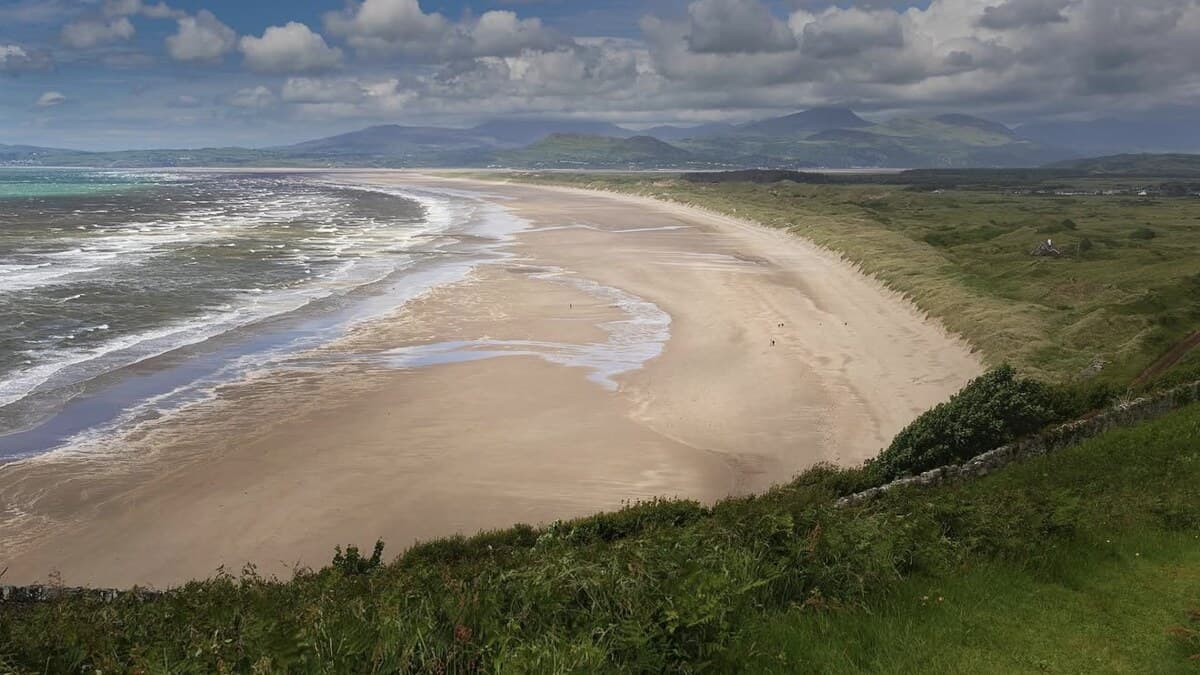
Some beaches have a backdrop. Harlech has a skyline. Behind four miles of golden sand and one of the largest dune systems in Wales, the medieval bulk of Harlech Castle sits on its crag, and behind that the mountains of Eryri, better known as Snowdonia, rise into the distance. It is one of the most cinematic stretches of coast in Britain, and because it takes a little effort to reach, it is often close to empty.
Set your expectations on the kind of beach it is, though. Harlech is a wild, big-sky, big-tide beach for walking, space and views, not a manicured resort strip. There are no lifeguards, the tide goes out a very long way, and the facilities run to a car park, toilets and a café. Come for the scale and the scenery, not the sun loungers.
The beach and the dunes
Harlech Beach runs for about four miles of flat golden sand, backed by the dunes of Morfa Harlech, the largest actively growing dune system in Wales and a protected National Nature Reserve and SSSI. The sand here is still building, washed down from the Snowdonia rivers and pushed along the coast by longshore drift, which is why the dunes feel so wild and alive compared with the fixed, grassed-over dunes elsewhere.
The scale is the whole appeal. At low tide the sea pulls back to leave a huge expanse of firm sand, big enough that even on a summer weekend you can walk a few minutes from the access path and have it largely to yourself. It is a beach for long walks, kite-flying, horse riding along the firm sand and just breathing in a lot of sky. The dunes themselves are fragile and protected, home to rare plants and wildlife, so stick to the marked paths through them rather than cutting your own. Natural Resources Wales manages the reserve and asks visitors to keep to the routes.
Harlech Castle and the view
The castle is what turns a fine beach into an unforgettable one. Harlech Castle, built by Edward I in the 1280s and now part of a UNESCO World Heritage Site, stands on a rocky crag above the dunes and is the beach's defining landmark. When it was built the sea reached the base of the rock and supplied the castle by a fortified stairway down the cliff. The coastline has retreated since, leaving the castle looking out over the very sand and dunes it once guarded from the water's edge.
It is also the home of "Men of Harlech," the march tied to the castle's long sieges. The beach and the castle are a short distance apart, so it is easy to pair a long walk on the sand with a visit to the battlements, where the view back over the beach to the Llyn Peninsula is worth the climb on its own.
Swimming and safety
On a calm day the water is fine for a swim, and the gentle, shallow gradient over firm sand makes the shallows easy to wade into. But go in clear-eyed. There are no lifeguards here, the tide goes out a long way and returns quickly across flat sand, and jellyfish turn up along this coast at times. The water is also properly cold for much of the year, this being North Wales rather than the Mediterranean.
Keep a close eye on children given the lack of patrols, do not get caught out by the returning tide on the outer sandbanks, and treat Harlech as a swim-with-care beach rather than a supervised one. For most visitors it is a paddling, walking and scenery beach first, and a swimming beach second.
How to get there and parking
Harlech is on the scenic Cambrian Coast railway, and arriving by train is part of the appeal, with the line hugging the coast and the station about a 15-minute walk from the sand. By car, the beach sits off the A496 between Barmouth and Maentwrog. The easiest parking is the beachfront pay car park reached via Ffordd Glan Mor, past the Min-y-Don holiday park, which saves you navigating Harlech's notoriously steep and narrow town streets up by the castle. From the car park, a 400-metre path crosses the dunes to the beach.
Facilities, dogs and the best time to visit
Facilities are basic but enough for a day out. There are public toilets, which can be locked in winter, plus a shop and a café near the beach, and the internationally known Royal St David's Golf Club sits behind the dunes. Otherwise, bring what you need rather than relying on finding it here.
Dogs are welcome year-round across most of the beach, with one exception: a small section in front of the holiday park bans dogs from 1 April to 30 September. For the beach at its best, come on a clear day from late spring to early autumn, ideally around low tide for the full sweep of sand, and stay for sunset when the light catches the castle and the mountains.
Beyond Harlech: the Ardudwy coast
Harlech anchors a whole run of big dune-backed beaches along the Ardudwy coast, so it is easy to build a few days around it. Just to the south, the tiny church-in-the-dunes at Llandanwg and the vast sands of Morfa Dyffryn, one of Wales's best-known naturist beaches, continue the same wild, sandy character. Combined with the castle, the mountain walks of Eryri inland and the railway linking it all up, Harlech makes a strong base rather than a single stop.
Is Harlech Beach worth it?
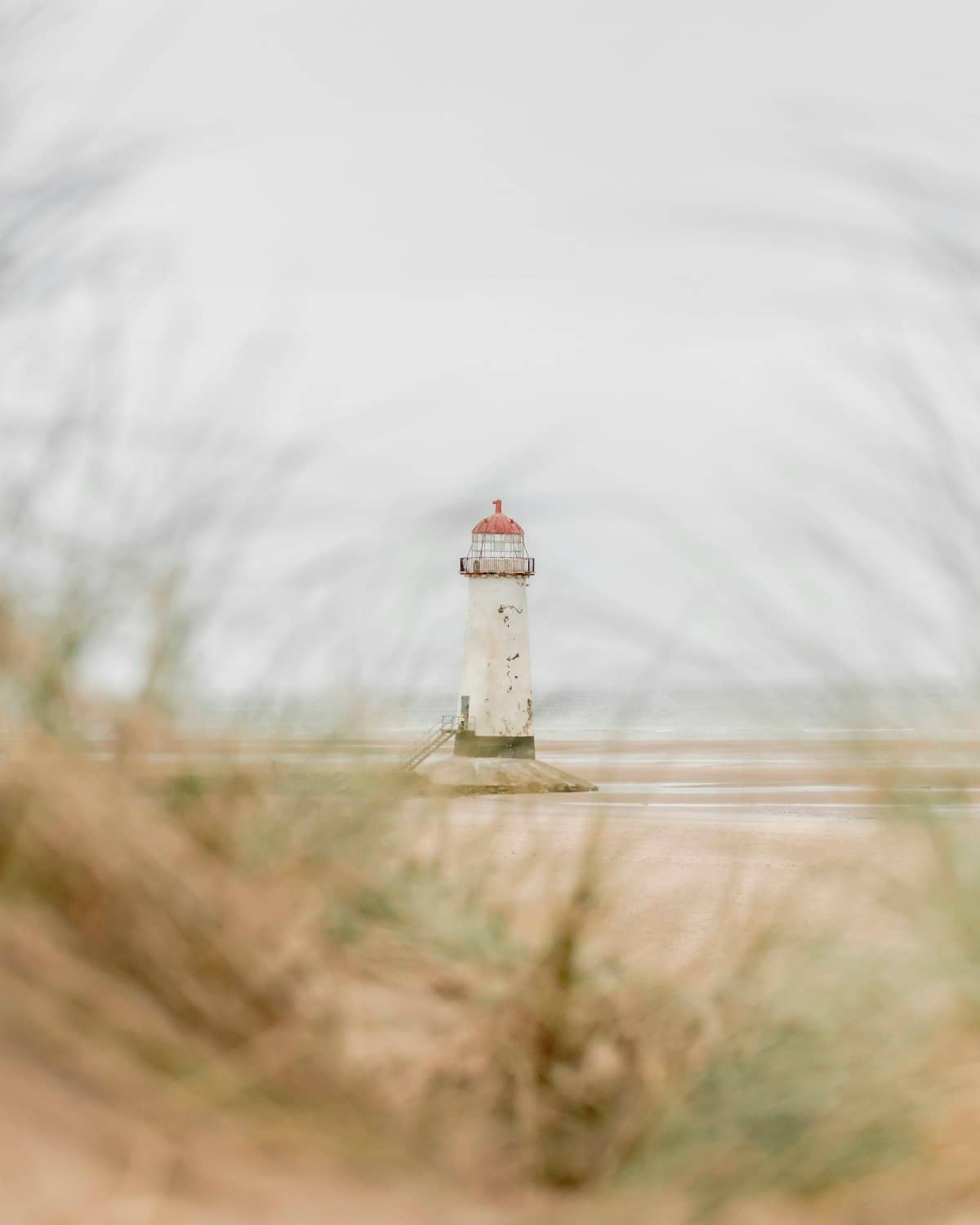
If you want a wild, scenic, genuinely big beach and you are not chasing facilities, absolutely. Harlech is one of the finest beach-and-backdrop combinations in Britain, and its size means it almost never feels crowded. Come for a long walk, the castle and the Snowdonia views, bring a windproof layer and your own supplies, and swim with care. For more of the same coast, Talacre further north pairs a lighthouse with its dunes, and Harlech earns its place among the best beaches in Wales for anyone planning a wider Welsh trip.