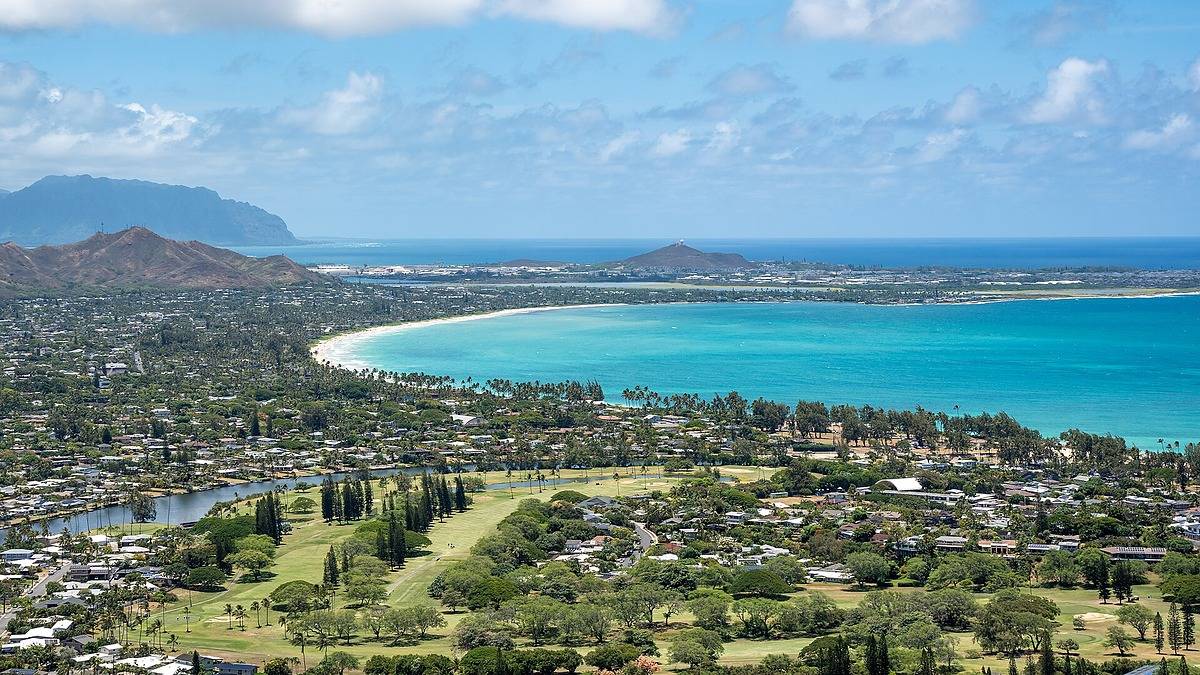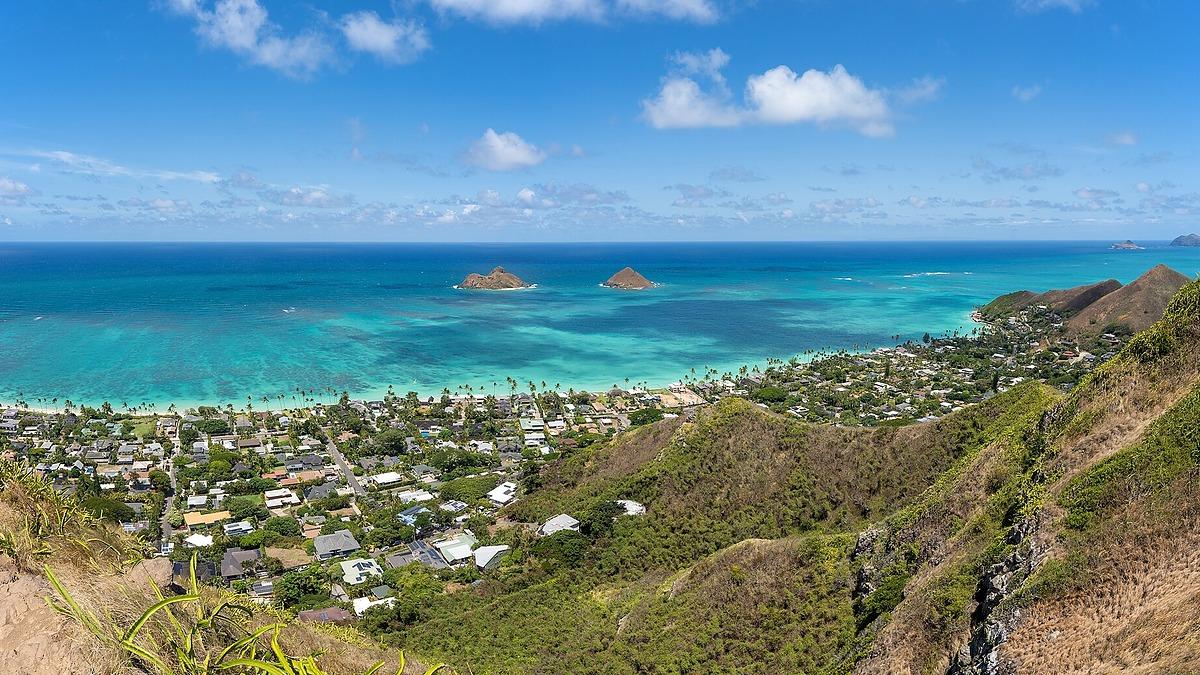
Lanikai Beach is a half-mile strip of pale sand on Oahu's windward coast, just past Kailua Beach Park, facing the twin Mokulua islands. Coastal scientist Stephen Leatherman (Dr. Beach) ranked it ninth on his 2026 list of America's best beaches. It lies inside a residential loop with no public car park, toilets or lifeguards, so where you leave the car decides the visit.
Half a mile of sand between seawalls
The beach runs along Mokulua Drive, backed by houses. Either side of it, the sand has gone: most of the Lanikai coast has no beach at high tide, and waves break straight onto seawalls, according to the University of Hawaii's coastal geology group. What remains is the central half mile.
Dr. Beach picks a large bulge of sand near Mokumanu Drive as the best spot. A shallow reef and the two islets shelter the water from open-ocean waves, and he describes it as clear, shallow and usually calm.
How to get to Lanikai Beach
Plan to park outside Lanikai. There are no public lots for the beach, and the one-way loop of ʻAʻalapapa and Mokulua drives has no on-street parking, says the city's Department of Transportation Services (DTS). Its 2025 plan counted more than 171 cars parked illegally on the verges on peak days.
The practical route is to park at Kailua Beach Park, off Kawailoa Road, and walk. Dr. Beach puts the walk at under half a mile (800m) on flat, paved roads, continuing along ʻAlalā Road onto Mokulua Drive. Those lots fill at weekends too; our Kailua Beach review covers them and the park's hours.
You can also leave the car at the city's municipal lot or garage in Kailua town and ride TheBus 671, which loops through Lanikai on ʻAʻalapapa and Mokulua drives.
Lanikai Beach parking rules
- Every day: parking on the unpaved verges, which city law treats as sidewalks, is not allowed. Some residents have lined them with large rocks and traffic cones, Hawaii Magazine reported in 2022.
- Holiday weekends: DTS bans parking on all streets and shoulders of Mokulua and ʻAʻalapapa drives from 10am to 3pm, and restricts the cross streets between them, as its New Year 2026 notice set out. Its Memorial Day 2026 schedule restricted Lanikai parking over that three-day weekend too. Police can ticket and tow once the barriers are up.
- Coming: No Parking Any Time signs on Mokulua Drive first, then ʻAʻalapapa Drive, plus five loading zones at beach paths. DTS presented this in June 2026 with no construction schedule and had announced none by November 2026, so treat the permanent ban as not yet in force. Parking on the verges is already illegal, but the city's plan says police struggle to ticket and tow there unless signs are posted, as they are on holiday weekends. The permanent signs would mark the no-parking areas the same way.
The DTS Lanikai plan page carries the latest documents. Checked November 2026.
Lanikai Beach from Waikiki by car or bus
By car, take the Pali Highway over the Koʻolau range to Kailua, follow Kailua Road to the Kalapawai roundabout, then Kalāheo Avenue, Lihiwai Road and Kawailoa Road past Kailua Beach Park. That last stretch is the only road in and out of Lanikai.
By bus from Waikiki Beach it takes three rides: the 8 or 42 from Waikiki to Ala Moana Center, the 67 over the Pali Highway to Kailua Road at Oneawa Street, then the 671. On the 671 timetable in force from 31 May 2026, buses leave Kailua about every 35 to 40 minutes on weekdays and every 40 to 45 at weekends. The first leaves Kailua just after 6am (about 6.40am at weekends) and the last at about 6.40pm, finishing its loop around 7.15pm. Checked November 2026.
TheBus adult fares from 1 July 2026:
- HOLO card 2-Hour Pass: $3, unlimited rides for two hours. The card costs $2.
- 24-Hour Pass: $7.50 from first tap, the simpler choice for a three-bus day trip.
- Cash: $3.25 a ride, exact fare, no transfers.
Beach access paths and what's on the sand
Beach access paths run down to the sand from Mokulua Drive opposite Kaʻelepulu, Mokumanu, Kaiolena, Haokea and Kuaʻilima drives, where DTS plans its Phase 1 loading zones for beachgoers. Lanikai has both public and private shoreline paths, the city says, so use the public rights-of-way between houses and stay off private lanes.
There are no restrooms, showers or lifeguards, and nothing is sold on the sand. The nearest toilets and showers are at the Kailua Beach Park comfort station, so bring water, shade and a bag for your rubbish.
Swimming at Lanikai: calm, shallow and unguarded
Lanikai is not on the state Ocean Safety list of lifeguarded beaches, though Kailua Beach next door is. The reef faces trade-wind waves all year and northerly swell in winter, University of Hawaii geologists note, so choose a calm morning and stay near shore. Checked November 2026.
After heavy rain, stay out of water that looks brown or murky, even with no advisory posted, and avoid storm-drain outlets: that is the Department of Health Clean Water Branch's advice, and it matters most in the October to April wet season.
Endangered Hawaiian monk seals rest on Oahu's beaches. DLNR says a seal born on Mokulua Nui in 2018 had her first pup there in 2024, and the state suspended commercial landings and closed the islet's shoreline until 7 October 2024, after the pup weaned. NOAA's viewing guidelines ask people to stay at least 15m (50ft) from a resting seal and 45m (150ft) from a mother with a pup, and to report a sick or injured seal on (888) 256-9840.
Kayaking to the Mokulua islands
Mokulua Nui and Mokulua Iki are state seabird sanctuaries, nesting grounds for wedge-tailed shearwaters. The Department of Land and Natural Resources restricts access to areas below the high-water mark, closes both islets from sunset to sunrise and bans dogs, fires and camping. Commercial activity may be allowed with a DLNR permit on Mokulua Nui only. Checked November 2026.
With nowhere in Lanikai to park or unload a kayak, launch from Kailua Beach Park. Beyond the reef it is open ocean, so go on a light-wind morning or with a guide.
The Lanikai Pillbox hike on Kaʻiwa Ridge
The Kaʻiwa Ridge trail climbs to Second World War observation bunkers above Lanikai, looking down over the beach and the islets. The city's plan calls it a half-mile hike that starts with a short, steep climb from Kaʻelepulu Drive near Mid-Pacific Country Club; Honolulu Magazine lists it as about 1.6km (1 mile) there and back.
There is no trailhead parking, and the city has signed Kaʻelepulu Drive as no parking, so walk in from Kailua Beach Park. The state has closed the trail at times for repairs and pest control, so check DLNR notices first.
When to visit Lanikai Beach
Come on a weekday morning. Up to 300 cars jam the loop at peak times, the Kailua Neighborhood Board chair told Civil Beat in July 2025. Kailua's car parks struggle at weekends but have plenty of space on weekday middays, according to the city's plan.
Early starts also catch the sunrise. Hawaii Magazine ranks Lanikai among Oahu's best sunrise spots, with an unobstructed view of the rising sun and the Mokulua offshore.
The National Weather Service counts May to September as Hawaii's dry season, when rain is least likely to cloud the water. From October to April, pick a run of dry days. DTS has banned parking on both the Christmas and New Year weekends in past winters, so check its notices before driving over in late December 2026 or early January 2027.
Is Lanikai Beach worth it?
Yes, if you plan the access. Swimmers, photographers and anyone happy to walk half a mile from a car park get calm, shallow water and one of Oahu's best views, and the Pillbox hike adds the view from above.
Families who want lifeguards and toilets close at hand should base themselves at Kailua Beach Park and visit Lanikai as a short walk. Skip it on holiday weekends, and do not drive into the loop hoping for a space.
The best way to see it: park at Kailua Beach Park early on a weekday, walk in along ʻAlalā Road, swim while the water is calm, then walk back for the showers. Our guide to the best beaches in Oahu covers the rest of the windward coast.