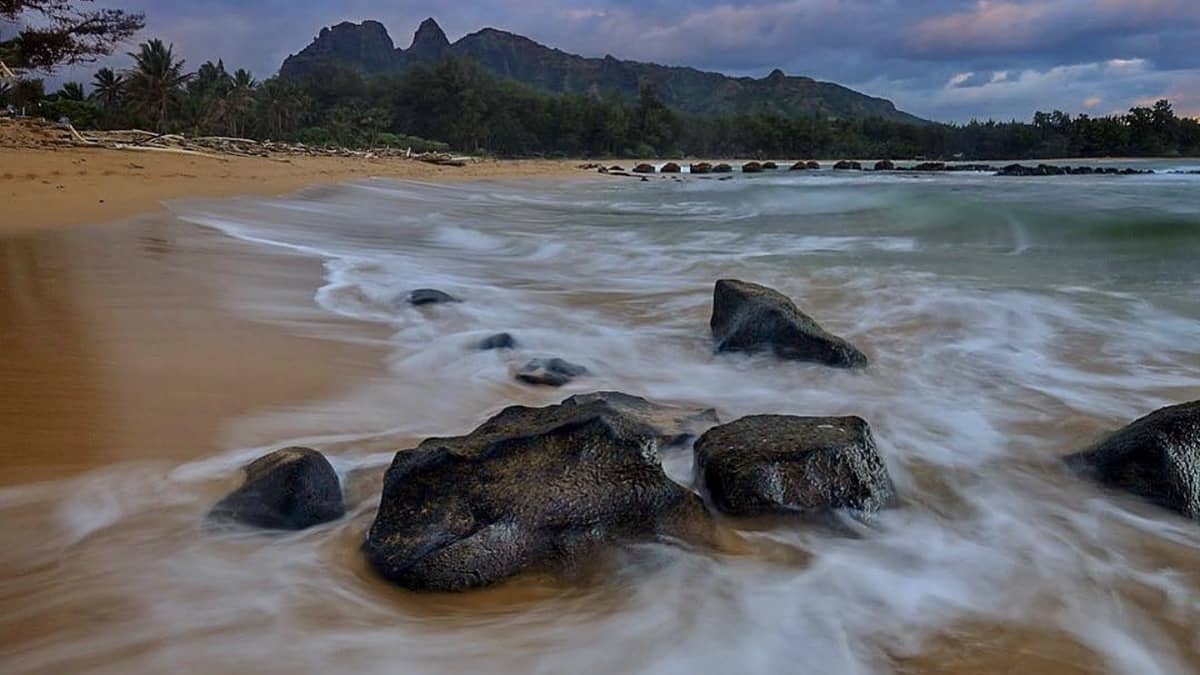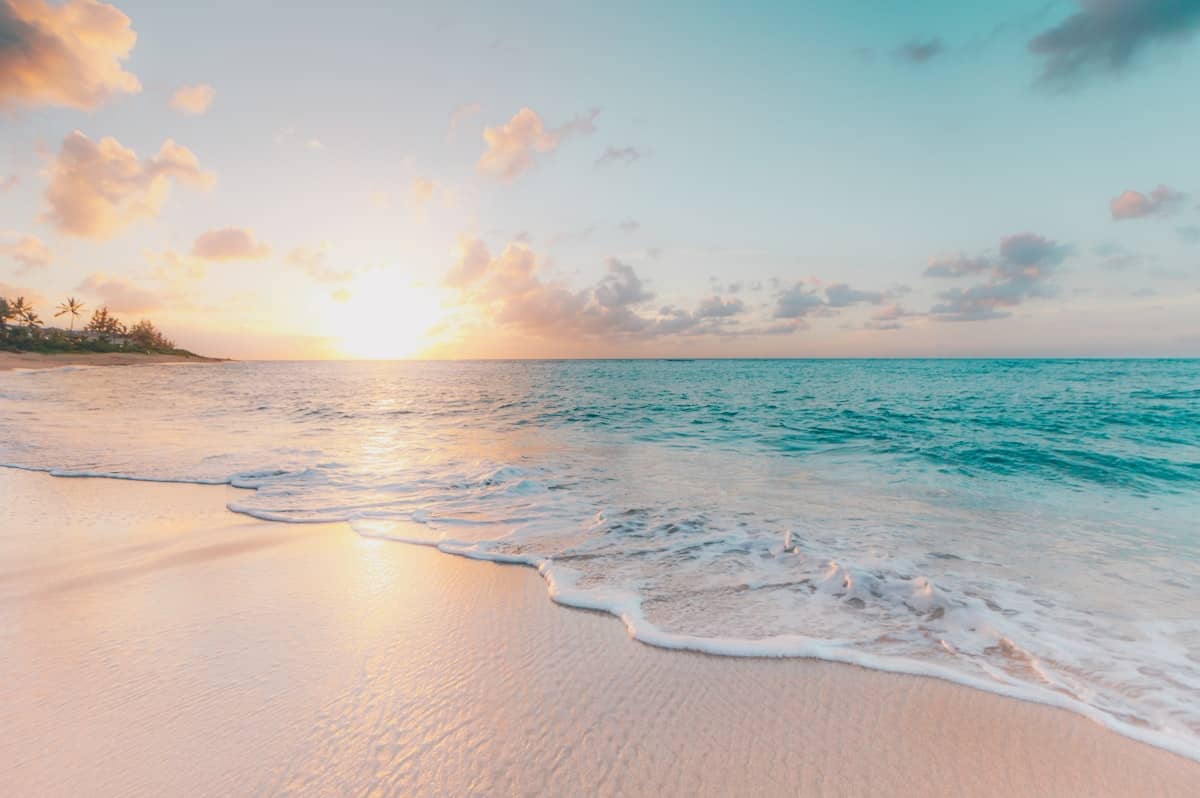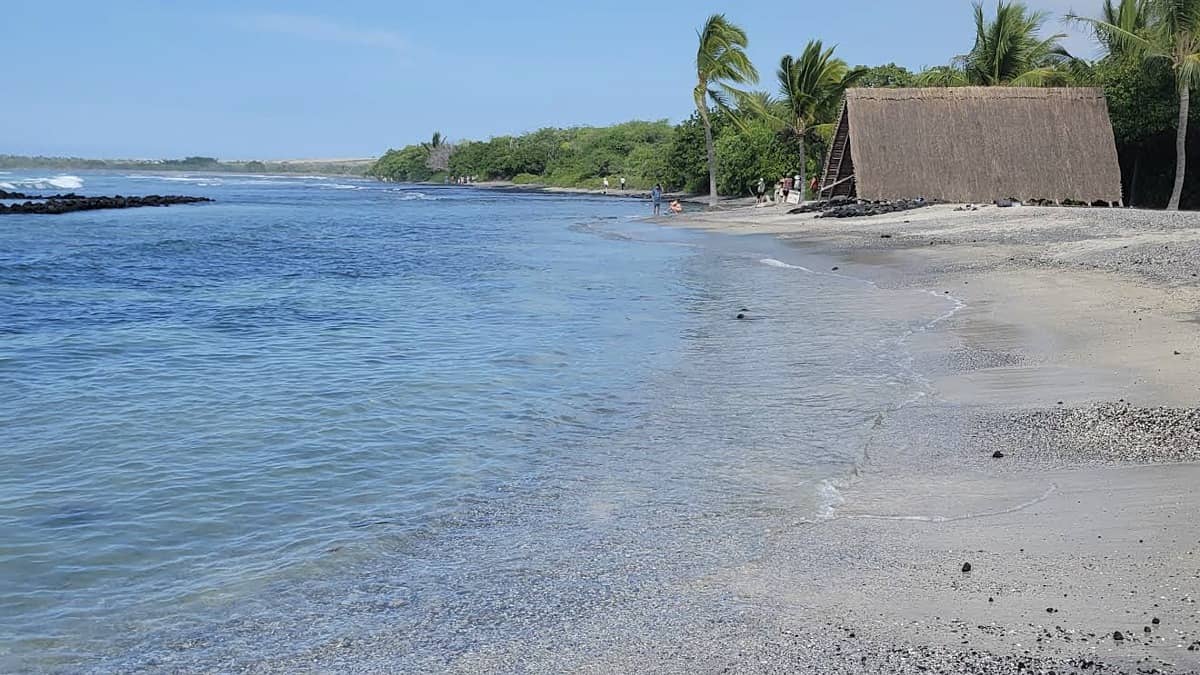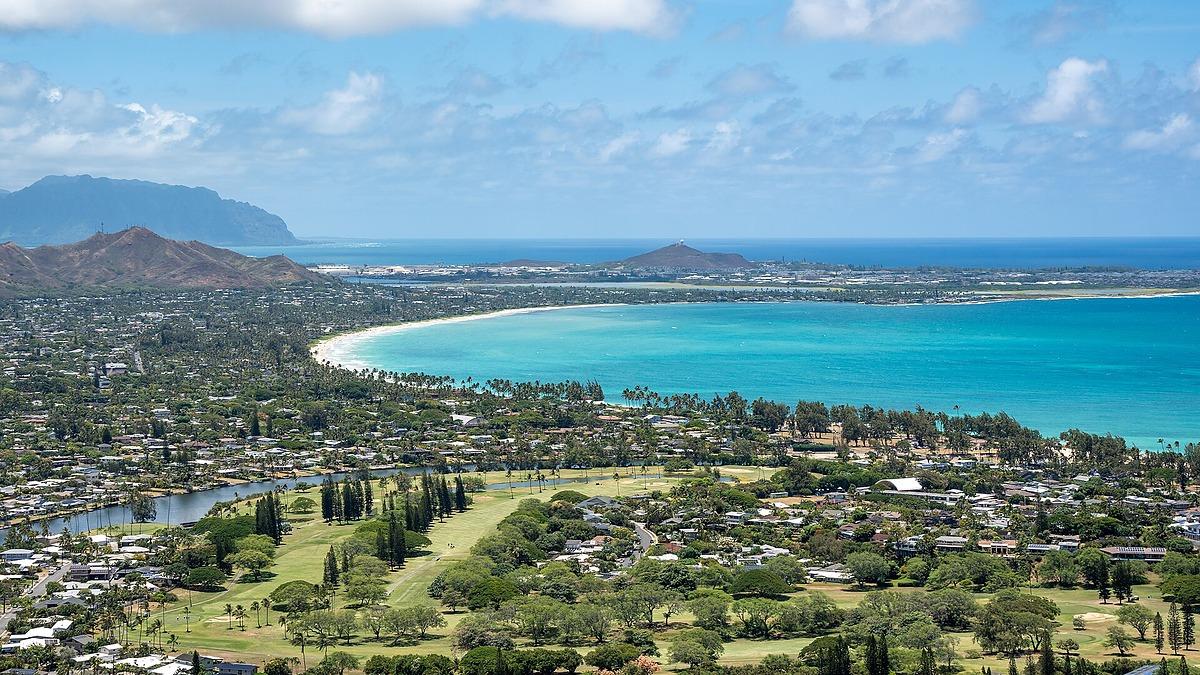
Kailua Beach is a 3km (2-mile) curve of pale sand on Oahu's windward coast, over the Koʻolau mountains from Honolulu. Its public south end, Kailua Beach Park, has lifeguards, a bathhouse and parking beside the sand, which makes it the easy alternative to Lanikai next door. Rain shapes the visit: after heavy showers, stormwater can turn the bay brown, and the state tells swimmers to stay out.
Kailua Beach Park: lifeguards, a bathhouse and islands offshore
The park wraps around Kaʻelepulu Stream and the boat ramp. The flat, low island in the bay is Popoiʻa (Flat Island); the twin Mokulua islands lie off Lanikai to the south.
Honolulu Magazine describes fine, powdery sand and clear water, and Hawaii Magazine calls the water clear and typically calm. Lonely Planet notes a gently sloping sandy bottom, so it deepens gradually, and says the wind usually picks up in the afternoon, which makes mornings best for swimming. Ironwoods line the back of the beach, though erosion has felled some and the city has removed others since 2024, and volunteers are replanting native dune plants.
Ocean Safety staffs lifeguard towers along the beach, and Hawaii's Ocean Safety site lists Kailua Beach as guarded daily from 8am to 6.30pm. The newest tower, at Kalama Beach Park in the middle of the beach, opened in August 2024. Checked November 2026.
The park has a city comfort station with showers. For food, Kalapawai Market sits at the Kailua Road and Kalāheo Avenue junction by the park entrance.
Nobody rents kit on the sand. City law has banned commercial activity at Kailua and Kalama beach parks at all times since 2012, tour stops included. Kayaks and boards come from shops in Kailua town, and you carry them to the water yourself, Honolulu Magazine reported after the ban.
The city's beach-wheelchair page has listed the park's all-terrain wheelchair and the access mat by the bathhouse as unavailable since August 2025; call the parks department on (808) 768-3027 before relying on them. Checked November 2026.
Is Kailua Beach safe to swim?
In dry weather, usually. Runoff is the risk: Kaʻelepulu Stream reaches the sea inside the park, and when the sand berm at its mouth opens after heavy rain, stormwater flows into the bay. The Department of Health issued brown-water advisories for Kailua Beach Park in April 2024, when it said the berm was open, and in March 2026 after a Kona low storm. In May 2024 it also warned people out of Kailua Bay after a discharge from the Kailua wastewater treatment plant exceeded bacteria limits.
Its advice is simple: if the water is brown, stay out, even where no advisory has been posted. Its Clean Water Branch site maps current advisories. Checked November 2026.
Hawaii's Ocean Safety site warns that strong trade winds can raise large, rough waves on east-facing shores like this one in any season. Strong onshore winds also bring Portuguese man-of-war, the Honolulu Ocean Safety Department says; its box jellyfish calendar covers other shores, not Kailua. On gusty trade-wind days, read the lifeguard tower's signs before you swim. Checked November 2026.
How to get to Kailua Beach from Waikiki
By car, take the Pali Highway over the Koʻolau range to Kailua. From the end of Kailua Road, by Kalapawai Market, follow South Kalāheo Avenue and Lihiwai Road to Kawailoa Road, which runs past the park. TheBus 671 takes the same roads.
Without a car, take three buses: the 8 or 42 from Waikiki to Ala Moana Center, the 67 over the Pali Highway to Kailua, then the 671 to the beach. On the timetable in force from 31 May 2026, the 671 runs about every 35 to 40 minutes, from just after 6am (about 6.40am at weekends) until around 7.15pm.
TheBus adult fares from 1 July 2026:
- HOLO card 2-Hour Pass: $3, with unlimited rides on TheBus and Skyline for two hours.
- Cash: $3.25 a ride, exact fare, no transfers.
- 24-Hour Pass: $7.50 from first tap. The HOLO card itself costs $2.
If each leg fits inside two hours, a round trip costs $6 on 2-Hour Passes; for a longer day, the $7.50 24-Hour Pass covers every ride.
Our Waikiki Beach review covers the city beach at the other end of the ride.
Parking and park hours at Kailua Beach Park
The park's lots are off Kawailoa Road: the city names the main lot by the comfort station and shower, the canoe hale lot on the Lanikai side of Kaʻelepulu Stream, and the boat-ramp lot. They also serve Lanikai, which has no public lot, and the city's Lanikai plan notes that Kailua's parking reaches capacity at weekends.
From 2022 to 2024, holiday-weekend notices also banned parking on Makaliʻi Place, the street closest to the park, usually from 10am to 3pm; the New Year 2026 notice covered Lanikai only. Check the transport department's notices before a holiday weekend.
The park closes from midnight to 4am, and its parking lots and comfort station from 10pm to 5am, according to the parks department's closure list (updated September 2026). The department's rule for all city parks is that you may walk through a closed park to reach the ocean, but not stay in it. Checked November 2026.
Kailua Beach vs Lanikai Beach
Lanikai has the Mokulua view and none of the infrastructure. The city's 2025 Lanikai transport plan sets out the difference:
| Feature | Kailua Beach Park | Lanikai Beach |
|---|---|---|
| Parking | Public lots beside the sand | No public lot; holiday-weekend street bans |
| Lifeguards | Ocean Safety towers | None |
| Toilets and showers | Comfort station and shower | None |
| Bus | 671 stops at the park | 671 continues into Lanikai |
Walking between them is easy: Hawaii Magazine puts Lanikai about a five-minute stroll along the shore from the Kawailoa Road lot; from the lots nearer Kaʻelepulu Stream, allow longer. Our guide to the best beaches in Oahu covers Lanikai's parking rules.
Kayaking to Popoiʻa and the Mokulua islands
Both are state seabird sanctuaries. The Department of Land and Natural Resources limits access to areas below the high-water mark, to avoid trampling burrows, bans fires, dogs and camping, and closes the islets from sunset to sunrise. Checked November 2026.
Popoiʻa is the nearer target, inside the bay. Paddling to the Mokulua islands is a bigger outing: Hawaii Magazine describes the trip as an 8km (5-mile) loop from Kailua Beach, and one of its writers found open-ocean paddling far harder than he expected, though the islands look close from shore. Go on a light-wind morning, or with a guide if you are new to sea kayaking.
When to visit Kailua Beach
Aim for May to September 2027. Rain brings the advisories, and the National Weather Service counts May to September as Hawaii's dry season and October to April as the wet season.
From October to April, pick a morning after a few dry days and check the Clean Water Branch map before driving over. All year, weekday mornings are easiest for parking.
Is Kailua Beach worth it?
Yes, for most visitors to Oahu. Families get lifeguards, toilets and a shower a few steps from the car, and paddlers get the bay and the islands offshore.
Skip it, or rethink the plan, if you are on a short stay without a car: from Waikiki it is three buses each way. If you want quiet sand on a weekend, look elsewhere, because the lots also take Lanikai's overflow. After heavy rain, wait for the water to clear or swim elsewhere.
If you came for the Mokulua view, park here and walk to Lanikai rather than circling its streets. Best of all: a dry-season weekday morning, a swim in front of a tower, then the short walk south.