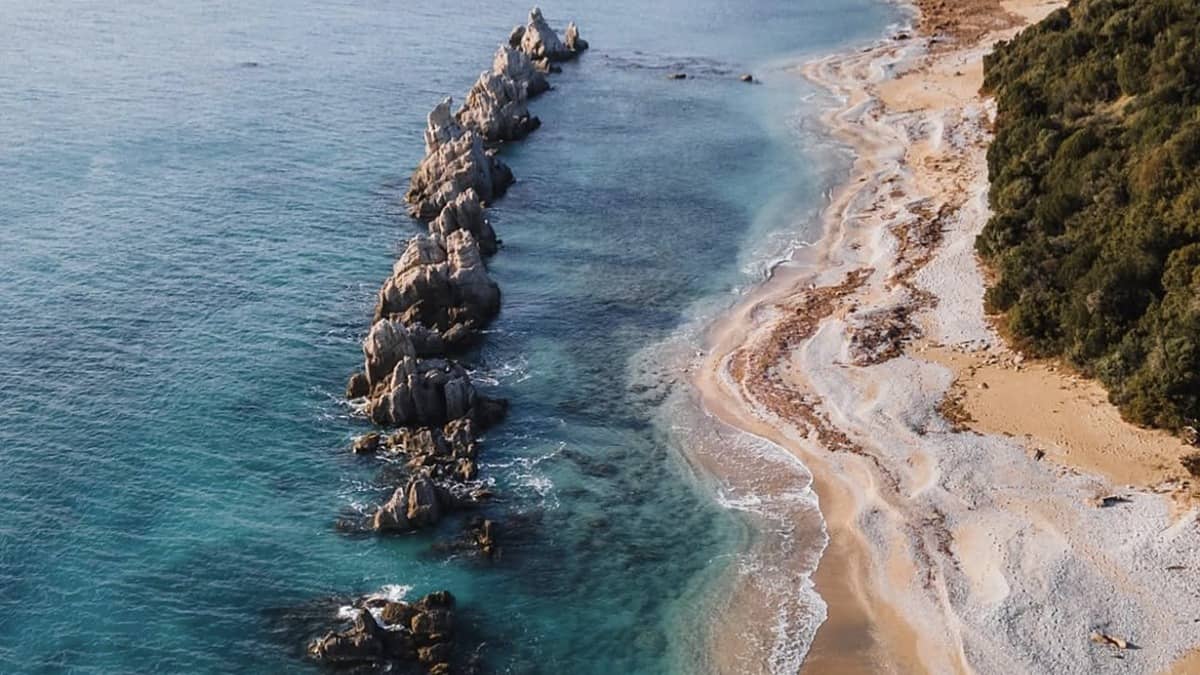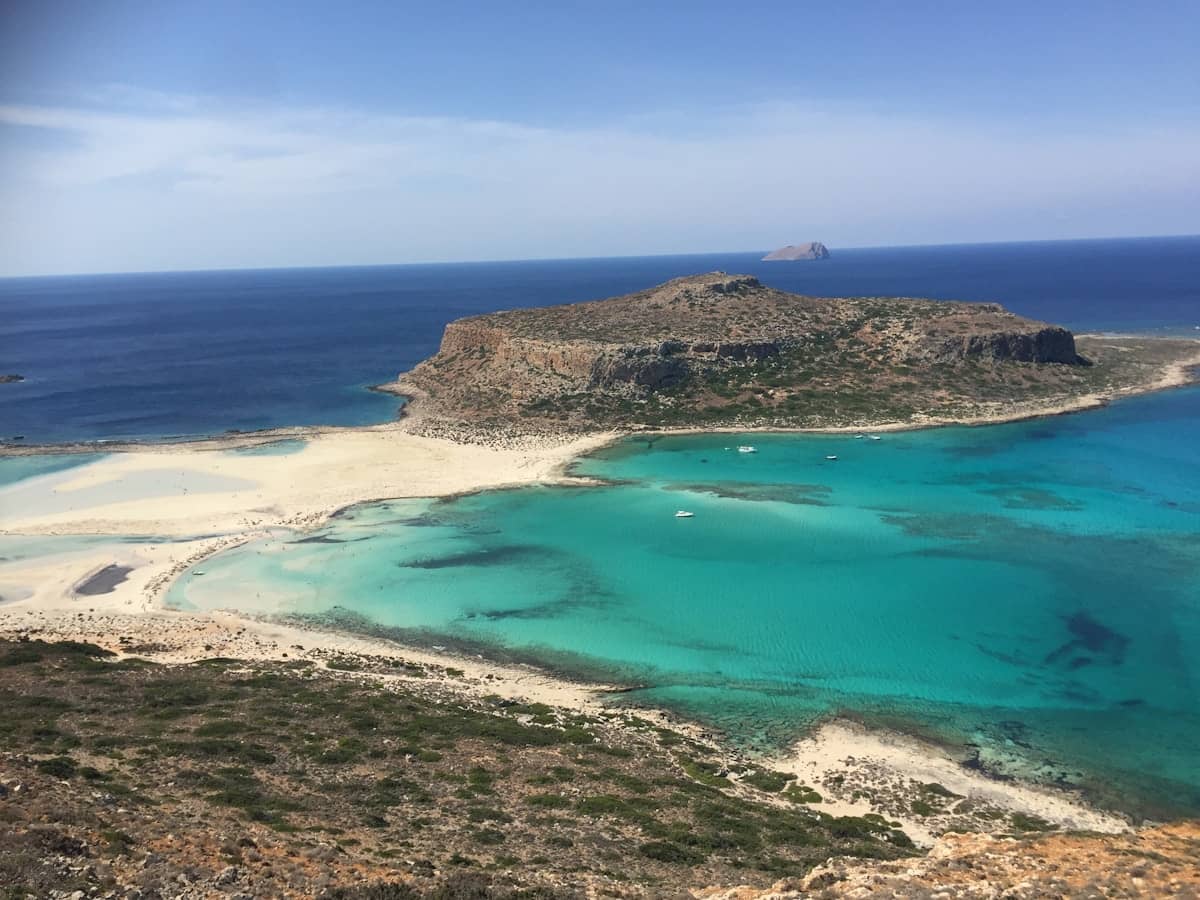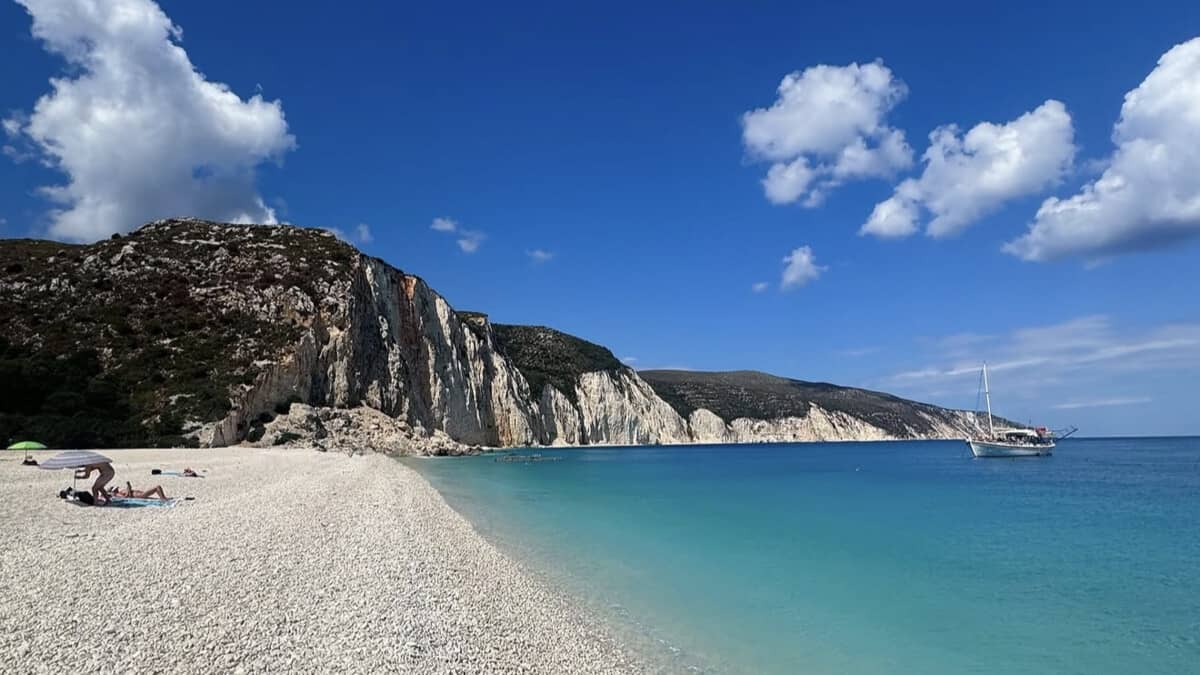
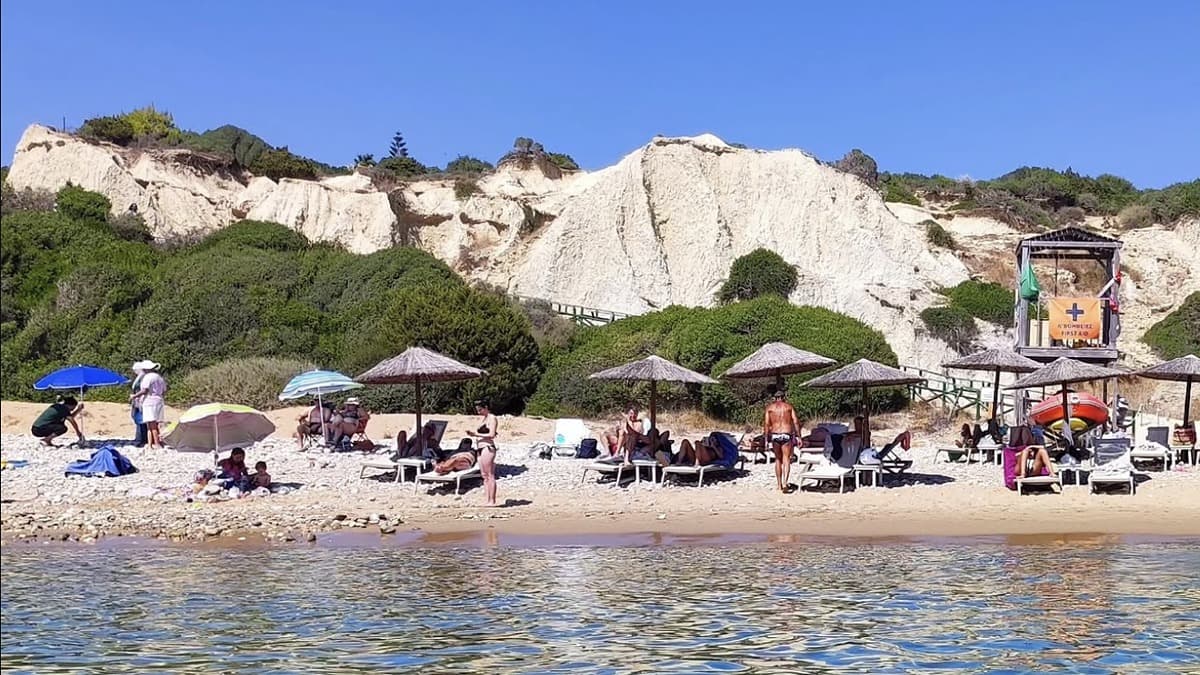
Most Mediterranean beaches let you set up a lounger, plug in music, and run a jet ski. Gerakas Beach is the opposite. The southeast tip of Zakynthos protects one of the most important loggerhead sea turtle nesting sites in the world, and the rules reflect that: no umbrellas, no sunbeds (except a few permanent stations endorsed by the park), no water sports, sunset closure during nesting season, and a 5-metre limit from the waterline where visitors can sit and swim. The setting is genuinely beautiful: red-clay cliffs above golden sand, protected turquoise bay, and quiet broken only by rangers explaining the rules to visitors who did not read the signs.
This is the most strictly protected beach in Greece, and one of the most quietly rewarding to visit.
How to Find Gerakas
Gerakas Beach is on the far southeast tip of Zakynthos in the Vasilikos peninsula, around 25 kilometres from Zakynthos Town and 30 minutes by car. From the capital, drive south past Argassi and follow the coastal road through Vasilikos. The signed Gerakas turn-off leads to a parking area above the beach; a 5-minute walk down a path through scrub vegetation leads to the sand.
Parking is free. The beach is part of the National Marine Park of Zakynthos and has full park signage and information panels at the entrance. Rangers are usually present in summer and will explain the rules to visitors arriving for the first time.
There is no bus service direct to Gerakas; a car is required. Many visitors combine Gerakas with a turtle-spotting boat trip from Laganas or Limni Keriou, which approaches the same protected bay from the water.
The Marine Park Rules
The protection rules are firm and enforced. From May through October (the active turtle nesting season), the following apply:
- Beach closed dusk to dawn. Visiting hours are 7am to sunset only.
- 5-metre waterline limit. Visitors must stay within 5 metres of the water. Going further inland on the beach is prohibited during nesting season.
- No umbrellas or sunbeds. Personal umbrellas are not permitted. A few permanent sunbed stations exist that have been specifically endorsed by the park, but most of the beach has none.
- No water sports. No jet skis, banana rides, paddle boats, or motorised activities. Quiet swimming is allowed.
- No dogs. Pets are not permitted.
- No music above conversational level.
- No littering. Carry out everything you bring in.
Rangers enforce. Fines apply for violations. The rules exist because the Caretta caretta loggerhead is endangered and Gerakas is one of the most important nesting beaches in the Mediterranean. The protection is the reason the species is recovering.
What You Can Actually Do at Gerakas
A typical Gerakas visit is 2 hours and includes:
- Walking the beach within the allowed waterline strip
- Swimming in the protected bay (water is clear, calm, gentle slope)
- Looking for sea turtles in the water (they regularly swim in the bay during daylight)
- Reading the interpretation panels about the conservation work
- Walking up to the red-clay cliffs at the south end for views
- Photographing the dramatic setting (no flash on or near turtles)
The combination is different from a typical beach day but consistently rewarding. Most visitors leave feeling they were part of something more important than a sunbathing destination.
When Turtles Are Visible
Female turtles come ashore at night (after the beach is closed) to dig nests and lay eggs from late May through August. Hatchlings emerge from the sand 50-60 days later and crawl to the water, typically at night.
What visitors actually see during daytime hours:
- Sea turtles swimming in the protected bay (common in summer mornings)
- Marked nest sites on the beach (rangers fence them with rope and signs)
- Occasionally, hatchlings emerging late afternoon (rare but possible)
Park-authorised night turtle walks run during peak nesting season. These are the only legal way to see active nesting at Gerakas. Check with the park visitor centre near Daphne for current schedules and bookings.
How Gerakas Compares to Other Zakynthos Beaches
Gerakas is unique. No other Zakynthos beach has the same protection rules, the same turtle nesting concentration, or the same conservation atmosphere.
For sun-and-loungers Zakynthos days, choose:
- Banana Beach (southeast coast): the largest sandy beach, family-friendly, full amenities
- Porto Limnionas (west coast): dramatic rocky inlet swim
- Navagio Beach (northwest cove, boat access only): the famous shipwreck cove, covered in our Navagio Beach review
For wider Zakynthos context, see our Best Beaches in Zakynthos guide.
When to Visit
May through October. June and September are sweet spots with warm water (24-26°C) and quieter crowds. July and August are busiest. Visit hours are 7am to sunset only; mornings are coolest and best for turtle spotting in the bay.
Should You Visit?
Yes, especially if you have any interest in marine conservation or wildlife. The combination of dramatic scenery, swimming in some of the cleanest protected water in Greece, and witnessing the conservation work makes Gerakas one of the more meaningful beach visits on the island. Treat it as a 2-hour cultural-and-natural visit rather than a full beach day.
For the wider Zakynthos picture, our Best Beaches in Zakynthos guide covers the lineup. For the famous shipwreck cove in detail, the Navagio Beach review covers the boat-only-access reality.