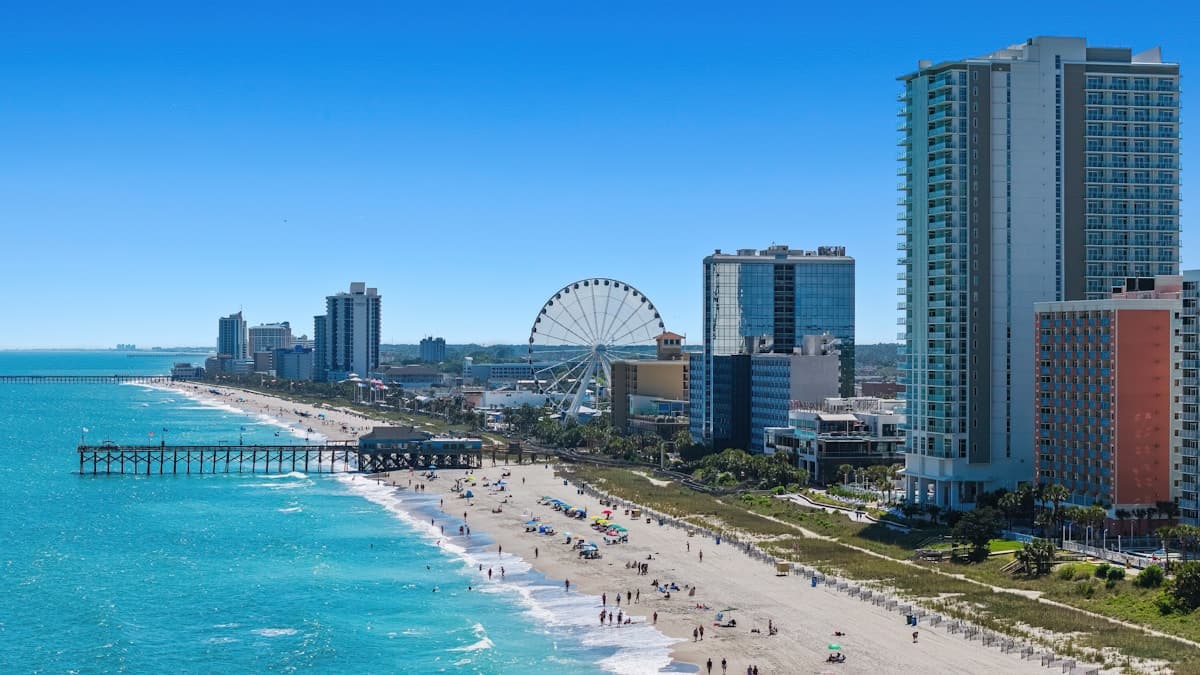
If you've searched "is Myrtle Beach safe" before booking a trip, you're not alone. Myrtle Beach has a reputation problem. Headlines about crime, spring break chaos, and shark sightings get clicks, but they paint a pretty lopsided picture of what's actually a solid family vacation spot. Here's what you really need to know about Myrtle Beach safety in 2026, from the real crime numbers to the beach hazards that should actually be on your radar.
Why Does Myrtle Beach Get Called Dangerous?
The short answer: crime stats look worse than they are because of how they're measured. Myrtle Beach has a permanent population of around 35,000, but the city hosts roughly 20 million visitors a year. Crime numbers get divided by permanent residents, not total people in the area. That makes the per-capita rate look inflated compared to cities that don't have massive tourism numbers.
Imagine if Disney World's crime statistics were calculated based only on the people who actually live in the parks. The numbers would look terrifying. Same logic applies to Myrtle Beach.
That said, the city does have real crime issues that affect tourists. Property crime in particular runs higher than the national average. Car break-ins, theft from rental properties, and pickpocketing are real concerns during peak summer months. Violent crime tends to cluster in specific neighborhoods and late-night scenarios that most vacationers never encounter, but it does happen.
The Real Crime Numbers
According to FBI Uniform Crime Reporting data, Myrtle Beach reports significantly elevated property crime per capita compared to the national average, with theft being by far the most common offense. The city has around 30 to 40 reported violent incidents per 1,000 residents in recent years, but again, that figure is inflated by the visitor-to-resident ratio.
What this means in practical terms for tourists:
- Theft is your most likely risk. Cars left unlocked in beach parking lots, hotel rooms with sliding doors left ajar, and bags left unattended on the sand are the top targets.
- Aggravated assault concentrates in specific zones at specific times. Almost always involves people who know each other, alcohol, and after-midnight settings in the bar district.
- Random violent crime against tourists is rare. The vast majority of visitors have zero negative interactions during their entire trip.
- Drug-related arrests are common but rarely involve tourists.
Compare this to other major US tourist destinations and Myrtle Beach lands in the middle of the pack. Higher than Hilton Head, lower than parts of New Orleans or Miami Beach. The reputation outpaces the reality.
Areas to Avoid in Myrtle Beach
Not every part of Myrtle Beach is created equal. Three zones deserve specific caution:
Ocean Boulevard between 3rd and 9th Avenue South gets rowdy at night, particularly on weekends during summer. This is where most of the bar scene concentrates. During the day it's perfectly fine, busy with tourists and well-policed. After midnight on a Friday or Saturday in July, the energy shifts. Fights spill out of clubs, intoxicated crowds are unpredictable, and police presence is high precisely because they need to be there.
Highway 17 Bypass on the west side of town has higher crime rates than the beachfront tourist zones. Most visitors have no reason to spend time there, but if you're driving the bypass at night to reach a destination, don't stop in unfamiliar areas.
Mr. Joe White Avenue and parts of the Booker T. Washington neighborhood have elevated crime rates that are well above the city average. Tourist destinations are not located in these areas, so simply staying in the beachfront and main attraction zones avoids them entirely.
Safer Neighborhoods for Different Travelers
For families, North Myrtle Beach is the obvious pick. It's technically a separate municipality north of Myrtle Beach proper, with its own quieter beach, family-oriented restaurants, and a noticeably calmer atmosphere. Cherry Grove Beach and Ocean Drive within North Myrtle Beach are particularly family-friendly.
Surfside Beach sits about 10 minutes south of central Myrtle Beach and calls itself "The Family Beach." It has a small-town feel, free beach parking in many spots, and very few late-night venues. Garden City Beach just south of Surfside is similar in character.
For couples and adults wanting a quieter trip without families everywhere, Pawleys Island (35 minutes south) or Litchfield Beach offer upscale, low-key alternatives.
For nightlife and entertainment, the Broadway at the Beach area is well-policed, well-lit, and walkable. It's the safest place to drink and stay out late in the Myrtle Beach area.
Beach Hazards Worth Knowing About
The ocean itself deserves more respect than the streets. Rip currents are the single biggest genuine danger at Myrtle Beach, responsible for the majority of beach-related emergencies every year. South Carolina averages multiple rip current fatalities annually, and Myrtle Beach is a hotspot because of its long, exposed Atlantic-facing coastline.
Rip currents are strongest after storms, during tidal shifts, and around sandbars and piers. If you get caught in one, the rule is simple but counterintuitive: don't fight it. Swim parallel to shore (not back toward the beach) until you escape the pull, then head in. Trying to swim directly against the current will exhaust you fast.
Jellyfish appear regularly from late June through September. Most stings are painful but not dangerous. Vinegar (often available at lifeguard stations) helps neutralize the sting. Portuguese man-of-war sightings are rare but more serious; their stings can cause severe reactions and require medical attention. Watch for purple flags signaling dangerous marine life.
Sharks are present off Myrtle Beach but attacks are extremely uncommon. South Carolina averages a small handful of unprovoked shark bites per year statewide, and most are minor. Avoid swimming at dawn, dusk, in murky water, or near fishing piers where bait attracts marine life.
Shore break injuries are an underrated risk. Myrtle Beach gets shoulder-high shore break in stronger conditions, and people get neck and back injuries diving into shallow water that drops off suddenly. If you're unsure of the water depth, walk in slowly.
The Beach Flag System You Need to Understand
Myrtle Beach uses the standard color-coded warning flag system. Pay attention to them. Every public beach access point has a flagpole displaying current conditions:
- Green: Calm conditions, low hazard
- Yellow: Moderate surf or currents, exercise caution
- Red: High hazard, strong surf or currents, swimming not advised
- Double red: Water closed to public, do not enter
- Purple: Dangerous marine life present (jellyfish, man-of-war, sharks)
When red flags are flying, lifeguards mean it. People drown every year specifically because they ignored red flag conditions. If you're unsure about the flag system, our guide to beach flag colors breaks down what each one means in detail.
Hurricane Season and Weather Safety
Atlantic hurricane season runs June 1 to November 30, with the peak risk period for South Carolina between August and October. Direct hurricane hits on Myrtle Beach are uncommon, but the area gets brushed by tropical storms and outer rain bands most years. Hurricane Matthew (2016), Hurricane Florence (2018), and Hurricane Dorian (2019) all caused significant damage and forced evacuations.
If a hurricane is forecast during your trip:
- Monitor the National Hurricane Center at nhc.noaa.gov, not just local news
- Heed mandatory evacuation orders without exception. Myrtle Beach is on a long, narrow strip with limited evacuation routes that gridlock fast.
- Buy travel insurance if you're booking during August or September. The cost is small relative to losing a non-refundable trip.
- Have a flexible booking through a major chain hotel that will rebook you if needed.
For day-to-day weather, summer thunderstorms are common and can produce dangerous lightning. Get off the beach when you hear thunder, even if you can't see clouds. Lightning has killed beachgoers in South Carolina who waited too long.
Heat is another underrated risk. July and August see regular temperatures in the mid-90s with humidity that pushes the heat index over 105°F. Hydrate aggressively, take shade breaks, and watch kids and elderly companions for heat exhaustion symptoms.
Crime and Scams to Watch For
The most common crime affecting tourists is theft. Don't leave valuables visible in your car, ever. Smash-and-grab break-ins happen in beach parking lots, especially along the Boulevard. Use your hotel safe for passports, cash, and electronics you're not carrying.
Timeshare pitches are aggressive in Myrtle Beach. You'll see offers for free show tickets, water park passes, or discounted dinners in exchange for attending a "short presentation." These are high-pressure sales situations that often run hours longer than promised. If you go in, know that "no" is a complete sentence. Set a hard time limit and stick to it.
Restaurant overcharging happens at some tourist-trap spots along the main strip. Check your bill carefully, watch for items you didn't order, and be aware that some places auto-add gratuity then leave the tip line blank to encourage double-tipping. Restaurants one or two blocks off the beachfront usually offer better food at fairer prices.
Fake parking attendants sometimes appear at busy events, charging cash to "watch" your car in lots that are actually free or where you should pay an automated meter. If someone in a high-vis vest is asking for cash, verify they're official.
Beach equipment scams include people selling stolen umbrellas and chairs at suspiciously low prices, or vendors charging tourists more than locals for the same rental. Use established rental companies, not random people on the sand.
Staying Safe at Night
Most safety concerns in Myrtle Beach come down to nightlife. The clubs along Ocean Boulevard and Celebrity Square can get rowdy. Stick to well-lit, busy areas. Travel in groups if you're going out late. Rideshare apps work well in the area, and using one beats walking back to your hotel at 2am through quiet streets.
Avoid confrontations. Alcohol plus large crowds equals short tempers, especially during Bike Week (Atlantic Beach Bikefest in late May and Harley Week in mid-May), when the area sees its highest visitor numbers. These events bring tens of thousands of motorcyclists and aren't dangerous by nature, but they create traffic, noise, and occasional incidents. If you don't want to be in town during these events, check the dates before booking.
Solo female travelers report Myrtle Beach as generally safe during the day and in the main tourist zones at night. The same precautions apply as anywhere else: don't accept drinks from strangers, watch your drink at bars, and use rideshares after dark rather than walking.
Driving Safety in Myrtle Beach
Myrtle Beach has a higher-than-average car accident rate, and most of it comes down to traffic patterns. Kings Highway (US 17 Business) runs through the heart of the tourist zone and gets heavy summer congestion. Highway 17 Bypass is faster but has more high-speed accidents.
The roundabouts near Barefoot Landing confuse first-time visitors. Traffic in roundabouts has the right of way; if you're entering, yield until there's a gap. Don't stop in the middle of one.
Drinking and driving is a serious problem in Myrtle Beach. South Carolina has higher-than-average DUI fatality rates, and Horry County (where Myrtle Beach sits) consistently ranks among the worst in the state. Use rideshares if you've been drinking. The cost of an Uber is nothing compared to the cost of a DUI or worse.
Practical Tips for a Safe Trip
Keep your hotel room locked and use the deadbolt. Don't leave sliding doors open if you're on a ground floor. These are basic travel habits, not specific to Myrtle Beach, but they matter here.
Swim near lifeguard stations. Myrtle Beach has lifeguards on duty from Memorial Day through Labor Day, typically from 10am to 5pm. Outside those hours, you're on your own. The beach is wide and can look calm even when currents are strong.
Stay hydrated. South Carolina heat in July and August is no joke. Make sure you've got the right gear packed before you head out with our beach packing list. Sunscreen, water, and shade breaks aren't optional if you're spending a full day on the sand.
Know your nearest hospital. Grand Strand Medical Center on 82nd Avenue North handles most major emergencies in the area. Save the address in your phone before you need it.
When Is the Safest Time to Visit?
April to early June offers warm weather, smaller crowds, and the lowest risk of weather problems or peak-season chaos. Water is still on the cool side until late May.
September to October is arguably the best window. Crowds thin dramatically after Labor Day, water is at its warmest of the year, and prices drop significantly. Hurricane risk is highest in September though, so monitor forecasts.
Late May (Bike Week period) brings the largest crowds and most isolated incidents. Skip this window if crowds aren't your thing.
July and August are peak family vacation months. Safe but extremely crowded, hot, and expensive. Hotels and restaurants run at maximum capacity.
Winter (December to March) is genuinely calm and very safe, with the trade-off of cold water and many seasonal businesses being closed.
The Bottom Line on Myrtle Beach Safety
Myrtle Beach is safe for the vast majority of visitors who use common sense. It's a tourist town with tourist town problems, but it's not the danger zone that clickbait articles suggest. Stay aware of your surroundings, keep valuables secured, respect the ocean and the weather, and you'll have a great time. Millions of families do exactly that every single year.
If Myrtle Beach isn't quite the right fit, our guide to the best beaches in Florida covers quieter Atlantic alternatives further south.