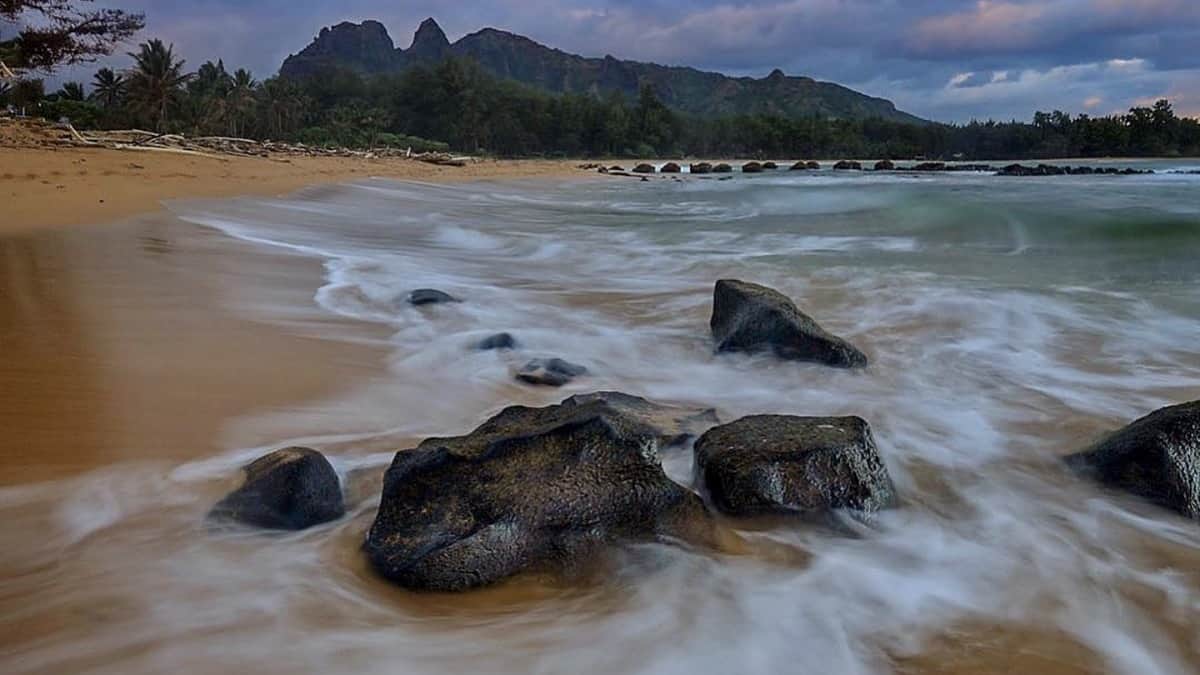
Koki Beach is the most photographed Road to Hana stop most travellers cannot remember the name of. Two minutes south of Hana town, an unprotected shoreline of mixed red, white, and black sand sits below the Ka Iwi o Pele cinder hill, with cone-shaped Alau Island offshore and ironwood trees framing a small grassy picnic area. People stop, photograph, eat lunch, and drive on. They do not swim, because Koki kills swimmers.
This is a stop, not a destination, and the trick is using it well.
Where Koki Sits and What Makes the Sand Red
Koki Beach Park is on Maui's east shore in Hana, just off Haneoo Road. From the Hana Highway, turn at the Haneoo sign two minutes south of Hana town and follow the road half a mile to the dirt pull-off above the beach. The drive from Kahului via the full Road to Hana is around 2.5 to 3 hours one way; most visitors hit Koki on the loop back from the Pools of Oheo.
The reddish sand comes from Ka Iwi o Pele, the cinder hill rising directly behind the beach. The hill is the eroded remains of an old volcanic vent, and the iron-rich red cinder it produced has been wearing into the sea for centuries. The result is a beach where the sand is actually a mix of black, white, and red grains, with red dominant near the cliff base. After heavy rain the colour intensifies as fresh material washes down.
Why You Should Not Swim Here
The water at Koki is genuinely dangerous. The shoreline faces directly into incoming Pacific swell with no reef or headland to break the energy. Strong alongshore currents run from right to left and then push out past the rocks at the south end of the beach, dragging swimmers into the open sea. Rip currents form regularly. There is no lifeguard.
Multiple fatal incidents have occurred at Koki, most often when visitors who ignored conditions tried to swim out to Alau Island or wade into surf they could not read. The beach is safe to enter only on rare flat days and only close to shore. The local rule, repeated by every guidebook and every Hana resident, is the right one: do not swim at Koki.
Alau Island and What You're Looking At
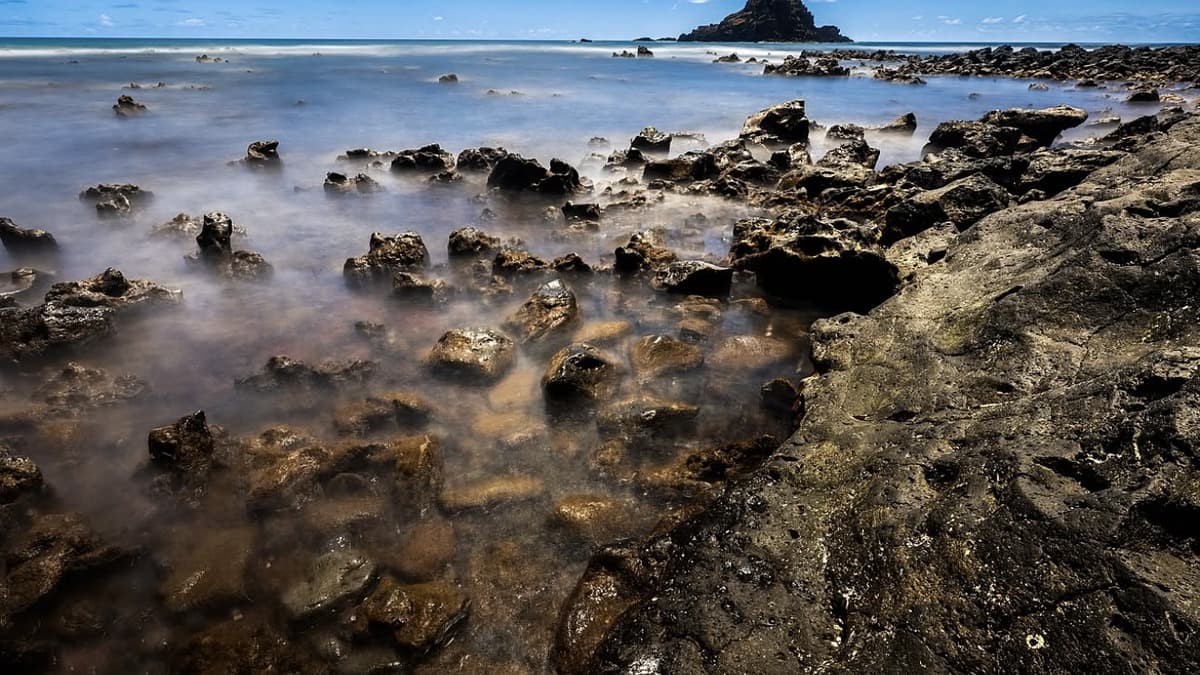
The cone-shaped islet half a mile off the south end of Koki is Alau Island, 150 feet tall and topped with a few coconut palms. It is a state seabird sanctuary, with frigatebirds (called iwa in Hawaiian) nesting on the upper rocks. Visitors cannot land on Alau, and you should not try to swim out, but the view from the picnic area is the photograph people remember from the Road to Hana.
Sea turtles work the rocky points at either end of the beach and are visible from shore on calm days. Local fishermen sometimes surf-cast from the rocks at the south end, a more practical use of the water than swimming.
Koki vs Kaihalulu (Red Sand Beach): The Confusion
Hana has two red-sand beaches and the names get mixed up constantly. Koki is south of Hana off Haneoo Road, accessed by a short paved drive, with mixed-tone red, black, and white sand and Alau Island offshore. Kaihalulu (often called "Red Sand Beach") is on the north side of Hana Bay, accessed by a steep eroded cliff trail, has much more intensely red sand contained inside a small lava cove, and is the harder hike. Our Kaihalulu Beach review covers that one.
If you want easy access and the famous Alau Island shot, you want Koki. If you want the dramatic red cove and the harder access, you want Kaihalulu. Many visitors do both in one Hana stop.
What to Actually Do at Koki
Park in the dirt pull-off above the beach. Walk down the short trail. Take the photograph that includes Alau Island in the frame, ideally from the south end where the angle is best. Sit on the grass under the ironwood trees and eat lunch out of the cooler that you brought. Watch the surf and the seabirds for a quarter hour. Get back in the car.
Koki is a 30-minute stop on a 12-hour driving day. Treating it as anything more is a mistake; treating it as anything less is a missed photograph.
Should You Stop?
Yes. Koki is one of the genuine highlights of the Road to Hana, even with the no-swim rule. The combination of red-toned sand, the dramatic Ka Iwi o Pele cinder hill behind, Alau Island offshore, and the easy access (you do not have to hike down a cliff like at Kaihalulu) makes it the easiest of Hana's photographable beaches. Pair it with Hamoa Beach (the safe swim alternative, two minutes further down Haneoo Road) for a full Hana beach day. For the wider Hana picture and the Road to Hana logistics, our other Maui content covers the loop.