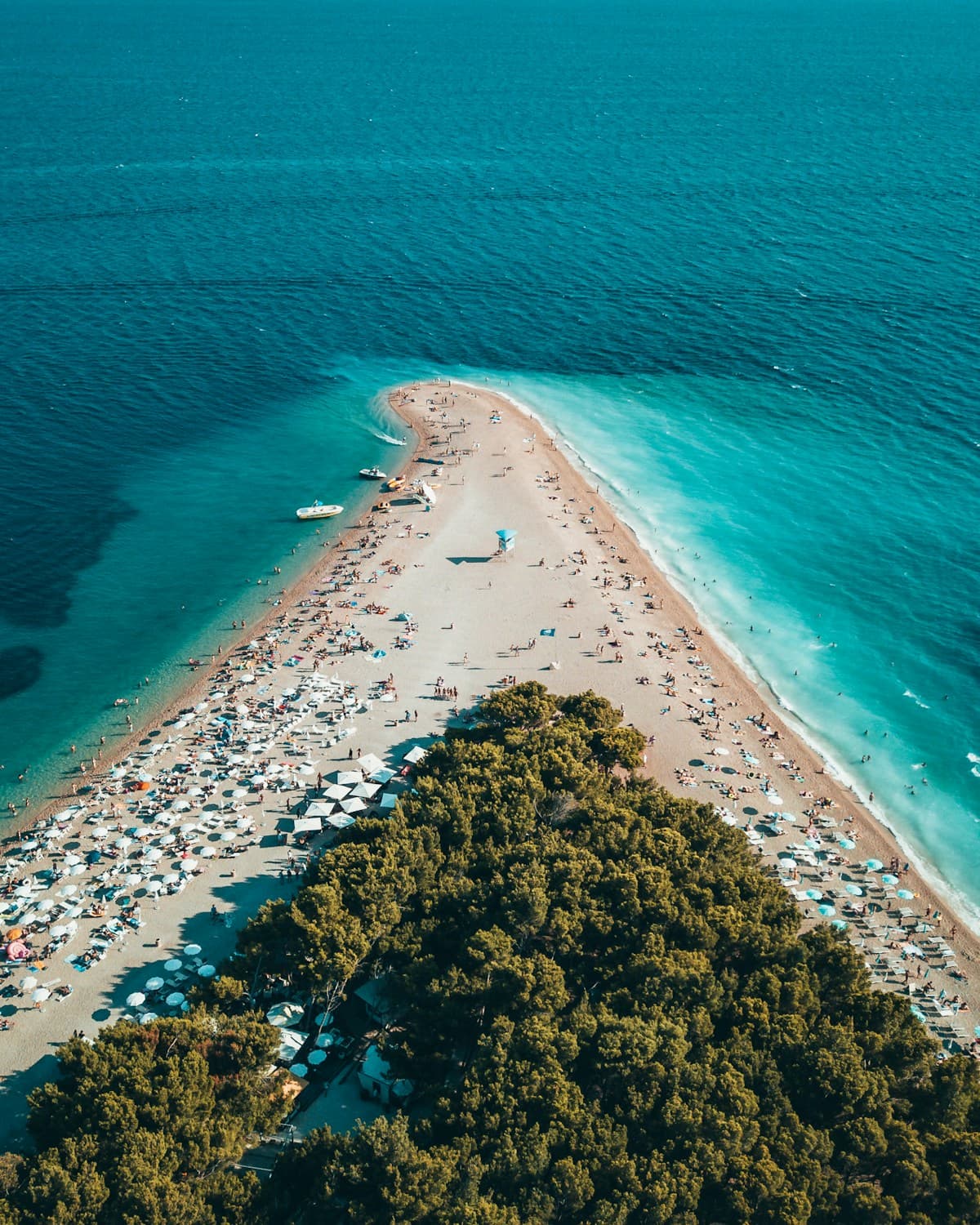
Every drone photographer who visits Croatia comes back with the same shot. That perfect triangle of white pebbles jutting out into deep blue water, the pine trees framing it from above, the whole thing looking like some geological accident that is too symmetrical to be real. Zlatni Rat, or Golden Horn, is probably the most photographed beach in the Adriatic. But here is the thing that nobody mentions in the Instagram captions: it looks very different when you are actually standing on it.
The Aerial View Versus the Ground-Level Reality
From the air, Zlatni Rat is extraordinary. That narrow horn of pebbles extending nearly 500 meters into the sea, shifting its tip with the currents, is one of those natural formations that genuinely makes you stop and stare. The drone shots make it look like a pointed spear of white sand surrounded by electric blue water, and it is easy to understand why it dominates every "best beaches in Croatia" list that exists.
From the ground, the experience is different. Not worse, just different. You are standing on a pebble beach, which is the first surprise for people who expected sand based on aerial photos. The pebbles are small and smooth, worn down by centuries of Adriatic waves, and they are perfectly comfortable to walk on. But this is not the soft, sink-your-toes-in kind of beach that the overhead shots imply.
The horn shape is also less dramatic when you are on it. Walking along the spit, you are aware that the beach narrows as you approach the tip, and the water on both sides gets closer until you are standing on a strip maybe 10 meters wide with the sea wrapping around you. That part is genuinely cool. But the sweeping triangular geometry that makes the drone shots so striking is something you experience more as a concept than a visual reality at eye level.
None of this is a complaint. Zlatni Rat is a beautiful beach with some of the clearest water in the Mediterranean. Just go in knowing that the experience and the aerial photo are two different things.
The Beach That Actually Moves
The famous claim about Zlatni Rat is that it changes shape, and this is genuinely true. The tip of the horn shifts direction depending on prevailing winds and currents. During strong southerly bora winds, the point can lean noticeably to one side, and over weeks and months the shape evolves constantly.
You will not see it moving in real time. It is not that dramatic. But if you visit twice, even in the same season, you might notice the tip pointing in a slightly different direction. Locals in Bol will tell you stories about seasons where the horn curved dramatically after big storms, which adds a nice layer of character to a beach that could otherwise just be "pretty pebbles, nice water."
The geological explanation is straightforward. Zlatni Rat is a gravel spit formed by deposits from a small stream that flows out from under the Vidova Gora mountain. The waves and currents continuously redistribute the pebbles, which is why the shape never quite settles. It has looked roughly the same, that distinctive horn, for as long as anyone has records, but the fine details are always in flux.
Getting There from Split
Most visitors to Zlatni Rat come through Split, which is the main hub for island-hopping along Croatia's Dalmatian coast. The journey involves a ferry to Brac island followed by a cross-island drive or bus ride to Bol.
Jadrolinija operates car ferries from Split to Supetar, the main port on Brac's north side. The crossing takes about 50 minutes and runs multiple times daily in summer, with the first departure usually around 7am. A foot passenger ticket costs around 5 to 7 EUR each way. If you are bringing a car, book ahead during July and August because the ferries fill up fast.
From Supetar, it is a 40-minute drive south across the island to Bol. Local buses make the journey too, though they run on a schedule that does not always line up conveniently with ferry arrivals. Renting a car at Supetar port gives you more flexibility and lets you explore Brac's other beaches and villages.
Once you reach Bol, Zlatni Rat is a 20-minute walk west along a pleasant waterfront promenade that passes through pine forest. You can also grab a small taxi boat from Bol harbour, which takes about five minutes and costs a couple of euros. The walk is nicer if you are not in a rush, with the pine shade keeping things cool even in midsummer.
If you are comparing Croatian beach trips, Stiniva Beach on nearby Vis island offers a more dramatic, secluded experience, though getting there takes more effort. And Ksamil Beach in Albania, just down the coast, gives you a completely different vibe for a fraction of the price.
What the Beach Is Actually Like
Zlatni Rat is a big beach. The spit runs nearly 500 meters on each side, and the wider base near the pine forest adds more usable space. Even on busy summer days, the sheer size means you can usually find a spot, though the most popular areas near the tip and along the south-facing side fill up by late morning.
The pine forest behind the beach is one of its best features. Aleppo pines grow right up to the pebble line in many spots, providing natural shade that you do not get on most exposed Mediterranean beaches. If you do not want to pay for a sunbed (around 10 to 15 EUR for a set with an umbrella), finding a shady spot under the trees is free and often more comfortable.
The water is excellent. Clear, calm on most days, and a colour that shifts between turquoise and deep blue depending on the depth and the light. Swimming is easy and safe, with a gentle slope into deeper water. The pebble bottom means no sand clouds, so visibility stays sharp even when the beach is busy with swimmers.
The western side of the horn catches more wind, which is exactly why Zlatni Rat has become one of Croatia's top windsurfing and kitesurfing spots. The maestral wind typically picks up after noon, creating consistent conditions that draw serious windsurfers from across Europe. If you want to try it, rental shops along the beach offer gear and lessons starting around 50 to 70 EUR for a beginner session.
Bol Town and Practical Details
Bol itself is a small, pleasant town that lives primarily off the Zlatni Rat tourist traffic but manages to retain some character despite that. The waterfront has a handful of solid restaurants where grilled fish and local wine run about 15 to 25 EUR for a main course. Konoba Dalmatino is a reliable pick for traditional Dalmatian cooking.
For supplies, there is a small supermarket near the harbour where you can grab water, snacks, and sunscreen before heading to the beach. Prices are island-level, meaning 20 to 30 percent more than mainland Split, but nothing outrageous.
The beach has basic facilities including changing rooms, showers, and a couple of snack bars selling drinks and sandwiches. Toilets are available but not abundant, so the ones in Bol town are worth using before you walk out to the beach.
If you are visiting on a day trip from Split, aim for the earliest ferry you can catch. The first catamaran gets you to Bol with minimal connecting hassle, and you will have the beach largely to yourself before the crowds build around 11am. The last return ferry from Supetar typically departs around 8pm, which gives you a full day if you plan it right.
Is Zlatni Rat Worth the Trip?
Zlatni Rat is one of those places where the marketing has created an expectation that does not perfectly match the experience, but the experience is still genuinely great. It is not the white sand paradise that aerial photos suggest. It is a pebble beach, and knowing that going in matters. What it is, though, is a uniquely shaped natural formation surrounded by outstanding water, backed by fragrant pine forest, and set on an island that rewards the effort of getting there.
The shape-shifting tip is a real phenomenon, even if it is subtle. The windsurfing is excellent. The water clarity rivals anything in the Mediterranean. And the combination of the beach, the pine shade, and the views across the channel to Hvar island creates something that feels special even when it is packed with visitors.
Come in June or September if you can. The water is warm enough for swimming, the ferries run on full schedules, and you avoid the worst of the July and August crush. Bring water shoes, skip the sand castle plans, and take at least one look at that famous horn shape from above. The Dominican Monastery on the hill above Bol offers a viewpoint, or just accept that some beaches are best appreciated from two altitudes at once. For more European beach ideas, check our guide to the best beach holidays in Europe.