Margate has done something few faded seaside towns manage: it got cool again. The arcades and rock shops are still there, but so now are art galleries, vintage shops and some of the best fish and chips on the Kent coast, and the beach sits right at the middle of it. Margate Main Sands is a broad, golden, properly sandy town beach, backed by a lively promenade and famous skies, and it is only about 90 minutes from London by train. For a day at the seaside without a long drive, few beaches in the south east beat it.
What you are getting is a classic British town beach rather than a wild natural one. It comes with the full kit: lifeguards, arcades, a tidal pool, ice cream and a funfair within sight of your towel. That is the appeal, not a drawback.
Margate Main Sands: the town beach
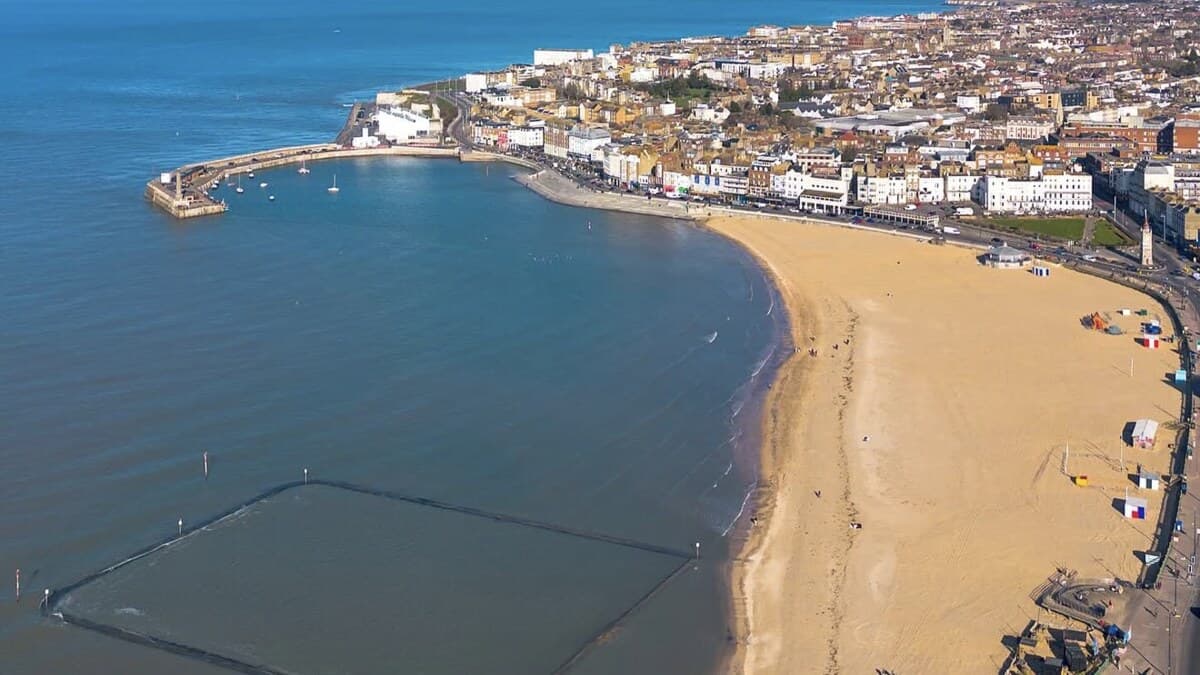
Main Sands is a wide arc of soft golden sand in the heart of Margate, gently sloping and backed by the curve of the harbour arm and the promenade. It is sheltered, the water shelves slowly, and the sand is good for the classic seaside business of castles and paddling, which is why it has long been a family favourite and held Blue Flag status in 2025.
The setting is half the draw. The painter J.M.W. Turner came here for what he called the loveliest skies in all Europe, and on a clear evening you see why, with big light over a flat sea. There are lifeguards in summer, public toilets and changing areas, deckchairs and the arcades right behind the sand. It gets genuinely busy on hot weekends, so come early if you want space near the front.
Margate is one of Britain's original seaside resorts, a day-tripper magnet since the Georgians, and that long history is part of the texture, from the arcades to the rock shops. It also carries serious cultural weight for a town this size. Turner studied those skies here, T.S. Eliot wrote part of The Waste Land on the beach, with its line "On Margate Sands. I can connect nothing with nothing," and the artist Tracey Emin grew up in the town and has since brought her studio back to it. That mix of bucket-and-spade and art-town is what makes a day here feel different from the average British seaside trip.
Tides and swimming
The one thing to plan around is the tide. Margate has a big tidal range, so at low water the sea pulls back a long way and leaves wet sand and tidal pools, while at high tide it comes right in toward the promenade. For swimming you want to be there a couple of hours either side of high water; at low tide it becomes more of a walking-and-rockpooling beach than a swimming one.
A note on the water itself. Like much of the UK coast, Margate has had bathing-water and storm-overflow issues in recent years, so after heavy rain it is worth checking the latest water-quality status before a long swim. On a normal dry summer's day with lifeguards on duty, the shallow, gently sloping water is fine for families.
The seafront: Turner Contemporary, Dreamland and the Old Town
Few town beaches have this much going on behind them. The Turner Contemporary gallery, free to enter, sits right on the seafront at the end of Main Sands and is the anchor of the town's art-led revival. A short walk inland, Dreamland is the restored vintage amusement park, all retro rides, roller disco and gigs, and a proper rainy-day backup.
Between the two, Margate's Old Town is full of independent shops, galleries and places to eat, and the seafront has the arcades and chip shops for the traditional version of the day. The Harbour Arm, the old stone pier curving out from Main Sands, has been turned into a strip of small bars, seafood spots and studios, and is one of the best places in town to catch the sunset with a drink in hand. A short walk inland sits Margate's genuine oddity, the Shell Grotto, an underground passage lined with millions of shells in mosaics that nobody has ever fully explained. Between the tide, the galleries and all that, you can easily fill a full day without leaving the front.
Walpole Bay and Botany Bay: the quieter alternatives
When Main Sands is heaving, two nearby beaches give you more room. A walk east along the front brings you to Walpole Bay in Cliftonville, home to the UK's largest tidal pool, a four-acre 1937 seawater pool that is Grade II listed and lets you swim at any state of the tide. It is a local favourite and far calmer than the main beach.
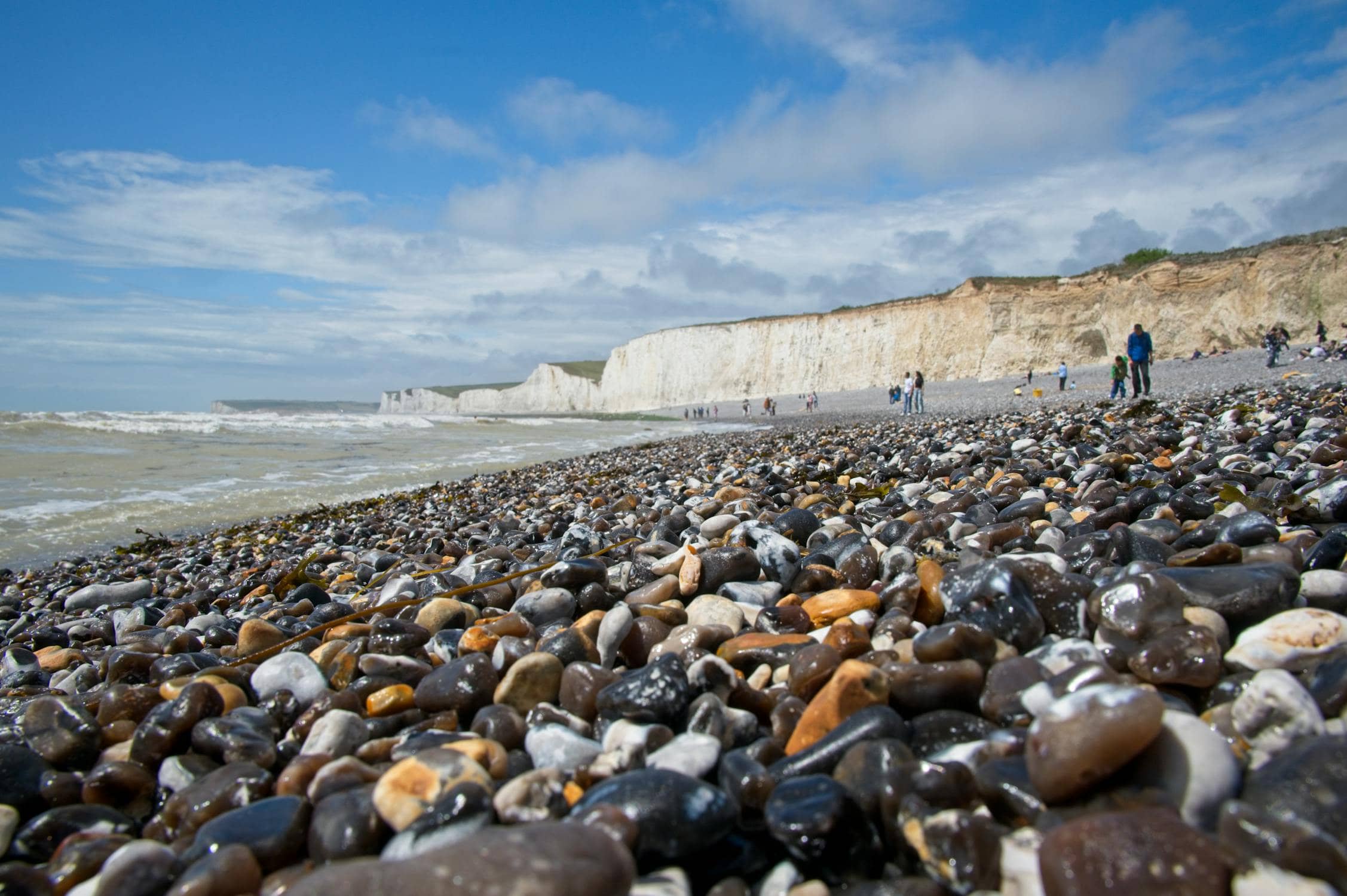
Further round toward Broadstairs, Botany Bay is the scenic one, a sandy bay framed by white chalk cliffs and sea stacks with rock pools at low tide and far fewer crowds. Both are easy add-ons to a Margate trip and worth the short hop if you want the coast without the funfair.
How to get there and parking
Margate is one of the simplest seaside escapes from London. The Southeastern high-speed Javelin from St Pancras takes about 1 hour 29 minutes, with slower trains from Victoria and Charing Cross, and the station is a short walk from Main Sands, so you can leave the car at home. A return usually runs around 20 to 30 pounds.
If you do drive, it is roughly two hours from London via the A299. Seafront and town car parks fill quickly on hot days, which is another reason the train is the easier call in summer.
Is Margate beach worth it?
For a sandy, sociable, do-everything day by the sea within easy reach of London, very much so. Margate Main Sands gives you the traditional bucket-and-spade beach plus a genuinely good town of galleries, food and the Dreamland funfair behind it, all reachable without a car. Time your swim to the tide, check the water after rain, and use Walpole Bay or Botany Bay when the main beach fills. It is one of the best entries in our guide to the best beaches near London, and it holds its own among the wider best beaches in the UK too.