Every guide to Playa Flamingo written before 2023 is now partly out of date, and most newer ones have not caught up either. The marina at the north end of the bay, closed for 19 years and derelict when most current travel articles were written, reopened in February 2023 and has already reshaped what the beach is for. The name still confuses people, the sand is not really pink, and the comparison with Playa Conchal four kilometres down the coast is still being mangled in roundup posts. Here is what actually works at Playa Flamingo in 2026, and what the older travel pages keep getting wrong.
Where Playa Flamingo Sits on the Guanacaste Coast
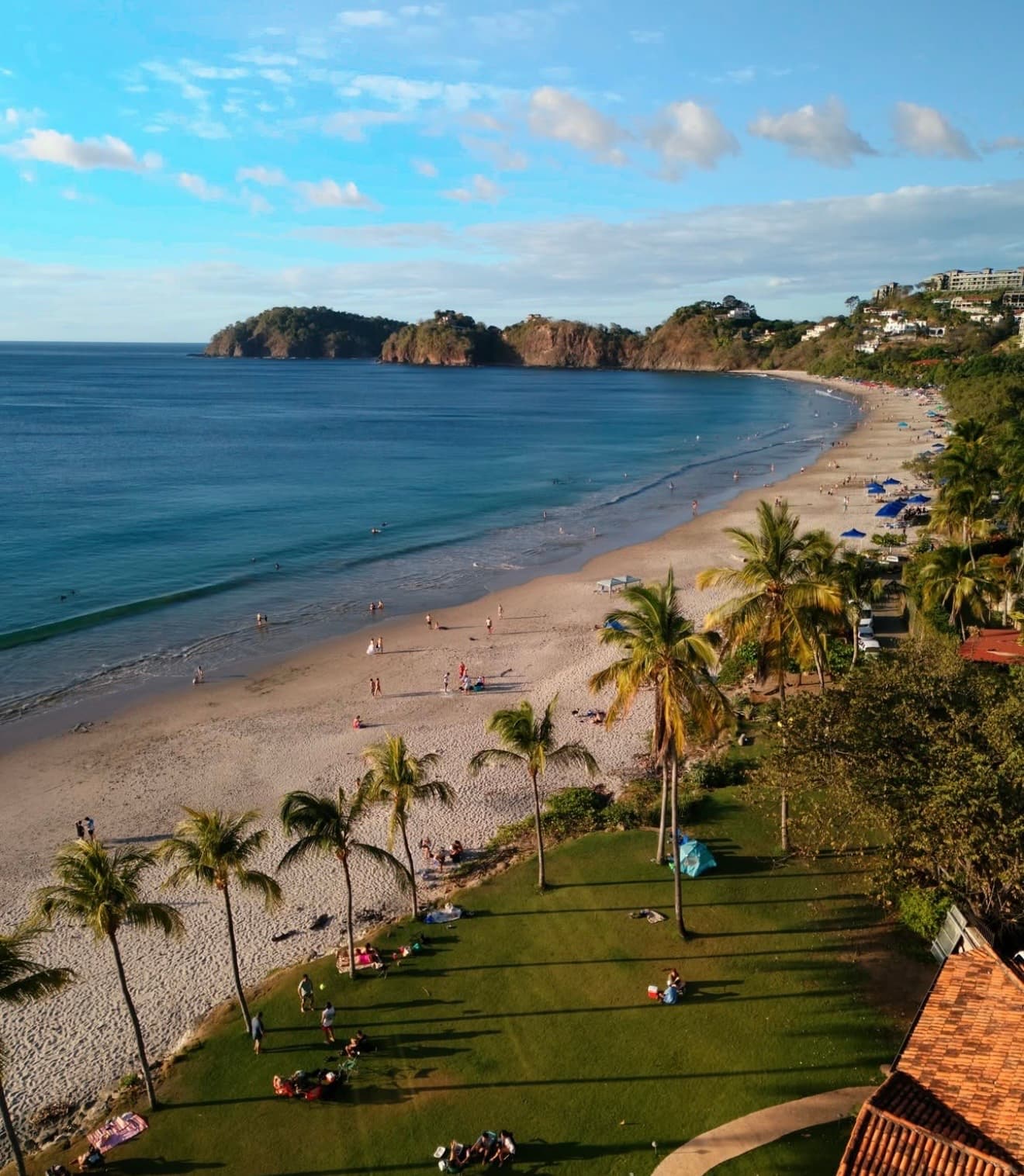
Playa Flamingo is on the northern Pacific coast of Costa Rica, in the Cabo Velas district of Guanacaste Province, about 65 kilometres southwest of Liberia and its international airport. The beach itself is a long crescent of pale, soft sand running between two rocky headlands, with turquoise water, a gentle slope into the swim line, and a wooded hillside behind it that holds most of the town's villas and luxury rentals.
The geography matters because Flamingo gets confused with its neighbours. South is Playa Brasilito, a small grey-sand fishing village beach. Past Brasilito is Playa Conchal, the famous crushed-shell beach. North sits Playa Potrero, a quieter darker-sand bay. All four get lumped together as "the Flamingo area" by tour operators but have different sand, different swims, and different vibes. Getting the names straight before you book saves you the wrong hotel.
The 2023 Marina Reopening and What Changed
This is the part newer visitors need to know and the part most older guides miss. Marina Flamingo operated through the 1990s and early 2000s, closed in 2003 after a combination of structural damage and environmental disputes, and sat empty for nearly two decades while the town's tourism sagged around it. Phase one of the rebuilt facility opened softly in June 2022 during the 81st International Light Tackle Tournament sailfish event, and was formally inaugurated on 19 February 2023 as a 12.7 million dollar floating-dock marina with 92 wet slips.
What that means for a visitor is concrete. Flamingo now has onsite customs and immigration clearance for international yachts, fuel and pump-out, and slips for boats up to 40 metres. Sportfishing operations that had moved to Papagayo or Tamarindo came back. Catamaran sunset cruises leave directly from the marina. A new wave of restaurants and marina-village retail opened around the basin. If you are visiting for a beach-and-boat trip, Flamingo in 2026 has more infrastructure than it has had since the late 1990s.
If you are visiting purely for the beach and do not care about boats, the marina barely registers. You see it from the north end of the bay and that is it.
The Sand, the Name, and What the Pink Really Is
Two things to clear up, because they appear in almost every travel article and both are slightly wrong.
The sand at Playa Flamingo is pale, soft, and does take on a subtle pink hue in certain late-afternoon light and at certain tide lines. It is not the bright rose of Horseshoe Bay. It is not crushed shells either. That is Playa Conchal, four kilometres south, and the two get conflated in listicles. Flamingo's sand is silica-dominant with a faint warm tone, and a drone photograph around golden hour shows the pink edge travel blogs refer to. At midday it reads as plain pale sand.
The name is the more entertaining mistake. Flamingos do not live in Costa Rica. The most widely repeated origin story, retold across a dozen local sources, credits George Howarth, an early Canadian developer in the area, who reportedly mistook a roseate spoonbill for a flamingo. Spoonbills are pink, do live on this coast, and at a distance resemble flamingos if you have never seen one. The name stuck before anyone bothered to correct it. If you ask at a marina bar, that is the story you will hear.
Playa Flamingo vs Conchal vs Potrero
Since most visitors end up at more than one, a quick side-by-side:
| Feature | Flamingo | Conchal | Potrero |
|---|---|---|---|
| Sand | Pale, soft, faintly pink | Crushed shells, coarse | Darker grey-brown |
| Swimming | Excellent, calm bay | Decent, smaller cove | Gentle, less scenic |
| Snorkelling from shore | Limited | Better than Flamingo | Poor |
| Marina / boats | Yes, reopened 2023 | No | No |
| Sunset | Excellent, west-facing | Good, partly blocked | Good |
| Crowds | Moderate | Can be busy at the resort end | Quiet |
| Best for | Swim, sunset, boats | Novelty, day trip | Quiet stay |
Flamingo wins on beach walk, sunset, and infrastructure. Conchal wins on the novelty of the shell sand and the offshore snorkel when the water is clear. Potrero wins when you want to sleep somewhere quiet and drive in for dinner.
Seasons, Wind, and When to Actually Come
Dry season runs roughly from mid-December through April. It is the peak tourist window, hotel prices are at their highest, and the sky stays mostly cloudless. The catch is the Papagayo winds. For much of January and the first half of February, steady offshore gusts sweep down the coast at 18 to 20 miles per hour with higher afternoon gusts. On the beach itself this means kicked-up sand, a chop on the otherwise calm bay, and slightly cooler upwelling water. The sailing and kitesurfing crowd love it. Beach loungers find it tiring after the second day.
Late February through May is the better dry-season window for a pure beach trip. Winds drop, clarity improves, sailfish season still runs through April, and humidity has not yet built. Water temperatures sit 26 to 30 C (79 to 86 F) year round.
Green season from May to November brings afternoon rains, lush hillsides behind the beach, and 30 to 40 percent cheaper lodging. Mornings are usually clear and swim-friendly. November and early December are an underrated sweet spot before the peak-season rates kick back in.
Fishing, Diving, and Why Snorkelling Is Oversold
Playa Flamingo is a genuine sportfishing destination. Sailfish peak from December through April with a secondary run in May through August. Blue marlin come through from November to early March, dorado in August to October, yellowfin tuna year round with a July to September peak. Charters run from Marina Flamingo at standard Costa Rica rates, and tournament weeks are worth checking before booking.
Scuba and snorkelling are best done as day trips to the Catalina Islands, a cluster of rocky offshore dive sites about 30 minutes by boat. Manta rays, white-tip reef sharks, and turtles are reliable there between December and April. Visibility in the islands runs 15 to 30 feet.
From the beach itself, snorkelling is the thing guides oversell. The bay is sandy rather than reefed, visibility near shore is limited, and the best you will see is the occasional ray or cornetfish on a calm morning. If you come for snorkelling, plan on a boat. If you come for swimming, the beach delivers.
Safety, Manchineel Trees, and the Crocodile Question
Swimming at Flamingo is generally safe. The crescent bay is sheltered by headlands, surf is gentle, and rip currents are modest compared with the open-ocean Guanacaste beaches further south. There are no full-time lifeguards, so use normal judgement on larger swell days.
Two quieter risks that local guides mention and outside guides skip. Manchineel trees, identifiable by small green apple-like fruit and smooth grey bark, grow in patches along the shoreline. The sap burns skin and the fruit is toxic. Do not pick anything, do not shelter under the trees during rain, and wash off if the sap drips on you.
Crocodiles have been reported in the waters off Flamingo and Potrero as of early 2026, part of a broader pattern of sightings on northern Pacific surf breaks. No recorded attack has happened at Playa Flamingo. Keep an eye out at river mouths and at dawn and dusk, which is standard Guanacaste advice.
Is Playa Flamingo Worth It in 2026?
Yes, with the caveat that the Flamingo you book is not the Flamingo some older articles describe. The marina reopening in 2023 repositioned the town from a quiet bay to a working sportfishing and yachting base with real restaurant options and a post-pandemic hotel recovery still running. The beach itself is still one of the cleaner swimming crescents on the northern Pacific, the sunsets still live up to their regional reputation, and the name still has nothing to do with flamingos. Come in late February through May or November through early December, rent a car at Liberia, and give yourself at least one day trip to Conchal and one sunset catamaran out of the marina. That is the full Flamingo experience as it actually exists now.