
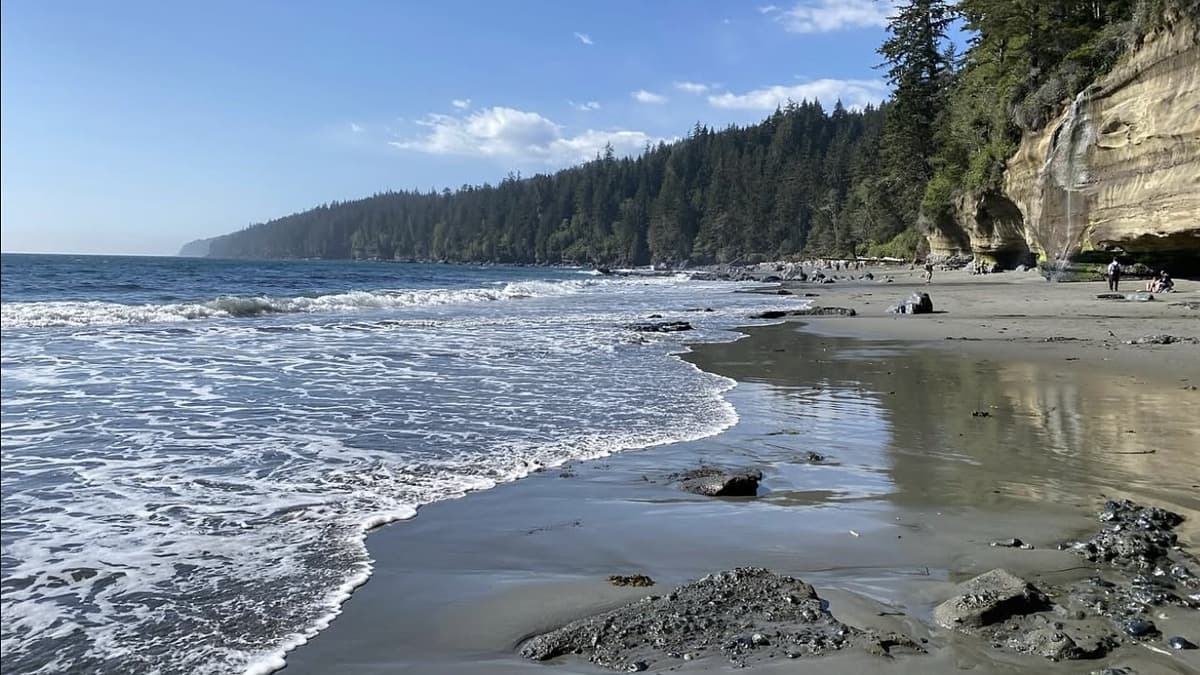
Mystic Beach is what Vancouver Island travel articles photograph: a small sandy cove backed by cliffs, with a waterfall dropping directly onto the sand, a sea cave accessible at low tide, and a rope swing dangling from a tree by the suspension bridge. The reward sits 2 kilometres down the Juan de Fuca Marine Trail from China Beach, around 1 hour west of Victoria, with the trail's roots and mud doing the work of filtering out casual day-trippers. Most people who reach Mystic Beach earn the beach by hiking it.
This is one of the genuinely scenic Pacific west coast Canada beaches, and worth the trail effort.
Where Mystic Beach Sits
Mystic Beach is on Vancouver Island's southwest Pacific coast in Juan de Fuca Provincial Park, around 1 hour west of Victoria. Drive Highway 14 west through Sooke and watch for signs to China Beach Day-Use. The trailhead parking is at the day-use lot, not the China Beach Campground entrance 400 metres south.
From the trailhead, the Juan de Fuca Marine Trail heads east 2 kilometres to Mystic Beach. The route is moderate, with sections of roots, mud, wooden boardwalks, and uneven stairs. The highlight is the suspension bridge over Pete Wolfe Creek about halfway in, where the rope swing typically dangles from a tree. Allow 45 minutes to 1 hour each way for the hike, plus your beach time.
There is no other way in. No road access. No water-taxi service. The Juan de Fuca Trail is the path.
The Hike: What to Expect
Trail conditions vary year-round. Spring brings mud and slippery roots; summer is drier but the boardwalks can still be wet in shaded sections; autumn returns the mud. Sturdy hiking shoes or trail runners are essential. Sandals and flip-flops are unsafe; the roots and mud are not flat-walking surfaces.
The trail descends roughly 150 metres of elevation through Pacific coastal rainforest, with cedar, hemlock, and fern undergrowth. The suspension bridge crosses Pete Wolfe Creek about halfway in. The rope swing has been a fixture for years; whether it is up on the day depends on weather and whoever last fixed the line.
Bring water. There is no source on the trail; the creek and the waterfall pool are fresh but not filtered, and Pacific coast water sources can carry giardia.
The Waterfall and the Sea Cave
The signature feature of Mystic Beach is the waterfall that drops from the cliffs above directly onto the sand. Flow varies: spring (April-June) delivers the strongest cascade; summer reduces to a steady stream; autumn rain bumps it back. The waterfall is almost never completely dry, even in late summer. The combination of waterfall, beach, and the Pacific behind is the photograph that put Mystic Beach on every Vancouver Island bucket list.
The sea cave at the south end of the beach is accessible only at low tide, typically 1-2 hours either side of low. At high tide the cave entrance is underwater. Check a Pacific tide chart for Sooke or Jordan River before hiking down if the cave is the goal. Bring a headlamp for exploring inside; the cave extends back several metres.
The combination of two photogenic features (waterfall + cave) is part of why Mystic Beach photographs better than most Pacific coast pocket-coves.
Camping at Mystic Beach
Mystic Beach is one of the designated campsites along the Juan de Fuca Marine Trail. A BC Parks Backcountry Camping Permit is required and must be pre-purchased before arrival. The campground is on the beach itself with limited tent sites; book ahead during peak season (June-August).
Amenities: pit toilets, a bear cache for food storage. No campfires permitted in summer; check current fire bans. No water source; bring a filter or carry water in. This is true backcountry camping; bring everything you need including stove, fuel, food, water purification, and bear-safe gear storage.
The Juan de Fuca Trail is a popular multi-day hike (47 km total from China Beach to Botanical Beach), and Mystic Beach is the first camping option on the route from the east end. Visitors doing the full trail typically spend one night here.
The Swim Reality
Pacific Coast water on this coast stays cold year-round. Summer surface temperatures average 10-14°C, much colder than visitors from warmer-water destinations expect. Most beach visitors wade or do short brisk swims; the cold makes long-stay swimming uncomfortable.
The bottom is sandy near shore. Gentle surf in normal conditions. Rip currents can form on rough days; there is no lifeguard. Most visitors come for the scenery and the photograph rather than a proper beach-day swim.
The waterfall pool is fresh-water and cold. A brief plunge into the pool is a photo opportunity, not a sustained swim.
When to Visit
May through September is the realistic visit window. June, July, August deliver the warmest weather and longest daylight; September is the sweet spot with smaller crowds. The wettest months (November-February) make the trail muddy and slippery; not recommended for day hikers. Pacific Coast weather is unpredictable year-round; bring rain gear regardless of forecast.
Check tide tables before going if the sea cave is on your list. The cave at low tide is one experience; the cave at high tide is just a wall of water.
Should You Make the Hike?
Yes, if you are reasonably fit, willing to commit half a day for the round trip plus beach time, and you want one of the more photogenic beach hikes on Vancouver Island. Mystic Beach is the kind of place that earns its photographs; the trail effort is the reason the beach is not packed.
For wider context on Pacific Northwest beaches, the Vancouver Island coast has dozens of pocket coves accessible by trail. Mystic is one of the most accessible from Victoria. Combining Mystic Beach with the nearby China Beach (day-use, no hike required) and Sandcut Beach (15-minute hike, smaller waterfall) makes a full Juan de Fuca day. For comparable rugged Pacific coast in the southern hemisphere, our Tunnel Beach New Zealand review covers the equivalent cliff-and-cove experience on the other side of the ocean.