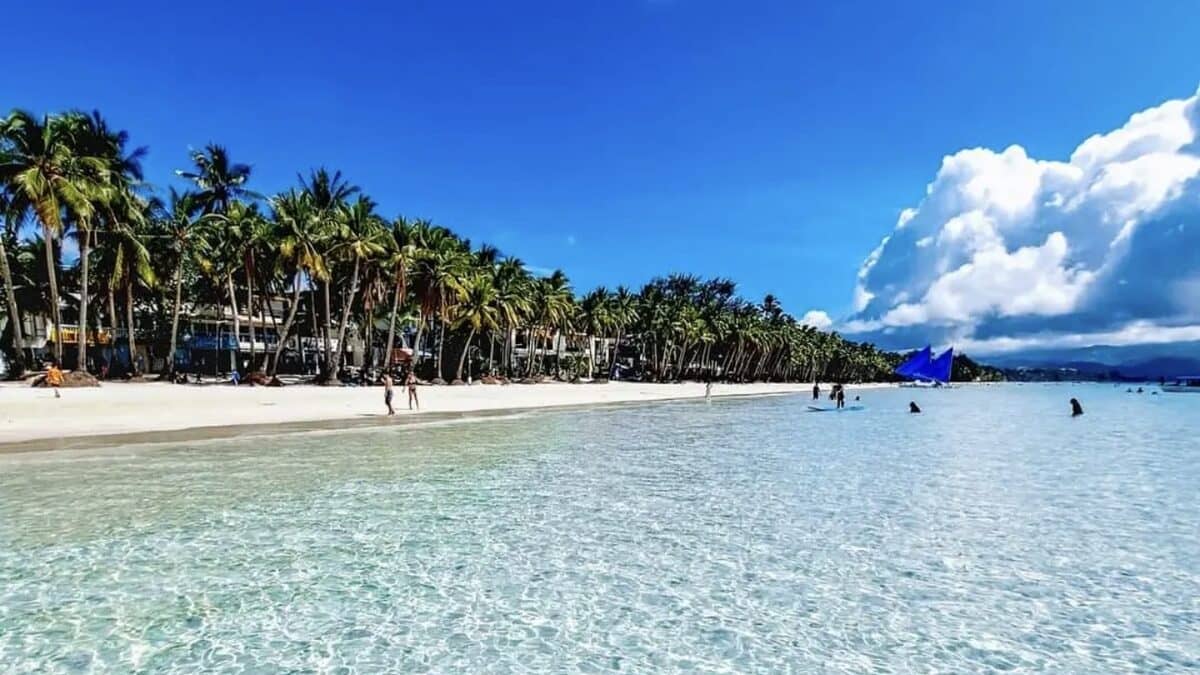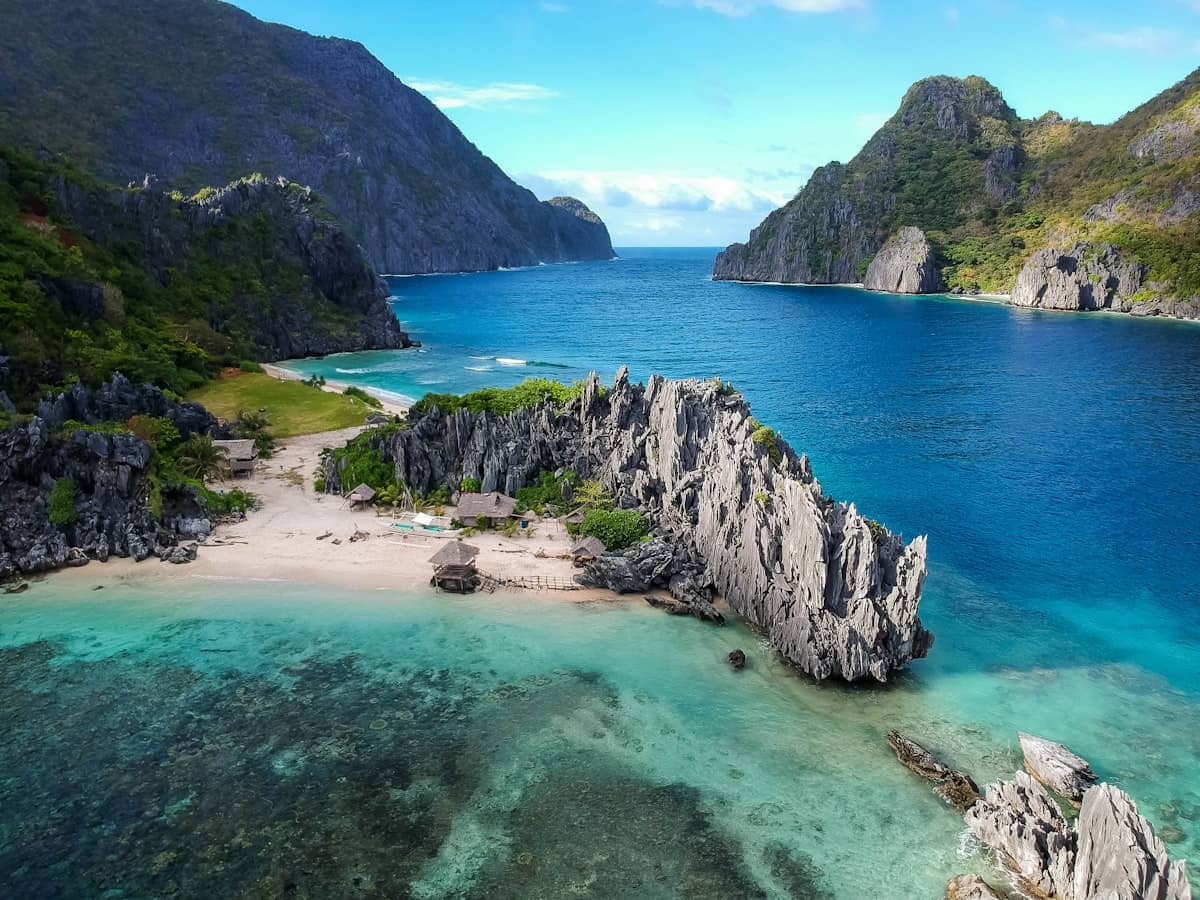
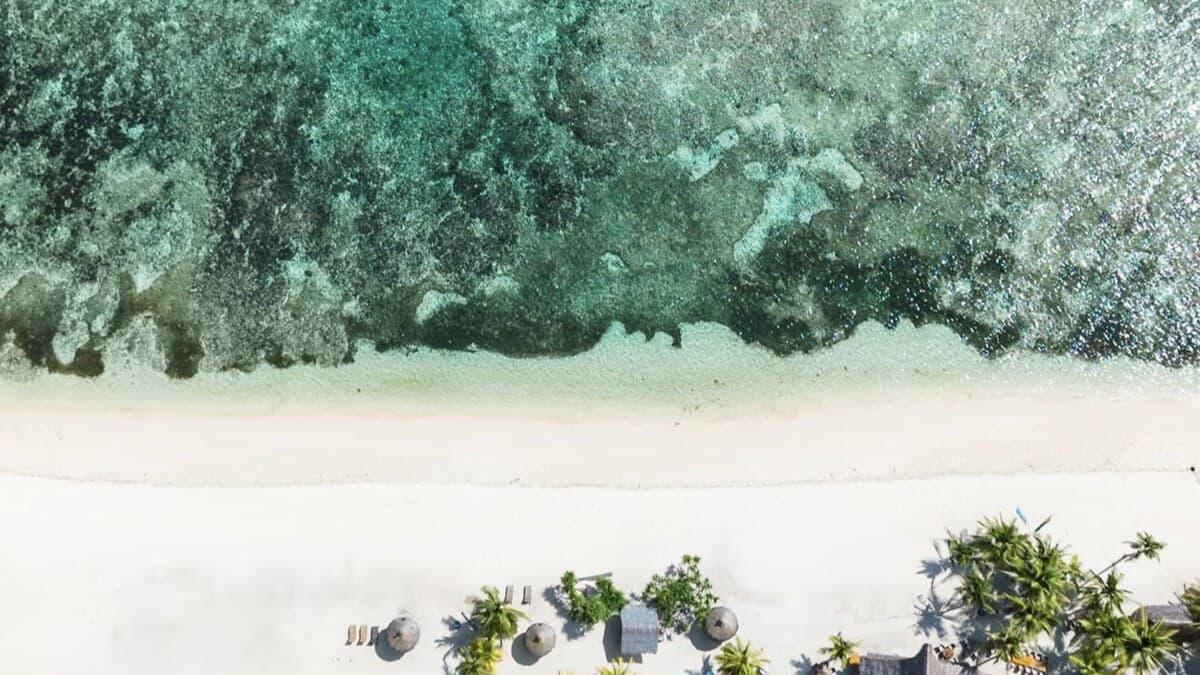
Siquijor has a reputation as the Philippines' mystic island, all faith healers and folklore, and it stays far quieter than Boracay or Bohol. If you come for a beach, the one to find is Tubod, on the west coast in San Juan. It regularly gets called the best beach on the island, but the honest pitch is this: the strip of white sand is small, and the real reason to come is what sits in the water just off it.
Tubod fronts a marine sanctuary that has been protected for more than 30 years, and it shows. A few fin-kicks from the shallows you are over living coral, giant clams, clouds of reef fish and, with a bit of luck, sea turtles. It is one of those rare beaches where you can swim out from your towel and be over a healthy reef inside a minute.
Snorkelling the Tubod Marine Sanctuary
This is the whole point of Tubod, so lead with it. The sanctuary is widely rated the best-preserved reef on Siquijor, and the coral starts close to shore in clear, turquoise water. Expect hard and soft corals, giant clams with their electric-blue lips, parrotfish and wrasse, the occasional banded sea krait, and green turtles grazing the reef. Much of the Philippines' coral has been hammered over the decades, which is exactly why a reef given three decades of protection feels so different: there is structure, colour and fish life where other beaches have rubble.
The layout suits all levels. Close to shore there is a shallow reef flat where nervous snorkellers and kids can float over coral in calm, waist-to-chest-deep water, and the sanctuary is roped off so you are not sharing the water with boats. Swim further out and the reef shelves into a deeper wall, which is where the divers head and where the bigger fish and the turtles tend to be. Currents inside the protected zone are usually gentle, but this is still open water, so keep an eye on children and on your bearings.
Time it for the morning. Before about 11am the water is calmest, visibility is at its best and the fish are most active. By the afternoon the wind often picks up and the surface chops. You can rent a mask, snorkel and fins at the beach if you do not have your own, and aqua shoes are worth packing because there are rocky and coral-strewn patches, especially at low tide. There is diving here too, with a dive centre on the beach and the reef wall for those who want to go deeper. The one rule that matters above all: do not stand on or touch the coral, and keep well back from the turtles. This reef is in good shape precisely because people leave it alone.
The beach itself
Set your expectations on the sand. Tubod's beach is small, a short stretch of white sand backed by trees and the long-running Coco Grove Beach Resort, which sits right on it with direct access to the reef. It is pretty and shaded in places, but it is not a vast arc you will wander for an hour. Think of it as a comfortable base for the snorkelling rather than a destination beach in its own right.
That said, the water is clear and calm in the swimming areas, and the resort setting means it is tidier and better kept than some of Siquijor's wilder, emptier coves. There is lounger and gear hire, somewhere to get a cold drink, and proper shade, which is more than most of the island's beaches offer.
Fees and the 2026 closures
A couple of practical things will shape your visit. Fees are small and collected at the beach in cash: sitting on the sand is generally free, snorkelling carries a conservation fee of roughly 50 pesos and swimming around 20, though you may meet a small entrance charge of about 100 pesos depending on the day and the access point. Bring pesos and coins, not cards.
The bigger thing to know for 2026 is that the sanctuary's snorkelling and swimming zone now closes for several days each month to let the reef rest, with the closure starting three days after each new moon. The white-sand beach itself stays open, usually 6am to 5pm, but the in-water sanctuary is off-limits on those days. It is easy to turn up on a closed day by accident, so check first: the beachfront resort that manages access has posted the 2026 restriction days, which is the simplest way to plan around them.
How to get to Tubod Beach
Siquijor is reached by ferry, most often from Dumaguete in about an hour, and the boats dock at Siquijor port in the island's main town. From there, Tubod is a short hop down the west coast to San Juan. The two easy options are renting a scooter, around 250 pesos a day and how most travellers get around the island, or hailing a tricycle, roughly 150 pesos for the 15-minute ride.
The entrance is easy to miss. Look for the signpost reading Tubod Marine Sanctuary, by the Coco Grove resort, and follow the short path through the trees down to the shore. If you are working through the island's sanctuaries, Tubod pairs naturally with Tulapos further round the coast.
Beyond Tubod: the rest of Siquijor's coast
Tubod makes most sense as part of a slow loop of the island rather than a single stop. A few minutes up the coast, Paliton Beach is the local sunset spot, a longer, palm-backed stretch that some call Siquijor's Little Boracay. Over on the east side, Salagdoong is the cliff-jumping beach, with platforms built into the rocks. None of these match Tubod's reef, but together they make a full, varied beach day on an island you can ride around in a few hours.
Is Tubod Beach worth it?
For snorkellers, and for anyone who likes their beach with a reef attached, easily. Tubod is the best swim-and-snorkel on Siquijor, a protected reef you can reach straight from the sand, and it fits the island's slow, low-key character. Just arrive with the right expectations: a small beach, a brilliant reef, a morning visit and a closure calendar to check. If your idea of a Philippine beach is the long white strip and the buzz, that is Boracay's White Beach instead. Tubod is the opposite trade, and for a lot of people the more memorable one.